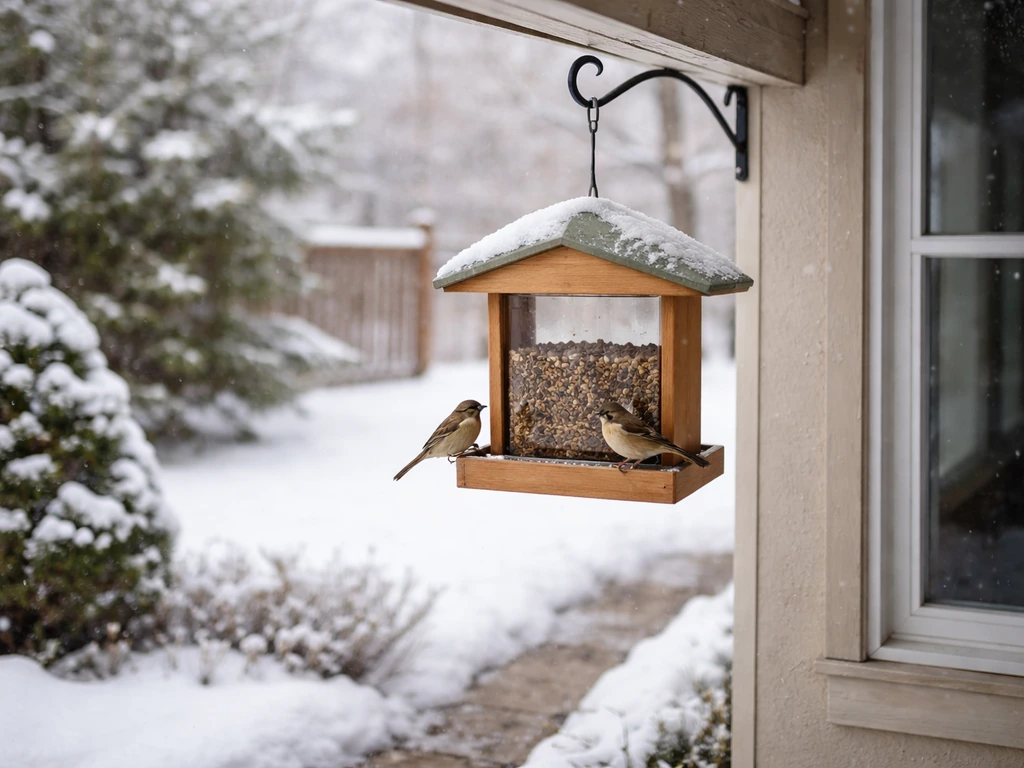
Yes, bird feeders can be placed in the sun, and for many setups it works fine. That said, direct sun all day creates real problems in warm weather: seed spoils faster, suet melts, and birds tend to avoid exposed feeders during the hottest hours. The best placement for most yards is morning sun with afternoon shade, which gives you the drying benefit of sunlight without the food-safety and comfort issues that peak heat brings. Where you hang your feeder matters more than most people realize, and the right answer genuinely depends on your climate, the season, and what you're feeding.
Can Bird Feeders Be in the Sun? Practical Seasonal Guide

Eleanor Hartwick
6 Aug 2026
Why feeder placement matters more than you might think
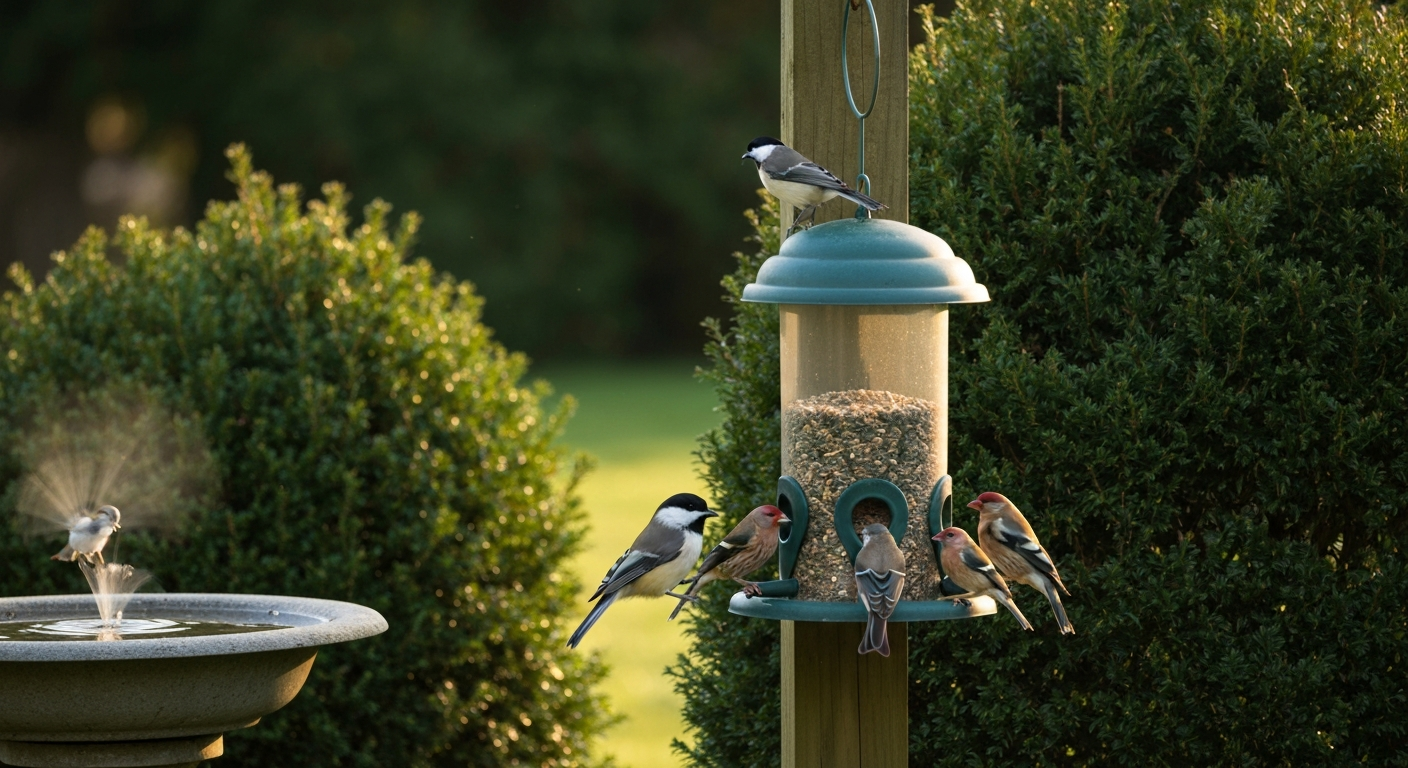
I hear questions about feeder placement constantly, and the honest answer is that it touches on several interconnected issues at once: food spoilage, bird health, bird behavior, and predation risk. Get placement right and your feeder becomes a reliable, safe food source. Get it wrong and you can end up with moldy seed, sick birds, and a feeder that sits empty because the birds won't use it.
Heat accelerates the breakdown of fats in seed, turning them rancid faster than most people expect. It also promotes the warm, humid conditions that fungi like Aspergillus species thrive in. Aspergillus flavus and related molds produce aflatoxins most aggressively at around 25 to 30 degrees Celsius (roughly 77 to 86°F) when moisture is present. Suet and fat-based foods become a particular concern above about 60 to 65°F (15 to 18°C), when they soften, leak oil, and go rancid quickly. Shade and ventilation slow all of these processes down.
Bird behavior adds another layer. Small granivores and passerines shift their feeding to morning and evening on hot days, avoiding midday heat to reduce thermal stress. A feeder baking in the afternoon sun may simply get ignored during peak hours. And any feeder in a fully open, exposed location increases birds' visibility to aerial predators. Studies on perch exposure and vigilance behavior confirm that birds on exposed perches spend more time scanning for threats and less time actually feeding. That's a real cost to the birds using your feeder.
The genuine benefits of a sunny feeder location
Sun isn't the enemy. There are solid reasons to choose a spot with good sun exposure, especially in cooler months or wetter climates.
- Sunlight dries feeders after rain or morning dew, which is one of the most effective ways to prevent mold. The Minnesota DNR specifically recommends letting cleaned feeders dry in the sun because sunlight helps kill bacteria on feeder surfaces.
- In winter, a south- or east-facing sunny spot helps birds warm up quickly while feeding, which matters when they're burning calories just to stay alive overnight.
- Visibility cuts both ways: an open, sunlit feeder is easier for you to monitor for signs of spoilage, sick birds, or low fill levels.
- Morning sun dries overnight condensation and dew from seed, reducing the moisture window during which mold can take hold.
- Sunlit feeders are often more visible to birds searching for food, especially species that rely on visual cues rather than scent or memory.
The real drawbacks of full, all-day direct sun
The benefits above are mostly about partial or morning sun. Full-day direct sun, particularly in summer, brings a different set of problems that are worth taking seriously.
Heat and food spoilage
Seed oils oxidize (go rancid) much faster at high temperatures. Lipid oxidation follows what chemists describe as Arrhenius kinetics: for roughly every 10°C increase in temperature, the oxidation rate approximately doubles. Hulled sunflower kernels, cracked corn, and raw peanuts are especially vulnerable because their oils and starches are exposed. Peanuts and corn are also the seed types most commonly found to carry pre-existing aflatoxin contamination, and adding heat and moisture to already-contaminated seed accelerates toxin exposure. Intact-hulled seeds like black-oil sunflower and safflower hold up better because their shells act as a moisture barrier, but even these degrade faster under prolonged heat than they would in shade.
Suet and fat-based foods
Suet cakes are simply not suitable for full-sun placement when daily highs consistently exceed 60 to 65°F. Even rendered tallow, which is more saturated and oxidation-stable than seed oils, will soften, leak grease, and become rancid at warm temperatures. You'll notice it when the cake looks shiny and greasy or starts to smell off. Once that happens, take it down. Birds will usually avoid truly rancid suet, but not always, and it isn't worth the risk.
Bird comfort and feeding behavior
Small birds can overheat. On hot days, research on species like zebra finches and other small granivores shows feeding activity concentrates in early morning and late afternoon, with very little midday foraging. A feeder in full afternoon sun may effectively be unusable during the hottest part of the day in summer. Birds also need access to water for drinking and cooling, so the microclimate around a feeder matters for whether birds will linger or avoid it.
Predator visibility
An open, sunlit feeder with no cover nearby is an easy hunting spot. Research on perch exposure and vigilance confirms that birds at exposed locations spend significantly more time watching for threats instead of eating. Free-ranging cats are estimated to kill between 1.3 and 4.0 billion birds annually in the U.S., and a predictable feeder location makes birds easier to ambush. Hawks and other raptors also take advantage of concentrated, exposed feeding activity. Placing feeders near shrubs or a tree canopy gives birds an escape route, while keeping the feeder itself a few feet from the cover edge reduces ambush risk from ground predators hiding in the vegetation.
Shade and partial sun: when they work better
Full shade has its own downsides. A feeder under a dense canopy stays damp longer after rain, which is exactly the condition mold needs. It's also harder for you to check and harder for birds to spot. Partial sun, specifically morning sun with afternoon shade, is the practical sweet spot that multiple extension services and bird-care organizations recommend.
Morning sun dries overnight dew and condensation before the day heats up. As afternoon temperatures peak, shade keeps seed cooler and slows oxidation and microbial activity. Birds can feed comfortably during morning hours, take a midday break, and return in the cooler late afternoon. If your yard doesn't offer this naturally, a feeder positioned on the east side of a fence, building, or dense shrub can approximate it. The key is airflow: shade without ventilation is worse than sun with good drainage. Look for feeders with mesh bases, drainage holes, or hopper designs that let moisture escape rather than pool.
| Placement | Spoilage Risk | Bird Comfort (Summer) | Bird Visibility | Drying After Rain | Best Season |
|---|---|---|---|---|---|
| Full direct sun all day | High (heat + UV) | Low (midday avoidance) | High (easy to spot) | Fast | Late fall to early spring |
| Morning sun, afternoon shade | Low to moderate | Good | Good | Good | Year-round |
| Full shade | Moderate (stays damp) | Good | Moderate | Slow | Peak summer heat |
| Partial dappled shade | Low to moderate | Good | Moderate | Moderate | Year-round |
Seasonal strategies: should feeders stay out all year?
The short version: yes, you can leave feeders out year-round, and many birds benefit from a consistent food source across seasons. For detailed guidance, see our piece on do you leave bird feeders out all year for seasonal recommendations and precautions. For a concise answer and practical tips, see should you fill bird feeders in the winter for winter-feeding guidance. For more details, see the guide titled "Should I leave my bird feeders out in winter?", which explains winter filling, placement, and maintenance. But the placement, food type, fill amount, and cleaning frequency should shift with the seasons. A feeder set up perfectly for January is probably not ideal in July, and vice versa. For specific guidance on whether bird feeders should be used in summer, consult our article on should bird feeders be used in summer. Thinking about this seasonally saves you food waste, reduces spoilage risk, and keeps your feeder genuinely useful rather than a source of contaminated seed.
The core seasonal logic is simple: in cold months, you want maximum calorie availability and shelter from wind and ice; in warm months, you want smaller fill amounts, more frequent cleaning, shade during afternoon heat, and no suet unless you're using a specially formulated no-melt variety. The specific decisions around whether and when to fill feeders in winter, and where to hang them for the best cold-weather results, are worth thinking through carefully depending on your region.
Summer guidance: keeping feeders safe in the heat
Best foods for summer feeding
In summer, stick to seed types that hold up well in heat and moisture. Black-oil sunflower seed in the shell is your most reliable option: the hull protects the kernel from moisture and slows oxidation. Safflower is similarly durable. Avoid or minimize cracked corn, raw peanuts (unless you're feeding them quickly and refilling often), and anything already hulled. Nyjer (thistle) seed dries out rather than molds in a well-ventilated feeder, making it a good summer option for finches. Remove suet entirely or switch to a no-melt formula rated for higher temperatures once your daytime highs are consistently above 65°F.
How much to fill and how often to clean
In warm weather, fill feeders with only as much seed as birds will consume in two to three days. This limits the time any given portion of seed sits in a warm feeder and reduces the chance of spoilage going unnoticed. Cornell Lab's Project FeederWatch recommends cleaning seed feeders every two weeks as a baseline, but in hot and humid conditions that interval should shorten to weekly or even more often if you see clumping, discoloration, or a sour smell. The cleaning method matters: scrubbing with soap and water removes organic debris, and following that with a 1:9 bleach-to-water soak significantly reduces Salmonella and other pathogens on feeder surfaces. Feliciano et al. (2018) experimentally showed that soap-and-water scrubbing, a 1:9 bleach soak, and the combination of scrubbing then bleach all lowered Salmonella on feeders, while organic debris lowered cleaning effectiveness and heavy debris needed both scrubbing and bleach for best results Experimental tests found soap + water scrubbing, a 1:9 bleach-to-water soak, and scrubbing followed by a bleach soak all significantly reduced Salmonella on feeder surfaces, but heavy organic debris reduced cleaning efficacy and required both scrubbing and a bleach soak for the highest reductions (The effectiveness of bird feeder cleaning methods with and without debris — Wilson Journal of Ornithology (Feliciano et al., 2018)).. Research published in the Wilson Journal of Ornithology confirmed that debris left in feeders reduces the effectiveness of cleaning, so scrub first, then disinfect. Let the feeder dry completely in the sun before refilling.
Summer placement tips
- Position feeders to catch morning sun and be shaded from mid-afternoon onward.
- Ensure feeders have drainage holes or mesh bases so water doesn't pool after rain.
- Place feeders within 10 to 12 feet of shrubs or trees for escape cover, but not right against dense cover where cats can hide.
- If you have multiple feeders, space them at least 5 to 6 feet apart to reduce crowding and limit disease transmission between birds.
- Check feeders every two to three days in summer for clumped, wet, or discolored seed and remove any immediately.
- Add a birdbath nearby with fresh water changed daily; birds need water for cooling in summer and may use your feeder more if clean water is accessible.
Winter guidance: where to hang feeders and whether to keep filling them
Should you leave feeders out and filled in winter?
Yes, and for many species this is when supplemental feeding matters most. Birds like chickadees, nuthatches, woodpeckers, and sparrows rely heavily on feeder food during cold snaps when natural food sources are buried under snow or ice. For more detail, see our guide "Do birds use bird feeders in the winter" which explains which species rely on feeders, when to keep them filled, and winter-specific placement tips. Leaving feeders out and stocked through winter, especially during extended cold periods and immediately after snowstorms, provides real survival value. Aflatoxin and mold risk drops significantly in cold weather because Aspergillus and related fungi are largely inactive below about 8°C (46°F), so food safety concerns are lower in winter than in summer, though you still want dry seed and a clean feeder.
Where to hang feeders in winter
Winter placement is mostly about microclimate and shelter from wind, cold, and precipitation. A few principles work well across most climates.
- Face south or southeast for maximum winter sun exposure. This keeps the feeder warmer during the day and makes it easier for birds to warm up while feeding.
- Use a windbreak. A fence, building wall, dense evergreen hedge, or garage on the north or northwest side dramatically reduces wind chill at the feeder and makes it more comfortable for birds to linger.
- Keep proximity to natural cover. Evergreen shrubs and dense hedgerows give birds a nearby refuge to dash into if a hawk appears. In winter, when deciduous cover is gone, evergreens are especially valuable.
- Avoid spots where snow and ice will accumulate on the feeder. Overhanging eaves, a gazebo-style feeder with a wide roof, or placement under a conifer's outer canopy all help.
- Keep the area beneath the feeder manageable. Spilled seed draws rodents, which in turn attract predators and can carry disease. Rake or sweep debris periodically, or use a catch tray and empty it regularly.
- Think about your access. You'll need to refill the feeder during cold and icy conditions. A feeder that requires a ladder or walking across an icy path to reach will get neglected. Convenient placement means more consistent care.
Managing snow, ice, and cold-weather maintenance
After heavy snowfall, check that feeder ports and perches aren't blocked by ice or packed snow. Hopper and tube feeders with roofs handle snow reasonably well; open platform feeders need more attention. If seed gets wet and then freezes into a solid block, remove and discard it. Frozen wet seed can still harbor mold spores that become active once the temperature rises. In winter you can fill feeders more generously since birds consume seed faster in cold weather and spoilage is slower, but still check every few days to make sure nothing is wet and clumped. Cleaning frequency can drop to monthly in dry winter conditions, though if you notice sick birds or an Avian disease alert in your area, increase to weekly and follow the bleach-soak protocol.
Feeder design choices that make placement easier
The feeder itself does a lot of the work. A feeder with a wide roof, drainage holes, and a mesh or slatted bottom will stay drier and cleaner than a basic tube feeder with solid walls and no drainage, regardless of where you put it. Clemson Extension and other sources recommend hopper-style or covered feeders for reducing moisture retention, and mesh feeders for nyjer and other small seeds because airflow dries the seed between uses. If you're in a consistently wet climate, the feeder design matters almost as much as the placement. You can put a well-designed feeder in a less-than-ideal spot and do fine; a poorly designed feeder in a perfect location will still give you mold problems.
Quick decision guide: sun, shade, or something in between?
If you're trying to decide where to put your feeder right now, here's how I'd think through it based on your situation. For a concise overview answering the common question 'should bird feeders be in the sun or shade', see the linked guidance for practical placement recommendations.
| Your situation | Recommended placement | Key priority |
|---|---|---|
| Hot summer, humid climate | Morning sun, shaded by noon | Reduce spoilage and bird heat stress |
| Cold winter, windy yard | South-facing, sheltered from north wind | Warmth, bird comfort, feeder accessibility |
| Wet climate, frequent rain | Covered feeder, good drainage, some sun exposure | Drying between rain events |
| Urban yard with cats present | Higher mount, open approach but cover nearby | Predator safety for birds |
| Year-round feeding, mixed seasons | Morning sun with afternoon shade, near evergreen cover | Balanced spoilage, comfort, and safety |
| Suet or fat-based feeder | Full shade or indoors when temps exceed 65°F | Prevent rancidity and waste |
The most practical takeaway is to watch what actually happens at your feeder. If birds are avoiding it during certain hours, notice what the sun is doing at that time. If seed is clumping or smelling off faster than it should, check whether the feeder is staying damp. If you're finding waste under the feeder daily, you're probably filling more than birds are consuming before it spoils. Placement is an ongoing adjustment, not a one-time decision, and the birds themselves will usually tell you when something isn't working.
FAQ
Short answer: can bird feeders be in the sun?
Yes — feeders can be placed in sun, but whether you should depends on season, local climate, feeder type and food. Morning sun helps dry feeders and discourages microbes, but prolonged hot sun increases spoilage, rancidity and bird heat stress. Aim for morning sun/afternoon shade or partial sun with good drainage/ventilation for safest results.
What are the main benefits of placing feeders in direct sun?
Benefits include faster drying after rain or cleaning (sunlight and heat reduce some bacteria on clean surfaces), improved visibility for birds, and reduced daytime moisture that promotes mold. Morning sun helps dry dew and cuts the period seeds stay damp, lowering fungal growth risk.
What are the key drawbacks of sun‑exposed feeders?
Prolonged high temperatures speed lipid oxidation (rancidity) in oily seeds, soften and leak fat‑based suet, and accelerate spoilage if seeds get wet. Hot, exposed sites can make birds avoid mid‑day feeding, increase perceived predation risk (more vigilant behavior), and create attractive hunting spots for cats and raptors.
How should placement differ in summer vs. winter?
Summer: prefer morning sun but ensure afternoon shade or partial cover; use ventilated feeders with drainage, rotate seed more often, avoid suet/cakes in steady heat (>60–65°F/15–18°C), and check for mold daily after rain/heat. Winter: sun is beneficial because warmth and light lower avian energy costs and help dry feeders; but place feeders near shelter (evergreen cover) and avoid sites where thaw‑freeze cycles refreeze feed or create icy perches.
Should I leave feeders out year‑round or remove them seasonally?
Generally leave feeders year‑round if you can maintain cleanliness and safe food. In winter, feeders can be important food sources and are less prone to mold. In hot, wet seasons consider reducing or emptying feeders during heat waves or prolonged rain to avoid spoilage. During disease outbreaks follow local wildlife authority guidance and consider temporary removal.
Where is best to hang feeders in winter?
Choose microclimates that reduce exposure to wind and provide nearby shelter/escape cover: near dense shrubs or evergreen trees (but not so close predators can ambush), on wind‑protected sides of buildings, and where sunlight can warm feeders during daytime. Ensure perches don’t collect ice and that birds have unobstructed access to fly to cover quickly.
Next Article
Where to Hang Bird Feeders in Winter: Exact Placement Tips
Exact winter feeder placement tips for birds and safety: height, window distance, shelter, and troubleshooting.