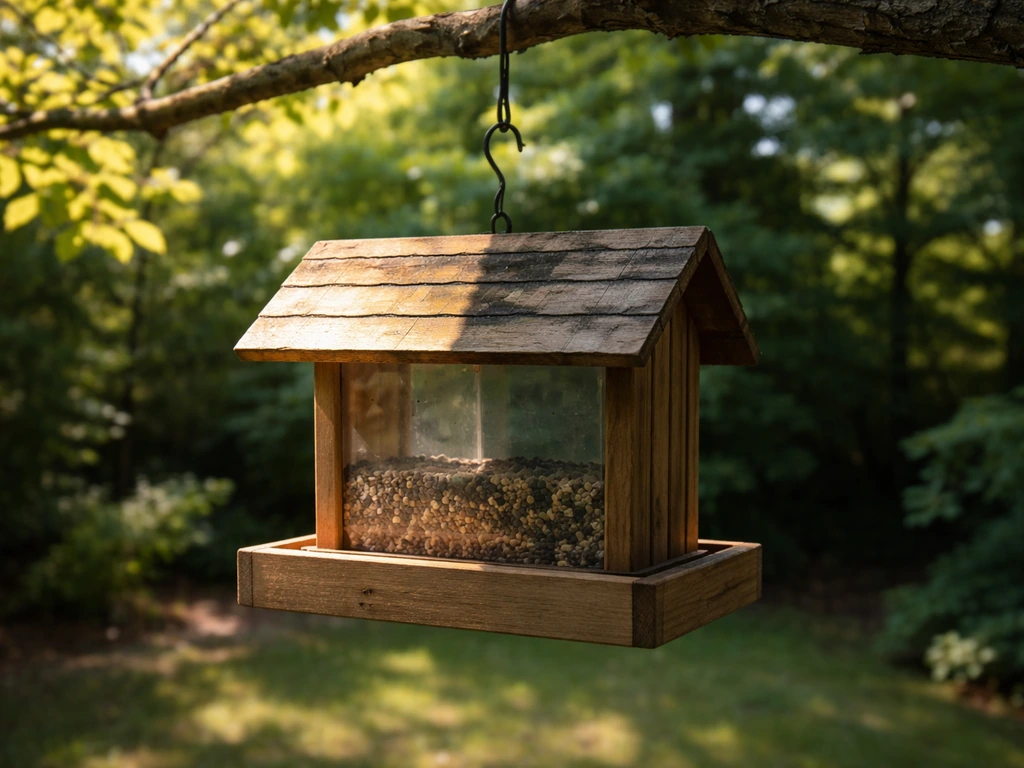
Yes, leave your bird feeders out in winter. For most backyard birders in North America and the UK, keeping feeders up through the cold months is genuinely helpful to birds and deeply rewarding to watch. The real question isn't whether to keep them up, it's how to do it safely: choosing the right food, maintaining feeders in freezing conditions, and staying on top of sanitation so you're not accidentally spreading disease or creating a mess that attracts rats and squirrels. Get those details right and winter feeding is one of the best things you can do for your local birds.
Should I Leave My Bird Feeders Out in Winter? Steps

Eleanor Hartwick
23 May 2026
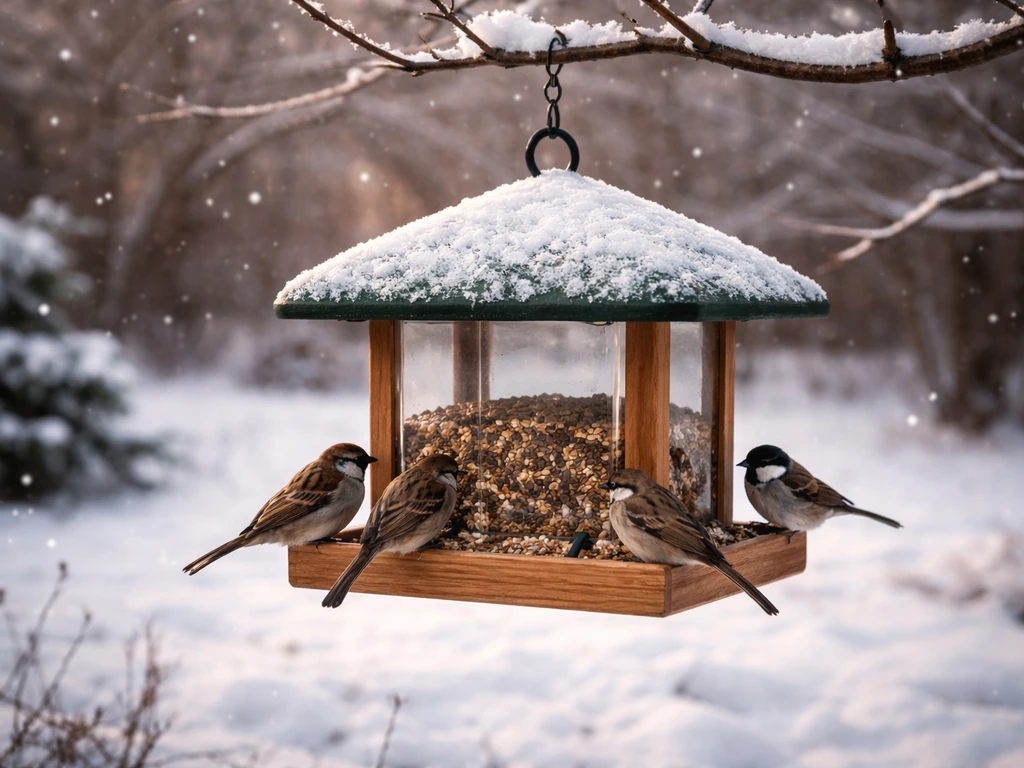
Keep feeders up or take them down? How to decide
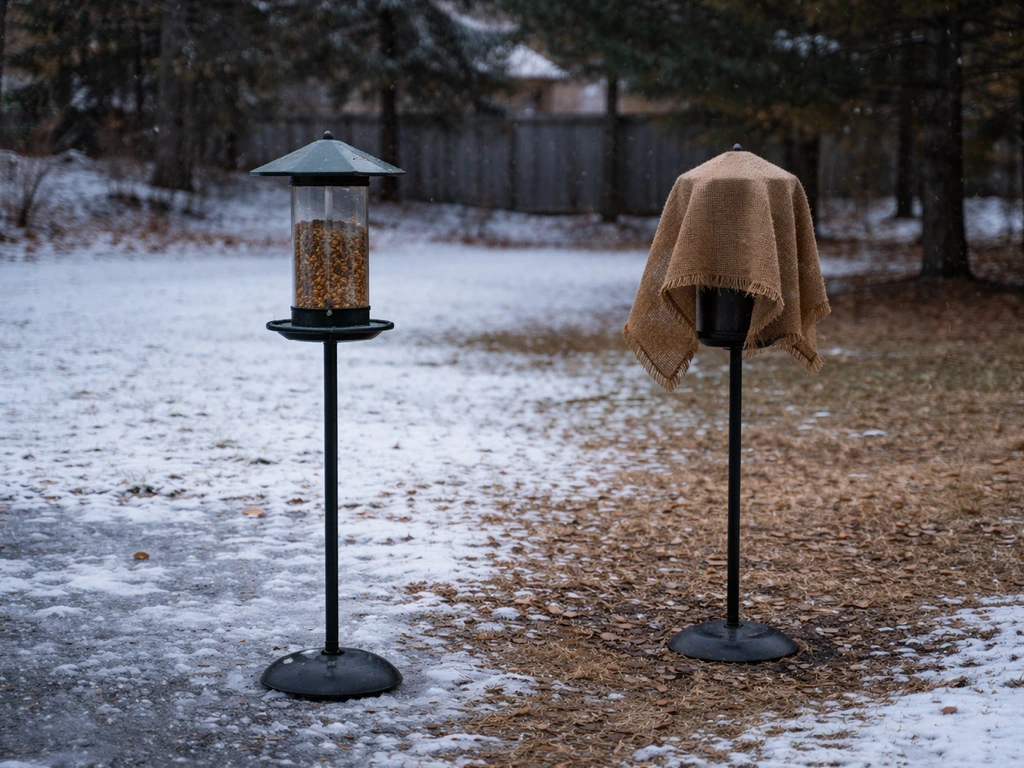
The default answer for almost every situation is: keep them up. Natural food sources like berries, insects, and seeds get buried under snow and ice, and birds that overwinter in your area are actively searching for calories to stay warm. According to Audubon, the main exception is a bad snow or ice storm that buries food for an extended period, and even then the recommendation is to keep feeding, not stop, because that's exactly when birds need it most. Birds will flock to feeders during severe weather when natural food becomes hard to find.
There are two situations where you should temporarily remove feeders: if you spot sick birds at or near your feeder (more on that below), or if you genuinely cannot maintain them through freezing conditions. A neglected, moldy feeder filled with wet, frozen seed is worse than no feeder at all. If you're heading away for two weeks in January with nobody to check on things, it's fine to take feeders down and bring them back out when you return. Birds won't become dependent on your specific feeder in a way that harms them if it disappears.
Your local conditions matter too. If you do place feeders in strong sun, make sure the sun doesn't overheat them or create wet, fast-spoiling conditions can bird feeders be in the sun. If you're in a mild climate where winters rarely freeze hard, the stakes are lower and maintenance is easier. If you're in Minnesota or Colorado where temperatures regularly drop well below freezing, you'll want to think more carefully about feeder design and food choices that hold up in the cold.
What to feed in winter (and what to skip)
Winter is the time to lean into high-fat, high-calorie food. Birds are burning enormous energy to stay warm overnight and forage through the day, so the nutrition you offer really matters here more than in summer.
The best winter foods
- Black oil sunflower seed: This is the single best all-around winter seed. Oregon State University Extension and Colorado State University Extension both name it the top choice because it attracts the widest range of winter species and packs real nutritional punch. The thin shells are easier for small birds to crack in cold weather.
- Sunflower hearts (shelled): These create less hull litter under the feeder, which means less mess to rake and less chance of mold building up on the ground beneath your feeder. Worth considering if you have a crowded feeding spot.
- Suet: This is winter feeding's secret weapon. High-fat suet cakes fuel birds through cold nights and attract woodpeckers, nuthatches, and chickadees. Audubon's winter feeding guide specifically recommends suet and bird puddings as a winter staple.
- Peanuts: Either whole (in a mesh feeder) or as peanut butter-based products, these are calorie-dense and popular with jays, woodpeckers, and nuthatches.
- Safflower seed: A good option if you want to discourage squirrels and starlings, which tend to avoid it, while still attracting cardinals, chickadees, and doves.
- Mixed seed: Choose mixes with high sunflower content and avoid cheap mixes loaded with milo or wheat, which most desirable species ignore and which pile up on the ground and rot.
What to avoid in winter
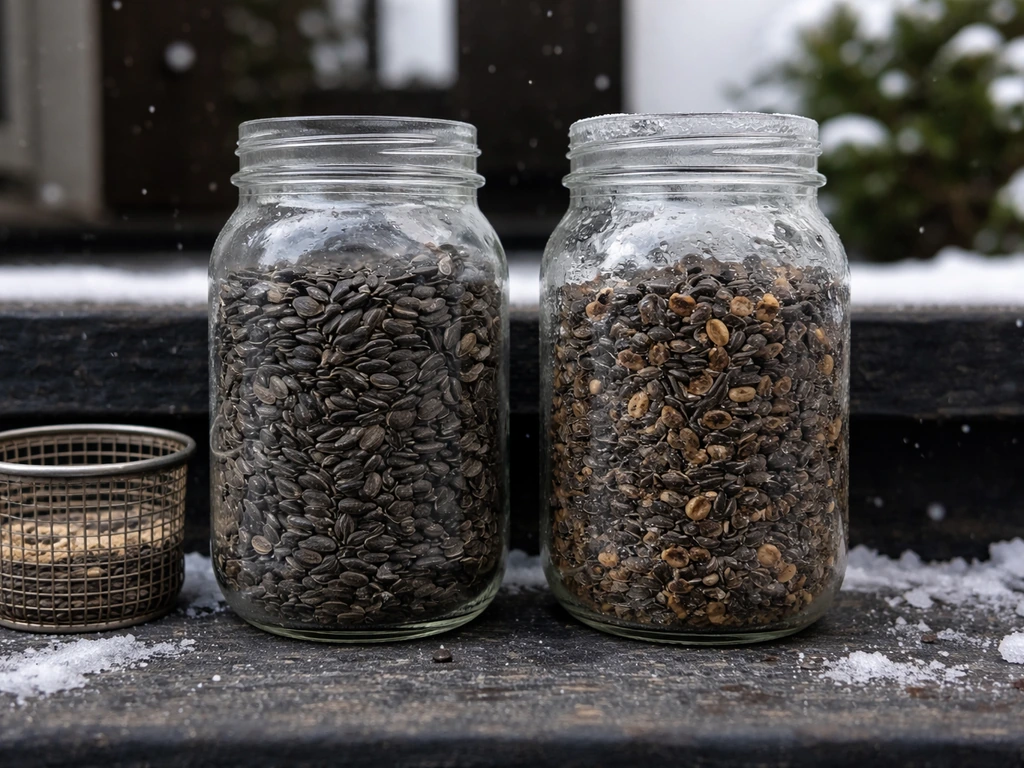
Avoid anything that clumps or spoils quickly in wet or freezing conditions. Nectar feeders for hummingbirds need to come in overnight when temps drop below freezing unless you have a heated feeder or can rotate them. Fruit-based foods can freeze solid and become useless, or thaw and ferment in freeze-thaw cycles. Bread and kitchen scraps are low-nutrition and go soggy fast, creating mold risks. Anything that's already been sitting in your feeder from fall should be completely emptied and discarded before you refill with fresh stock.
Feeder types that actually work in cold weather
Not every feeder handles winter well. The biggest enemy of winter feeders isn't cold itself, it's moisture. Wet seed clumps, freezes, and molds faster than you'd expect, and once that happens birds stop using the feeder anyway.
Look for feeders with a roof or cover over the seed ports to keep snow and rain off the food. UW-Madison Extension specifically recommends feeders with roofs or drainage holes in the tray so water can exit rather than pool. Purdue Extension echoes this: even covered tray feeders should have drainage holes so water doesn't sit and contaminate seed from below.
For suet, cage-style feeders work well in winter and keep the suet accessible even in icy conditions. Audubon mentions mesh cage feeders and suet hung in mesh onion bags as practical options. If starlings are raiding your suet, try an upside-down suet feeder that only allows access from the bottom. Purdue Extension confirms this design keeps starlings out while woodpeckers and nuthatches, which are comfortable hanging upside down, can still access the food easily.
Tube feeders with metal ports hold up better than plastic in freezing temperatures, where repeated freeze-thaw cycles can crack ports and create gaps where moisture enters. If ice is building up inside a tube feeder, bring it in briefly to thaw, shake out any frozen clumps, dry it, and refill before putting it back out. This is more work but it's worth it.
Where to place feeders in winter
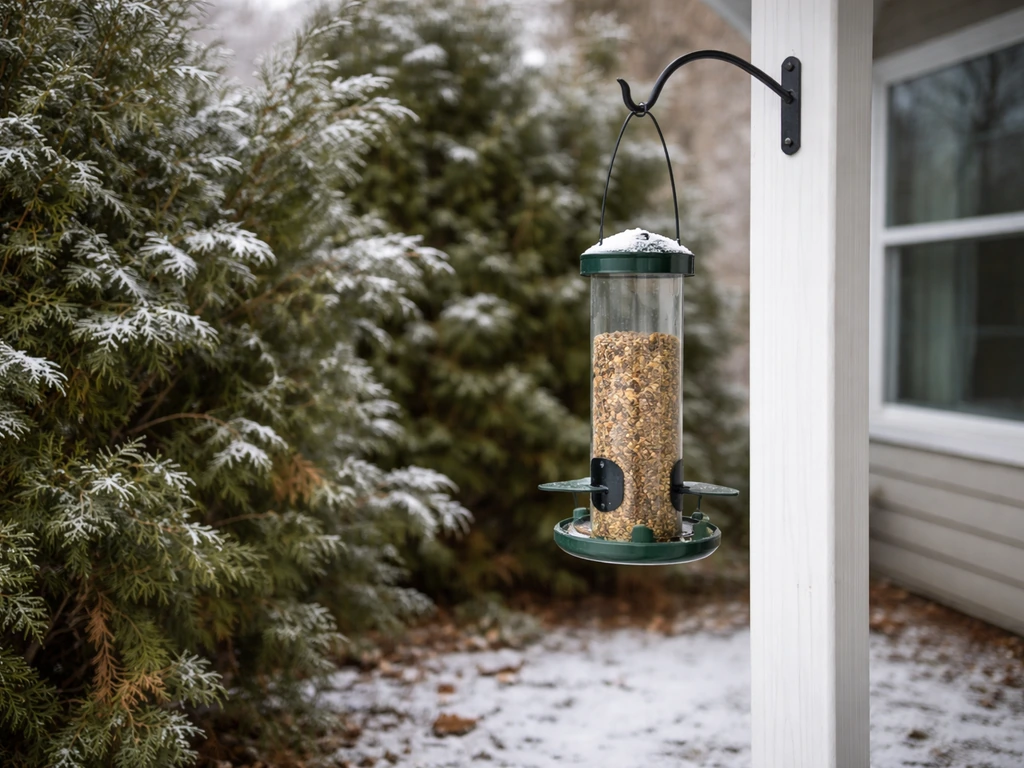
Winter placement is about two things: making feeding accessible for birds in tough weather, and keeping birds safe from hazards that are more pronounced in winter. If you want the most reliable results, focus on shelter from wind, safe spacing from predators, and correct distance from windows where to place feeders in winter. You may also wonder whether your feeders should go in sun or shade, since temperature and food safety both affect how they perform Where to place feeders in winter.
Shelter from wind and snow
Position feeders near natural windbreaks like hedges, dense shrubs, or evergreen trees. This gives birds a place to wait and watch for predators before approaching the feeder, and gives them quick cover to retreat to. But don't tuck feeders so deep into shrubs that cats can lurk right underneath. A few feet of clear ground around the feeder base lets birds spot approaching predators.
Window collision risk
This matters year-round but becomes more urgent in winter because birds are more stressed, flying more desperately, and visiting feeders in larger numbers. Research cited by Audubon from Cornell Lab's Project FeederWatch shows feeders placed between 3 and 30 feet from a window are in the danger zone for collisions, because birds have enough distance to build up speed but not enough to brake. Audubon's winter guide recommends hanging feeders at least 5 feet off the ground and either very close to the window (within 3 feet, so birds can't gain momentum) or 30 or more feet away. If you're placing feeders for the first time this winter, aim for one of those two zones and avoid the middle distance.
Predator awareness
Cats are a serious threat at winter feeders, especially when birds are ground-feeding on spilled seed. Keep feeders high enough that birds on the ground below have a clear sightline in all directions. Squirrels and larger birds are covered separately below, but for cats specifically, clearing away low cover within about 3 to 4 feet of the feeding area makes a real difference. Hawks also work feeders more aggressively in winter, which is natural, but if you're seeing regular hawk strikes you can temporarily move the feeder closer to dense cover to give smaller birds an escape route.
Sanitation in winter: the part most people underdo
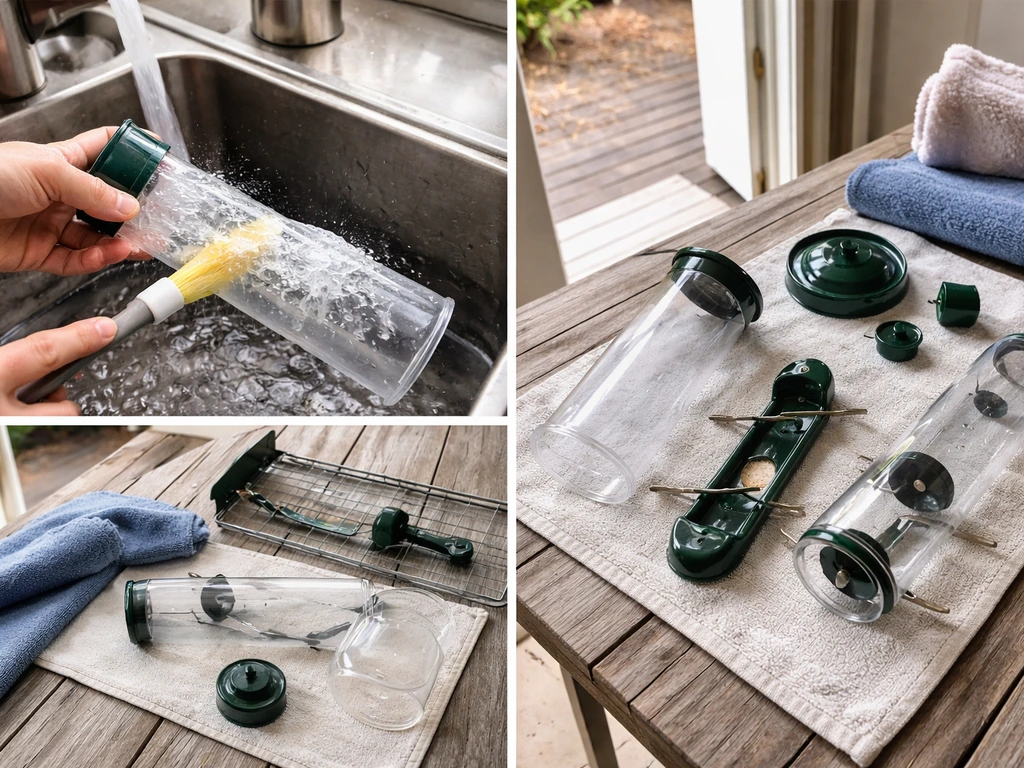
Winter feeding creates real disease risk if you let sanitation slip, and it's easy to slip when it's cold and you don't want to stand outside scrubbing a feeder. But dirty feeders spread illness efficiently, especially when birds are crowded and stressed. Diseases like trichomonosis, salmonellosis, and avian pox can move through a feeder population quickly if conditions are right.
The target cleaning frequency from both Audubon and Project FeederWatch is every two weeks as a starting baseline, but more often in wet weather, after snowstorms, or any time you spot a sick-looking bird. Project FeederWatch also advises that feeders be cleaned every two weeks using a diluted bleach solution (or sanitized in a dishwasher with water hot enough to kill bacteria) clean feeders every two weeks. Clean every time you refill if you can. Audubon Connecticut's guidance is to clean feeders each time they're emptied before adding fresh food, which is a good habit to build.
For the cleaning itself: use a diluted bleach solution. The National Wildlife Health Center's recommendation, as cited by Audubon, is a 9:1 water-to-bleach ratio. The CDC's standard sanitizing ratio is about 1 tablespoon of household bleach per gallon of water, which is roughly similar and practical for most people to mix at home. Scrub the feeder with a dedicated brush, rinse thoroughly, and then, critically, let the feeder dry completely before refilling. Audubon is very clear on this: drying before refilling is the step that prevents mold from taking hold immediately in the new seed. Alternatively, feeders that can fit in the dishwasher can be sanitized with a hot water cycle.
Also clean up underneath the feeder regularly. Seed hulls, spilled seed, and bird droppings accumulate under feeders and can become a source of disease transmission. Project FeederWatch recommends raking the area under feeders as part of routine maintenance. Project FeederWatch recommends raking the area under feeders as part of routine maintenance to help prevent waste from accumulating.
If you see a sick bird, act immediately. The RSPB recommends stopping feeding altogether and thoroughly cleaning and storing your feeders if you observe sick birds. Garden Wildlife Health's guidance on trichomonosis specifically recommends stopping feeding for a minimum of 2 to 4 weeks to encourage birds to disperse and break the transmission cycle. It's also a good idea to spread food across a few feeders rather than concentrating everything in one spot, since this limits the number of birds sharing a single contaminated surface at once.
Your winter maintenance checklist and when to pull feeders
Here's what to do this week and keep doing through the winter:
- Empty and inspect all feeders now. Discard any leftover seed from fall, especially anything that looks clumped, discolored, or smells musty. Mold is invisible early but the smell gives it away.
- Clean all feeders before refilling. Use a 9: 1 water-to-bleach solution, scrub thoroughly, rinse well, and let them dry completely before adding fresh seed or suet.
- Stock up on black oil sunflower seed and suet cakes as your winter staples. Buy enough to keep a dry indoor supply going so you're not making emergency trips when conditions are bad.
- Check feeders every 2 to 3 days in winter. After snowstorms, clear any ice or snow off the feeder and surrounding perches, and check that seed hasn't clumped or frozen inside.
- Clean feeders every two weeks on a schedule. Set a reminder. Do it more often after heavy rain, wet snow, or if you notice sick birds.
- Rake under feeders weekly or after storms to clear accumulated hulls and droppings.
- If you spot a sick bird, take all feeders down, clean and store them, and wait 2 to 4 weeks before putting them back out.
Pull feeders temporarily if you're going away for more than a week and nobody can check on them, if you've confirmed sick birds in the area, or if a prolonged stretch of wet, sub-freezing weather has made it impossible to keep seed from turning into frozen, moldy blocks. Coming back to a clean, dry feeder after a short break is fine. Leaving a neglected feeder out indefinitely is not.
Dealing with squirrels, rats, and other unwanted visitors
Winter brings unwanted visitors to feeders partly because natural food is scarce for everyone, not just birds. Squirrels, rats and mice, European starlings, and sometimes deer all become more persistent when the ground is frozen.
Squirrels
Squirrels can jump horizontally about 10 feet and vertically about 4 feet, so placement matters. Project FeederWatch notes that feeders within 10 feet of a tree, fence, or building are easy targets. A pole-mounted feeder with a properly fitted baffle, placed in the open away from launch points, is your most reliable defense. Caged feeders that physically block squirrels while allowing small birds through are also very effective. Safflower seed is less attractive to squirrels than sunflower, which can help at platform feeders where baffles are harder to deploy.
Rats and mice
Ground spillage is the main problem here. Rats and mice are attracted to the seed that accumulates under feeders, particularly at night. The fix is mostly about ground management: rake daily or every other day in winter, use feeders with trays that catch hulls before they hit the ground, and consider switching to hulled sunflower seeds (sunflower hearts) which leave almost no waste. Don't leave platform or tray feeders loaded overnight if rodents are a persistent issue in your area.
Starlings and large birds
European starlings can dominate suet feeders and mixed seed trays in winter when they flock. The upside-down suet feeder design mentioned earlier handles them effectively at suet. For seed, a caged feeder or tube feeder with small ports excludes larger birds while still welcoming chickadees, finches, and nuthatches. Safflower seed is also a useful tool here since starlings tend to avoid it.
Deer
If deer are reaching your feeders, the solution is purely about height. Mount feeders high enough that deer can't reach them, typically 6 to 7 feet from the ground. Ground-level platform feeders are essentially deer feeders in areas with significant deer populations, so either raise them or be willing to accept deer visits as part of the landscape.
A quick comparison of common winter feeder setups
| Feeder type | Best winter food | Key advantage | Main winter challenge |
|---|---|---|---|
| Tube feeder (metal ports) | Black oil sunflower, sunflower hearts | Keeps seed dry and enclosed | Can freeze up inside; needs thawing after heavy ice |
| Suet cage feeder | Suet cakes | Very weather-resistant; simple to clean | Starlings compete unless you use upside-down design |
| Covered hopper feeder | Black oil sunflower, mixed seed | Roof protects seed from snow | Needs drainage holes; can hold moisture if not maintained |
| Platform/tray feeder | Mixed seed, peanuts, safflower | Accessible for many species | Exposed to weather; spillage attracts rodents; clean frequently |
| Peanut mesh feeder | Whole peanuts | Attracts woodpeckers, jays, nuthatches | Needs regular inspection; peanuts can mold in wet conditions |
One more thing: water in winter
Food gets all the attention, but a source of liquid water in winter can be just as valuable to birds, sometimes more so. Natural water sources freeze solid for weeks at a time in cold climates, and birds need water for drinking and feather maintenance year-round. A heated birdbath or a birdbath de-icer is worth serious consideration alongside your feeders. It attracts species that don't typically use seed feeders and gives the birds you're already feeding a complete support system through the toughest months.
FAQ
What should I do if the seed freezes inside the feeder during a cold snap?
If you want to be proactive, keep feeders up but switch to cold-proof options and use smaller, more frequent refills. A clogged feeder with frozen clumps should be taken down briefly to thaw, emptied, and dried before you reload, otherwise birds will waste energy trying to access food that is effectively sealed in ice.
Is it safe to leave hummingbird nectar out overnight in winter?
You generally should not rely on leaving nectar out overnight when temperatures drop below freezing. Unless you have a heated nectar feeder or a way to remove and replace it overnight, nectar can freeze or degrade after freeze-thaw cycles, and birds will stop using it. For freezing temps, use alternatives like suet or tube feeder seed that tolerate cold better.
Can I take feeders down during a long stretch of wet, freezing weather?
Yes, but only as a temporary fix for winter conditions you cannot maintain. If you cannot keep the feeder clean and dry, or wet weather has turned the food into moldy frozen blocks, remove it until you can service it. Plan for the feeder to be down long enough to fully reset the situation, then put it back only after cleaning and drying.
Will birds become dependent on my feeder if I take it down for a week?
Feeding through winter usually does not create harmful dependency on your specific feeder. Birds may visit while it is available, and they disperse if food sources stop. If you remove feeders, do it for a clear reason (sick birds nearby, unsafe sanitation, or you cannot maintain them) and then restart with a clean, dry feeder.
If I spot one sick bird, do I stop feeding the whole season or just clean?
If you see a single sick bird, you do not have to permanently quit, but you should pause feeding long enough to break spread and to fully sanitize. The common approach is to stop feeding and thoroughly clean, then resume only after an interval, typically several weeks for certain diseases, plus a switch to spreading food across multiple feeders so fewer birds share the same surface at once.
Does it matter if I feed everything from one feeder versus multiple feeders?
If you have multiple feeders, spread them out rather than concentrating all food in one location. Concentration increases the number of birds touching the same surfaces and speeds disease transmission when conditions are right. Rotating or using separate feeders for different foods can also reduce cross-contamination from drips and spills.
How do I handle the seed and droppings that collect underneath the feeder in winter?
Yes, because wet seed under and around feeders is a major driver of both mess and disease risk. Remove husks, rake or sweep the area under feeders regularly, and consider hulled sunflower seeds where appropriate to reduce waste that rodents can use as a food source.
Is it okay to leave platform feeders loaded overnight if I have rats or mice?
If you use a tray or platform feeder and rodents are persistent, do not keep it fully loaded overnight. Use designs that catch hulls before they hit the ground, clean up spillage promptly, and consider switching to hulled seed or using feeders with trays that reduce drop waste to make nighttime foraging less rewarding for rats and mice.
How often should I clean feeders during winter, not just once at the start?
In most cases, yes, you should clean on a schedule and also immediately when conditions worsen. A practical rule is every two weeks as a baseline, more often after snowstorms, during wet spells, and whenever you see sick-looking birds. Cleaning each time you refill is the safest habit when winter weather is hard on sanitation.
What’s the best way to reduce bird collisions when I hang feeders near windows?
Yes, window collisions are a real winter risk because birds fly in repeatedly and can build up speed. Use the window-distance guidance, avoid the mid-range placement that allows approach speed without enough braking, and if you are unsure, aim for either very close placement or a far-away placement rather than the middle distance.
Next Article
Should Bird Feeders Be in Sun or Shade? Clear Placement Guide
Expert guide on whether bird feeders belong in sun or shade, plus tradeoffs, hygiene tips, and species-specific placemen