Hang your winter bird feeders within 3 feet of a window (or more than 30 feet away), about 5 to 6 feet off the ground, close to natural cover like trees or shrubs but not so close that a cat or hawk can use that cover to ambush feeding birds. That combination handles the three biggest winter placement problems at once: window strikes, predator pressure, and birds simply not feeling safe enough to visit.
Where to Hang Bird Feeders in Winter: Exact Placement Tips

Eleanor Hartwick
10 Jul 2026
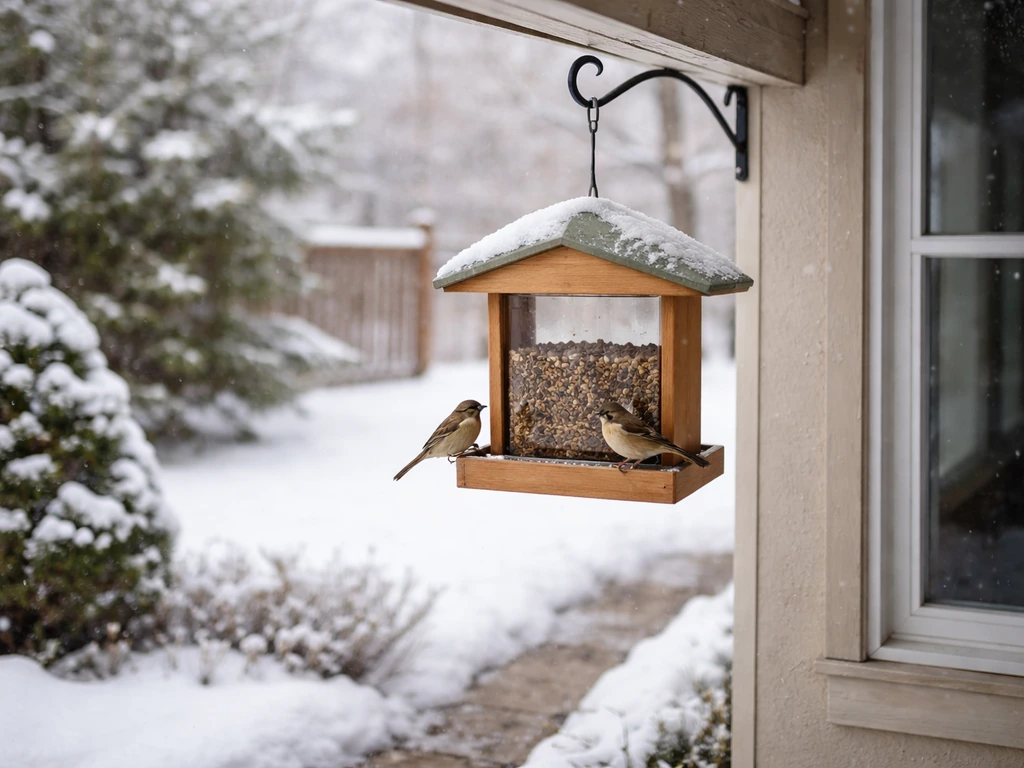
Winter placement checklist: shelter, visibility, and safety
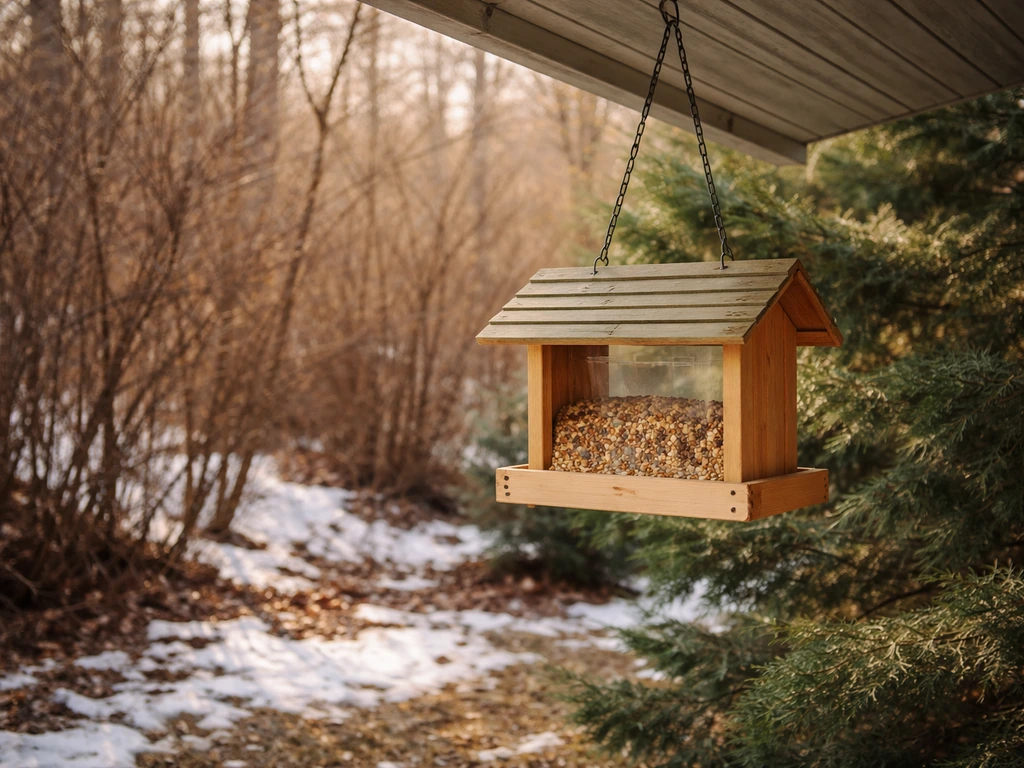
Before you pick a specific spot, run through these conditions. Also, if you want to keep conditions comfortable, avoid placing feeders in direct, scorching sun during the hottest part of the day can bird feeders be in the sun. A good winter feeder location checks most of these boxes. If yours checks fewer than four, it's worth reconsidering the spot.
- Natural cover within 10 feet: trees, dense shrubs, or even a brush pile so birds have a quick escape route if a hawk appears
- Shelter from the prevailing wind: a fence, building wall, or dense evergreen on the windward side reduces heat loss for birds waiting to feed
- No dense hiding cover directly at feeder level: bushes right next to the feeder give cats and Cooper's Hawks a launchpad
- Visible from inside your home so you can monitor food levels, ice buildup, and bird behavior without going outside
- Accessible for you to reach safely in icy or snowy conditions without a ladder or risk of slipping
- At least 5 feet off the ground to slow squirrel access (more on this below)
- Either within 3 feet of a window or more than 30 feet away to reduce window-strike risk
- Away from human foot traffic paths so birds aren't flushed every time someone walks past
Height and distance rules for windows, doors, and foot traffic
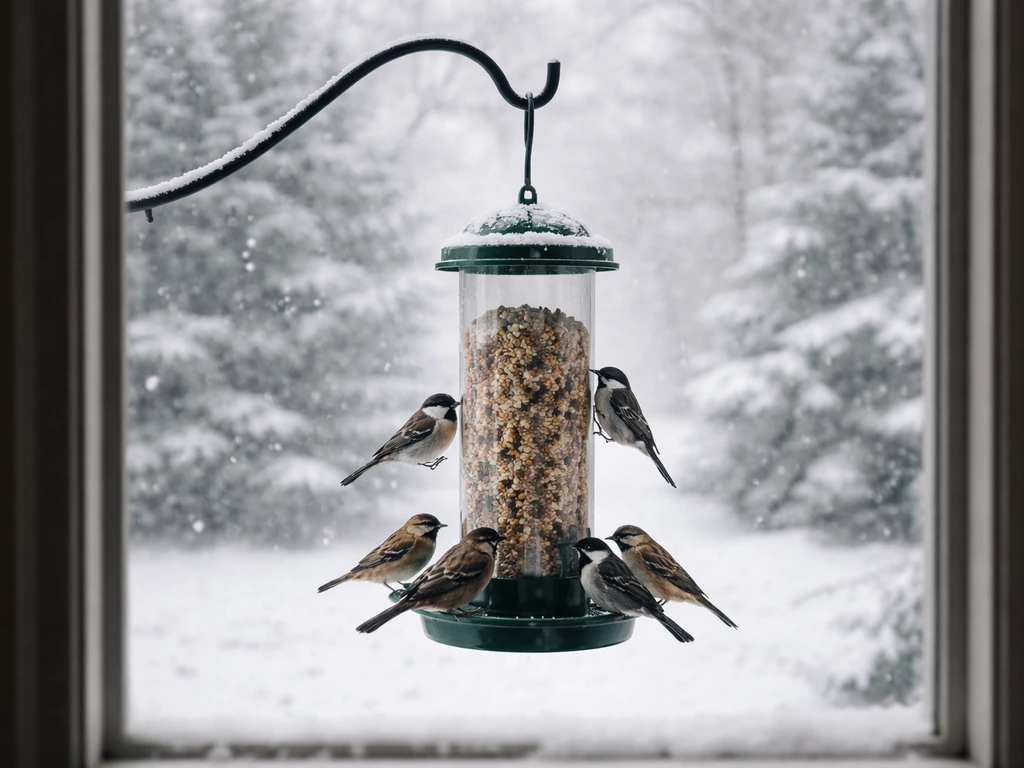
Window strikes kill a staggering number of birds year-round, and feeders placed at a middle distance from glass are the worst offenders. The physics are simple: a bird leaving a feeder 15 feet from a window has enough runway to build fatal speed. That's why the guidance from Audubon and multiple ornithology sources is consistent and pretty firm: place feeders either within 3 feet of the glass or at least 30 feet away. Within 3 feet, a bird startled off the feeder can't accelerate enough to cause serious injury. At 30-plus feet, it has time to register the glass and veer off. The 4 to 29 foot zone is the danger zone. If you also wonder whether to leave bird feeders out all year, the safest approach depends on your local climate and the type of food you provide do you leave bird feeders out all year.
The easiest close-window setup is a suction-cup feeder mounted directly on the glass. These work well for chickadees, nuthatches, and goldfinches, and they're genuinely the safest option for window-strike prevention. If you're hanging a larger feeder, a shepherd's hook or bracket that positions it within 2 to 3 feet of a window edge achieves the same effect.
For doors, apply the same logic: avoid hanging feeders directly across from a door you open frequently, especially a glass storm door. Every time you step outside, you flush the birds, and a startled bird near glass is a collision risk. Keep feeders at least a body-length to the side of any door opening.
Height from the ground matters too. A general hanging height of 5 to 6 feet keeps feeders out of easy reach for ground-level predators and makes squirrel jumping harder, while still being accessible for you to refill without a step stool. If you're using a pole-mounted setup, the pole baffle should sit at least 4 feet above the ground, and the feeder itself will naturally end up a foot or two above that.
Trees vs. porch eaves vs. balcony: which location actually works best?
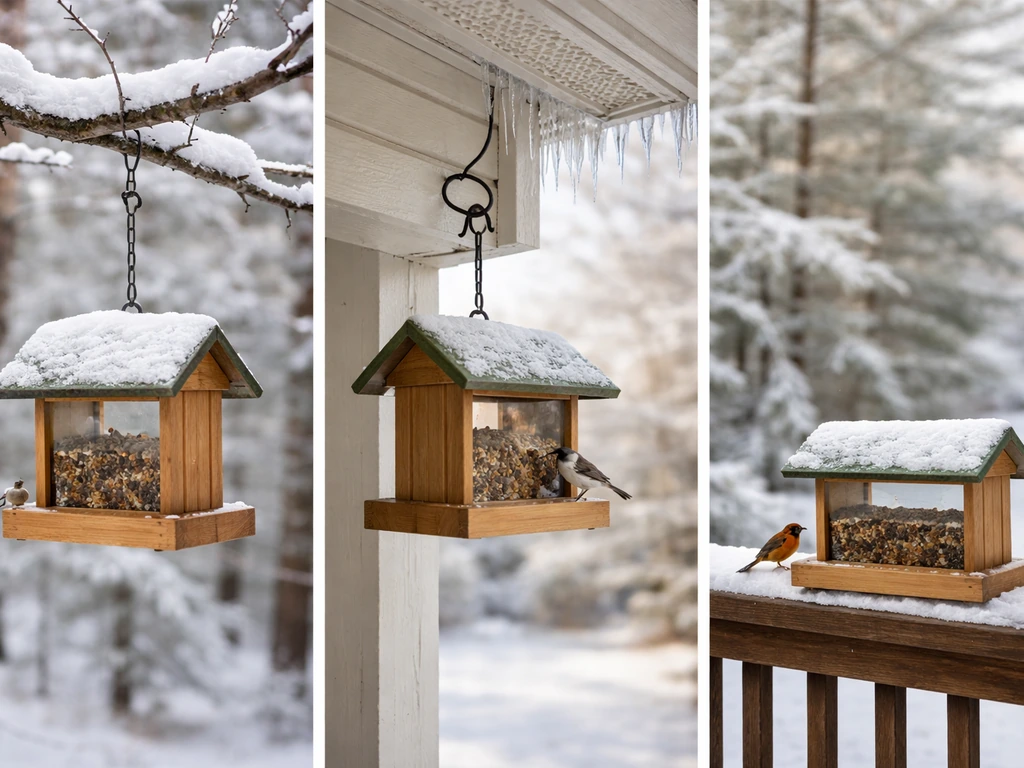
Each of these setups has real advantages and real drawbacks in winter. Here's an honest look at all three.
| Location | Winter advantages | Winter drawbacks | Best for |
|---|---|---|---|
| Tree branch hanging | Natural cover already present; birds feel safe; easy to position near escape routes | Branch access makes squirrel-proofing harder; harder to reach in snow/ice; feeder may swing in wind | Yards with mature trees and good squirrel-deterrent setups |
| Porch eaves or overhang | Excellent weather protection; feeder stays dry and ice-free longer; easy to refill | Often too close to the house for birds to feel comfortable; may conflict with window distances; limited natural escape routes nearby | Window-adjacent close-range feeders or tube feeders for bold species like chickadees |
| Shepherd's hook (open yard) | Full control over exact distance from windows and cover; easy to add baffles; flexible repositioning | Exposed to wind and snow accumulation; birds need nearby cover added artificially if yard is open | Most setups; the most versatile winter option |
| Balcony | Elevated naturally; good for window-mount or railing feeders; birds often comfortable with height | Predator ambush risk from above (hawks); wind exposure on upper floors; seed mess on flooring | Apartment or urban dwellers with limited yard space |
My honest recommendation: a shepherd's hook or freestanding pole in an open area 10 to 15 feet from a tree or large shrub is the most controllable winter setup. You can add baffles, move it if it's not working, and place it at the exact window distance you need. Tree-hanging looks more natural but gives squirrels a highway, and porch overhangs often end up in that dangerous 4 to 29 foot window-distance zone.
If your yard lacks natural cover entirely, a brush pile made from pruned branches or even a retired Christmas tree propped nearby gives birds the shelter and escape cover they need without creating a predator ambush point. It sounds low-tech, but it works.
Wind, snow, and ice: how winter weather should change your placement
Cold, wind, and precipitation are the practical variables that most people underestimate when placing a feeder in summer and then forget to revisit in November. In winter, birds are burning more calories just staying warm, so a feeder that's battered by wind or caked in ice is genuinely useless to them, regardless of how good the seed is. The Oregon Department of Fish and Wildlife also advises placing feeders with protection in mind, so squirrels, cats, and predators cannot access them and the feeder is protected from weather blank" rel="noopener noreferrer">feeders should be protected from weather. If you’re choosing among sunny and shady spots, aim for shade that still lets birds feel safe and keeps the feeder reliable through the day battered by wind or caked in ice.
Position feeders on the lee side of a wind break if you can. A solid fence, a wall, a dense evergreen hedge: anything that interrupts the prevailing wind makes the feeder more hospitable and makes it easier for birds to land and perch without fighting gusts. Watch where snow drifts in your yard after the first storm of the season. If a spot collects deep drifts, it's not a good feeder location because you'll be trudging through snow to refill it and birds will struggle to access the landing perches.
Roofed feeders and covered platform feeders handle snow buildup far better than open trays or unprotected tube feeders. If you're hanging a tube feeder in a snowy climate, look for models with a built-in weather guard dome above them. The dome does double duty: it sheds snow and ice from the ports, and it also functions as a squirrel baffle. Orienting the feeder opening slightly away from the prevailing wind direction also reduces rain and snow entry into the ports.
Ice is the sneakier problem. When temperatures cycle around freezing, ports and perches can ice over completely overnight. A feeder under an eave or porch roof avoids most of this. If you're in an area with regular freeze-thaw cycles, plan to check and clear ice from ports every morning during those periods.
Keeping out squirrels, rodents, and keeping seed mess under control
Squirrels and rats are more persistent in winter because natural food sources are scarcer. Placement alone won't solve the problem entirely, but it's the foundation everything else builds on.
The physical rules for squirrel-proofing through placement
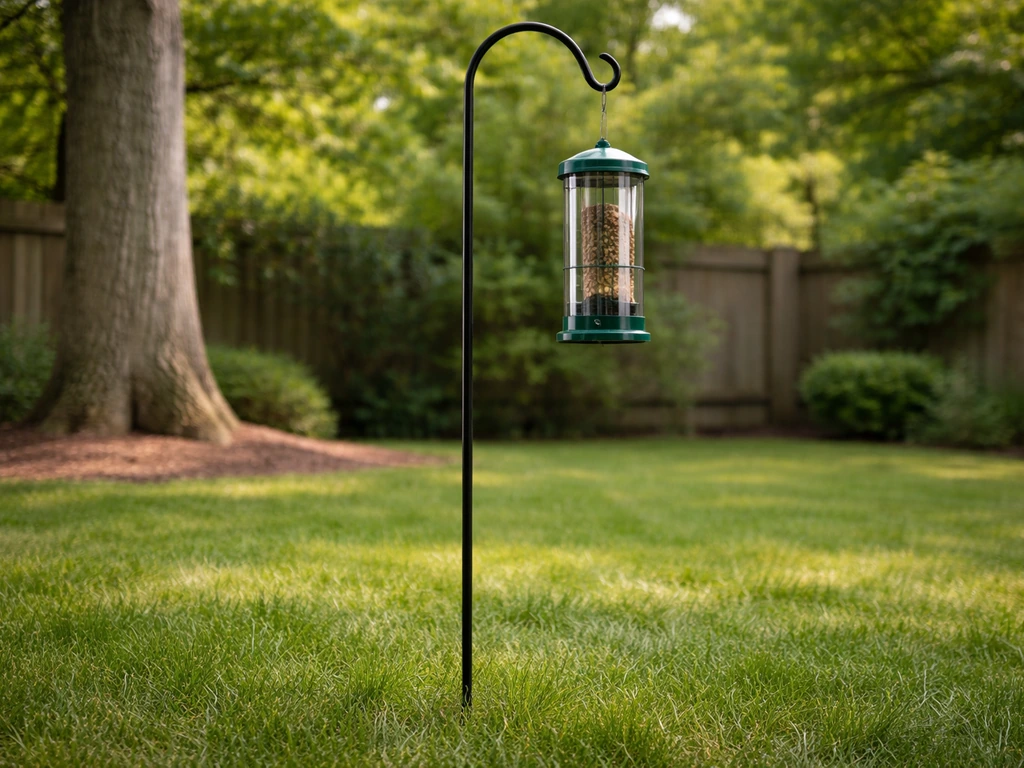
- Keep feeders at least 10 feet horizontally from any tree trunk, branch, fence, or roof edge that a squirrel could leap from
- Hang feeders at least 5 feet off the ground to prevent jumping access from below
- Use a pole-mounted baffle attached at least 4 feet above the ground; a dome or cone baffle extending at least 2 feet out from the pole blocks both climbing and jumping approaches
- For hanging feeders, add a tilting dome baffle above the feeder on the wire or chain to prevent squirrels from sliding down to the feeder
- Weight-activated feeders close off ports when a heavier animal lands, which works well regardless of location but is especially useful when perfect placement isn't possible
Rats are a different problem. They're primarily ground feeders attracted by seed that falls from the feeder. The most effective approach is a combination of placement and feeder choice: use a no-mess seed blend or hulled sunflower seeds that birds eat entirely rather than tossing aside, and sweep or rake under the feeder regularly. A baffle on the pole at the 4-foot height discourages climbing rats, and keeping the area under the feeder clear removes the initial attraction. If you're seeing rats and you're in a suburban or urban setting, it's also worth asking whether your neighbors have feeders that are acting as the primary draw.
Seed mess in winter is more than an aesthetic problem: wet, decomposing seed shells on a porch or deck can become a slip hazard, and wet seed mold under the feeder creates a disease risk for ground-feeding birds. Place feeders over grass or gravel rather than decking where possible, and choose a spot where you can rake or clear debris without it being a major production.
Targeting specific species with placement and food positioning
Winter dramatically narrows the range of bird species using feeders in most regions: you're primarily dealing with chickadees, nuthatches, titmice, downy and hairy woodpeckers, dark-eyed juncos, white-throated sparrows, cardinals, and house finches, depending on where you live. In winter, the birds that use feeders are often different from the ones you see in warmer months, so matching the feeder to what’s local can help Winter dramatically narrows the range of bird species using feeders. Each of these species has slightly different placement preferences.
Ground-feeding birds like juncos and white-throated sparrows prefer low platform feeders or scattered seed on cleared ground beneath hanging feeders. Position a low tray or flat platform feeder 2 to 3 feet off the ground under a tree or shrub edge. These birds naturally forage at the shrub line, so a feeder set out in the open middle of a lawn often gets ignored.
Chickadees, nuthatches, and titmice are bold and will use feeders close to the house, including window-mount feeders. They prefer sunflower seeds, peanuts, and suet, and they're comfortable feeding 2 to 3 feet from a window if it's been in place for a few days. These are the species most likely to visit a new feeder quickly in winter because they're actively searching for reliable food sources.
Woodpeckers need suet feeders or feeders with peanuts or safflower, and they prefer feeders attached to or very close to a vertical surface, like a tree trunk or a wooden post. A suet cage hung directly on a tree trunk at about 5 to 6 feet is about as close to ideal as you can get for woodpeckers. Don't put suet in a feeder hanging free in open air if woodpeckers are your target: they like to brace against something while they feed.
Cardinals and finches tend to like feeders with perches positioned slightly away from cover rather than right against the shrub. They're more cautious about tight, enclosed feeding spots. A tube feeder or a hopper feeder on a pole 5 to 8 feet from a shrub edge suits them well.
Maintenance, hygiene, and what to do if birds aren't showing up
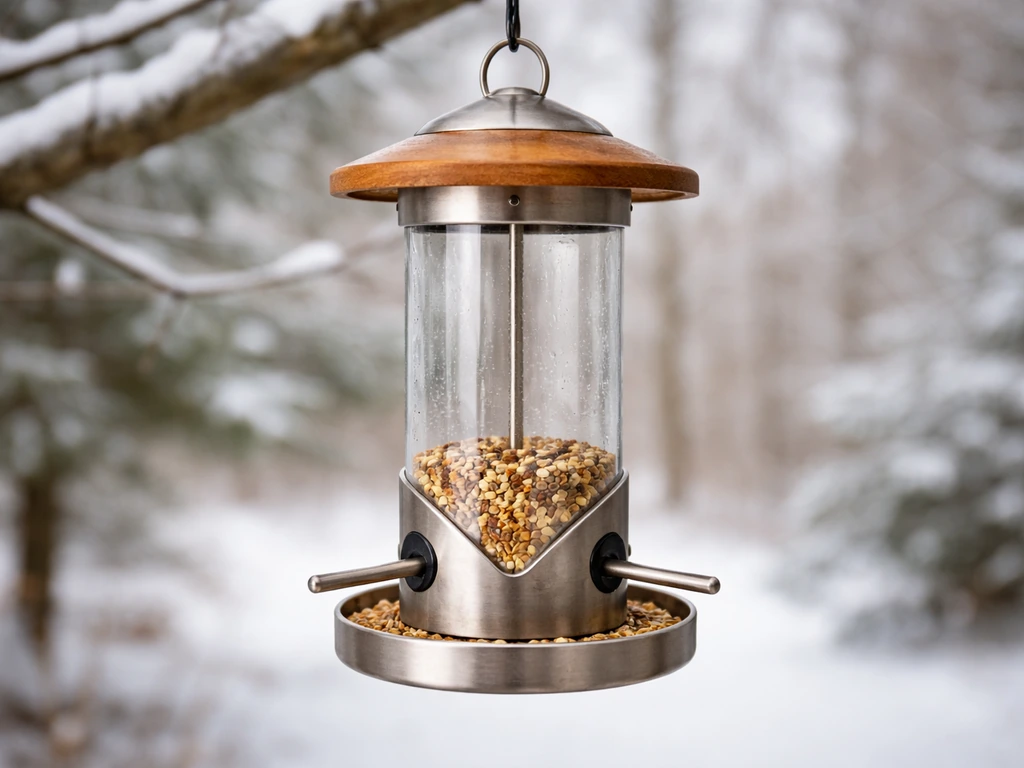
Even a perfectly placed feeder won't work if it's dirty or if the food is wrong for what's around. In winter, disease spread at feeders is a real risk: birds congregate more tightly at food sources, and wet, moldy seed is a vector for illnesses like trichomonosis and salmonellosis. In summer, you should also adjust your feeding and cleaning routine so you reduce spoilage and keep birds coming back safely summer feeder use. The standard guidance from Audubon and wildlife health organizations is to clean feeders every one to two weeks using a solution of 1 part bleach to 9 parts water, letting the feeder soak for about 15 minutes, then rinsing thoroughly and letting it dry before refilling. Don't skip the drying step: a damp feeder in freezing temperatures becomes an ice trap.
If you're doing everything right placement-wise and birds still aren't visiting, work through this sequence before moving the feeder:
- Check the seed: wet, clumped, or mold-smelling seed gets rejected immediately. Dump it, clean the feeder, and refill with fresh seed
- Assess whether the feeder is too exposed: if there's no cover within 15 feet and no nearby perch trees, birds may sense the location as unsafe. Add a brush pile or move the feeder closer to existing cover
- Give it time: a new feeder in a new location can take 1 to 3 weeks to be discovered in winter, especially if your yard doesn't have an established bird population. Watch for scouts (usually a single chickadee) before expecting regular visitors
- Match the food to the species present: black-oil sunflower seed attracts the widest range of winter feeder birds in North America. If you're using cheap mixed seed with lots of milo or millet, many birds will ignore it
- Check for predator pressure: if a hawk or outdoor cat is actively hunting near the feeder, birds will avoid it entirely for days. Track whether activity stops after a predator visit and resumes once the pressure drops
- Reconsider the window distance: if the feeder is in the 4 to 29 foot zone from a window, birds may be getting hit and associating the area with danger. Move it to under 3 feet or over 30 feet
One thing worth saying clearly: winter feeding genuinely helps birds in cold climates, but it works best when it's consistent. Birds that find a reliable feeder will return to it and incorporate it into their daily foraging routes. If you fill the feeder erratically or let it sit empty for days during a cold snap, you lose that trust. Check food levels every couple of days at minimum during periods of heavy use, and especially after snowstorms when natural foraging is suppressed. Whether you should keep feeders out at all through winter, or what to fill them with, are separate questions worth thinking through depending on your local bird populations and conditions. If you’re wondering whether to leave feeders out all season, the answer is yes for many backyards, as long as you keep them consistent and clean should i leave my bird feeders out in winter.
FAQ
Should I remove bird feeders during the warmest parts of winter (or during mild spells)?
Keep feeders up year-round only if you can maintain a strict cleaning and replenishing routine. In winter you reduce travel and keep traffic at the feeder consistent, but empty or dirty feeders become more harmful than helpful during freeze-thaw weather. If you cannot clean on a regular schedule (every 1 to 2 weeks, and more often in wet or icy spells), scale back or remove feeders during conditions that quickly foul the feed.
Can I hang a feeder closer to my window if it is under a covered porch or eave?
Yes, but you must still manage window distance and predator escape. If you use the “within 3 feet or 30+ feet” rule, place the window-mount or close feeder so it is not visible from a high perch where cats can ambush. Also, keep the feeder area clear of obstructions that block birds’ escape routes (like dense branches directly in front of the glass).
What if my yard layout forces the 4 to 29 foot “danger zone” from the window?
For the safest window-strike setup, use a window-mounted feeder or place a feeder within 3 feet of glass, or farther than 30 feet. The middle range can still be risky even if the feeder is sheltered by an overhang, because birds still accelerate after leaving the feeder. If your space forces the 4 to 29 foot zone, the practical fix is changing the feeder location or using a window-mounted suction-cup model.
Do I need to reposition feeders after the first big snow?
Revisit the exact spot after the first heavy snowfall. If the feeder becomes hard to access, move it before snow accumulates deeply around it, because birds may stop visiting when landing perches disappear and you will not be able to refill promptly. Snow drifts also increase safety issues for you (slips) and for birds (blocked approach routes).
How should I adjust placement for juncos and white-throated sparrows if my yard is mostly deck or patio?
If you’re targeting ground-feeding birds, the feeder should be paired with accessible foraging area underneath. If your feeder is too high (or perched where shells fall onto decking), you reduce visits and also increase mess and mold. Aim for a low platform (about 2 to 3 feet) or a cleared area under the feeder, and prefer grass or gravel over wooden decking when possible.
Why do I still get rats even if my feeder is high and has a baffle?
Rats are often drawn to the food that falls below the feeder, so placement that looks “good for birds” can still create a ground buffet for rodents. If you see rat activity, switch to no-mess or hull-eating food, add a pole baffle at about 4 feet, and commit to clearing below the feeder frequently. Also consider whether nearby feeders from neighbors are the main source of dropped seed.
How often should I check a feeder for ice in winter?
A single morning check is not enough during freeze-thaw periods. Ports and perches can ice over overnight, especially under roofs that block falling snow but not condensation. In areas with frequent temperature swings around freezing, plan on checking and clearing ice daily during those stretches.
What’s the best way to choose between a sunny spot and a wind-protected spot in winter?
If your goal is to reduce bird stress and improve visit frequency, prioritize locations that are sheltered from wind but still allow safe landings. Watch for perching stress like birds struggling to approach in gusts or repeatedly landing farther away. Moving the feeder to the lee side of a fence, wall, or dense hedge often improves consistency within days.
My feeder ports clog with snow or wet seed. What should I change first?
If seed is getting wet or the feeder ports are clogging, you will see reduced visits. Start by switching to a winter-appropriate feeder style (roofed feeders or covered platforms, and tube feeders with weather guards) and orient the opening slightly away from prevailing wind. Then adjust how you refill, so you are not leaving damp seed to freeze and block feeding ports.
When should I move a feeder if I suspect window strikes are happening?
Do it immediately if you observe repeated collisions, or if you notice birds “hesitating” and not using the landing zone. A practical method is to place a temporary feeder at the safe window distance rule (within 3 feet or 30+ feet) and compare traffic over 2 to 3 days. If collisions happen, do not keep trying to “train” birds to a risky location.
Next Articles
Do You Leave Bird Feeders Out All Year? Seasonal Guide
Should you leave bird feeders out all year? Get seasonal tips, safe feeding, and cleaning to prevent disease and pests.
Do Birds Use Bird Feeders in Winter? How to Feed Safely
Yes, birds use feeders in winter when needed. Feed safely, keep it clean, prevent spoilage and adjust amounts.
Should You Fill Bird Feeders in Winter? When to Fill or Stop
Know when to fill bird feeders in winter, when to stop, and how to adjust food, amounts, and safety for summer too.