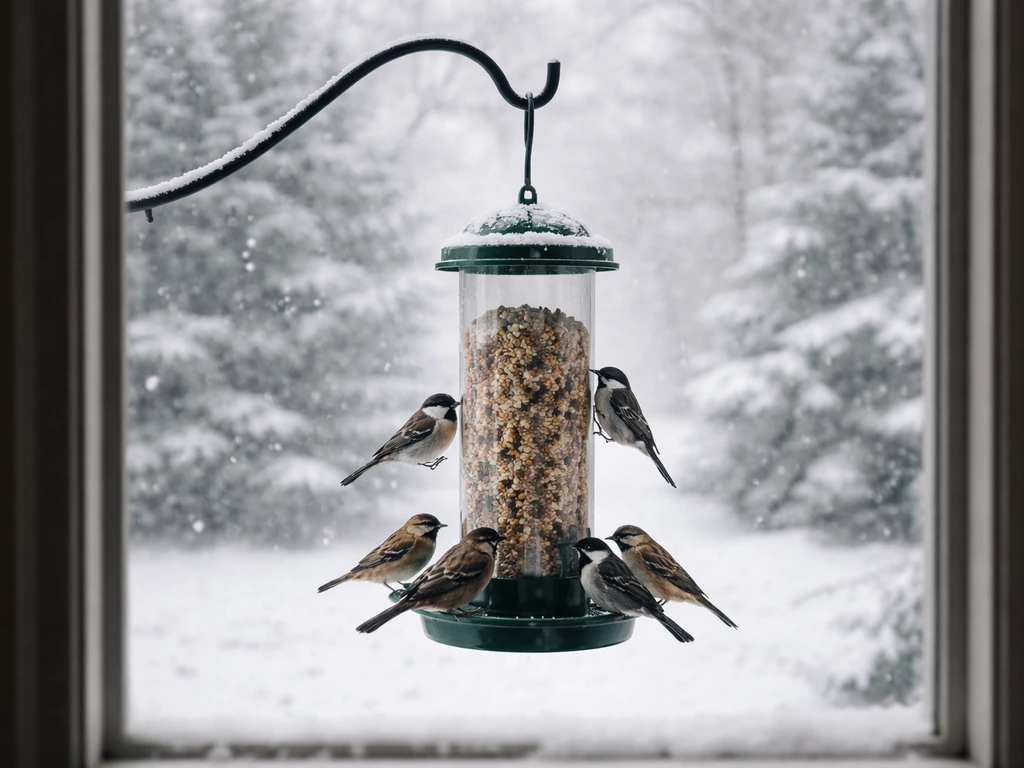
Yes, filling bird feeders in winter is genuinely worthwhile, and for many birds it matters most during this season. When temperatures drop, natural food sources like berries, seeds, and insects get scarce or locked under snow and ice. More than a hundred bird species will supplement their diets at feeders during winter, and some rely on that supplemental food most heavily when conditions are harshest. That said, feeders aren't a lifeline for every bird, most still get the majority of their food from natural sources, so the goal isn't to keep feeders constantly overflowing, but to keep them clean, stocked with the right food, and managed in a way that actually helps rather than harms.
Should You Fill Bird Feeders in Winter? When to Fill or Stop

Eleanor Hartwick
9 Jun 2026
Do birds actually need your feeders in winter?
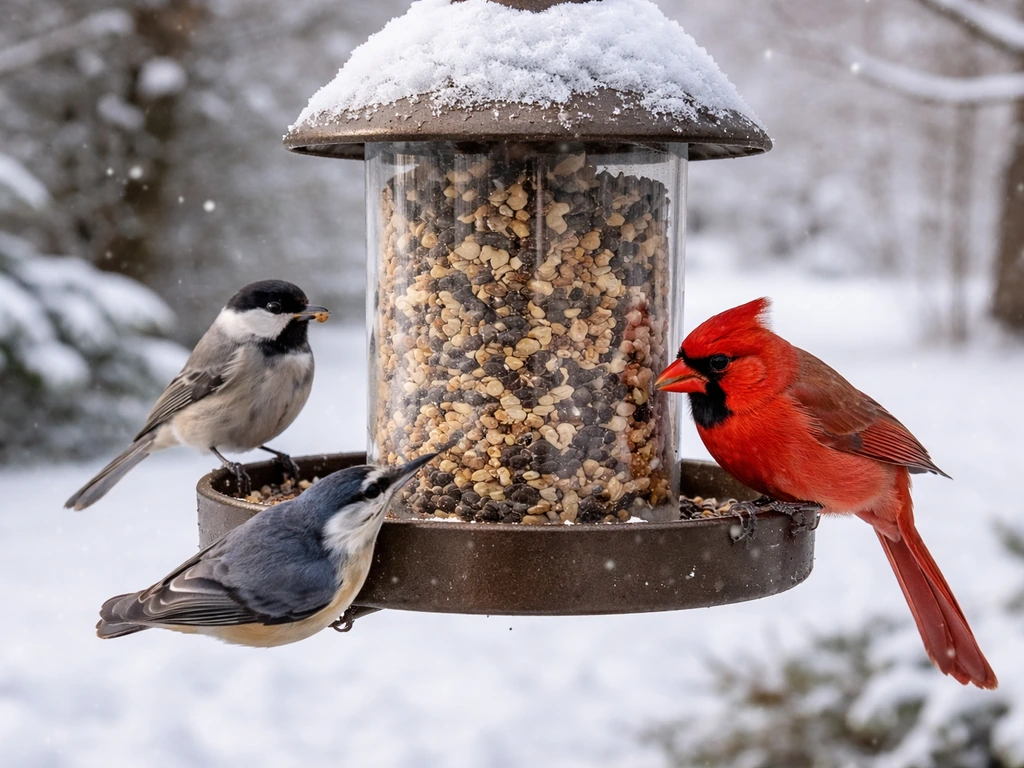
The honest answer is: it depends on the bird, your location, and what the winter throws at you. Cornell University Press research is clear that even in winter, most birds visiting feeders still get only a small portion of their daily diet from those feeders. If you're asking do birds use bird feeders in the winter, the next thing to dial in is which foods and feeder types match the birds in your area do birds use bird feeders in the winter? Cornell University Press research is clear that even in winter, most birds visiting feeders still get only a small portion of their daily diet from those feeders.. They're foragers by nature and they're good at it. But that calculus shifts during extended cold snaps, heavy snowfall, or ice storms when foraging becomes genuinely dangerous or impossible. That's when a reliably stocked feeder goes from a nice bonus to a meaningful assist.
Species matter too. Chickadees, cardinals, house finches, nuthatches, woodpeckers, and dark-eyed juncos are among the birds most likely to show up at winter feeders. These are year-round residents in much of North America, and they're well adapted to cold, but they burn a lot of calories just staying warm. For them, finding a consistent food source in your yard in January or February is genuinely useful. Migratory birds are a different story, since most have already left by the time winter hits hard.
So should you fill your feeder this winter? Yes, if you're willing to do it right. If you want the practical guidance for this decision, follow our tips on timing and feeder maintenance throughout the winter. The birds benefit. You benefit too, frankly, watching winter bird activity is one of the better reasons to look out the window in February. The key is matching your effort to conditions and keeping up with basic maintenance, which is where a lot of feeders fall short.
When to fill, when to ease up: timing across the winter months
You don't need to treat feeder filling as an all-or-nothing commitment. Think of it more like a sliding scale tied to conditions. Here's how the seasonal rhythm tends to play out across most of the northern hemisphere.
October and November: ramp up as natural food disappears
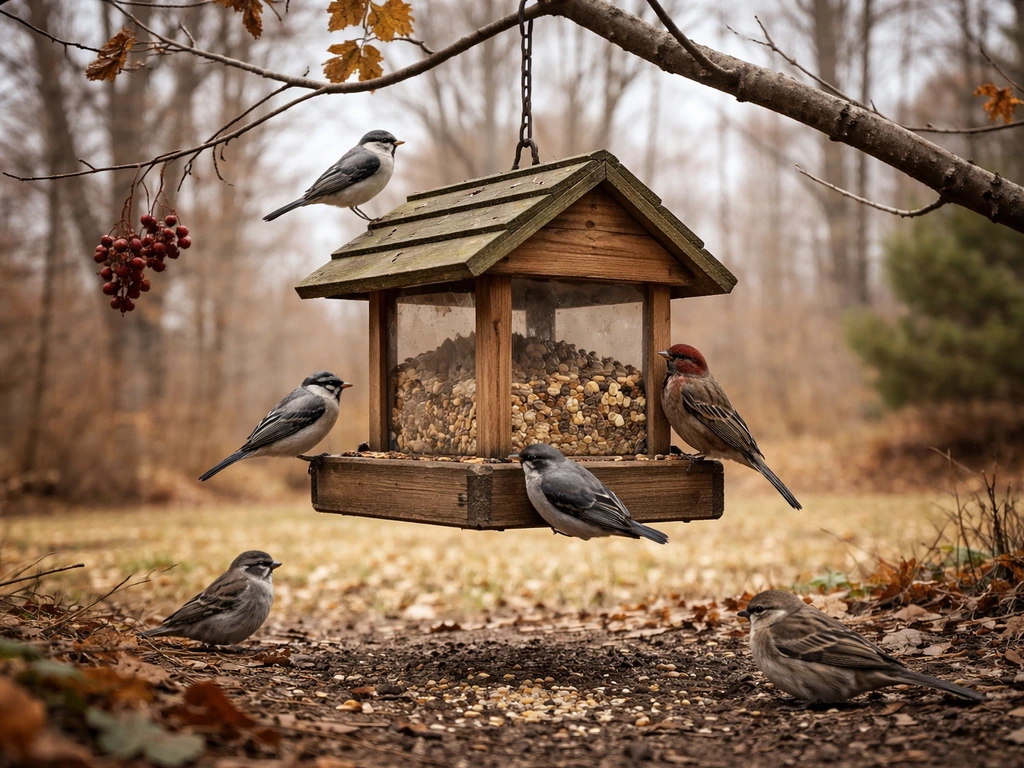
This is when the transition happens. Berries and seeds that birds relied on through fall start to run out. Insects are gone. You'll notice bird traffic at feeders picking up noticeably, often by mid-October in colder climates. This is the time to clean your feeders thoroughly, stock up on quality seed, and get suet out. Don't wait for the first hard freeze to start, birds begin establishing feeding routes before conditions get extreme.
December through February: peak filling season
These are your highest-impact months. Keep feeders well-stocked and check them every one to two days when temperatures are below freezing, especially after storms. Birds need to eat frequently to stay warm, and an empty feeder on a bitter morning is a real problem for a bird that's been relying on your yard. Refill before feeders go completely empty if you can. During stretches of ice or heavy snow, you might increase frequency to daily refills.
March and April: start tapering off gradually
As temperatures rise and natural food sources recover, you can ease back. Birds will start spending more time foraging naturally and less time at your feeder, and you'll see visit frequency drop. You don't have to pull feeders entirely, but you can reduce how much you put in, fill halfway rather than to the top, and refill less often. This is also a good time to do a thorough deep clean before shifting to summer mode.
What to put in feeders in winter
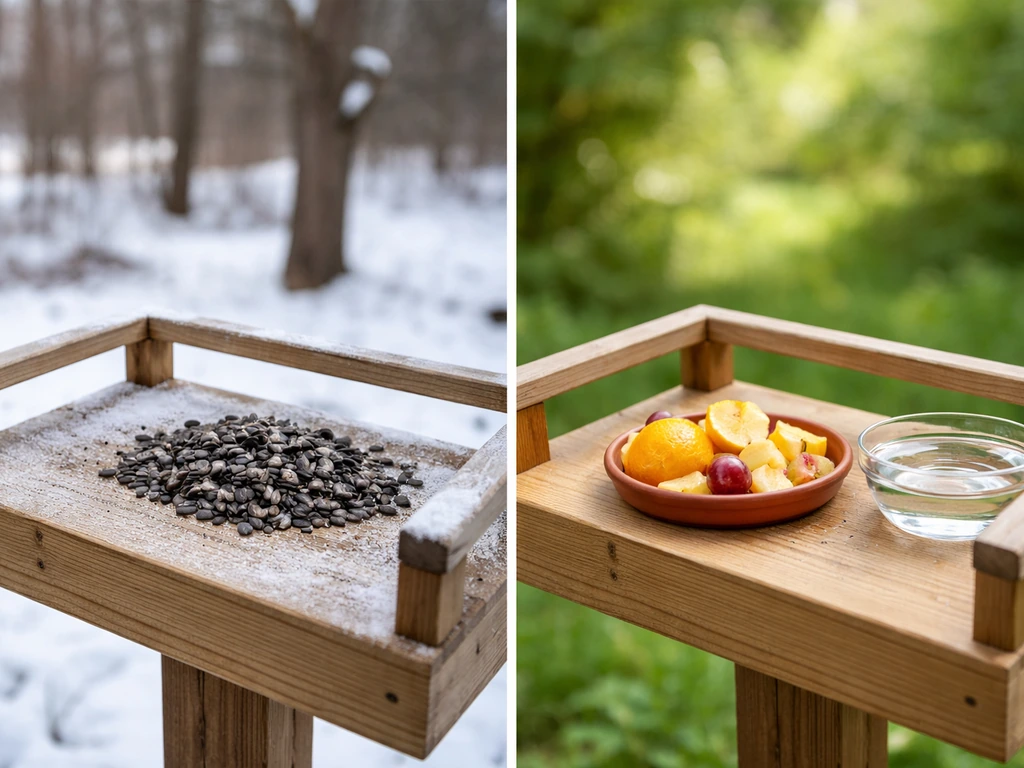
The food you choose makes a big difference in both which birds you attract and how much energy those birds actually get. Winter is not the time for the cheap mixed-seed bags. A lot of that filler (milo, red millet, cracked corn) gets pushed aside by the birds you most want to see, piles up on the ground, gets wet, and rots. Focus on high-energy, targeted options instead.
| Food Type | Best For | Notes |
|---|---|---|
| Black-oil sunflower seeds | Cardinals, chickadees, house finches, nuthatches, sparrows, blue jays | The single most versatile winter feeder food; thin shells are easy for small birds to crack |
| Suet (rendered or commercial cakes) | Woodpeckers, nuthatches, chickadees, flickers, brown creepers | High-fat, high-calorie; only offer raw suet in freezing temps—it goes rancid above freezing |
| Nyjer (thistle) seed | Goldfinches, pine siskins, redpolls | Requires a tube feeder with small ports; not useful for most other species |
| Safflower seeds | Cardinals, house finches, chickadees | Squirrels and starlings tend to ignore it—useful if you have pest pressure |
| Peanuts (shelled or in-shell) | Blue jays, woodpeckers, nuthatches, chickadees | High protein and fat; use a mesh feeder for in-shell peanuts |
| White millet (on ground or platform) | Juncos, sparrows, towhees | Best offered on a low platform or scattered on cleared ground for ground-feeders |
Suet deserves special attention in winter because it's a cold-weather powerhouse for calorie-dense feeding. Commercial suet cakes that include seeds, berries, or insects are a good choice because they add variety and hold together better than raw fat. Just know that raw suet grows rancid quickly in temperatures above freezing, so it's really a winter-only food. And skip bacon fat entirely, it's processed with salts and preservatives that aren't good for birds over time.
Feeder type matters alongside food choice. A tube feeder filled with black-oil sunflower seeds draws finches and chickadees well. A hopper-style feeder handles cardinals and jays. A suet cage with bottom-only access discourages European starlings while still giving woodpeckers and nuthatches easy access, they're perfectly comfortable hanging upside down. If you're seeing mostly unwanted birds and missing the ones you want, the feeder type is often the first thing to adjust.
Summer vs. winter: why the advice changes and when to fill in warmer months
A lot of people assume that if winter feeding helps birds, feeding year-round must be even better. If you are wondering, do you leave bird feeders out all year, the short answer is that you should adjust or pause feeding in warmer months and clean more often when you do offer food. That logic is understandable but not quite right. Summer feeding is genuinely different, and in some ways more complicated, than winter feeding.
In summer, most birds have abundant natural food available, insects, ripe berries, wild seeds. Parent birds feeding nestlings specifically need insects, which feeders can't provide. Relying on feeder seed during nesting season can actually shortchange nestlings nutritionally. Both the RSPB and BTO advise pausing seed and peanut offerings between May and October in favor of protein-rich foods and bird-friendly planting, letting birds feed naturally during the season when natural food is richest.
There's also the food-spoilage issue. Suet goes rancid quickly in warm weather, and seed sitting in a humid summer feeder grows mold fast. Hummingbird nectar can ferment within days in heat. The same feeder that's a safe, helpful resource in February can become a disease source in July if it isn't managed very carefully. If you do feed in summer, clean more frequently (every few days for nectar feeders, at least weekly for seed), offer smaller quantities so food turns over quickly, and pull back on suet entirely.
The general takeaway: winter feeding is where supplemental feeding has the most genuine impact and the most straightforward case for doing it. Summer feeding can still be done, but it takes more diligence and more restraint.
Feeder safety and maintenance that actually matter
This is the part people skip, and it's the part that determines whether your feeder helps birds or quietly harms them. Concentrated birds at feeders means concentrated disease risk. House finch conjunctivitis, salmonellosis, and other illnesses can spread quickly at feeders when feeders aren't kept clean.
How often to clean
Audubon recommends cleaning seed and suet feeders at least every other week as a baseline, with more frequent cleaning in humid or warm conditions. The RSPB recommends weekly cleaning, and that's a reasonable target if you have high feeder traffic or live somewhere damp. The CDC says monthly at minimum. My take: every one to two weeks is the practical sweet spot for most people during winter, and you should do a full deep clean whenever you notice buildup, seed clumping, or bird droppings accumulating.
How to actually clean feeders properly
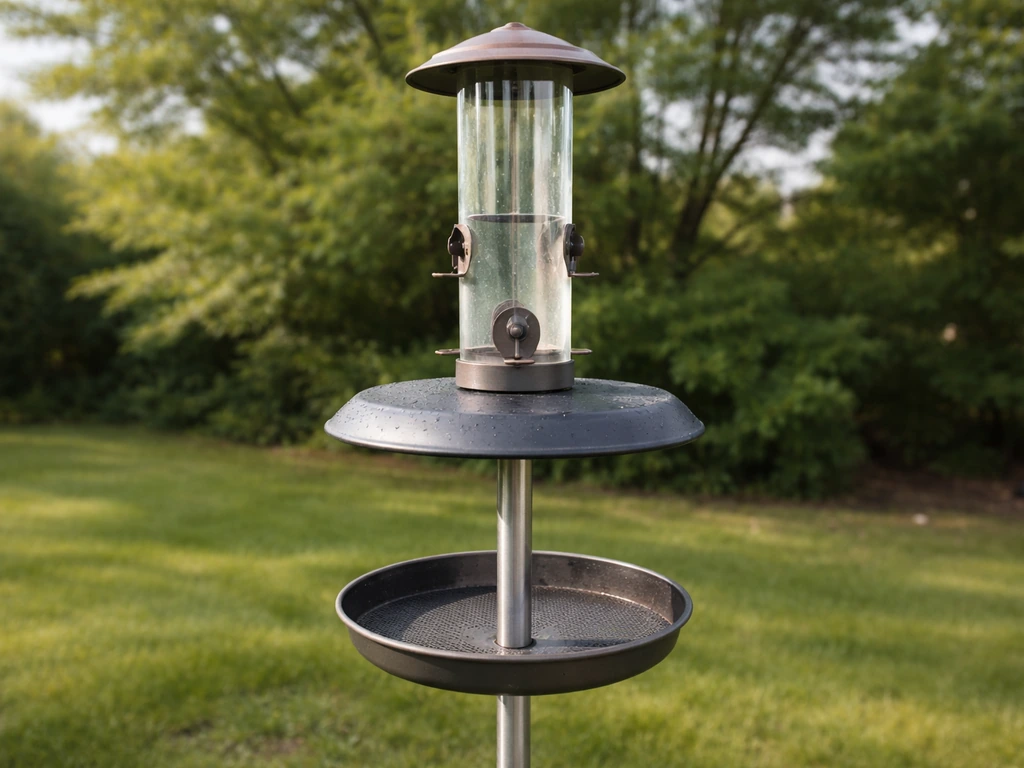
- Disassemble the feeder completely and dump out all remaining seed or food.
- Scrub with warm soapy water to remove debris, droppings, and hulls.
- Soak in a solution of 1 part bleach to 9 parts water for 10 to 15 minutes to disinfect.
- Rinse thoroughly—multiple times—to remove all bleach residue.
- Allow to dry completely before refilling. This step matters more than people realize; damp feeders grow mold fast.
- Wash your hands with soap and water after handling feeders, food, or bird baths.
Some feeders can go through the dishwasher on a hot cycle, which is a time-saver if the feeder design allows it. Don't skip the drying step either way, refilling a still-damp feeder is one of the fastest ways to end up with moldy seed by the next week.
Feeder placement and structural hygiene
Where you hang feeders affects how easy they are to maintain and how much mess accumulates. Hanging feeders over a patio or deck makes cleanup easier but puts seed hulls and droppings right underfoot. When thinking about feeder placement, you can also consider whether should bird feeders be in the sun or shade to help keep the food conditions safer and more comfortable for birds. Hanging over lawn or a designated mulch area works better for managing the debris. Sweep up fallen seed regularly, wet, decomposing seed on the ground is a disease and pest magnet regardless of how clean your feeder is above it.
Keeping out pests, unwanted visitors, and disease
One of the most common reasons people stop feeding birds in winter is that the feeder becomes a buffet for squirrels, raccoons, rats, or starlings. This is a real problem and it's worth taking seriously, both because pest pressure is unpleasant and because concentrating wildlife creates real disease and public health concerns.
Squirrels
Squirrels are persistent and creative. If squirrels are overrunning your feeder, they don't just eat your seed, they actively discourage birds from visiting. The most reliable solution is a combination of placement (feeders on a pole at least five feet off the ground and ten feet from any launching point) plus a baffle on the pole. Dome-shaped or torpedo-style baffles work well on poles. Avoid hanging feeders from branches or structures squirrels can climb. Safflower seed is a partial solution if baffles aren't possible, squirrels tend to ignore it, and many birds love it.
Rats and mice
Ground-level spilled seed is the main attractant. Sweep or rake fallen seed regularly, especially in the evening. Hanging feeders with a tray underneath to catch shells and debris helps reduce what hits the ground. If you're seeing rats, temporarily pulling feeders for a week or two breaks the habit and usually sends them elsewhere.
Starlings and house sparrows
Both species are aggressive and can dominate feeders at the expense of the birds most people want to see. For starlings, a suet cage with bottom-only access largely solves the problem since starlings can't cling upside down but woodpeckers and chickadees can. For house sparrows, halo baffles positioned around tube feeders can deter them without affecting other species. Switching to nyjer seed also helps, since house sparrows largely ignore it while finches love it.
Raccoons and larger wildlife
Raccoons are mostly a nighttime problem. Bringing feeders inside at night is the simplest prevention during periods of heavy raccoon activity. Mounting feeders on smooth metal poles with baffles also deters most raccoons. The USDA APHIS notes that feeding wildlife concentrates animals in ways that can increase disease risks for both animals and people, so it's genuinely worth keeping larger wildlife away from your feeder setup rather than just accepting their presence.
Troubleshooting: birds not showing up, or food going bad fast
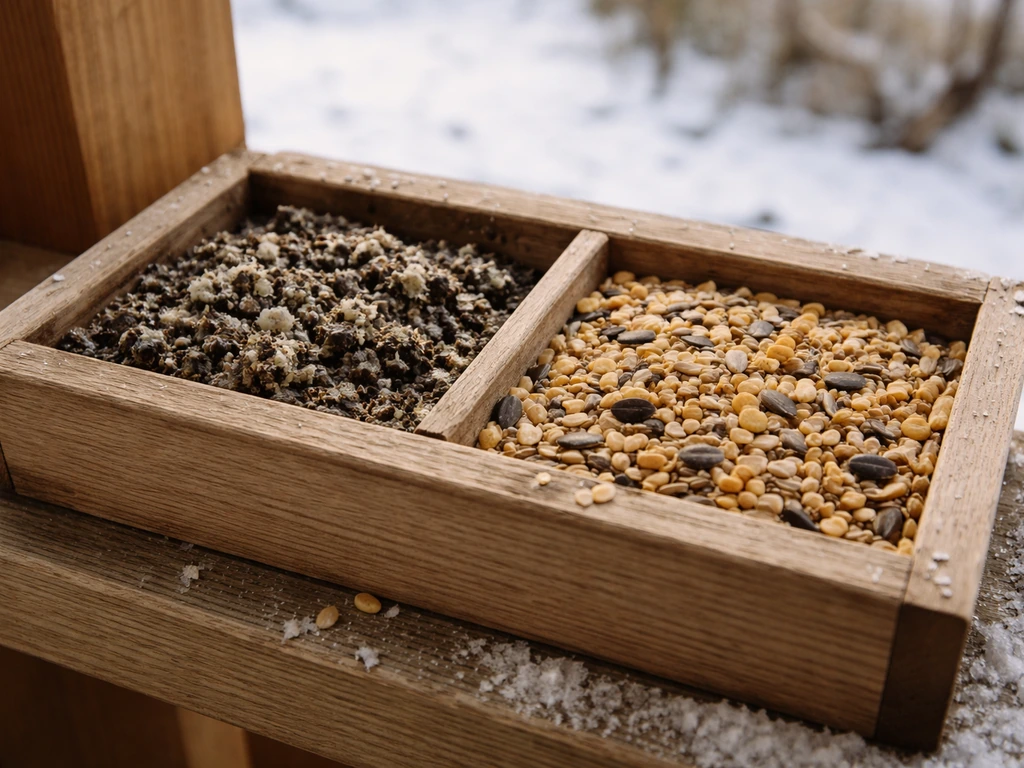
Two of the most common frustrations with winter feeders are birds that don't appear despite a stocked feeder, and seed that seems to go bad before birds get to it. Both are fixable once you know what to look for.
Birds aren't coming to the feeder
Start with food and feeder type. A tube feeder filled with milo or mixed filler seed will go largely ignored by most desirable winter birds. Switch to black-oil sunflower seeds and watch whether activity picks up within a week. If you're trying to attract specific birds, make sure your feeder style matches, cardinals and blue jays prefer platform or hopper feeders over narrow tube feeders, while finches and chickadees do fine with tubes. Ground-feeding sparrows and juncos may be there but eating dropped seed below the feeder rather than from it.
Also consider location. Feeders that are too exposed (no nearby shrub or tree cover for birds to retreat to) can deter nervous species, especially in the first week or two after you put them out. Birds need to find feeders before they use them, and they often take a week or more to discover a new feeder location. Be patient, keep the feeder stocked, and watch from a distance during morning and late afternoon when bird activity peaks.
If birds were visiting and then stopped, check for a predator. A hawk that has started hunting your yard will shut down feeder activity fast. Birds will resume once the hawk moves on, usually within a few days to a week.
Seed going bad or clumping quickly
Seed that clumps, smells sour, or shows visible mold means the feeder is holding moisture. Most common causes are: refilling over old seed without cleaning first, a feeder that doesn't drain well, or filling more than birds can eat in a few days during mild weather. The fix is to empty the feeder completely before each refill, check that drainage holes are clear, and fill only as much seed as birds will consume in two to three days rather than topping it off weekly. In cold, dry winter conditions seed will stay fresh longer, but even then, clumping is a sign to stop, clean, and start fresh. That said, if you do place a feeder in direct sunlight, keep a close eye on spoilage and clean it more often so the food does not go bad quickly can bird feeders be in the sun.
One more thing worth tracking: if you see sick or lethargic birds at your feeder, that's a signal to clean immediately and potentially take the feeder down for a week or two. A sick bird is usually a sign of a disease outbreak moving through a local population, and a crowded feeder speeds up transmission. It's better to pause feeding temporarily than to turn your yard into an amplifier for the problem.
FAQ
Can I leave bird feeders filled all winter, without refilling or cleaning?
Yes, but only if the food is fresh and the feeder stays dry. In mild spells, seed can spoil faster, so use smaller refills sized for 1 to 3 days, and clean the feeder right away if you see clumping or a sour odor. In very cold, dry weather you can stretch the refill interval, but you should still avoid “topping off” without emptying and cleaning.
How often should I refill my bird feeder in winter during freezing temperatures or after storms?
A good rule is to match refill frequency to conditions, not to the calendar. Below freezing, check every 1 to 2 days, and refill before the feeder is completely empty. After snowstorms or ice, assume you need to refill sooner because birds will arrive quickly and chew through food while they wait out the weather.
What should I do if birds stop visiting after I’ve started filling the feeder?
If birds are absent, pause adding new food for 24 to 48 hours only long enough to troubleshoot, then restart with the right seed. Common fixes are switching from mixed fillers to black-oil sunflower, adjusting feeder type (hopper or platform for larger birds), and moving the feeder to safer cover. Also give it a week, since birds often scout a new feeder location before using it consistently.
My seed seems to go bad quickly, how do I tell if it’s the food or the feeder setup?
Use this quick triage: clumping, wet seed, visible mold, and a sour smell mean you should stop, empty the feeder, and deep-clean it. Then restart with a smaller quantity and confirm drainage holes are clear. If the weather is dry and cold but the feeder stays damp, that usually points to a design or drainage problem you should correct before refilling.
What if I see sick or lethargic birds at the feeder during winter?
Take action based on severity. If you see one or two lethargic birds, clean immediately and consider taking the feeder down for a week or two while local traffic drops. If you see multiple sick birds over a short period, it’s safer to stop feeding sooner rather than later, since crowding at feeders can accelerate spread.
Can I mix foods in winter, or should I pick one type to avoid problems?
Yes, but do it in a targeted way. You can often offer suet during winter while skipping other options, or use suet alone to reduce the amount of loose seed that soils your yard. If you already have seed attracting starlings or house sparrows, switching some of your setup to suet cages with bottom-only access or to nyjer for finches can reduce the “wrong-bird” crowding.
Should I ever take feeders down during winter? If so, how long?
Remove the feeder temporarily rather than letting it empty and rot. For a single day, birds will usually find alternatives nearby, and for 1 to 2 weeks you reduce disease risk and pest attraction if cleaning is needed. If extreme weather is forecast, you can keep it as an option, but prioritize short refills and frequent cleaning over leaving it unattended.
Do I need to fill feeders to the top in winter to help birds?
Yes, if there’s a lot of natural cover and the feeder remains accessible. Birds can still benefit from winter feeding without a constant buffet, especially during cold snaps. Offer enough for 1 to 3 days, keep it clean and dry, and only increase quantity during extended storms.
How can I stop squirrels from taking over my winter feeder?
Start with placement and feeder design. Keep feeders off the ground, use pole baffles, and choose foods that your target birds actually eat, like black-oil sunflower for chickadees and finches. If squirrels are still getting in, consider shifting to safflower seed as a partial deterrent, and avoid hanging feeders from trees or structures squirrels can climb.
Are there practical ways to deal with raccoons at winter feeders without harming wildlife?
Typically, yes. During heavy raccoon activity, bringing feeders in at night is the simplest fix, and it prevents nighttime defecation and seed dumping. For longer-term control, mount on smooth metal poles with baffles. In any case, keep spilled seed cleaned up daily in problem areas.