
For most feeders, dappled shade or a spot with morning sun and afternoon shade is the sweet spot. It keeps seed dry without baking it, slows bacterial growth in nectar, and gives birds a comfortable, sheltered place to land. Full shade all day isn't ideal either, though, because food stays damp and birds often prefer a little light. The right answer depends on what you're feeding, what season it is, and the specific microclimate of your yard, but if you're standing in your yard right now trying to pick a hook location, aim for partial shade with morning sun.
Should Bird Feeders Be in Sun or Shade? Clear Placement Guide

Eleanor Hartwick
16 May 2026
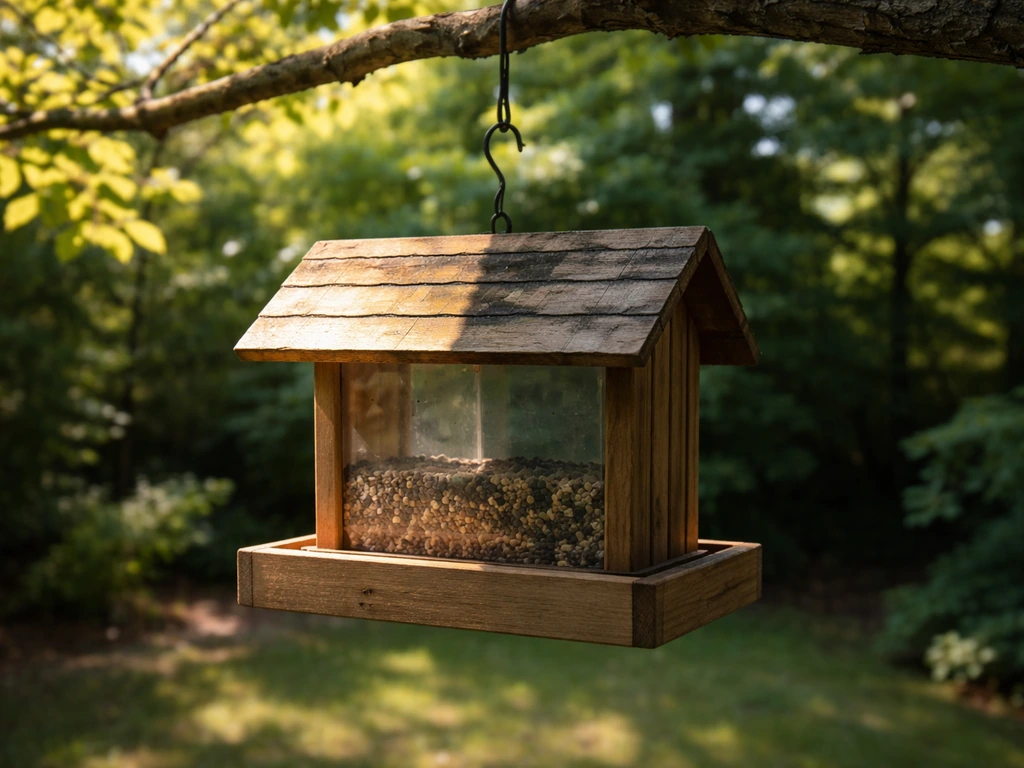
Sun vs Shade: The Quick Answer for Different Situations
There's no single universal rule, but there are clear defaults. In spring and summer, lean toward shade, especially afternoon shade. If you are wondering should bird feeders be used in summer, start by prioritizing shade and adjusting placement so food stays fresher and safer In spring and summer, lean toward shade, especially afternoon shade. .
Heat accelerates seed spoilage and causes nectar to ferment within hours. In fall and winter, a bit more sun is actually helpful: it warms the feeder area, helps dry out moisture, and makes the feeding station more visible and inviting to birds that are actively foraging for calories. In winter, aim for a placement that still gets a little sun to help keep the feeding area dry and visible to birds actively foraging a bit more sun.
If you're wondering about feeding in winter, consider using a bit more sun to keep the feeder area warm and easier for actively foraging birds to spot. That same seasonal shift matters when deciding whether you should fill bird feeders in the winter, since birds may need easier-to-find food and the moisture level changes in fall and winter, a bit more sun is actually helpful.
If you're in a mild climate year-round, partial shade with good airflow covers you in almost every scenario.
| Season | Recommended Placement | Why |
|---|---|---|
| Spring / Summer | Partial to full shade (especially afternoon) | Prevents seed spoilage, slows nectar fermentation, reduces heat stress on birds |
| Fall / Winter | Partial sun or open area with wind protection | Warmth helps birds, aids drying after rain or snow, improves visibility |
| Year-round mild climates | Partial shade with morning sun | Balances drying, hygiene, and bird comfort across seasons |
What Sun Actually Does to Your Seed and Nectar
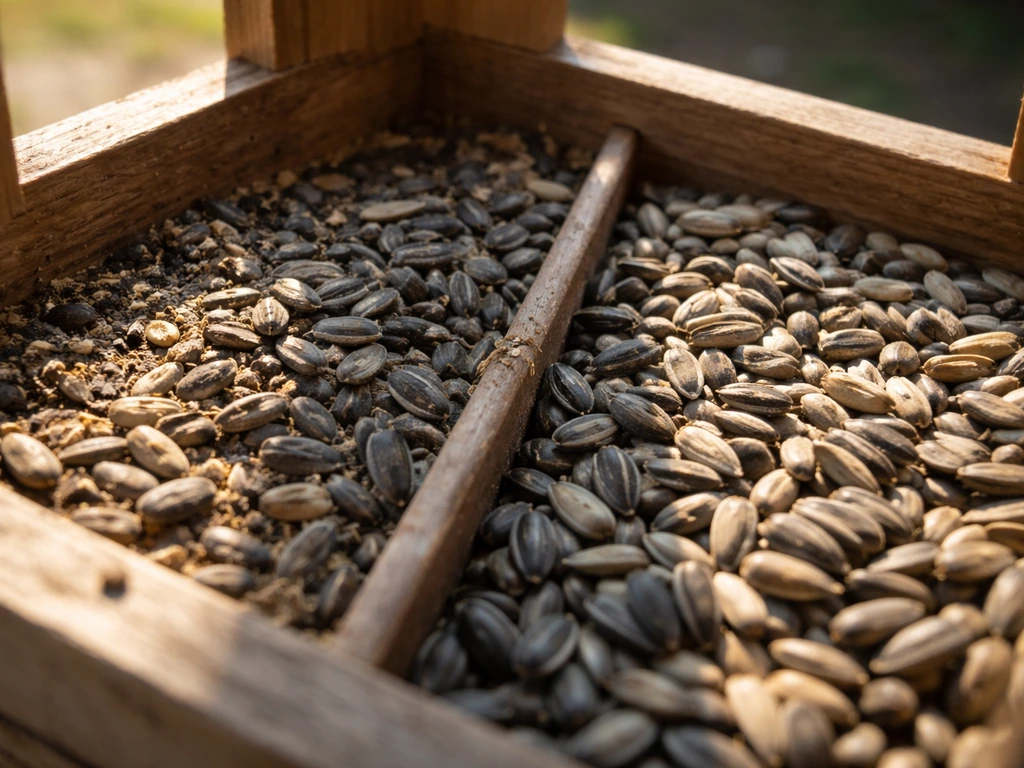
Direct sunlight is hard on food quality in ways that are easy to underestimate. UV exposure oxidizes the oils in sunflower seeds and other oily seeds fairly quickly, which is why you'll sometimes notice a rancid smell from a feeder that's been sitting in full sun for a few days. Suet melts and goes rancid even faster. Nectar (the sugar-water mix in hummingbird feeders) is particularly vulnerable: on a hot sunny day, the liquid can reach temperatures that trigger rapid yeast and bacterial growth within four to six hours. What looks like fresh nectar by noon can be a fermented soup by mid-afternoon.
Dry seeds in a feeder with good airflow hold up better than nectar, but they're not immune. A mesh or tube feeder baking in the July sun will heat the seed inside to well above ambient temperature, speeding up moisture loss (which sounds good) but also triggering mold if any humidity is trapped inside. Morning sun followed by afternoon shade is useful here: the morning warmth dries out any overnight condensation, and the shade prevents the afternoon heat from turning your feeder into an oven.
Heat, Mold, and Disease: How Sun Raises the Risks
Feeders in full sun during warm months are genuinely higher-risk from a bird health standpoint. Bacteria and fungi thrive in warm, moist conditions, and a sun-warmed feeder with any trapped humidity ticks both boxes. Audubon explicitly recommends increasing cleaning frequency during hotter and more humid weather, and hummingbird feeders are treated as a special case because sugar solutions are described, without exaggeration, as a petri dish for bacteria. If you've ever opened a hummingbird feeder that's been sitting in the sun for three or four days in summer, you know exactly what that means.
Mold is the most visible problem. Black or green mold growing on seed, in ports, or on perches is a sign that moisture and warmth are combining in exactly the wrong way. Penn State Extension recommends never using moldy seed and managing how much food you put out so birds can clear it within a day, particularly on open platform feeders. A full-sun platform feeder in summer is almost guaranteed to develop moldy patches unless you're refilling daily with very small amounts. Moving it to shade, or switching to a covered platform, makes that much more manageable.
Disease spread at feeders is a real concern and placement is part of the equation. Crowded feeders in warm spots encourage more bird contact with contaminated surfaces. You don't need to be alarmist about it, but if you've had a local outbreak of salmonellosis or other feeder-related illness in your bird population (watch for lethargic birds sitting on or near the feeder), moving to a cooler, shadier spot and increasing cleaning frequency is one of the first practical steps to take.
The Case for Shade, and Where It Falls Short
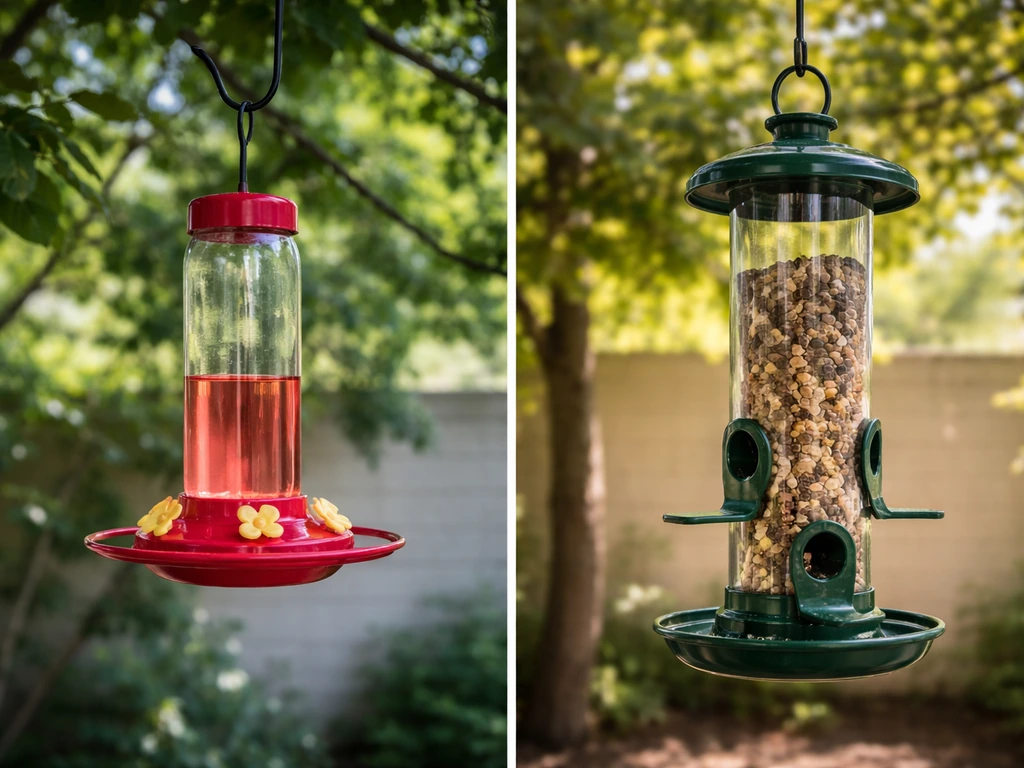
Shade keeps food fresher longer, reduces cleaning frequency, and makes birds feel safer because they associate tree canopy with shelter from predators. A feeder hung under a tree or at the edge of a wooded area tends to get steadier, calmer traffic than one sitting exposed in the middle of a lawn. Birds are less stressed when they can duck into cover quickly if a hawk flies over.
That said, full shade has real downsides. Feeders under dense tree canopy stay damp for longer after rain, which is exactly the condition that promotes mold and bacteria. Falling leaves, bird droppings from roosting birds overhead, and tree sap can all foul your feeder more quickly in a heavily shaded location. There's also the visibility factor: birds find feeders partly by sight, and a feeder that's invisible from above or from nearby perches will get less traffic initially. Deep shade can also mean poor sight lines for you, which makes it harder to enjoy watching and to notice when the feeder needs attention.
The practical middle ground is placement at the edge of a tree's canopy rather than directly underneath it, or near a shrub rather than inside it. You get the protection and the perching options without the drip-zone moisture problem.
Placement by Feeder Type and Species
Not all feeders need the same placement, and getting specific here will save you a lot of trial and error.
Hummingbird (Nectar) Feeders
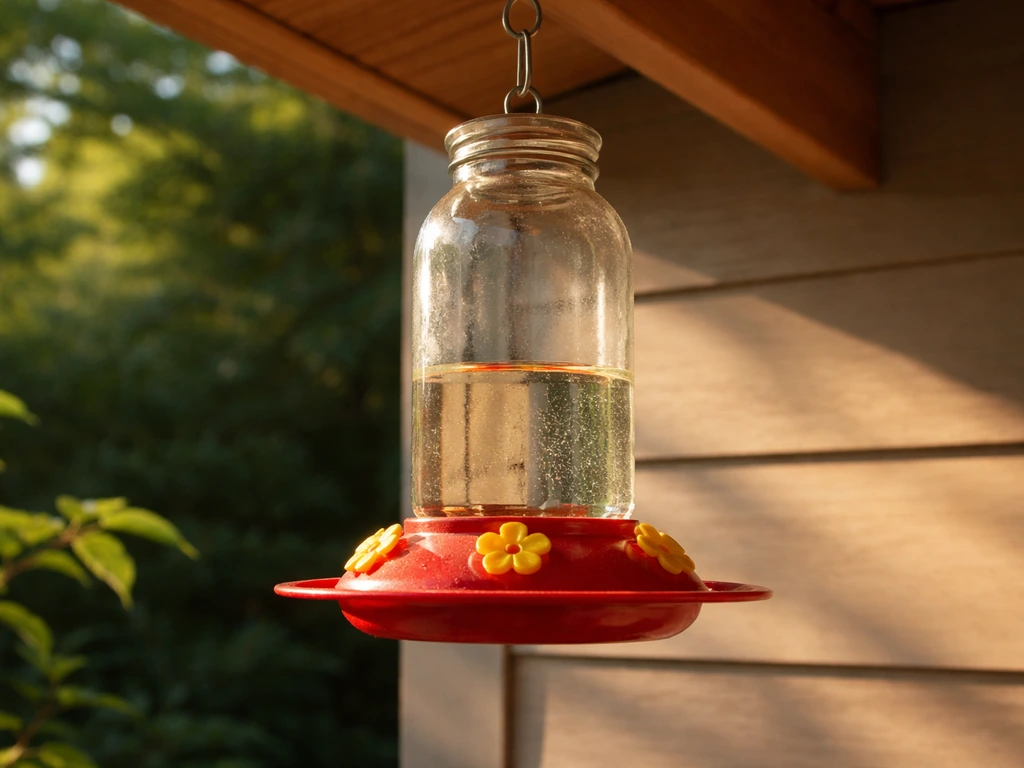
These need shade more urgently than any other type. In summer, a hummingbird feeder in full sun can go bad in under 24 hours in hot climates. Hang them in a spot that gets morning light (hummingbirds are active early and like warmth then) but is shaded by early afternoon. Change the nectar every two to three days in warm weather, and every day if temperatures are above 85 to 90 degrees Fahrenheit. A red feeder in light shade is still highly visible to hummingbirds; they will find it.
Seed Feeders (Tube, Hopper, and Platform)
Tube and hopper feeders with enclosed seed compartments handle sun better than open platform feeders, but they still benefit from partial shade in summer. Platform feeders should absolutely be in partial to full shade in warm months and restocked daily with small amounts so seed doesn't sit and spoil. For seed feeders in winter, partial sun is fine and even helpful for attracting activity and keeping the feeding area free of ice.
Suet Feeders
Suet is rendered fat, and it melts. In temperatures above 70 to 75 degrees Fahrenheit, plain suet will turn greasy, drip, and go rancid quickly in full sun. If you're feeding suet in warmer months, move it to a shaded, north-facing spot or switch to no-melt suet formulas designed for warmer weather. In winter, suet in partial sun is perfectly fine and woodpeckers, nuthatches, and chickadees will hammer it regardless of light level.
Finch Feeders (Nyjer/Thistle)
Nyjer seed dries out quickly and loses palatability when exposed to too much sun and heat. Goldfinches and other finches will refuse stale nyjer. A lightly shaded spot with good airflow keeps this seed fresh longer. Check it weekly by squeezing a few seeds: they should feel slightly oily, not dried out and dusty.
Seasonal Adjustments and Microclimate Factors That Matter as Much as Sun
Sun and shade are the headline, but microclimate details often matter just as much. Here's what to actually observe in your specific yard:
- Wind exposure: A feeder that swings constantly in the wind loses seed, spills nectar, and discourages birds from landing. Even a sunny spot with a windbreak (a fence, hedge, or shed wall) can be better than a calmer but fully exposed shaded area. In winter especially, wind chill at the feeder matters to birds.
- Rain and drip zones: Positioning feeders under roof overhangs, porch eaves, or the outer edge of a tree canopy keeps food drier after rain without requiring full shade. This is one of the most underused placement tricks.
- Window distance: The standard guidance is to place feeders either within 3 feet of a window or more than 30 feet away. Close placement means birds don't build up enough speed to be seriously injured if they hit the glass; far placement means the window isn't in their flight path at all. The worst zone is 5 to 20 feet away.
- Patio and foot traffic: Feeders near patios or high-traffic areas work better if there's some cover between the feeder and the activity. Birds habituate to predictable human movement but will flush from sudden disturbance.
- Tree cover type: Deciduous trees give you natural seasonal adjustment: shade in summer when leaves are out, sun in winter when they've dropped. This is genuinely useful and worth taking advantage of if you have the option.
Seasonal movement of feeders is worth doing deliberately. Moving a feeder a few feet each spring and fall takes five minutes and can meaningfully improve food quality, bird traffic, and your own maintenance burden. Many experienced feeders keep two or three hook locations and rotate between them.
Cleaning and Maintenance: How Placement Changes Your Routine
Placement determines how often you need to clean, not just whether cleaning is necessary. Here's the practical reality:
- Full sun in summer: Clean seed feeders every 3 to 5 days, nectar feeders every 1 to 2 days. Watch for seed clumping at ports, which signals moisture and early mold.
- Partial shade year-round: Clean seed feeders every 5 to 7 days, nectar feeders every 3 to 4 days in warm weather and weekly in cool weather.
- Full shade in a humid climate: Don't let that fool you into cleaning less often. High humidity in shade can mean faster mold growth than a breezy partial-sun spot.
Audubon's guidance is to dry feeders completely before refilling, and this is worth taking literally. A feeder that's been rinsed but refilled while still wet is already starting the mold clock. If you're cleaning with a dilute bleach solution (1 part bleach to 9 parts water is the standard), rinse thoroughly and let the feeder air-dry fully, ideally in a breezy spot, before adding fresh seed or nectar.
Ground management matters too, especially under platform feeders and tray feeders. Hulls and spilled seed on the ground under a sun-baked feeder will develop mold and fungal growth that can sicken birds that forage on the ground, including sparrows, doves, and juncos. Rake or sweep the area under feeders at least weekly in summer. The RSPB recommends feeding in ways that keep food dry to prevent spoilage and reduce disease risk at the ground level as well as at the feeder itself.
Troubleshooting: When Birds Avoid It, Seed Molds, or Pests Move In
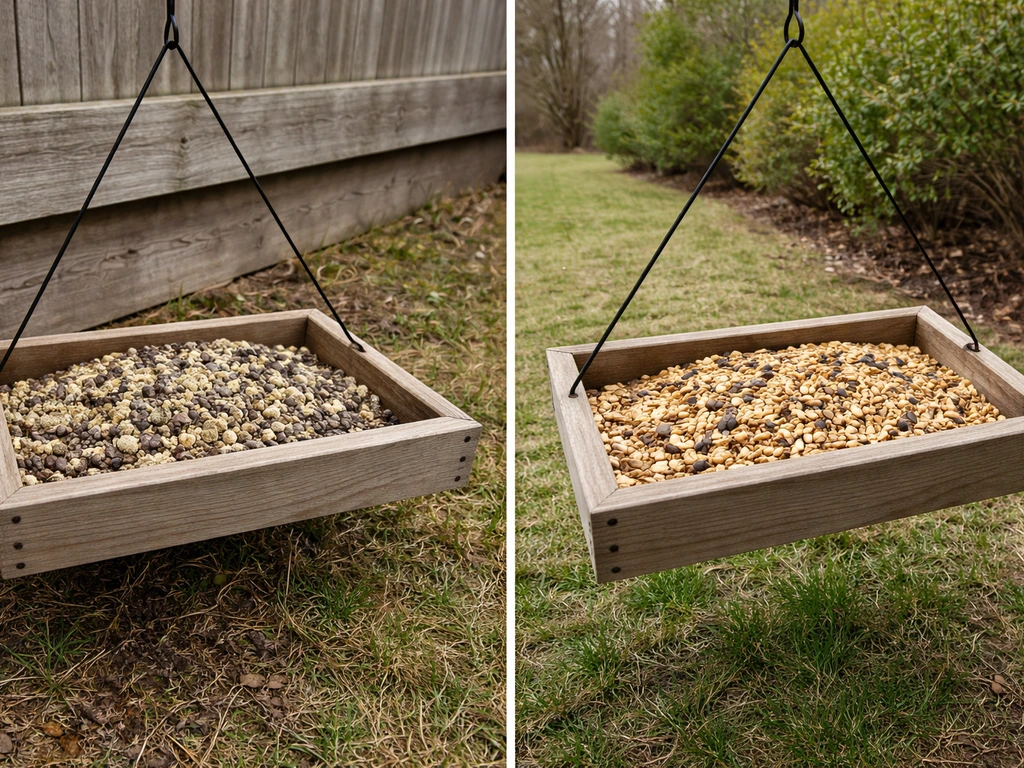
Birds aren't using the feeder
First, check placement relative to cover. A feeder in the middle of an open lawn with no nearby shrubs or trees is uncomfortable for most birds: they want an escape route. Move it within 10 feet of a bush, hedge, or tree. If it's already near cover, check whether it's in a spot with too much foot traffic or disturbance. Also consider that birds may simply not have discovered it yet: new feeders can take one to four weeks to find regular visitors. If it's been longer than that, try adding a second feeder type or moving to a different part of the yard.
Seed is molding quickly
This is almost always a moisture and airflow problem. If you're seeing mold within a few days, suspect one of these: the feeder is in too much shade with poor airflow, it's under a drip zone (tree branches, roof edge), you're overfilling so seed sits too long, or the seed you're buying is already old or damp. Move the feeder to a spot with more airflow, reduce fill volume so birds clear it within two days, and check your seed storage: it should be in a sealed container in a cool, dry place, not a bag left open in a warm garage.
Ants are getting into the nectar feeder
Ants follow warmth and sweet scent. A sun-warmed nectar feeder is especially attractive. The most effective fix is an ant moat: a small water-filled cup that attaches above the feeder on the hanging wire, which ants can't cross. Make sure there are no branches or structures within ant-crawling distance of the feeder. Moving a hummingbird feeder further from a sunny wall or fence can also reduce ant traffic.
Squirrels are emptying it
This is a placement problem as much as a feeder hardware problem. Squirrels are more active in open, sunny, low-traffic areas where they feel safe. A feeder near a window or door with regular human activity, or in a spot with fewer ground-level approach routes, can reduce (not eliminate) squirrel pressure. Baffles, pole-mounting, and squirrel-resistant feeder designs are the main tools, but placement on a freestanding pole at least 5 feet off the ground and 10 feet from any jump-off point is the baseline.
Nectar is fermenting too fast
Move the feeder out of direct afternoon sun immediately. If you can't do that, reduce the fill volume so you're replacing it daily rather than letting it sit. A smaller feeder that you refill more often is almost always better than a large one that sits in the heat for four days. In peak summer heat above 90 degrees Fahrenheit, every-other-day changes are the minimum; daily is better.
Where to Start If You're Setting Up for the First Time
Pick a spot that has morning sun and afternoon shade, is within 10 to 15 feet of some shrubs or trees for cover, is at least 10 feet from any squirrel jump-off point, and is either within 3 feet of a window or more than 30 feet away. In general, you should avoid leaving bird feeders out year-round without changing how you place and clean them as temperatures shift.
Hang a covered tube or hopper feeder with sunflower seed, watch it for two weeks, and track what's happening: Are birds using it? How fast is the seed going? Is anything molding? The answers to those questions will tell you whether to move it, adjust fill volume, or change cleaning frequency.
Start simple, observe actively, and adjust from there. That's honestly how every experienced feeder-person works.
FAQ
What should I do if I only have a full-sun spot for bird feeders? Provide a practical workaround.
If your yard has only full sun available, prioritize covered or enclosed designs (tube or hopper) and use smaller fill amounts. Plan on checking at least once daily in hot weather, because even covered feeders can heat up and speed spoilage, especially for nectar and oily seeds.
Does “afternoon shade” matter, or is any shade during the day enough? What about late-day sun?
Yes. Evening sun and night warmth can matter just as much as midday sun, because fermented nectar and mold often show up after hours of sustained warmth. If possible, move the feeder so it avoids late-day sun, not just the hottest part of the day.
Is “under a tree” always good for shade-loving birds, or can it make things worse?
Try placing the feeder where birds can approach from nearby cover, without being hidden under heavy foliage. Good middle ground is the edge of a shrub or the border of tree canopy, because deep shade increases dampness after rain and leaves less airflow.
How far from a window or walkway should I place the feeder if I’m trying to optimize sun and shade?
Yes for safety. Keep a feeder away from windows where birds can collide and also away from busy pedestrian paths that stress birds. A common approach is to balance visibility for you with a clear retreat route for birds (nearby shrubs or trees).
If my feeder still gets moldy, how do I decide whether to change shade position or how much I fill it?
Do it by monitoring, not by guessing. If seed is developing visible mold within a few days, or if nectar smells fermented, you need more shade, better airflow, or smaller fill volume. Changing only the sun exposure without adjusting fill amount often doesn’t fix the root cause.
Are platform feeders treated differently than tube or hopper feeders when deciding sun versus shade?
For platform feeders, the risk is higher because seed and hulls can sit longer and traps moisture and humidity. In warm months, use partial to full shade and restock daily with small amounts, then reduce fill volume again if birds do not clear it quickly.
In winter, should feeders be placed in sun or shade if the main issue is wetness and ice, not heat?
Winter changes the goal from “prevent spoilage” to “avoid dampness and maintain access.” Partial sun is usually fine, but if the spot stays wet from thaw-refreeze cycles or snow melt, more sun can help dry it out. If you see moisture or ice buildup, shift to the sunnier side and keep food fresh and dry.
Can a feeder still overheat even when it’s technically in shade? How do I tell?
Yes, especially with hummingbird feeders. If your nectar feeder is in shade but still in a warm microclimate (near a hot wall, fence, or reflective surface), it can still overheat. Check temperatures by observation (does it look cloudy or smell sour by early afternoon), then move farther from sun-reflecting surfaces.
What’s the best way to handle ants on a feeder that’s in partial shade with morning sun?
If you see ants, it usually means the feeder or its lines are providing an accessible route. Use an ant moat, ensure there are no nearby branches or ledges ants can use as bridges, and keep the feeder positioned so nothing creates a “crawl path” from the ground.
After I move a feeder, how should I clean and refill to prevent mold from coming back?
If mold is showing up quickly, don’t just move it and refill immediately. Dry the feeder completely before refilling, use smaller fill amounts so it gets cleared faster, and improve airflow by moving away from drip zones and dense leaf cover.