Owls do not eat from bird feeders. They have zero interest in seeds, suet, or nectar. What they are interested in is everything that your feeder attracts: sparrows, finches, mice, and voles that come to clean up spilled seed on the ground. If you have spotted an owl near your feeder, it is almost certainly treating your yard as a hunting ground, not a dining room.
Do Owls Eat From Bird Feeders? What to Do Tonight

Eleanor Hartwick
17 Jun 2026
Do owls typically eat from bird feeders
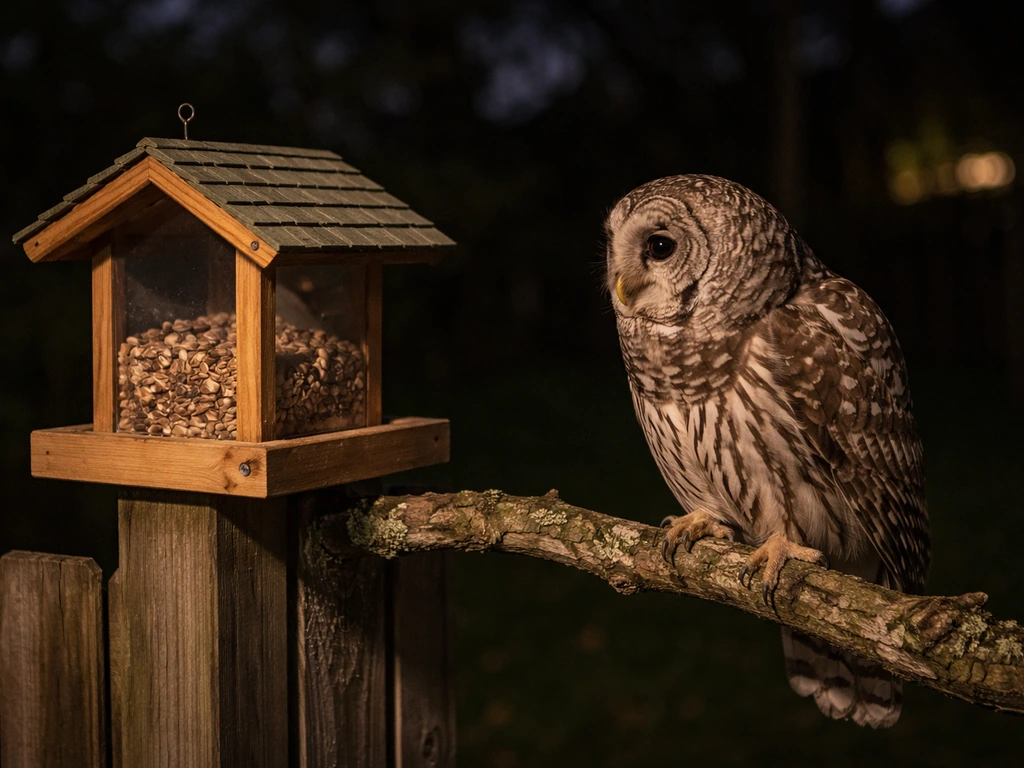
No owl species feeds on bird seed, grain, or any plant-based food. Owls are strict carnivores, and their diet is built entirely around live prey: small mammals, songbirds, insects, frogs, and occasionally fish depending on the species. The reason this question comes up so often is that people genuinely do see owls near feeders, sometimes sitting on a shepherd's hook or perching in a nearby tree for extended stretches. That behavior looks a lot like feeding, but it is pure predation strategy.
Here is what is actually happening: your feeder creates a reliable congregation of prey. Songbirds cluster at seed ports. Mice and voles show up after dark to scavenge spilled millet and sunflower husks from the ground beneath the feeder. An owl learns this quickly and returns to the same yard night after night because the hunting is predictable. Research published in 2024 found experimental evidence that supplemental feeding does increase predator presence over time, but through exactly this indirect mechanism: more prey birds arrive first, then predators follow. Research published by BirdWatchingDaily explains that bird feeders may attract owls indirectly because owls hunt prey drawn to feeders rather than because owls are seeking the seed itself blank" rel="noopener noreferrer">supplemental feeding does increase predator presence over time. Your feeder did not attract the owl directly. It attracted the owl's dinner. Doves can also visit bird feeders, but what they eat there depends on the feeder type and the seeds you offer.
Anecdotal accounts from experienced birders describe owls perching at feeder poles and consuming freshly caught mice right there in the yard. The feeder itself is incidental. It is simply a convenient structure that happens to be near where the prey is concentrated.
Why an owl might investigate a feeder area
There are a few overlapping reasons an owl shows up in your feeder zone, and understanding which one applies to your situation changes what you do next.
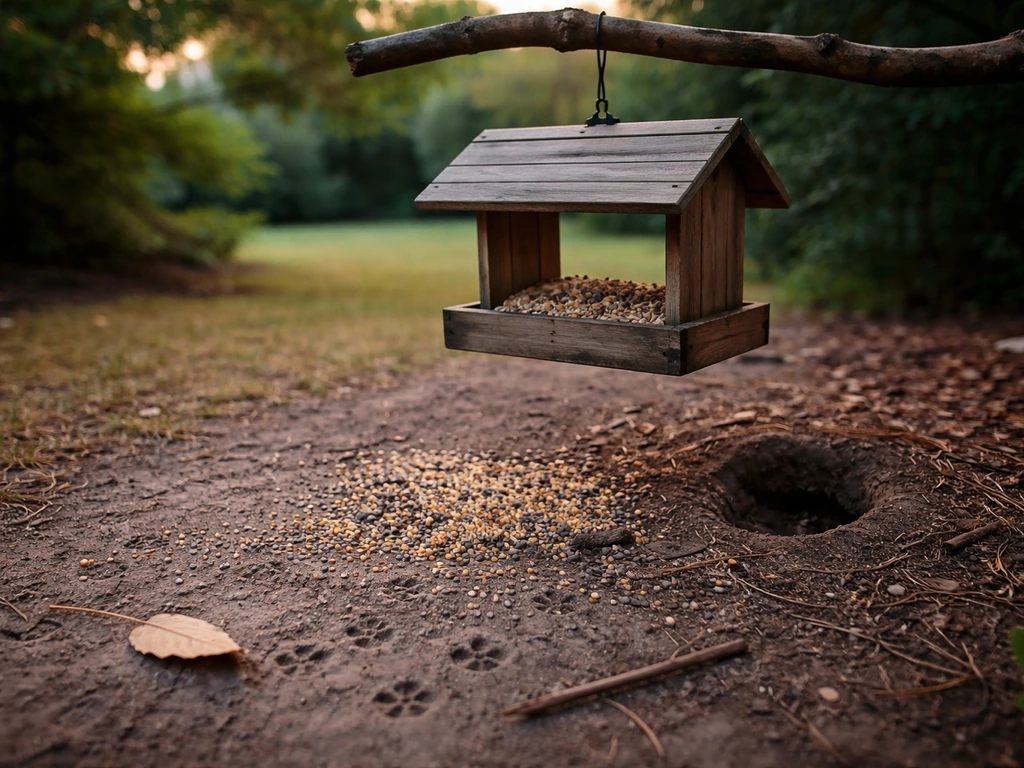
- Rodent activity: Spilled seed beneath feeders is one of the most reliable rodent attractants in any suburban yard. Mice and voles feed nocturnally, and owls such as barn owls and screech-owls specifically key in on this kind of ground-level rodent traffic.
- Songbird hunting: Larger owls, particularly great horned owls and barred owls, actively hunt songbirds. A feeder full of chickadees, sparrows, and finches at dusk is a real target. Owls hunt at night partly to avoid competing with daytime raptors like hawks, so that window right around dusk when birds are still feeding is a prime strike opportunity.
- Perch access: Feeder poles, shepherd's hooks, fence posts, and nearby tree branches all function as hunting perches. Owls are sit-and-wait predators. They scan from an elevated position and drop onto prey below. Your feeder infrastructure may be offering them ideal vantage points.
- Territorial or vocal behavior: Sometimes what sounds like a hunting owl is actually a territorial display, courtship calling, or a young owl begging for food from a parent. Owls call at different times of day and year for these social reasons, and it can look and sound like the bird is actively patrolling your yard when it is doing something entirely unrelated to your feeder.
- Opportunistic injured or sick bird predation: Birds that are already weakened by disease or injury tend to linger near feeders rather than flee quickly. An owl may take an easy target without much active hunting at all.
How to tell an owl vs other feeder visitors
People frequently misidentify the predator visiting their feeder. Before you restructure your whole setup, it is worth making sure you are dealing with an owl and not a hawk, a cat, a raccoon, or even a squirrel causing a commotion. The time of day is usually your biggest clue: owls are almost exclusively active from dusk through dawn. If the predation incident happened in full daylight, you are almost certainly looking at a Cooper's hawk or sharp-shinned hawk, which are the most common feeder predators in North America according to Project FeederWatch data.
| Characteristic | Owl | Hawk (e.g., Cooper's/Sharp-shinned) | Cat | Raccoon |
|---|---|---|---|---|
| Active time | Dusk to dawn | Daytime | Any time, often dusk/dawn | Primarily nocturnal |
| Body shape | Round head, no visible neck, large eyes facing forward | Sleek, long tail, visible neck, side-facing eyes | Four-legged, low silhouette | Masked face, ringed tail, hunched posture |
| Flight style | Silent, moth-like flapping | Fast, direct, accipiter flap-flap-glide pattern | N/A | N/A |
| Sound | Hooting, screeching, or silence | Rapid kek-kek-kek alarm call | Hissing or silence | Chittering, heavy rustling |
| Evidence left behind | Pellets (compacted fur/bones) on ground | Plucked feathers in a pile | Scattered feathers, puncture wounds | Knocked-over feeder, scattered seed |
One identification trap worth knowing: the northern hawk-owl can look strikingly similar to a Cooper's hawk in flight, enough that even experienced birders get thrown. If you are in northern North America and see what looks like a hawk during daylight but with an unusually round-headed profile, double check before assuming it is definitely one or the other.
What to do if you're worried about feeder safety
First, keep this in perspective. Project FeederWatch's winter predation analysis found no strong evidence that bird feeders expose visiting birds to higher predation risk compared to areas without feeders. Project FeederWatch’s winter feeder-predation analysis also included sharp-shinned hawks and Cooper’s hawks among recorded predators, and overall found that feeding environments do not appear to expose birds to higher predation risk than the absence of feeders blank" rel="noopener noreferrer">Project FeederWatch's winter predation analysis found no strong evidence that bird feeders expose visiting birds to higher predation risk compared to areas without feeders.. However, the question of whether cardinals ever eat from feeders depends more on the birds’ comfort and food availability than on predator risk do cardinals eat from bird feeders. Songbirds face predation pressure everywhere in their environment. Your feeder is not uniquely dangerous. That said, if you have observed an owl actively returning to your yard and taking birds or you want to reduce the risk proactively, there are concrete things you can do right now.
- Take the feeder down for a few days. This is genuinely one of the most effective short-term interventions. A persistent hunting owl learns your feeder schedule. Removing the feeder breaks that pattern and disrupts the reward cycle. Most wildlife guides recommend at least a few days to a week to reset the behavior.
- Clean up ground spillage immediately. The biggest nocturnal predation risk is rodents under your feeder attracting owls after dark. Sweep or rake spilled seed daily. Switching to no-mess seed blends (hulled seeds, no shells) dramatically reduces ground debris.
- Check for sick or injured birds and remove them from the feeder area. Vulnerable birds near feeders are easy targets. If you notice birds with puffy feathers, labored breathing, or discharge around the eyes (signs of conjunctivitis or other illness), take the feeder down, clean it thoroughly, and keep it down for at least a week per disease-control guidance from wildlife agencies. This also reduces the easy prey that owls key in on.
- Vary your feeding schedule. If you feed primarily at dawn, try shifting to mid-morning. This moves the peak congregation of birds away from the dusk/dawn window when owls are most active.
- Move the feeder to a more exposed location temporarily. Owls prefer to hunt near cover. A feeder in a wide-open area gives prey birds more reaction time and gives the owl fewer ambush angles.
Feeder setup changes to discourage predation (without harming birds)
If you want structural changes rather than just temporary fixes, these are the modifications worth making to your feeder setup.
Remove hunting perches near the feeder
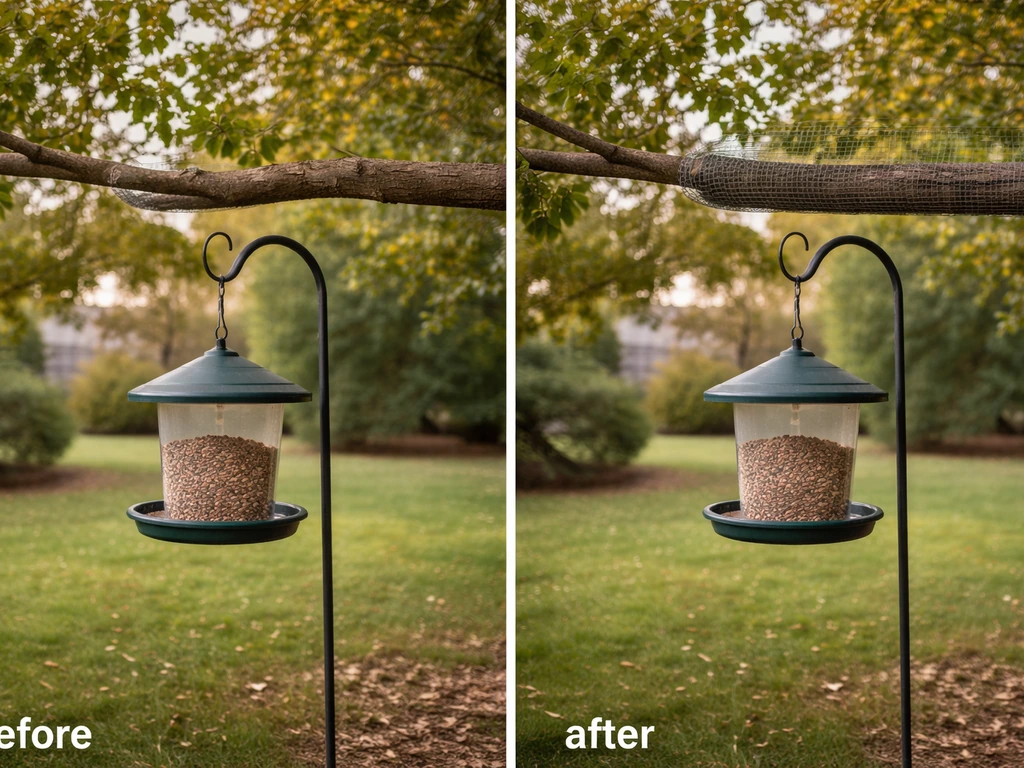
Owls are sit-and-wait hunters. They need an elevated perch with a clear sightline to prey below. Walk your yard and identify branches, fence tops, deck railings, or structures within about 15 to 20 feet of your feeder that an owl could use as a launch point. Trimming overhanging branches does double duty: it removes perch access and also eliminates the cover that lets a bird of prey approach undetected.
Adjust feeder placement and height
The National Wildlife Federation recommends placing feeders in locations that do not provide hiding places for predators. For owl risk specifically, think about vertical clearance and open sightlines around the feeder rather than tight placement next to fences or dense shrubs. Hanging feeders closer to a window (within 3 feet) actually reduces collision risk for the birds and can make it harder for a large owl to maneuver in for a strike. Positioning feeders at least 10 feet from dense shrubs removes ground-level ambush cover without eliminating the shrubs entirely, since nearby cover helps small birds escape aerial threats during the day.
Use feeders with physical protection built in
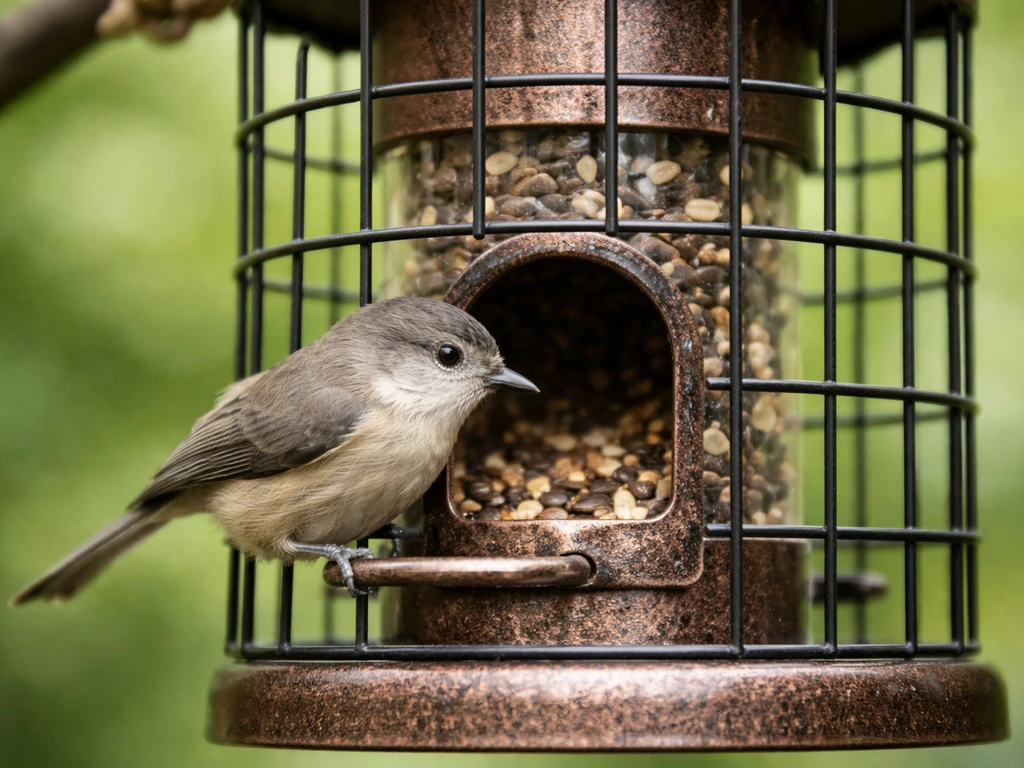
Tube feeders with caged wire surrounds are the most effective design for protecting small birds at the feeder itself. The cage allows chickadees and finches through but blocks larger raptors from getting close to birds while they are eating. These are widely available and worth using as your primary feeder style if owl or hawk predation is a repeated concern.
Manage the ground zone
Tray feeders and ground spill create the biggest nocturnal predation risk because they attract rodents. If you use a tray feeder, attach it directly to your pole and bring it inside at dusk rather than leaving it out overnight. Switch from loose-shell seeds like standard sunflower mix to hulled or no-mess varieties to minimize what falls. Because robins are ground-feeding birds, they usually do not visit bird feeders the way many other species do why don't robins eat from bird feeders. Baffles on the feeder pole serve double duty here: they deter squirrels and raccoons from climbing up, which means less feeder disruption and less spilled seed on the ground overall.
Owl-friendly considerations and balanced bird feeding
Here is something worth sitting with: owls visiting your yard are a genuinely good sign from an ecological standpoint. The Pennsylvania Game Commission and most wildlife agencies describe owls as beneficial predators, specifically because they keep rodent populations in check. If an owl is hunting mice under your feeder, it is doing work that keeps those rodent numbers from getting out of hand. That is a real benefit, not just a silver lining.
The one thing you should actively avoid is trying to attract owls deliberately to your feeder area or baiting them. Audubon is direct on this: feeding or baiting wild owls habituates them to humans in ways that tend to go badly for the owl. A habituated owl loses its natural wariness, which puts it at risk around roads, pets, and people who are less owl-friendly than you are. Let owls hunt on their own terms.
The broader picture with bird feeding is that the risks are species-dependent and context-dependent. Research confirms that predator effects around feeders vary by predator type rather than following a uniform pattern. A screech-owl hunting mice in a rural yard is a very different situation from a great horned owl returning nightly to a dense suburban feeder setup where songbirds are packed in close together. Your response should match your specific situation, not a blanket rule. Do woodpeckers eat from bird feeders too, especially when the setup offers suet or seeds they can access.
If you are already thinking about which birds your feeder is attracting and whether their behavior changes risk, that same logic applies to other species too. Birds like doves and robins interact with feeders very differently from finches and sparrows, and each creates a somewhat different predation profile in terms of size, ground feeding habits, and activity timing. The more you observe what is actually visiting your yard and when, the better you can tune your setup to reduce risk without stopping feeding altogether.
The bottom line is this: an owl near your feeder is not eating your seed and is not a disaster. Do crows eat from bird feeders, and how can you tell if they are just visiting or actively feeding? It is a predator doing what predators do in a spot that happens to have reliable prey. Reduce the rodent draw under your feeder, remove convenient hunting perches, consider a caged tube feeder, and take the feeder down for a few days if a specific owl keeps returning. Those four steps will make a real difference without requiring you to give up feeding birds entirely.
FAQ
If owls do not eat bird seed, why do they hang around the feeder so long at night?
They are hunting whatever the feeder attracts. Seed activity brings in small birds, and the spilled seed under the feeder brings rodents. Owls can sit in one spot for extended periods because prey movement in that area is predictable, even if they never touch the feeder itself.
Can I test whether an owl is actually hunting under my feeder or just passing through?
Yes. Check for fresh pellets (small, dark, birdlike droppings with a strong scent), and look for mouse or songbird remains on the ground or near the base of the feeder. Also note whether the owl returns on multiple nights to the same perch location, that pattern usually means it is actively hunting the site.
What should I do if I see an owl during daylight near my feeder?
Daytime sightings are often not owls. Many common feeder predators that hunt in daylight are hawks, and the body shape and head profile matter. If you are unsure, avoid changing your entire feeder setup right away, first confirm the species and timing pattern.
Will removing the feeder solve the owl problem permanently?
It can, but not always. If the owl is learning that prey is available under that specific hunting perch, taking feeders down for a few days can break the routine. If the yard still has abundant ground rodents from other food sources or cover, the owl may keep returning. The most effective approach is usually feeder changes plus reducing rodent-friendly conditions.
How low is too low to let the spilled seed and husks accumulate under my feeder?
If you want to reduce owl hunting opportunities, minimize night-time rodent food. Try clearing spilled seed regularly, especially in the evening, and avoid designs that produce constant ground spill. Ground cleanup matters most if you use tray or platform feeders where husks and kernels accumulate overnight.
Are caged tube feeders enough to stop an owl?
Caged tube feeders greatly reduce predation on the small birds at the feeder opening, but they do not eliminate hunting around the yard. Owls can still hunt mice and voles attracted to spilled seed, so pair caged feeders with baffles, reduced ground spill, and better perch management.
Should I bring the feeder in at night to discourage owls?
Bringing it in at dusk can help when the goal is to reduce nocturnal hunting opportunities, especially with tray feeders that attract rodents. For tube feeders that create less ground mess, you may not need to remove them nightly, but removing specific feeder types for a few nights can help you evaluate whether the owl keeps returning to the same pattern.
What if the animal causing the commotion is not an owl, but I think it is?
Common misidentifications include hawks, cats, raccoons, and even squirrels. A practical rule is to use timing as a first clue, owls are usually active from dusk through dawn. If you can, take note of the approach style and the size and movement, then adjust your response toward the correct predator.
Can I keep feeding birds if owls are active in my yard?
Often yes, the key is changing conditions that make hunting efficient. Focus on reducing rodent draw (less spill, more cleaning, avoid tray spill), removing nearby launch perches through trimming, and choosing feeder designs that protect small birds at the feeding point.
Is it safe to try to scare an owl away if it returns repeatedly?
In general, avoid actions that could habituate wildlife to humans or escalate risk. Instead of baiting or actively attracting owls, use passive changes like feeder removal for a few days, removing hunting perches, and adjusting feeder placement and design. If there is an unusual situation involving people or pets, contact a local wildlife agency for tailored guidance.
Do all owl species hunt the same way around feeders?
No. While all owls are carnivores and do not eat seed, different species vary in typical prey and hunting behavior. That means the yard pattern you see, for example mouse-focused versus bird-focused, can differ, and your mitigation should target the prey source you are actually producing.
Next Articles
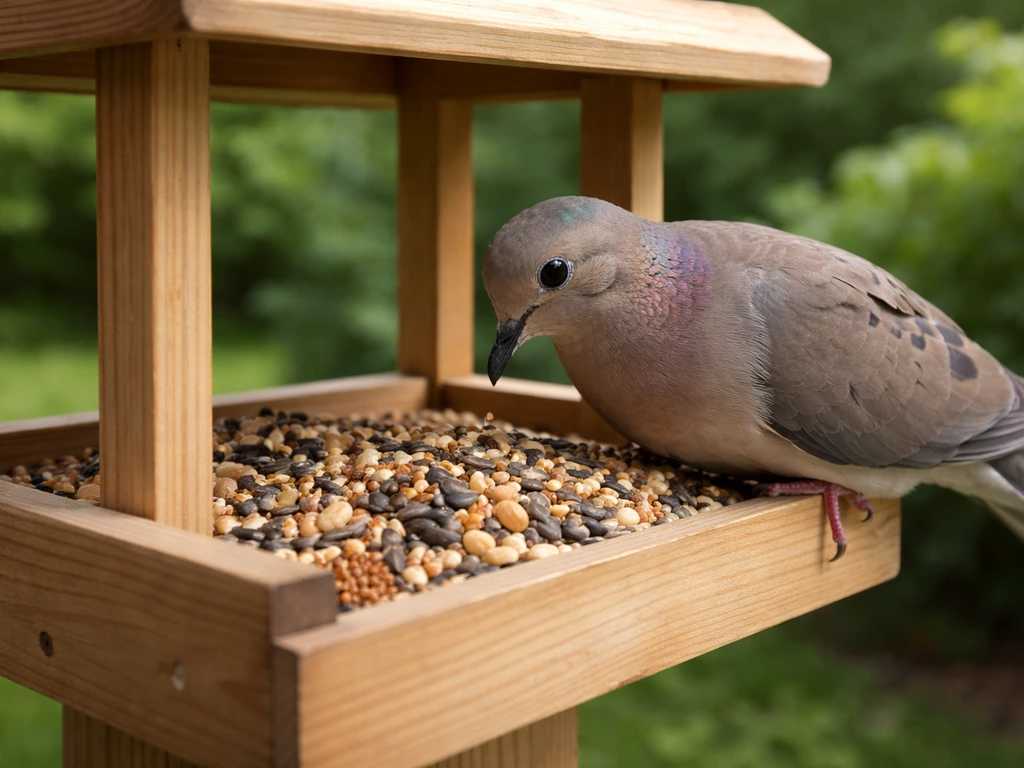
Do Doves Eat From Bird Feeders? Troubleshooting Guide
Find out if doves eat bird feeder seeds and troubleshoot issues like feeder access, food choice, and placement to attrac
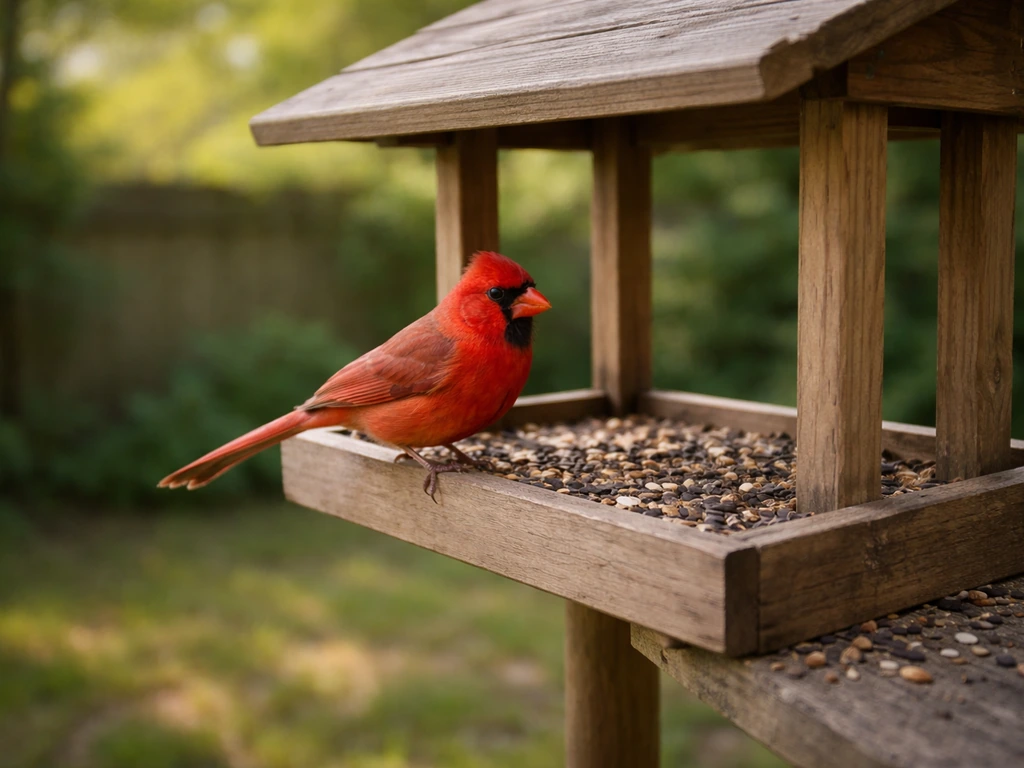
Do Cardinals Eat From Bird Feeders? What to Put Out
Do cardinals eat from bird feeders? Learn their seed preferences, feeder setup tips, and safe maintenance for fast visit
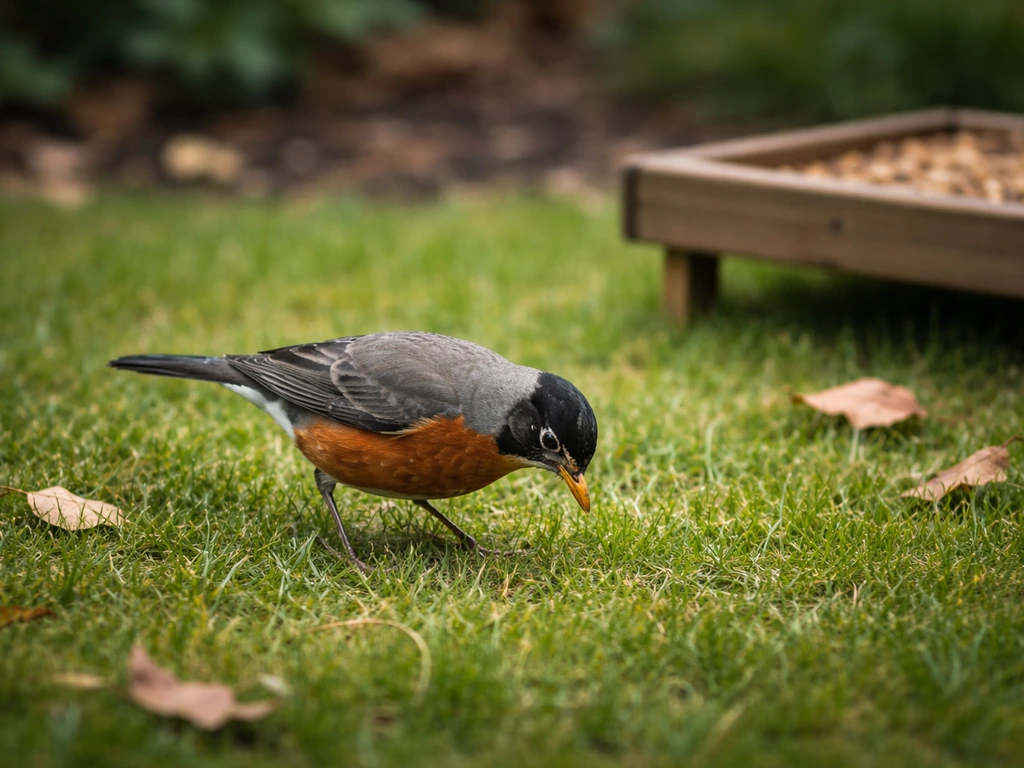
Why Don’t Robins Eat From Bird Feeders? Fixes That Help
Robins avoid bird feeders due to natural insect and worm diet, ground-foraging, and safety and setup factors. Fixes insi