Robins almost never eat from standard bird feeders because their diet and foraging style are fundamentally mismatched with what most feeders offer. They're ground hunters and fruit specialists, not seed eaters, and the typical hanging feeder filled with sunflower mix is essentially invisible to them as a food source. That's not a feeder placement problem you can tweak your way out of, it's just how robins are wired. But there are specific setups that do give you a realistic shot at attracting them, and understanding why they ignore feeders in the first place is the fastest way to figure out what's actually worth trying.
Why Don’t Robins Eat From Bird Feeders? Fixes That Help

Eleanor Hartwick
18 May 2026
How robins naturally eat (and why feeders don't match)
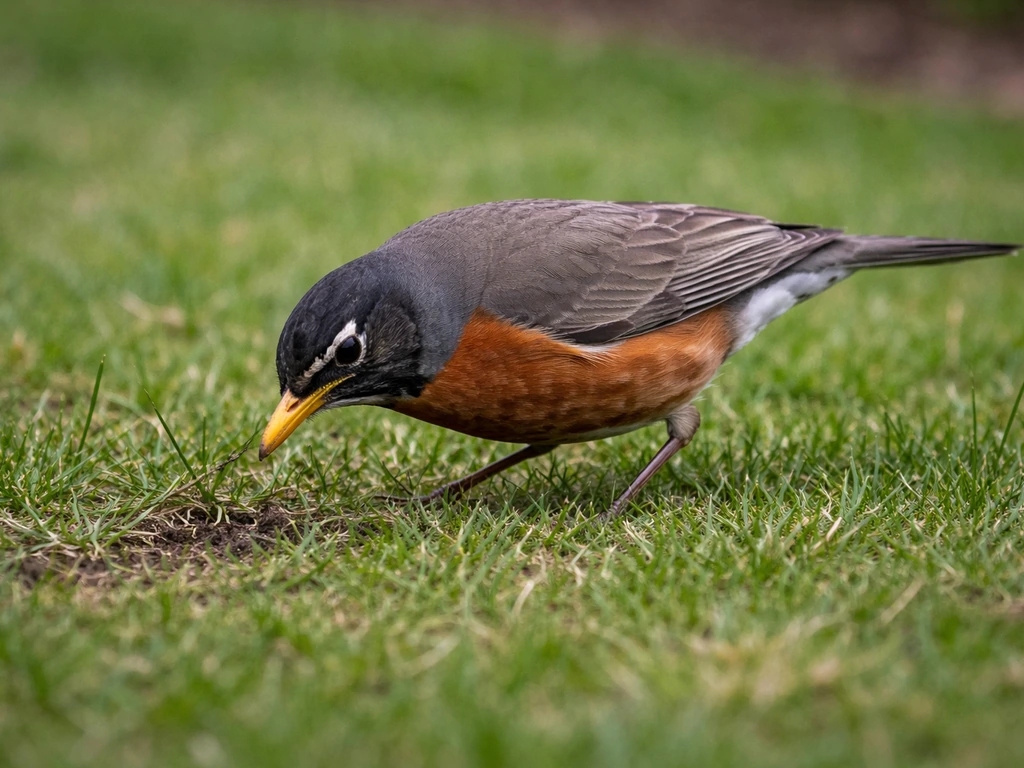
Watch a robin on a lawn and you'll see a very specific pattern: a short burst of running, a sudden stop, a tilt of the head, then a quick stab at the ground. This “blank" rel="noopener noreferrer">run-pause-probe” ground-foraging sequence is described in Cornell’s American robin life history overview as the bird’s Ground Forager behavior. That's not random. Robins are classic ground foragers, and they locate earthworms primarily by sight, they're watching for movement at the surface, not listening for worms underground the way the old myth goes. This run-pause-probe behavior is deeply ingrained, and it only works on open ground where the robin can scan a wide area and move freely.
That foraging style has almost nothing in common with perching on a feeder port or clinging to a hanging tube. Even if a robin is hungry and you've put out food it likes, a feeder that requires perching in an exposed or enclosed spot just doesn't trigger the same feeding response. Robins are also operating on a time-of-day rhythm: earthworms tend to come up earlier in the morning when soil is moist, so robins concentrate on invertebrate hunting then and shift toward fruit later in the day. That dual-track diet makes them much harder to pin down than seed specialists like sparrows or cardinals.
Food mismatch: what's on most feeders vs what robins want
The core problem is this: robins rarely eat birdseed. do robins eat at bird feeders birdseed. Audubon says it plainly, fruit specialists like robins almost never touch seed mixes, which means the standard feeder filled with sunflower seeds or millet is offering food robins simply don't want. Fruit makes up roughly 60% of a robin's diet across the year, with earthworms and other invertebrates dominating in spring and summer, and fruit taking over in fall and winter. There's no seed in that equation.
In spring and summer, robins are focused on earthworms, insects, and other invertebrates, food they find by hunting live ground surfaces, not by visiting a feeder. Once cooler weather sets in, their diet shifts hard toward fruit and berries. Neither of those seasonal priorities overlaps with what a typical mixed seed feeder delivers. So if you've been wondering why your feeder is busy with other birds but robins keep walking right past it, the food is the biggest reason.
What robins will actually consider eating from a supplemental source is a much shorter list: fresh or dried fruit (apples, grapes, cherries, raisins), mealworms (live or dried), and occasionally suet or peanuts, but only when those are presented in the right way. Swap out the seed, and you're already closer to something that makes sense to a robin.
Feeder type and design issues robins avoid
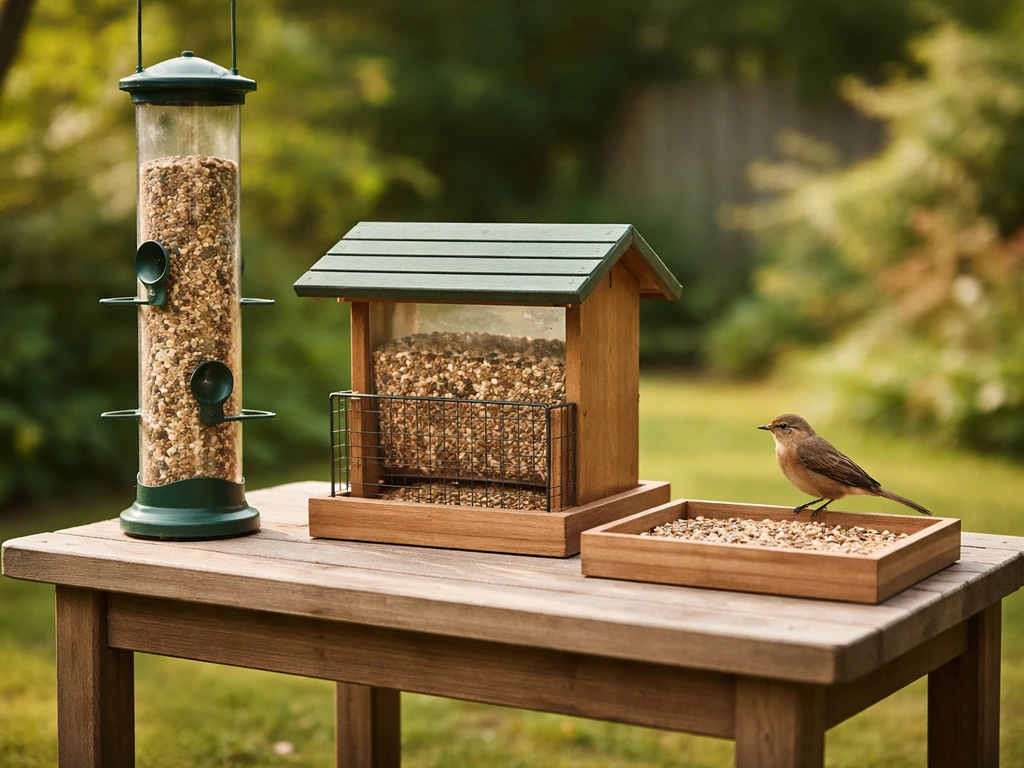
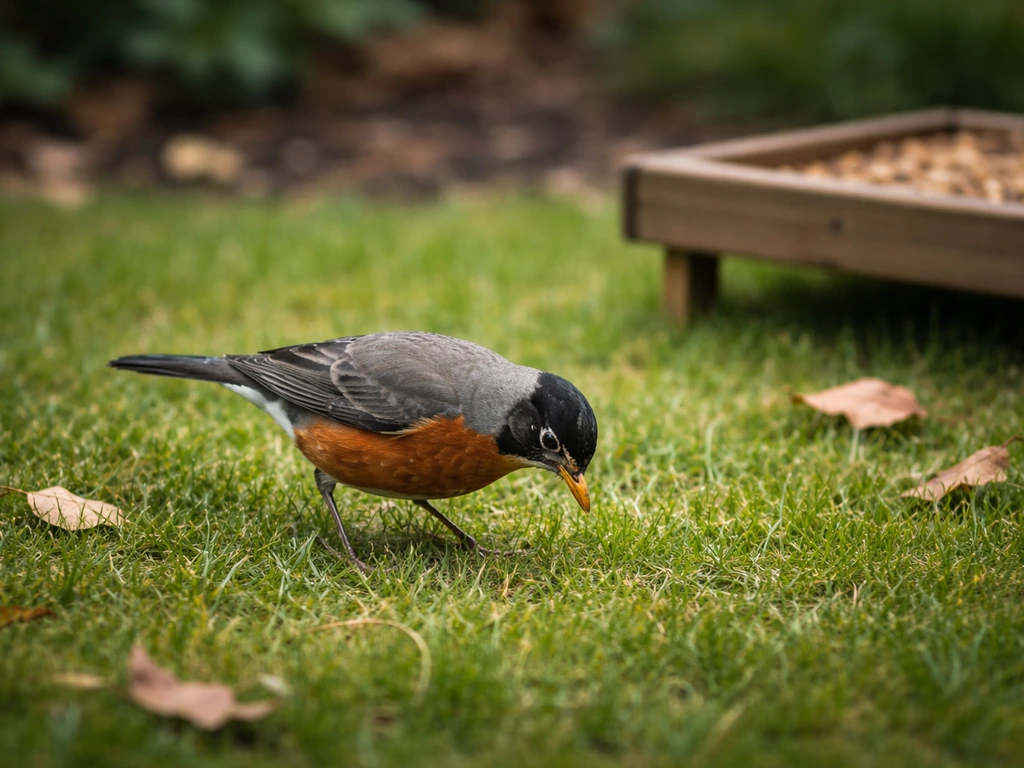
Even if you put out the right food, the wrong feeder design will cost you. Hanging tube feeders, enclosed hopper feeders, and anything with a narrow perch are all wrong for robins. They didn't evolve to cling to a small rod and pick through a port opening. What robins need is the equivalent of a flat, open surface, something that mimics the ground they're already comfortable landing on.
A platform feeder is the right call here. That's basically any flat, raised surface where food is spread out openly. It gives robins the space to land, look around, and pick at food the same way they'd work a lawn. Some people skip the commercial feeder entirely and just spread food on a picnic table or a large flat board on the ground, that works too, and for robins it can actually work better than a raised platform because it puts them at the level they're most comfortable. The main downside of ground-level feeding is that it also attracts raccoons and rats, so keep that in mind.
Placement and safety: visibility, ground access, and cover
Robins are alert, cautious birds. They forage on open lawns precisely because they can see a wide area and spot a threat early. If you put a platform feeder in a cramped corner or under dense cover, you're taking away the sight lines they rely on to feel safe. On the flip side, if it's completely exposed with no nearby trees or shrubs, they're exposed to hawks with nowhere to retreat.
A good rule of thumb is to place any ground-level or platform feeder within about 10 to 15 feet of some cover, a shrub, a hedge, or a low tree branch, while still leaving an open approach on at least two sides. That setup balances the "I can see predators coming" need with the "I have somewhere to go" need. Open suburban lawn conditions are essentially what robins are evolved for, so if your yard looks like a lawn with some trees around the edges, you're already close to ideal habitat.
Quick troubleshooting checklist you can try today
If you want to give attracting robins a real shot, here's the order I'd work through it. Start with the food and feeder type, since those are the two biggest barriers by far.
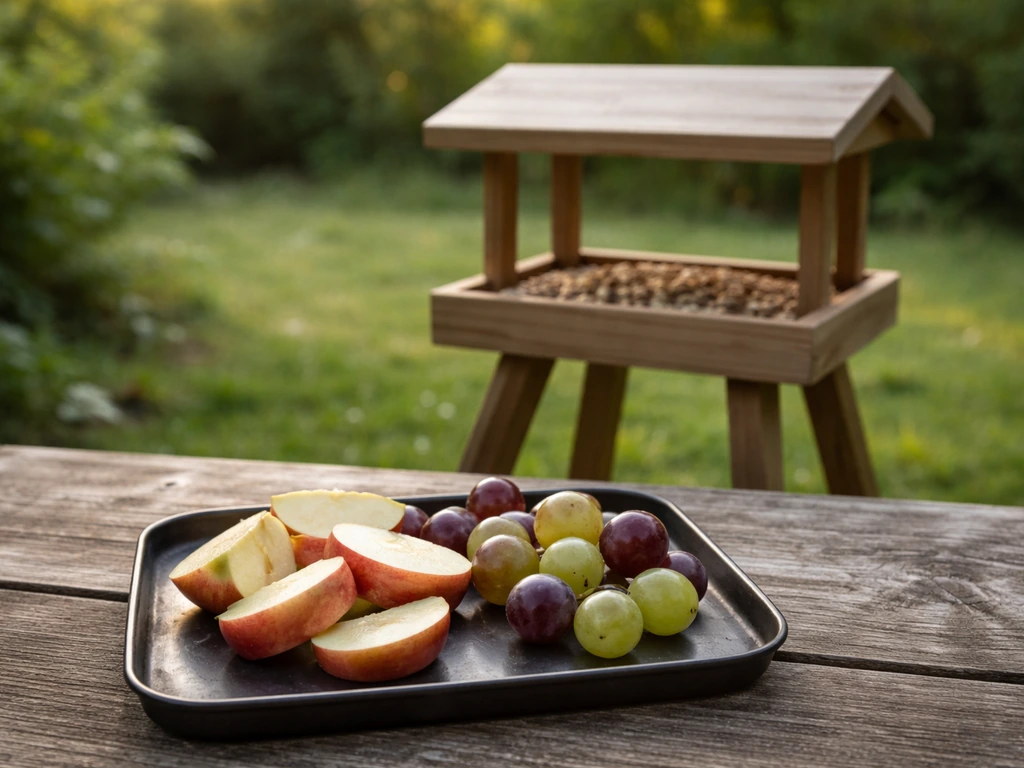
- Replace or supplement seed with robin-friendly food: fresh apple slices, halved grapes, raisins soaked in water, or live/dried mealworms. These are the foods most likely to actually interest a robin.
- Switch to a platform feeder or a flat tray — something wide and open with no walls or enclosed sides. Alternatively, try spreading food directly on a picnic table or a large flat board at ground level.
- Check your placement: the feeding surface should have open sightlines in most directions, with shrubs or low trees within about 10 to 15 feet as a retreat option.
- If you're using a raised platform, make sure it's stable and doesn't swing or wobble — anything that moves unpredictably will spook a ground-forager like a robin.
- Keep the feeding area clean. Rotting fruit or soggy mealworms will deter robins faster than an empty feeder. If you're using a platform, choose one with drainage holes so it doesn't turn into a wet mess after rain.
- Watch your yard in the early morning — that's when robins are most active on the ground hunting worms. Note whether they're already in the yard and just ignoring the feeder, which tells you the issue is the feeder itself, not the location.
Seasonal strategies and realistic expectations
Your best window for attracting robins to a supplemental food source is late fall through winter, when natural fruit and berry supplies start running low and robins are actively seeking fruit wherever they can find it. During this period, a platform tray stocked with apple chunks, grapes, or soaked raisins can genuinely pull robins in. Some people see real success with this approach, especially in yards that don't have a lot of fruiting trees or berry shrubs.
In spring and summer, your expectations should be lower, not zero, but lower. Robins in breeding season are focused on earthworms and insects, and they're finding those in the ground around your yard anyway. A tray of mealworms is the best bet during warm months if you want to offer something, since it mimics their natural prey. But honestly, the most reliable thing you can do in spring and summer is maintain a healthy lawn that supports earthworm populations: avoid pesticides, keep the soil moist, and leave some leaf litter in garden beds. That's the feeder robins will actually use.
If you've tried the right feeder, the right food, and a good placement and robins still aren't visiting, that's not necessarily a failure. Do owls eat from bird feeders? Sometimes, but it depends on whether the feeder reliably attracts prey and whether owls feel safe nearby. Robins are more habitat-dependent than feeder-dependent compared to seed specialists like cardinals or chickadees.
Even though cardinals are common at feeders, they have different feeding habits than robins, so the question of whether cardinals eat from bird feeders depends on the food and feeder type. Planting native berry-producing shrubs, serviceberry, holly, dogwood, is often more effective long-term than any feeder setup.
It's also worth knowing that other birds you might be feeding, like doves, crows, and woodpeckers, have their own strong feeder preferences that are just as specific as robins', so a yard that works for one species won't always work for another without deliberate adjustments. Doves may also visit bird feeders, but they have different preferences than robins, so your feeder setup and food choice still matter.
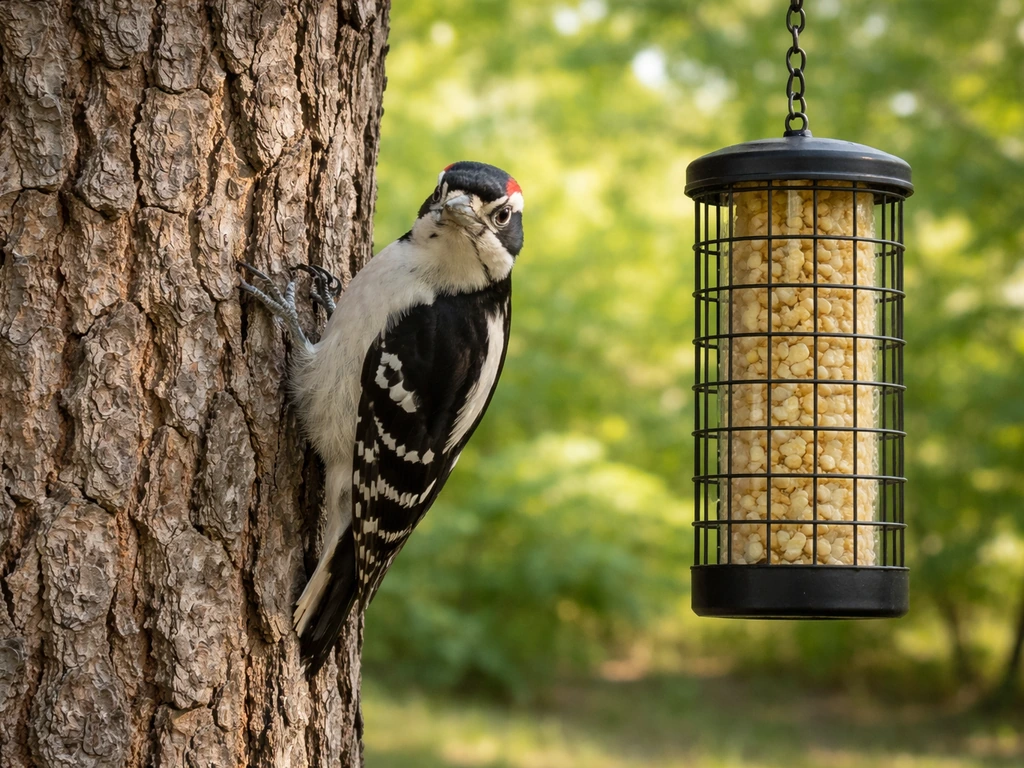
Woodpeckers also have specific feeder preferences, so it helps to know whether they will eat from bird feeders at all before you change your setup. If you’re also curious about other backyard birds, do crows eat from bird feeders?
When to stop forcing the feeder and work with the yard instead
There's a point where chasing robin feeder visits stops being useful and becomes frustrating. If you've made the food and feeder adjustments above and robins are still not engaging, the honest answer is that your yard may just not need supplementing from their perspective, they're finding enough on their own. That's actually a good sign ecologically.
The most effective long-term robin strategy is habitat-based: keep pesticide use low or zero so earthworm and insect populations stay healthy, plant native fruiting shrubs and trees that produce berries through fall and winter, and maintain some open lawn area for ground foraging. Robins are already one of the more yard-adapted bird species in North America, they don't need much help finding your property. What they need is for your yard to have the actual resources they're wired to look for, and a feeder can only go so far in replicating that.
FAQ
If I change the seed to fruit, why do I still get no robins on the feeder?
Most often it is still the surface and access. Robins are willing to take fruit from a tray or picnic-table style platform, but they avoid cramped, enclosed, or narrow-perch designs even when the food is right. Place the platform within 10 to 15 feet of shrub or low branches (two-sided approach if possible), so they can land, scan, and escape quickly.
What fruit works best for robins, and how should I prepare it?
Try chopped apple, grapes, or soaked raisins, offered in small pieces they can pick up quickly. Avoid sticky whole fruit that gets coated and hard to probe. In warm weather, replace fruit daily to prevent fermentation odors that can deter birds.
Do robins eat mealworms from a feeder, and do I need live ones?
Mealworms are one of the few supplemental foods robins will take outside of fruit. Live or dried both can work, but live often triggers more probing because it moves. Use a shallow platform or tray, and offer in the late morning or late afternoon when they are more likely to linger in feeding areas.
Should I put the feeder on the ground or mount it higher?
Either can work, but robins need an open, landing-friendly surface. Ground-level trays can be as effective as elevated platforms, and they match the robin's natural comfort zone. If you do ground feeding, protect from predators by keeping it near cover but not hidden, and remove leftovers promptly.
Why do robins visit once and then stop coming back?
Usually safety or food quality changed. If cats roam nearby, if the platform gets surrounded by dense vegetation, or if fruit spoils, robins may test it once and then decide the site is too risky. Keep the approach open and refresh food regularly, especially in spring and summer.
What time of day should I expect robins to use a platform or tray?
For invertebrate-focused seasons, robins may probe early and again later, but they often move in waves with the yard. For fruit in late fall through winter, visits can be more consistent because they are actively seeking berries and similar items. Aim to check and refresh food in the morning and late afternoon.
Will attracting robins also attract rats or raccoons to the same setup?
Yes, ground-level and open trays can draw those animals because they are also attracted to easy, exposed food. Reduce risk by using a tray with easy cleanup, feeding only what you can finish within a day, and keeping the area clear of spilled seeds or dropped fruit.
Can I use a standard platform feeder, or do I need a specific design?
A standard platform-style feeder (flat tray, wide access) is usually sufficient, as long as robins can land and walk around the food. Avoid narrow-perch or tube-feeder designs, and skip any setup that forces birds to cling at a small opening.
Does leaving a bird feeder up year-round help robins, or should I store it seasonally?
If you are offering fruit, a fall and winter setup tends to matter most. During spring and summer, your results may improve more from habitat changes than from the feeder, because robins shift toward earthworms and insects. Consider rotating your offerings, fruit in cold months, mealworms in warm months, and focus on lawn and soil health overall.
If cardinals or sparrows use my feeder but robins do not, what does that tell me?
It strongly suggests the food type or access still favors seed specialists. Robins generally ignore typical sunflower and millet mixes because their year-round diet relies heavily on fruit and live invertebrates. Switching to fruit or mealworms on a platform is the decision that most often bridges that species mismatch.
What yard changes increase robin visits without relying on feeders?
The most reliable background change is supporting earthworms and insects, which means minimizing pesticides, keeping soil moisture steady, and retaining some leaf litter in garden beds. Add native fruiting shrubs and trees for late-season food, and keep an open lawn area for their scan-and-stab foraging behavior.
Next Article
Do Woodpeckers Eat From Bird Feeders? What to Do Now
See when woodpeckers eat from bird feeders, which feeder types and foods attract them, and how to place and troubleshoot