Yes, woodpeckers absolutely eat from bird feeders, and suet is your fastest path to getting them there. Set up a suet cage feeder, fill it with plain suet or a peanut-blend suet cake, hang it at least 5 feet up on or near a tree trunk, and you've done most of the work. Downy Woodpeckers especially are regulars at backyard feeders across North America, and Hairy Woodpeckers, Red-bellied Woodpeckers, and others will follow once the right food is available. The key is matching the feeder style and food to how woodpeckers actually forage, which is different from most other backyard birds.
Do Woodpeckers Eat From Bird Feeders? What to Do Now

Eleanor Hartwick
7 May 2026
Do woodpeckers actually eat from bird feeders?
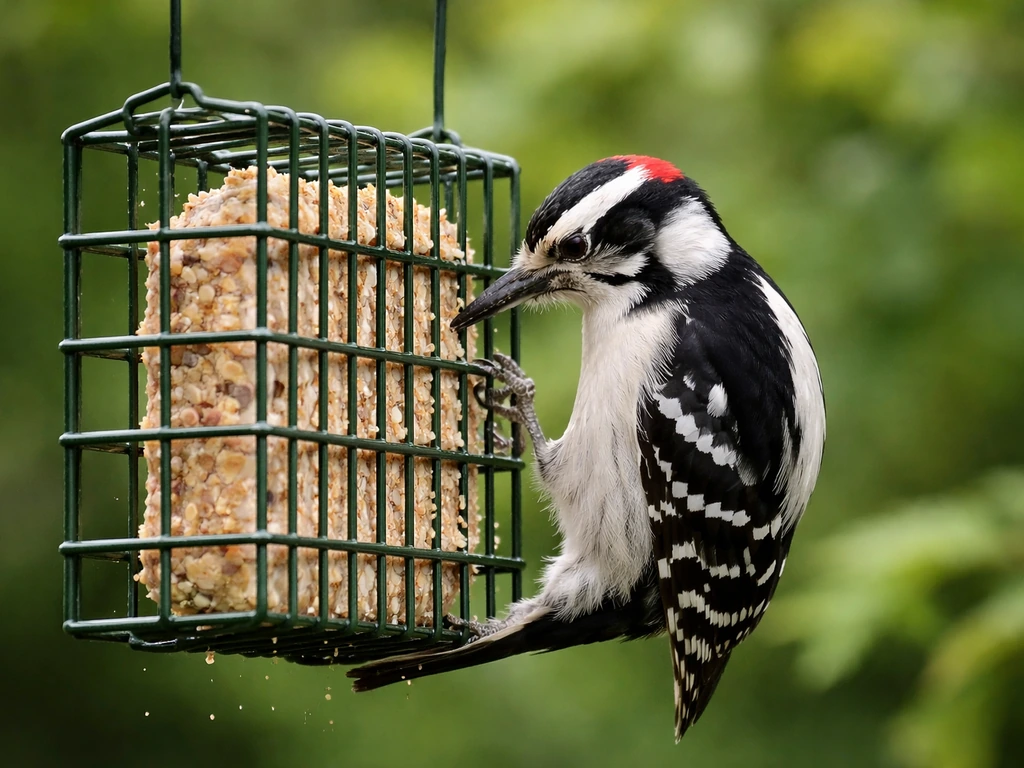
Woodpeckers are primarily insect eaters, so they're not naturally drawn to seed-heavy setups the way cardinals or doves are. But they're also highly opportunistic, and suet mimics the fat-and-protein profile of the grubs and insects they drill trees for. That's why suet feeders work so reliably: they're not tricking woodpeckers into something unnatural, they're just offering the closest thing to their preferred food in a convenient format.
The species you're most likely to see depends on where you live. Downy Woodpeckers are the most widespread and feeder-friendly species in North America. Hairy Woodpeckers look similar but are larger, and they show up at suet feeders too, though they tend to be a bit warier. Cornell Lab Bird Cams shows Hairy Woodpeckers actively visiting a busy suet feeder, illustrating that woodpeckers beyond Downy will attend these feeders Hairy Woodpeckers show up at suet feeders. Red-bellied Woodpeckers are common in the East and Southeast and readily take suet, peanuts, and sunflower seeds. Red-headed Woodpeckers are less predictable at feeders but will cache food and revisit reliable sources. Yellow-bellied Sapsuckers are a special case: they drill trees for sap rather than forage at feeders, so don't count on them showing up at your setup.
One thing worth knowing: woodpeckers are not flock birds. You won't get a crowd of them the way you might with sparrows or finches. You'll typically see one or two at a time, and they may visit briefly before moving on. That's normal. It doesn't mean your feeder isn't working.
What types of bird feeders attract woodpeckers
The feeder design matters a lot here. Woodpeckers forage on vertical surfaces: tree trunks, branches, fence posts. They cling and peck, they don't perch horizontally and peck down the way many songbirds do. So the feeders that work best are the ones that let them do what they already know how to do.
Suet cage feeders are the go-to. These are simple wire mesh cages that hold a standard suet cake, and woodpeckers can cling to the outside and peck through the mesh. Look for a cage with a tail-prop extension below the feeding area, which lets larger woodpeckers brace their stiff tail feathers for stability, just like they do on bark. It's a small design feature that makes a real difference for Hairy Woodpeckers and Red-bellied Woodpeckers.
Upside-down suet feeders are also worth mentioning. These cages only allow access from the bottom, so the bird has to hang inverted to reach the suet. Woodpeckers can handle this easily, but European Starlings, which love suet and can quickly take over a feeder, usually can't. If starlings are a problem in your area, an upside-down design is a smart move.
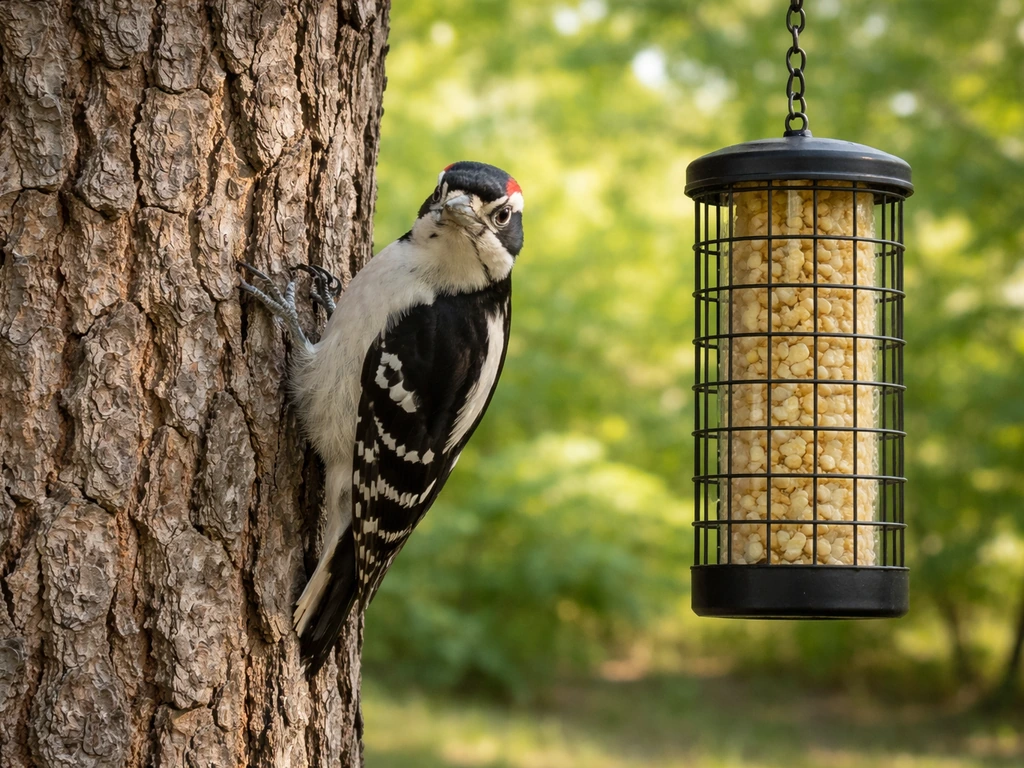
Beyond suet feeders, a sturdy platform or tray feeder mounted on a post can work for peanuts and shelled sunflower seeds. Downy Woodpeckers will also occasionally visit tube feeders with large enough ports, especially if they're offering sunflower seeds or peanut pieces. But suet cages are where you'll see the most consistent woodpecker traffic, so start there.
| Feeder Type | Best For | Woodpecker Appeal | Drawback |
|---|---|---|---|
| Standard suet cage | Suet cakes | High: works for most woodpecker species | Starlings and squirrels compete easily |
| Upside-down suet feeder | Suet cakes | High: starling-resistant | May deter timid or first-time visitors briefly |
| Platform/tray feeder | Peanuts, shelled sunflower seeds | Moderate: open surface suits woodpeckers | Attracts many other species too |
| Tube feeder (large ports) | Sunflower seeds, peanut pieces | Low to moderate: Downy Woodpeckers only | Most tube feeders are too small for larger species |
Best foods for attracting woodpeckers to feeders
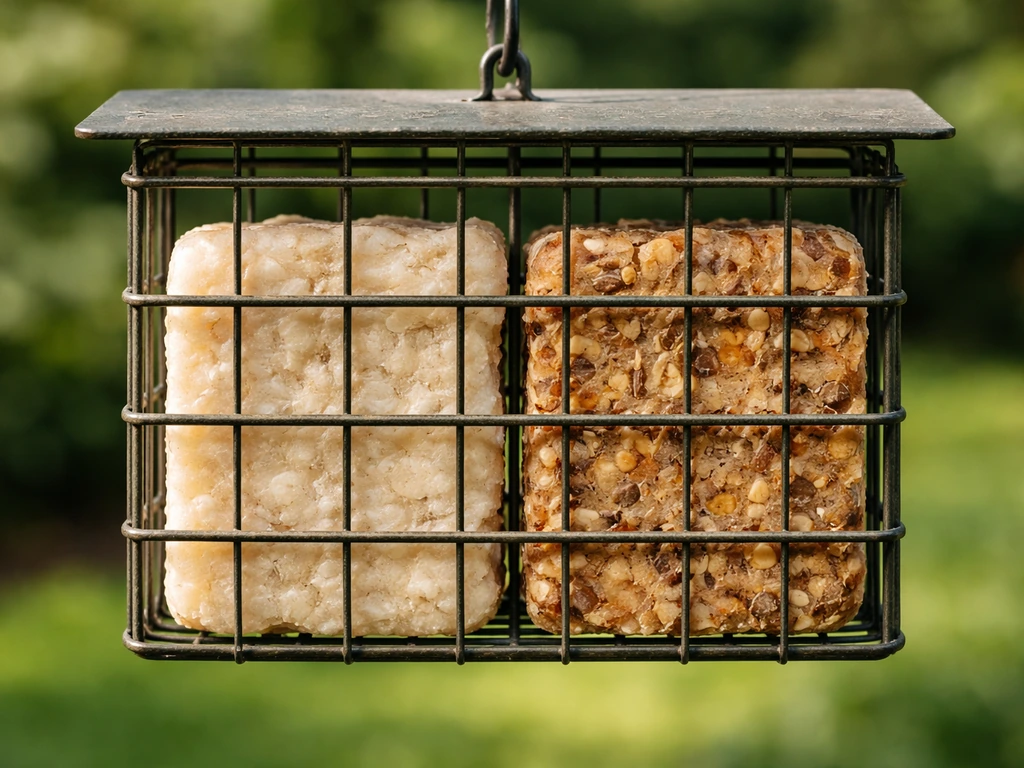
Suet is the most reliable food for woodpeckers, full stop. Plain beef suet works, but peanut-blend or insect-blend suet cakes tend to pull in woodpeckers even faster because the scent and fat profile are closer to their natural diet. You can find these at any feed store or online, and they're inexpensive.
Beyond suet, peanuts are probably the second-best option. Offer them raw or plain roasted, shelled or in-shell on a tray, and avoid anything salted, flavored, or coated. Salted peanuts can be harmful to birds, so stick to the plain versions. Black oil sunflower seeds are also worth having: Downy Woodpeckers eat them readily, and while Red-bellied Woodpeckers prefer suet and peanuts, they'll take sunflower seeds too.
Chunky peanut butter is another option that Cornell specifically notes for Downy Woodpeckers. You can smear it into the bark crevices of a nearby tree or into a wooden log feeder. Some people mix it with cornmeal to make it less sticky and easier for birds to swallow safely. This is a low-cost option that works well if you don't want to buy specialty feeders right away.
- Suet cakes (plain, peanut-blend, or insect-blend): the most effective single food for woodpeckers
- Raw or plain roasted peanuts (no salt, no coatings): great on a tray or in a peanut feeder
- Black oil sunflower seeds: especially attractive to Downy Woodpeckers
- Chunky peanut butter (unsalted): smear into bark crevices or log feeders
- Millet: a secondary option Downys will pick at if it's available
Placement and timing: where and when to set up your feeders
Placement is where a lot of people go wrong. Woodpeckers are not naturally comfortable in open spaces, so a feeder hanging in the middle of your yard on a shepherd's hook isn't going to perform as well as one positioned near or on a tree. Attaching a suet cage directly to a tree trunk, or hanging it from a low branch close to the trunk, puts it exactly where a woodpecker expects to find food. If you don't have a good tree, mounting a feeder on a post near shrubs or a brush pile gives birds somewhere to retreat and watch before committing to the feeder.
Height matters too. Hanging suet at least 5 feet off the ground helps keep it out of reach of dogs, raccoons, and other ground-level wildlife. You don't need to go extremely high: 5 to 8 feet is a practical range that's accessible enough for you to maintain but elevated enough to reduce competition. A shaded spot is better than full sun, especially in warmer months, because suet can turn rancid quickly in heat, and rancid suet stops attracting birds.
On timing: woodpeckers visit feeders year-round in most of their range, but activity tends to peak in fall and winter when insects are scarce and birds need high-calorie food to stay warm. Spring is also a good time, especially in suet-heavy setups, because woodpeckers are building nests and need extra energy. If you're setting up for the first time right now in early May, you may see less traffic than you would in October, but visits are still common and woodpeckers will establish feeder habits that carry into next winter.
No woodpeckers yet? Here's what to change
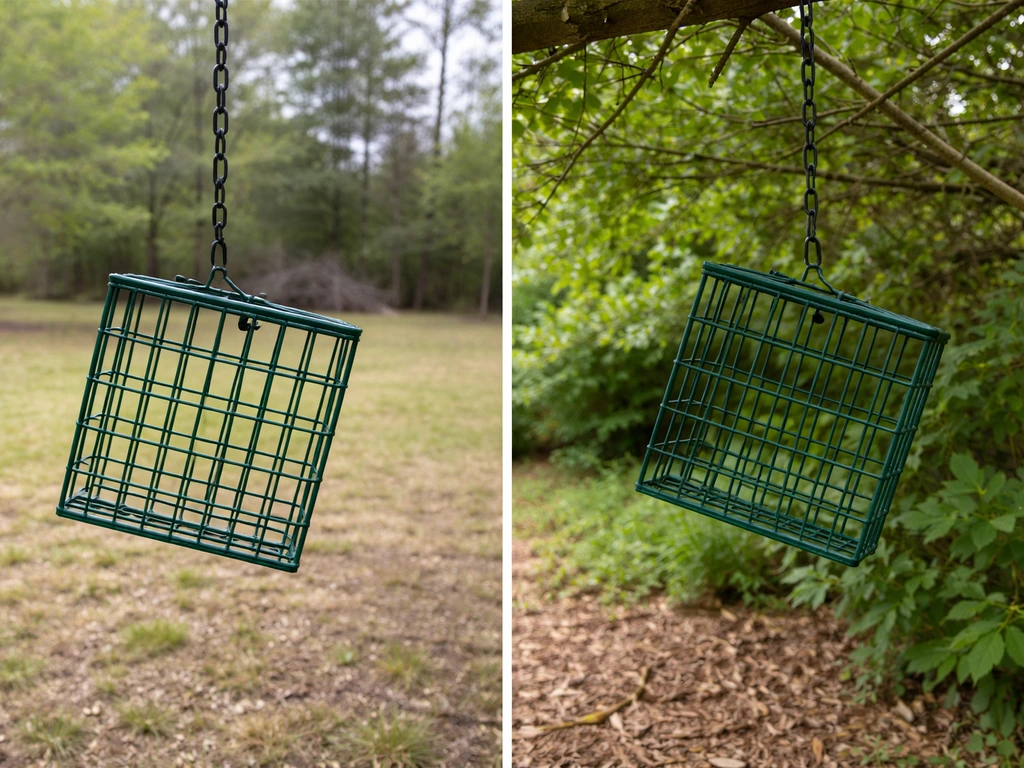
If you've had a suet feeder up for a week or two and still nothing, don't panic. Woodpeckers are territorial and move around large home ranges. It can take time for them to find a new food source, especially if you're in a suburban area with less tree cover. Here's what to check.
- Move the feeder closer to trees or existing shrub cover. If it's in an open spot, that alone could explain the lack of visits.
- Check whether the suet has gone rancid, especially in warm weather. Fresh suet has a mild, fatty smell. Rancid suet smells sour and looks grayish or oily. Replace it and see if visits pick up.
- Add a second food type. If you've only got suet, try adding a tray of shelled peanuts nearby. Sometimes a different scent or texture catches a bird's attention first.
- Reduce competition at the site. If you have squirrels climbing all over the feeder or starlings dominating it, woodpeckers will avoid the area. Switch to an upside-down suet feeder and add a baffle to the mounting pole.
- Give it more time. In spring and summer, woodpeckers have plenty of natural food available and may visit less frequently than in winter. Consistency matters: keep the feeder stocked and clean, and visits will come.
Also consider your habitat. If you're in a dense urban area with few large trees and no nearby woodland edge, you may attract Downy Woodpeckers but struggle to pull in larger species like Hairy or Red-bellied. That's not a feeder problem, it's a habitat reality. Work with what visits naturally in your neighborhood and adjust your expectations accordingly.
Reducing problems: feeder damage and unwanted wildlife
Woodpeckers are strong birds, and occasionally people worry about them damaging wooden feeders or even pecking at the house near where a feeder is mounted. Feeder damage is usually minor, since woodpeckers are after the food, not the feeder itself. But if you're using a wooden suet log feeder, expect some wear over time. Metal mesh or plastic suet cages hold up much better.
The bigger concern for most people is attracting squirrels and raccoons. Suet is high-fat and appealing to a lot of wildlife, not just birds. A few practical fixes: use a pole-mounted baffle below the feeder, hang suet cages from a thin wire that squirrels can't easily grip, or choose an upside-down suet feeder which deters both squirrels and starlings. Bringing feeders in at night helps with raccoons, which are primarily nocturnal.
Spreading seed or suet on the ground is something to avoid entirely. Robins also tend to prefer natural food sources like insects and worms, which is one reason they often ignore bird feeders why don't robins eat from bird feeders. It attracts rats, raccoons, and deer, and it makes it harder to keep the feeding area clean. Platform feeders catch fallen food better than tube feeders but still need regular cleaning. Keep the area beneath your feeders raked or clear to reduce ground-level wildlife interest.
European Starlings are worth calling out specifically. They mob suet feeders aggressively and can drive woodpeckers off. If starlings are crowding your feeder, the upside-down suet cage design is the most effective deterrent that doesn't require you to give up suet altogether.
Safety and maintenance tips for woodpecker-friendly feeding
Keeping feeders clean is not optional if you want birds coming back safely. A general rule for suet and seed feeders is to clean them about every two weeks, more often during hot or wet weather when mold and bacteria grow faster. If you see black mold, cloudy residue, or the food smells off, clean the feeder immediately and replace the food. Moldy suet isn't just unappetizing, it can make birds sick, and it can affect pets that get into dropped suet on the ground.
Cleaning is straightforward: scrub with a stiff brush, rinse with a diluted bleach solution (about one part bleach to nine parts water), rinse thoroughly with clean water, and let the feeder dry completely before refilling. Wet suet in a wet cage is a recipe for mold within days.
In hot weather, consider switching to no-melt suet dough products, which are formulated to hold up in temperatures above 50 degrees Fahrenheit. Standard suet cakes can melt and spoil quickly in summer heat, which wastes money and potentially harms birds. This is especially relevant right now in May, depending on your climate.
One broader question worth thinking about: are feeders actually helping woodpeckers, or disrupting their natural foraging? The honest answer is that supplemental feeding, done right, provides real caloric support especially in winter, and there's no strong evidence that it makes birds dependent or undermines their foraging instincts. Woodpeckers that visit feeders continue to forage naturally too. Some robins also visit backyard feeders, but they typically prefer mealworms, fruit, or platform offerings rather than suet Woodpeckers that visit feeders continue to forage naturally too.. The main risks are disease from dirty feeders and window collisions, both of which are manageable. Position feeders either very close to windows (within 3 feet, so birds can't build up dangerous speed) or well away from glass (more than 10 feet), and keep things clean, and you're doing right by the birds.
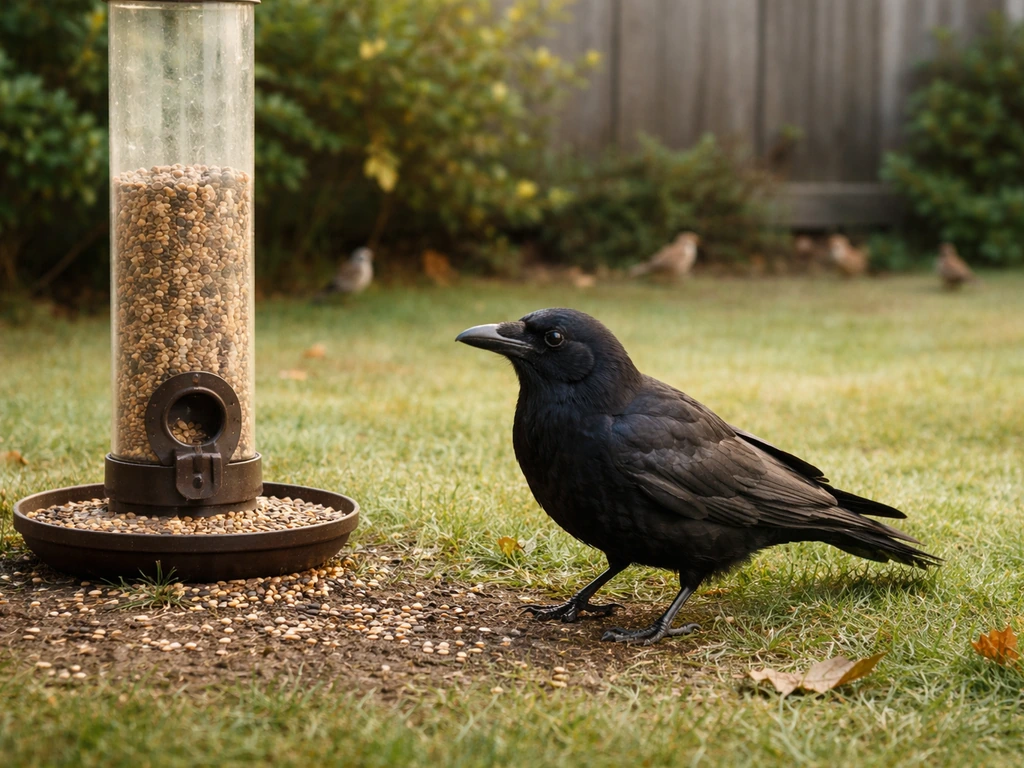
If you're already feeding other species and wondering how woodpeckers compare, they're generally more predictable than crows or owls when it comes to feeder use, but less likely than cardinals or doves to appear in large numbers. If you're also wondering about other backyard visitors, do crows eat from bird feeders is a related question many people ask. Doves are much more likely to feed at open, seed-friendly feeders, so feeder design matters for them too do doves eat from bird feeders. If you are also curious about owls, you might be wondering do owls eat from bird feeders crows or owls. However, if you're specifically asking whether do cardinals eat from bird feeders, you'll usually find that they do less likely than cardinals or doves to appear in large numbers. Think of woodpeckers as a reliable solo visitor rather than a flock species, and set your expectations accordingly. Once a Downy or Red-bellied Woodpecker finds your suet feeder and recognizes it as a dependable food source, you'll often see the same individual returning day after day.
FAQ
If I only see one woodpecker occasionally, does that mean my feeder setup isn’t working?
Most woodpecker visits involve quick clinging and pecking bursts, so seeing only one bird at a time is normal. If you want more activity, keep the suet cage filled and positioned near cover (tree trunk, branch, or shrub edge), since woodpeckers are cautious in open yards.
Can woodpeckers eat peanuts from bird feeders? What peanut types should I use?
Yes, but only in small, appropriate formats. Use raw or plain roasted peanuts without salt or seasonings, offered in shelled form on a tray, or in-shell so pieces can be managed. Avoid peanut products with coatings, garlic, or sweet flavors.
Do sapsuckers (yellow-bellied sapsuckers) eat from suet feeders like other woodpeckers?
Red-bellied, Downy, and Hairy woodpeckers do well with suet, but sapsuckers usually ignore typical feeders because they feed by drilling for sap from specific trees. If you suspect sapsuckers, focus on nearby native trees they might target, rather than expecting them to take suet cages.
Why did my woodpecker feeder work earlier but stop attracting birds in warm weather?
Warm weather can be the reason. Standard suet can melt, leak, and spoil quickly in heat, which reduces visits and increases mold risk. Switch to no-melt suet dough products when temperatures stay above about 50°F, and place the feeder in shade when possible.
What height and placement should I use if I want woodpeckers to actually use my suet feeder?
Yes, and it matters more than people think. Hanging suet too low can invite raccoons, while placing it in an exposed open area can reduce visits because woodpeckers prefer vertical feeding spots near cover. Use 5 to 8 feet as a practical range and mount near a trunk or branch.
How long should I wait after setting up suet before I assume it’s not working?
Reactions can vary by region and timing, but the “no woodpeckers yet” window can be real. Give it two weeks, keep food fresh, and avoid changing too many variables at once. If you recently removed other attractants or there is heavy predator activity, that can also delay visits.
Will woodpeckers damage my feeder or peck holes in nearby structures?
Yes, woodpeckers can peck at wood components, especially wooden suet log feeders, but the feeder itself is usually not a serious concern. Use metal mesh or sturdier cage designs if you notice rapid wear, and avoid mounting where their pecking could damage siding or trim.
How can I keep squirrels and starlings from taking over the suet feeder?
To reduce squirrel access, use a hanging method they cannot grip (for example, suspend from wire rather than a surface they can climb) and consider a pole-mounted baffle. An upside-down suet cage is also effective because it forces access from below, which helps discourage starlings and many squirrels.
How often should I clean a suet cage feeder, and what are the signs it’s time right now?
Clean food is the biggest factor, because moldy suet can discourage visits quickly and can be unsafe for birds. Aim to clean roughly every two weeks, and do it immediately if you see black mold, cloudy residue, or an off smell.
Is it okay if a little suet or seed falls onto the ground under the feeder?
Generally, yes, but it should be done safely. Follow the same cleaning routine, and keep the feeding area tidy by removing dropped food, since excess fallen suet and seed can attract rodents. Also, use feeder styles that minimize spillage into open ground.
I’m feeding other birds, but woodpeckers won’t come. What’s the most common mistake?
There are two common reasons: wrong food type and wrong feeder geometry. If you are offering mostly seed or using a horizontal perch feeder, woodpeckers may ignore it. Switch to a suet cage that lets them cling to vertical surfaces, and consider peanut-blend suet cakes.
How do I prevent window collisions when I’m attracting woodpeckers to a feeder near my home?
Window collisions are mostly preventable with smart placement. Keep feeders within about 3 feet of glass so birds cannot build speed, or place them more than 10 feet away when possible. If you can’t change distance, consider adding window film or screens.
Next Article
Do Crows Eat From Bird Feeders? How to Stop or Invite Them
Yes, crows may eat from bird feeders. Learn why they visit, what attracts them, and how to invite or deter them.