Yes, crows will absolutely eat from bird feeders. They are opportunistic feeders with a broad diet, and if your feeder offers accessible food, especially on or near the ground, crows will find it and return to it. The real question most backyard birders are asking is not whether crows can use feeders, but how to stop them from dominating yours. The good news is that a few targeted changes to your feeder setup, food choices, and placement can reduce crow visits significantly without shutting down your feeding station for the birds you actually want. Do robins eat at bird feeders? They do sometimes, especially when feeders offer accessible food like fruit or mealworms.
Do Crows Eat From Bird Feeders? How to Stop or Invite Them

Eleanor Hartwick
1 May 2026
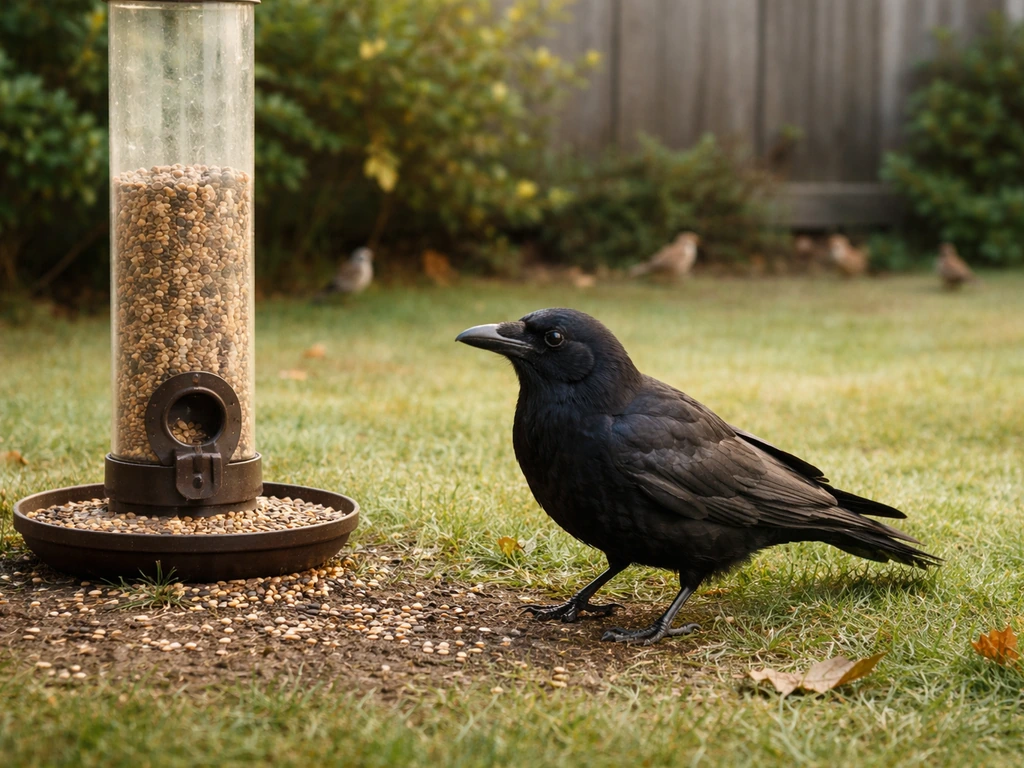
Why crows show up at feeders in the first place
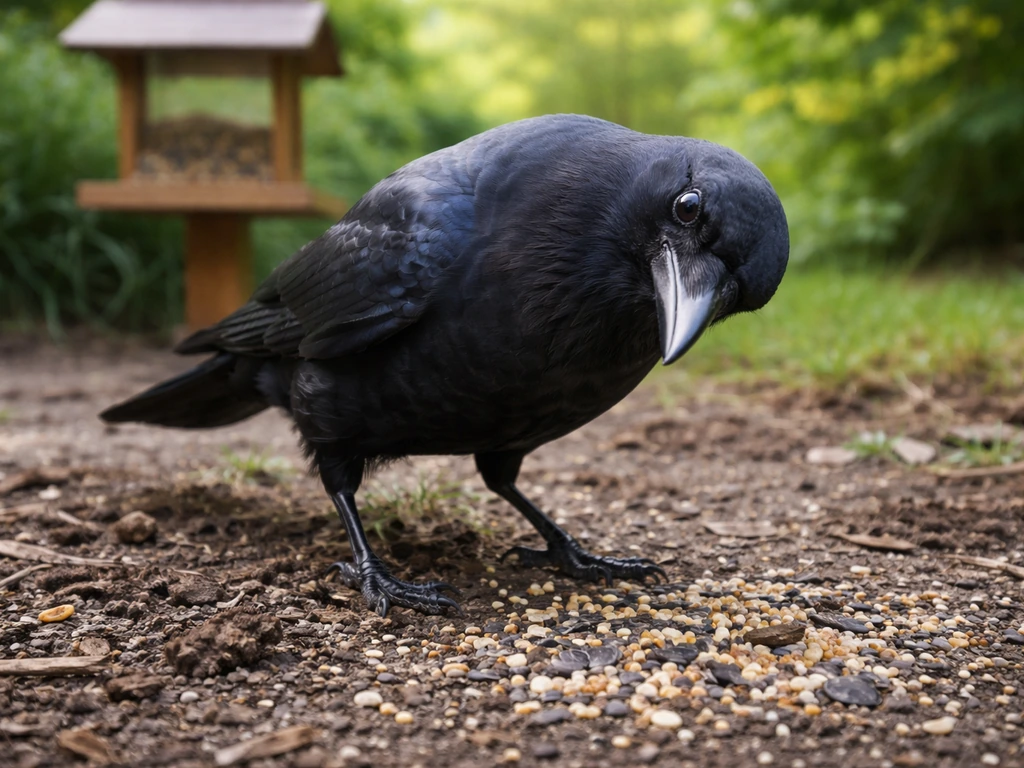
Crows, both American crows and fish crows, are described by ornithologists as eating almost anything: seeds, nuts, fruit, carrion, garbage, insects, and even eggs from other birds' nests. That generalist diet is the first reason they end up at feeders. When a crow spots a reliable food source, it learns fast and comes back. Audubon describes American crows as 'opportunistic, quickly taking advantage of new food sources,' and that is exactly what happens when a crow discovers your feeder.
The second factor is their intelligence. Crows form associations between locations and food rewards. Once one crow figures out that a particular yard reliably has seeds or suet or scattered peanuts, it will return, and it may bring others. Research from Penn State on urban crow behavior reinforces this: crows develop habitual patterns around dependable food supplies and adjust their routines to exploit them. This is why early intervention matters. The longer a crow collects easy meals from your yard, the harder the habit is to break.
There is also a caching angle worth knowing. The Smithsonian National Zoo notes that American crows are moderate cachers, meaning they regularly take food and store it for later rather than only eating on the spot. So a crow at your feeder is not just grabbing a snack. It may be loading up, flying off to cache the extras, and coming back for more. This is why removing food once or twice does not always solve the problem immediately. The crow has already identified your yard as worth monitoring.
Which feeder types and foods pull crows in most
Crows feed mostly on the ground. That single fact tells you a lot about which feeder setups are most vulnerable. Open platform feeders placed low to the ground are essentially an invitation. The food is visible, accessible, and easy to grab in quantity. Spilled seed on the ground beneath any feeder is similarly attractive. If your tube or hopper feeder is scattering seed onto the ground, crows will exploit that spillage even if they cannot physically perch on the feeder itself.
In terms of food, peanuts and whole corn are crow magnets. Sunflower seeds, particularly sunflower hearts, also draw them in. Suet is another target. These are all high-calorie, easy-to-grab foods that crows value highly enough to cache. Research on American crow caching behavior shows they are selective, preferring higher-value foods, which lines up with why peanuts and suet tend to attract more crow attention than mixed filler seeds like millet.
| Food Type | Crow Appeal | Notes |
|---|---|---|
| Whole peanuts | Very high | Easy to grab and cache; a top crow attractant |
| Sunflower hearts / hulled sunflower | High | High calorie, easy to eat; also attracts birds you want |
| Whole corn / cracked corn | High | Especially attractive when scattered on the ground |
| Black oil sunflower seed (in shell) | Moderate | Crows can eat it but smaller birds still compete effectively |
| Suet (open tray or cage) | Moderate to high | Open tray suet is easier for crows to access than cage-style |
| Nyjer / thistle seed | Low | Not a preferred food; tube feeders also limit access physically |
| Mixed filler seed (millet, milo) | Low | Crows will eat spilled piles but rarely seek it out specifically |
How to tell if crows are actually eating from your feeder
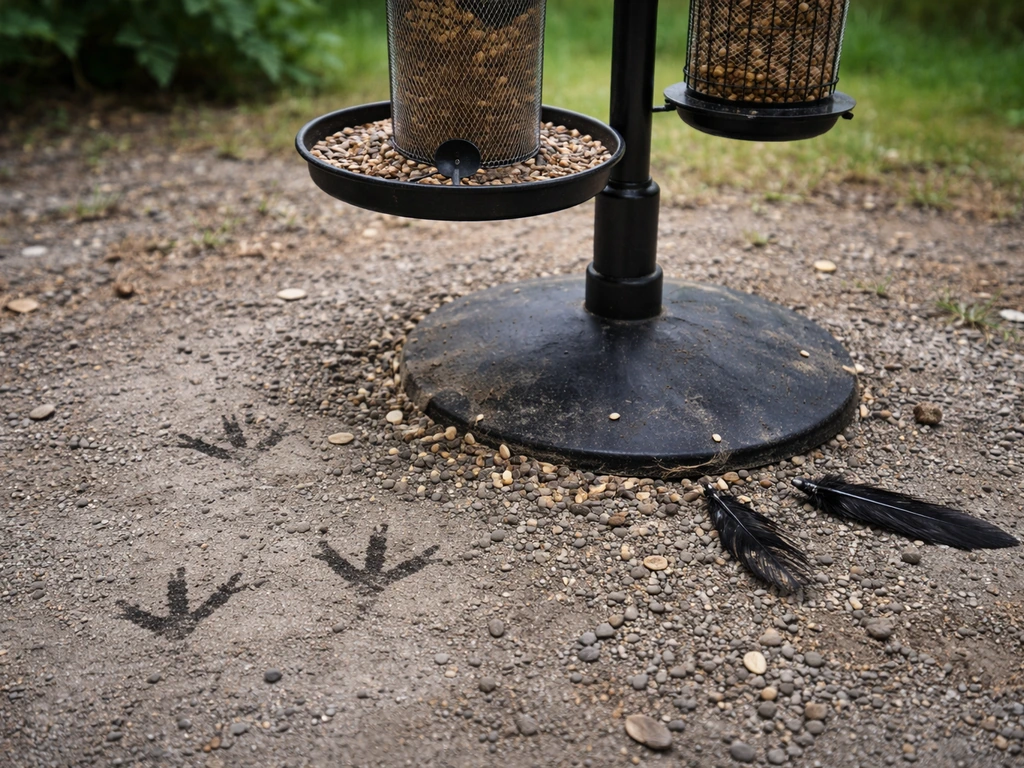
Sometimes it is obvious: you see a crow perched on or near your feeder, grabbing food. do doves eat from bird feeders. But crows are also wary, and many people find that their feeder activity drops sharply or blank" rel="noopener noreferrer">smaller birds vanish without any crow visibly sitting on the feeder itself. Here is what to watch for. If you are also wondering do owls eat from bird feeders, the answer is yes, they may visit but usually in connection with prey near the feeder.
- Food disappearing faster than expected, especially in the early morning when crows are most active
- Smaller birds staying away from the feeder even when it appears full, which often means a dominant bird like a crow has claimed the area
- Large droppings near the feeder base or on any flat surface below it
- Peanuts, suet, or sunflower hearts vanishing quickly while less-preferred seeds are left behind
- A crow perching nearby but not directly on the feeder, watching and waiting for the area to clear
- Ground beneath the feeder being picked completely clean of spilled seed, even heavy or difficult seeds that smaller birds typically ignore
Cornell Lab's guidance on watching feeder behavior is useful here: look at what is not happening, not just what is. Do cardinals eat from bird feeders too, and what should you do if they are competing with smaller birds like finches? If your usual finches, chickadees, or sparrows have gone quiet, something is disrupting the feeding routine. Crows are large enough that their presence alone keeps smaller birds away, so you may be losing feeder activity to crows without ever seeing one directly on the feeder.
What you can do about it today
The goal is not necessarily to eliminate crows from your yard entirely. It is to make your feeder setup less rewarding for them while keeping it accessible for smaller birds. Robins do not usually eat from bird feeders because they mostly forage on the ground for insects and other natural foods. These steps are practical and can be applied immediately.
- Switch to a tube feeder with small perches. Crows are large birds and struggle to use tube feeders with short perches designed for finches, chickadees, and small sparrows. If you are running an open platform or tray feeder, switch or supplement with a tube feeder as your primary station.
- Stop putting out whole peanuts, whole corn, and open-tray suet. These are the highest-value, easiest-to-grab crow foods. Switch to suet in a cage-style feeder with a bottom-access tail-prop design (which makes it harder for large birds to cling and feed) or use shelled peanuts in a mesh feeder sized for smaller birds.
- Clean up ground spillage immediately. Crows feed on the ground by preference. If seed is piling up under your feeder, you are creating a ground buffet. Use a no-mess seed blend like hulled sunflower or nyjer to reduce shell waste, and physically rake or clear fallen seed before it accumulates.
- Raise or reposition your platform feeder. If you do use a platform feeder and want to keep it, raise it to an elevated position rather than low to the ground, and consider adding a cage or baffle that allows smaller birds to access it while physically excluding larger ones.
- Remove food from open feeders during peak crow hours. Crows are most active early morning. If you are seeing heavy crow activity at dawn, bring in open feeders overnight and set them out after the morning crow rush, around mid-morning.
- Do not scatter food directly on the ground. Ground feeding attracts crows more than almost any other feeder style. If you feed ground-foraging birds like doves or towhees, use a low platform with a roof or switch to a ground tray that you can monitor and empty.
Feeder placement and maintenance to reduce repeat visits
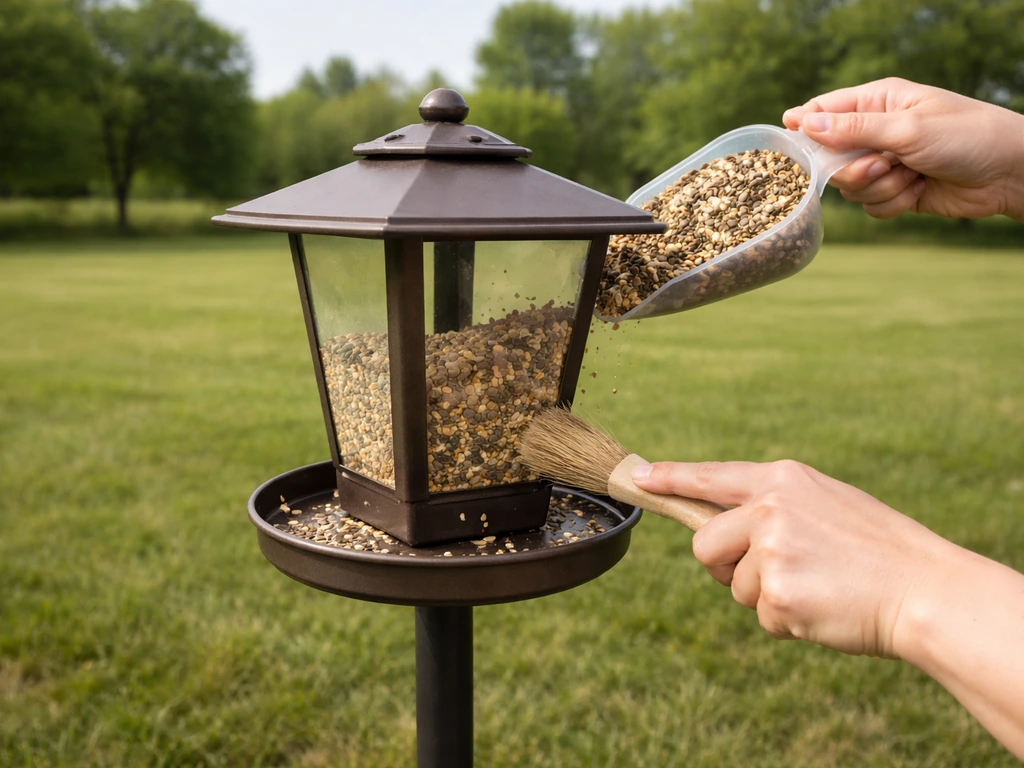
Placement matters more than most people realize. Crows prefer open sightlines where they can watch for danger while feeding. A feeder in the middle of an open yard is easier for crows to use than one positioned closer to dense shrubs or under a tree canopy with limited approach angles. That said, do not move feeders so deep into cover that the small birds you want cannot safely use them either. The goal is reducing easy crow access, not creating new problems.
For maintenance, K-State Extension guidance on feeder management recommends cleaning up spilled seed regularly to prevent buildup. This is especially important for crow management because accumulated seed on the ground is what crows notice and return to. Make ground-level cleanup part of your regular routine, not just an occasional task. Disposing of excess droppings near feeders also matters: it keeps the area cleaner and removes one of the signals that draws scavenging birds back to the same spot.
If crow pressure is severe, exclusion approaches can help as a last resort. USDA Wildlife Services recognizes exclusion using netting and overhead wire grids as a recognized method for keeping birds from accessing a specific resource. For a feeder, this could mean placing a wire cage or barrier around your feeder station with openings large enough for small birds but too tight for a crow to fit through. These are commercially available for squirrel exclusion and work on the same principle for large birds.
The Penn State Extension guidance on managing crow behavior emphasizes that early intervention is more effective than waiting until habits are entrenched. If you have only started seeing a crow or two at your feeder, act now. The longer crows associate your yard with reliable food, the more persistent they become and the harder it is to redirect their attention elsewhere.
The honest trade-off: what crow management actually costs you
There is no crow-proof feeder that still attracts every other species you want. Every change you make to reduce crow access involves some trade-off. Removing peanuts cuts crow visits but also affects blue jays and woodpeckers. Woodpeckers can take food from bird feeders too, but whether they eat from them depends on the feeder type and how the food is offered woodpeckers eat from bird feeders. Switching to a cage-style suet feeder reduces crow access but may also slow down larger woodpeckers. Tube feeders with short perches exclude crows but also exclude some of the larger songbirds people enjoy watching. None of these are dealbreakers, but it is worth going in with clear expectations about what you are optimizing for.
It is also fair to say that crows are not all downside in a backyard ecosystem. They are intelligent, fascinating birds, and some people actively welcome them. If crow-watching is part of your enjoyment, you could run a separate, dedicated crow station farther from your main feeder with whole peanuts or corn, which keeps them occupied away from the smaller-bird feeders. That separation strategy works well when you have enough yard to give each bird type its own zone.
For most backyard birders who are troubleshooting unwanted dominance at a feeder, the practical answer is: switch feeder types, eliminate the highest-value crow foods from open feeders, clean up ground access religiously, and act before crows have had weeks to form a strong habit. Those steps alone reduce most crow pressure noticeably. The occasional crow still passing through is a different situation than a crow that has learned your yard is a reliable daily stop, and the former is rarely a problem worth stressing over.
FAQ
Do crows eat directly from the feeder, or do they mostly take food from the ground?
They do both, but ground access is often the bigger driver. Even if a feeder design limits perching, crows quickly exploit visible spills, seed dropped during feeding, or food that falls from tube and hopper feeders. If you clean beneath the feeder daily, crow visits usually drop faster than if you only change the feeder.
Will switching to sunflower hearts or peanuts still attract crows even with a tube or hopper feeder?
Yes, higher-value foods can still draw crows, especially if your feeder setup allows crumbs or spilled kernels to accumulate below. If you keep sunflower hearts, use a feeder style that minimizes leakage and commit to frequent ground cleanup. Otherwise the food value plus ground availability makes the yard learnable for crows.
How quickly can crows form a habit at a feeder?
Crows can start returning within days once they find a reliable stop. Habit formation accelerates when the same foods are offered in the same location and spill is left to build up. If you notice the first repeat visits, treat it as early intervention, not a one-time event.
If I stop feeding peanuts and corn, will crows eventually leave for good?
Not always. Because crows can cache and because they remember successful locations, a sudden food change may reduce visits but not immediately end them. Give it time while also removing ground-level food access and adjusting feeder placement so there is less to cache or scavenge.
What should I do if smaller birds disappear and I rarely see a crow on the feeder?
Look for a feeding disruption pattern, not just direct observations. If activity drops and you see crowing or nearby scavenging, the crow may be controlling the area from nearby perches or using the ground. Clearing spilled seed and switching to feeders with smaller access openings often helps even before you see the crow at the exact feeder.
Do cage-style suet feeders and squirrel guards stop crows completely?
They can significantly reduce access, but not always eliminate it. Crows may still probe, exploit gaps, or take anything that falls. The key is choosing a design with openings that work for your target birds while leaving no easy route for a crow to access or topple food.
Is it safe or effective to use scare tactics to keep crows away?
Scare tactics can work briefly, but crows learn patterns quickly, so effectiveness often declines after a few days. If you use them, rotate methods and do not rely on only visual deterrents. Combine deterrents with structural changes, like reducing ground spillage and moving to feeder types crows cannot easily exploit.
Does moving a feeder into more cover help, or does it hurt smaller birds?
It can help with crow sightlines, but too much cover can reduce safety and access for smaller birds. Aim for an arrangement where crows have fewer clear approach angles while small birds can still land and feed comfortably. Test changes gradually rather than making a drastic relocation overnight.
How often should I clean up spilled seed, and what about droppings?
Daily cleanup under and around the feeder is ideal during periods of crow pressure, especially if kernels or pellets are dropping. Also remove excess droppings near the feeding area, because it keeps the spot cleaner and reduces scavenging reinforcement that encourages repeated visits.
If I want to invite crows instead of stopping them, what’s a practical setup?
Create a separate dedicated crow zone farther from your main feeders, and offer crow-friendly foods there so they have less reason to investigate your primary bird station. Keep that zone consistent so crows learn it as a target stop rather than sampling multiple areas, which reduces disruption to smaller birds.
When does exclusion (wire grids or netting) make sense for a backyard feeder?
Exclusion is most useful when crow visits are persistent and other changes fail. Make sure any barrier design still allows target birds to enter safely, and choose openings sized for small songbirds, not for large body access. If you have pets or children, also consider safe placement and secure installation to prevent entanglement or accidental contact.
Next Articles
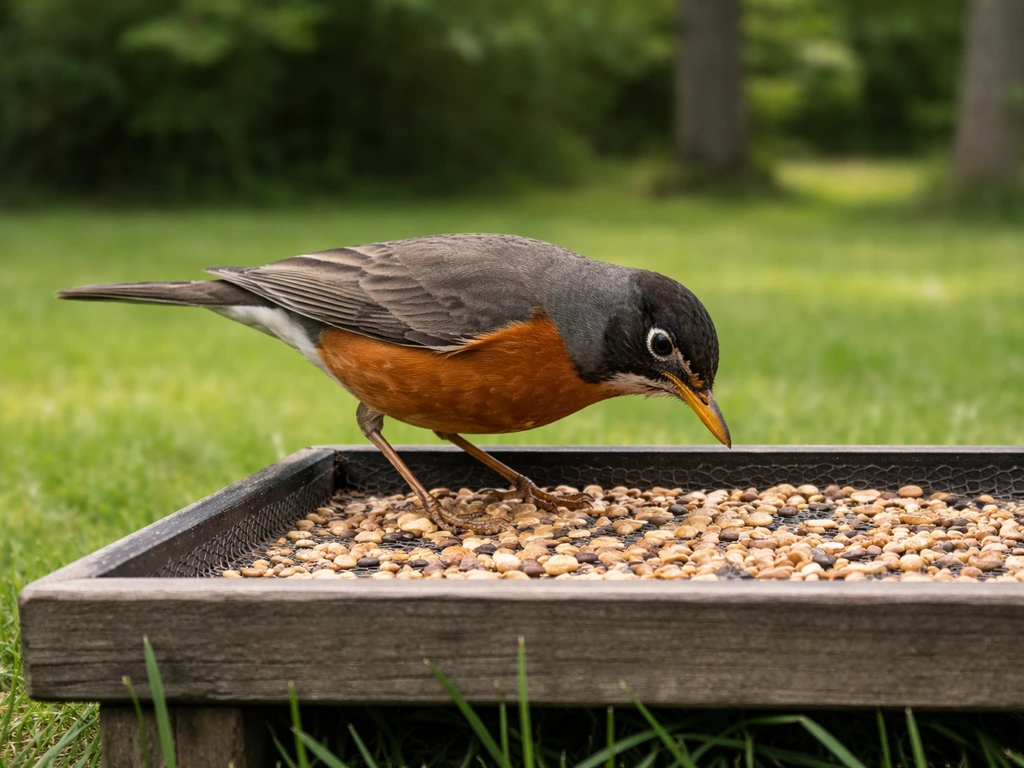
Do Robins Eat at Bird Feeders? What to Offer Today
Yes, robins may feed at platforms, not tube feeders. Learn what to offer, where to place it, and how to troubleshoot.
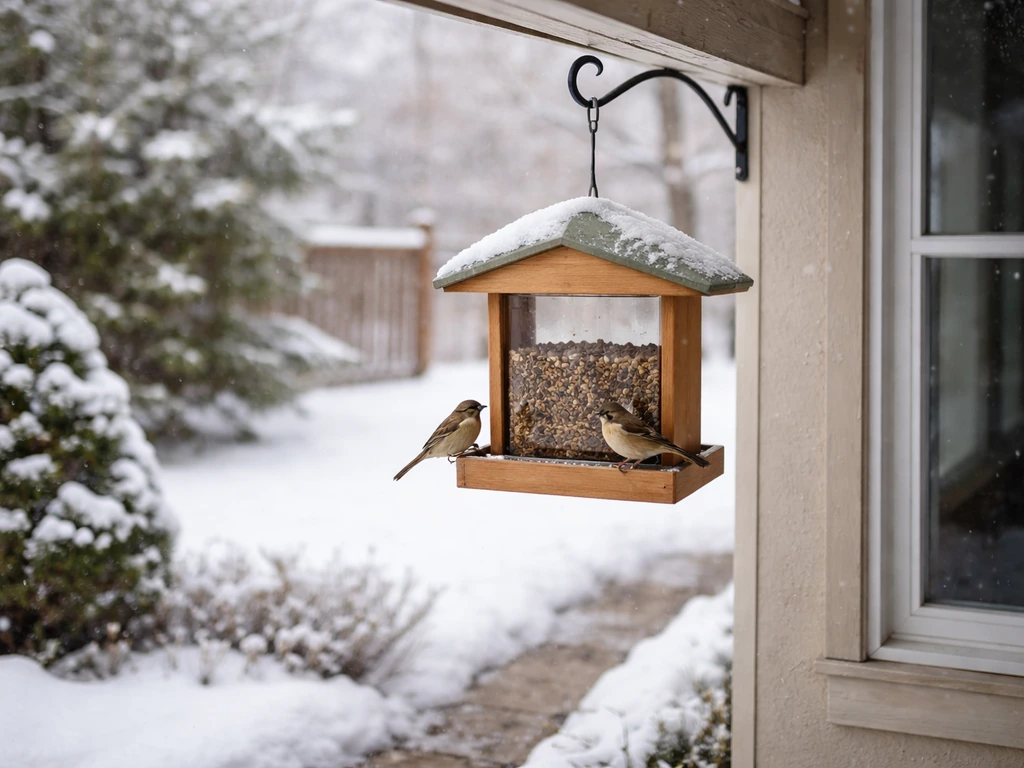
Where to Hang Bird Feeders in Winter: Exact Placement Tips
Exact winter feeder placement tips for birds and safety: height, window distance, shelter, and troubleshooting.
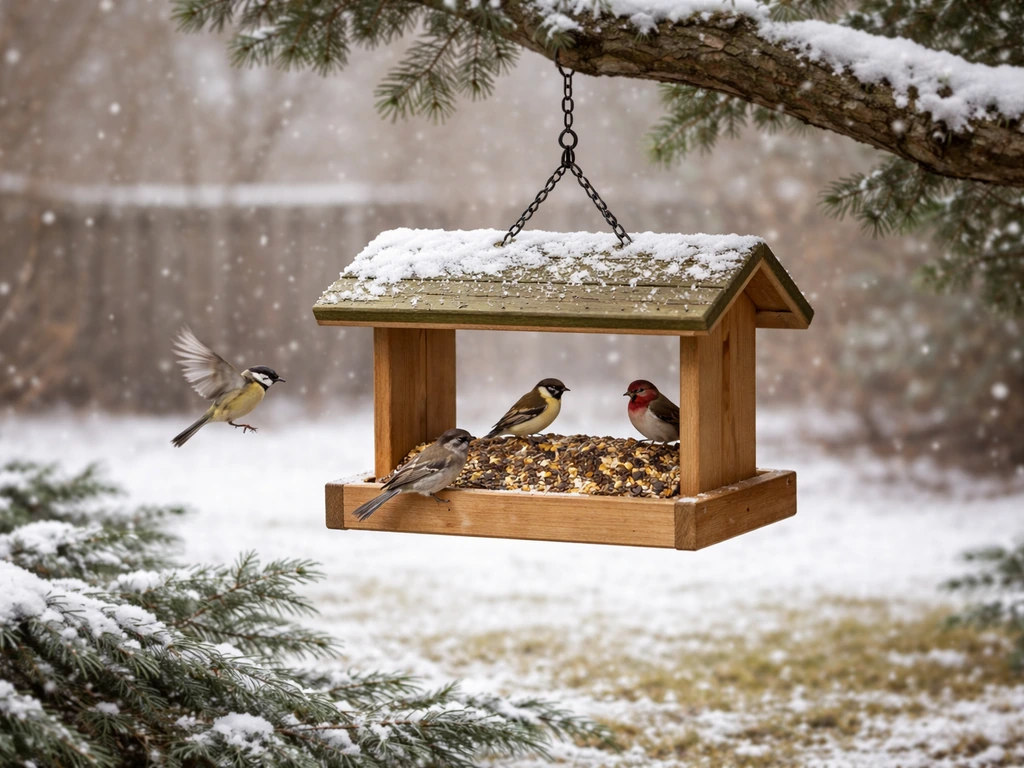
Do You Leave Bird Feeders Out All Year? Seasonal Guide
Should you leave bird feeders out all year? Get seasonal tips, safe feeding, and cleaning to prevent disease and pests.