Yes, bird feeders are generally safe to have, but not automatically, and not without some basic upkeep. The honest answer is that a well-maintained feeder in a thoughtful location does far more good than harm. An ignored, poorly placed, or overcrowded feeder is a different story. Most of the risks people worry about (to birds, to pets, to the neighborhood) are real but very manageable once you know what to watch for.
Is It Safe to Have a Bird Feeder? Risks and Fixes

Eleanor Hartwick
18 Jun 2026
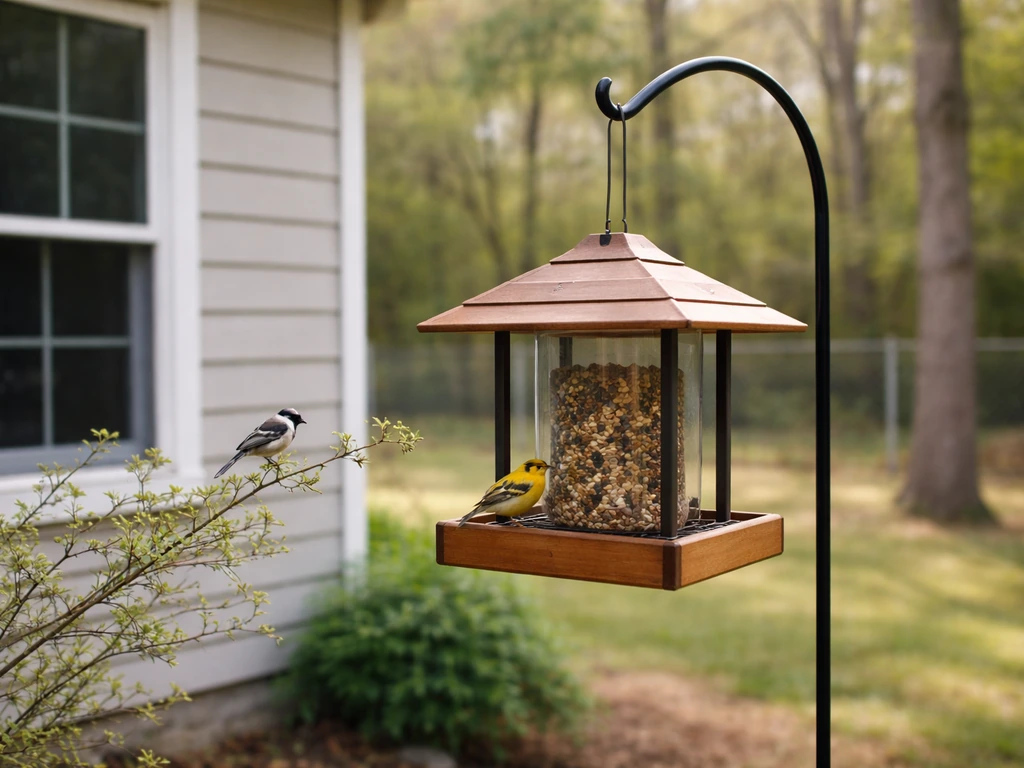
Are bird feeders safe or harmful? The direct answer
Bird feeders are not inherently dangerous, but they do concentrate birds in one spot, and that changes the risk profile. When birds from a wide area funnel into a single feeder, they share surfaces, droppings, and close airspace in ways that don't happen in the wild. That's the core of every feeder-related safety concern. The U.S. Fish and Wildlife Service specifically flags disease spread as a genuine consequence of that concentration effect. But the keyword there is 'can', feeders can create risk, not that they always do. A clean feeder with good placement and the right food choices keeps that risk low enough that millions of people run feeders year-round without ever seeing a problem.
The bottom line: feeders are safe when managed. They are not a set-and-forget item. If you're willing to clean regularly, choose food wisely, and check your setup a couple of times a season, you're very unlikely to cause harm. If you'd rather not do any of that, it's worth reconsidering whether now is the right time to run a feeder.
The real ways feeders can harm birds and other wildlife
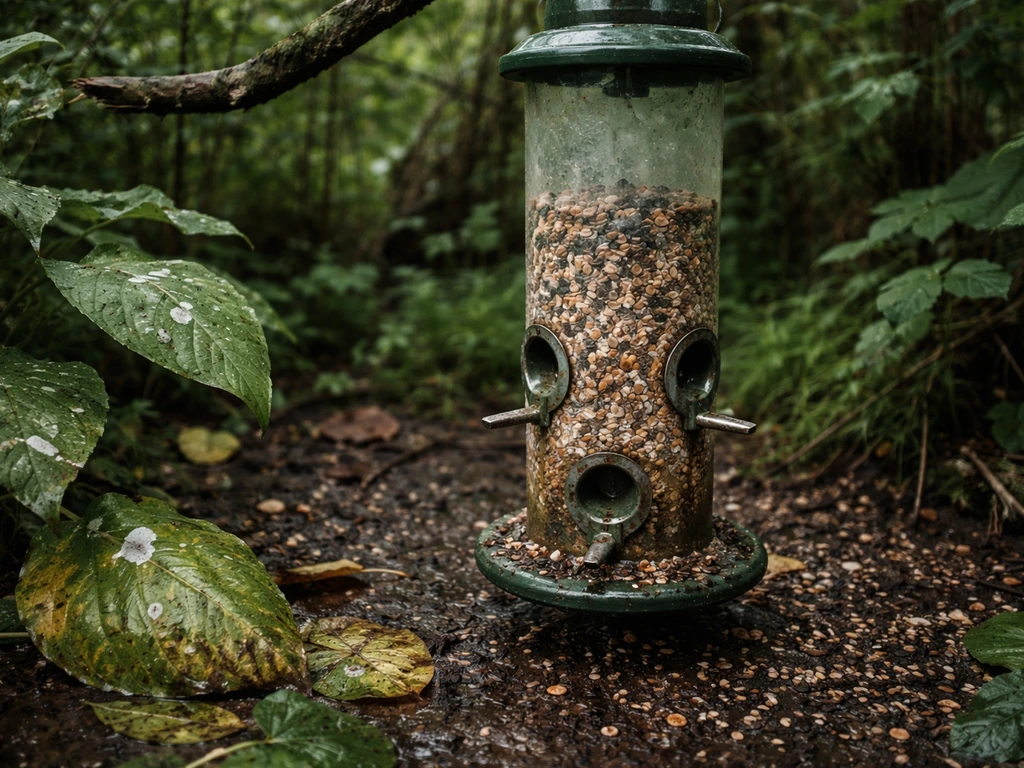
Understanding the actual risks makes it easier to avoid them. Here's what the research and real-world observation consistently point to:
- Disease transmission: Audubon lists several feeder-associated illnesses including mycoplasmal conjunctivitis (house finch eye disease), salmonellosis, aspergillosis, avian pox, and avian flu. These spread when sick and healthy birds share the same surfaces, perches, and spilled seed.
- Mold and spoiled seed: Wet or old seed grows mold quickly, especially in warm or humid weather. Aspergillosis is a fungal lung infection birds can contract from moldy seed, and it can be fatal.
- Overcrowding and competition: Dense feeder activity increases stress, injury from pecking disputes, and the odds that one sick bird infects many others in a short window.
- Window collisions: Poorly placed feeders push birds into glass. This is one of the leading human-related causes of bird death — estimated in the hundreds of millions annually in North America.
- Predator attraction: Feeders create predictable, easy hunting grounds for cats, hawks, and other predators. The seed on the ground can also attract rats and squirrels, which then attract larger predators.
- Raccoons, bears, and other wildlife conflicts: In rural and suburban areas, seed (especially suet or corn) draws wildlife that can become habituated to human spaces, creating safety problems for both the animals and residents.
- Dependence concerns: There's ongoing debate about whether feeders cause birds to rely on supplemental food to a harmful degree. Current evidence suggests most wild birds continue to forage naturally and use feeders as a supplement, not a replacement — but this is worth monitoring in your own yard.
Setting up safely: placement, height, and protecting birds from windows and predators
Placement is the one decision that's hardest to undo, so get it right from the start. The two biggest physical dangers a feeder creates, window collisions and predator vulnerability, are almost entirely a function of where you put it.
Window collision prevention
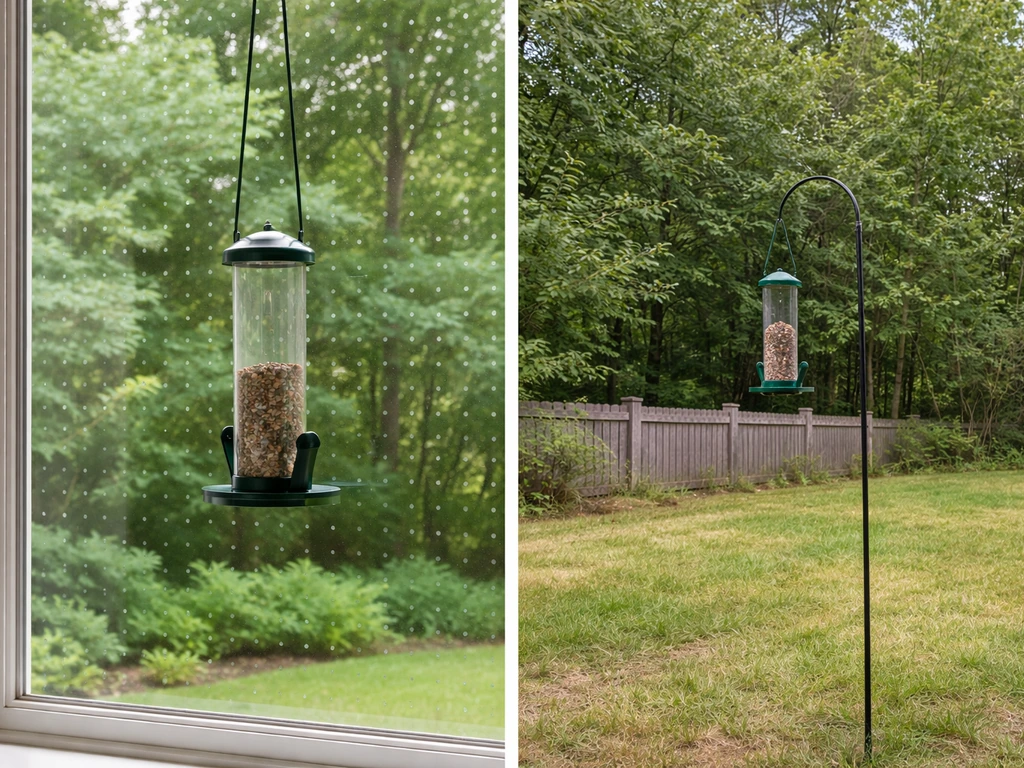
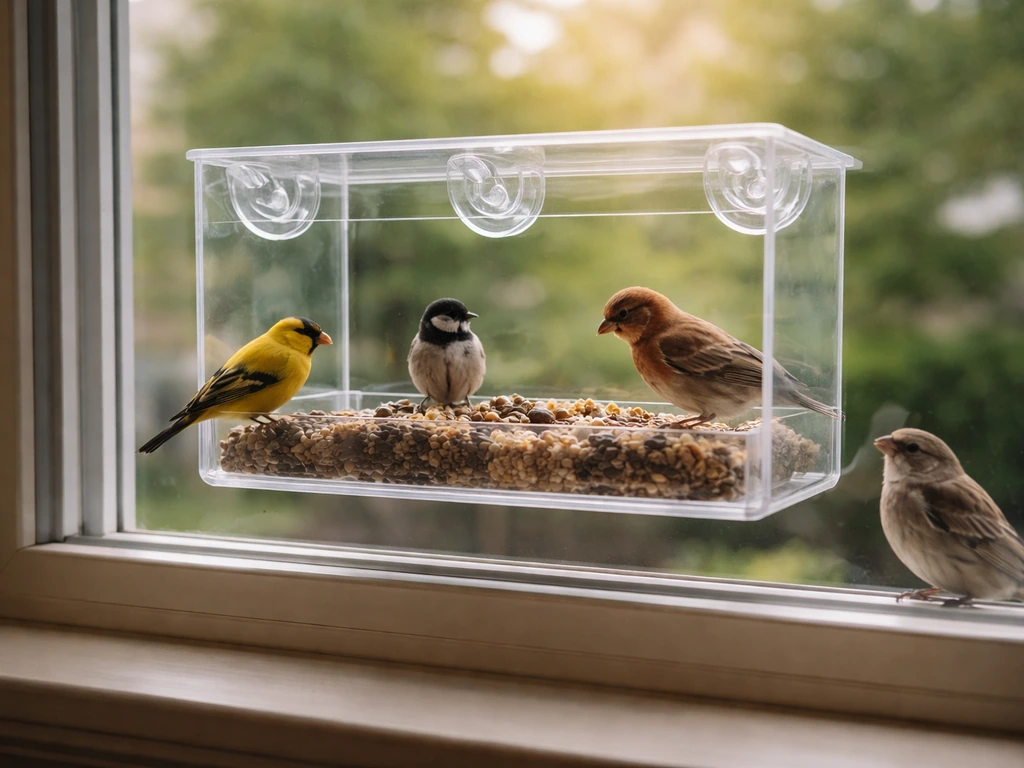
Place feeders either very close to a window (within 3 feet / about 1 meter) or far from it (more than 30 feet away). Both approaches work, for opposite reasons. Close feeders mean birds can't build enough speed to injure themselves if they do fly toward the glass. Far feeders mean birds have time to recognize the obstacle. The danger zone is the middle range, 5 to 30 feet, where birds flush fast and hit hard. Window bird feeders, which attach directly to the glass, fall into the 'very close' safe category when properly installed.
Height and predator cover
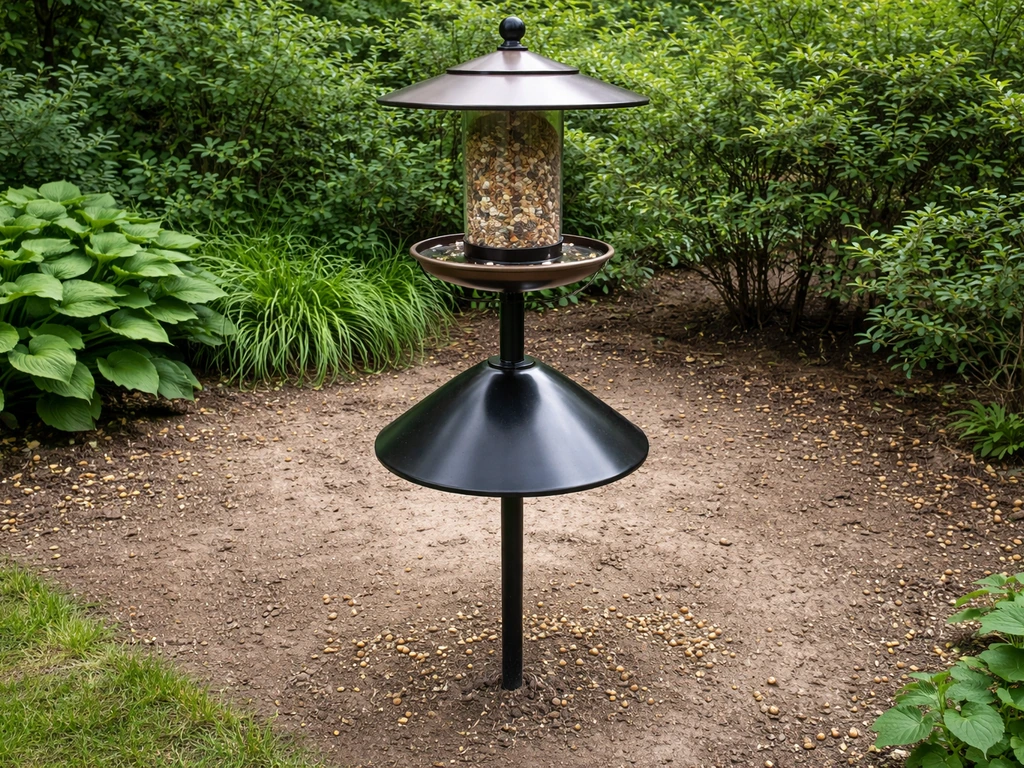
Mount pole feeders at least 5 feet off the ground, and position them 10 or more feet from shrubs, fences, or structures a cat could use to launch from. Baffle systems, smooth cone or tube baffles mounted on the pole below the feeder, are highly effective against both cats and squirrels. Give birds escape routes: place feeders near (but not directly in) shrubs or trees so they can retreat quickly if a hawk appears, but not so close that a cat can hide and ambush them. Scatter feeders or ground feeding trays should be elevated or avoided altogether if cats are active in your area.
Spacing multiple feeders
If you run more than one feeder, spread them out rather than clustering them. Wider spacing reduces the concentration of birds in one spot, which directly lowers disease transmission risk and aggressive competition. Even 10 to 15 feet between feeders makes a measurable difference in crowding behavior.
What to feed (and what to skip): seed, water, and feeder types
The food you put in a feeder matters as much as where the feeder sits. Metal bird feeders can work fine if they are easy to clean and kept in good condition, but upkeep matters as much as the material are metal bird feeders safe for birds. Poor seed quality and the wrong feeder design are two of the easiest things to fix.
Seed choices
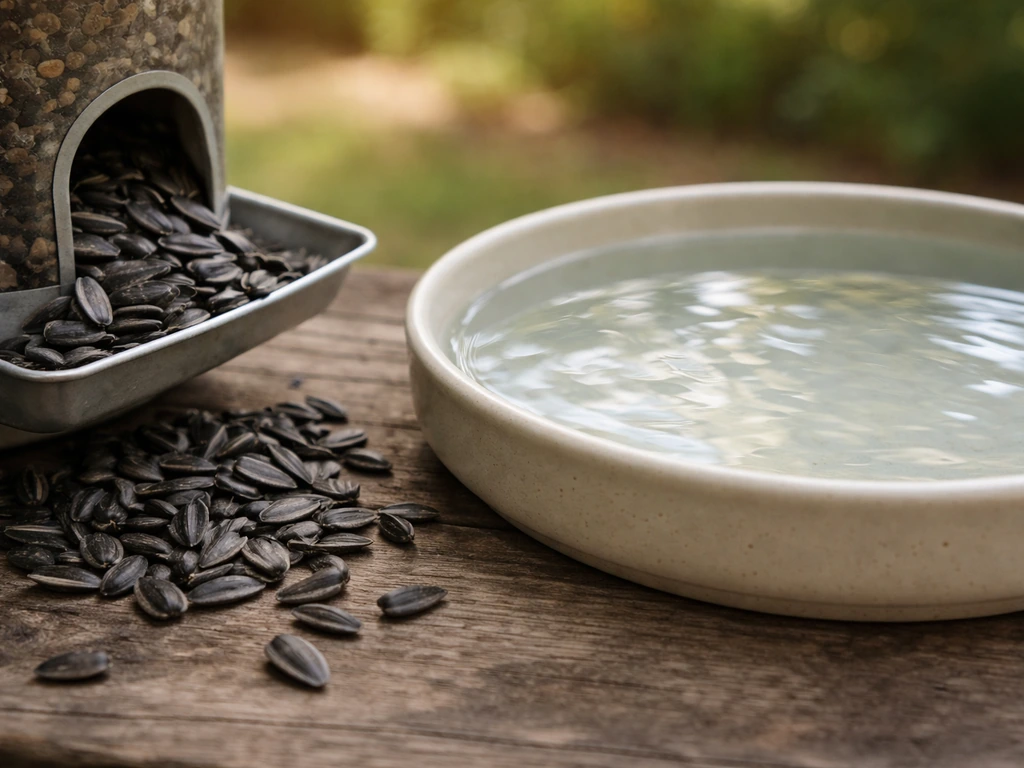
Black oil sunflower seed is the most broadly safe and universally attractive option, high calorie density, thin shells, and most feeder species eat it readily. Nyjer (thistle) seed is excellent for finches. Plain peanuts (unsalted, unflavored, aflatoxin-tested) attract woodpeckers, jays, and nuthatches. Plain peanuts can attract birds, but safe peanut butter bird feeders still require clean surfaces and careful placement to reduce disease and spoilage risk. Avoid seed mixes with a lot of milo, wheat, or filler grains, most birds push them onto the ground where they rot and mold fast. Never use seed that smells musty, looks clumped, or has visible mold. Spoiled seed is one of the fastest ways to make a feeder dangerous.
Water
A clean birdbath or water dish near your feeder is genuinely beneficial, but water is also one of the fastest vectors for disease if it goes stale. Change the water every one to two days in warm weather, scrub the basin weekly, and make sure it drains fully before refilling.
Feeder types and design
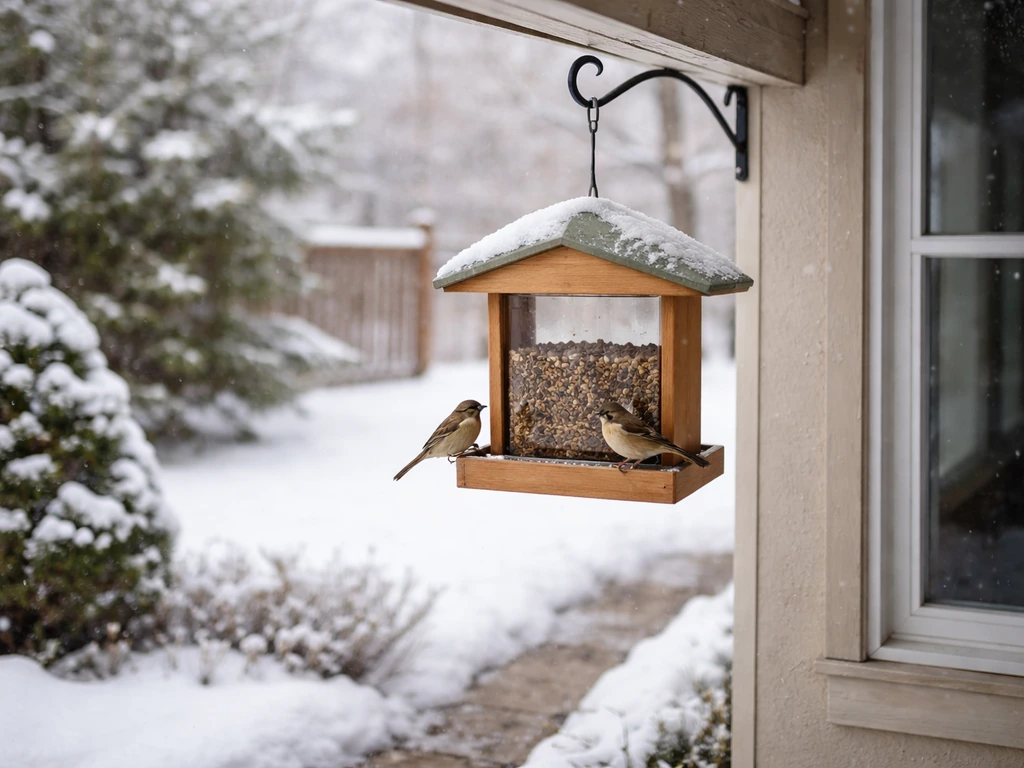
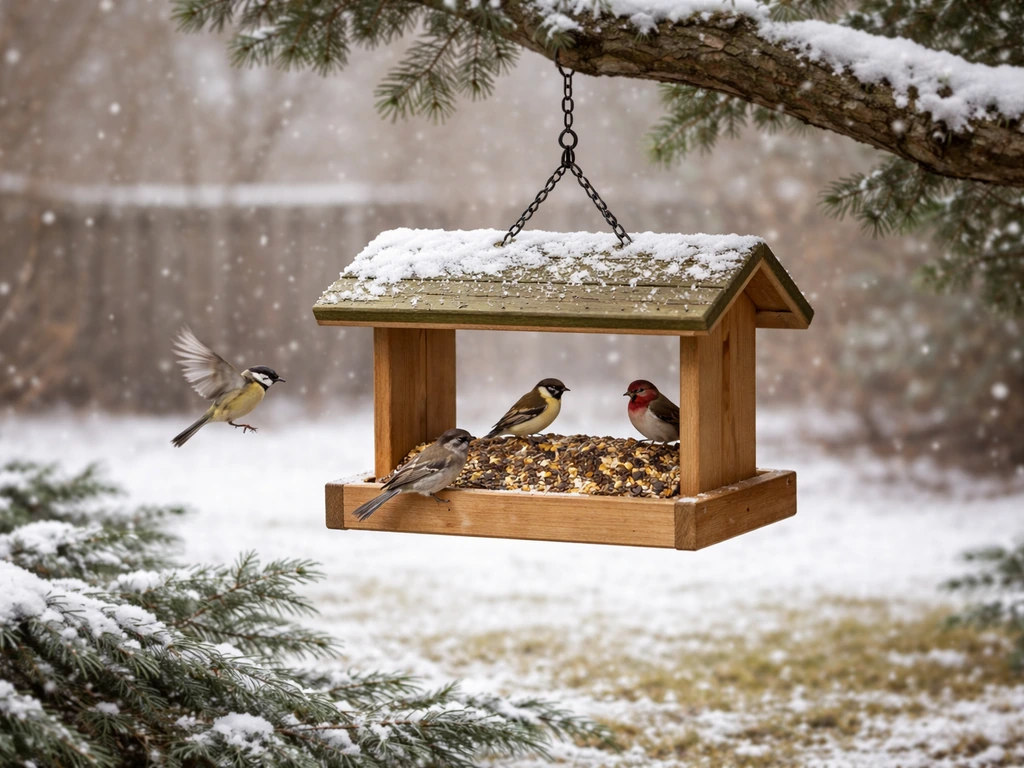
Tube feeders with small ports are generally lower risk than flat open trays because they limit direct contact between birds. The RSPB specifically flags flat or open platform feeders as higher disease-transmission surfaces, and recommends using them with more caution and cleaning them more frequently if you do use them. Tube and hopper feeders are generally easier to keep clean and allow better seed flow. Metal feeders hold up better through temperature extremes and are typically easier to disinfect than wood or lower-grade plastics. The questions of whether plastic bird feeders are safe and whether metal bird feeders pose any risks, including whether metal gets hot enough to burn birds' feet, are worth understanding when choosing your equipment.
What not to add
Don't put out salted nuts, seasoned foods, bread, or anything processed for human consumption. These can cause digestive problems and nutritional issues in birds. Honey-based feeders and homemade peanut butter mixes are sometimes recommended online but carry specific risks: honey ferments, and some peanut butter additives are problematic, if you want to offer peanut butter, plain unsweetened varieties used in purpose-built feeders are the safer route. The feeder paint question also comes up often: if your feeder is painted or treated, make sure any finish is food-safe and fully cured before birds contact it.
Keeping it clean: disinfecting schedules, mold prevention, and hygiene basics
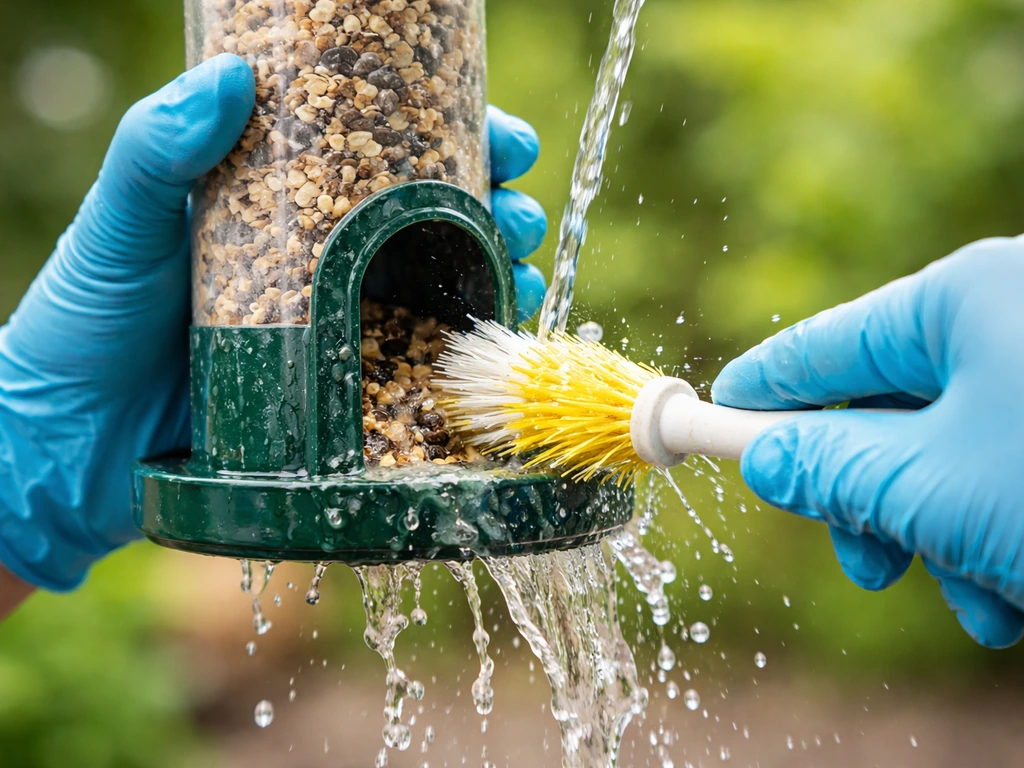
This is the section that most people skip, and it's the one that matters most. Most feeder-related bird illness is preventable with consistent cleaning. Audubon also lists common feeder-site illnesses, such as house finch eye disease, salmonellosis, aspergillosis, avian pox, and avian flu, and links lower risk to cleaning and maintenance Most feeder-related bird illness is preventable with consistent cleaning.. The guidance from Cornell Lab's Project FeederWatch (via Audubon) is to clean seed feeders about every two weeks under normal conditions, and to double that frequency, weekly, if you see signs of illness in visiting birds.
Basic cleaning steps
- Empty the feeder completely and discard all old seed.
- Scrub all surfaces with a stiff brush and hot soapy water to remove seed residue, droppings, and biofilm.
- Disinfect using a diluted bleach solution (roughly 1 part bleach to 9 parts water) or a vinegar solution for a milder option. Let it soak for a few minutes.
- Rinse thoroughly — no bleach residue should remain.
- Allow the feeder to dry completely before refilling. This step is non-negotiable. Audubon is explicit that moisture left in the feeder is what drives mold and bacterial growth.
- Clean the area below the feeder too. Rake up spilled seed and droppings regularly to reduce ground-level disease and rodent attraction.
Where to clean
The CDC is clear on this: do not clean bird feeders in your kitchen or any food-preparation area. Use an outdoor utility sink, a bucket designated for feeder cleaning, or a bathroom sink you can disinfect afterward. Birds, including healthy-looking ones, can carry Salmonella without showing symptoms, and feeder surfaces can harbor it. This isn't cause for alarm, but it does mean treating feeder cleaning as you would any animal-related hygiene task, wash your hands thoroughly after handling feeders, seed, or the ground area beneath them.
How much seed to put out
The RSPB's guidance is practical: put out only as much food as birds eat within one to two days. If seed is sitting in the feeder for a week, you're either overfilling or the feeder isn't getting much traffic, either way, that seed is becoming a problem. Start with smaller amounts and adjust based on what you actually see disappearing.
Keeping people and pets safe, and handling unwanted visitors
Bird feeders are very low risk for people when basic hygiene is followed. The main human health concern is Salmonella exposure from handling contaminated feeders or seed. Always wash hands after any contact with feeders, seed bags, or the ground under feeders. Keep children from handling feeder components without adult supervision and handwashing afterward. Do not compost seed or droppings, bag and discard them.
Pets and feeders
Outdoor cats are both a safety risk to birds (they kill an estimated 1.3 to 4 billion birds annually in the U.S.) and at risk from diseases birds can carry. If you have outdoor cats, keeping them indoors during peak feeder activity or using a cat enclosure is the most effective solution. Dogs are generally low risk around feeders but can disturb the ground area and scatter seed; training them to avoid the feeder zone keeps the setup functioning better.
Dealing with squirrels, rodents, raccoons, and bears
Squirrels are a nuisance issue rather than a safety one, and baffles plus weight-sensitive feeder designs handle most of it. Rodents are more serious, spilled seed on the ground is the main attractor. Raking up seed debris daily and using a no-mess seed blend (hulled sunflower, nyjer) that produces less waste goes a long way. If you're in bear country, the recommendation is to bring feeders in entirely from spring through fall, since even a single bear visit teaches the animal to associate your yard with food, which creates lasting problems beyond just the feeder.
What to do if birds get sick or something looks wrong
If you see birds acting lethargic, looking fluffed up outside of cold weather, having trouble flying, or showing visible eye problems (swollen, crusty, or discharge-covered eyes), take the feeder down immediately. Don't wait to see if it resolves. A sick bird at a feeder can infect every other bird that visits that day.
Step-by-step response to suspected illness
- Remove and empty the feeder the same day you notice the problem.
- Do a full disinfecting clean (bleach solution, full rinse, complete dry) before putting it back up.
- Leave the feeder down for at least one week to break the cycle of sick birds visiting the same location.
- Contact your local wildlife rehabilitator or state wildlife agency if you find dead birds — multiple deaths in a short period may need to be reported.
- When you bring the feeder back, monitor closely and clean weekly rather than every two weeks until you're confident the problem has passed.
Other problems to watch for
Aggressive behavior at feeders, one species dominating and excluding others, is usually a feeder-design or placement issue. Adding a second feeder in a different location, or choosing a feeder style that accommodates the displaced species, usually resolves it. Excessive seed waste on the ground means you're either using the wrong seed mix (switch to hulled varieties) or the feeder ports are too large for the species visiting. Ants in feeders are common in summer, ant moats (water-filled cups on the hanging wire above the feeder) are the most reliable fix.
Seasonal strategy: when to run feeders, when to pause, and how to switch things up
There's no universal rule that says feeders must run year-round or must be taken down in any particular month. The right seasonal approach depends on your region, local wildlife, and what you're seeing at your feeder.
| Season | General Guidance | Key Watch-Outs |
|---|---|---|
| Winter | Feeding is most beneficial — natural food is scarce and calories matter most for survival. High-fat options like suet and black oil sunflower are ideal. | Check seed for moisture/freezing; cold can slow seed spoilage but wet conditions still cause mold quickly. |
| Spring (migration) | Great time to keep feeders active — migrating birds use supplemental food as stopovers. Clean thoroughly after winter. | Disease risk is moderate; warm temperatures make seed spoil faster. Switch to smaller fill amounts. |
| Summer | Feeding is fine but requires more vigilance. Heat accelerates seed spoilage and mold dramatically. | Refill small amounts only. Check every 1 to 2 days. Consider pausing suet (it melts and goes rancid in heat). In bear country, bring feeders in entirely. |
| Fall (pre-winter) | Resume or increase feeding as temperatures drop. Natural food is declining and birds are fattening up for winter. | Do a thorough clean and inspection of all feeder equipment before ramping back up. Replace any cracked or damaged components. |
The idea that leaving feeders up in spring or summer will prevent birds from migrating or cause harmful dependence is not supported by evidence. Birds migrate based on photoperiod (day length), not food availability. However, summer does bring the highest risk of spoilage and mold, so if you're going to scale back at any point in the year, summer is actually the most defensible time to do it from a pure safety standpoint, not because it harms birds to have food available, but because maintaining safe feeder conditions in heat requires more effort.
When transitioning between seasons, do a full clean and inspection before changing your seed type or putting out fresh equipment. A transition clean at the start of fall and again at the end of winter covers most of what you need beyond the regular two-week cleaning cycle. That rhythm, routine cleaning every two weeks, deep clean at seasonal transitions, immediate action if you see sick birds, is really all the structure you need to run a safe feeder from January through December.
Your safe feeder checklist
- Feeder is placed within 3 feet or more than 30 feet from windows to prevent collisions.
- Feeder is mounted at least 5 feet high with a baffle to deter cats and squirrels.
- You're using quality seed: black oil sunflower, nyjer, or plain unsalted peanuts — no filler-heavy mixes.
- Feeder is filled with only 1 to 2 days' worth of seed at a time.
- Feeder is cleaned with hot soapy water and disinfected every two weeks (weekly if any illness is suspected).
- Feeder is completely dry before refilling.
- Feeder cleaning happens outside the kitchen — hands washed thoroughly after.
- Spilled seed and droppings under the feeder are cleared regularly.
- Water source nearby is changed every 1 to 2 days and scrubbed weekly.
- Feeder is taken down immediately if sick or dead birds are observed, with a full clean before returning it.
- In bear country: feeders are stored indoors from spring through fall.
- Feeder design, material, and any paint or finish have been checked for food safety.
FAQ
How do I know when I’ve put out too much seed and it’s becoming unsafe?
Use “last birds ate it” as your trigger, not a fixed date. In warm weather, if seed is still sitting after 24 to 48 hours, dump it, clean the feeder, and refill with a smaller amount. Seed that gets damp, clumps, or develops odor is a safety issue even if the birds still visit.
Do I take the feeder down if I only see a little illness, or only after confirmed disease?
If you notice mild congestion or a few crusty droppings, it’s usually about hygiene and spoiled seed rather than an emergency. Take the feeder down right away if you see lethargy, fluffed-up birds outside cold weather, trouble flying, or eye discharge or swelling. In those cases, remove food until the birds you see stop showing symptoms.
Are platform feeders safer than tube feeders for disease spread?
Yes, but you must change your cleaning pace. Flat trays and open platforms are harder to keep clean because birds sit and defecate directly in the same open surface. If you use them, empty and clean more often (often weekly), scrub corners thoroughly, and stop using them if you see persistent wetness or rapid spoilage.
Can birds get sick even if the feeder looks clean and the seed looks normal?
Not necessarily. Birds can still visit a feeder even when the seed is not visibly spoiled, and healthy-looking birds can carry bacteria. Instead of judging by appearance alone, switch to reliable, fresh seed sources, and follow a consistent cleaning schedule. When in doubt, discard any seed that smells musty or looks clumped.
Is rinsing a feeder enough, or do I need a deeper clean?
Do not assume a one-time wash is enough. Greasy residues, mold films, and biofilm can remain after light rinsing. Deep clean involves scrubbing all contact surfaces, then rinsing well and letting everything dry completely before refilling to prevent new contamination.
How often should I change and clean the water around the feeder?
Change water on schedule and remove access to stale water when it’s hot. For birdbaths and water dishes, change every 1 to 2 days in warm weather, scrub weekly, and ensure drainage is complete so water does not sit in cracks or puddle areas.
What’s the safest way to clean feeders if I don’t have an outdoor utility sink?
If you’re cleaning outdoors, use a designated container and keep it away from food prep. Use gloves if you have them, disinfect the sink or bucket afterward, and never use a brush that later goes into household food tasks. Also wash hands after touching feeders, seed, or the ground beneath them.
Can I use a hose or pressure washer to clean my feeder?
Avoid pressure washing in a way that spreads contaminated droplets. Scrub with a brush instead, then rinse thoroughly and let the feeder fully air-dry. If you use a hose, do it carefully so runoff does not create a contaminated puddle around patios or gardens where pets play.
Are peanuts safe in a feeder if they attract lots of different bird species?
Yes for many people, but you still need to manage disease risk and spoilage. Offer only plain, unsalted, unflavored peanuts (ideally aflatoxin-tested), use purpose-built peanut feeders, and keep surfaces clean. Also reduce waste, because peanut-rich setups can attract more birds and more droppings.
Why is so much seed ending up on the ground, and how do I reduce it?
Start with no-mess seed choices and use port size and feeder type that match your target birds. If you’re seeing heavy waste, you likely have too-large ports or a mix that birds can’t fully utilize. Switching to hulled sunflower or nyjer blends (where appropriate) usually reduces the amount that falls to the ground.
What should I check before using a newly bought or refinished feeder?
Yes, and it’s specifically about safety of materials and drying time. If the feeder is painted or has a finish, confirm it is food-safe and fully cured before birds contact it. Otherwise, residue can wash off into seed and contact birds’ feet and beaks.
If I live in bear country, do I just use a bear-proof feeder instead of taking it down?
Yes, and timing matters. Bring feeders in from spring through fall in bear country, because leaving them out teaches bears to return for food. Even one visit can create ongoing problems, and baffle or placement changes are usually not enough to stop learned behavior.
Does taking feeders down in spring or summer prevent birds from migrating or create harmful dependence?
It depends on the bird species you attract and your local conditions, but there is no evidence-based need to remove feeders solely to stop migration. If you scale back, the most defensible window for pure safety reasons is summer, when heat increases spoilage and mold risk and requires more frequent upkeep.
What should I do if I see a cluster of sick birds at the same feeder?
Watch for changes you can act on quickly. If you see lethargy, fluffed birds, eye swelling or discharge, or birds having trouble flying, remove the feeder immediately and clean up the area beneath it. Then restart only after the problem appears to stop, keeping to strict cleaning and fresh seed practices.
If I have multiple feeders, does spacing them really reduce disease risk, or is cleaning the only factor?
It can help, but it is not the only solution. Spreading feeders out reduces crowding and lowers transmission risk, but you still need cleaning discipline and the right feeder style. If birds are still packed tightly at one feeder, add distance and consider switching to tube or hopper designs.