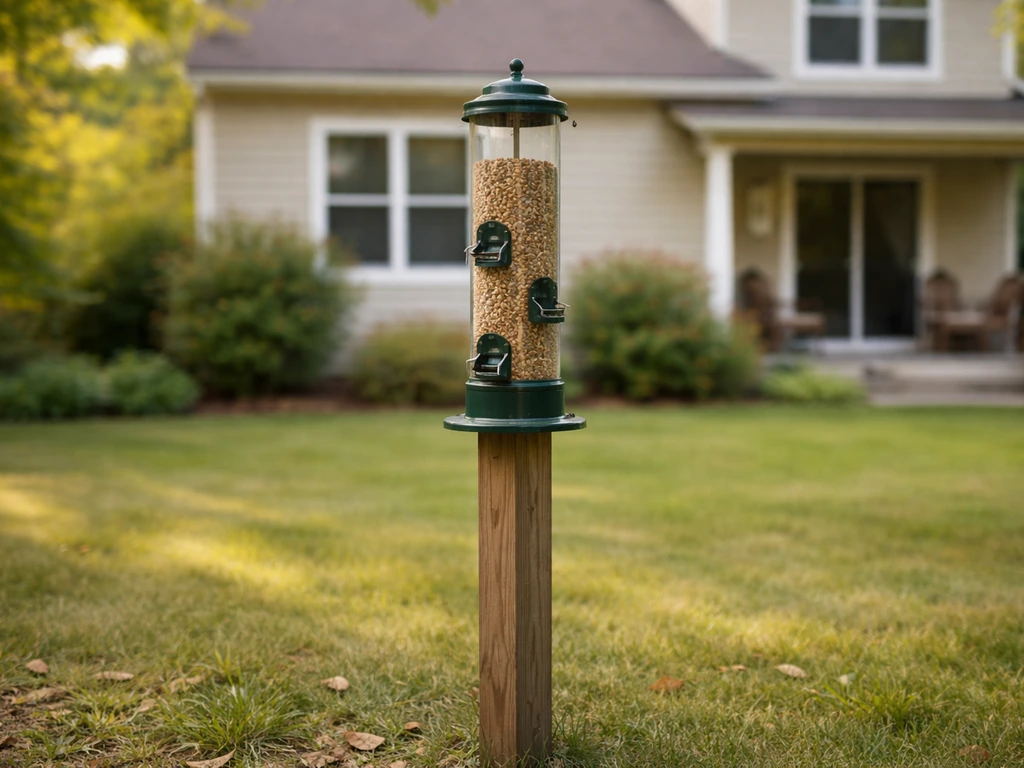
Your bird feeder is probably too close to your house if it sits between 3 and 30 feet from a window, that mid-range zone is where window collisions happen most often and where predators like cats and raccoons have the easiest time using your house's structure as cover. Either pull the feeder within 3 feet of glass (counterintuitive, but it works) or push it beyond 30 feet. Everything in between is the danger zone.
Is My Bird Feeder Too Close to the House? Distances, Fixes

Eleanor Hartwick
6 Jul 2026
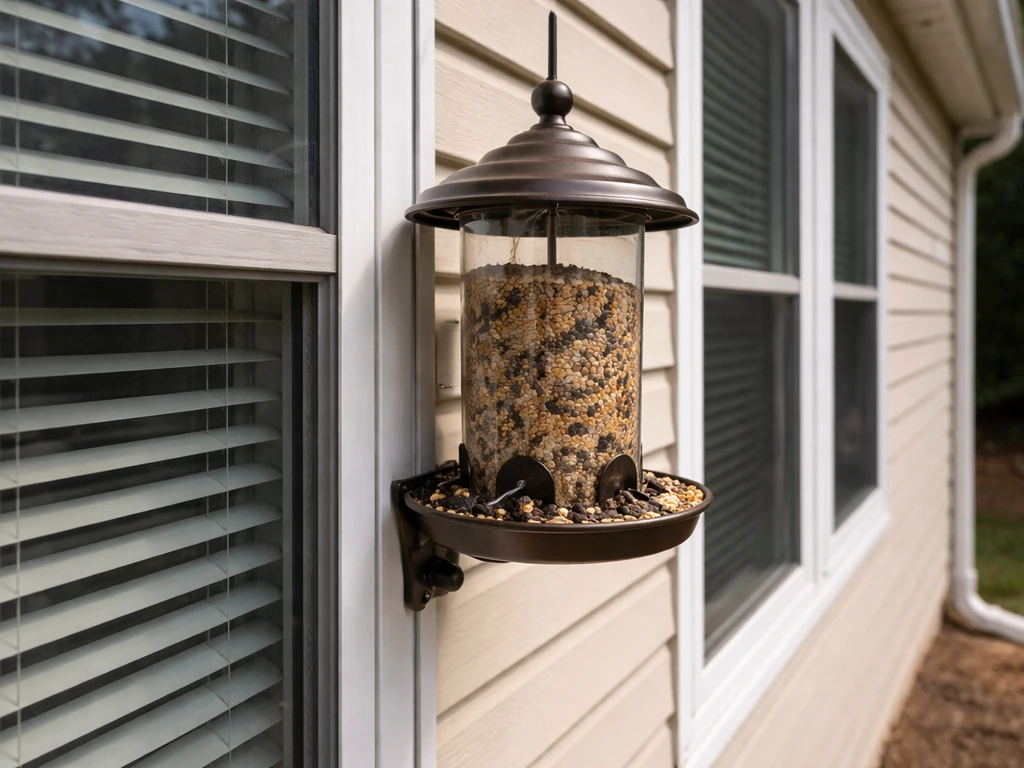
The 3-foot and 30-foot rule explained
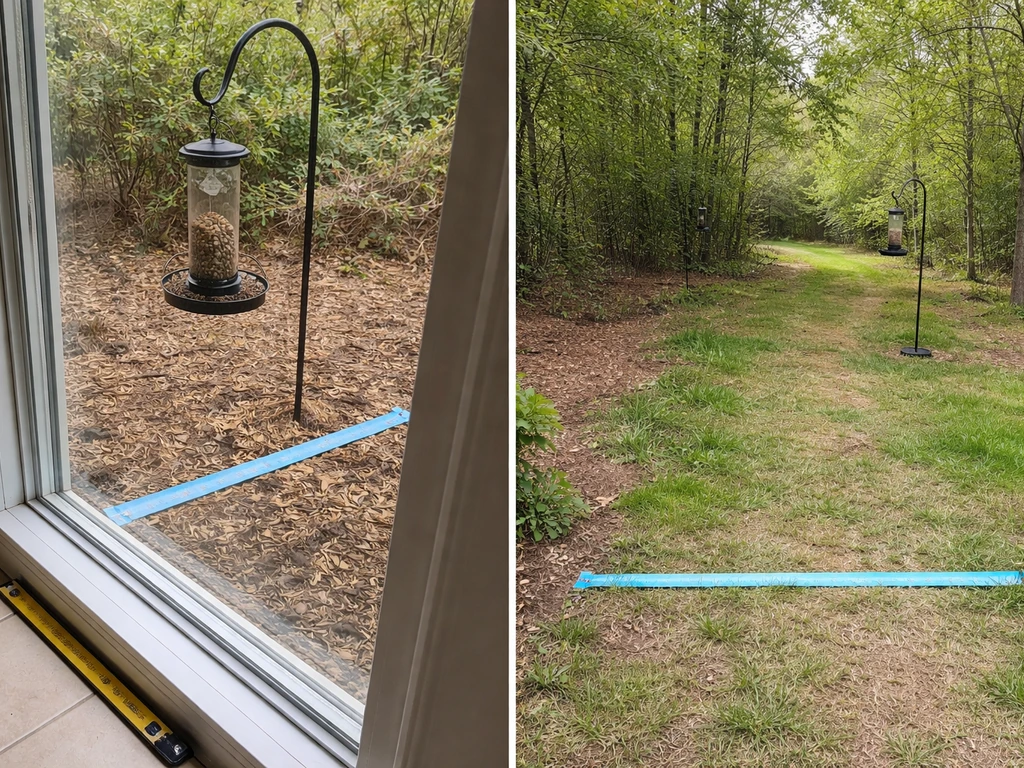
The U.S. Fish and Wildlife Service, Audubon, and Cornell Lab all converge on the same two safe distances: closer than 3 feet to a window, or farther than 30 feet away. As a general guideline, aim to place your bird feeder either close to the house or far enough away to reduce window collisions, which is why distance matters so much safe distances. The logic is straightforward. When a feeder sits within 3 feet of glass, a bird that takes fright and flies toward the window doesn't have enough speed built up to cause a fatal impact. When a feeder sits beyond 30 feet, birds have time to recognize the glass as a barrier and redirect. The deadly window-to-feeder range is roughly 3 to 30 feet, because that's where birds build up enough velocity to sustain serious or fatal injuries on impact.
One important caveat: the American Bird Conservancy points out that blank" rel="noopener noreferrer">unless your windows have been treated to prevent collisions, there's technically no such thing as a completely safe distance. That's not meant to make you give up on feeding birds, it's a reminder that distance alone isn't a complete fix. You also need to think about what's between the feeder and your house, what's reflected in your windows, and whether any other mitigation is in place. The U.S. Fish and Wildlife Service also recommends additional collision mitigation such as external insect screens that reduce reflections, UV-reflecting glass products, and reducing artificial lights at night blank" rel="noopener noreferrer">layer collision-mitigation beyond distance, including treated glass and lighting changes.
Proximity problems worth watching for
Window collisions
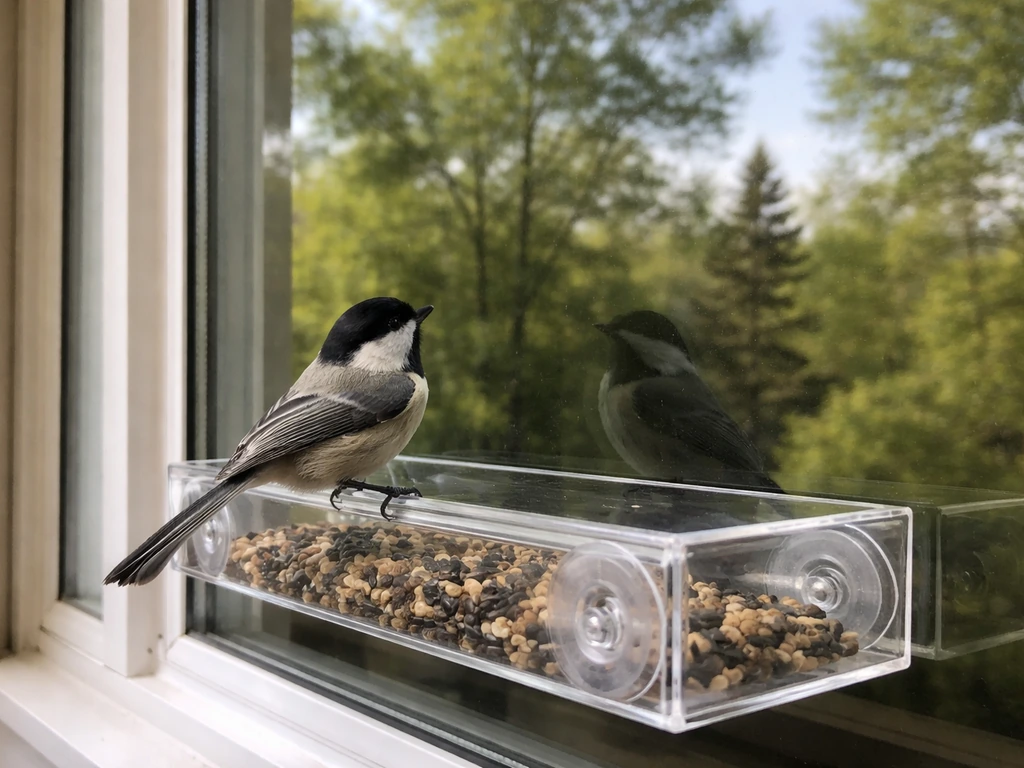
This is the big one. Reflections in glass can look like sky, trees, or open flyway to a bird, and they simply can't distinguish a reflected image from the real thing. If your feeder is in that 3 to 30 foot window danger zone, you will almost certainly lose birds to strikes over time. You might find dazed birds sitting on the ground below a window, or sadly, dead ones. Sometimes you'll just notice smudge marks on the glass where birds have hit. Watch for those signs.
Cats and ground predators
A feeder close to your house means cats, squirrels, and raccoons can use your foundation, porch railings, downspouts, and window sills as launching points. A feeder on a deck railing or hanging just off the eaves is very easy for a cat to ambush. You'll notice birds being skittish, fewer birds visiting, or actual predator activity around the feeder. Squirrels become a near-constant problem when there's a structural shortcut, and once raccoons learn your feeder location, they'll work hard at it.
Mess and structural issues
Bird droppings, hulls, and discarded seed accumulate fast under a close-in feeder, and that mess lands on your deck, siding, and foundation. Wet seed and hulls breed mold and attract rodents. If the feeder is under an overhang or close to a vent, you can also end up with birds investigating those spaces for nesting, which causes its own problems. This isn't a reason to stop feeding, but it's a reason to be thoughtful about where exactly you put the feeder.
How to assess your current setup today
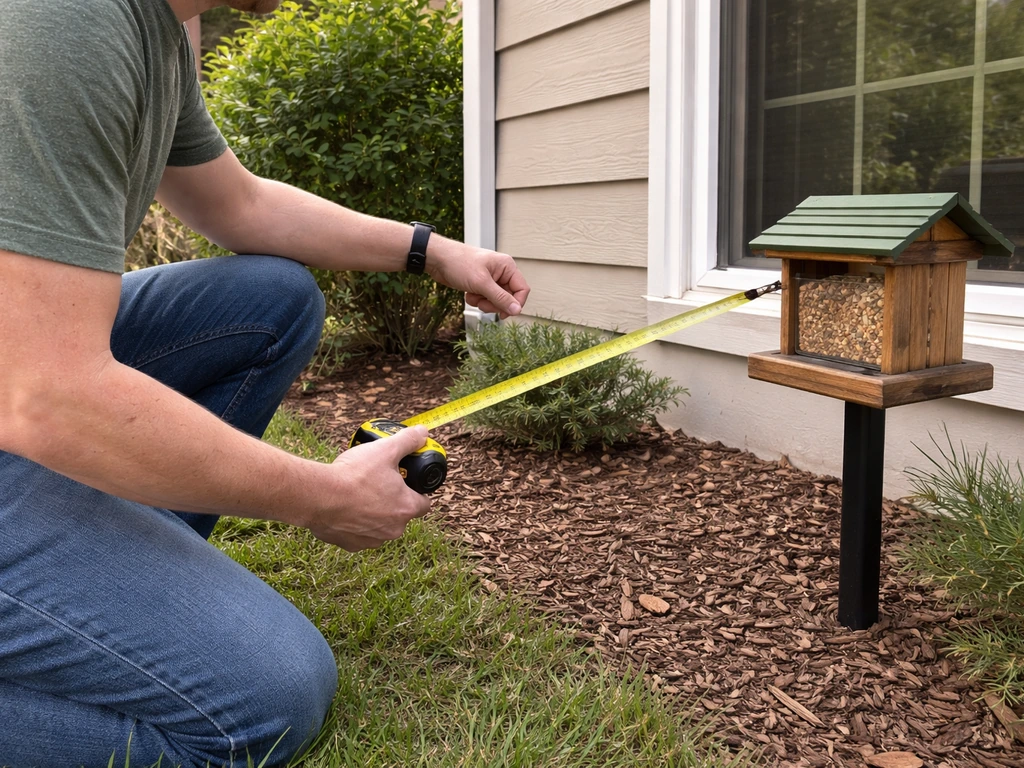
Grab a tape measure and spend five minutes outside. A common starting point is to place the feeder either within 3 feet of glass or beyond 30 feet to reduce collision risk. These are the three things to check:
- Measure from your feeder to the nearest window pane, not the frame, not the wall, but the glass itself. If that number is between 3 and 30 feet, you're in the collision risk zone.
- Look at your windows from the feeder's position. Walk to the feeder and look back. Are you seeing sky, trees, or garden reflected in the glass? That's what birds see. A reflective window is a much higher risk than a window with interior blinds, a screen, or exterior netting.
- Look at the horizontal flight path. Is there a clear, unobstructed line from the feeder to a window? Shrubs, a fence, or even a large planter between the feeder and the window can break up the flight line and reduce risk.
Also note what's directly below and around the feeder. Is there dense shrub cover within 10 feet? That's good for birds seeking shelter after feeding, but it's also good cover for cats to hide in while waiting. Is the feeder mounted on a structure that predators can easily climb? A deck post with no baffle is an open invitation.
Best placement fixes and how to make them today
- If you're in the danger zone (3 to 30 feet), decide which direction to move: in or out. Moving closer is often easier in small yards, especially if you have a window box or suction-cup feeder option. Moving farther out requires a pole or shepherd's hook at least 30 feet from the nearest glass.
- Mount a freestanding pole in an open area at least 30 feet from the house. Place it 10 to 12 feet from shrubs or trees, close enough that birds have cover nearby but far enough that cats can't use the cover as a launch point.
- If you move the feeder to within 3 feet of a window, add window treatment. The 2x4 rule from Audubon is a practical benchmark: markings spaced roughly 2 inches apart horizontally and 4 inches apart vertically across the glass. That pattern is dense enough for birds to register the barrier. Note that decals on the inside of the glass and interior blinds generally do not deter birds during the day, they need to be on the exterior surface.
- Add a baffle to any pole-mounted feeder. A cone baffle below the feeder stops squirrels and raccoons from climbing up. A weather guard baffle above it protects seed from rain and discourages larger birds from perching on top.
- Clear out dense ground cover directly below the feeder so cats can't hide there. A 6 to 8 foot radius of open space under the feeder is a reasonable target.
What to do when you can't move the feeder
If you're on a balcony, in an apartment, or simply stuck with a window-adjacent feeder as your only option, you're not out of luck. You just need to layer your mitigation instead of relying on distance. Even if you already follow the 3-foot and 30-foot rule, the height of a feeder can still matter for bird safety can a bird feeder be too high.
- Use a window-mounted suction-cup feeder placed directly on the glass. This is the closest-possible option and actually reduces collision risk because birds land on the glass rather than approaching it at speed.
- Apply exterior window film or tape with the 2x4 spacing pattern. Products like Feather Friendly tape or ABC BirdTape are designed for this and can be applied to balcony doors and windows.
- Add an external insect screen over large windows facing the feeder. Screens diffuse reflections and create a visible barrier that birds recognize. They're one of the more effective passive deterrents according to FWS guidance.
- Reduce interior lighting near the windows at night to cut down on reflections and light pollution that can confuse birds after dark.
- Hang the feeder off a balcony railing bracket angled away from glass, and use a tray feeder with a lip to catch hulls and droppings before they fall to the floor below.
- Switch to lower-mess food options like hulled sunflower, nyjer seed in a sock feeder, or suet cakes to minimize the accumulation problem when cleanup access is limited.
Feeder and food choices that reduce risk
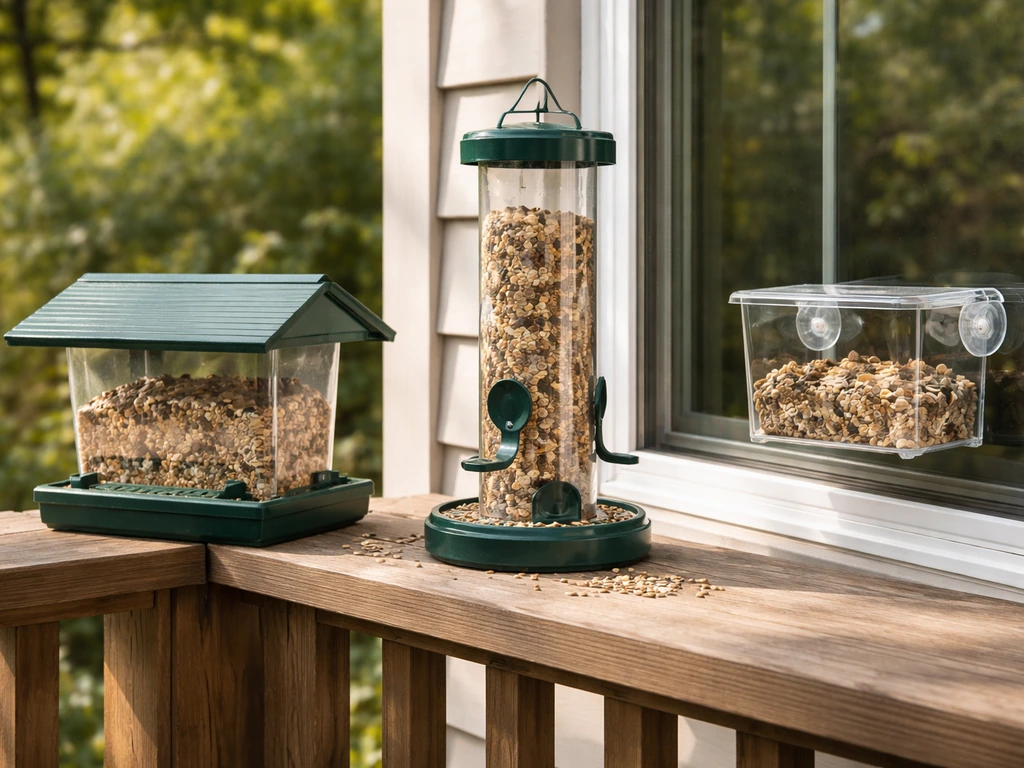
Not all feeders create equal risk near the house. Here's a quick comparison of the most common types and how they behave in close-in placements:
| Feeder Type | Collision Risk (near house) | Predator Access Risk | Mess Level | Best for Close Placement? |
|---|---|---|---|---|
| Window suction-cup feeder | Very low (on glass) | Low | Low | Yes, ideal for under 3 ft |
| Hanging tube feeder (pole) | Moderate if 3-30 ft from window | Moderate without baffle | Moderate | Only if beyond 30 ft or with window treatment |
| Platform/tray feeder | High if facing window | High (open, accessible) | High | Not ideal close to house |
| Ground feeder | Low (flight path is low) | Very high | High | No, best kept away from structure |
| Suet cage (mounted to tree or post) | Low to moderate | Moderate | Very low | Reasonable with baffle and window treatment |
Food choice matters too, especially when mess is a concern near the house. Hulled sunflower seed (no shells) dramatically cuts the debris pile. Safflower seed is less attractive to squirrels and blackbirds, which can reduce the chaotic feeder activity that drives birds into panicked flights toward windows. Avoid cheap mixed seed with milo and millet if you're trying to minimize ground-level mess and rodent attraction near your foundation.
Baffles deserve their own mention here. A properly fitted squirrel baffle on a pole or hanging feeder does more than keep squirrels out. It also makes the feeder less accessible to raccoons and reduces the chance of larger animals knocking the feeder against your siding. Pair a weather dome on top with a cone baffle below for best coverage.
Seasonal and species-aware adjustments
Migration season (roughly April through May and August through October in most of North America) is when window collisions spike. Migratory birds are unfamiliar with your yard's layout and fly at night or in low light, making reflections especially dangerous. If your feeder is borderline on distance, this is the time to add temporary exterior window tape or move the feeder. In winter, the lower sun angle changes how windows reflect, and what looked fine in summer can suddenly become a mirror in January. Do a quick reflection check at the same time of day you see the most feeder activity.
Nesting season (spring through midsummer) brings increased territorial behavior. Some birds, especially American Robins and Northern Cardinals, will repeatedly fly at their own reflection in windows, which can look alarming but is different from collision behavior. If you're seeing this, a temporary visual break on the outside of the glass usually stops it.
Troubleshooting checklist: signs your feeder is too close
Run through this list if you're not sure whether your current setup needs to change:
- You've found dead or stunned birds near a window at least once in the past season.
- You see smudge or feather marks on your windows regularly.
- Birds seem skittish and flush easily from the feeder, rather than lingering to eat.
- Squirrels or cats are at the feeder more often than birds.
- There's a significant seed/hull mess accumulating on your deck, siding, or foundation.
- You've noticed rodents (mice, rats) near the base of the feeder or your foundation.
- Birds are approaching the feeder on a direct line that passes close to a large reflective window.
- Feeder activity dropped suddenly, which can indicate predator pressure nearby.
If two or more of those are true, it's worth making at least one change today, whether that's measuring and adjusting distance, adding a baffle, or applying window treatment. You don't have to overhaul everything at once. Start with the change most likely to address the specific symptom you're seeing: collisions get window treatment first, predator pressure gets a baffle first, mess gets a food or feeder-type swap first.
Bird feeding does come with trade-offs, and proximity to your house amplifies all of them. But most problems have practical fixes, and the goal is a setup that works long-term without creating harm. Distance is the single biggest lever you have, but when distance isn't an option, layered mitigation gets you most of the way there. Track what changes after each adjustment and give it at least a week or two before deciding whether something worked.
FAQ
If my feeder is exactly 3 feet from the window, is it safe?
Not guaranteed. The 3-foot threshold is a rule of thumb, not a guarantee, and reflections or a feeder-height issue can still contribute to strikes. If you can, measure from the feeder itself to the glass, then verify the reflection problem at the same time of day birds are most active.
How should I measure the distance, from the feeder hanging point or the tray itself?
Measure from the point the birds reach when feeding (usually the tray or perch level) to the window glass, not from the post or the roof edge. If the feeder swings in wind, estimate the closest point during movement, then add a small buffer beyond the threshold.
What if the feeder is farther than 30 feet, but there are trees or a roofline between it and the window?
That can help, but it can also worsen things if the obstacle creates a clear “tunnel” of reflection toward the glass. Do a quick check from inside the house (or using your phone camera) to see what a bird would visually see, especially in morning and late afternoon light.
Do window decals or window film replace the need to move the feeder?
They can reduce strikes, but they are most effective when installed correctly (coverage where birds fly) and when reflections are also managed. If collisions are already happening, distance remains the highest-leverage change, but treatments can be a strong second step if moving isn’t possible.
My issue is mainly cats and squirrels, not collisions. Should I still follow the 3-foot and 30-foot rule?
Yes, but you may get more benefit by focusing on access points first. A squirrel baffle on the pole plus a feeder style that is harder to climb (for example, properly mounted hanging with a cone baffle) often reduces predator visits faster than chasing the exact distance if you cannot move far.
Can a feeder close to the house increase rodent problems even if I clean regularly?
It can, especially if seed is spilled or shells collect on the ground. For practical control, clean daily under and around the feeder during heavy traffic, use hull-less options to cut debris, and avoid letting dropped seed accumulate near doors, vents, or foundation cracks.
Does the feeder height matter if I’m already outside the 3 to 30 foot range?
It can. Height affects how birds approach and whether they launch from nearby cover. If you’re stuck near a window, try to avoid placing the feeder at a height that matches nearby shrub or ledge lines that birds use as a ramp toward the glass.
What should I do if birds are hitting the window but I cannot move the feeder?
Layer mitigation immediately: add a window treatment that breaks up reflections and visibility, cover the feeder-side window area with an effective external solution if you can, and perform a reflection check at peak feeder times. Also consider a food or feeder-type switch that reduces frantic panicked flights.
How can I tell whether I’m seeing collision deaths versus territorial “reflection attacks”?
Reflection aggression often looks like repeated short flights or “sparring” in front of one window, while collisions usually show birds dazed on the ground or visible streaks and smudges from impacts. If you’re unsure, take note of timing (migration spikes often correlate with collisions) and whether birds land after hitting.
Is it better to move the feeder closer than 3 feet or farther than 30 feet?
Both approaches can work, but “closer than 3 feet” is more sensitive to reflection and setup details, so you need to verify at your actual viewing angles and times. If you can truly get beyond 30 feet with no major reflection funneling, that is often the simpler path.
What is the quickest change I can make first if I’m not sure what problem is biggest?
Start by addressing the most visible symptom. If you see strikes, do window mitigation first and then confirm whether the feeder is in the 3 to 30 foot zone. If you see consistent predator activity, install baffles and remove climbable access first. If mess is the main complaint, switch to hull-less food and improve cleanup around the feeder.
Will moving the feeder a few feet help if it’s in the danger zone?
Sometimes, but the key is crossing out of the 3 to 30 foot band, not just nudging it slightly. If you are at 25 feet and can’t reach beyond 30, consider either bringing it within 3 feet or adding a secondary mitigation like window treatment and changing the feeder type.
Next Article
How Far Should Bird Feeders Be From the House?
Set bird feeders 10 to 30 ft from the house to cut window strikes and mess while managing pests, cats, and disease risks