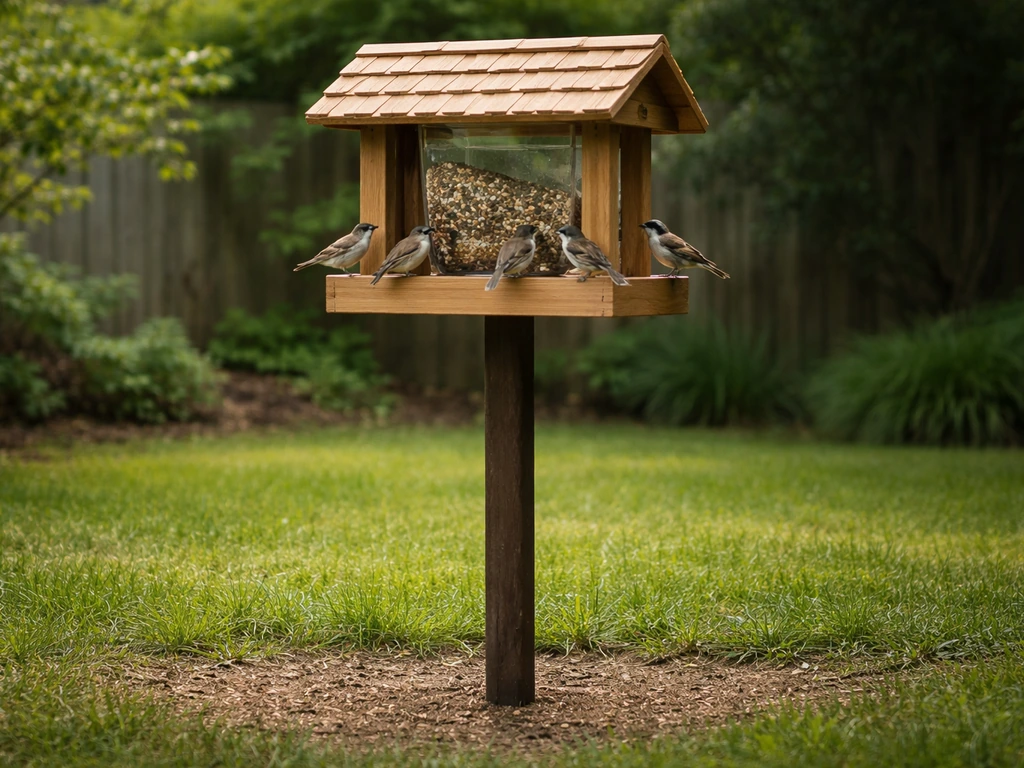
The short answer: aim for 5 to 6 feet off the ground
For most setups, hanging your bird feeder between 5 and 6 feet off the ground hits the sweet spot. That height keeps it out of easy reach of most ground predators and cats, gives birds a clear sightline to spot danger, and puts the feeder at a comfortable viewing level for you. Audubon recommends at least 5 feet as a baseline, and that tracks with what I've seen work consistently in real yards. If you're using a pole-mounted feeder, 5 feet to the feeding tray is a solid starting point. If you're hanging from a branch or hook, aim for the bottom of the feeder to sit around that same height.
Why height actually matters
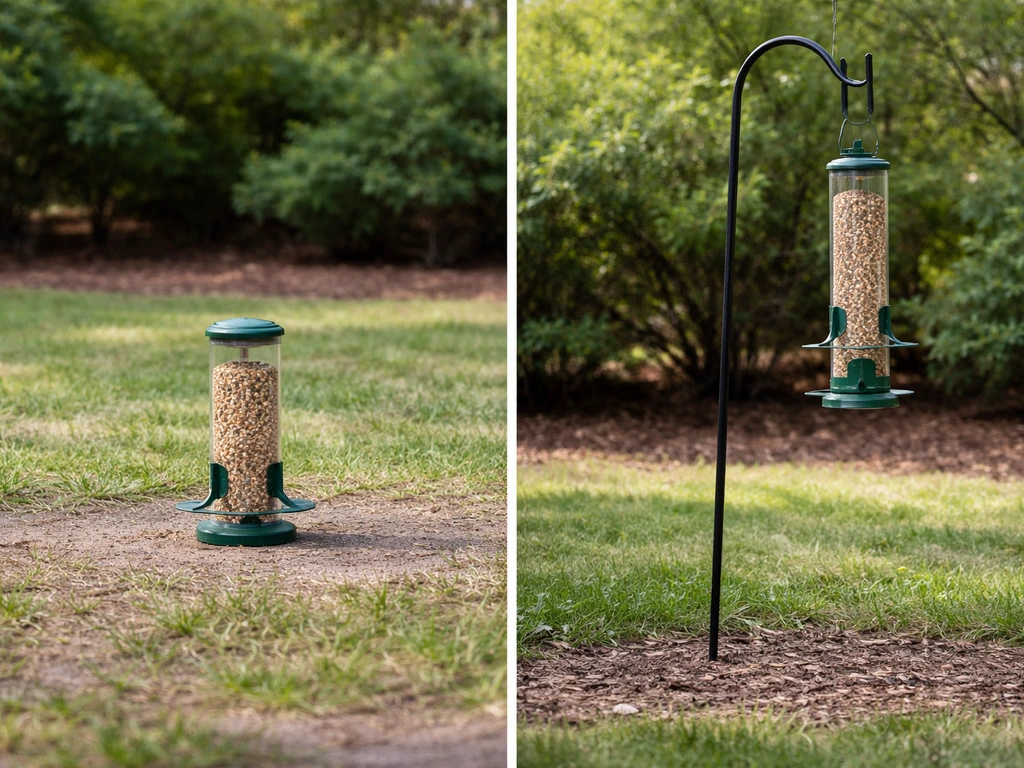
Height isn't just about aesthetics or convenience. It's one of the most direct controls you have over predator access, squirrel activity, and which birds actually show up. Get it wrong and you'll spend the season frustrated by empty feeders or a yard full of unwanted guests.
Cats and ground predators
Cats are the biggest ground-level threat at most suburban and urban feeders. A feeder sitting at 3 feet or lower is essentially a cat hunting blind. At 5 feet, a cat can still theoretically reach a low-hanging feeder with a jump, but birds feeding at that height have enough clearance to spot the approach and react. The goal isn't to make the feeder unreachable from below so much as to give feeding birds enough visual distance to escape. Foxes, raccoons, and opossums are also factors depending on where you live, and the 5-foot baseline handles most of those threats reasonably well.
Squirrels
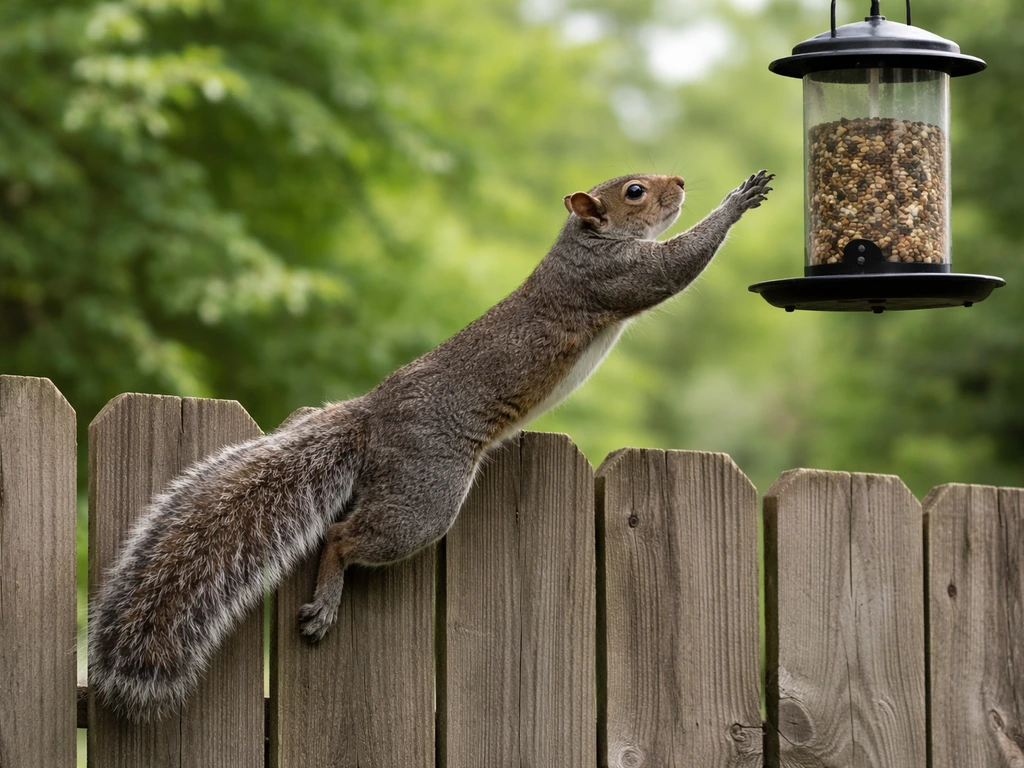
Here's the honest truth about squirrels: height alone won't stop them. Squirrels are exceptional jumpers and climbers, and they'll reach a feeder at 5 feet just as easily as one at 3 feet if there's a nearby tree, fence, or structure to launch from.
Audubon is blunt about this: the only reliable method is to mount the feeder on a smooth pole placed at least 20 feet away from any branch or roof overhang, then add a metal baffle (cone or tube-shaped) just below the feeder. Height works in combination with those other measures, not instead of them. So don't think bumping your feeder from 4 feet to 8 feet will solve a squirrel problem on its own. It probably won't.
Bird comfort and feeding behavior
Birds are more likely to visit a feeder when they feel they can escape quickly. That means clear sightlines in multiple directions, nearby cover to retreat to (a shrub or tree within 10 feet is ideal), and a height that doesn't feel exposed. Very high feeders, say 12 feet or more, can actually reduce visits from some species because the birds feel too exposed while feeding. Very low feeders feel risky for a different reason: ground-level cover for predators. The 5- to 6-foot zone tends to balance both concerns.
Matching height to your setup and feeder type
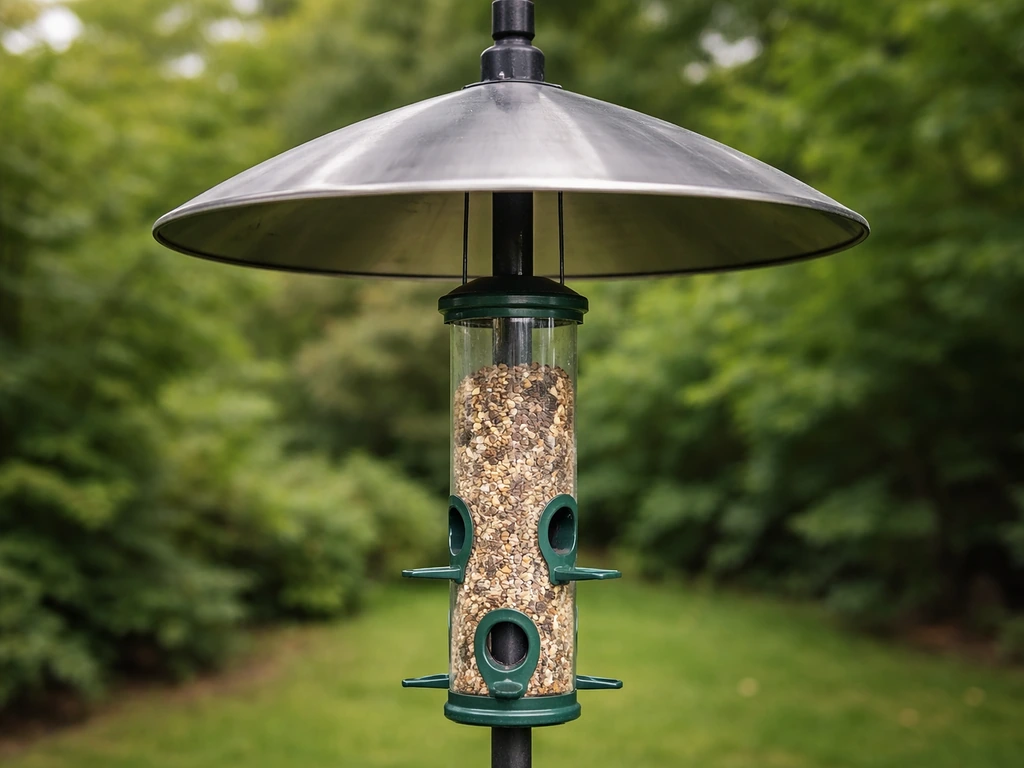
The right height depends partly on what kind of feeder you're using and where you're putting it. One number doesn't fit every situation. If you're also thinking about how tall your bird feeder pole or post should be, that's a related question worth thinking through alongside height off the ground, since the two decisions interact.
| Feeder Type | Recommended Height | Notes |
|---|
| Tube feeder (pole-mounted) | 5–6 ft to base of feeder | Add a baffle at 4 ft on the pole for squirrel protection |
| Platform / tray feeder | 5–6 ft to tray surface | Lower (3–4 ft) is acceptable if in an enclosed or very safe yard |
| Suet cage | 5–6 ft, ideally on a tree trunk or hanging post | Woodpeckers prefer vertical attachment near bark |
| Hopper feeder (hanging) | 5–6 ft to bottom of feeder | Hang from a branch or shepherd's hook at the right clearance |
| Ground feeder tray | Ground level to 12 inches | For mourning doves and sparrows; use only in low-cat-traffic areas |
| Balcony / porch railing mount | As high as railing allows, min 5 ft from ground below | Prioritize window collision distance over height in this case |
Suet feeders are a slight exception. Woodpeckers, nuthatches, and creepers are all comfortable clinging to feeders mounted on or near a tree trunk, and in those cases the "height" is less about ground clearance and more about positioning relative to the bark. Somewhere between 5 and 8 feet on a tree trunk tends to work well. For ground-feeding setups (a flat tray for mourning doves or native sparrows), you're intentionally placing food low, which means extra vigilance about cats and making sure the area has clear sightlines.
Balconies and porches
If you're on a balcony or apartment porch, ground-to-feeder height is mostly determined by the structure itself. Focus instead on how far the feeder should be from a nearby window, since window strikes are a real concern in tight balcony setups. Either hang the feeder blank" rel="noopener noreferrer">within 3 feet of the glass (close enough that birds can't build up dangerous speed) or more than 10 feet away. Either hang the feeder within 3 feet of the glass (close enough that birds can't build up dangerous speed) or more than 10 feet away blank" rel="noopener noreferrer">within 3 feet of the glass or more than 10 feet away. The height from the ground below matters less in these setups than collision risk does.
How height affects which birds show up
Different species have strong habitat-level preferences that translate into feeder height preferences. You won't get every bird at every height, and if you're targeting specific species, it's worth adjusting.
- Chickadees, titmice, and nuthatches: comfortable at 5–8 feet, strongly prefer feeders near tree cover
- Finches (goldfinches, house finches, purple finches): tube feeders at 5–6 feet work well; they like some elevation
- Woodpeckers: prefer suet feeders mounted on or near tree trunks, 5–8 feet up
- Cardinals and blue jays: platform or hopper feeders at 5–6 feet, near shrubs or low branches
- Mourning doves and native sparrows: ground level to 3 feet; they're natural ground feeders
- Hummingbirds: tube or nectar feeders at 4–6 feet, easy to see from a window or porch
I've found that if you're running multiple feeders in your yard, spacing and height variety together do more than either factor alone. A tube feeder at 6 feet draws finches, a platform at 5 feet brings cardinals, and a ground tray pulls in the doves. That kind of layered setup is worth thinking about when you're also considering how far apart to space your feeders for the best results.
How to actually hang it at the right height
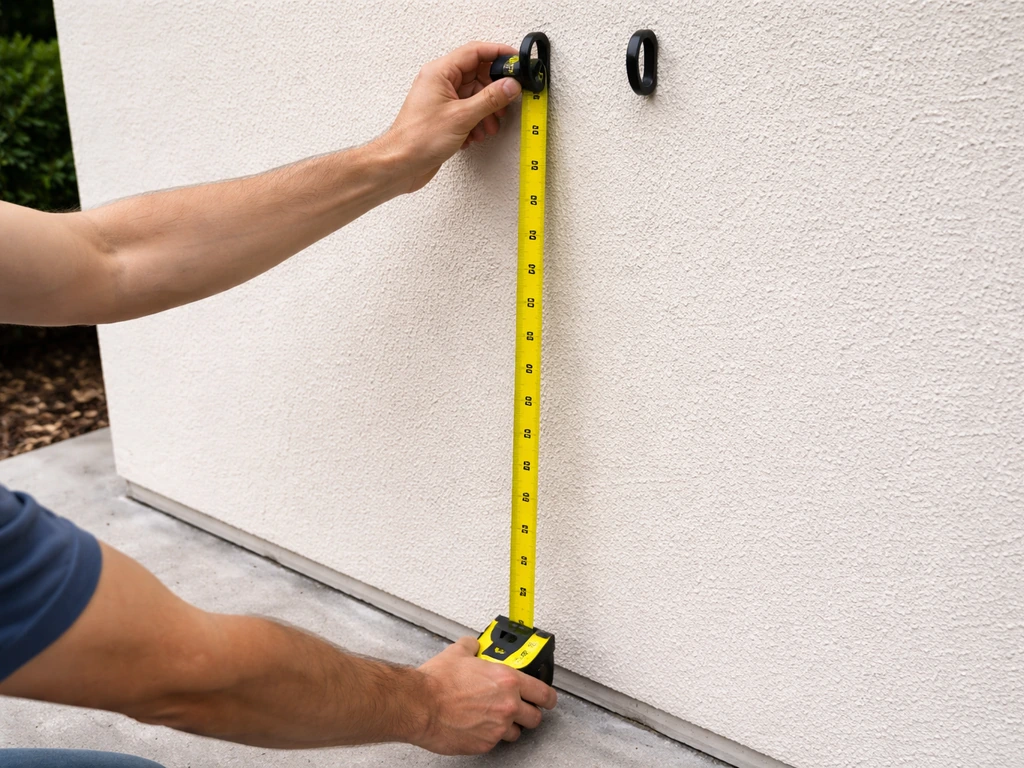
Getting the height right in practice is simpler than it sounds. Here's how I'd walk through the setup from scratch.
- Pick your mounting point: pole, shepherd's hook, branch, or hook on a post. The mounting point determines your flexibility.
- Measure from the ground to where the bottom of the feeder will sit. Use a tape measure. For most feeders, target 5 feet (60 inches) as the floor.
- If using a pole, plan to mount a baffle at about 4 feet (48 inches) on the pole, below the feeder. UNL Extension guidance supports keeping feeders at least 4 feet off the ground specifically when using baffles, since the baffle needs clearance below it to work properly.
- Check the horizontal clearance. Per Audubon, the feeder should be at least 20 feet from any branch, roof edge, or structure a squirrel could use as a launch pad. Measure this honestly.
- Hang the feeder and check the sightlines from bird level: clear in most directions, with some nearby cover (shrub, tree) within 10–15 feet.
- Step back and look at the feeder from the house. You want to be able to see it clearly from wherever you'll observe it most. This isn't a vanity consideration: regular observation is how you catch problems early.
- Give it 3 to 5 days before drawing conclusions about whether the placement is working.
One thing worth thinking about before you finalize placement: how far the feeder should be from your house is just as important as how high it is. Feeders too close to the house can cause window strike problems or draw pests toward your foundation, so it's worth solving both questions at the same time.
If birds aren't coming, or the wrong animals are
Height is often the first variable people adjust when a feeder isn't performing, but it's rarely the only problem. Here's how to diagnose what's actually going on.
Birds aren't visiting at all
Give it at least a week before worrying. New feeders often take time for local birds to discover. If it's been longer than that, check: Is the feeder too exposed (no nearby cover to retreat to)? Is it too close to a window or busy area of the yard? Is there a lot of cat activity nearby that birds have noticed even if you haven't? Try moving the feeder a few feet closer to a shrub or small tree without going lower than 5 feet. Sometimes a lateral move does more than a vertical one. Also double-check the seed quality: old or wet seed is frequently the real culprit, not placement.
Squirrels are dominating the feeder
If squirrels are your main problem, revisit the basics: Is the feeder on a smooth pole, not a wood post they can grip? Is there a metal baffle in place? Is the pole truly 20 feet from any launch point? Height alone won't fix this. Raising the feeder from 5 feet to 8 feet without addressing those other factors is unlikely to make any difference. You can also explore whether having multiple feeders close together is making the squirrel problem worse by creating a bigger target.
Cats are a persistent problem
If cats are regularly sitting below the feeder or ambushing birds landing nearby, height helps but so does the ground cover situation. Clear away dense low shrubs or tall grass immediately under the feeder (within 5 feet) so cats can't hide. Keep the feeder at 5 feet or above, and consider a pole-mounted setup with a baffle rather than hanging from a structure cats can climb. If you're unsure whether your current setup is too close to the house in a way that's helping cats, it's worth asking whether the feeder's proximity to the house is creating part of the problem.
Too high: are you going overboard?
It's less common, but some people hang feeders very high thinking more height equals more safety. There's a real ceiling to the benefit, and going too high can reduce bird visits and make maintenance a hassle. If you're wondering whether your feeder is actually placed too high, there's a point where a feeder can be too high and work against you. For most species, anything above 10 feet starts to see diminishing returns.
Seasonal adjustments worth making
Height doesn't need to change dramatically with the seasons, but a few practical adjustments are worth knowing about.
- Winter snow and ice: If you're getting significant snowfall, check that ground-level snow accumulation isn't reducing the effective clearance under a low-mounted feeder. A feeder that sat at 5 feet in fall might have only 3 feet of clearance after a big snowfall. Either raise it slightly in winter or clear snow from under the pole regularly.
- Spring and nesting season: Birds become more cautious during nesting. Feeders with good nearby cover (within 10–15 feet) will perform better. Don't move feeders during active nesting if birds are already using them consistently.
- Summer: Bear activity increases in many regions. If you're in bear country, take feeders in at night or remove them entirely from late spring through fall. No height will stop a bear with motivation.
- Fall migration: You may see new species passing through. This is a good time to temporarily add a second feeder at a different height to catch more visitors, then evaluate what you saw before committing to a permanent second setup.
The practical takeaway on maintenance is this: check the effective height of your feeder at least twice a year, and after any significant weather event. Snow, shifting ground, and pole settling can all change the actual height without you realizing it. A quick measurement every few months keeps things calibrated and removes one variable when you're trying to figure out why bird traffic has changed.