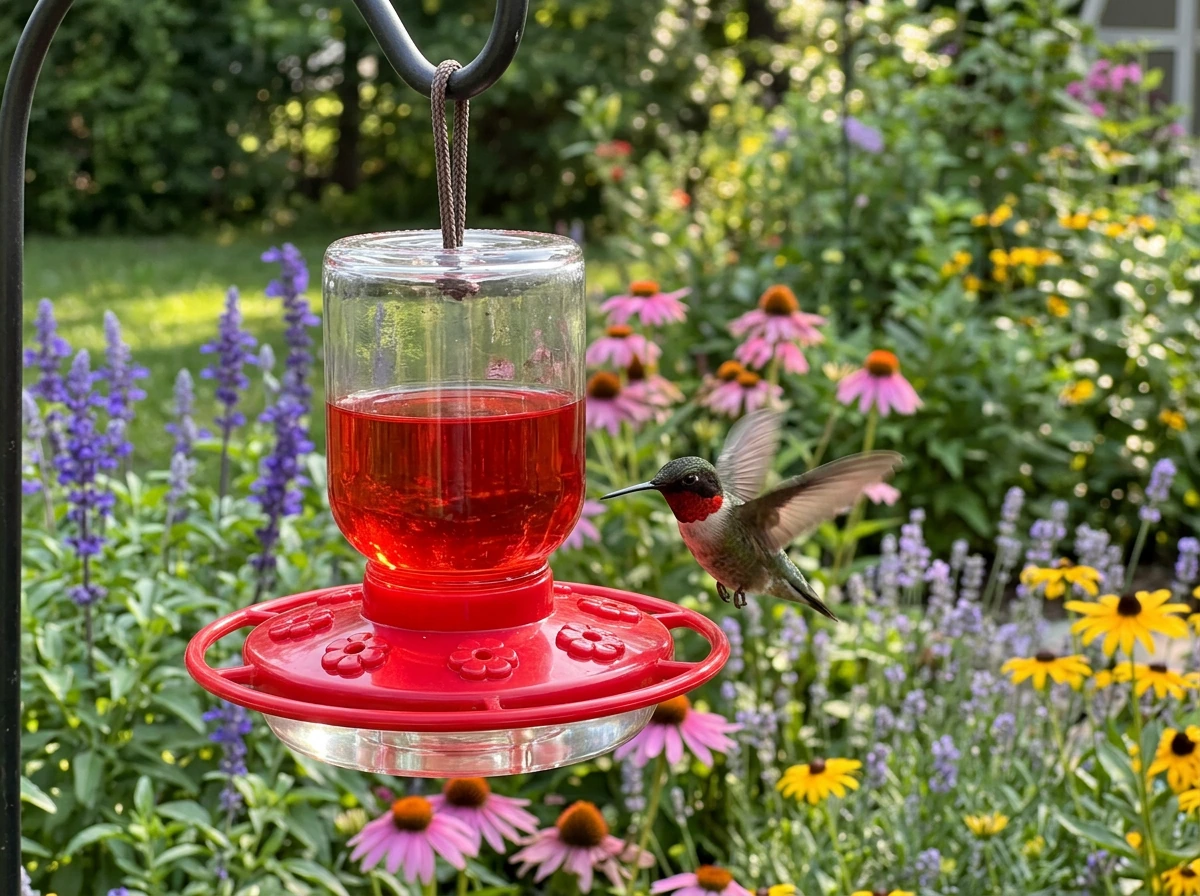
Here's the short answer: yes, birds can smell, but for most backyard feeder species, smell is not the primary way they find food. Vision dominates. That said, scent absolutely matters at the feeder in practical terms, just not in the way most people assume. It's less about birds sniffing out your sunflower seeds from across the yard and more about odor working as a deal-breaker once a bird is already nearby. Rancid seed, moldy suet, or fermented nectar can drive birds away just as surely as the wrong feeder placement. So if you're troubleshooting a feeder that's getting no visitors, scent is part of the equation worth taking seriously.
Can Birds Smell Bird Feed? Placement and Troubleshooting Tips

Eleanor Hartwick
23 Mar 2026
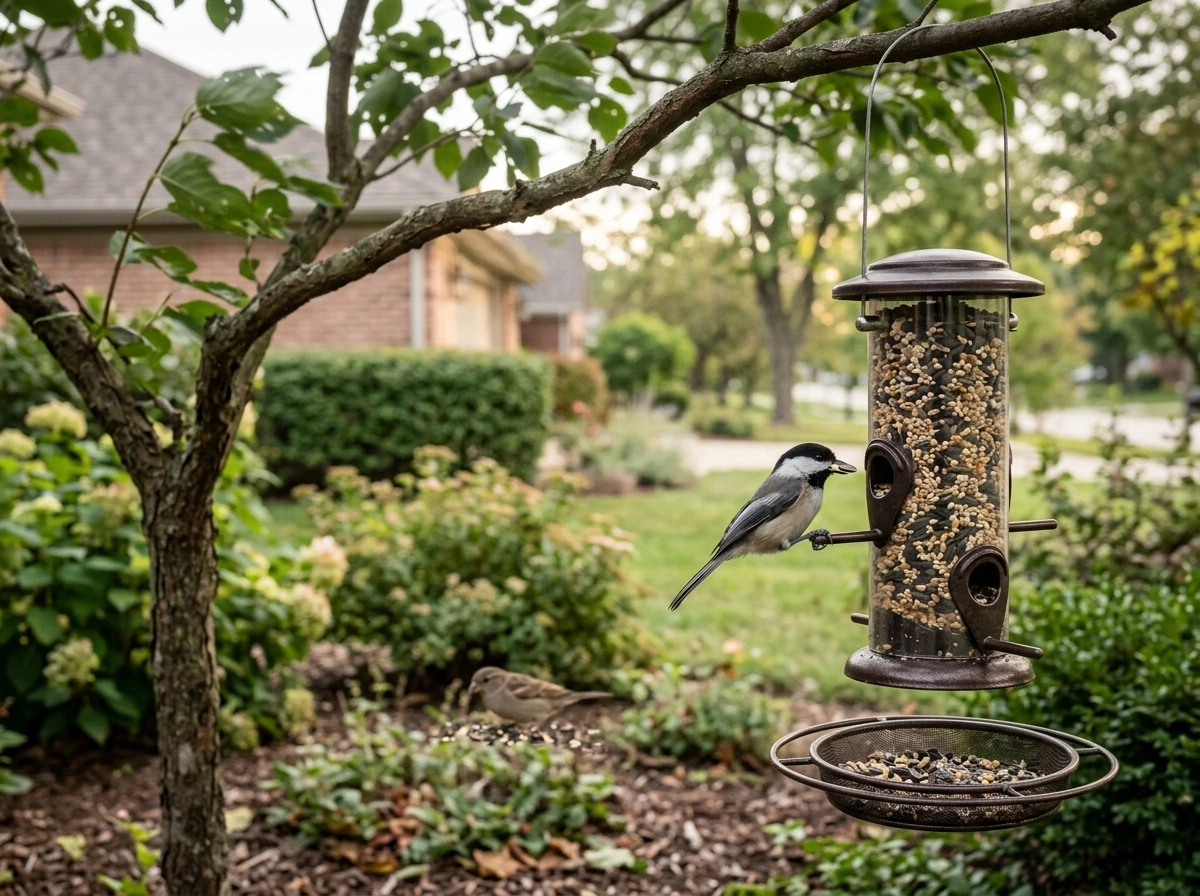
Do birds actually smell bird feed or just find it visually
For a long time, the conventional wisdom was that birds basically can't smell. That turned out to be wrong. Genomic research across multiple bird species has shown that birds carry a functional set of olfactory receptor genes, which means the biological hardware for smelling is very much there. Comparative anatomy studies measuring olfactory bulb size across more than 100 bird species confirmed that some species have genuinely well-developed olfactory systems, while others have smaller ones, reflecting different ecological needs.
That said, for the songbirds and small backyard birds you're likely trying to attract, vision is the workhorse sense. A chickadee or house finch scouting your yard is scanning for shape, color, and movement first. Experimental work with great tits has shown that birds can use scent cues to relocate feeding sites after being displaced, and that they can learn and discriminate specific odors in food-related tasks as well as they learn colors. So smell is real and functional in many species, but it layers on top of vision rather than replacing it.
The birds with the strongest documented olfactory abilities are generally seabirds (tracking food across the open ocean using chemical plumes), turkey vultures (famous for sniffing out carrion), and some insectivorous birds that can discriminate prey by chemical cues. Hummingbirds, woodpeckers, finches, and most songbirds rely far more on sight. So when someone asks whether birds can smell bird feed, the truthful answer is: some can, most can find food without relying on it heavily, and none of them need to smell your feeder from a great distance to discover it.
How birds use smell vs sight (and why wind and distance matter)
Think of it as a two-stage process. At a distance, birds rely almost entirely on vision and memory, scanning for feeders they've seen before or new ones that look like familiar food sources. Once a bird is close, within a few feet of the feeder, scent becomes more relevant. It helps a bird assess whether the food is fresh and worth eating, or whether something is off. That's why the condition of your feed matters even though birds aren't necessarily trailing a scent trail from across the street.
Wind changes this dynamic somewhat. Odor compounds travel on air currents, and some research on pigeon olfactory navigation has identified that birds can detect and use airborne volatile compounds at a regional scale. For backyard purposes, this means a feeder with strongly spoiled or rancid feed might actually broadcast an off-putting signal on a breezy day. On the flip side, you can't reliably count on fresh seed smell to lure birds from a distance the way you might attract a dog with food. The visual cue, a feeder that looks like a feeder in a sensible location, does far more of the long-range attracting work.
Habitat matters too. Research has shown that birds can differentially prioritize visual versus olfactory cues depending on context, including the type of environment they evolved in. Dense woodland birds may rely more on local scent and sound cues because long-range visual detection is obstructed. Open-habitat birds lean harder on vision. That's worth keeping in mind if you're feeding in a heavily wooded backyard versus an open suburban lawn.
What 'can birds smell bird feed?' really means in practice
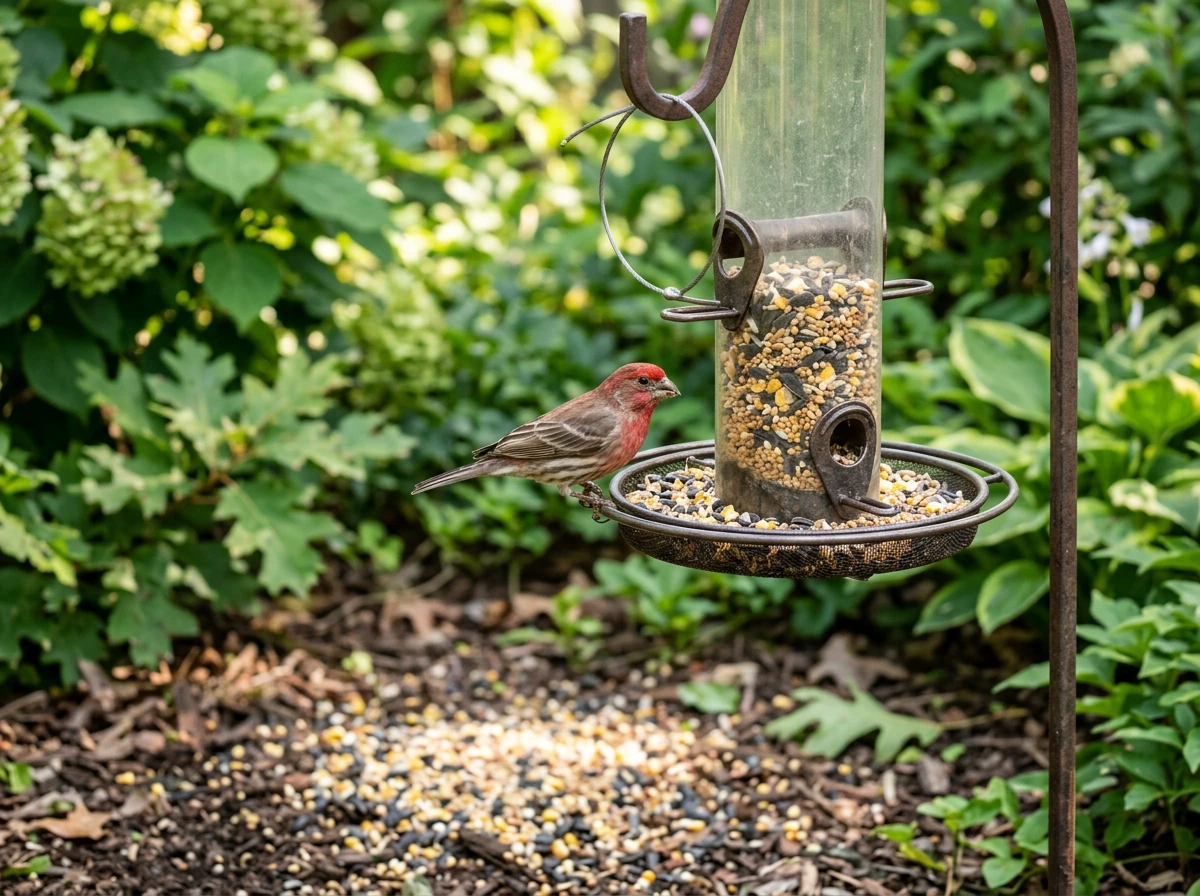
For most people asking this question, what they really want to know is one of two things: either 'will birds detect my feeder by smell and come to it?' or 'could something about my feeder's smell be keeping birds away?' The answer to the first is 'not primarily, but place it where birds can see it and they'll find it.' The answer to the second is a more emphatic yes, and this is where you should focus your energy.
A feeder with wet, clumped, or moldy seed produces genuine odor compounds. A nectar feeder left out too long in warm weather ferments and develops off-notes that signal to a hummingbird that the food isn't right. Rancid suet in summer smells bad to humans and appears unappealing to birds, which can make it seem like birds nest near bird feeders. University of Georgia guidance explicitly states never to fill a feeder with moldy, sour-smelling, or wet seed. That's not just a health recommendation, it's a practical one. Birds can detect that something is off, and they'll skip your feeder for a neighbor's fresher setup.
The other practical reality is that smell from your feeder area matters more to the animals you don't want than to the birds you do. Spilled seed on the ground, accumulated hulls, and damp old feed produce scent trails that rodents, raccoons, and other wildlife follow readily. So managing the odor environment around your feeder is good practice for multiple reasons.
Troubleshooting: when birds don't visit (and how to test the scent factor)
If your feeder has been up for a while and bird activity has dropped off, or if you set up a new feeder and nothing has found it yet, scent is one variable to rule out but not the only one. Work through this systematically.
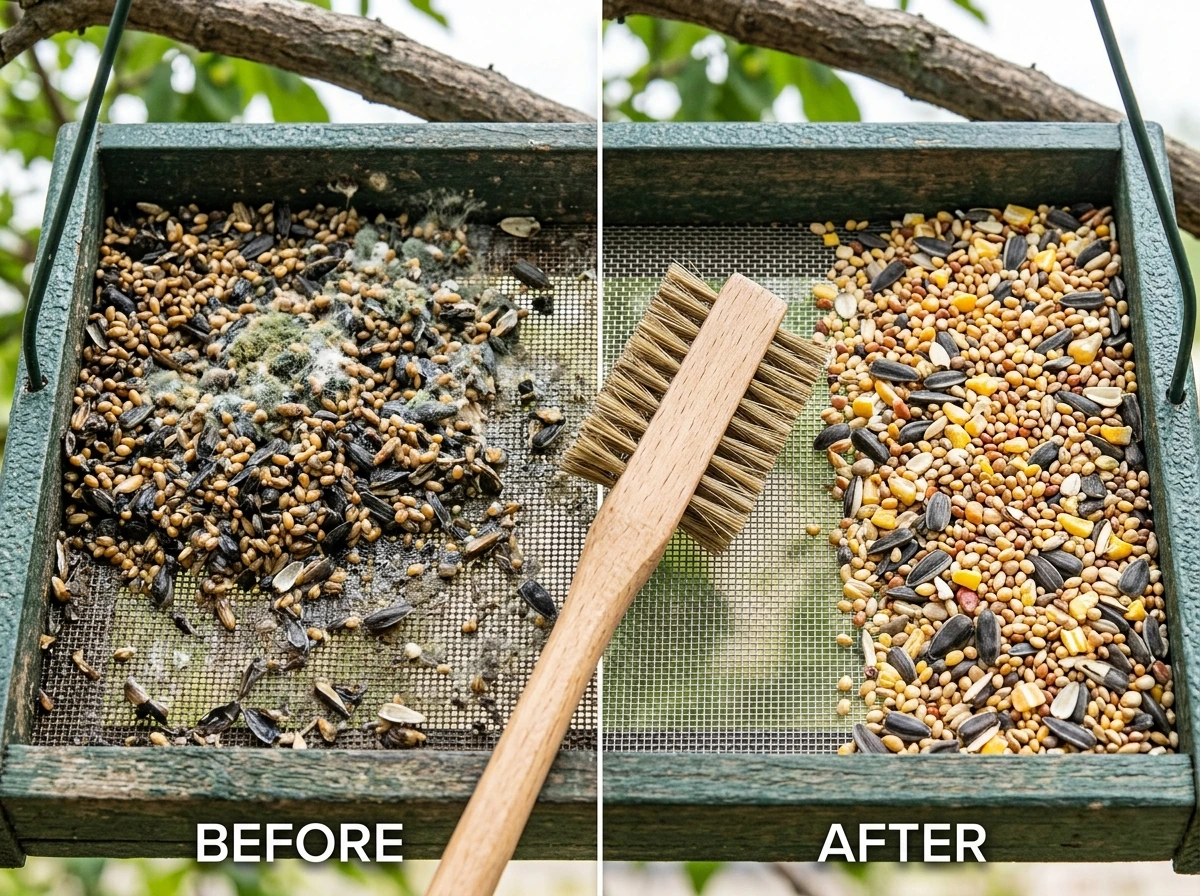
First, do a simple smell test on your seed. Open the feeder and take a sniff. Fresh black-oil sunflower seed smells mildly nutty. If what you smell is musty, sour, or stale, the seed has gone bad and needs to come out. Check for clumping, dark discoloration, or visible mold. Any of those means replace the seed entirely, not just the top layer.
Second, check for moisture inside the feeder. Wet seed spoils fast. Minnesota DNR notes that mold and bacteria can form on wet birdseed within the feeder itself during rainy or humid weather. If your feeder has drainage holes, make sure they're clear. If water is pooling at the bottom, that's a design or placement problem.
Third, consider placement. Birds need a clear sightline to the feeder and nearby cover to retreat to quickly. WVU Extension recommends placing feeders close to natural cover but far enough from dense shrubs that squirrels can't easily use them as a launch pad. If scent isn't the issue and birds still aren't coming, visibility and safety are the more likely culprits. Other articles on this site covering how birds find feeders and how long it takes them to discover a new feeder are worth reading alongside this one if you're in the early stages of setting up.
- Smell your seed directly: musty, sour, or rancid means replace it
- Check for moisture pooling inside the feeder and clear any drainage holes
- Look for visible mold, clumping, or dark staining at the bottom of the feeder
- For nectar feeders, check whether the liquid is cloudy or has visible black spots
- Assess whether the feeder is visible from the air and from nearby perch points
- Remove accumulated hulls and debris from around the base of the feeder
Feeder and feed steps to take today (cleaning, freshness, placement changes)
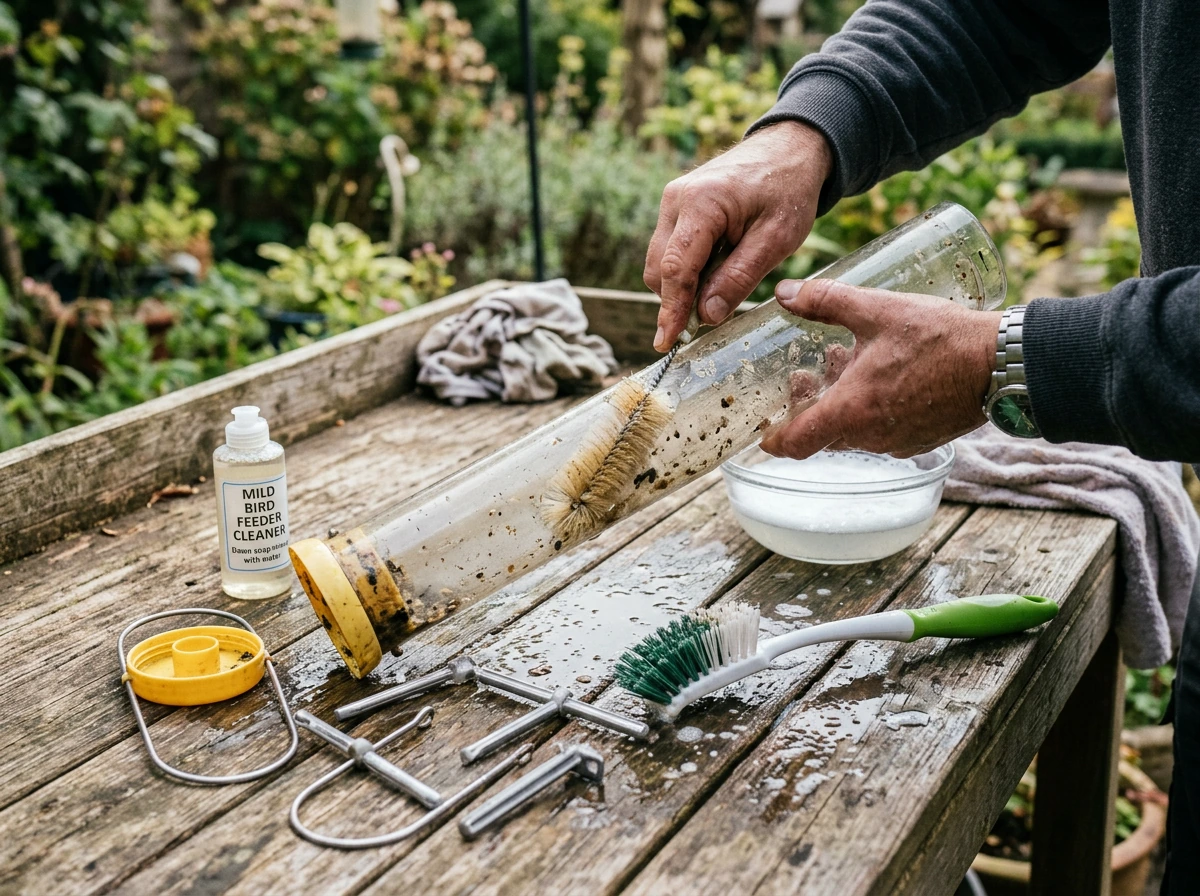
If you're looking for concrete actions to take right now, start with cleaning. Penn State Extension recommends emptying and scrubbing tube feeders thoroughly to remove mold and residue rather than just topping them up. Wild Birds Unlimited suggests cleaning feeders every three to four days in damp conditions to prevent bacteria and mold from building up. That schedule might feel aggressive, but if you've ever opened a feeder in summer and found a solid wet cake at the bottom, you'll understand why.
The cleaning protocol that works well: a solution of 1 part bleach to 32 parts water, a 10-minute soak, a scrub with a brush, a thorough rinse, and then letting the feeder dry completely before refilling. Audubon cites the National Wildlife Health Center's recommendation for a similar approach. The drying step matters because refilling a damp feeder just jumpstarts the spoilage cycle again.
On feed freshness, buy seed in quantities you'll actually use within a few weeks. Bulk buying seems economical but if seed sits in a hot garage or shed, it goes rancid faster. Storage moisture is the key driver of spoilage: keeping sunflower seed at low moisture levels (around 10% or below) significantly reduces rancidity risk. A cool, dry container with a tight lid is the practical version of that recommendation.
Seed choice also helps. Black-oil sunflower seeds produce less waste than mixed seed blends because most birds eat the whole kernel rather than tossing aside filler seeds they don't want. Less spilled seed means less decomposing material on the ground, fewer odor issues, and fewer pest attractants. That single swap makes cleaning and maintenance much more manageable.
For placement, height and visibility matter more than scent, put feeders where birds already travel, along fence lines, near trees or shrubs they use as staging areas, and within your own sightline so you notice problems early. Put feeders where birds already travel, along fence lines, near trees or shrubs they use as staging areas, and within your own sightline so you notice problems early. If a feeder has been in one spot for weeks with no action, try moving it 10 to 15 feet. Sometimes a small shift in sight angle makes a big difference.
Species and conditions: when scent attraction is stronger or weaker
Not all birds process smell equally, and conditions change how much olfaction factors in. Here's a practical breakdown:
| Bird Type | Reliance on Smell | Practical Notes |
|---|---|---|
| Songbirds (finches, chickadees, sparrows) | Low to moderate | Find feeders primarily by sight; scent matters mainly for food quality assessment at close range |
| Hummingbirds | Low | Strongly visual; attracted by feeder shape and color (red); fermented nectar may deter visits |
| Woodpeckers | Low to moderate | Use vision and sound to locate food; rancid suet may reduce visits |
| Turkey vultures | High | One of the strongest avian olfactory capabilities; not typically a feeder bird |
| Seabirds (petrels, albatrosses) | High | Locate food via chemical plumes over the ocean; rarely relevant to backyard feeding |
| Great tits and related titmice | Moderate | Documented use of scent to relocate feeding sites; can learn odor cues |
Weather and season shift the calculus too. In cold winter months, birds need reliable, high-calorie food and will revisit familiar feeder locations repeatedly once they've discovered them. The scent of fresh seed matters less than consistency in winter, though spoiled feed will still deter visits. In summer, heat accelerates spoilage dramatically, which means nectar feeders and suet need much more frequent attention. The Hummingbird Society recommends changing nectar every two days when temperatures are between 80 and 90°F, and daily when it's above 90°F. Suet, per USDA guidance, becomes rancid much faster in warm weather than in winter, and rancid suet smells noticeably bad even to humans.
Wind is another variable. On gusty days, any volatile compounds from spoiled seed or fermented nectar disperse more widely. This can work in your favor if you have fresh feed and a well-maintained feeder, since nearby birds may detect appealing food cues more readily. It works against you if your feeder is broadcasting the scent of old, wet seed across your yard.
Avoiding unwanted wildlife and keeping feed safe
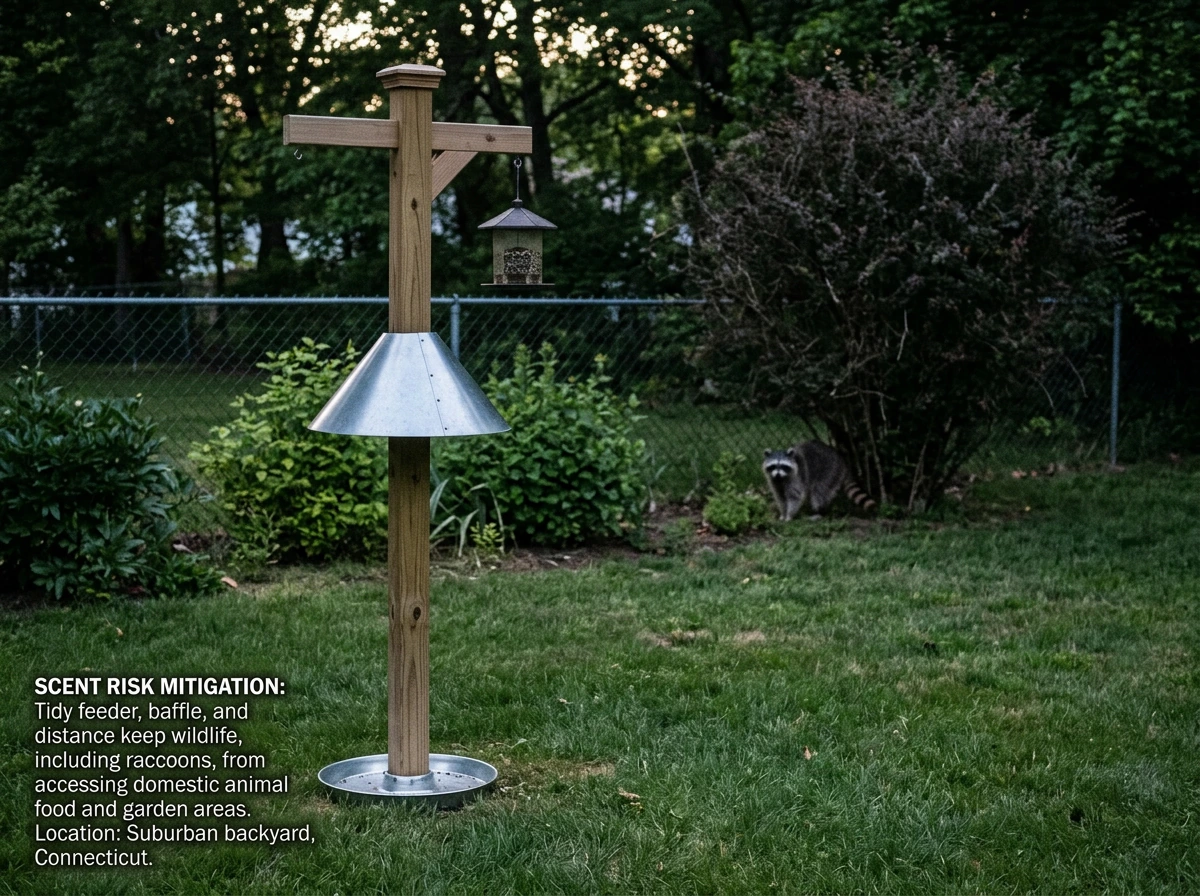
This is where scent really earns its reputation as a problem rather than a feature. Rodents, raccoons, and other opportunistic wildlife have a much stronger sense of smell than birds and will follow odor trails to your feeder reliably. Spilled seed on the ground is a primary attractor. The Internet Center for Wildlife Damage Management recommends mounting feeders with a catch tray or basin beneath them so spilled seed lands in the tray rather than on the ground. That single change reduces the scent footprint of your feeder significantly.
Project FeederWatch flags that food scattered on the ground consistently attracts rodents, and that moldy or spoiled feed should be discarded immediately rather than left out. Hulls and debris under feeders should be raked or swept regularly, especially after rain, because wet decomposing material is far more odor-active than dry hulls.
If you're dealing with ants getting into feeders, that's another scent-management problem worth addressing. An ant moat, a small water-filled barrier hung above the feeder, is a simple physical solution. Nebraska Extension includes this in bird feeding guidelines as a practical setup step.
The bottom line on wildlife and scent: birds will find your feeder through their eyes. Pests will find it through their noses. Managing the odor environment around your feeder, keeping feed fresh, cleaning regularly, minimizing ground spill, and disposing of spoiled feed promptly, is mostly about pest control and bird health rather than bird attraction. Get that right and you've solved the scent side of the equation completely.
FAQ
Do birds smell bird feed if it is new, but the feeder is in a hidden spot?
They might investigate briefly once they are nearby, but smell usually cannot compensate for poor visibility. If birds cannot see the feeder clearly from their approach routes, relocate it to a place with an open sightline and nearby cover, then re-evaluate after a few days.
If the seed smells fine to me, could it still be off for birds?
Yes. Some spoilage starts as moisture buildup or early mold you might not notice right away. Check for clumps, dark patches, a musty odor, and any wet cake in the bottom of the feeder, then replace the entire contents if you see any of those signs.
Should I add stronger-smelling foods to help birds find the feeder faster?
Usually no. For most backyard species, scent is a close-range quality check, not a long-distance attractant. Instead of changing to very aromatic foods, focus on keeping feed fresh, improving placement, and cleaning so the feeder is not accidentally sending an off-signal.
Can I use scent to stop pests like raccoons and rodents?
You can help, but smell management is mainly about removing attractants, not overpowering them. Reduce ground spill with a catch tray, rake debris under the feeder, and discard spoiled feed promptly, since pests follow odor trails more reliably than birds do.
Does wind make spoiled feed worse for birds?
Often, yes. Breezy conditions can carry volatile off-notes farther through the yard. If you notice fewer birds after windy spells, inspect for rancid seed or fermented nectar, then clean the feeder and replace the feed even if it seems only slightly old.
Do birds smell through plastic or covered feeders?
Most feeders still allow odor cues to escape, but coverage can reduce airflow and how far those cues travel. If a covered feeder is also harder for birds to see, visibility will still be the limiting factor. Prioritize clear sightlines and safe perching or staging cover.
What is the best way to check whether my seed has gone bad?
Do both a sniff test and a moisture inspection. Seed that smells musty, sour, or overly stale is a red flag, and any clumping, discoloration, or visible mold means replace all contents, not just the top layer.
How soon after cleaning will I see bird activity return?
Often within a few days, but it depends on whether other issues were present, like poor visibility or dominant competitors. After cleaning and fresh refilling, monitor for 3 to 7 days, and if there is still no activity, adjust placement by 10 to 15 feet or improve cover and sightlines.
How frequently should I clean if it is humid or rainy?
More often than in dry weather. In damp conditions, mold and bacteria build up quickly, so plan tighter cleaning intervals (for example, every few days) and allow feeders to fully dry before refilling.
Could scent be why hummingbirds avoid my nectar feeder?
Yes, fermented nectar and residues left in the bottle and ports can be strongly off-putting. In hot weather, change nectar frequently, scrub bottle and feeding ports regularly, and never top off old nectar, since leftovers can ferment and keep sending bad cues.
If birds are coming but not eating, what smell-related causes should I look for first?
Look for partially spoiled seed, moisture pooling, or old hull and residue that is breaking down. Also check that nectar or suet is not rancid or leaking and then remove and replace the feed promptly, since birds may sample and move on if the taste or freshness is off.
Does buying seed in bulk affect how smelly it becomes?
It can. Heat and trapped moisture during storage increase rancidity and spoilage, which changes odor and can deter birds while attracting pests. Store seed in a cool, dry container with a tight lid, and buy quantities you will use in a short window.
Are scent effects stronger in winter or summer?
In winter, birds often return based on consistent food availability, so scent matters less for long-range attraction. In summer, heat accelerates spoilage, so freshness and odor-related deterrents become more critical for keeping visits consistent, especially for nectar and suet.
Next Article
How Do Hummingbirds Find Bird Feeders? Practical Tips
Learn how hummingbirds locate feeders using vision, memory, and nectar cues, plus placement, setup, and troubleshooting