Birds find feeders primarily through vision, learned routes, and social cues from other birds. Smell plays a smaller but real role for some species, can birds smell bird feed? If you've just put up a new feeder and nothing has shown up yet, that's completely normal, and there are specific things you can do today to speed up the process. Let me walk you through exactly how this works and what actually moves the needle.
How Do Birds Find Bird Feeders So Quickly? Cues and Tips

Eleanor Hartwick
23 Mar 2026
How birds locate food in general
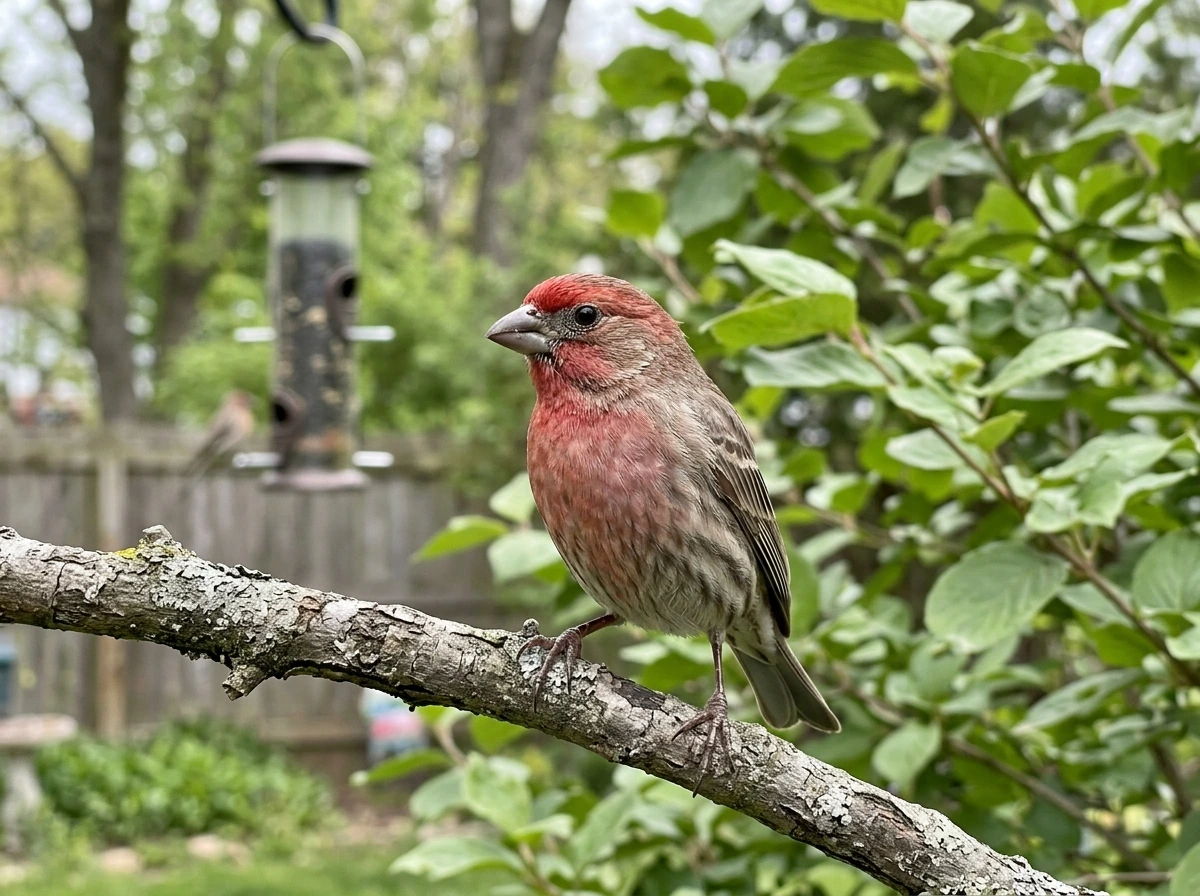
Wild birds are wired to scan their environment constantly. Their vision is exceptional, covering a wide field of view with the ability to detect color, movement, and contrast far better than we can. When a bird is foraging, it's essentially running a continuous visual search across its territory and familiar routes. Any new object that breaks the pattern, especially something brightly colored or that catches light, gets noticed. This is why a shiny new feeder filled with seed tends to attract attention faster than you might expect.
Smell is more of a factor than people once thought. Research on great tits showed that birds deprived of olfactory cues took significantly longer to relocate a feeding site after being displaced, meaning scent does help birds orient toward food sources they've found before.
In an experiment on great tits, birds deprived of olfactory cues took significantly longer to relocate a feeding site after displacement, indicating that scent helps them orient to familiar feeding locations [olfactory cues help birds relocate feeding sites](https://www. frontiersin. org/journals/ecology-and-evolution/articles/10. 3389/fevo.
2022. 858981/full). Wandering albatrosses are a dramatic example of smell-guided foraging, tracking food odors across vast ocean distances. For backyard birds, scent probably plays more of a confirming role once they're close, rather than guiding them from blocks away.
So don't count on the smell of sunflower seeds to do the heavy lifting, but it isn't irrelevant either.
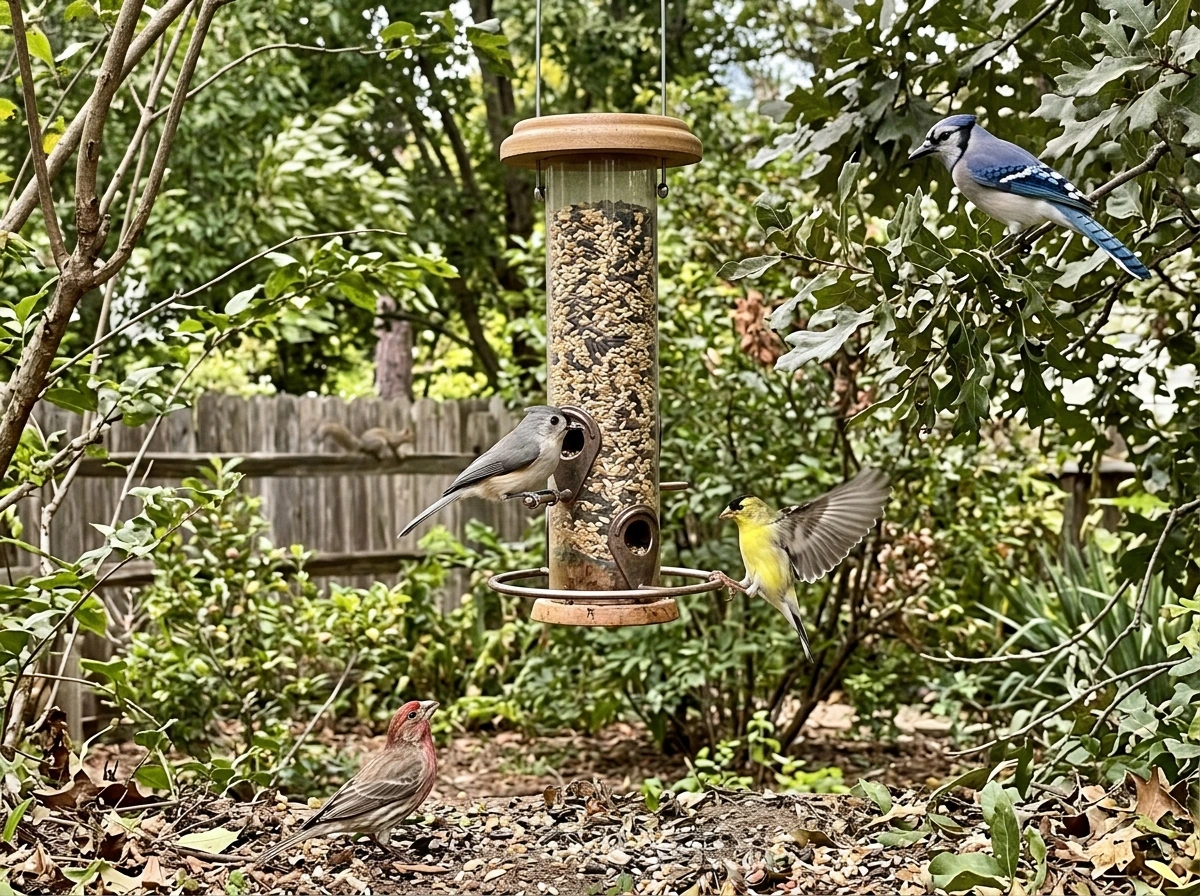
Sound is another piece of this. Birds are alert to the calls of other birds, particularly feeding calls and alarm calls. If you've ever watched a feeder get discovered by one chickadee and then had six more show up within minutes, that's sound (and social signaling) at work.
Why birds seem to find feeders so fast
The honest answer is that birds have been mapping your yard long before you put up the feeder. Most backyard birds have established foraging routes they repeat daily, checking spots where food has appeared before: under shrubs, around certain trees, along fence lines. When a feeder appears in a location they already pass through, they find it quickly because they weren't starting from scratch. They were already there.
Social learning accelerates this dramatically. Research on mixed-species foraging flocks supports the idea that birds in groups discover food resources faster than solo foragers, and the "information centre hypothesis" shows that when one bird finds a reliable food source, others in the same roost or flock follow that bird on subsequent foraging trips. A study on hooded crows found that unfamiliar (“ignorant”) birds followed knowledgeable roost-mates to food, providing support for the information-centre hypothesis. In practical terms: once one bird finds your feeder and returns to it, others that roost or forage with that bird are likely to follow. This is why you often see a slow trickle at first, then suddenly a much busier feeder a few days later.
Visibility is probably the single biggest factor in how fast this first discovery happens. A feeder tucked behind dense shrubs or placed in a low-traffic corner of the yard will take much longer to get noticed than one placed with clear sightlines from perches and flyways birds already use.
What happens when a new feeder appears in your yard
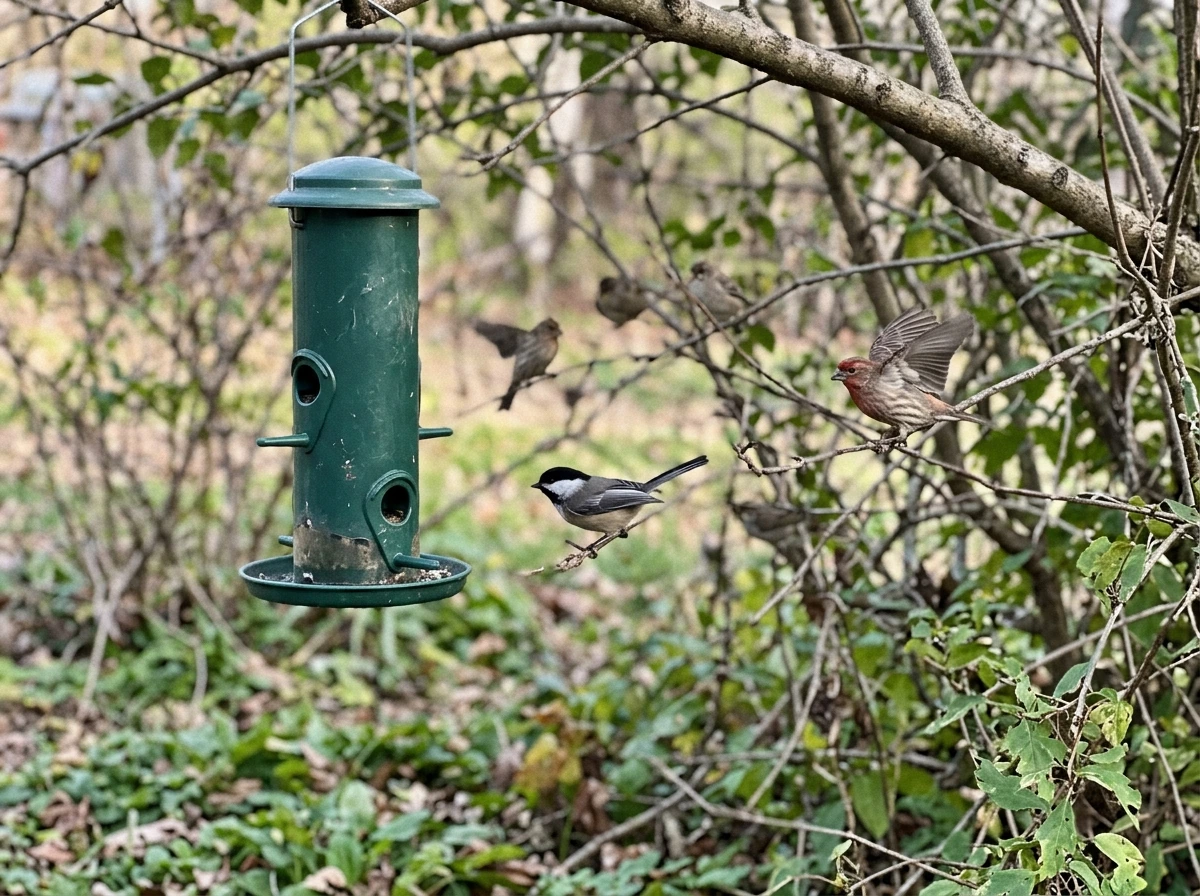
A brand-new feeder is initially just a new object, and birds are cautious about new objects, a trait called neophobia. Some species (crows, jays) are naturally curious and will investigate quickly. Others (many sparrows, finches) are more hesitant and may watch from a distance for days before approaching. This is completely normal behavior and doesn't mean your feeder is wrong or poorly placed.
The typical sequence goes something like this: a bird flying through the yard notices the feeder (usually by sight), may land on a nearby branch to observe, eventually approaches and investigates, finds the food, eats, and then returns. On the next outing, it goes back to the same spot because it knows food is there. It might also bring or attract other birds through calls or by being observed feeding. Within a week or two in a yard with active bird traffic, a well-placed feeder in good conditions usually has regular visitors.
If you're in a yard that doesn't already have much bird activity, or if you've just moved and the local birds don't have your yard on their mental map yet, it can take longer. That's a different problem with different solutions, covered below.
What you can do right now to help birds find your feeder
The most effective thing you can do immediately is scatter a small amount of seed on the ground or on a flat surface near the feeder. The most effective thing you can do immediately is scatter a small amount of seed on the ground or on a flat surface near the feeder. Ground foragers especially will find this first, and once birds are feeding near the feeder, they'll notice the feeder itself. Think of it as creating a visual and olfactory trail toward the main attraction.
Use high-quality seed. Black-oil sunflower seed attracts the widest variety of birds and has a strong enough scent to register up close. Avoid cheap filler mixes loaded with milo or wheat that most songbirds ignore. Fresh seed also matters more than people realize. Old, stale, or damp seed loses its scent and visual appeal, and birds will pass it by.
- Scatter a small amount of seed on the ground within a few feet of the feeder to create an obvious food signal
- Use black-oil sunflower seed as your baseline, since it attracts the most species and is easy for birds to spot and handle
- Keep the seed fresh. If it's been sitting in the feeder for more than two weeks without being eaten, dump it and refill
- Add a birdbath nearby. Water attracts birds even when they're not hungry, and birds that come to drink will notice the feeder
- Consider a second feeder type (tube feeder plus platform feeder) to catch species that prefer different feeding styles
Timing matters too. Early spring and late fall are when natural food sources are less abundant and birds are most motivated to try new resources. If you're setting up a feeder in late summer when wild berries and insects are everywhere, expect a slower start. That's not a feeder problem, it's just timing.
Placement and setup that make feeders easier to find
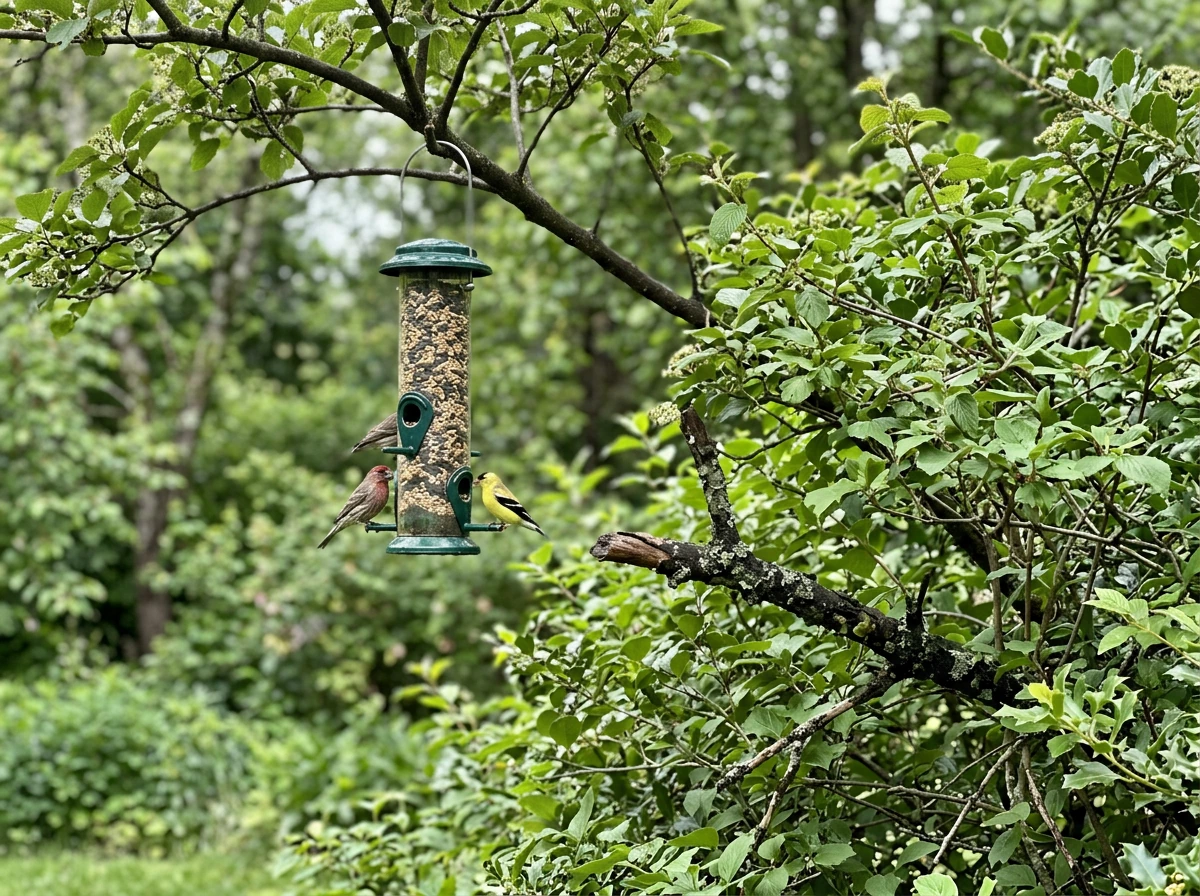
Where you put the feeder matters as much as what's in it. Birds need to be able to see it from their existing flight paths and perching spots, feel safe approaching it, and have a quick escape route if something startles them. All three of these requirements should shape your placement decision.
Place the feeder within sight of existing perches like trees, shrubs, or fence lines, ideally 5 to 15 feet away. This gives birds a staging area where they can watch the feeder before committing to landing. A feeder completely isolated in open space with no nearby cover nearby will be ignored by cautious species, even if they can see it fine.
Window collisions are a real concern and worth factoring into placement from the start. The guidance from bird safety research is clear: either place the feeder very close to a window (within 3 feet) so birds don't have room to build up speed before hitting it, or place it far from windows (more than 30 feet away) so birds have space to see the glass and adjust. The danger zone is the middle range, roughly 3 to 30 feet from a window, where birds take off from the feeder with enough speed to collide fatally.
Height is less critical than people think, but a feeder that's too low (below 4 feet) in an area with cats or ground predators will feel unsafe to many birds. Most feeders do well between 5 and 6 feet off the ground, which balances visibility with a sense of security.
| Placement factor | What to aim for | Why it matters |
|---|---|---|
| Distance from perches/shrubs | 5 to 15 feet | Gives birds a safe staging area before approaching |
| Window distance | Under 3 feet or over 30 feet | Reduces fatal window collision risk |
| Height off ground | 5 to 6 feet in most yards | Balances visibility with predator safety |
| Sun/shade | Morning sun, afternoon shade | Keeps seed fresher longer and is comfortable for birds |
| Visibility from sky | Open approach path above | Birds scout from above before descending |
When birds don't show up, or only a few species do
If it's been two to three weeks and you're seeing almost no activity, work through this checklist before assuming something is fundamentally wrong. Most slow-start feeder problems come down to one of a handful of causes.
No birds at all
- Check whether birds are present in your yard at all (not just at the feeder). If you don't see or hear birds elsewhere in the yard, the local bird population may be thin or the yard lacks habitat. Adding native plants and a water source helps with this over time.
- Verify the seed is fresh and hasn't gotten wet. Moldy or clumped seed is a major deterrent.
- Look for predator pressure. A cat that regularly patrols the yard, or a hawk that has taken up residence nearby, can suppress feeder activity for days or weeks.
- Consider the season. In peak summer, natural food is abundant and competition from your feeder is high. Activity naturally picks back up in fall.
Only certain species are visiting
This is usually a seed or feeder type issue. House sparrows and European starlings dominate platform feeders with mixed seed. If you want finches, use a tube feeder with nyjer (thistle) seed, since starlings and sparrows can't easily use tube feeders and aren't interested in nyjer. If you're getting finches but not cardinals, cardinals strongly prefer platform or hopper feeders at medium height with black-oil sunflower or safflower seed. Different species literally need different equipment. The question of how finches specifically find feeders goes a bit deeper into species behavior, which is worth exploring separately.
If you're only getting ground feeders (doves, sparrows, juncos) but not birds that prefer elevated feeders (chickadees, nuthatches, titmice), check whether your elevated feeder is placed with enough nearby cover. Those species are more cautious and need a clear perch route in.
Birds came for a while and then stopped
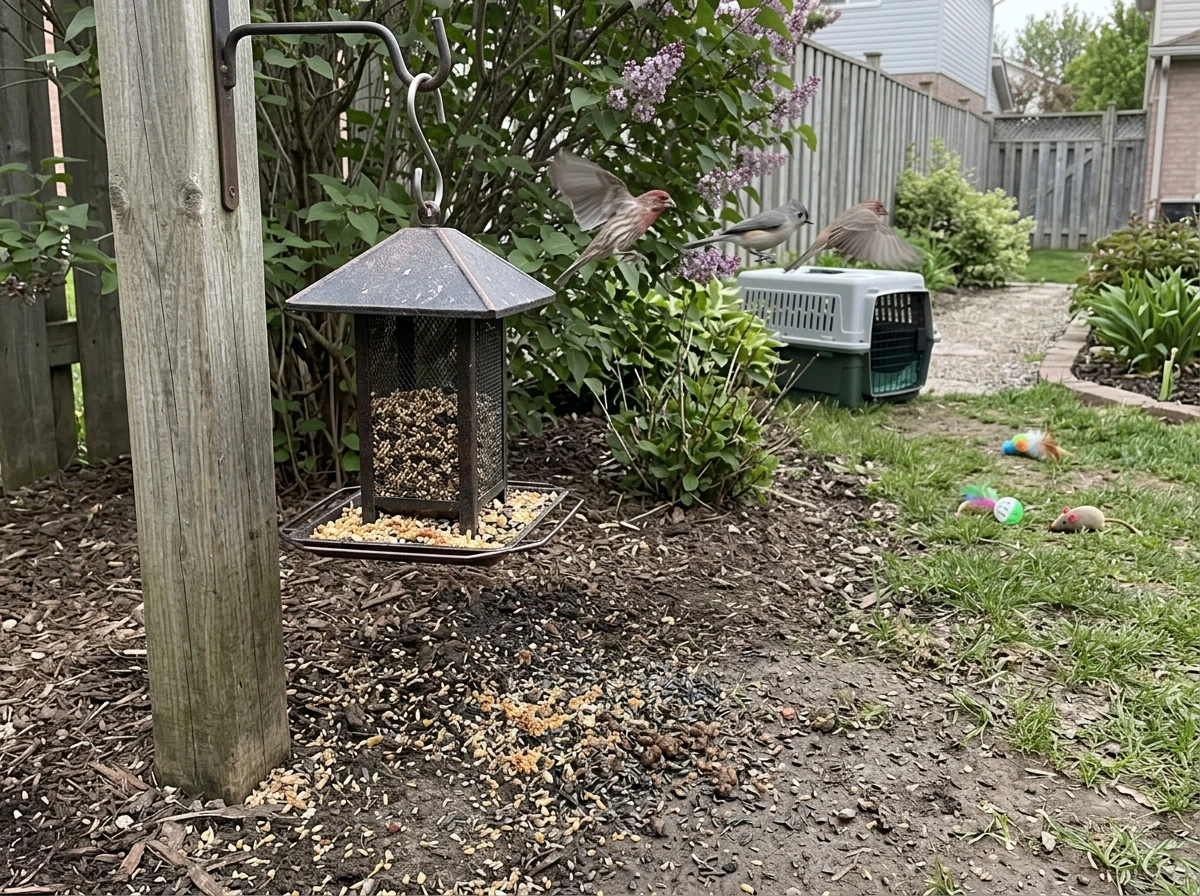
This is usually a food quality or safety issue. Check the seed first. Then check whether something changed in the yard: a new pet, construction noise, a neighbor's cat, or a predator sighting near the feeder. Birds have good memories for places where they felt unsafe, and they may avoid a feeder for weeks after a single bad experience.
If the feeder itself is dirty (old hulls, mold, bird droppings inside the ports), clean it thoroughly with a diluted bleach solution, rinse well, dry completely, and refill with fresh seed. A dirty feeder doesn't just deter birds, it can make them sick, which is worth taking seriously.
do birds nest near bird feeders do birds nest near bird feeders Do birds also poop near bird feeders, and how can you clean up safely do birds poop near bird feeders.
One more thing worth knowing: seasonal movement patterns mean that some birds will show up reliably in fall and winter, disappear in spring as they migrate or shift to natural food sources, and return next season. If your feeder goes quiet in late spring, that's often not a problem you need to fix. It's just the natural rhythm of bird activity, and they'll be back.
FAQ
How long does it usually take before birds find a brand-new feeder?
In a yard that already has active bird traffic, you often see the first visitors within a few days, and steady traffic within one to two weeks. If you see nothing after 2 to 3 weeks, treat it as a placement, food type, or safety change problem rather than “normal delay.”
What should I do if birds find the scattered seed but still ignore the feeder itself?
That usually means the feeder area does not feel safe or visible enough. Recheck that there is a nearby perch route (trees or shrubs within a short, easy line of approach) and that the feeder is not in heavy concealment where birds can’t see it while staging before landing.
Do different species notice feeders at different speeds?
Yes. Crows and jays often investigate quickly due to higher neophobia tolerance, while many finches and sparrows may observe from a distance for days. Species also differ in whether they respond to open platform vs tube or hopper designs, so “slow” often reflects the wrong feeder type for the local birds.
Does changing the seed brand or mix reset how birds find the feeder?
It can. Birds learn a reliable resource at a location, then update their behavior if the food becomes less attractive or harder to access. If you want to switch seed, do it gradually and keep the feeder location and setup stable so birds do not interpret the change as a “new” or unreliable food source.
Is it safe to put seed on the ground even if I worry about rodents?
Ground seed helps ground foragers discover the feeder, but it can also attract unwanted animals if it remains available. Use small amounts, place it close to the feeder, and remove wet or excess seed daily so it does not become a long-term buffet.
Why do birds stop visiting after a while, even if the feeder is still full?
A common trigger is a perceived risk, such as a new cat or increased human activity near the feeder, or a predator hanging around. Birds also avoid feeders that become dirty or start to smell off, so check for moldy seed, clogged ports, and old hull buildup.
Can I speed up feeder discovery without attracting the wrong species?
Yes, by matching the seed and feeder to target birds. For example, use a tube feeder with nyjer to reduce sparrows and starlings, and use black-oil sunflower in platforms or hoppers for species like cardinals. Also consider adjusting height and covering so cautious species can approach confidently.
What is the best feeder placement to both prevent window collisions and help birds find it quickly?
Follow the two safe-zone approach: mount within about 3 feet of the window so birds do not have enough runway to build speed, or place it more than 30 feet away so birds can see and react to the glass. Avoid the middle range (about 3 to 30 feet) because it is where collisions are most likely.
Do birds recognize a feeder by smell alone?
Smell is usually a confirming cue once birds are already close, not the primary “search method” from far away. If you want to rely on scent, focus on fresh, high-quality seed and clean conditions, then ensure strong visibility from existing perches and flight paths.
Should I move the feeder if birds do not show up at the start?
Wait at least a couple of weeks before major changes, because birds build a location memory. If you do move it, do so to a similarly visible and safe staging spot (near perches and cover), then keep the seed consistent so you are not forcing birds to relearn both access and food.
Do feeders work differently if my yard has few natural perches or cover?
Yes. If there are no nearby perches or shrubs for birds to stage, many species will pass the feeder even if they can see it. Add or position nearby cover, such as locating the feeder near trees or fence lines that birds already use for approach and escape.
Will birds eventually return after seasonal changes, or should I adjust everything in spring?
Many birds simply shift locations or focus on abundant natural foods in spring and may pause feeder visits. Instead of changing your setup immediately, track local patterns. If feeder activity resumes in late summer or fall with the same birds, it confirms seasonal rhythm rather than a problem with your feeder.