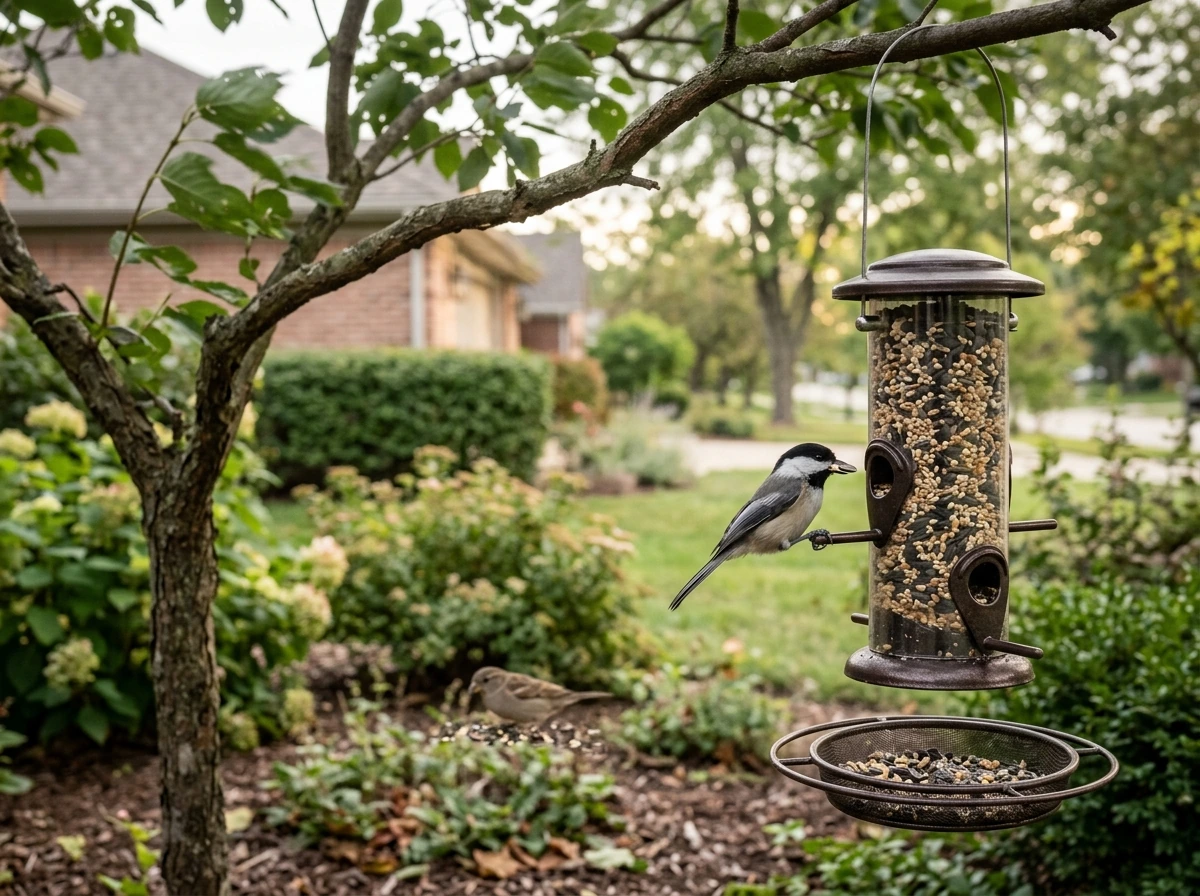
Finches find bird feeders primarily through sight. They spot the feeder itself, notice other birds feeding at it, and pick up on the movement and color of seed or other finches in the area. Sound plays a supporting role too: the contact calls of goldfinches and other finches in flight help pull in nearby birds. What does not play much of a role, despite what you might have heard, is smell. Research consistently shows that olfaction plays little or no role in food-finding for most birds, including finches. So if you're hoping finches will sniff out your nyjer seed from across the yard, it's not going to happen that way. What will work is making your feeder visible, familiar-looking, and stocked with the right food.
How Do Finches Find Bird Feeders? Setup Guide
Eleanor Hartwick
23 Mar 2026
How finches actually locate food
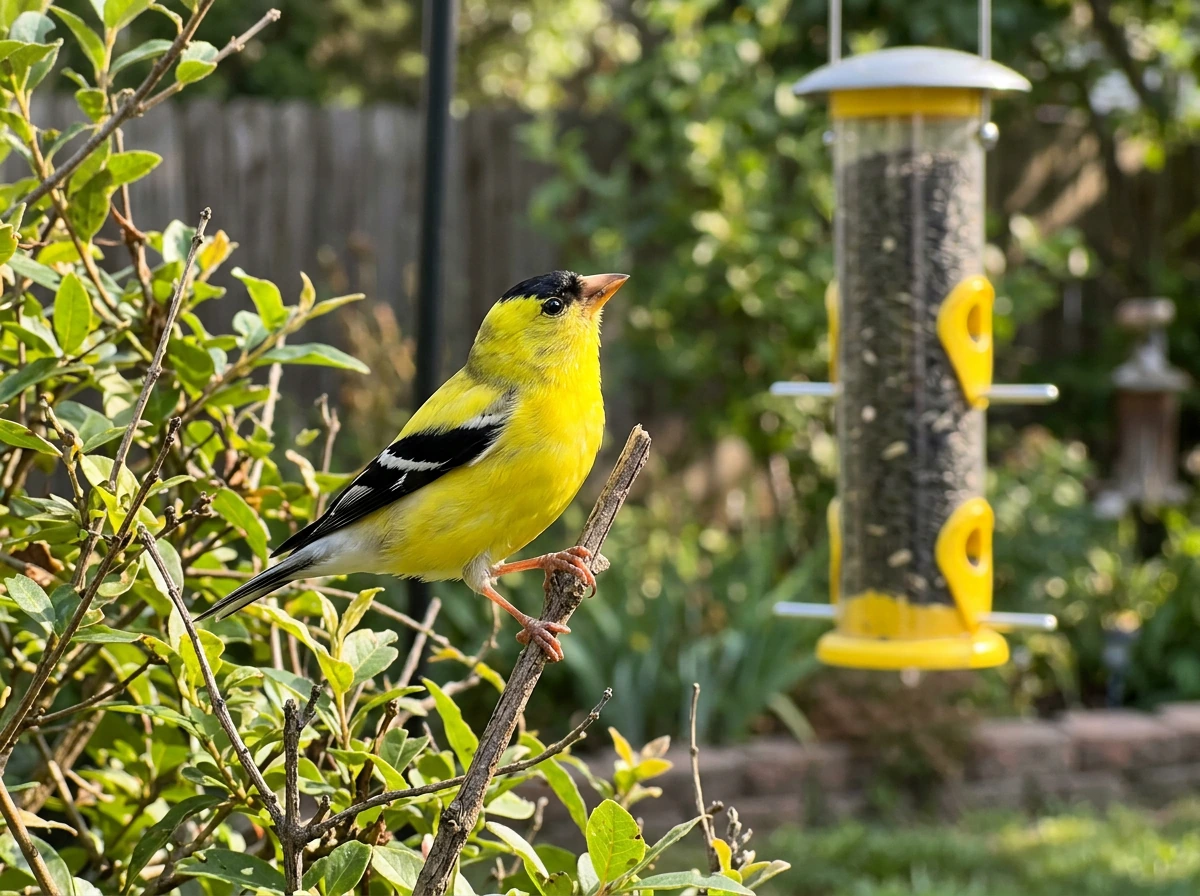
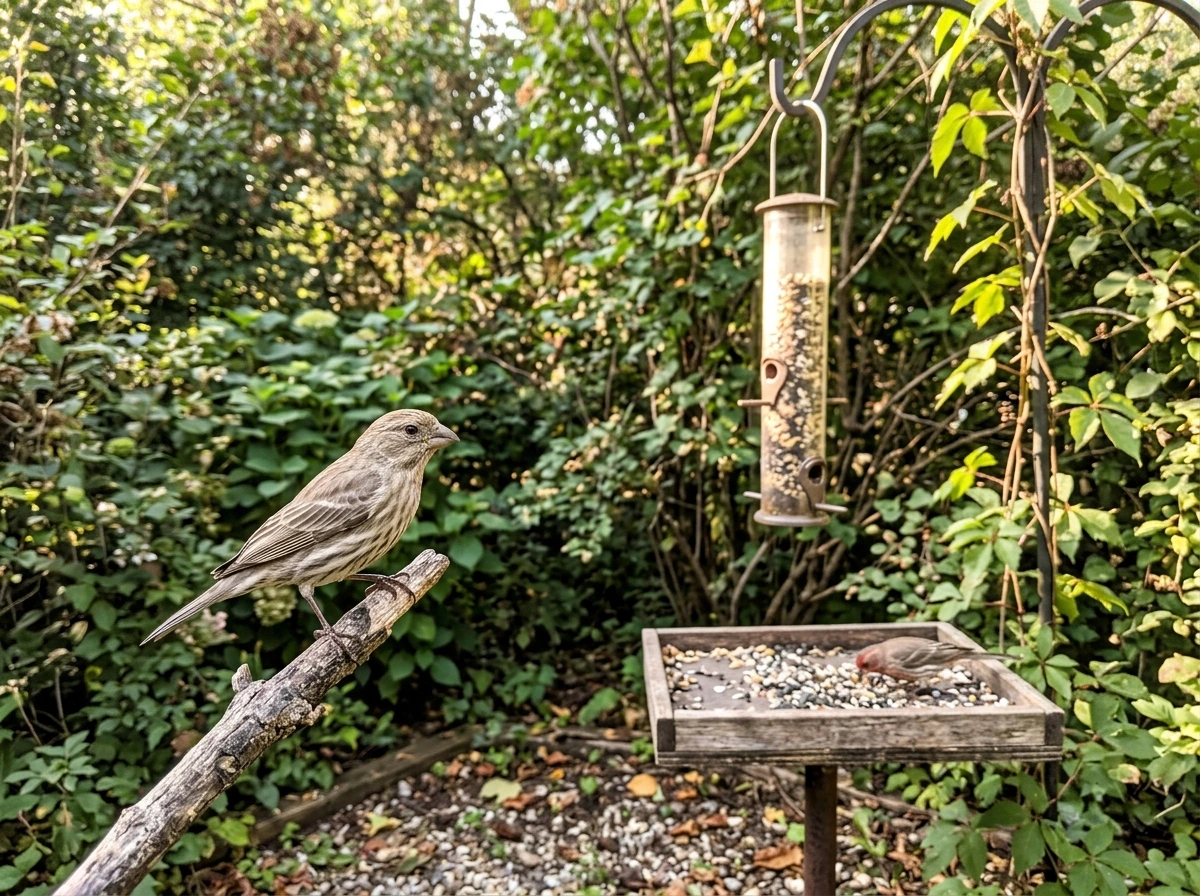
Vision is the main tool finches use to find feeders. They have wide visual fields and sharp color perception, which means a bright yellow feeder or a flash of movement near one can catch a bird's attention from a surprising distance. American Goldfinches, House Finches, and Purple Finches all tend to scout from elevated perches before dropping down to feed, so they are actively looking around their environment as they move through it.
Auditory cues matter more than most people realize. American Goldfinches give a distinctive contact call (often described as a bouncy "potato chip" sound) both in flight and while flocking and feeding. American Goldfinches’ most common contact call is often described as sounding like “po-ta-to-chip,” and it’s given in flight blank" rel="noopener noreferrer">potato chip. A group of finches already at your feeder is essentially broadcasting a dinner bell to other finches in the area. This is one reason that once one or two finches find your feeder, more tend to follow quickly. The birds are talking to each other, and nearby individuals pick up on those social signals.
Learning and memory also drive feeder discovery. Finches that have visited feeders before, whether yours or a neighbor's, are far quicker to recognize and approach a new one. Young birds raised near feeders develop a search image for them. Birds new to your yard, or juveniles from late summer, may take longer simply because they haven't built up that experience yet. And once a finch finds your feeder and gets a reliable meal, it will remember the location and return, sometimes for years.
Why finches might not show up right away
A new feeder in an unfamiliar yard can sit untouched for days or even weeks, and that is completely normal. There are a few reasons this happens. First, finches are creatures of habit. They follow established foraging routes, and a new feeder doesn't fit into those routes until a bird happens to pass close enough to notice it. If finches aren't already moving through your yard regularly, there's no guarantee they'll stumble across it quickly.
Second, finches can be skittish about unfamiliar objects. Even if a bird flies past your feeder, it may take several passes over several days before it decides the situation is safe enough to land. This is especially true if there's no cover nearby, no other birds using the feeder, or if the feeder is positioned in an exposed, windy spot.
Third, time of year matters enormously. Finch populations shift with the seasons. American Goldfinches, for example, are year-round residents across much of the US but their local numbers peak and dip depending on breeding activity and migration. If you've just set up a feeder in late summer or early spring when finches are regrouping or moving, you may simply be waiting for the right birds to arrive in your area. If you're wondering more broadly how long the wait typically is, that depends on your local bird density and the specific season, but a week to three weeks is a reasonable window for a well-placed, well-stocked feeder.
Competition is the other big factor. If larger, more dominant birds, such as House Sparrows, Starlings, or even larger finches, are monopolizing the feeder space, smaller finches may be getting outcompeted before they even land. More on how to fix that below.
Where to place your feeder for the best results
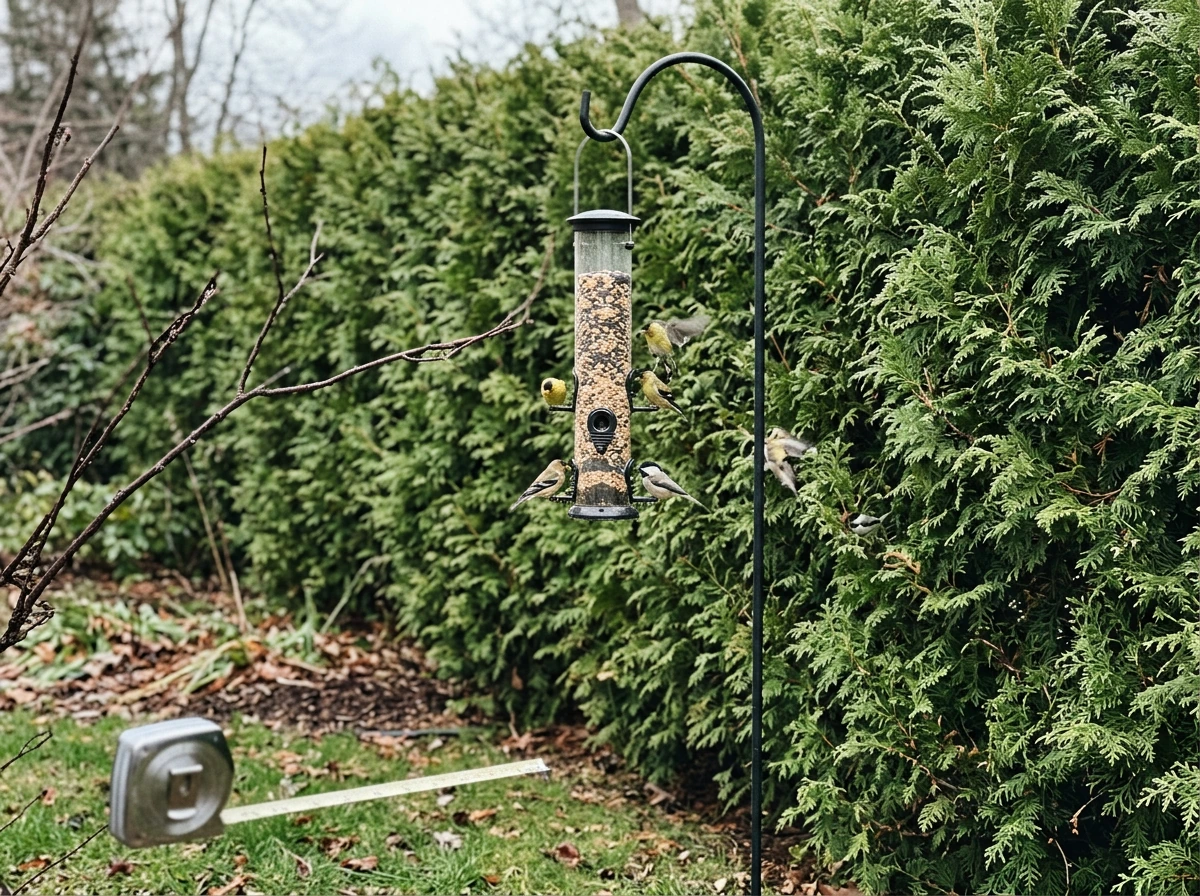
Placement is probably the single most impactful decision you'll make. Get it right and finches will find the feeder much faster. Get it wrong and you can have the best seed in the world sitting untouched.
Distance from cover
Finches want to be able to see the feeder from a nearby perch and drop down to it quickly if they feel threatened. Place your feeder roughly 5 to 10 feet from a shrub, hedge, or small tree. That distance gives them a quick escape route without putting the feeder so close to dense cover that a cat can use it for ambush. If you're in an area with heavy predator pressure, err toward 8 to 10 feet from cover rather than 3 to 4 feet.
Height
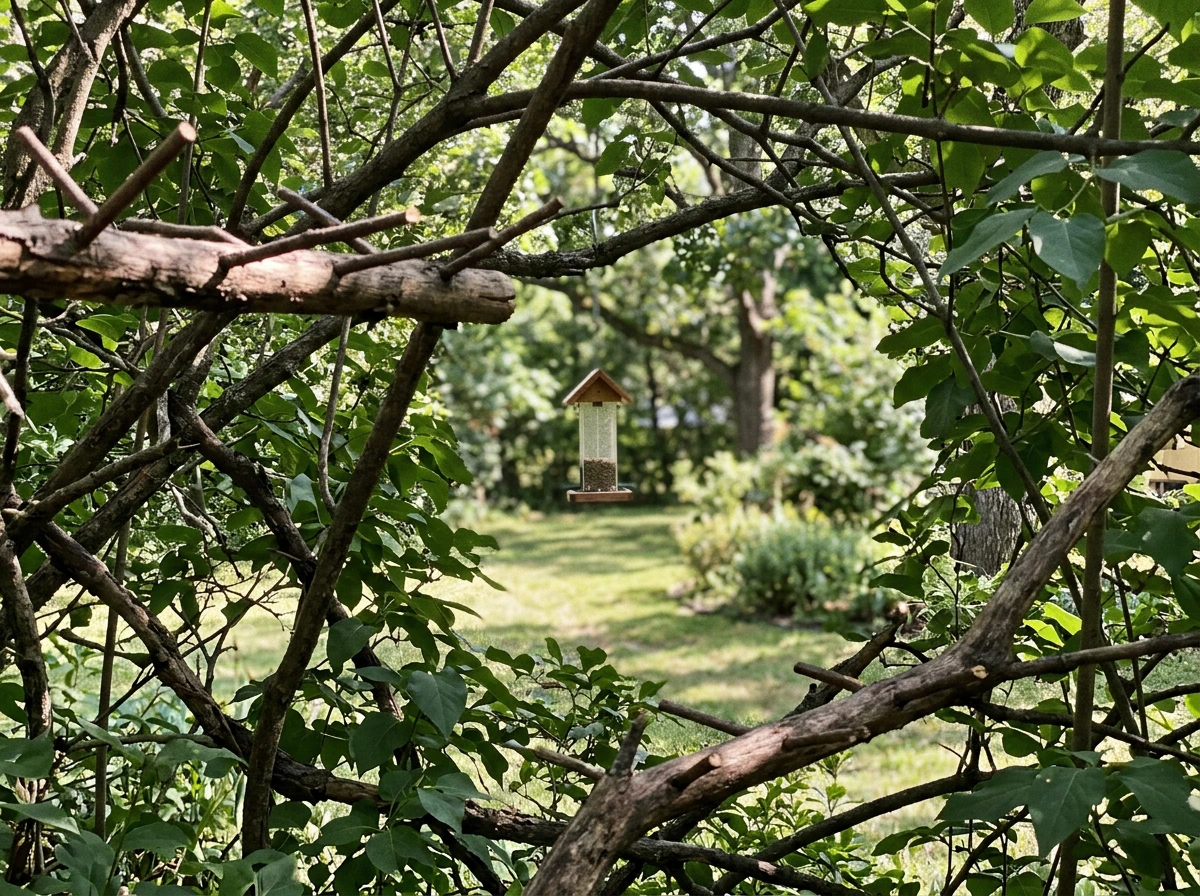
Most finches are comfortable feeding at a range of heights, but tube feeders hung at roughly 4 to 6 feet off the ground tend to perform well. That's high enough to be visible from a distance and to discourage some ground-level predators, but low enough that the birds don't feel exposed. Avoid hanging feeders directly under dense overhead cover where birds can't see the sky, and avoid placing them right against a wall where there's no clear approach path.
Visibility and line of sight
Think about where finches in your yard would naturally perch when scanning for food. If you have a fence line, a couple of tall shrubs, or even a dead branch or two you can add as a makeshift perch, position your feeder within clear visual range of those spots. Finches do a lot of their food-finding from above, so creating an obvious sight line between a natural perch and the feeder speeds up discovery considerably, and this is why they often come closer once a feeder is noticeable from nearby perches.
Wind and rain protection
A feeder that swings violently in the wind or fills up with rain is a feeder that finches will avoid. Choose a spot with some natural windbreak, like the east or south side of a building, fence, or dense shrub row. If you're in a rainy climate, a feeder with a built-in weather guard or wide roof dramatically reduces seed spoilage and makes the feeder more reliably attractive.
The right feeder and the right seed
Not all feeders and seeds are equal when it comes to finches. Matching the hardware to the bird makes a real difference.
Seed: nyjer wins, but it's not the only option
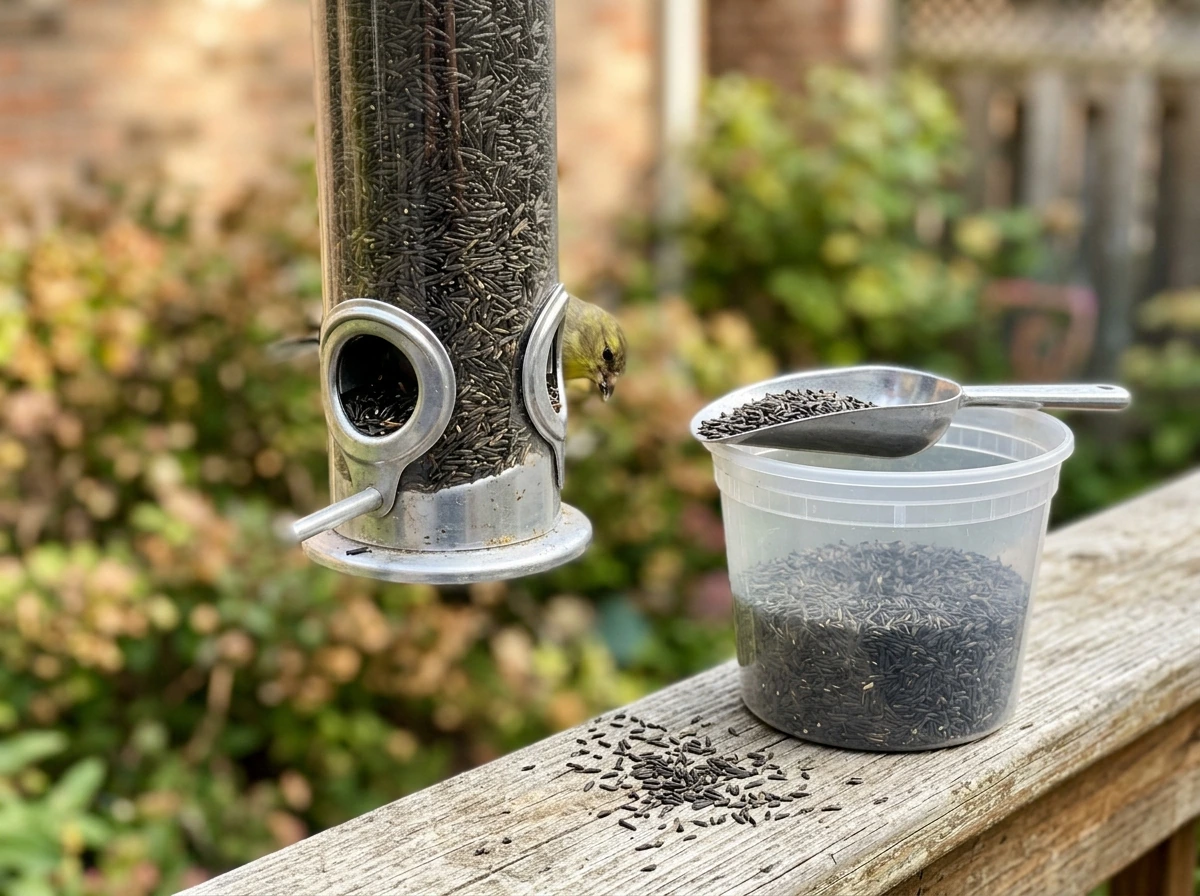
Nyjer seed (also called thistle seed, though it's technically a different plant) is the gold standard for attracting American Goldfinches, Lesser Goldfinches, and House Finches. These birds have beaks well-suited for extracting tiny seeds, and they genuinely prefer nyjer over most other options. One important note: nyjer goes stale faster than sunflower seed. If it sits in a damp feeder for more than two or three weeks without being consumed, finches will often reject it even if it looks fine to you.
Black oil sunflower seed is the versatile backup. It attracts House Finches and Purple Finches reliably, and it brings in a wider range of birds overall. If you want to target goldfinches specifically, nyjer is the better call. If you want general finch activity plus other songbirds, a mix of nyjer and black oil sunflower gives you solid coverage.
Avoid cheap "wild bird" seed mixes that are heavy on millet, milo, or cracked corn. Finches will ignore those fillers, and you'll end up with a pile of rejected seed on the ground attracting squirrels and sparrows instead.
Feeder type: tube vs. sock vs. dish
| Feeder Type | Best For | Finch-Friendliness | Drawbacks |
|---|---|---|---|
| Tube feeder (nyjer ports) | Goldfinches, House Finches | Excellent | Ports can clog; needs frequent cleaning |
| Nyjer mesh sock | Goldfinches, small finches | Excellent | Tears easily; not durable long-term |
| Tube feeder (sunflower) | House Finches, Purple Finches | Very good | Attracts larger birds too |
| Open dish / platform | Mixed finch species | Good | Seed exposed to weather; needs daily refresh |
| Hopper feeder | General backyard birds | Moderate | Less targeted; dominated by larger birds |
For pure finch targeting, a tube feeder with small nyjer ports or a mesh nyjer sock is your best starting point. The small port size physically limits access for larger birds, which reduces competition. If you want to attract a broader range of finches and don't mind sharing with other species, a tube feeder with sunflower seed is a reliable all-rounder.
How to speed up discovery and manage competition
There are a few practical tricks that genuinely help finches find a new feeder faster. The most effective is to scatter a small amount of nyjer seed on the ground or on a flat surface directly below the feeder when you first set it up. Finches and other birds often forage at ground level, and a small seed trail creates a visible cue that leads them upward toward the feeder. This is especially useful in the first week or two.
Consistency matters as much as anything else. Fill the feeder on a regular schedule and keep it full, especially in the early weeks. Finches that visit and find an empty feeder will cross it off their mental list quickly. Once you've established a reliable food source, birds will return on a predictable schedule and will continue to recruit other finches through their contact calls.
If you're dealing with dominant birds crowding out finches, the feeder type is your best lever. House Sparrows and Starlings struggle with nyjer ports and mesh socks, so switching to a dedicated finch feeder immediately reduces that competition. For squirrel interference, a baffle on the pole below the feeder, or a hanging feeder with a squirrel-resistant cage, handles most situations without requiring toxic deterrents.
One thing worth avoiding: placing your finch feeder immediately next to a feeder that's already attracting aggressive species like Starlings or large blackbirds. That "wrong crowd" dynamic can suppress finch visits even when finches are present in your yard. Give your finch feeder some physical separation, at least 10 to 15 feet, from any feeder that's pulling in birds that bully smaller species.
Keeping finches coming back: maintenance and safety
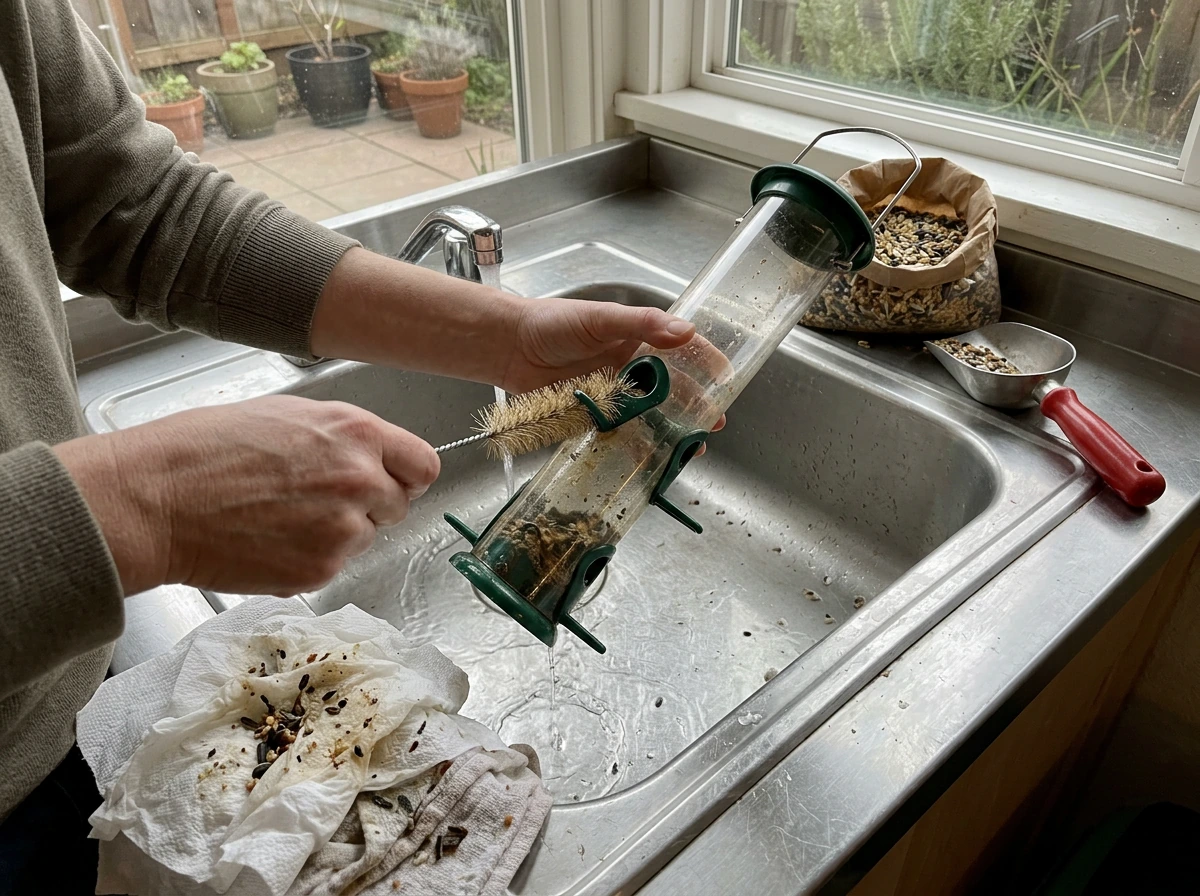
A feeder that attracts finches once can lose them fast if maintenance slips. Nyjer seed goes rancid or moldy faster than most people expect, particularly in warm, humid conditions. If finches were visiting regularly and suddenly stopped, stale seed is the first thing to check. Dump everything out, rinse the feeder with a 10% bleach solution (one part bleach to nine parts water), let it dry completely, and refill with fresh seed. That single step solves a surprising number of "where did my finches go" problems.
Aim to clean tube feeders at least once a month during moderate weather and every two weeks during summer heat or prolonged wet periods. Check the ports and the bottom of the feeder for clumped or dark seed, which is a reliable sign of moisture getting in.
Window strikes are worth thinking about if your feeder is close to a large glass surface. Placing feeders either within 3 feet of a window (so birds don't build up lethal flight speed) or more than 30 feet away significantly reduces collision risk. Right in the middle, around 5 to 15 feet from a window, is actually the highest-risk zone.
Finally, keep an eye on the ground below the feeder. Seed hulls and droppings accumulate fast, and that debris can harbor bacteria and attract rats or raccoons. Raking it out weekly and moving the feeder location by a few feet every month or two helps prevent buildup from becoming a health issue for the birds and an unwanted wildlife problem for you.
If finches still aren't showing up, work through this list
Here's a practical troubleshooting checklist for the most common failure scenarios. Go through it in order before assuming there are no finches in your area.
No finches after 1 to 3 weeks
- Check that finches are actually present in your area this time of year. Use eBird or a local bird group to confirm recent sightings nearby.
- Verify the seed is fresh. Buy a small amount from a store with high turnover, not a bag that's been sitting on a shelf for months.
- Reassess placement. Is the feeder visible from a natural perch point? Is it within 5 to 10 feet of cover? Is it getting battered by wind?
- Try scattering a tablespoon of nyjer on the ground below the feeder to create a ground-level visual cue.
- Add a natural perch, a short dead branch zip-tied near the feeder, to give approaching birds a comfortable staging spot.
Finches arrive but won't land or feed
- Look for nearby threats: a cat that frequents the area, a feeder positioned too close to dense shrubs where predators can hide, or a reflective surface that's spooking birds.
- Check whether larger birds are present and aggressive. Even brief visits from Starlings or large jays can make finches nervous for hours.
- Make sure the feeder ports aren't clogged with wet, compacted seed. Birds that can't extract seed will move on.
- Consider whether the feeder is swinging or moving too much. A more stable mount or a heavier feeder can help.
Only the wrong species are using the feeder
- Switch to a nyjer-only tube feeder or mesh sock, which physically excludes most larger, unwanted species.
- Remove or relocate any nearby feeders stocked with millet or mixed seed that are drawing in House Sparrows or other competitors.
- Be patient: once dominant species stop getting rewarded at the area, they tend to move on within a few days.
Feeder is emptying too fast
- Check for squirrels. Even a feeder hung from a branch can be accessed if the branch is within jumping distance (roughly 10 feet horizontally and 4 feet vertically from any launch point).
- Look for signs of nocturnal visitors like raccoons, which can drain a feeder overnight.
- If finch numbers are genuinely high, consider adding a second feeder a few feet away to distribute demand and reduce crowding, which can itself deter shyer birds.
The core reality is that finches are out there, and they're good at finding food when the setup is right. Vision and social signals do most of the work for them and helps answer how do birds find bird feeders and how long for birds to find bird feeder. Your job is to put the feeder somewhere they can actually see it, stock it with seed they actually want, and keep it in a condition they'll trust. Do those three things consistently, and finches will find it. will birds find my bird feeder. how do hummingbirds find bird feeders
FAQ
Do finches recognize a feeder by brand or only by the food and appearance?
They mostly learn the location plus the overall “signal” (visible feeder shape and predictable food type). If you swap to a different feeder model or change seed types, expect a delay while birds update their search image, even if the feeder is in the same spot.
If I fill the feeder but finches still do not show up, should I change the seed first or the placement?
Try seed changes first if you suspect the birds are present but ignoring the food. If nothing arrives after a short window (about 1 to 3 weeks in season), adjust placement to improve sight lines from nearby perches and add sheltered, wind-stable positioning.
Will finches feed in the rain if the seed is dry?
They often feed through light rain if the ports stay dry and the feeder does not swing. If the feeder collects water and seed turns clumpy, visits drop quickly, so prioritize weather-guarded feeders and check ports for moisture.
How can I tell whether finches are close but being scared away?
Look for passing behavior, frequent hovering, or partial landings without committing to the port. If you see this, reduce disturbances (less traffic near the feeder), add nearby escape cover at the right distance, and avoid placing the feeder in a highly exposed or overly open corner.
Does moving the feeder frequently help or hurt finches learning the location?
It usually hurts learning. Finches build routine and memory, so move only after you have tested the setup for days to weeks. When you do move it, keep the new location within the same general sight range and nearby perch network.
Can squirrels or other birds make finches quit even if the feeder is stocked?
Yes. If dominant birds or squirrels repeatedly block access, finches may stop attempting. Use a dedicated finch feeder with small ports for nyjer, add a baffle or squirrel-resistant design, and avoid placing your finch feeder right beside feeders that attract more aggressive species.
Is it okay to use nyjer even if I do not see goldfinches yet?
It can be, but manage expectations by seed freshness. Nyjer typically performs best for American Goldfinches and similar finches, but if it sits damp or stale for more than a couple of weeks, finches often reject it and you will lose momentum.
How much seed should I put out when I first set up a feeder trail?
Start with a small, manageable trail just below the feeder (enough to create a visible cue), then keep the main feeder consistently filled. Avoid overfilling so the mix does not spoil or attract excessive unwanted ground feeders.
Do finches prefer morning or afternoon for discovering and feeding?
They can feed throughout the day, but discovery often happens when light and visibility are best and when birds are actively moving between perches. If your feeder is easy to see from perches, you can often notice first visits sooner during calmer, brighter parts of the day.
What should I do if I suspect stale seed but the feeder looks clean?
Check inside the ports and bottom for dark clumps or stuck seed, which can indicate moisture or breakdown even when the exterior looks fine. Dump, rinse with a 10% bleach solution, fully dry, and refill with fresh seed if you are seeing a sudden stop in visits.
Can window placement still be risky if the feeder is not very close?
Yes. The highest risk is not only the closest distance but the mid-range where birds build up enough speed. If the feeder is within the roughly 3 to 15 foot band of a large window, reposition it to under 3 feet or more than 30 feet to reduce strikes.
Next Article
Can Birds Smell Bird Feed? Placement and Troubleshooting Tips
Learn if birds can smell bird feed and how odor affects feeder placement, plus fixes for low visitation and spoilage.