Hummingbirds find feeders primarily through vision, not smell. They have exceptional color sensitivity that extends into the ultraviolet range, a strong memory for rewarding locations, and a foraging instinct that keeps them scanning their territory for anything that looks like a food source. Once one bird finds your feeder, it will return repeatedly if the nectar is fresh and the setup feels safe. Getting to that first discovery is really the only hard part, and it's very manageable once you understand what actually grabs a hummingbird's attention.
How Do Hummingbirds Find Bird Feeders? Practical Tips

Eleanor Hartwick
23 Mar 2026
How hummingbirds locate food in the first place
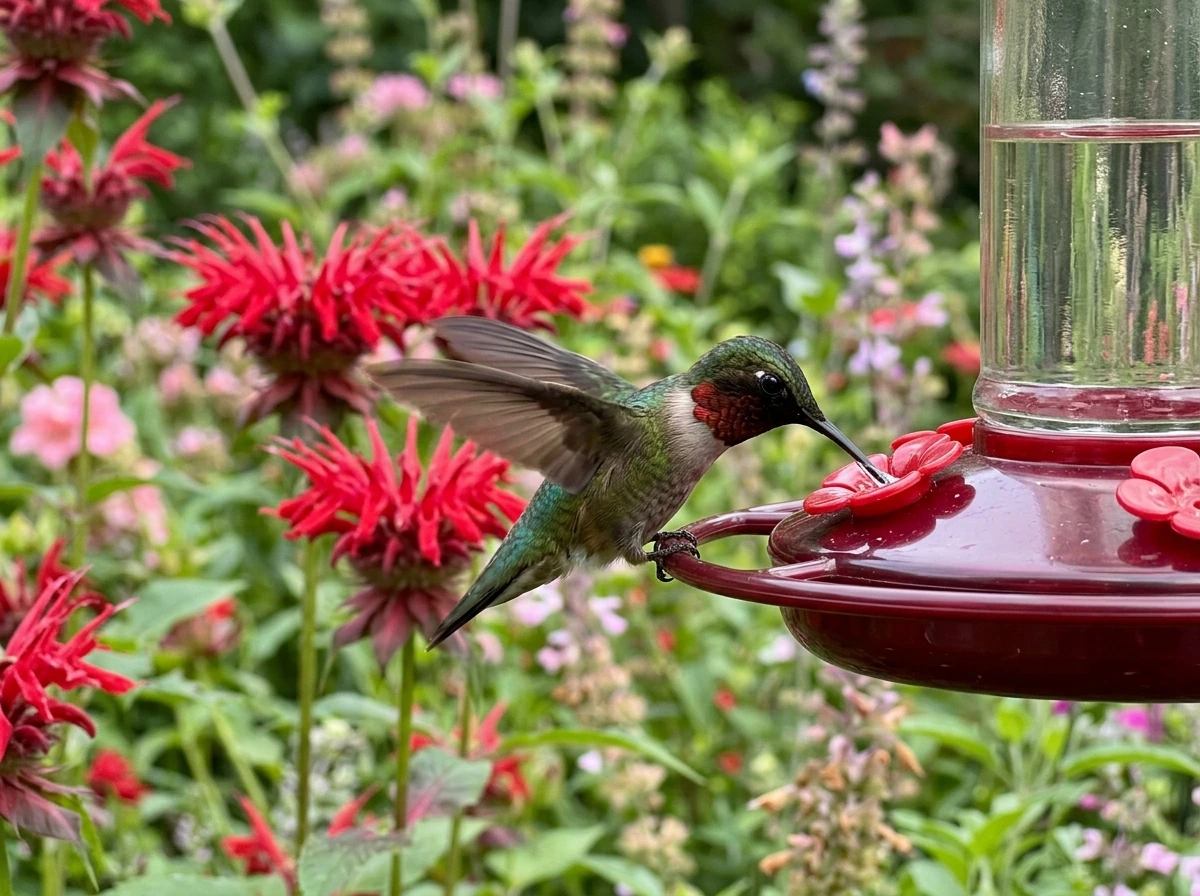
Hummingbirds rely almost entirely on vision when foraging. Their eyes can detect colors well into the ultraviolet spectrum, meaning a feeder or flower that looks like a certain shade of red to you may appear as an entirely different, more vivid color combination to a hummingbird. A Princeton-led study confirmed that wild hummingbirds can perceive nonspectral color combinations, including UV plus red, that are simply invisible to human eyes. This partly explains why red feeders work so well: the color signals "nectar here" in a way that's hard for a passing hummingbird to ignore, especially against a contrasting background like green foliage or a light-colored wall.
Smell plays almost no role. Research on spatial learning in rufous hummingbirds shows they rely on location memory and local visual landmarks rather than scent when returning to food sources. In experiments where researchers tested whether birds were navigating by smell or by spatial cues, the birds consistently used location information. So if you've been reading that you should add scented elements to attract hummingbirds, skip it. What matters is what a hummingbird can see and remember.
Memory is the other big piece. Once a hummingbird has visited a rewarding location, it remembers that location with surprising precision. Studies on rufous hummingbirds show they can return to exact feeder positions even when nearby landmarks are reduced or rearranged. This is why a hummingbird will often hover at the spot where your old feeder used to hang, even if you've moved it six feet away. It also means that earning that first visit is what unlocks repeat visits, because the bird will build your feeder into its regular foraging route.
What specifically draws them to a feeder
Color contrast is the biggest initial attractor. Hummingbirds are drawn to bright red, orange, and pink tones, and the contrast between those colors and the background makes the feeder pop visually as the bird moves through your yard. A feeder hanging against a solid green hedge is easier to spot than one tucked against a cluttered background where the colors blend in. The glossy, reflective quality of a clear nectar reservoir also helps, because the liquid catching light is one more visual signal that says "food source" to a passing bird.
Movement matters too. A feeder hanging from a thin wire that moves slightly in the breeze catches the eye more readily than one rigidly mounted against a wall. Nearby flowers, especially red tubular varieties, act as secondary attractors that can guide hummingbirds toward the area where your feeder hangs. Think of the flowers as the billboard and the feeder as the destination. If you don't have flowering plants nearby, placing the feeder in a spot with good sightlines from multiple directions compensates for that.
Nectar quality reinforces the visit once the bird arrives. Research on hummingbird sweetness preferences found that a sucrose concentration around 40% was preferred over weaker solutions. That's close to the standard 1:4 sugar-to-water recipe (roughly 20% sucrose by weight when properly diluted), which mimics the concentration range found in many natural flowers. The point is that a bird's decision to return tomorrow depends on how rewarding yesterday's visit felt. Weak or fermented nectar discourages repeat visits even from birds that already know where your feeder is.
Where to hang the feeder for faster discovery
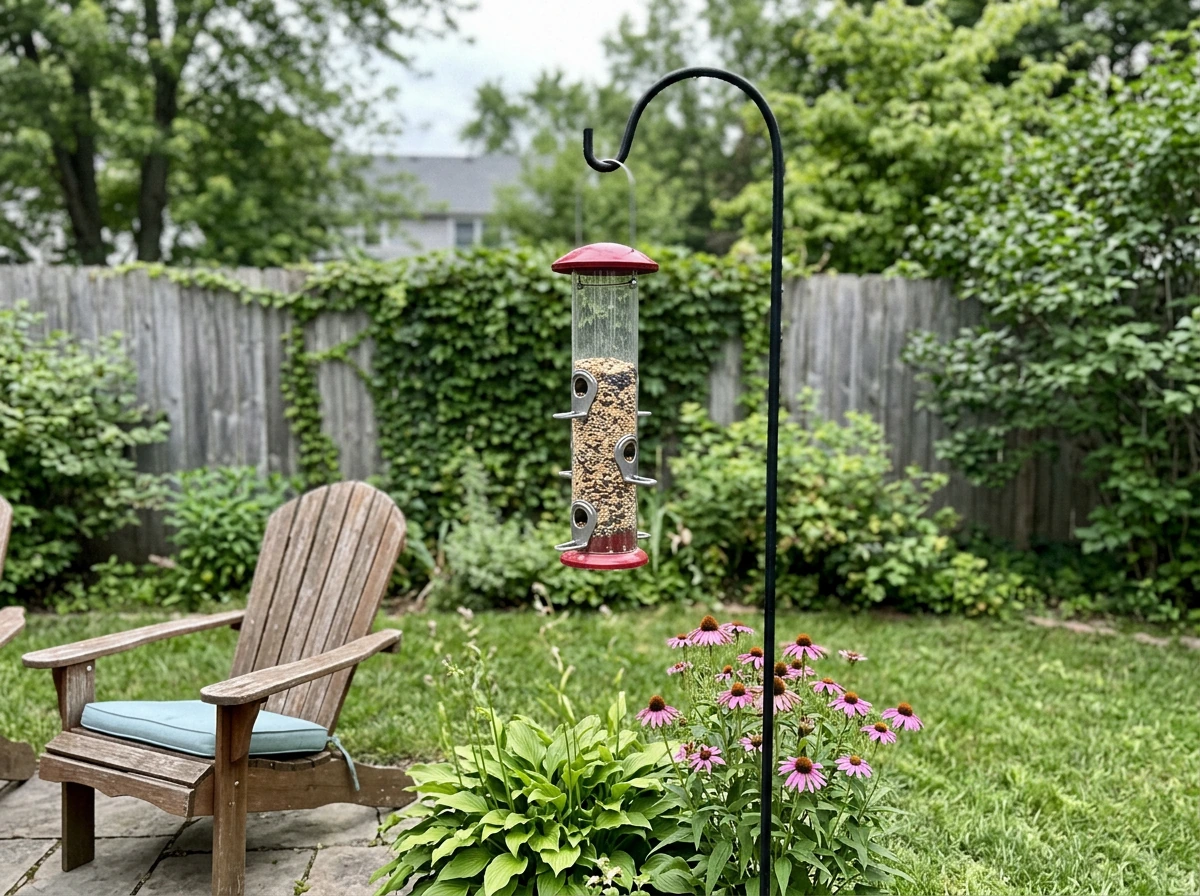
Height should sit between 4 and 6 feet off the ground. That range balances visibility (hummingbirds patrol at roughly eye-to-chest height for a standing adult) with safety from ground predators like cats. Higher than 6 feet can work, but it puts the feeder out of the natural flight corridor most hummingbirds use when cruising through a yard.
Shade versus sun is a practical compromise. Full sun all day heats the nectar and accelerates fermentation and mold growth, which means you'll be cleaning and refilling much more often. Full shade can reduce visibility if the feeder sits in a visually dark area. The sweet spot is dappled or morning light with afternoon shade, which keeps the nectar cooler and the feeder visible. If you're placing the feeder near a structure, the east side of a house or shed often works well.
Distance from cover matters for safety and approach. Hummingbirds like to have a perch or shrub within about 10 to 15 feet where they can rest and watch the feeder before committing to a visit. Placing the feeder completely in the open with no nearby perch can slow initial adoption because the bird has nowhere to sit and assess the situation. That said, don't tuck it so deep into dense shrubs that it's hidden from view during flight. You want the feeder visible from the air as a bird flies through, with cover nearby but not obstructing the approach.
Visibility from multiple angles speeds discovery. A feeder on the corner of a deck, near an open gap in a hedge, or in a yard section where hummingbirds already patrol is going to be found faster than one in a single-sightline spot. Watch where hummingbirds already appear in your yard (even briefly), and place the feeder in or very near that flight path.
Setting up the feeder so birds notice it fast
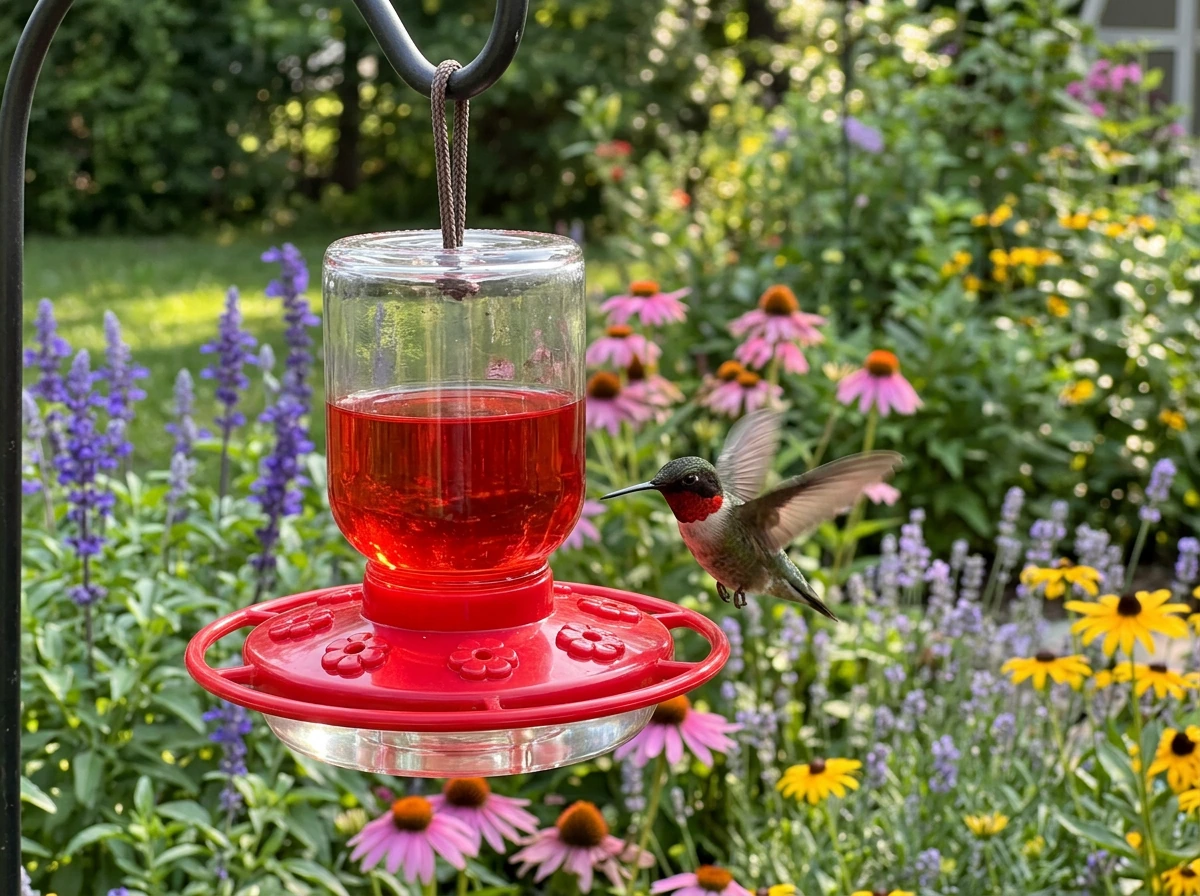
Choose a feeder with red or bright-colored ports and a clear reservoir. The red ports serve as the initial visual cue, and the clear reservoir lets the nectar itself be visible, which adds a secondary attractant. Feeders with multiple ports, like a 4-port lantern style, allow more than one bird to feed without forcing a standoff, which can slow adoption when territorial birds dominate a single-port setup.
Hang it so it moves slightly. A simple S-hook from a shepherd's crook or a flexible wire from a tree branch gives the feeder a gentle sway in wind. Rigid mounts against walls or posts are fine long-term, but a feeder with a little motion catches the eye more reliably during that initial discovery window.
If you're setting up multiple feeders (which I'd recommend if you have the space), space them apart so that one dominant bird can't guard all of them from a single perch. If feeders are 10 to 15 feet apart or around different corners of your yard, a territorial hummingbird physically can't defend all positions at once, which means subordinate birds get access and your overall visitation rate goes up.
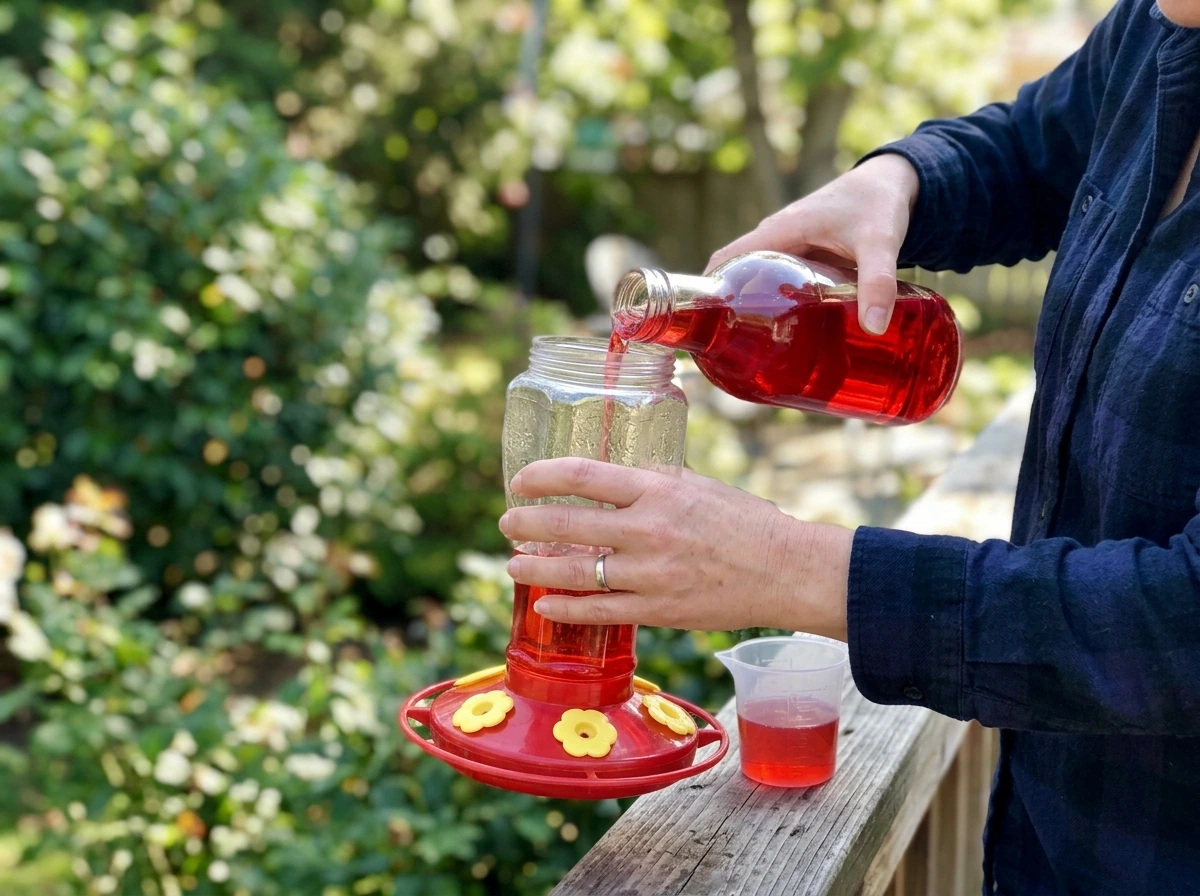
Keep the feeder clean from the start. A new feeder with fresh nectar is attractive. A new feeder with cloudy, slightly fermented nectar from sitting out too long is not. Hummingbirds can detect nectar quality quickly at the flower, and a bad first sip can make a bird skip your feeder for days. Start the relationship right with clean equipment and fresh nectar on day one.
What to do when no one shows up
Give it at least a week before worrying. If hummingbirds were previously feeding from other sources in your area, it may simply take them a few days to expand their patrol route to include your yard. In the same way, once other birds learn where your feeder is, they are more likely to come back and check it again will birds find my bird feeder. This is normal, and the timeline is roughly consistent across most regions: expect 1 to 2 weeks in an established hummingbird area, longer if you're setting up in a new location or early in the season before migration has fully arrived. how do finches find bird feeders
Check the nectar. Nectar that's been sitting out too long, especially in warm weather, ferments and becomes unappealing or even harmful. At temperatures between 80 and 90°F, change nectar every 2 days. Above 90°F, change it daily. Cloudy nectar, nectar with any visible mold or black specks, or nectar that smells slightly sour should be dumped immediately and the feeder cleaned before refilling. A feeder that smells off will actively repel birds.
Check your timing. If you put the feeder out in winter in a region where hummingbirds don't overwinter, you may simply be waiting for a migration that hasn't started yet. In most of the continental U.S., ruby-throated hummingbirds begin arriving in the Southeast in late March and push northward through April and May. In western states, species like rufous and Anna's have different timetables. Match your setup timing to your local species.
Look at competition from existing feeders. If a neighbor has a well-established hummingbird feeding station, birds may already have a strong attachment to that location. Territorial behavior among hummingbirds is real: one dominant bird can lock down a feeder entirely, which reduces the number of birds looking for alternatives. The fix is multiple feeders in different visual zones of your yard, which makes it harder for one bird to monopolize everything.
Consider the habitat context. If your yard has very few flowering plants, limited cover, or is surrounded by conditions that don't support hummingbirds generally (heavy pavement, no trees, high cat traffic), discovery will be slower. Adding even a few red or orange flowering plants near the feeder can make a meaningful difference, since flowers in the yard signal "this is a good foraging habitat" before a bird even notices the feeder.
Mistakes that reduce visits or actually harm hummingbirds
The wrong nectar recipe is the most common problem I hear about. The only safe recipe is 1 part plain white granulated sugar to 4 parts water. That's it. No honey (ferments fast and promotes fungal growth), no brown sugar (contains molasses and other compounds that hummingbirds can't process well), no artificial sweeteners (zero caloric value means zero energy for the bird), and absolutely no red food dye. The dye adds nothing useful and some researchers have raised concerns about potential harm from regular dye consumption. The red parts of the feeder itself are enough to attract birds. You don't need to color the nectar.
Making the nectar too strong is a lesser-known issue. A richer solution isn't automatically better. Overly concentrated nectar increases the viscosity of the liquid, which affects how easily hummingbirds can drink it and how the feeder ports function. Stick to the 1:4 ratio. It's not arbitrary. It falls within the range of natural flower nectar concentrations that hummingbirds have evolved to prefer and process efficiently.
Dirty feeders are the single biggest cause of hummingbird illness at feeding stations. Mold and bacteria grow quickly in sugar water, especially in warm weather. Clean the feeder with hot water and a bottle brush every time you change the nectar. Every 2 weeks or so, do a more thorough cleaning with a diluted white vinegar solution, then rinse completely before refilling. Avoid soap if you can, since residue can affect nectar taste. A feeder with black mold spots or a slimy interior is genuinely dangerous to hummingbirds.
Placement that encourages bees and wasps can deter hummingbirds, also, keep in mind that <a data-article-id="B3DAFA8F-BE89-4A8A-9056-BFB946F2855D"><a data-article-id="B3DAFA8F-BE89-4A8A-9056-BFB946F2855D"><a data-article-id="B3DAFA8F-BE89-4A8A-9056-BFB946F2855D">birds can poop near bird feeders</a></a></a>, which is another reason to manage the area around the station. If your feeder is dripping or leaking, insects will swarm it and make it effectively unusable for hummingbirds. If you are also placing other feeders, it can help to know whether do birds poop near bird feeders so you can keep the area around the feeder clean. Look for feeders with bee-proof port designs where the nectar sits below a baffle that only a long hummingbird tongue can reach. Ant moats or ant guards mounted above the feeder prevent ants from reaching the ports from above. These aren't optional accessories once insects find your feeder; they become the difference between a functional setup and one that birds avoid.
Placement near windows where birds can collide is another risk. Hummingbirds move fast and can't always brake quickly enough to avoid glass. If you're hanging a feeder near a window, keep it either very close to the glass (within 3 feet, so a collision wouldn't build up dangerous speed) or well away (10 or more feet). The middle distance is actually the most dangerous zone.
Adjusting your strategy as the seasons change
Spring is the highest-payoff time to have your feeder ready. Migrating hummingbirds are traveling through and actively searching for food sources. A feeder that's clean, filled, and well-placed during the spring migration window can get discovered by multiple birds passing through, some of which may stay if your yard has good habitat. Put your feeder out 1 to 2 weeks before the expected first arrival date for your region. You're not wasting nectar by being early; you're making sure the feeder is in place when the first scouts arrive.
Summer is about maintaining what you've built. The birds that settled in your area are raising young and defending territory. Your job is to keep nectar fresh (which gets harder as temperatures rise) and to make sure no single dominant bird is locking other birds out. If you notice one aggressive bird chasing all others away, adding a second or third feeder out of sightline from the first one is the most effective response. Multiple feeders placed strategically around the yard or on different sides of your house means a single territorial bird simply can't cover everything.
In fall, migration brings a second wave of traffic, often from birds that bred farther north and are now heading south. Keep feeders up and clean through this window. Research on migrant rufous hummingbirds shows they make energetically based decisions about whether to stay at or abandon a food source, and that abandonment tends to happen within 1 to 3 days of a resource dropping below their minimum energy threshold. That means a feeder that runs dry or goes sour during fall migration gets dropped from a bird's route almost immediately. Consistent refilling during this period is especially important.
In winter, strategy depends entirely on where you live. In the Pacific Coast states and parts of the Southwest, some hummingbird species are year-round residents and winter feeding is genuinely useful. In the eastern U.S., most hummingbirds have migrated by October, and keeping feeders out into December doesn't delay migration (that's a myth, and it's been well studied). If you do maintain winter feeders in cold climates, watch for freezing: nectar freezes at roughly the same temperature as water, which makes the feeder useless unless you bring it in overnight or use a feeder with a built-in heater.
One practical note on seasonal placement: shade patterns in your yard shift with the seasons. A spot that gets ideal dappled light in June may be in deep shade by September or full sun by April. It's worth adjusting the feeder's position a few times a year to keep it in good light conditions and to match where hummingbirds are actually patrolling as flower availability in your yard changes. Rotating feeder location slightly with the seasons also keeps the nectar cooler, which reduces how often you need to clean and refill.
Quick reference: feeder setup at a glance
| Factor | Recommendation | Why It Matters |
|---|---|---|
| Nectar recipe | 1 part white sugar to 4 parts water | Matches natural flower concentration; safe and preferred by hummingbirds |
| Feeder height | 4 to 6 feet off the ground | Balances hummingbird flight path with safety from ground predators |
| Sun/shade | Partial shade, especially afternoon | Slows nectar fermentation and mold growth |
| Distance from cover | 10 to 15 feet from shrubs or perches | Gives birds a resting/scouting spot without hiding the feeder |
| Nectar change frequency (above 90°F) | Daily | Prevents fermentation and mold that repels or harms birds |
| Nectar change frequency (80–90°F) | Every 2 days | Keeps nectar fresh and reliably rewarding |
| Number of feeders | Multiple, spaced 10–15 feet apart | Reduces territorial exclusion by dominant birds |
| Feeder color | Red or bright-colored ports, clear reservoir | Maximizes visual detection using hummingbird UV-extended color vision |
| Ant/bee management | Ant moat above feeder, bee-proof port design | Prevents insect swarms that deter hummingbird use |
FAQ
How long does it usually take before hummingbirds find a new feeder?
In a yard with hummingbirds already active, many feeders see first visits within about 1 to 2 weeks. If you live in a quieter area or are setting up early, it can take longer because birds first need to add the location to their patrol route, which they typically do after a few exploratory visits from scouts.
What should I do if hummingbirds come to the feeder but don’t stay?
Check nectar freshness and temperature first, cloudy or even slightly fermented liquid can end a visit quickly. Also verify the feeder ports are not partially blocked by insects, spider webs, or debris, and make sure the feeder is in a safe approach path with nearby cover so the bird feels comfortable lingering.
Can I use an old hummingbird feeder that was already used by other people?
You should treat it as if it is contaminated until cleaned. Even if it looks fine, residues can harbor bacteria or leave sugar film that accelerates fermentation, scrub with hot water and a bottle brush, rinse thoroughly, then refill with fresh nectar before hanging.
Do hummingbirds follow the same individuals or does any hummingbird find the feeder eventually?
Hummingbirds do not require the same bird to return, other individuals can discover the feeder once it becomes a reliable landmark in the area. However, if one bird is highly territorial, it can delay other birds, so adding a second feeder in a different visual zone often speeds up wider adoption.
Why do I see bees and wasps at my hummingbird feeder, and will it stop hummingbird visits?
It often will reduce hummingbird activity, because insects swarm around the ports and create competition and disturbance during feeding attempts. Use bee-resistant port designs, prevent leaks that attract insects, and consider moving the feeder to a less insect-heavy area or adjusting height so it is harder for ground insects to reach.
How do hummingbirds react if the feeder is placed too high or too low?
If it is too low, ground predators and disturbance from pets can make visits riskier, and if it is too high it may fall outside the bird’s cruising or hovering corridor in your yard. Use a 4 to 6 foot range as a starting point, then fine-tune based on where you see hummingbirds hovering most often.
Should I hang the feeder in the sun, or keep it in shade all day?
Full sun can increase fermentation speed, meaning more frequent changes and a higher chance of sour nectar. Full shade can make the feeder harder to detect from flight paths, the best compromise is dappled or morning light with afternoon shade so nectar stays cooler while the feeder remains visually obvious.
Is it safe to mix nectar with honey, fruit juice, or dyed sugar water?
No. Honey and most flavored or colored liquids ferment faster or contain compounds hummingbirds cannot process safely, and adding dye to the nectar is unnecessary because the feeder’s red parts already provide visual cues. Stick to plain white granulated sugar diluted 1 part sugar to 4 parts water.
What if my nectar keeps turning cloudy or molding quickly?
Reduce the time the nectar sits out and lower the nectar’s exposure to heat by moving the feeder to dappled light. Replace nectar more aggressively in warm weather, and do a thorough cleaning schedule, because sticky residue can shorten the time before fermentation starts again.
Can I place the feeder near a window if I take precautions?
You can, but collisions remain a concern. Place it either very close to the glass (so birds do not build dangerous speed) or far enough away to avoid the glass looking like an open route, also check for reflections from interior lights, especially at dawn and dusk.
How do I stop ants from taking over the feeder area?
Use ant guards or moat designs that prevent ants from reaching the ports, and address the attractant source by fixing leaks and keeping the surrounding area dry. If ants are climbing the support line, add a barrier system higher up so they cannot bridge over to the feeder.
Will moving the feeder confuse hummingbirds, and how much should I change it?
Small adjustments are usually fine, but a dramatic relocation can temporarily slow discovery because birds must relearn the visual landmark. If you need to reposition for seasonal light, move gradually or within the same general flight path and keep the feeder consistently clean and filled so the new spot becomes the next reliable stop.
Next Article
Do Birds Poop Near Bird Feeders? What to Expect and Fix
See if birds poop by feeders, what droppings look like, why they gather, and step-by-step fixes to keep areas clean.