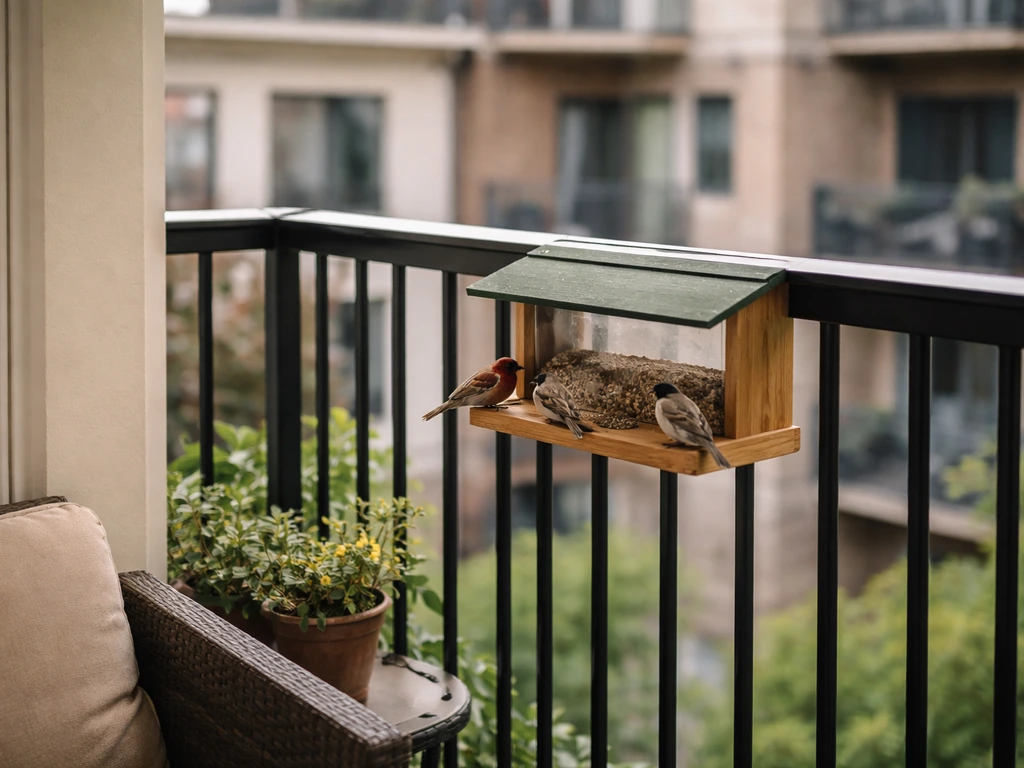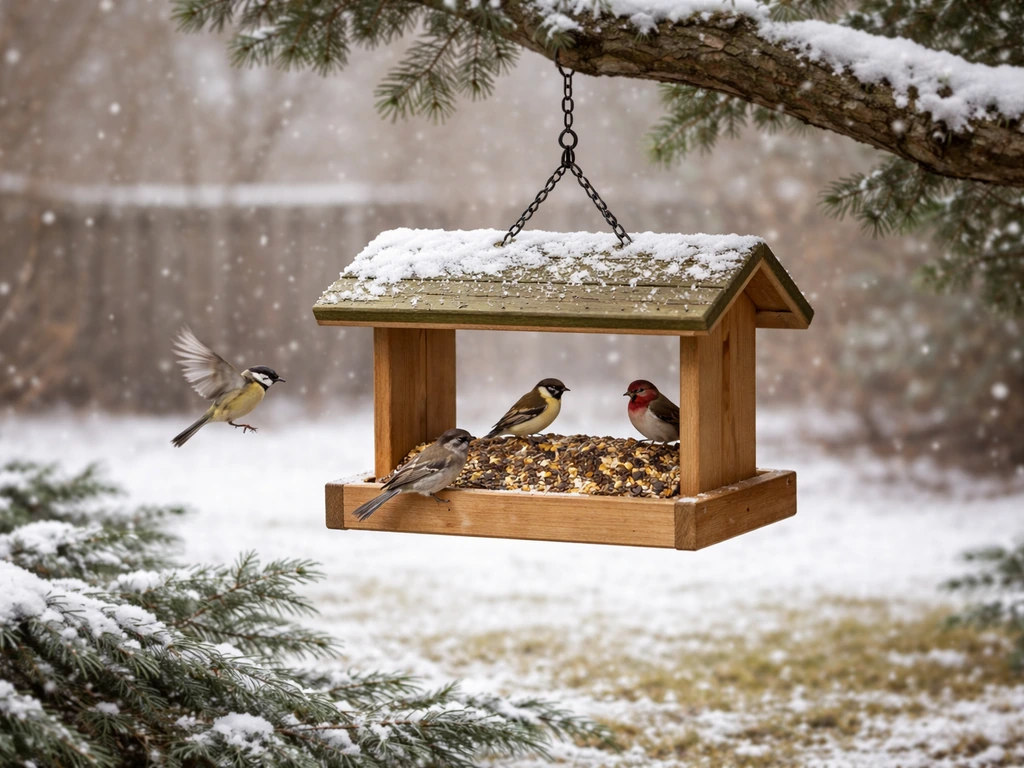
Bird feeders are legal for most New Jersey homeowners and renters. There is no statewide law banning them. That said, your specific situation, where you live, what wildlife lives nearby, and what your HOA or landlord says, can absolutely change that answer. The biggest legal landmine in New Jersey is not the feeder itself, it is what the feeder attracts. If you live in bear country (and a lot of NJ qualifies), putting out seed carelessly can put you in legal and safety trouble fast.
Are Bird Feeders Illegal in New Jersey? Rules to Follow

Eleanor Hartwick
10 Jun 2026
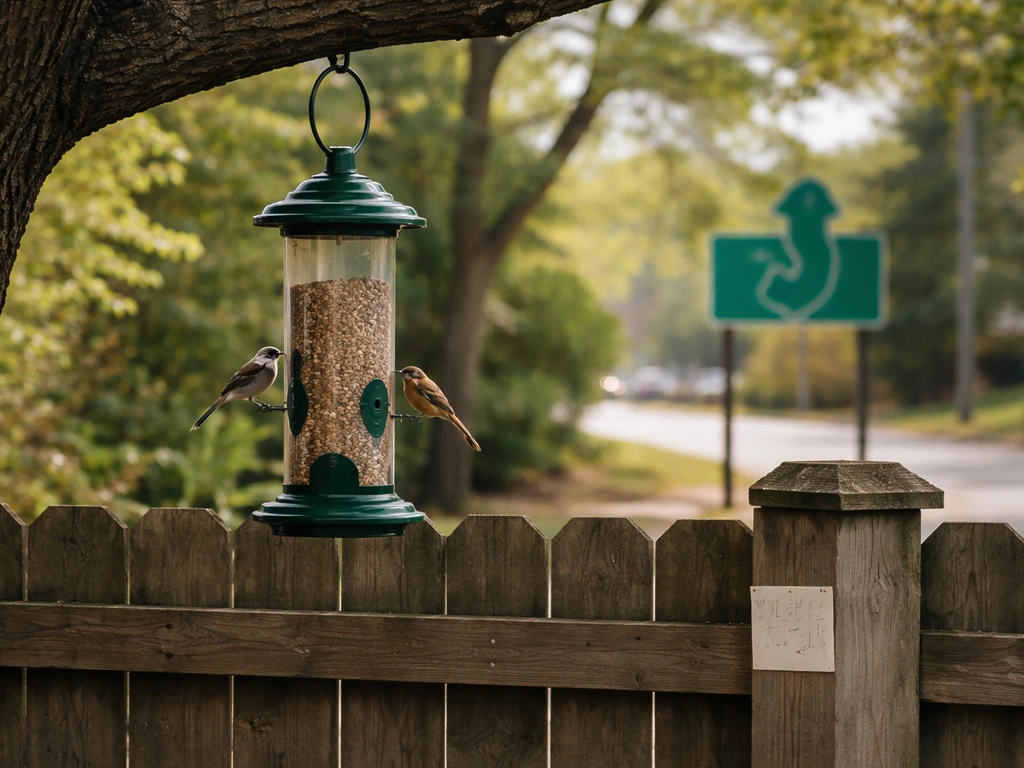
What NJ law actually says about bird feeders
New Jersey does not have a statewide law that prohibits bird feeders. The NJDEP (New Jersey Department of Environmental Protection) explicitly says that backyard bird feeding during winter months is acceptable. That is about as close to a green light as you will get from a state agency.
Where things get complicated is wildlife attraction. New Jersey Revised Statutes Section 23:2A-14 makes it illegal to intentionally feed black bears, and the law defines feeding broadly, placing, exposing, or scattering any edible material that attracts or entices a bear. Bird feeders loaded with seed, suet, or nectar absolutely qualify as bear attractants. The statute is enforced by municipal police, the NJ Division of Fish and Wildlife, and the Division of Parks and Forestry. First-time violations carry real penalties, so this is not something to brush off.
The NJDEP's position is nuanced but honest: bird feeding is fine in the right context, but if you live where bears roam, you need to take specific precautions or avoid feeding birds altogether during bear-active seasons. That is the core of New Jersey's legal framework around feeders, it is less about the feeder and more about what you are inadvertently feeding.
Statewide rules vs. what your town says
New Jersey gives municipalities a lot of room to regulate wildlife feeding under local nuisance, health, and public safety codes, and many towns have taken that opportunity. The variation from one town to the next can be significant, which is why the statewide answer ('generally legal') is only a starting point.
Consider how differently three NJ municipalities have handled this. Hoboken outright prohibits feeding birds, rodents, or any non-domesticated wildlife on public streets, sidewalks, parks, and public places, though your own backyard is a different story there. Morris Township goes further, stating that feeding wild animals and waterfowl is a public health nuisance and safety hazard and prohibiting it on both public and private lands. Harrington Park splits the difference, banning wildlife feeding on borough property but explicitly carving out an exception: feeding birds by way of a bird feeder on private property is allowed. Palisades Park has an ordinance that permits feeders but requires them to be placed at least five feet off the ground and limits seed capacity to reduce attractants.
The pattern you will notice: public spaces are almost always more restricted than private property, and even private-property rules can vary from outright permission to outright prohibition depending on your town. You cannot assume your neighbor's town rules apply to you.
Where feeders are most commonly restricted in NJ
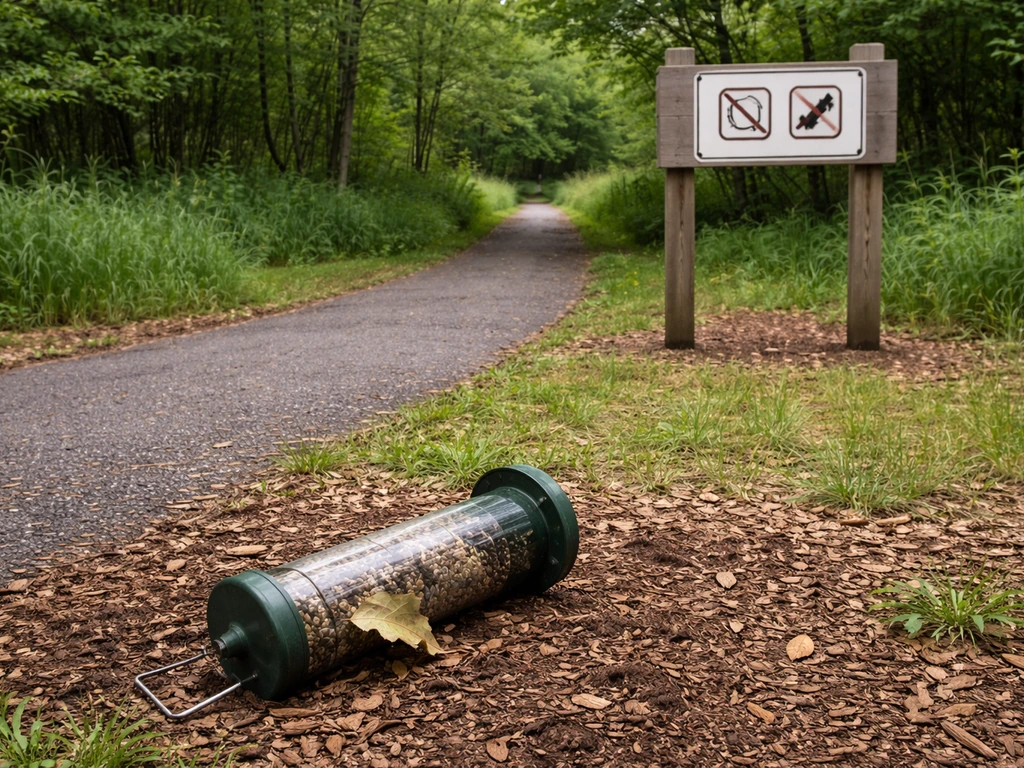
Knowing which categories of land and governance tend to restrict feeders helps you zero in on whether your setup is a problem before you even start researching ordinances.
- Public parks and nature preserves: Most NJ parks, state forests, and protected areas prohibit wildlife feeding outright. This is both a state-level policy under NJDEP and commonly reinforced by local park rules.
- Public streets, sidewalks, and plazas: Municipalities like Hoboken explicitly ban feeding wildlife on any public property, which includes setting up feeders near the sidewalk or in common outdoor spaces.
- Bear habitat zones: Northwestern and central NJ counties including Sussex, Warren, Morris, Passaic, and Hunterdon have significant black bear populations. In these areas, the state's anti-bear-feeding statute effectively limits how and when you can operate a bird feeder, regardless of local ordinances.
- HOA-governed communities: Homeowner associations can and do prohibit bird feeders through CC&Rs (covenants, conditions, and restrictions) independent of local law. These are private contractual rules, not government ordinances, but they are enforceable.
- Apartment buildings and rentals: Landlords often prohibit feeders via lease addenda, especially if prior tenants attracted rodents or pigeons. NJ state law does not override your lease on this.
- Waterfowl-heavy areas: Towns near ponds, lakes, and wetlands sometimes target waterfowl feeding specifically, which can sweep in bird feeder use if the ordinance language is broad enough.
How to check the rules for your exact address today
This is the most practical step you can take right now. Do not assume, verify. Here is a fast way to do it.
- Go to ecode360.com or your municipality's official website and search your town name plus the words 'wildlife feeding,' 'bird feeder,' or 'nuisance ordinance.' Most NJ municipal codes are indexed there.
- Search for Chapter titles related to nuisances, health, public welfare, or animal control — that is usually where wildlife feeding rules live.
- Look for language about exceptions: phrases like 'shall not apply to... feeding of birds by way of a bird feeder on private property' tell you feeders are carved out. Broad language like 'no person shall provide access to food for wild animals on public or private lands' means you have a problem.
- If you can't find a clear answer online, call your municipal clerk or the local health department. Ask directly: 'Does our town have any ordinance that restricts bird feeders on private property?' They deal with this question regularly.
- Check with NJDEP's Division of Fish and Wildlife (609-292-2965) if you are near bear habitat or state-managed land. They can tell you whether your area has documented bear activity that would trigger additional feeding restrictions.
- If you live in an HOA or a rental, pull out your CC&Rs or lease agreement and search for 'feeder,' 'bird,' 'wildlife,' or 'nuisance.' Do this before calling anyone — the answer is often right there.
How to stay compliant wherever you are in NJ
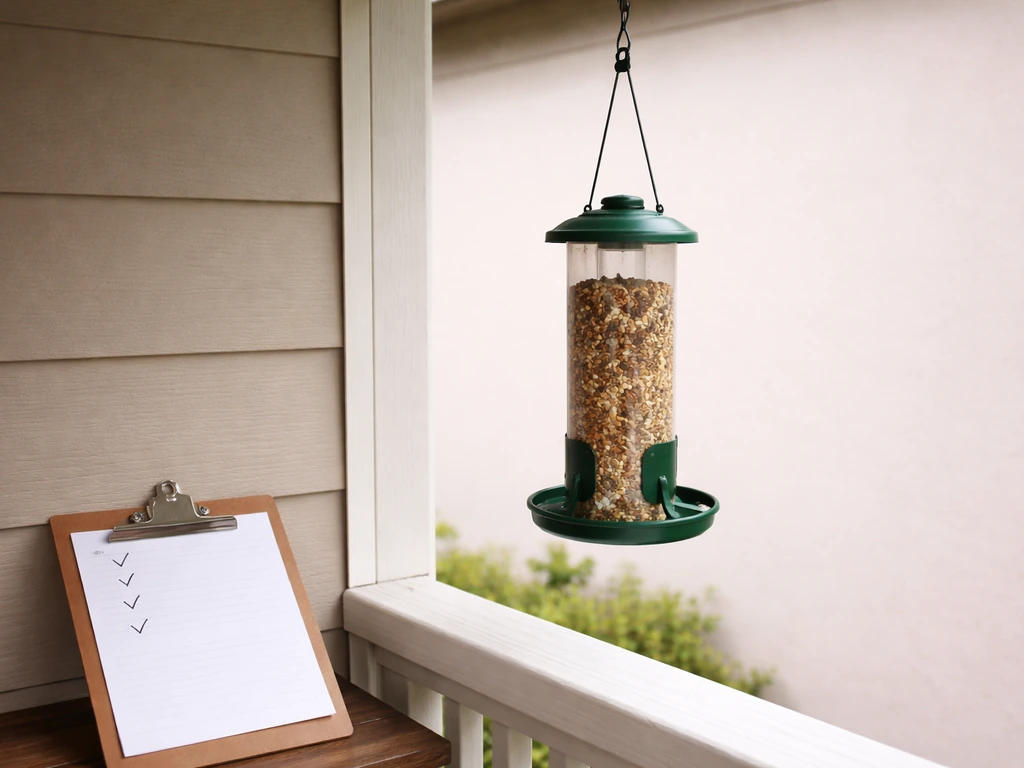
Even in places where feeders are allowed, how you set one up matters legally and practically. Nuisance complaints are the most common way a legal bird feeder becomes a legal problem, and most nuisance ordinances give enforcement officers broad discretion. A feeder that is attracting rats, creating a mess on a neighbor's property, or drawing bears is a feeder that can get you a citation even if the feeder itself is technically permitted.
Placement
NJDEP recommends suspending feeders from a free-hanging wire at least 10 feet off the ground and at least 10 feet from the nearest tree trunk. This discourages bears from reaching it and keeps squirrels from launching themselves onto it. Some municipalities (like Palisades Park) codify a minimum height requirement of five feet, so staying at or above 10 feet keeps you compliant with both local rules and state guidance. Position feeders away from property lines and fences to minimize mess drifting onto neighboring property.
Sanitation
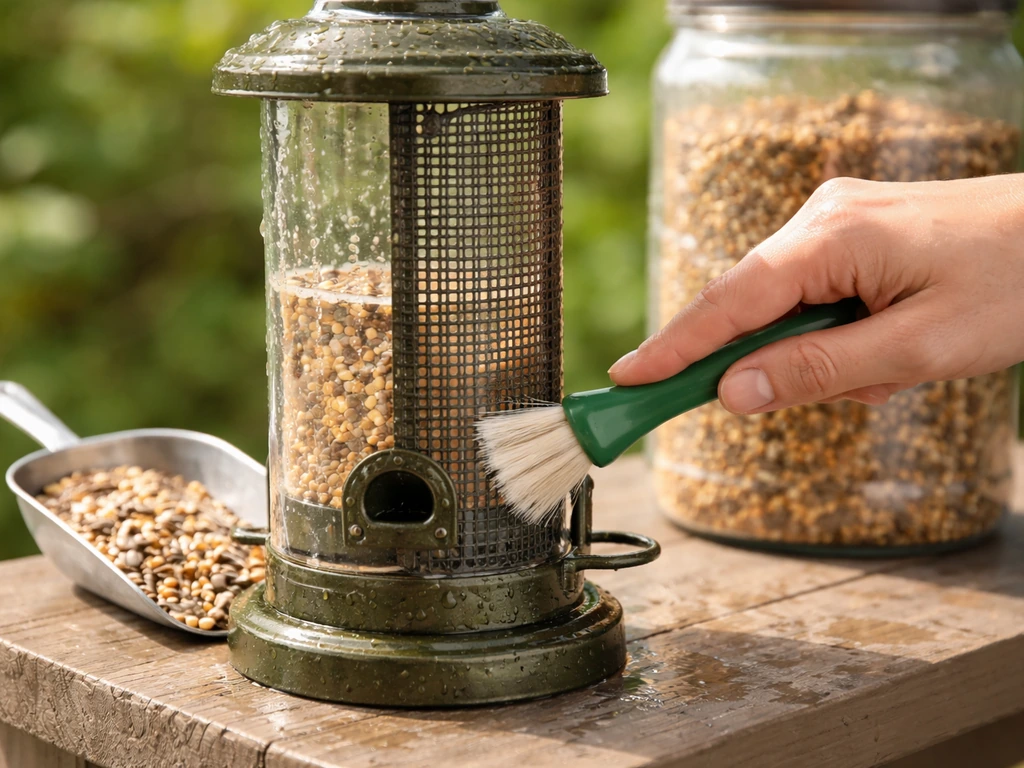
Clean feeders every two weeks at minimum, more often during wet weather or if you spot a sick bird. The U.S. Fish and Wildlife Service and Cornell Lab both recommend a two-week cleaning cycle. Use a dilute bleach solution, rinse thoroughly, and let the feeder dry completely before refilling. Wear gloves. The CDC has documented Salmonella outbreaks linked to contaminated feeders and bird baths, and touched-then-unhandled feeders are a real transmission route. A clean feeder is also far less likely to trigger a nuisance complaint from a neighbor or a health department inquiry.
Seed storage
Store birdseed in a sealed, hard-sided container, a metal trash can with a locking lid works well. NJDEP specifically calls this out as a bear-mitigation step, but it also prevents rodent infestation in your garage or shed. Keep stored seed away from exterior walls where bears or rats are more likely to detect it by smell.
Keeping unwanted wildlife out of the picture
Rodents, aggressive birds like European starlings and house sparrows, and of course bears are the three most common reasons a neighbor or code enforcement officer shows up at your door about a bird feeder. Addressing these proactively is the best way to stay out of legal and neighbor-relations trouble.
| Problem | What causes it | What to do |
|---|---|---|
| Rodents under the feeder | Seed falling to the ground and accumulating | Use a tray catcher, switch to no-waste seed mixes (shelled sunflower, no millet), and rake up spills daily |
| Bears approaching the feeder | Accessible seed in bear territory, especially spring through fall | Remove feeders April through November in bear counties, or use the NJDEP-recommended 10-foot suspended wire setup during daylight hours only |
| Aggressive/invasive birds dominating | Millet, mixed seed, and bread attract starlings and sparrows | Switch to nyjer (thistle) or shelled sunflower hearts and use feeders with smaller ports that exclude larger birds |
| Neighbor complaints about mess | Hulls and debris under the feeder | Use hull-free seed and place a ground cloth or tray under the feeder; clean up weekly |
One thing worth understanding: in NJ, the black bear issue is not hypothetical. Bears have been documented in every county in the state, and the NJDEP is explicit that one person attracting a bear with birdseed can create a 'problem bear' for the whole neighborhood. Problem bears that lose their fear of humans are often euthanized. That is a real consequence worth taking seriously.
Seasonal feeding: when to go for it and when to pull back
The NJDEP's own guidance gives you a practical seasonal framework: winter feeding is the safest and most acceptable time to run a bird feeder in New Jersey. Black bears are least active from approximately December through March, migratory birds are in greatest need of supplemental food, and the cold limits seed spoilage and mold growth in the feeder. This is the window the state explicitly endorses.
Spring through fall is when you need to make a judgment call, especially if you are in bear habitat. Bears emerge from dens hungry, and birdseed is one of the highest-calorie, easiest-to-access food sources they find near homes. NJDEP advises avoiding bird feeders entirely if you live in an area frequented by black bears, and if you insist on feeding, the 10-foot suspended wire setup during daylight hours only is the minimum precaution. Even if you are trying to help birds, some towns treat bird feeders as prohibited, so check whether your address falls under “no bird feeders allowed.”. Bring feeders in at night.
For bird health, clean feeders more frequently in warm months because seed ferments faster and mold develops quickly in heat and humidity. If you see birds that look lethargic, puffed up, or are falling near your feeder, take the feeder down immediately, clean it with a 10% bleach solution, and let it dry completely before putting it back up. That is both responsible practice and, in some municipalities, a way to avoid a code violation based on feeder maintenance standards.
The bottom line for New Jersey: feeders are generally fine, but the rules around them are more layered here than in many states, partly because of bear country, partly because NJ towns have widely varying ordinances. Verify your specific town's code, know your bear-risk level, keep the feeder clean and well-placed, and you will be on solid ground both legally and practically. In Singapore, bird feeding rules are also restricted, so check local guidance before setting out seed or other food is bird feeding illegal in singapore. If you are curious how NJ compares to other states with their own feeder rules, the landscape looks similar in some ways, local ordinances and wildlife-specific restrictions tend to do more of the work than statewide bans almost everywhere in the U. If you are also wondering about Florida, the key is to check for state and local rules because bird-feeder legality can vary by jurisdiction are bird feeders illegal in florida. Yes, bird-feeding rules differ widely by state, so California may have its own restrictions beyond any local HOA or city ordinances. Michigan has its own wildlife and nuisance rules too, so you need to check your exact local requirements before putting out a bird feeder other states with their own feeder rules. S.
FAQ
If there’s no statewide ban, can I still get ticketed in my town for a bird feeder?
Possibly, yes. Even though New Jersey has no statewide blanket ban, your HOA or lease can prohibit feeders, and many nuisance or public safety ordinances treat “any feeding that attracts wildlife” as a violation in specific zones. If you do not have clear written permission, assume you could still be cited or fined.
What exact wording should I look for in my town’s ordinance to figure out if feeders are allowed?
Try searching your municipality’s code for terms like “wildlife feeding,” “bird feeding,” “nuisance,” “public health,” and “public safety,” and verify whether the rule applies to private property or only public places. Some towns prohibit feeding on borough/public land but allow feeders in backyards, others regulate both.
Do bird feeders count as “feeding” legally if I’m trying to help birds but live in bear habitat?
Yes. The black bear statute broadly covers placing or scattering edible materials that attract bears, and a feeder can count even if you intended to help birds. If your area has frequent bear activity, the safer legal and practical choice is to avoid feeding during bear-active seasons.
Should I take my feeder down during certain months in New Jersey?
Use a seasonal plan. The article notes winter feeding is the most acceptable window, but spring through fall requires extra judgment in bear country. A common mistake is keeping the feeder up year-round in high bear areas, which increases risk of both enforcement and creating “problem bears.”
Can the way I place the feeder make it illegal even if bird feeders are generally permitted?
Yes, placement changes both compliance and liability. If seed or crumbs drift onto a neighbor’s yard, walkway, or shared area, nuisance complaints become more likely, and enforcement discretion is broad. Position the feeder away from property lines and fences, and avoid locations where waste accumulates.
What are the most common reasons a legal feeder becomes a legal problem in New Jersey?
Feeding issues often overlap with other attractants. If the setup brings rodents, aggressive birds (like starlings or sparrows), or creates a mess, towns can treat it as a health and nuisance problem. Switching to smaller seed types or using feeder designs that reduce waste can help, but you still must comply with local height and placement rules.
If my town allows feeders, is it still smart to remove them at night?
You should bring the feeder in at night, especially in bear-prone areas. The article specifically recommends bringing feeders in after dark, and daylight-only operation during active seasons is a key mitigation step if you insist on feeding.
What should I do if birds at my feeder look sick or behave unusually?
Yes. If you see sick or lethargic birds, take the feeder down immediately and clean it thoroughly before refilling. In addition to bird health, keeping the feeder sanitary reduces the chance neighbors report odors, droppings, and contaminated food.
If my friend in another NJ town uses a feeder, can I assume the same setup is legal for me?
Not exactly. The law emphasis is on bear attractants, but in practice your feeder setup also needs to meet local requirements and neighbor expectations. For example, some towns codify minimum height or limit how feeders are mounted, so “I saw one like this online” is not enough to confirm your address is compliant.
Are there safer feeder types or food choices than loose seed for reducing legal risk?
It can, especially because regulated “feeding” can still apply if the food is accessible to wildlife other than birds. If your goal is feeding birds only, use feeders designed for that purpose, avoid supplemental foods like sugary nectar unless you are sure it is allowed locally, and be cautious about anything that increases attraction to bears.