Bird feeders are legal in most residential settings across the US, UK, and Canada, but 'most' is doing a lot of work in that sentence. Whether feeding birds is technically allowed at your specific address depends on your state or country's wildlife laws, your city or county ordinances, and whether you're bound by an HOA or lease. In a handful of states and municipalities, feeding certain birds or any wildlife is outright banned. In others, it's permitted with conditions. And in a few places, the rules are genuinely unclear until you look them up. The honest answer is: probably fine, but worth a ten-minute check.
Are Bird Feeders Illegal? Quick Legal Check by Location

Eleanor Hartwick
20 May 2026
Why the answer is almost always 'it depends'
Bird-feeding law is layered. At the top you have federal and state wildlife statutes, which mostly regulate what you can do to birds (not feed them, in most cases) and focus heavily on protecting native species. Below that sit county and municipal ordinances, which are where most bird-feeder restrictions actually live. And then there are private agreements like HOA rules and lease terms, which aren't laws but are just as enforceable in practice.
The confusion often comes from state laws targeting deer, elk, or other large mammals that include wildlife broadly. Michigan's statute, for example, makes intentional deer feeding in the Lower Peninsula illegal, but explicitly carves out an exception for feeding wild birds provided deer can't access the feed. Washington state went further in May 2025, prohibiting feeding of deer, elk, and moose entirely under a WDFW director-approved rule, citing disease transmission risk. Neither of those laws bans your backyard bird feeder, but without reading them carefully you might think they do.
Then there are city-level ordinances that directly address bird feeders. A New Jersey borough ordinance in Harrington Park prohibits feeding birds on any property but explicitly exempts 'the feeding of birds by way of a bird feeder' on private property. Wood-Ridge, NJ takes a different approach: bird feeders are permitted but capped at no more than 10 ounces of feed at a time. A Michigan city ordinance (Allen Park, 2025) labels indiscriminate wildlife feeding a public nuisance while preserving limited bird-feeder rights. These are real, local variations that Google won't surface unless you search specifically for your municipality.
How to check if bird feeding is illegal where you live
The fastest way is a targeted search: type your city or county name plus 'bird feeder ordinance' or 'wildlife feeding ordinance. ' Most municipal codes are now online through sites like Municode or American Legal Publishing. If you get no useful results, try your city or county's official website and look for a code of ordinances section. State wildlife agency websites (WDFW in Washington, Michigan DNR, CDFW in California, Florida Fish and Wildlife, etc.
State wildlife agency websites (WDFW in Washington, Michigan DNR, CDFW in California, Florida Fish and Wildlife, etc. ) also post their feeding regulations, and you can also check are bird feeders illegal in california before setting anything up. ) also post their feeding regulations and are usually searchable.
- Search '[your city/county] bird feeder ordinance' and '[your city/county] wildlife feeding ordinance'
- Check your state wildlife agency's website for any statewide feeding ban or permit requirement
- Look up your address on Municode.com or your municipality's online code portal
- If you're in an HOA or apartment, pull your CC&Rs, community rules, or lease and search for 'feeder,' 'bird,' or 'wildlife'
- Call your local animal control or code enforcement office if you find conflicting or ambiguous language — they're usually willing to clarify over the phone
State-specific rules for Michigan, New Jersey, California, and Florida are worth checking directly since all four have documented local or statewide restrictions. If you’re specifically wondering about whether bird feeders are illegal in Michigan, the Michigan DNR guidance and local ordinances are the best place to start. If you're in Singapore, bird feeding laws there are handled quite differently under national legislation and are worth researching separately. If you want a clear answer for your exact situation, check whether bird feeding is illegal in Singapore under local regulations.
Legal edge cases: protected areas, public land, and seasonal rules
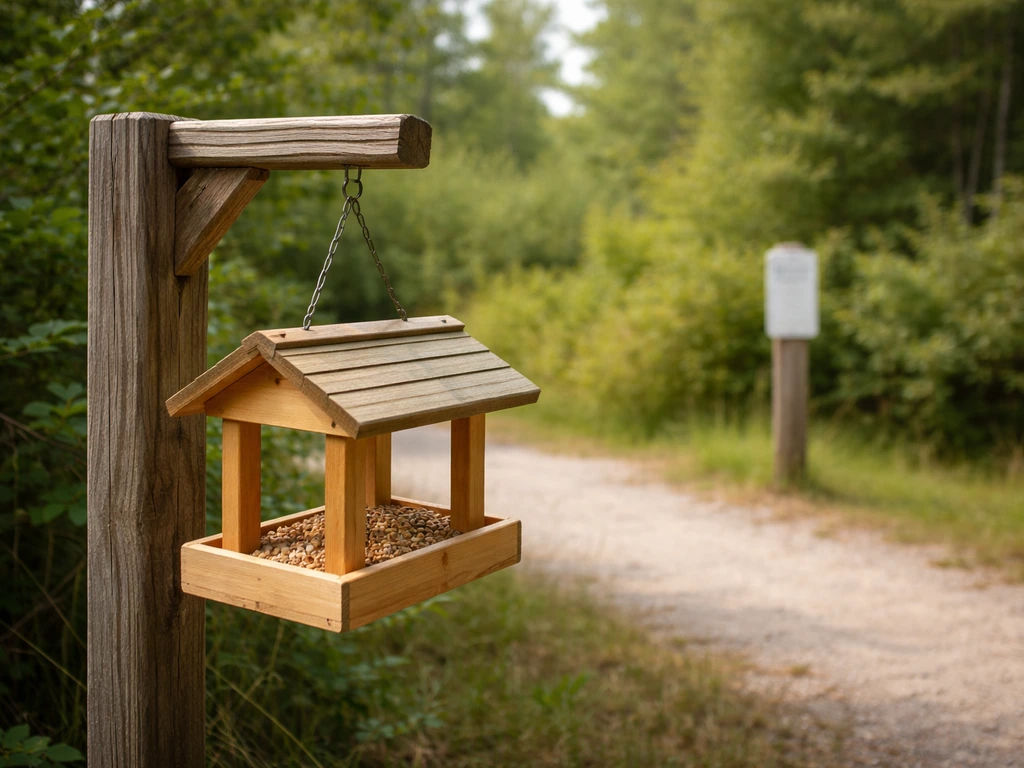
Even if feeding is perfectly legal at your home address, moving that feeder to a public park, wildlife refuge, conservation area, or national forest changes the rules completely. Many protected areas prohibit any wildlife feeding, including birds, to prevent habituation and disease transmission. Hunting areas and game management units often have seasonal feeding bans. Before you set up a feeder at a vacation property, campsite, or community garden space, check with the land manager first.
Seasonal restrictions are another edge case people miss. Some states suspend or restrict feeding during certain disease-outbreak windows. North Carolina Wildlife, for instance, recommends closing feeders if disease or unusual predation spikes in your area, and some state agencies convert that recommendation into a temporary rule during active outbreaks. It's worth bookmarking your state wildlife agency's news page and checking it a couple of times a year, especially in spring and fall when bird congregations are highest.
If you're in the UK, the situation is different again. Local councils can refer complaints about bird feeding to environmental health if the feeding is causing significant nuisance, such as rotten food accumulation or pest infestation. It's not a blanket ban, but it is a real enforcement pathway. UK law also protects wild bird nests and eggs, so disturbing nesting birds while adjusting a feeder during breeding season could technically put you on the wrong side of wildlife protection legislation.
HOA rules, lease terms, and private property restrictions
This is where most urban and suburban bird feeders actually run into trouble. City and state rules may be completely silent on feeders, but your HOA or landlord may not be. CC&Rs (Covenants, Conditions, and Restrictions) in HOA communities can prohibit feeders outright, restrict where they can be hung, or impose rules about the type of feeder or food allowed. Lease agreements in apartments sometimes include 'no wildlife feeding' language as part of a broader pest-control clause.
The key practical difference between a legal restriction and an HOA/lease restriction is enforcement: HOAs can fine you and ultimately pursue legal action, and landlords can cite lease violations. Neither requires a city ordinance to back them up. If you live in a condo or apartment and aren't sure whether feeders are allowed, check your governing documents before installing anything. The rules for apartment feeders and 'no bird feeders allowed' community policies are their own rabbit hole and worth looking at in detail if that's your situation.
Why regulators and neighbors actually get involved
In practice, bird feeders rarely trigger enforcement action on their own. What triggers it is the downstream effects: rodent attraction, property damage, noise, or disease. Understanding why regulators care helps you feed in a way that avoids complaints in the first place.
- Rodent and pest attraction: The CDC explicitly recommends removing bird feeders as part of preventing raccoon roundworm, and California's CDFW wildlife health guidance flags feeders as a known attractant for mice and rats. Spilled seed on the ground is the main culprit.
- Disease risk: The CDC has documented Salmonella outbreaks linked to wild songbirds at feeders and notes that people can get sick from touching feeders or birdbaths. Pennsylvania's Game Commission notes that disease can spread not just by direct bird contact but via contaminated feed and soil.
- Wildlife congregation and habitat degradation: Feeding large numbers of animals in one spot degrades the habitat value of that area over time and increases disease transmission risk among birds and mammals alike.
- Nuisance complaints from neighbors: Feral pigeons and starlings, which Michigan DNR specifically advises against feeding, produce noise and droppings that cause property damage and generate neighbor complaints. Several species in that category are not federally protected, so feeding regulations targeting them face fewer legal hurdles.
- Public property and public health: Florida Statutes § 379.412 includes wildlife and fish feeding provisions with penalty structures, and California municipal codes have been amended specifically to control wildlife and predators in urbanized settings, citing public health rationales.
How to feed responsibly and reduce legal and complaint risk
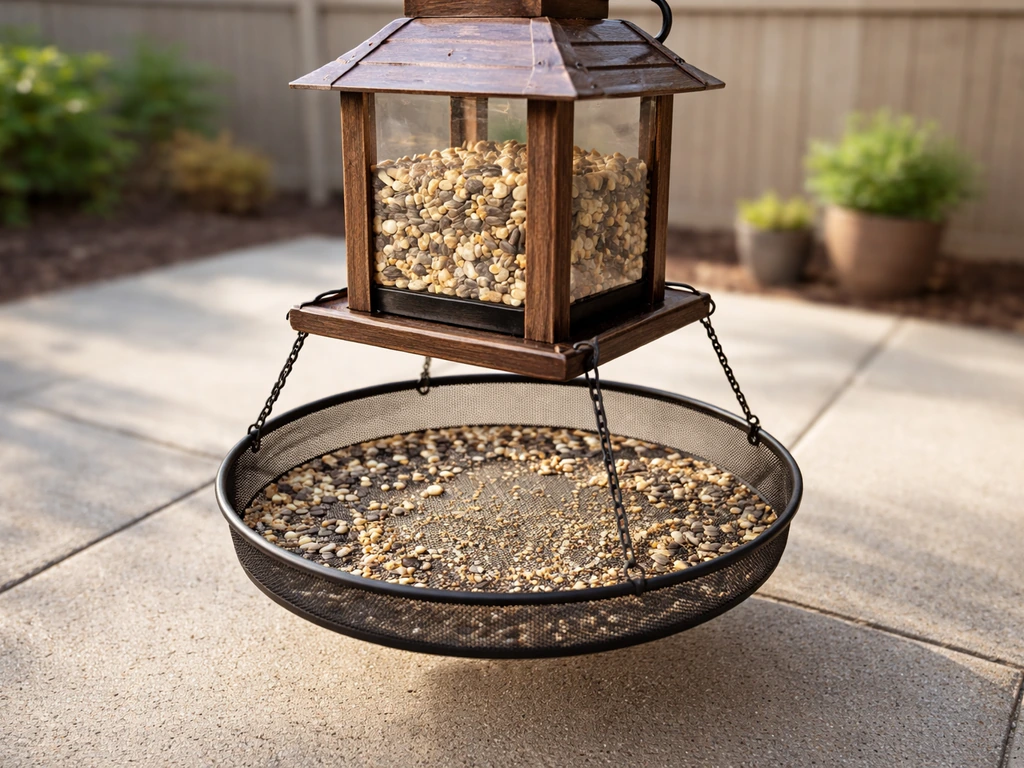
Even where feeding is fully legal, a few practices dramatically reduce your chance of running into nuisance complaints, wildlife problems, or neighbor friction. North Carolina Wildlife's guidance is a good baseline: place feeders near escape cover so birds can retreat from predators, clean feeders regularly, use high-quality food, and close feeders if you notice disease symptoms or unusual predation. Michigan DNR's bird-feeding tips add one more practical rule: only put out as much feed as birds will eat in a day or two. Excess seed on the ground is the single biggest driver of rodent problems.
- Use a feeder with a tray or catch basin to reduce seed scatter on the ground
- Clean feeders every one to two weeks with a 10% bleach solution, rinse thoroughly, and let dry before refilling (CDC recommends doing this outdoors when possible)
- Don't put out more feed than birds consume in 24 to 48 hours
- Avoid cracked corn, millet, and cheap filler mixes that attract large flocks of starlings, pigeons, and house sparrows — and the rodents that follow them
- Keep the ground under the feeder raked or cleared of seed hulls and waste
- Position feeders away from property lines and neighbor windows to reduce noise and droppings complaints
- Temporarily remove feeders during any local disease outbreak notices from your state wildlife agency
If you're in an area with active bird flu concerns, the CDC recommends wearing gloves and a mask when cleaning feeders and avoiding handling sick or dead birds. That might sound excessive for a backyard feeder situation, but it's worth taking seriously during active outbreak advisories.
What to do today if you think you might be violating a rule
Don't panic, and don't immediately remove your feeder. Start by identifying exactly what rule you might be violating and who enforces it. The steps below take less than an hour and will give you a clear picture of where you stand.
- Search your city and county municipal code online right now for 'wildlife feeding' and 'bird feeder.' Note any ordinance number and the exact language.
- If you're in a state with known feeding restrictions (Michigan, California, Florida, New Jersey, Washington), go directly to your state wildlife agency's website and read their current feeding guidance.
- Pull your HOA CC&Rs or lease agreement and search for 'wildlife,' 'feeder,' 'bird,' and 'nuisance.' If you find a restriction, read the full section to understand whether there are exceptions or conditions.
- If anything is ambiguous, call your local code enforcement or animal control office and ask directly. Describe your setup: a standard hanging bird feeder with seed, on private residential property. Most officers will give you a straight answer.
- If you find you're technically in violation, decide on the simplest fix: relocating the feeder, switching to a covered or no-scatter model, reducing fill quantity, or in rare cases removing it temporarily while you appeal an HOA rule.
- If the restriction seems unreasonable or you want to push back, document your feeder setup with photos, keep a log showing responsible maintenance, and request clarification in writing from your HOA or code enforcement. Responsible, well-maintained feeders are rarely the target of enforcement action.
The vast majority of people asking this question are going to find out their feeder is fine. Because bird feeding laws vary widely by location, it helps to check bird feeding laws in Singapore before setting up a feeder. But doing the ten-minute check now is worth it, both to put your mind at ease and to make sure you're feeding in a way that keeps things that way.
FAQ
If bird feeders are legal where I live, can my HOA or landlord still ban them?
Yes. HOA covenants and lease clauses can prohibit feeders even if city and state rules allow them. Treat HOA/lease terms as enforceable private rules, and check your CC&Rs or lease “nuisance,” “pest,” and “animal feeding” sections before installing or moving a feeder.
What should I do if I get a warning from animal control or my city?
Ask for the exact ordinance number or complaint basis (for example, “wildlife feeding,” “nuisance,” or “public health”). Then confirm whether the rule targets all feeding, certain species, or only conditions like seed disposal, feeder placement, or duration. Save photos of feeder placement and cleaning frequency for any dispute.
Does “no wildlife feeding” mean I can never feed birds, even with a feeder?
Not always. Some laws and ordinances prohibit feeding large mammals or animals broadly, while others carve out an explicit exception for bird feeders (or for feeding that excludes non-target animals). The safest approach is to look for the exact wording about “wild birds” or “bird feeders,” not just the general phrase “wildlife feeding.”
Are bird feeders illegal in parks, trails, or other public land areas?
Rules can change completely on public land. Many parks, refuges, and conservation areas prohibit any wildlife feeding to prevent habituation, disease spread, or litter. Before you place a feeder at a vacation property or community garden site, contact the land manager and confirm whether any feeding is allowed.
Do seasonal disease rules make bird feeding temporarily illegal?
Sometimes. Even when feeding is generally permitted, agencies may issue temporary restrictions or advisories during outbreaks or unusual mortality events. Check your state wildlife agency’s news updates and local public health or wildlife disease notices in spring and fall, when bird congregations increase.
Can I avoid problems by using only bird-safe food and not attracting rodents?
You can lower the risk, but you cannot eliminate it. Using appropriate food is helpful, but the biggest driver of rodent issues is leftover seed on the ground. Plan for frequent cleanup under and around the feeder, use a feeder design that reduces spillage, and only put out as much as birds will consume quickly.
Is it illegal to feed only birds but also attract squirrels or raccoons?
Often, the legal issue is not “bird-only” intent, it is whether the activity results in nuisance, illegal feeding of protected wildlife, or violations triggered by access to feed. Some jurisdictions care about whether deer or other specific animals can reach the feed. If other wildlife is repeatedly accessing the feeder, adjust the setup and verify whether that triggers any rule in your area.
What about bird feeders that are already up, do I have to remove them immediately if a rule is unclear?
No automatic immediate removal is required, but you should stop and verify. Identify the exact jurisdiction that applies to your address (city, county, state) and check whether the rule is a prohibition, a species-specific ban, or a nuisance standard. Until you confirm, reduce risk by cleaning more frequently and preventing spillage.
How do I find the correct law if I live in an unincorporated area or just outside city limits?
Check both the city and the county. Unincorporated areas often fall under county ordinances rather than city codes. Your fastest path is usually county “code of ordinances” plus your address location, then cross-check any state wildlife feeding guidance that could override local gaps.
Are there extra rules in the UK about nuisance complaints?
Yes, enforcement can happen through nuisance pathways rather than a blanket ban. If feeding causes rotten food buildup, pests, or repeated neighbor complaints, the matter may be referred to environmental health. Minimize the conditions that create waste and pest attraction, and consider temporarily pausing feeding if the issue persists.
If a rule exists, who is most likely to enforce it?
Typically, nuisance and ordinance issues are enforced by city or county departments (for example, code enforcement or animal control), while wildlife statute violations fall under wildlife agency oversight. HOA enforcement is separate and usually starts with a written complaint and fines. Determine the enforcement body for your rule before deciding how to respond.
Next Articles
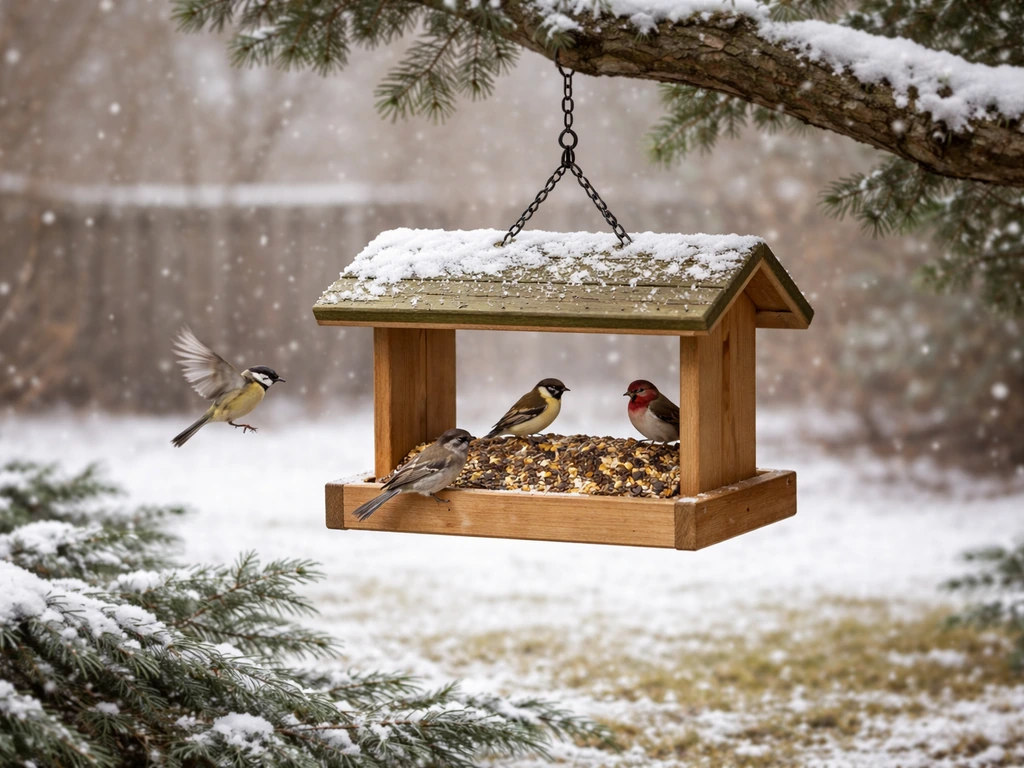
Do You Leave Bird Feeders Out All Year? Seasonal Guide
Should you leave bird feeders out all year? Get seasonal tips, safe feeding, and cleaning to prevent disease and pests.
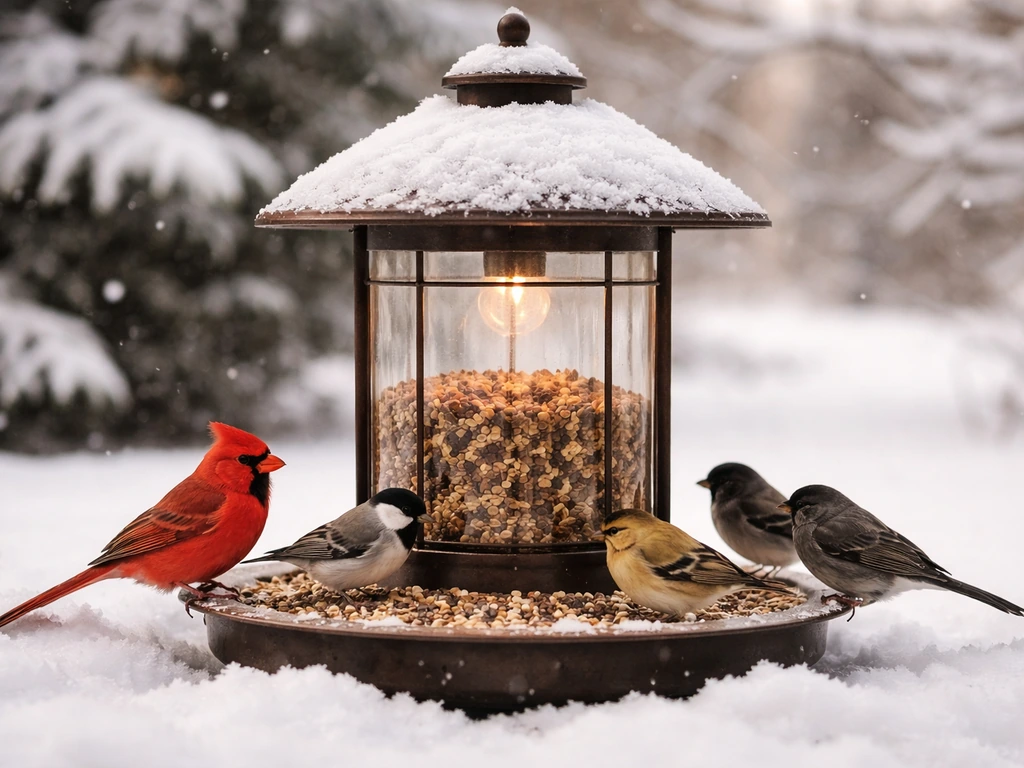
Do Birds Use Bird Feeders in Winter? How to Feed Safely
Yes, birds use feeders in winter when needed. Feed safely, keep it clean, prevent spoilage and adjust amounts.
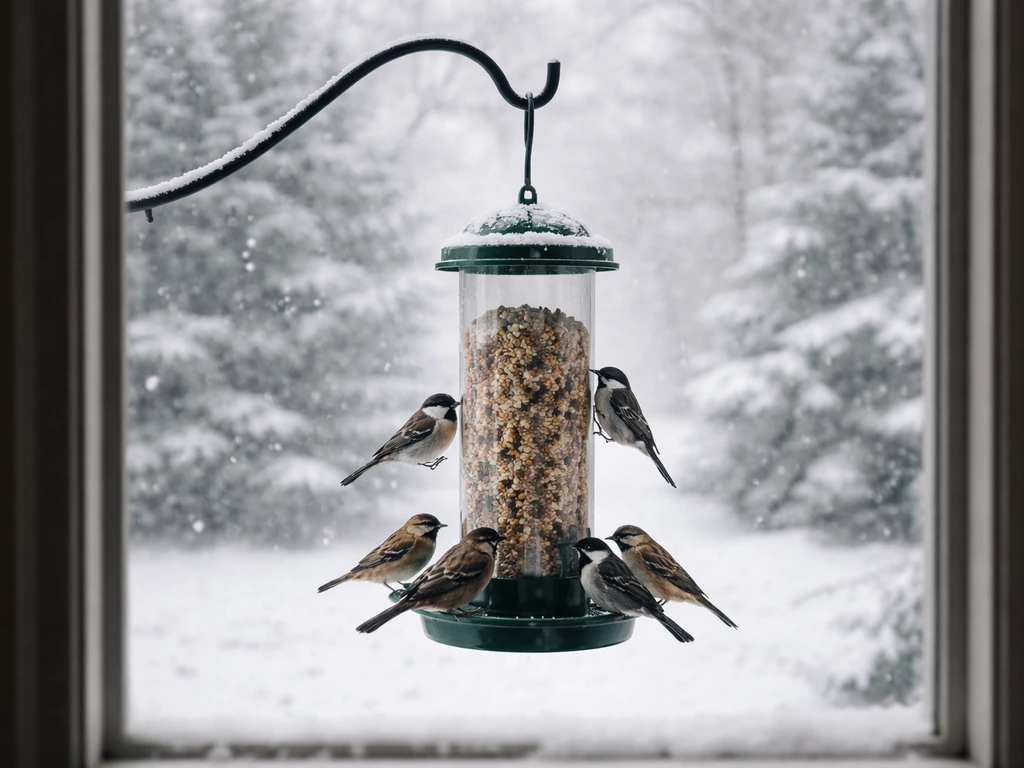
Should You Fill Bird Feeders in Winter? When to Fill or Stop
Know when to fill bird feeders in winter, when to stop, and how to adjust food, amounts, and safety for summer too.