Bird feeders are legal in Michigan for most homeowners. There is no statewide law that bans backyard bird feeding, and the Michigan DNR actually publishes guidance encouraging responsible feeder use. If you are wondering whether bird feeders are illegal in Michigan, the starting point is that there is no statewide ban for most homeowners are bird feeders illegal. That said, 'legal statewide' does not mean 'legal everywhere with no conditions.' Local ordinances, specific wildlife situations (especially bears and deer), disease outbreak advisories, and nuisance rules can all restrict or effectively prohibit feeding in certain places or at certain times. So the real answer is: you're almost certainly fine, but it's worth a quick check on your city or county rules and a look at current DNR advisories before you hang a feeder.
Are Bird Feeders Illegal in Michigan? Rules by City

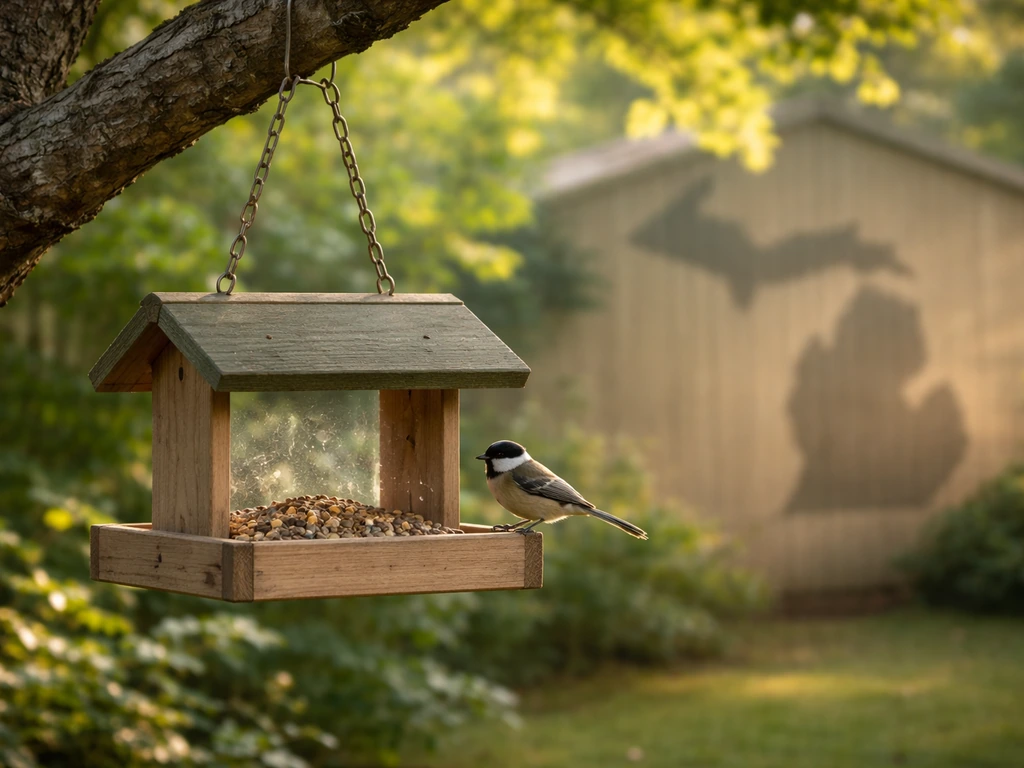
The bottom line on Michigan and bird feeders
Michigan has no blanket state-level prohibition on bird feeders. The Michigan Natural Resources and Environmental Protection Act (Part 401, Wildlife Conservation) and the DNR's Wildlife Conservation Order govern wildlife feeding broadly, but their deer and elk feeding restrictions are the main focus, not songbird feeders. The DNR's own Landowner's Guide to Bird and Other Wildlife Feeders and Bird Feeding Tips document (produced jointly with Michigan Audubon) treat backyard bird feeding as a normal, encouraged activity, with guidance on how to do it well rather than warnings against doing it at all.
Where things get more complicated is at the local level. Detroit, for example, passed Ordinance No. 2021-23 that prohibits feeding wild birds except from properly elevated feeders meeting specific design requirements. That kind of local rule can turn an otherwise legal activity into a violation if you're not paying attention. If you are asking are bird feeders allowed at apartments, the same local-or-rules check applies, because building policies and city nuisance ordinances can restrict feeding even when it is otherwise legal. Other Michigan cities and townships have nuisance ordinances that can be applied to feeding situations that attract pests or generate sanitation problems. So your zip code matters.
State rules vs. local ordinances: how to check what applies to you
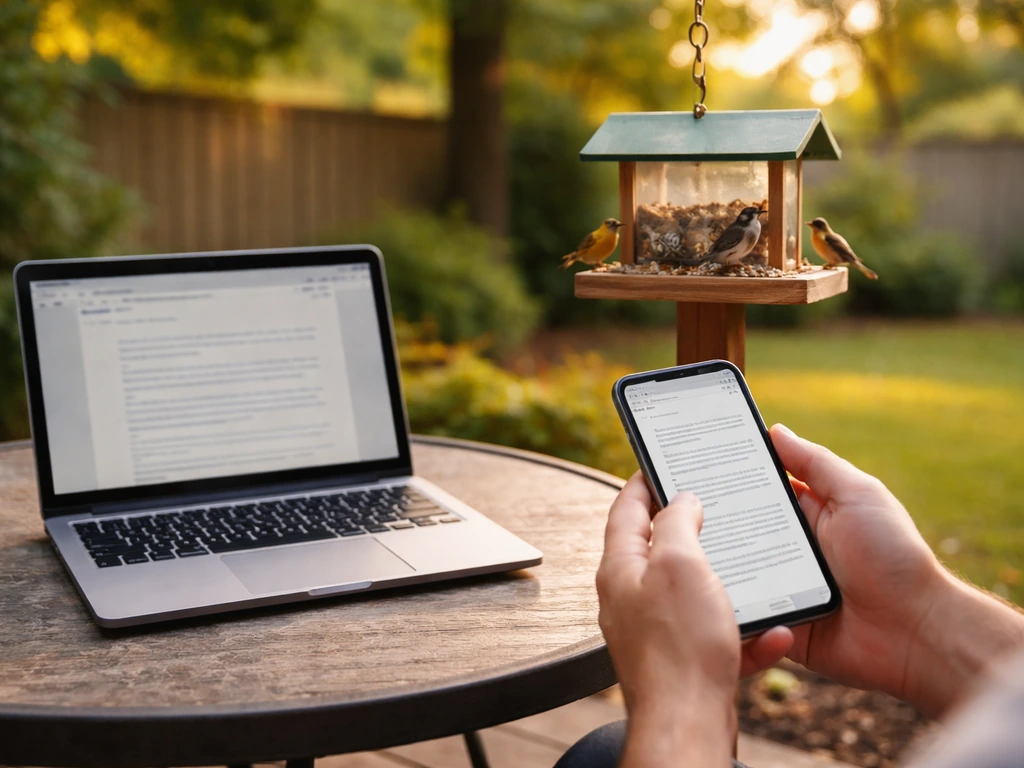
At the state level, the rules that are most likely to affect a backyard bird feeder user in Michigan are not specifically about bird feeders at all. If you are asking the same question in Florida, check for any state rules and local city or county ordinances, since legality can vary by location and wildlife rules are bird feeders illegal in Florida. They're about deer and elk. The DNR restricts deer and elk feeding under its Baiting and Feeding framework, which defines 'feed' as any substance that may attract deer or elk. If you're using a ground-level feeder that spills seed, and deer start showing up regularly, you're getting into murkier territory. The DNR's rules for residential deer feeding include a specific distance limitation: feed must be no more than 100 yards from a residence on land owned or possessed by that person. That rule is aimed at managing disease risk (primarily Chronic Wasting Disease), not at punishing bird feeder owners, but it's worth knowing.
For local rules, you need to check two things: your city or township's municipal code, and your county. You can search your city name plus 'municipal code' or check Municode.com, which hosts most Michigan local codes. Look for sections on wildlife feeding, nuisance animals, or property maintenance. If you live in a city like Detroit, Ann Arbor, or Grand Rapids, there's a reasonable chance a relevant ordinance exists. Smaller townships are less likely to have specific bird-feeding rules, but general nuisance ordinances can still apply if complaints arise.
- Search your city or township name plus 'bird feeding ordinance' or 'wildlife feeding ordinance'
- Check Municode.com for your municipality's full code and search for 'feeder,' 'wildlife,' or 'nuisance'
- Contact your local animal control or city clerk's office if you can't find clear answers online
- Check your county's zoning or health department website for any county-level feeding restrictions
- Review the current Michigan DNR Wildlife Conservation Order (available as a PDF on the DNR website) for any active statewide restrictions
When feeding birds can actually get you in trouble
Even where no specific ordinance bans feeders, a few situations can turn your hobby into a legal problem. The most common one is attracting nuisance wildlife. If your feeder is consistently pulling in bears, large flocks of pigeons, or enough raccoons to alarm your neighbors, you're potentially facing a nuisance complaint under local property codes. The Michigan DNR explicitly advises against intentionally feeding pigeons and starlings, noting that feeding encourages roosting, increases noise and droppings, and leads to property damage. Neither pigeons nor European starlings are protected under Michigan or federal law, which is part of why the DNR takes a harder line on them.
Bears are the bigger concern in northern and western Michigan, Upper Peninsula, and areas bordering state forests. If a bear associate your yard with food, that's a wildlife conflict situation that the DNR takes seriously, and continued feeding that draws bears in can result in warnings or required removal of feeders. The DNR does issue seasonal guidance in bear-active areas, and in some cases local authorities have issued temporary bans on outdoor feeding to address bear activity. Check the DNR's current bear-activity advisories if you're in a rural or semi-rural part of the state.
Disease outbreaks are another trigger. Michigan has experienced HPAI (highly pathogenic avian influenza) events, and during active outbreaks the DNR and Michigan Department of Health and Human Services have coordinated on guidance around feeder use. These aren't always mandatory bans for backyard songbird feeders, but they can be, especially for people who also keep poultry. Salmonellosis is a year-round concern: the DNR notes that die-offs around bird feeders have been documented since at least 1970, and crowded, poorly maintained feeders are a known driver.
Setting up your feeder the right way to avoid complaints
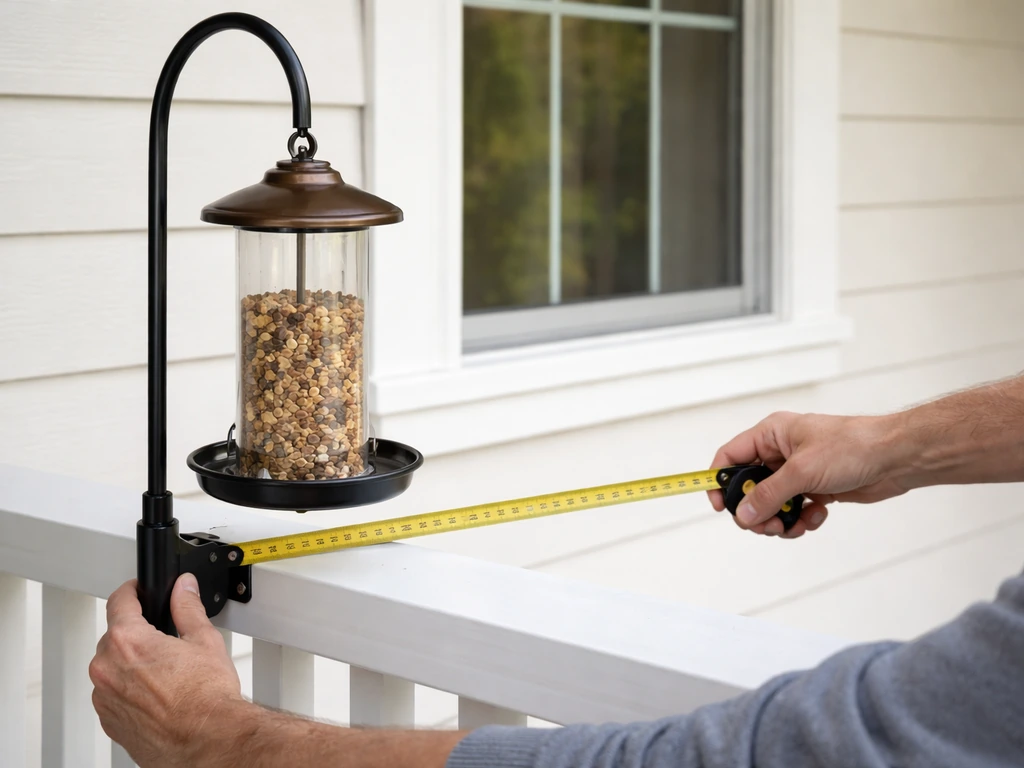
A well-placed, well-maintained feeder is almost never going to generate a complaint or a violation. The problems people run into are almost always about spilled seed accumulating on the ground, feeders placed in spots that push birds into windows, or setups that invite the wrong wildlife. Here's what the Michigan DNR and Michigan Audubon both recommend for responsible placement.
- Place feeders either less than 3 feet from windows or more than 30 feet away to reduce bird-window collisions
- Use multiple smaller feeding stations spread across the yard rather than one large central feeder, which reduces crowding and disease transmission risk
- Elevate feeders off the ground to limit access by raccoons and to comply with local ordinances like Detroit's that require elevation
- Keep feeders away from property lines to reduce neighbor friction and avoid seed or debris landing on adjacent property
- Avoid placing feeders directly above garden beds or hardscape where seed buildup and droppings accumulate visibly
- Use a tray or catch basin under tube feeders to collect fallen seed and reduce ground-level wildlife attraction
Cleaning and sanitation: your best compliance tool
This is the area where most people fall short, and it's also the area most likely to create both a disease problem and a nuisance situation. A dirty feeder with moldy seed and bird droppings is a health hazard for birds, a potential public health concern, and exactly the kind of thing that triggers neighbor complaints or code enforcement attention in areas with property maintenance ordinances.
The Michigan DNR's Landowner's Guide recommends cleaning feeders once or twice a month using warm soapy water and a capful or two of household bleach. For disease-specific concerns, the DNR's HPAI guidance calls for cleaning with a 10 percent bleach-to-water solution, describing it as 'always a good practice' to avoid transmission of HPAI and other diseases commonly spread at feeders. The DNR's salmonellosis guidance adds one more step: make sure the feeder is thoroughly dried before refilling with seed. Wet seed packed into a damp feeder is exactly how salmonella colonizes a feeding station.
- Clean feeders once or twice a month minimum, more often during wet weather or high bird activity
- Use a 10% bleach-to-water solution (roughly 1.5 cups bleach per gallon of water) for scrubbing
- Rinse thoroughly after bleach cleaning to remove residue
- Allow feeders to dry completely before refilling, especially tube and hopper styles
- Rake up or dispose of seed hulls and droppings from the ground beneath feeders regularly
- Remove and discard any wet, clumped, or moldy seed immediately rather than letting it sit
What to feed and how to keep the wrong wildlife away
What you put in your feeder and how you set it up has a direct effect on what shows up, and that matters both for wildlife management and for staying out of trouble. Black-oil sunflower seed is the workhorse choice for Michigan songbirds: it attracts chickadees, nuthatches, finches, cardinals, and woodpeckers without drawing in the species you'd rather not see. Avoid cheap mixed seed blends with milo, millet fillers, or cracked corn at ground level if you're worried about attracting deer, turkeys, or large flocks of house sparrows and starlings.
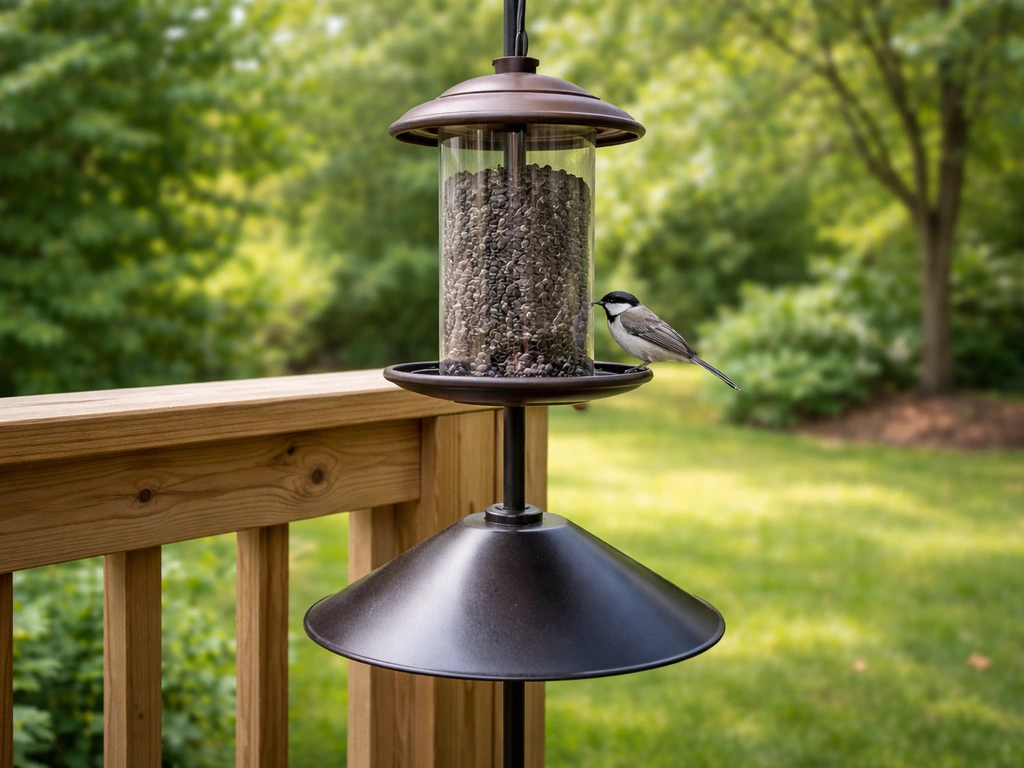
Squirrels are the most common complaint the Michigan DNR's landowner guide addresses. Squirrels gnaw plastic feeders, scare off birds, and accelerate seed spillage onto the ground. Weight-sensitive feeders that close ports when a heavier animal lands, pole-mounted feeders with baffles, and metal-bodied feeders that resist gnawing all help. The baffle approach works well: a smooth metal cone mounted on a pole below the feeder prevents squirrels from climbing up, and an overhead baffle stops them from jumping down from above.
For bears, the guidance is simpler and more absolute if you live in bear country: bring feeders in at night during active seasons (spring through fall), or skip outdoor feeding entirely during peak bear activity months. Bears that get into feeders repeatedly become habituated and often have to be destroyed. No feeder is worth that outcome, and in some northern Michigan areas, wildlife officers or local ordinances may require you to take feeders down if bears have been reported nearby.
| Wildlife concern | Risk level in Michigan | Best mitigation |
|---|---|---|
| Squirrels | High statewide | Baffled pole mount, weight-sensitive feeder, metal-body feeder |
| Raccoons | High in urban/suburban areas | Elevated feeder with smooth pole baffle, bring feeders in at night |
| Deer/elk | Moderate, higher in rural areas | Elevated feeders, no ground feeding, stay within DNR distance rules |
| Bears | High in UP and northern Lower Peninsula | Remove feeders April-November or whenever bears are active locally |
| Pigeons/starlings | High in urban areas | Use feeders that exclude large birds; avoid platform feeders with mixed seed |
Seasonal and special-case guidance
Winter feeding
Winter is the most popular time to feed birds in Michigan, and it's also when feeding does the most measurable good for resident species like black-capped chickadees, dark-eyed juncos, and white-breasted nuthatches during cold snaps. Bear activity is minimal from December through March in most of the state, so the main risk factor is removed. Keep feeders stocked consistently if you start winter feeding, because birds can become reliant on a food source and relocate their territory around it. Stopping mid-winter abruptly isn't catastrophic, but it's better to taper off gradually if you plan to stop.
Breeding season considerations
Spring and summer feeding in Michigan is a more personal choice. Many experienced feeders cut back or stop during the warmer months to encourage birds to forage naturally, which also gives young birds a chance to learn where wild food sources are. There's no legal requirement to stop summer feeding, but crowded feeders during breeding season can increase disease transmission risk, especially for finch diseases like salmonellosis that peak when bird density is high. If you keep feeders running through summer, increase your cleaning frequency.
Disease outbreak advisories
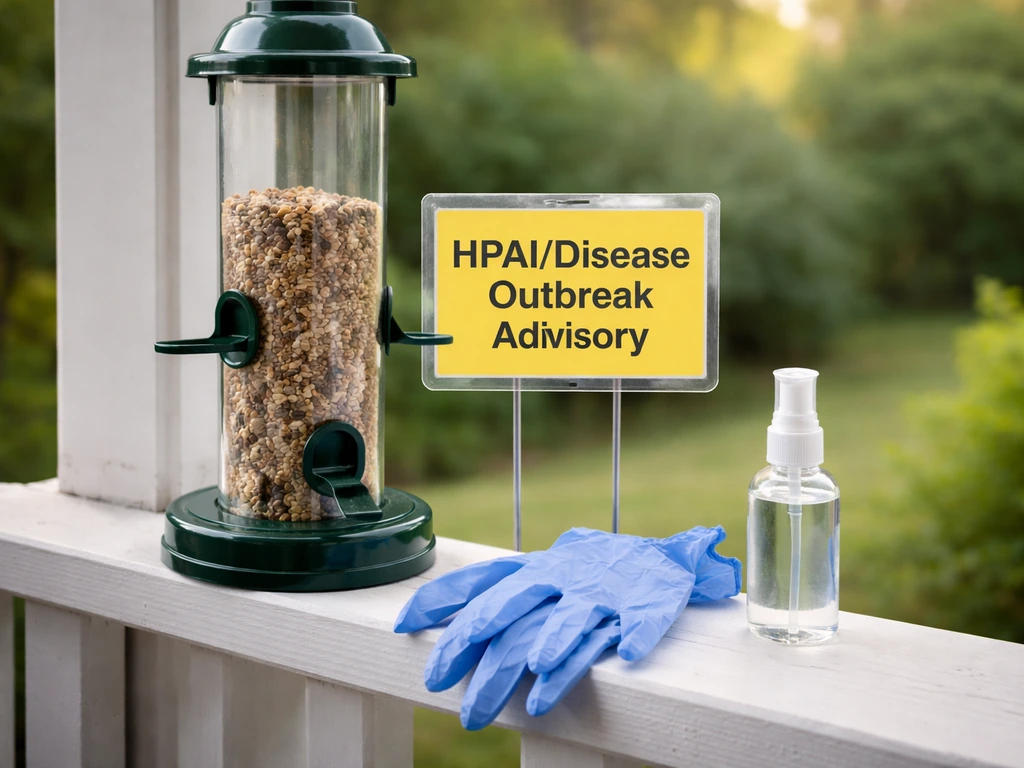
This is the one seasonal situation where bird feeding in Michigan can go from fully legal and encouraged to actively discouraged or restricted overnight. During HPAI outbreaks, the Michigan DNR and MDHHS have recommended reducing or temporarily eliminating backyard feeders, particularly for people who keep domestic poultry. In some circumstances, local or outbreak rules can make it effectively “no bird feeders allowed,” even when feeding is usually permitted reducing or temporarily eliminating backyard feeders. Even when feeders aren't formally banned for the general public, temporarily taking them down during an active outbreak in your area is the responsible call. Monitor the Michigan DNR's HPAI FAQ page and the DNR's bird disease advisories for current guidance, since these situations can change quickly. Similar temporary pauses may be recommended during salmonellosis or other outbreak events if bird die-offs are being reported in your county.
Your next steps checklist
If you're in Michigan and want to set up a feeder today with confidence that you're doing it right and staying within the rules, here's what to work through.
- Check your city or township's municipal code for any bird feeding, wildlife feeding, or nuisance ordinance (search Municode.com or call your city clerk)
- Look up the Michigan DNR's current Wildlife Conservation Order PDF to check for any active statewide restrictions relevant to your area
- Visit the Michigan DNR's HPAI FAQ page and bird disease pages to check for any current outbreak advisories in your county
- If you're in northern Michigan or the Upper Peninsula, check the DNR's current bear activity map or contact your local DNR wildlife office before setting up outdoor feeders in spring or summer
- Choose an elevated, baffled feeder placement at least 3 feet from or more than 30 feet from windows, with a seed-catching tray below
- Set a monthly reminder to clean feeders with a bleach solution and let them dry completely before refilling
- Avoid feeding pigeons, starlings, or other unprotected feral birds, and switch feeder types or seed mixes if those species dominate your setup
Most Michigan homeowners will find that bird feeders are completely unproblematic legally. The rules that exist are mostly about how you feed rather than whether you feed, and a thoughtful setup sidesteps nearly every common issue. The general principle holds across other states where these questions come up too: statewide legality is usually not the issue, but local ordinances and specific wildlife situations are worth checking before you assume you're in the clear. Bird feeding rules in Singapore are different from Michigan, so check Singapore-specific regulations before setting up a feeder. If you want the New Jersey answer, you will need to check state rules and, just as in Michigan, your local municipality’s ordinances before hanging a feeder bird feeders in New Jersey. For California, you should similarly verify whether any state or local rules apply before setting up a bird feeder across other states.
FAQ
Are bird feeders illegal in Michigan for renters or apartments?
Yes, but the “permission” usually comes from general nuisance and property maintenance rules, not from a bird-feeding allowance. If you live in a city with specific feeding restrictions (like design and placement requirements) or your lease has rules against attracting wildlife, you can still be cited or fined even if the state does not ban feeders.
Can a ground-seed spilling feeder cause legal trouble even if feeding is generally allowed?
If the seed tray or hopper can drop seed onto the ground, you can end up creating a nuisance animal problem even when there is no feeder-specific ban. Consider using a feeder that minimizes spillage, place it where falling seed will not accumulate, and clear seed waste under and around the feeder regularly.
What should I do if neighbors complain about bird feeders in Michigan?
DNR guidance focuses more on how feeding affects disease risk and wildlife behavior, but enforcement risk rises if you repeatedly receive neighbor complaints. Practically, if you are feeding and people nearby report roosting birds, excessive droppings, or pest attraction, you should address the setup quickly or you may face nuisance enforcement.
Do deer or elk feeding rules affect my bird feeder?
Even if songbird feeders are the main focus, the situation can change if deer or elk start coming to the feeder consistently. If you notice regular deer or elk activity near your feeder or see feed being accessible to them, treat it like a baiting risk and adjust placement or feeding practices.
During avian influenza or other outbreaks, am I required to take my feeder down?
Yes. In bird-disease events, local authorities or state guidance can effectively restrict or discourage feeding at the time, especially if there is poultry in the home. Instead of relying on year-round “it’s legal,” monitor active outbreak advisories and be prepared to temporarily remove feeders.
Are there any bird species I should avoid feeding because they create legal or enforcement risk?
It depends on your location and the type of animal you are feeding. The most common legal friction is not with protected birds, it is with unintentional feeding of nuisance species (like pigeons and starlings) and with attracting wildlife you then cannot control.
If I live near the woods, is it still legal to feed birds?
Not automatically. Feeding can become a problem if it draws bears into your yard or teaches them to associate the property with food. If bear activity is reported nearby, you may be expected to stop outdoor feeding during that period, and continued feeding can escalate conflict.
How do I check Detroit-style rules if my city has an ordinance about feeding wild birds?
Local ordinances often regulate “wildlife feeding” more broadly than just bird feeders. If you are in a city, check whether your ordinance defines feeders by elevation and design, and confirm whether it allows feeding from residential property without specific protections.
What are the most common mistakes that lead to citations or complaints in Michigan?
Commonly, problems come from poor maintenance (moldy seed, droppings buildup, wet feed), and from spill management (seed piles attracting pests). A quick compliance win is to clean on a regular schedule and use equipment and placement that prevents seed from accumulating.
Is it safer for birds and legally safer to stop feeding abruptly or taper off in winter or summer?
If you plan to stop, abrupt removal is usually not a legal issue, but it can increase disease risk indirectly if feeders become dirty during the transition. If you keep feeding for a while, maintain cleaning standards until you fully remove the feeder, then do a final cleaning and prevent lingering seed from rotting.
Are Bird Feeders Illegal in New Jersey? Rules to Follow
Understand if bird feeders are illegal in New Jersey, plus local checks and best practices to avoid nuisance violations.