Bird feeders are not illegal in California at the state level. There is no statewide law that bans backyard bird feeders for songbirds, finches, hummingbirds, or most common feeder species. What can make a feeder illegal is where you live and how you use it. Cities, counties, homeowners associations, and specific locations like state parks or beaches all have their own rules, and some of those rules are strict enough to result in fines.
Are Bird Feeders Illegal in California? Local Rules and Fixes

Eleanor Hartwick
24 Jun 2026
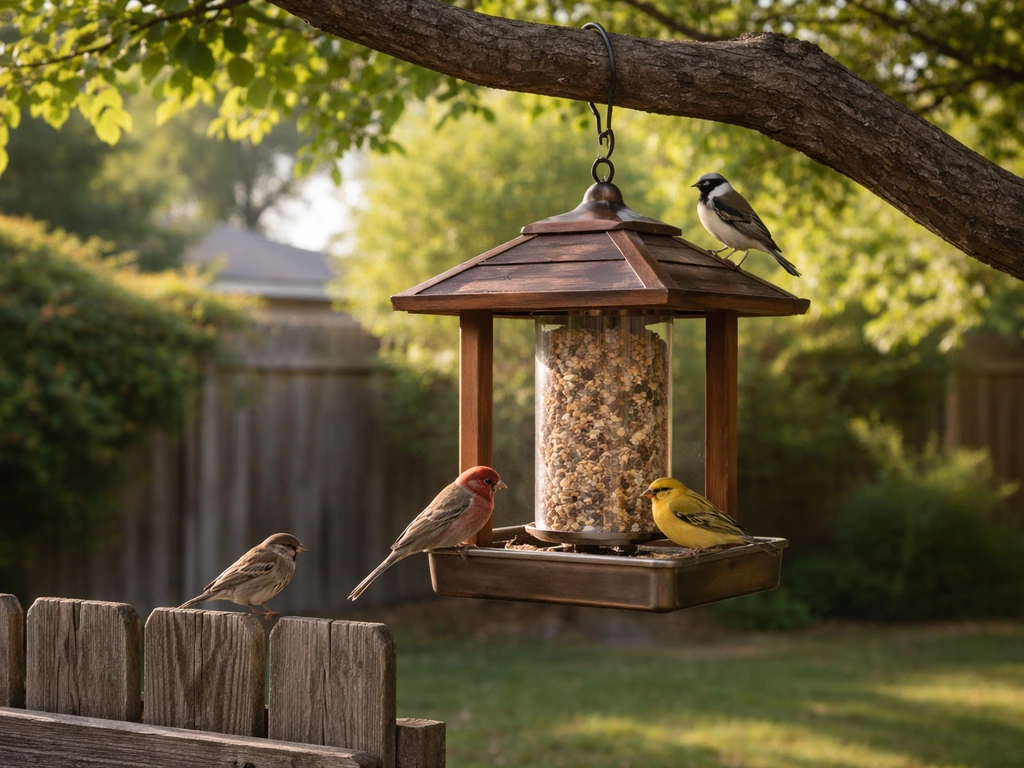
State law vs. local rules: what actually applies to you
California state law doesn't prohibit backyard bird feeders as a category. However, a few state-level regulations are worth knowing. California Code of Regulations Title 14, Section 251.1 defines 'harassment' of wildlife to include intentional acts that disrupt an animal's normal feeding or sheltering behavior. This isn't aimed at backyard feeders, but it does signal that the state treats wildlife feeding as something with ecological consequences. More directly relevant: Title 14, Section 4305(e) bans feeding wildlife in state park units where that prohibition is posted. So if you're setting up a feeder at a campsite or picnic area in a state park, you're likely violating that rule. On private property at home, neither of those provisions blocks you.
Local ordinances are where things get complicated. Cities across California have enacted their own wildlife feeding rules, and they vary significantly. Are bird feeders illegal in New Jersey depends on state rules and, just as importantly, local ordinances in your specific city or county. Santa Monica prohibits feeding birds and animals in designated areas like beach and pier zones unless authorized. Lakewood has had a city ordinance since at least 1985 against feeding wild pigeons in numbers that cause swarming or quality-of-life problems for neighbors. Laguna Woods amended its municipal code to regulate wildlife feeding as a public health issue. Rancho Palos Verdes specifically made it illegal to feed peafowl under Ordinance No. 488, citing interference with population control efforts. And Colma allows residential bird feeders on private property as long as the feeder is suspended off the ground, which is a good example of how local rules often set design or placement conditions rather than an outright ban.
If you live in an apartment or rental, your landlord and HOA rules add another layer on top of municipal code. For apartment residents, you should also check whether bird feeders are allowed in your lease terms or HOA rules apartment or rental. Those are private agreements, not public law, but they're still enforceable. The situation in California is genuinely fragmented, and there's no shortcut that lets you skip checking your specific location.
How to check your city or county rules fast
The fastest way to find your local ordinance is to search your city or county name plus terms like 'wildlife feeding ordinance,' 'bird feeding municipal code,' or 'animal ordinance.' Most California cities publish their municipal codes on sites like Municode or their own city websites. Look in chapters covering animals, public health, or nuisance. If you can't find it yourself, call your city's animal control or code enforcement office directly and ask whether there are any restrictions on feeding wild birds on private residential property. That question usually gets a clear answer in one call.
- Search '[your city name] municipal code wildlife feeding' or '[your city name] bird feeding ordinance'
- Check Municode.com, your city's official website, or your county's code library
- If nothing turns up, call city animal control or code enforcement and ask specifically about residential bird feeders
- If you're in an HOA or rental, check your CC&Rs or lease for wildlife feeding restrictions separately from local law
- If you're near a state park, beach, or other public land, check posted signs and the California Department of Fish and Wildlife's site for site-specific rules
When a feeder can become 'illegal' in practice
Even where bird feeders are technically allowed, they can cross into enforcement territory through nuisance complaints or public health concerns. This is where most real-world problems come from. Understanding what triggers enforcement helps you avoid it. If you are in Florida, you should verify your local and state rules before putting up a feeder are bird feeders illegal in florida.
Nuisance complaints from neighbors
Large concentrations of birds, bird droppings on shared surfaces, noise, and seed debris that attracts pests are the most common complaint drivers. California nuisance law is broad enough that a neighbor with a legitimate grievance, say, bird feces coating their fence or rats moving in from your spilled seed, can push a code enforcement inquiry. You may not get cited for having a feeder, but you might get cited for creating a nuisance. The distinction matters: clean up your act and the complaint often goes away. Ignore it and it can escalate.
Attracting unwanted wildlife
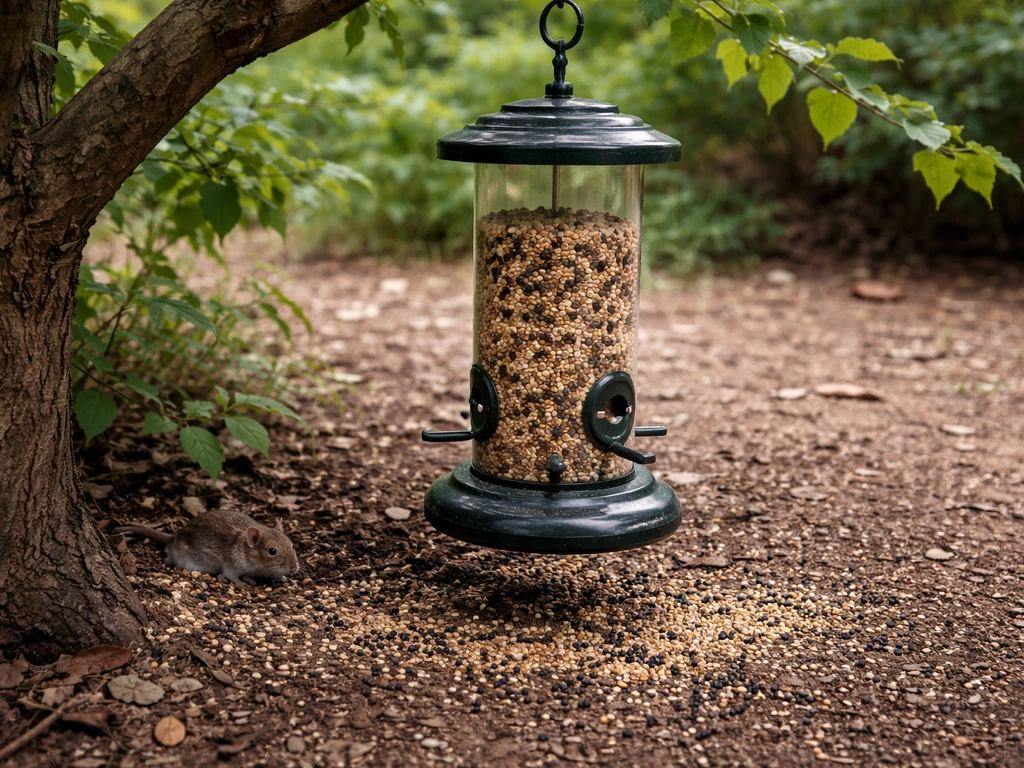
Bird feeders attract more than birds. The California Department of Fish and Wildlife's Wildlife Health Lab explicitly notes that feeders can bring in mice, rats, raccoons, skunks, and other opportunistic wildlife that become nuisances or cause property damage. In bear country, which covers a significant portion of California, a bird feeder is essentially a calorie station for bears. Many mountain communities in California have bear-proof food storage ordinances that explicitly include bird feeders. If you're in Tahoe, the Sierra foothills, or other bear-range areas, check those local rules carefully because the fines there tend to be real and enforceable.
Disease and health hazards
The California Department of Fish and Wildlife has specifically discouraged providing food or water to wild birds during Highly Pathogenic Avian Influenza (HPAI) outbreaks, especially if you keep backyard poultry or other captive birds. Feeder congregation creates fecal contamination that can aid disease transmission. CDFW's Wildlife Health Lab also notes that tube-style feeders are especially prone to contamination from birds' eye and nasal discharge on feeder surfaces. A neglected feeder covered in mold or droppings isn't just bad for birds, it's the kind of thing that can turn a neighbor's complaint into a public health referral.
How to set up feeders compliantly and safely
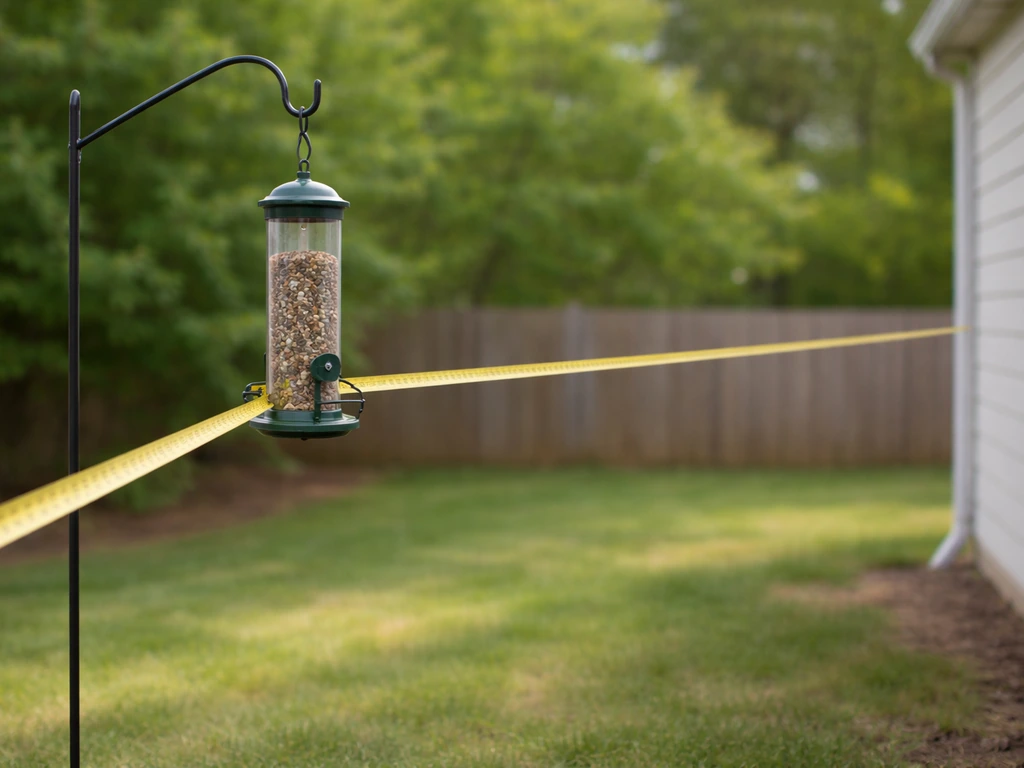
Even in areas where feeders are allowed, how you set them up matters a lot for staying out of trouble. A well-placed, well-maintained feeder is much less likely to generate complaints or attract enforcement attention than a sloppy setup.
- Hang feeders at least 10 feet from your home's exterior and away from shared fences or neighboring structures to reduce droppings on surfaces that aren't yours
- Use a tray or catch basin under the feeder to capture fallen seed, which is the primary rodent attractant
- Avoid ground feeding entirely, since scattered seed on the ground is the fastest way to invite rats and other pests
- Choose tube or hopper feeders with tight closures over open platform feeders to reduce contamination exposure
- Position feeders so they're visible from inside your home, making it easier to monitor for disease signs, overcrowding, or pest activity
- In bear country, bring feeders in at night or switch to bear-proof hanging systems with appropriate cable heights
Food choice, placement, and sanitation to prevent problems
What you put in your feeder and how often you clean it are the two biggest variables you control. Both directly affect whether your feeder becomes a hazard.
Choosing the right food
Use species-specific mixes rather than cheap all-purpose blends that are heavy in fillers like milo or red millet. Birds pick through those and throw unwanted seeds on the ground, which creates waste, pests, and mess. Black-oil sunflower seed is the single most efficient food for attracting a wide range of native songbirds with minimal waste. Nyjer (thistle) seed works well for finches and is less attractive to pest species. Avoid bread, cooked food, or anything that can mold quickly. If you're in a pigeon-heavy neighborhood, know that certain cities like Lakewood specifically target pigeon feeding, so switching to nyjer or safflower (which pigeons largely ignore) can help you fly under the radar while still feeding songbirds.
Cleaning schedule
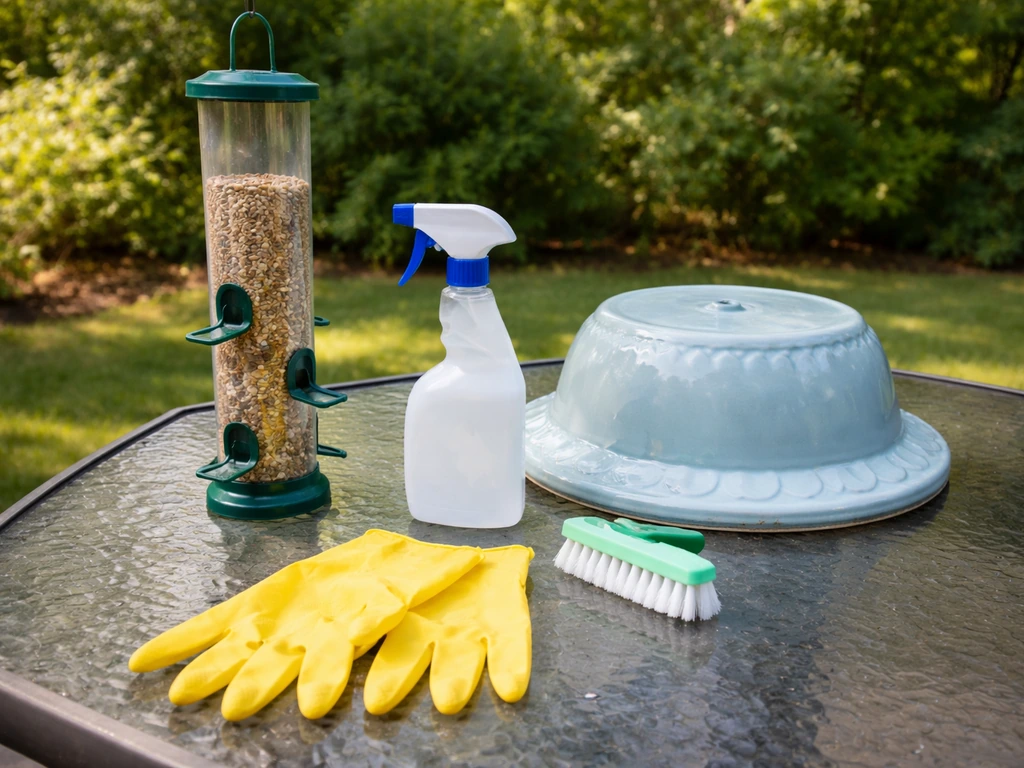
The CDC recommends removing your feeder and birdbath for two weeks and cleaning them outdoors if you find sick or dead birds in your yard. That's the reset protocol for disease outbreaks. For routine maintenance, clean feeders every one to two weeks with a 10% bleach solution (one part bleach to nine parts water), scrub thoroughly, rinse well, and let them dry completely before refilling. The CDC specifically warns against bringing contaminated feeder equipment into food preparation areas. Clean outdoors, wash your hands afterward, and you're covering the basic hygiene concerns that regulators and health agencies care about.
| Feeder type | Disease risk | Pest attraction | Ease of cleaning | Compliance notes |
|---|---|---|---|---|
| Tube feeder | Moderate (discharge on ports) | Low | Easy | Good default; empty and clean frequently |
| Hopper feeder | Moderate | Moderate (seed accumulates) | Moderate | Check for mold in reservoir after rain |
| Platform/tray feeder | High (open surface) | High (seed visible to rodents) | Easy but frequent | Avoid if neighbors are sensitive or pests present |
| Ground feeder | High | Very high | Difficult | Avoid in urban/suburban settings entirely |
| Nyjer/thistle sock | Low | Low | Easy | Best choice for pigeon-heavy or complaint-prone areas |
What to do if feeding is prohibited or you're getting complaints
If your city, HOA, or property manager says no feeders, that's not the end of bird watching. Michigan rules can be different, so check your state and local ordinance before putting out a feeder city, HOA, or property manager. There are real alternatives that keep you on the right side of the rules without giving up your connection to backyard birds.
- Plant native California plants that produce seeds and berries naturally: toyon, coffeeberry, native sages, and native grasses attract finches, sparrows, and thrushes without a feeder in sight
- Install a birdbath with a dripper or wiggler (moving water attracts more species than still water) since water features are rarely restricted by the same ordinances that cover feeders
- Use a window feeder with a small capacity and low mess profile, which some landlords and HOAs treat differently than pole-mounted or hanging feeders
- If you're in a location with seasonal rules (some park jurisdictions restrict feeding only during certain seasons), find out the exact permitted window and feed only then
- If a neighbor has complained, talk to them directly before the situation escalates to code enforcement; often the complaint is about mess or pests, not the feeder itself, and adjusting your setup resolves it
If you receive an official notice from code enforcement, don't ignore it. If you are in an area or situation where enforcement says “no bird feeders allowed,” you should remove the feeder and follow the local posting or notice. Respond in writing, ask specifically which ordinance applies, and ask what compliance looks like. In many cases, removing a feeder temporarily or cleaning up accumulated seed waste is all that's required to close the complaint. The goal of most code enforcement actions around bird feeders is to resolve the underlying nuisance, not to permanently ban you from feeding birds.
Troubleshooting unwanted visitors and disease prevention
Most 'illegal feeder' complaints aren't really about legality at all. If you're also wondering is bird feeding illegal in singapore, note that many places treat it as an enforcement issue only when it creates problems like pests, droppings, or disease risks. They're about specific problems the feeder is causing: rats, bears, sick birds, or aggressive pigeon flocks. Here's how to address the most common ones.
Rodents
If you're seeing rats or mice, the feeder is almost certainly contributing. Install a baffle above and below any pole-mounted feeder to block climbing access. Switch to a catch tray and empty it daily. Stop feeding for two to three weeks to break the rodent habit at that location, then restart with tighter seed management. Ground-level seed scatter is the main culprit, so address that first.
Pigeons and invasive species
Rock pigeons, European starlings, and house sparrows are not native species and are not protected under the Migratory Bird Treaty Act. If your feeder is attracting large flocks of pigeons or starlings, switching to safflower seed or nyjer dramatically reduces their interest while still feeding native songbirds. Tube feeders with short perches also discourage larger birds. If you're in a neighborhood where pigeon feeding is explicitly targeted by local ordinance (like Lakewood), eliminating the feeder entirely and switching to native plants is the cleanest solution.
Sick or dead birds
If you find sick or dead birds near your feeder, follow CDC guidance: take down your feeder and birdbath immediately, clean them outdoors with a 10% bleach solution, and wait two weeks before putting them back up. Do not handle dead birds with bare hands. If you suspect HPAI (bird flu) is involved or you see multiple dead birds, contact the CDFW Wildlife Health Lab or call the California Department of Food and Agriculture's sick bird hotline at 866-922-BIRD (2473). If you have sick birds (including backyard poultry and other captive birds), California CDPH directs you to contact the CDFA Animal Health Branch’s sick bird hotline at 866-922-BIRD (2473) California Department of Food and Agriculture's sick bird hotline at 866-922-BIRD (2473).. That hotline is specifically set up for these situations and is the right first call.
Bears and other large wildlife
In bear-range areas of California, the practical answer is to take feeders in at night from April through November, which covers the active foraging season. If a bear has already visited your yard and associated it with food, you may need to stop feeding entirely for a full season to break that association. Contact your local CDFW regional office for guidance on your specific area since some communities have specific requirements beyond general nuisance law.
The broader pattern here is that most feeder problems in California have practical fixes that don't require giving up bird feeding entirely. Get the right feeder design, use the right food, clean consistently, and manage your setup so it isn't creating a burden for neighbors or attracting wildlife beyond birds. That combination keeps you well inside both the legal and social norms that actually drive enforcement in most California communities.
FAQ
If there is no statewide ban, how can bird feeders still get me fined in California?
In California there is generally no statewide ban on backyard feeders, but you can still get enforcement if your feeder violates a local “wildlife feeding” or “nuisance” rule, or if it is located in a place where feeding wildlife is posted as prohibited (for example, certain state-park units). If you want a quick safety check, confirm (1) your city or county ordinance, (2) any HOA or rental terms, and (3) whether your location has posted wildlife-feeding restrictions.
What counts as a nuisance versus a feeder that is simply allowed?
“Legal” usually depends on whether your feeder creates a nuisance. The most common triggers are seed scatter on the ground, visible droppings on shared surfaces, attracting rodents, offensive odor, and frequent complaints from nearby residents. A common mistake is assuming that “no one has told me not to” means there is no enforcement risk. Design the feeder to reduce mess, and clean up waste even if the feeder is otherwise permitted.
Do avian influenza or sick-bird situations change the legality of using feeders?
Yes, even if bird feeding is permitted, disease-control rules can require you to temporarily remove feeders and birdbaths. If you see sick or dead birds, the practical compliance step is to take down the feeder and birdbath, clean with a 10% bleach solution outdoors, and wait about two weeks before restarting. During outbreak concerns, regulators may also treat congregation at feeders as a higher-risk condition.
If my city allows feeders, can my HOA or landlord still prohibit them?
HOAs and landlord rules can ban feeders even where the city or county allows them. In practice, enforcement can come from the HOA/property manager as a contract matter, not a criminal or municipal citation. If you rent, read the lease and any HOA bird or wildlife policy, then ask in writing for clarification on what type (platform, tube, seed type) or what placement is allowed.
What should I do if I live in bear country but my city did not mention feeders specifically?
For bear-range areas, the biggest compliance mistake is relying on a generic “bird feeder is legal” assumption. Some mountain communities have additional local bear-proofing or food-storage requirements that explicitly include feeders. If you are in bear country, follow local guidance and consider temporarily removing feeders during peak foraging months, especially if bears have already visited your yard.
Can placement rules (like off-the-ground requirements) matter more than whether feeders are allowed?
Even if a local ordinance does not ban feeders, it may regulate where and how you place them. A frequent example is restrictions that effectively require hanging/suspension off the ground, limiting placement near certain public areas, or addressing public-health concerns. If you are trying to comply, keep the feeder off the ground where permitted, use a catch tray when appropriate, and avoid overfilling that leads to seed waste.
What should I ask for if code enforcement contacts me about my feeder?
If you receive a notice or complaint, your best next step is to request the exact ordinance section cited and what behavior or condition needs to be corrected. Many actions are resolved by reducing nuisance factors, removing accumulated seed, and improving cleaning and waste management. A common mistake is to argue “it’s legal statewide” without addressing the local nuisance basis.
Does feeder type (like tube feeders) affect my compliance risk in California?
Tube-style feeders and cleaner seed choices often reduce contamination risk, but the key is maintenance. If mold, heavy droppings buildup, or wet, dirty surfaces develop, regulators and neighbors are more likely to escalate the issue as a health or nuisance matter. Treat cleaning as part of compliance, not just hygiene.
How do I handle enforcement risk if my feeder attracts mostly pigeons or starlings?
Seed selection can be a practical compliance tool. Using heavy-waste blends can create more spilled seed and attract pests, which increases nuisance complaints. If you have pigeon problems, the article notes local examples where pigeon feeding is targeted, and a switch to seed types that pigeons mostly ignore (for example, nyjer or safflower) can reduce flock pressure while still feeding native songbirds.
If feeders are banned where I live, what are realistic alternatives to still attract birds?
Alternatives can keep you bird-focused without triggering some feeder-related complaints. Consider planting native species that attract birds naturally, or using a setup designed to minimize mess (for example, covered feeding areas, less scatter, and strict cleanup). If feeders are disallowed by a specific HOA or posted restriction, these options are often the simplest way to stay compliant while still supporting birds.
Next Article
Are Bird Feeders Illegal in Michigan? Rules by City
Michigan bird feeder legality by city: state and local limits, nuisance rules, disease edge cases, and compliance checkl