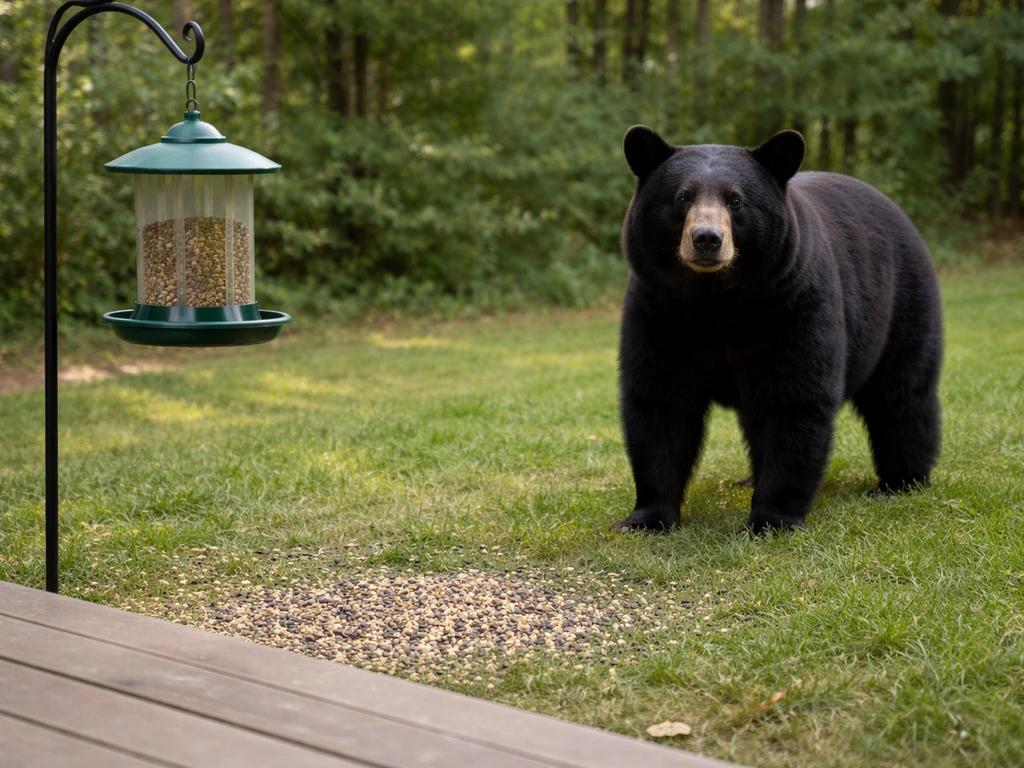
Yes, bird feeders absolutely attract raccoons. Raccoons are opportunistic feeders and birdseed, especially when it's spilled on the ground, is an easy, reliable food source they'll return to night after night. The good news is that a few targeted changes to your setup, placement, and feeding routine can break the cycle without giving up on feeding birds entirely.
Do Bird Feeders Attract Raccoons? How to Stop Visits

Eleanor Hartwick
16 Jun 2026
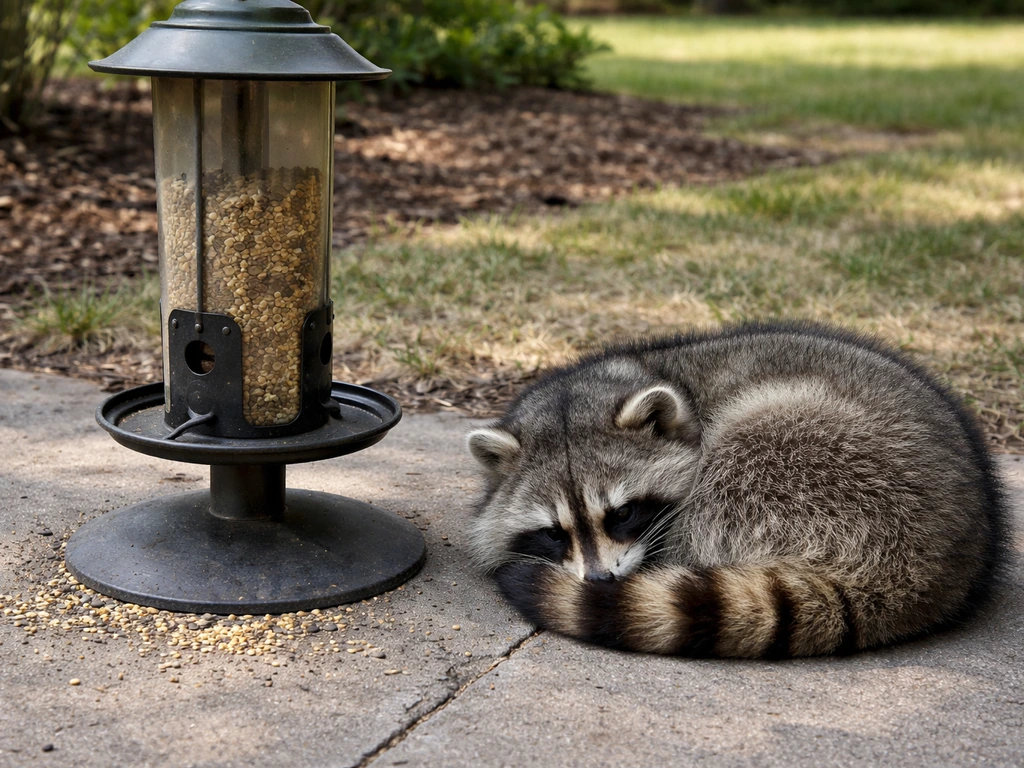
Do raccoons actually get into bird feeders?
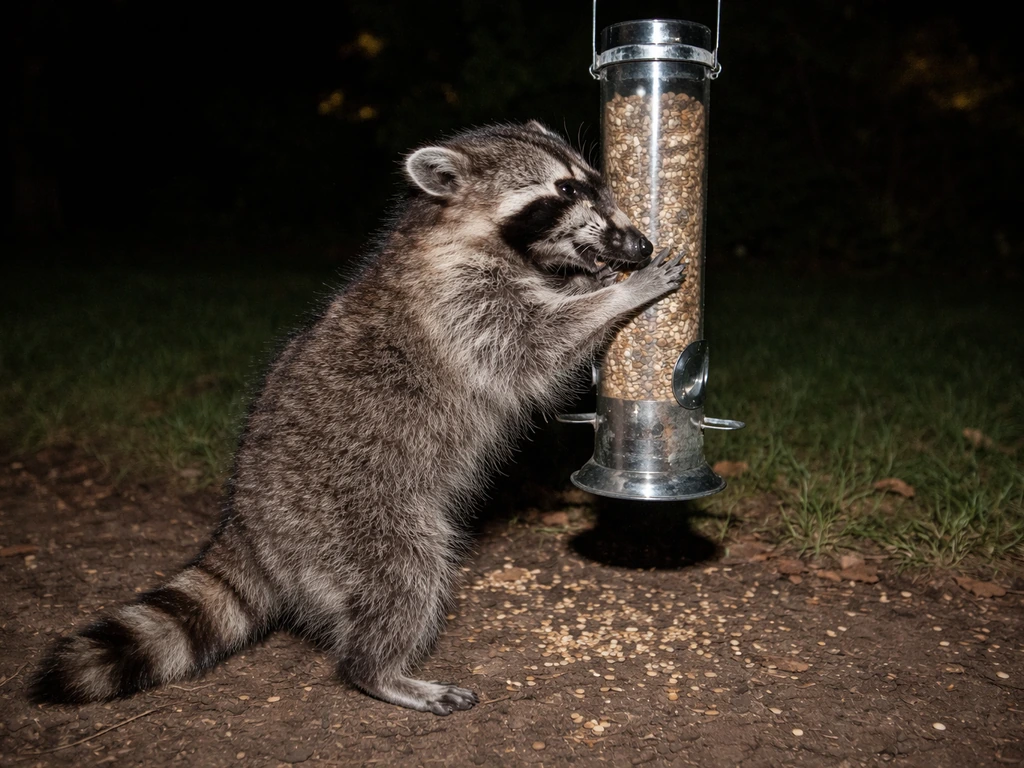
They do, and more often than most people expect. Trail cameras and Reddit threads are full of footage of raccoons hanging off tube feeders, raiding platform feeders, and feasting below hanging feeders in the middle of the night. Raccoons are smart, dexterous, and persistent. A feeder that a squirrel can access is almost certainly accessible to a raccoon too.
The most common scenario is a raccoon working below the feeder, picking through spilled seed on the ground. That's often where the first visit starts. But raccoons also climb poles, shimmy along fence lines and branches, and pull feeders down entirely if the setup gives them any purchase. If your feeder is hung from a tree branch or mounted on an unprotected pole, there's a good chance a raccoon has already tested it or will soon. Research with trail cameras has documented raccoons and other mesocarnivores feeding directly at birdfeeders, including below them on the ground, particularly at night.
Platform and tray feeders are especially vulnerable because they're large, stable, and easy to stand on. Tube feeders with small ports offer a bit more resistance, but a determined raccoon will still work the seed out. The scenario that escalates fastest is a feeder close to a fence, tree, or wall that raccoons use as a launchpad.
Why bird feeders attract raccoons in the first place
Raccoons are driven by calorie availability, and birdseed, particularly sunflower seeds and mixed blends with corn, is calorie-dense and predictable. If your feeder is refilled on a regular schedule, raccoons learn that schedule. They're creatures of habit when a food source proves reliable, and they'll return to the same feeder for multiple nights in a row once they've found it. Birds are attracted to feeders mainly by the easy, dependable food they provide, especially when feeders are placed in safe, familiar spots what attracts birds to bird feeders.
Timing matters a lot here. Most bird activity happens during daylight. Raccoons are primarily nocturnal, which means they often show up after you've gone to bed, long after the birds have left. This is why many feeder owners don't realize they have a raccoon problem until they notice the feeder is mysteriously empty every morning, or they catch movement on a motion-activated light or camera.
Spilled seed is probably the single biggest attractant. A feeder that drops seed onto the ground creates a ground-level buffet that's easy for raccoons, as well as mice, squirrels, skunks, and even coyotes, to exploit without ever touching the feeder itself. State wildlife agencies including the Washington Department of Fish and Wildlife specifically flag spilled feed as a key attractant for raccoons and other wildlife, recommending cleanup every couple of days.
It's worth noting that raccoons aren't uniquely drawn to bird feeders in the way that, say, bears are driven by strong scent from a distance. It's worth noting that raccoons aren't uniquely drawn to bird feeders in the way that, say, bears are driven by strong scent from a distance, which is why it's helpful to also consider do bird feeders attract bears when wildlife like ursids are in your area. Raccoons find feeders by exploring their territory opportunistically.
Once they do find yours, though, they remember it and return. The same behavioral pattern applies to other wildlife visitors: mice are often found below feeders just like raccoons, and bears present a more serious version of the same problem in areas where they're active. If you’re wondering, will bird feeders attract mice, the answer is yes, because they’re drawn to the same spilled seed and easy access below the feeder.
Signs raccoons are targeting your setup
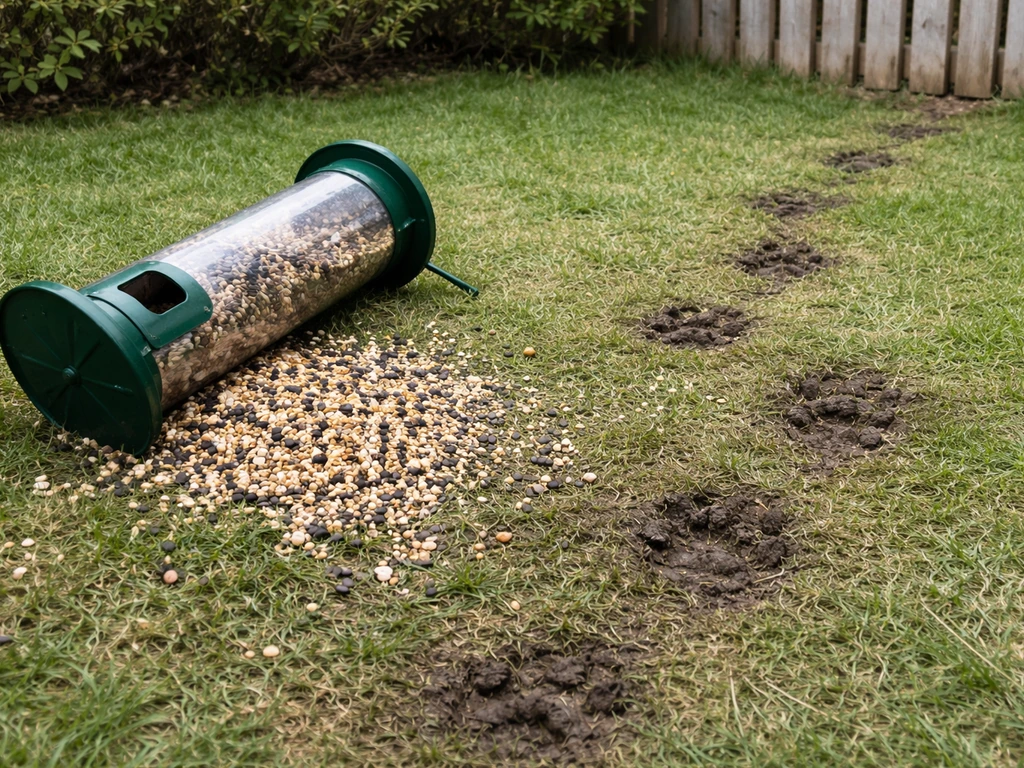
Raccoon activity at a feeder leaves pretty distinct clues if you know what to look for. Watch for these signs:
- Feeder is empty or nearly empty in the morning after being filled the evening before
- The feeder has been knocked down, bent, or repositioned overnight
- Muddy paw prints on the feeder pole, nearby fence, or the feeder itself (raccoon tracks show five long fingers on both front and back feet)
- Scratch marks on a wooden or plastic feeder
- Seed scattered in a wide radius around the base, more than normal bird spillage would explain
- Droppings nearby (raccoon scat is tubular, about the width of a finger, and often contains seed hulls or berry remnants)
- Motion-sensor lights or cameras triggering between 9 PM and 4 AM with no corresponding bird activity
If you're not sure, a cheap trail camera aimed at the feeder for two or three nights will give you a definitive answer. You'll often be surprised by how many visitors you have that you didn't know about.
Reduce access: placement, barriers, and feeder types
This is where most people get the most traction quickly. Raccoons are capable climbers but they have limits, and a well-designed setup exploits those limits.
Pole placement and baffles
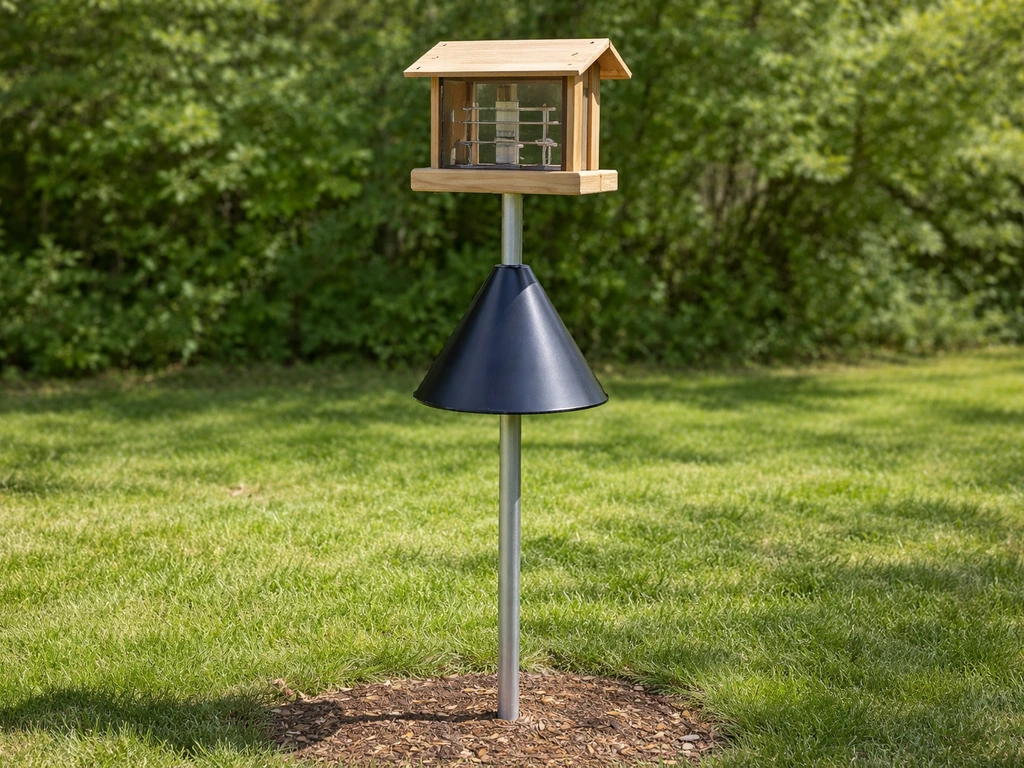
Mount your feeder on a smooth metal pole at least five feet off the ground and at least ten feet away from any fence, tree, roof overhang, or structure a raccoon could use to jump across. Then add a baffle, specifically a raccoon baffle, not just a squirrel baffle. A clamshell-style or cylinder baffle installed 4 to 5 feet up the pole makes it physically impossible for a raccoon to get past without falling off. This is the single most effective deterrent for pole-mounted feeders. Multiple people who've dealt with repeat raccoon visits report that the combination of a tall smooth pole and a proper baffle stops the problem almost immediately.
Hanging feeders
If you hang feeders from a wire strung between two points (rather than from a branch), position the wire high enough that a raccoon can't reach down to the feeder from either anchor point. Adding a plastic or metal sleeve around the wire near each anchor helps prevent them from walking along it. Avoid hanging feeders from tree branches entirely if raccoons are already active in your yard.
Feeder design choices
Tube feeders with small ports are harder to raid than platform or tray feeders. Weight-sensitive feeders designed to close under the weight of a squirrel will also close under the weight of a raccoon, making them a solid investment if you're fighting this problem repeatedly. Avoid large open platform feeders if raccoons are a consistent issue; they're simply too easy to clean out.
| Feeder Type | Raccoon Vulnerability | Best Use Case |
|---|---|---|
| Platform/tray feeder | High — easy to stand on and access | Ground-feeding birds; avoid if raccoons are active |
| Tube feeder (small ports) | Moderate — harder to access but not raccoon-proof | Finches, chickadees; pair with baffle for best results |
| Weight-sensitive feeder | Low — closes under raccoon's weight | Best option where raccoons are persistent visitors |
| Hopper/house feeder | Moderate to high — depends on placement | General use; effectiveness depends on pole setup |
| Suet cage | Low to moderate — less appealing to raccoons | Woodpeckers; raccoons occasionally pull these down |
Change what you're offering and control food spill
What's in your feeder matters almost as much as where it is. Corn is a top attractant for raccoons and is often a filler ingredient in cheap mixed seed blends. Switching to a straight sunflower or nyjer seed mix reduces raccoon appeal while still attracting a wide range of songbirds. Peanuts and suet are also attractive to raccoons, so consider limiting them or using suet feeders designed with caged protection around them.
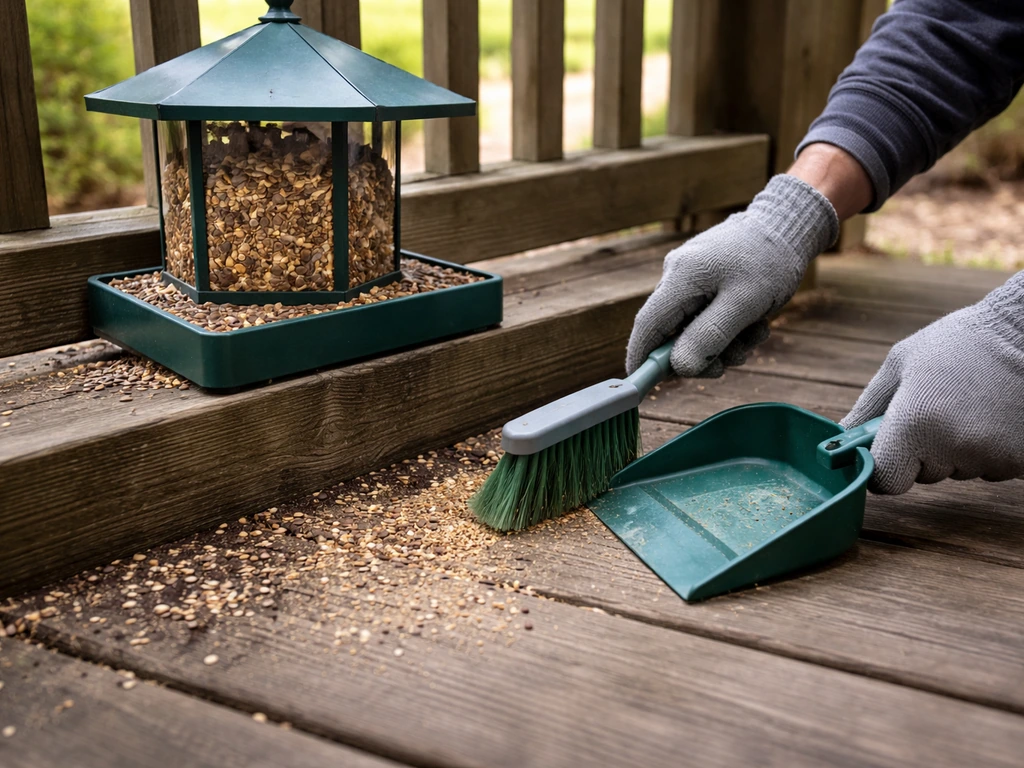
Spill control is critical. Look for feeders with trays that catch falling seed rather than letting it drop to the ground. Some feeders have built-in seed catchers; you can also buy add-on tray attachments that fit many standard feeders. Chipmunks may also investigate bird feeders, but whether they truly get attracted depends largely on what food is available and whether seed is spilling on the ground seed catchers.
Whatever feeder you use, sweep or rake up fallen seed at least every two days, more often if you're seeing active raccoon visits. The USDA Forest Service and multiple state wildlife agencies specifically point to keeping spilled seed off the ground as one of the most effective ways to reduce unwanted wildlife attraction.
You might also consider taking your feeders in at night, at least temporarily while you're working through the problem. Raccoons are nocturnal, so removing the food source during their active hours removes the reward entirely. Birds don't feed at night, so you lose nothing on the bird-attraction side. It's not always practical long-term, but it's a simple and immediate solution that breaks the pattern of raccoons returning to the same spot.
Ongoing maintenance to keep raccoons away for good
The reality is that raccoon deterrence isn't a one-time fix. It's a set of habits you build into your feeder routine. Here's what to do consistently:
- Clean up spilled seed and bird droppings from the ground beneath your feeder every two to three days. This removes the ground-level attractant that often starts the problem.
- Check your baffle and pole setup monthly. Raccoons will test it repeatedly, and a baffle that's slipped or loosened is no longer doing its job.
- Rinse and dry your feeder every one to two weeks. Seed residue and hulls left in the tray or ports attract not just raccoons but also rodents and can harbor bacteria harmful to birds.
- Adjust your fill schedule. Fill feeders in the morning rather than the evening so the seed is largely consumed by birds before raccoons become active at night.
- If raccoon activity spikes seasonally, typically in spring when females are feeding young, and in fall when animals are building up fat reserves, increase your deterrence measures during those periods.
- Rotate or reposition feeders occasionally if a raccoon has learned the exact location. A change in placement can disrupt their routine long enough to break the habit.
One thing worth keeping in perspective: a raccoon visiting your feeder is annoying and expensive in terms of wasted seed, but it's usually manageable with the right setup. The same thoughtful approach to placement and maintenance that keeps raccoons at bay also helps with the other common visitors like mice, chipmunks, and pigeons, all of which are drawn to feeders for the same basic reason: easy food. Managing that attractant smartly lets you enjoy the birds without turning your yard into a wildlife free-for-all.
If you've made the physical and maintenance changes above and you're still seeing nightly visits, the next step is a motion-activated deterrent like a sprinkler or light. These don't harm raccoons but they make your yard uncomfortable enough that the animals move on to easier opportunities elsewhere. Most people don't need to go that far if the baffle, pole placement, and spill control are dialed in.
FAQ
If my tube feeder has small ports, will raccoons still be able to get to the food?
Yes, even a feeder designed for small birds can still be a raccoon target. If seed falls to the ground, raccoons can feed below without ever reaching the ports, so port size only helps if you also manage spill and use a proper baffle.
How can I tell whether it’s raccoons or something else (like squirrels or mice) taking my seed?
Don’t assume it’s only raccoons. If you see claw marks on metal or hear scraping at night, that can also be squirrels, and if you find droppings near the feeder, those size differences can help. A short trail camera check for 2 to 3 nights is the fastest way to confirm who is visiting before you buy the wrong fix.
Should I change when I refill my feeder, or is night feeding the main issue?
Attracting birds is mostly about reliable food during daylight, but raccoons often learn refilling schedules. If you need to refill, switch to smaller top-offs and do them in the morning, and avoid leaving seed out overnight while you’re troubleshooting.
What’s the common mistake with baffles, and how do I place them correctly?
If your feeder is mounted on a pole and you install a baffle, the pole height matters because raccoons jump and climb. If the baffle is too low, they may be able to get past by grabbing from nearby surfaces, so keep the baffle placement high enough that there is no easy “launch point” from a fence, branch, or roof edge.
If I take feeders in at night, will raccoons stop coming right away?
If you stop feeding, you reduce the reward immediately, but raccoons can keep exploring your yard for a few nights, especially if they have already identified a safe access route. Combine temporary removal with cleanup (no spilled seed left behind) so the animal doesn’t switch to foraging at the ground beneath the feeder.
Do weight-sensitive feeders fully solve raccoon problems, or do I still need spill control?
Weight-activated closures can help, but only if the mechanism is sealed properly and the feeder doesn’t leak when bumped. Raccoons can also try to raid the base or surrounding area, so still use spill control and a ground-level seed tray, not just a gravity-close design.
Are seed catchers enough, or do I have to manage overflow and fallen seed anyway?
Yes. If you use seed catchers or trays, you can still attract wildlife if the catcher fills up and seed overflows. Empty trays frequently, and check that the catcher is positioned so falling seed is contained, not kicked out by wind or animal movement.
What should I check around my yard if the raccoon problem continues after I adjust the feeder?
If raccoons persist after you’ve fixed height, baffles, and spill, focus on the access routes. Common hidden routes include a nearby clutter “landing zone,” a nearby downspout, or branches that allow a jump onto the feeder area, even if the feeder itself is blocked.
What deterrents should I avoid, and what approach is safest if I want to keep raccoons out?
In most cases you can reduce visits without harming raccoons, but avoid trapping unless you know local rules and have a plan. Also, don’t use poisons, and don’t rely on repellents as your only strategy, because raccoons can habituate if the food source remains easy.
Next Article
Do Bird Feeders Attract Bears? Causes and Prevention Steps
Answer if bird feeders attract bears, why spilled seed draws them, and step-by-step prevention and cleanup to reduce vis