Bird feeders attract birds for one simple reason: they offer a reliable, easy food source. But "reliable" and "easy" are the operative words. Birds are constantly scanning their environment for food, and once they find a consistent spot, they return. The challenge most people run into is that feeders don't attract birds automatically on day one. The right food, the right feeder style, the right placement, and a little patience all work together. Get those aligned, and you'll have steady visitors within days to weeks. Get them wrong, and you'll end up with a feeder full of soggy seed and no birds in sight.
What Attracts Birds to Bird Feeders: How to Get Visitors
Eleanor Hartwick
15 Apr 2026
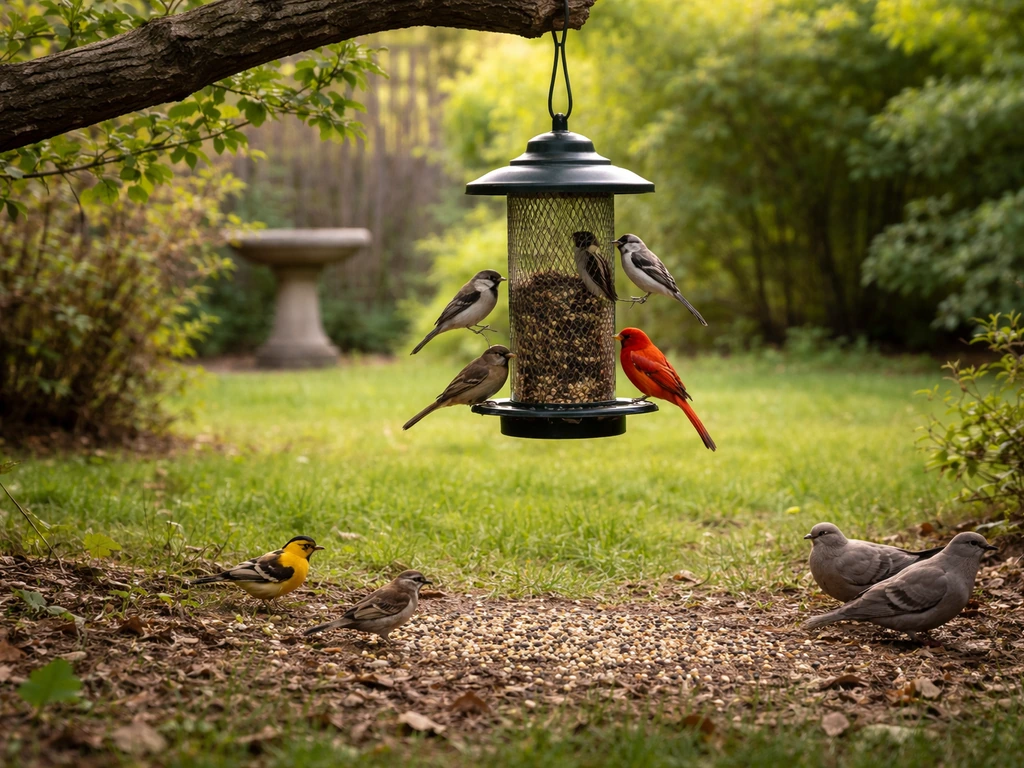
Do bird feeders really attract birds, and why do they work?
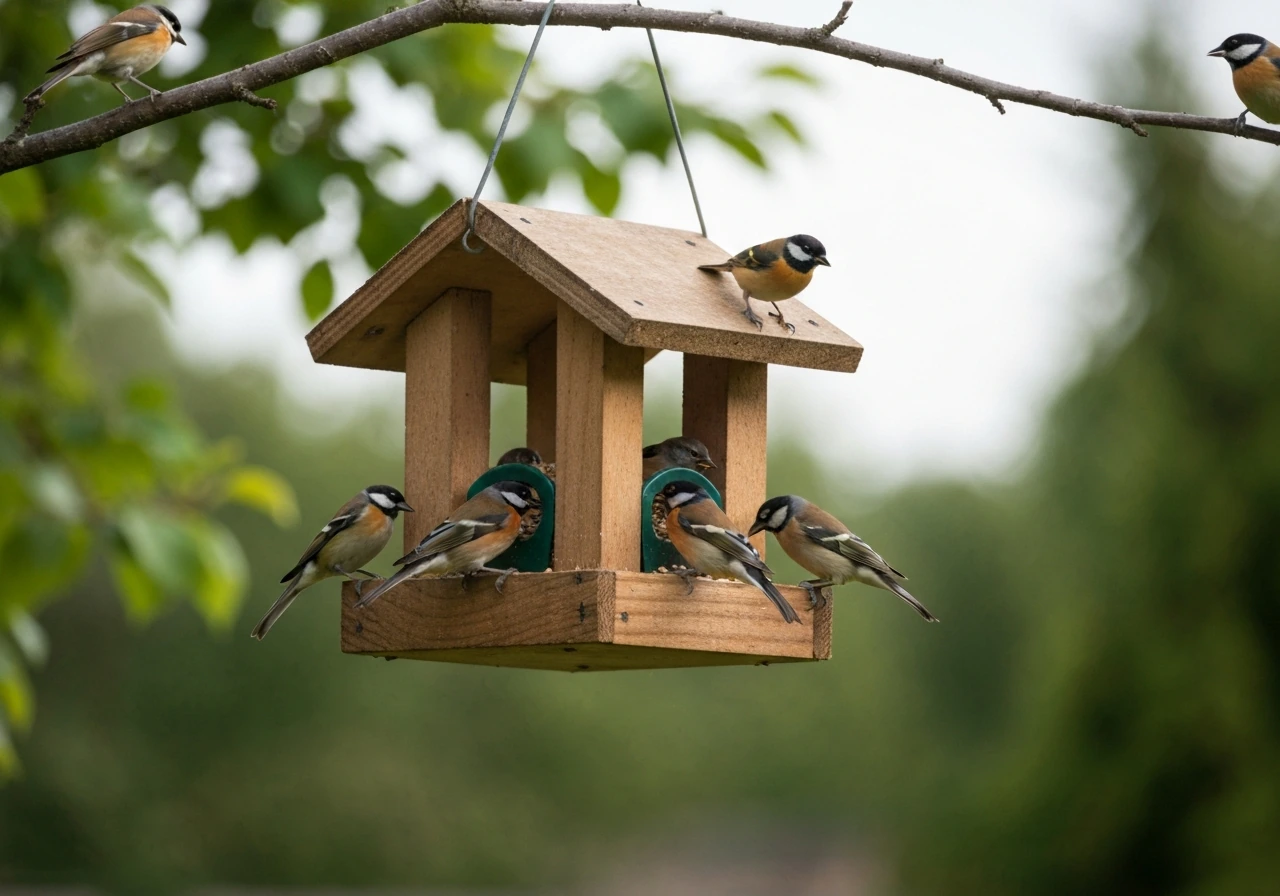
Yes, bird feeders genuinely attract birds, and the science behind why is pretty straightforward. Wild birds spend most of their waking hours foraging. They're constantly doing a cost-benefit calculation: how much energy does it take to find this food versus how much energy will I get from eating it? A feeder tips that equation dramatically in the bird's favor. High-calorie seed, suet, or nectar sitting in one predictable spot is a far better deal than hunting for insects under bark or chasing down scattered seeds in a field.
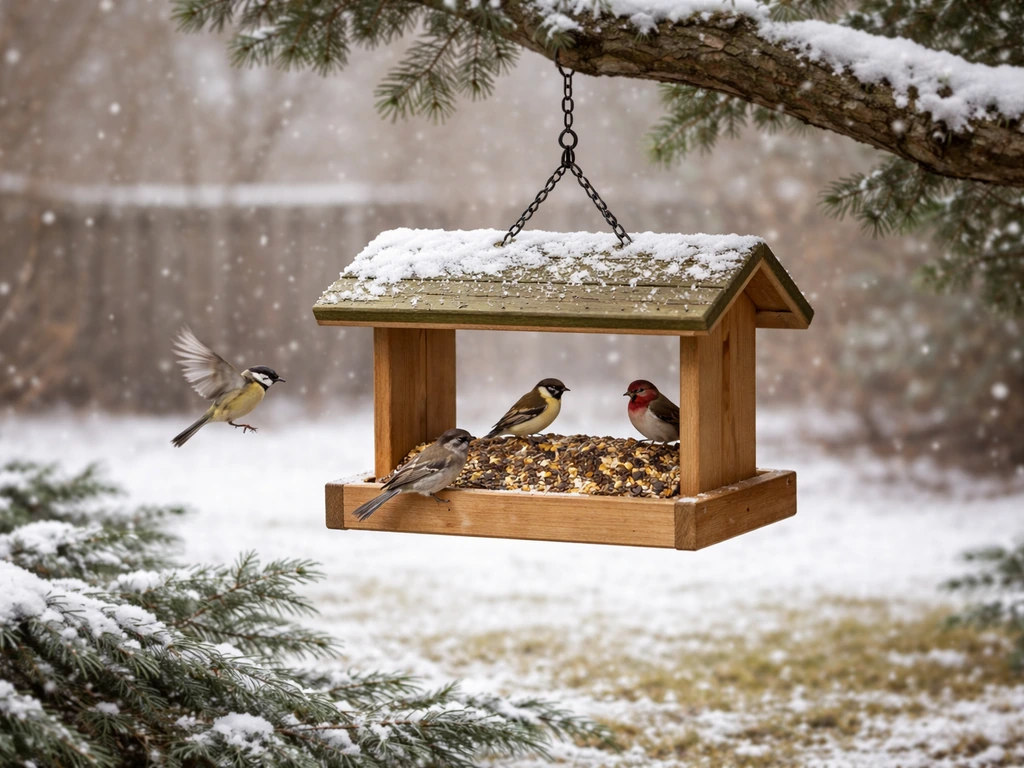
The effect is most pronounced in winter. Research from a long-term chickadee study summarized by the Aldo Leopold Foundation found that 69% of chickadees with feeder access survived winter (October through April) compared to only 37% without supplemental food. That gap widened most during brief extreme cold snaps when natural food became nearly impossible to access. So feeders aren't just a nice amenity. For some birds, in some conditions, they're genuinely life-sustaining.
Beyond the energy math, feeders also work because birds are social learners. When one bird discovers a feeder, others notice. Chickadees, in particular, are known to communicate food source locations. Once a small group starts visiting, you'll often see a cascade of new species show up within the same week. That's why a feeder that looks abandoned for two weeks isn't necessarily a failure. It may just need more time to get on the local bird radar.
Best bird feeder placement: location, height, and visibility
Placement is one of the most underestimated factors in whether birds actually visit. The two things that matter most are safety from window collisions and proximity to natural cover. On the window side, the research points to a clear rule: place feeders either within 3 feet of a window or more than 30 feet away. Cornell Lab, Tufts Wildlife Clinic, and Canada's federal wildlife guidance all converge on this. The logic is that birds hitting a feeder placed within 3 feet of glass haven't built up enough speed to injure themselves seriously, while birds more than 30 feet away have enough room to recognize and avoid the glass. The danger zone is everything in between: birds gain speed flying away from the feeder and then collide with a window they didn't register. Feeders also need to be positioned so birds have escape routes. Canada.ca specifically notes that feeder placement should give birds room to flee if a predator appears, which is another argument for keeping feeders near, but not pressed against, dense cover.
On cover: Project FeederWatch recommends placing feeders near brush piles, shrubs, or trees so smaller birds can dash to safety quickly. This isn't just about predators. Birds are simply more willing to visit a feeder they can escape from easily. A feeder sitting in the middle of an open lawn, 20 feet from any cover, will get fewer visitors than one positioned 6 to 10 feet from a shrub or brush pile, all else being equal. Height matters too, and it depends on the species you're targeting. Ground feeders like juncos and doves want low trays. Songbirds like finches and chickadees prefer mid-height tube or hopper feeders. Woodpeckers and nuthatches want suet cages mounted well off the ground on a trunk or pole.
Feeder types that attract different species
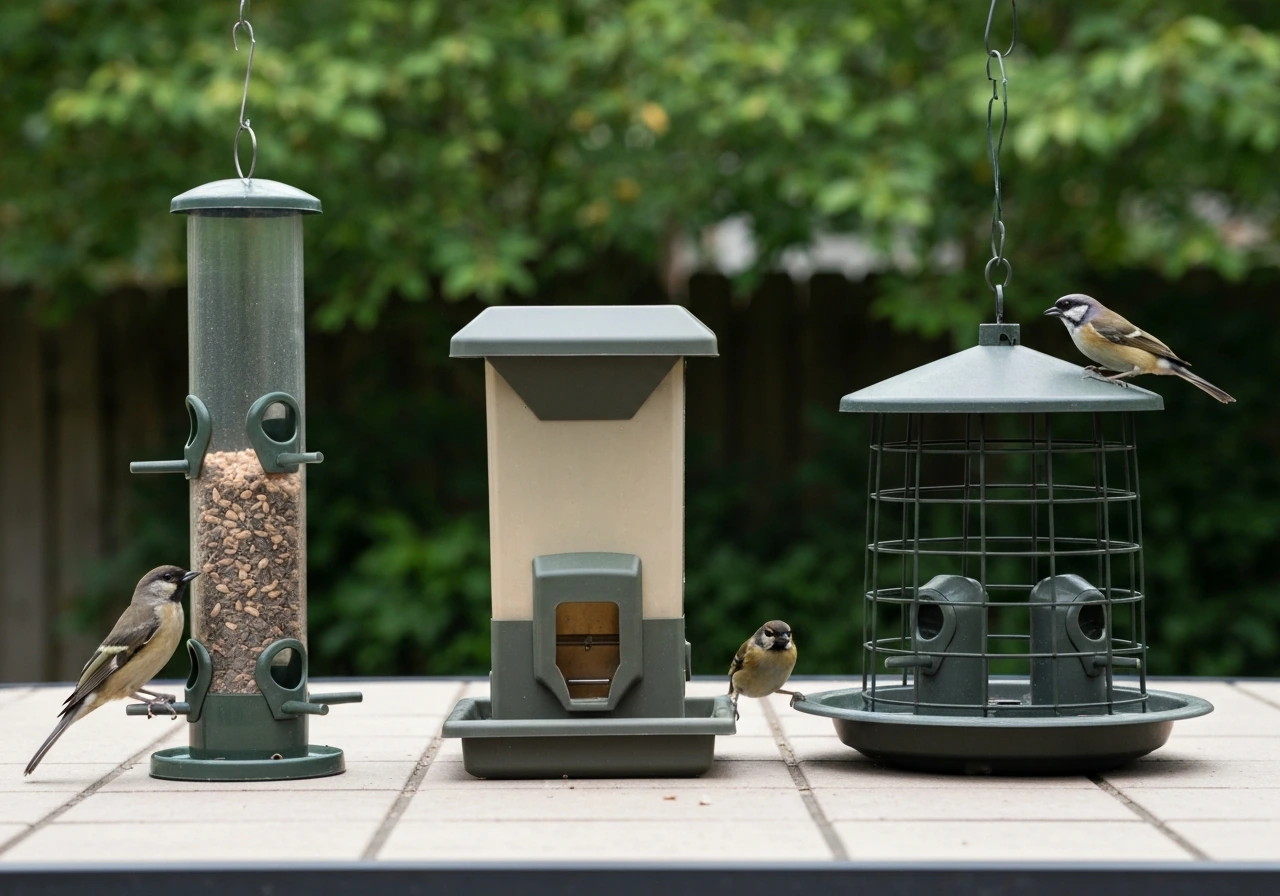
The style of feeder you choose isn't just an aesthetic decision. It determines which birds can physically access the food and which will feel comfortable eating there. Audubon's guidance on matching feeder style to bird behavior is worth taking seriously: ground-feeding birds like sparrows, towhees, and doves do best with flat, open tray or platform feeders. Birds that feed in shrubs and mid-canopy, like chickadees, nuthatches, and finches, prefer hopper or tube feeders mounted at a comfortable perch height. Woodpeckers, creepers, and nuthatches are bark foragers by nature, so they gravitate toward suet cages that mimic clinging to a surface.
Feeder design also helps manage who shows up uninvited. Tube feeders with short perches and no large catch basins are harder for bigger birds to dominate. If you're finding that larger species are taking over and chasing off the smaller birds you actually want to attract, switching to a smaller-port tube feeder is one of the most effective adjustments you can make. If you're specifically worried about whether bird feeders attract pigeons, feeder style plays a big role: pigeons are ground and platform feeders, so removing platform feeders or switching exclusively to tube feeders can reduce their presence considerably.
| Feeder Type | Best For | What to Fill It With |
|---|---|---|
| Platform / tray feeder | Sparrows, juncos, doves, towhees | Millet, mixed seed, cracked corn |
| Hopper feeder | Chickadees, cardinals, finches, nuthatches | Black-oil sunflower, mixed seed |
| Tube feeder (small ports) | Goldfinches, siskins, redpolls | Nyjer (thistle) seed |
| Tube feeder (large ports) | Chickadees, nuthatches, titmice | Black-oil sunflower, hulled sunflower |
| Suet cage | Woodpeckers, nuthatches, creepers, chickadees | Suet cakes |
| Hummingbird feeder | Ruby-throated and other hummingbirds | Sugar water (1 part sugar : 4 parts water) |
| Ground scatter | Doves, juncos, native sparrows | Millet, sunflower chips |
What to put in feeders: seed, suet, nectar, and water
If you want one universal answer on what to fill a feeder with, it's black-oil sunflower seed. All About Birds calls it the "mainstay for most backyard bird feeders," and that reputation is well-earned. Black-oil sunflower has thin shells that even small birds can crack, and the kernels are high in fat, which matters enormously in cold weather. It attracts chickadees, nuthatches, finches, cardinals, grosbeaks, and more. If you're only stocking one type of seed, this is it. One note on millet: All About Birds points out that virtually every bird attracted to millet is also attracted to black-oil sunflower, so if you're using both, millet becomes redundant. Save it for platform feeders where ground-foraging species like juncos and native sparrows will genuinely prefer it.
For attracting goldfinches specifically, nyjer (also called thistle) seed in a tube feeder with small ports is the go-to. For woodpeckers and nuthatches, suet cakes provide the high-calorie fat they need, especially in winter. For hummingbirds, the recipe is simple: 1 part plain white table sugar to 4 parts water, stirred until dissolved. Don't use honey, red dye, or artificial sweeteners. The feeder's red color is what draws hummingbirds initially (they associate red with nectar-rich flowers), not anything in the nectar itself. Store extra nectar in the refrigerator and use it within one week.
Water is often overlooked, but a birdbath or shallow dish with fresh water can attract species that won't visit seed feeders at all, including warblers, thrushes, and robins. Moving water (even a simple dripper) is more attractive to birds than still water because they can hear it. In winter, a heated birdbath can become the most visited spot in your yard.
How birds find feeders and start using them
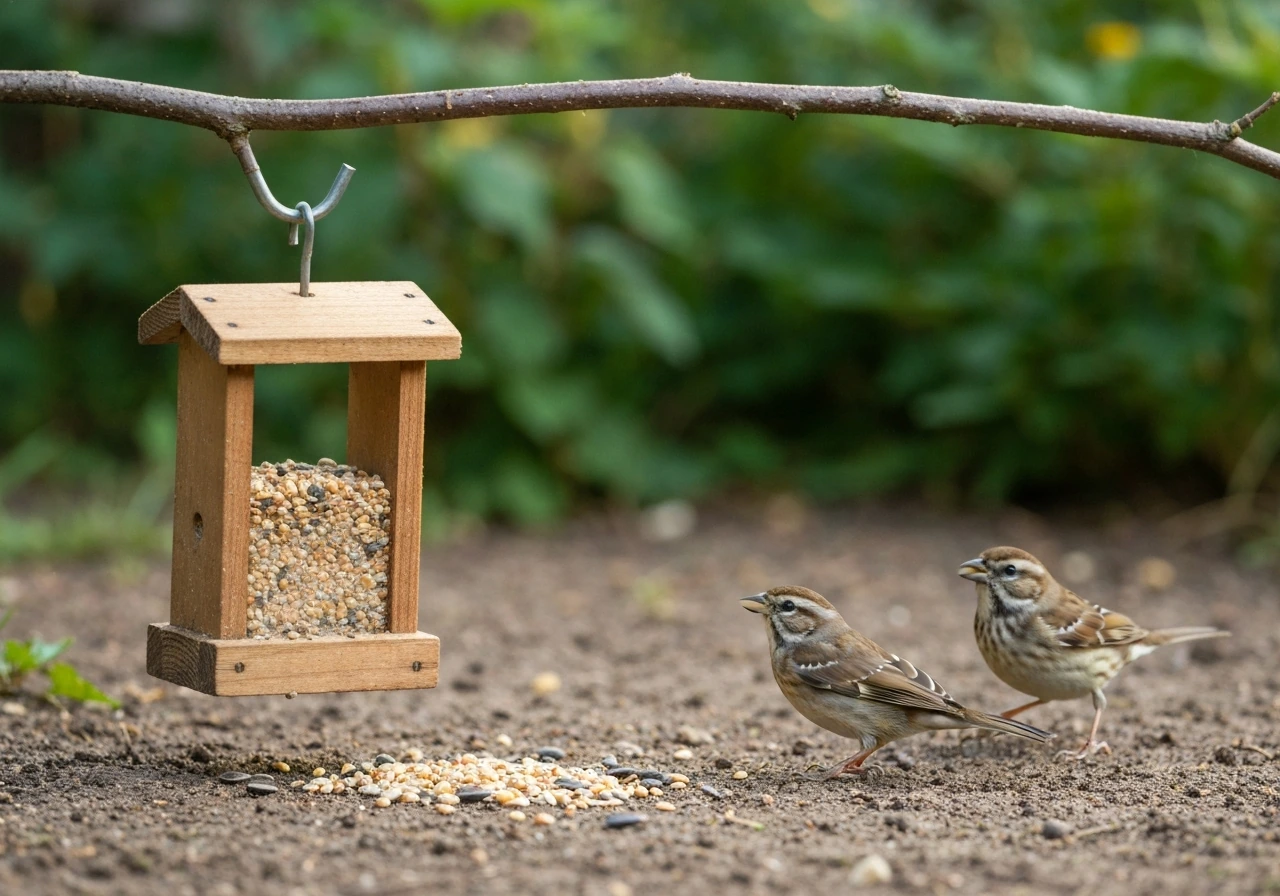
Birds find feeders primarily through sight and social observation, not smell. They're scanning constantly for food sources while foraging, and a feeder with colorful seed or visible movement from other birds is the primary draw. This is also why placement matters for discovery: a feeder visible from established bird flight paths and perching spots gets found faster than one tucked away in a corner. UNH Cooperative Extension notes that it can simply take time for birds to locate a new feeder, and that patience is genuinely part of the process. A feeder that's been up two weeks with no visitors isn't necessarily doing anything wrong.
You can speed up discovery in a few ways. Scatter a small amount of seed on the ground near the feeder to create visible food that birds spot from above. Add a birdbath nearby to draw birds to the area for water, where they'll also spot the feeder. And if you have an existing feeder that's already visited, placing a new feeder within sight of it leverages the existing flock's knowledge. Once one or two birds start using a new feeder, others in the area learn from watching them.
Avoiding the common reasons birds don't come
If your feeder has been up for a few weeks and still has no visitors, work through this list systematically. The most common culprits are wrong food, wrong feeder, poor placement, or a cleanliness issue. A tube feeder filled with millet in the middle of an open yard won't attract much. A hopper feeder filled with black-oil sunflower near a shrub probably will. Matching food to feeder style to target species is the whole game.
Cleanliness is a real issue and one people consistently underestimate. Wet or moldy seed is a health hazard for birds and will deter new visitors once a feeder develops a bad smell or visible mold. All About Birds recommends cleaning feeders at least once a week with hot water and a bottle brush, taking the feeder fully apart for best results. For disinfecting, the standard guidance is to soak feeders in a solution of 1 part bleach to 9 parts water for about 15 minutes, then rinse thoroughly before refilling. Audubon notes this is the National Wildlife Health Center's recommended approach, and Project FeederWatch suggests cleaning seed feeders every two weeks at minimum, more often if there's any sign of disease in your visiting birds.
Wildlife competition is another factor worth thinking through honestly. Squirrels are the most common complaint, and they can genuinely deter smaller birds by monopolizing feeders and creating chaos around them. Baffles on feeder poles and weight-sensitive perches are the most effective mechanical deterrents. But it's also worth knowing that feeders can attract other animals beyond squirrels. If you're seeing mammals around your feeder at night or early morning, you may want to read up on whether bird feeders attract bears in your region, particularly if you're in bear country, or explore whether bird feeders attract raccoons, which are common nighttime visitors in suburban areas. Even small mammals get in on the action: bird feeders can attract chipmunks, which are mostly harmless but can exhaust your seed supply quickly. And if you've noticed rodent activity near your feeder, it's worth understanding whether bird feeders attract mice, since spilled seed on the ground is a primary draw for them.
The practical fix for most wildlife competition is to use feeders with no or minimal seed catch trays (less spill), bring feeders in at night if bears or raccoons are a known issue, and keep the ground under feeders raked clean. These steps reduce the mammal draw while keeping the bird-friendly elements in place.
Seasonal and environment factors that affect who shows up
Bird feeder activity is not constant across the year, and understanding that rhythm will save you a lot of frustration. Late fall through winter is typically peak feeder season in most of North America. Natural food sources are scarce, temperatures drive up caloric needs, and migratory visitors are passing through or wintering in your area. This is when the Aldo Leopold Foundation's chickadee survival data kicks in most dramatically: brief extreme cold snaps are exactly the moments when feeder access matters most.
Spring brings a lull in feeder activity as natural food becomes available again. Birds that were regulars all winter may disappear almost overnight as insects emerge and berries ripen. Don't take that personally. It means your local birds have good wild food options. Hummingbird feeders become relevant in spring and summer as birds return from migration. Timing hummingbird feeder deployment to just before your local first-arrival date (which varies widely by region, from March in the South to May in the North) gives scouts a resource to find early. USFWS notes that in areas with significant habitat loss, feeders can provide important food stops along migratory routes, making spring and fall feeder maintenance worthwhile even outside peak winter use.
Your local environment also shapes what species you'll see regardless of what you do. A feeder in a dense suburban neighborhood with mature trees will attract different birds than one at the edge of a forest or in a rural yard. Urban feeders tend to see house sparrows, starlings, and pigeons in higher numbers. Feeders near natural habitat edges attract more native sparrows, warblers, and migratory species. Neither is better or worse. They're just different, and calibrating your feeder type and food selection to the birds that actually live in your area will always produce better results than chasing a species list that doesn't match your local ecosystem.
What to do today to start getting birds
Here's a practical starting sequence if you're setting up for the first time or troubleshooting a feeder that isn't working. Start with one hopper or tube feeder filled with black-oil sunflower seed, placed within 3 feet of a window or more than 30 feet away, near a shrub or tree with natural cover. Scatter a small amount of seed on the ground beneath it. Add a shallow birdbath with fresh water nearby if you have one. Then wait at least two to three weeks before concluding something is wrong. Birds need time to find new food sources.
- Choose black-oil sunflower seed as your baseline fill for a hopper or tube feeder.
- Place the feeder either within 3 feet of a window or beyond 30 feet from any glass surface.
- Position it within 6 to 10 feet of a shrub, brush pile, or tree for bird escape cover.
- Scatter a small amount of seed on the ground under or near the feeder to increase visibility.
- Add fresh water nearby (a birdbath or shallow dish) to draw in a wider range of species.
- Clean the feeder with hot water every one to two weeks; disinfect with a 1: 9 bleach-to-water soak monthly.
- Give it two to three weeks before adjusting. New feeders take time to get discovered.
- Track what shows up and adjust food or feeder style to match your actual visitors.
The most important thing is to stay observant. Watch for signs of which species are actually visiting, which foods go quickly, which seeds get ignored and pile up (those are the ones to stop buying). Bird feeding rewards active attention more than passive setup. Once you know what's using your feeder, you can add species-specific feeders, adjust placement, or change your seed mix. That iterative process is genuinely more effective than trying to nail everything perfectly on day one.
FAQ
How long does it usually take for birds to notice a new feeder?
Yes, but it needs alignment: birds will not reliably find a feeder overnight, they must discover it by sight or social cues, and the right food must be present immediately. If you want quicker results, use black-oil sunflower, place the feeder within the safe window-distance rule, scatter a small amount of seed nearby, and expect a realistic timeline of 2 to 3 weeks for steady activity.
Why is my feeder full but no birds are coming?
A feeder can look full and still attract no birds if the food is the wrong type or becomes unappealing quickly. Start by checking for moisture and clumping, replacing any seed that smells musty, and confirming the feeder design matches where your target birds feed (platform for ground feeders, tube or hopper for perching birds).
What’s the best seed if I want the widest variety of birds?
Avoid putting seed out that birds cannot process. Millet is widely used, but it is often less effective than black-oil sunflower for many common backyard birds, and it can be redundant if you already offer sunflower. If you see only one species and others ignore the seed, switch to black-oil sunflower or add species-specific offerings like nyjer for goldfinches (tube with small ports).
Do I need to clean a feeder even if it looks clean?
Cleaning and drying matter more than fragrance. Rinse feeders to remove old seed, scrub with a bottle brush, and remove any moldy clumps. If you recently disinfected, fully rinse and let the feeder dry before refilling, because leftover sanitizer residues can deter birds and are harmful if you see wet spotting or chemical smell.
What should I do if birds stop visiting after initially coming?
If you see birds but they stop visiting, the cause is often food quality (wet, spoiled, or too old), feeder competition (one dominant species), or safety (perches are exposed so birds wait). Troubleshoot in this order: swap seed immediately, check for mold, confirm correct feeder height and style for the birds you want, then evaluate placement near escape cover.
How can I attract smaller birds if bigger birds keep taking over?
To reduce “crowding” by large birds, choose a feeder with smaller openings and limited access. For example, a smaller-port tube feeder can cut down bigger-bird domination, and avoiding oversized perches helps. Also consider switching from platform feeders to tube feeders if pigeons are an issue, since pigeons strongly prefer ground and platform access.
Why do I have a lot of leftover seed that birds ignore?
If seed is piling up, it is usually a mismatch: either the feeder type does not match the bird’s feeding style, or the birds do not like that specific seed. Replace the food first with black-oil sunflower, then confirm feeder height and access (ground tray for juncos and doves, hopper or tube at comfortable perch height for many songbirds). If the same seed keeps ignoring, stop buying it and switch to what local visitors are actually taking.
Does the 3-feet or 30-feet window rule always prevent window collisions?
It can, even when you have correct window distance, because birds might not approach from the same angle each time. Re-check the exact placement relative to flight paths and nearby cover, then increase safety by moving the feeder to maintain either very near placement (within the safe zone described) or well beyond it, and increase visual cues near glass if collisions are happening.
How can I speed up discovery if birds keep passing by?
Yes, and it is often the fastest way to solve “mystery non-visitors.” Add a shallow seed scatter spot near the feeder, keep water fresh, and ensure the feeder is visible from typical perching spots. Birds rely on what they can see from above and nearby, so a feeder tucked away from sight can be discovered more slowly even with perfect seed.
Can I use one feeder to attract all bird types?
Start by choosing a feeder based on where the bird naturally feeds. Woodpeckers and nuthatches tend to use suet cages mounted on a trunk or pole at a height that matches their usual foraging, while hummingbirds need a dedicated nectar setup with correctly mixed sugar water. Mixing nectar and seed feeders together can also confuse daily routines if placement and timing are off.
Should I change the feeder setup throughout the year?
Yes, but plan for seasonal switching rather than keeping everything unchanged. Many species reduce feeder dependence in spring, and hummingbirds only become relevant once they arrive locally. Instead of stopping maintenance, adjust offerings when weather changes, keep clean water available year-round, and expect visitor patterns to shift as natural food returns.
Does smell matter for attracting birds to feeders?
Mostly, yes, because birds primarily locate food by sight and observation rather than smell. Still, you should avoid leaving very old seed that has a stale or moldy odor, because that becomes a health issue and can reduce visits after a bad batch. If a feeder becomes wet or smells off, remove and replace immediately.
How do I keep squirrels, raccoons, or other animals from ruining my feeder?
It depends on the animal, but many bird feeders do become mammal targets because of spilled seed and easy access. Use baffles on feeder poles, choose designs with minimal catch trays to reduce spill, rake and remove ground seed under the feeder, and if bears or raccoons are in the area, bring feeders in at night.
Next Articles
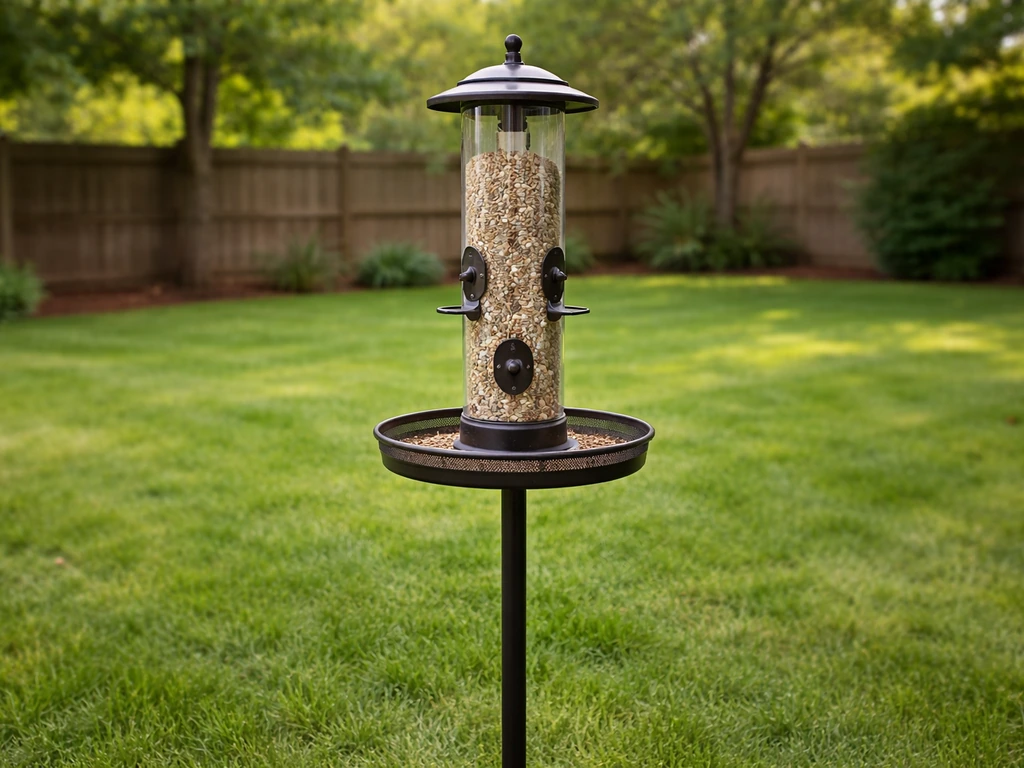
Will Bird Feeders Attract Mice and How to Prevent It
Do bird feeders attract mice and rats? Learn why, risk factors, and step-by-step steps to prevent rodents.
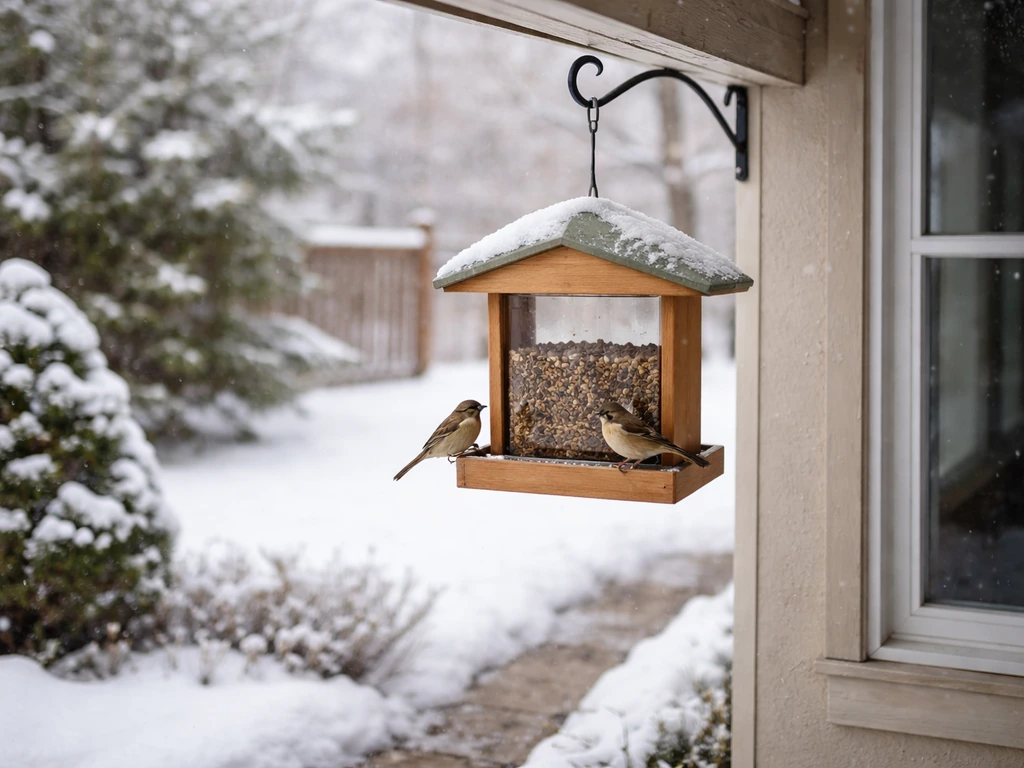
Where to Hang Bird Feeders in Winter: Exact Placement Tips
Exact winter feeder placement tips for birds and safety: height, window distance, shelter, and troubleshooting.
Do You Leave Bird Feeders Out All Year? Seasonal Guide
Should you leave bird feeders out all year? Get seasonal tips, safe feeding, and cleaning to prevent disease and pests.