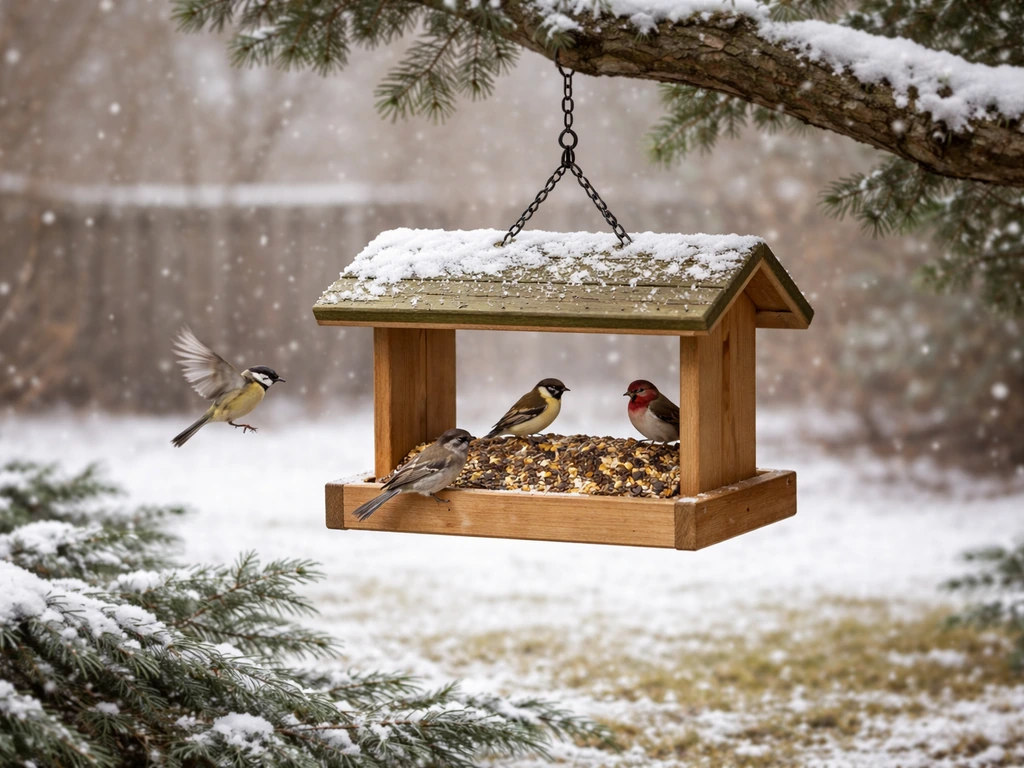
Yes, bird feeders can attract mice and rats. But the feeder itself isn't really the problem. It's the food, how much spills, where it lands, and what's nearby. I hear this concern constantly from backyard birders, and the good news is that with a few specific changes, you can keep feeding birds without turning your yard into a rodent buffet. This guide walks through exactly why it happens, how to know if it's already happening, and what to do about it today.
Will Bird Feeders Attract Mice and How to Prevent It

Eleanor Hartwick
5 Apr 2026
Why bird feeders pull in mice and rats
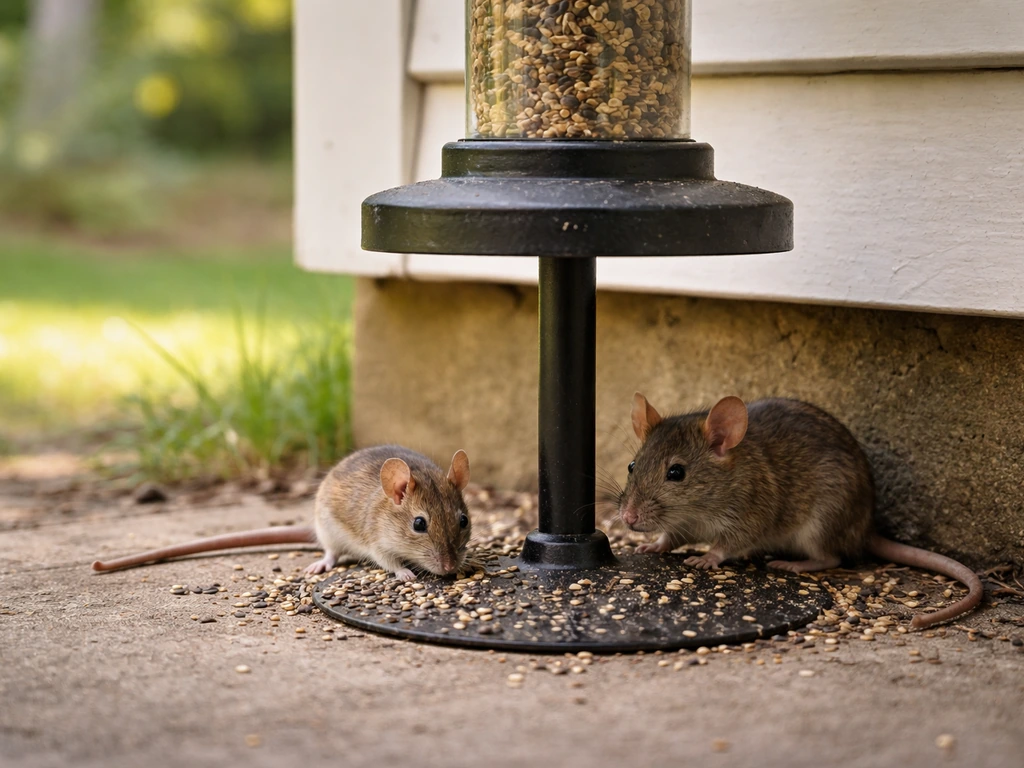
Rodents need three things to move into your yard: food, water, and shelter. Bird feeders check the food box loudly and reliably. Rats and mice will feed directly from feeders when they can reach them, and they'll absolutely forage on the excess seed that falls to the ground below. The real problem is that a bird feeder is not a one-time snack. It's a consistent, predictable food source that gets refilled regularly. Rodents are opportunists, and they learn routines fast. Once a rat or mouse finds that your feeder drops seed every day, it will keep coming back and tell its friends, in the way rodents do, which is mostly by existing in the same space.
Rats are especially capable climbers. They can scale poles, fences, and tree trunks without much trouble, which means a feeder hanging from a tree branch is entirely accessible to them. Mice tend to stick closer to the ground, which means spilled seed is their main target. Both species are more active at night, so the seed sitting in your feeder after dark is prime feeding time for them.
It's the spilled food, not just the feeder
Here's the distinction that matters most: bird food sitting in a well-maintained, properly placed feeder is far less likely to cause a rodent problem than the seed that hits the ground. Spillage is the biggest driver. Birds are messy. They kick out seeds they don't want, crack open shells and drop the debris, and knock food over the edge of tray feeders. That accumulation on the ground is what really draws rodents in, especially because ground-level food is easy and safe for them to access.
Mixed seed blends are a specific risk here. Products that contain large grains like cracked corn and millet tend to end up scattered on the ground because birds often pick through them for preferred seeds. That tossed-aside grain sits there and becomes an open invitation. Compared to something like straight black-oil sunflower seed, which birds tend to eat more deliberately, mixed blends create more waste and more rodent opportunity. What attracts birds to bird feeders matters here too: the very features that bring in more birds, like diverse seed mixes and open tray designs, can also increase spillage if you're not managing them carefully.
What actually affects your risk level
Feeder type
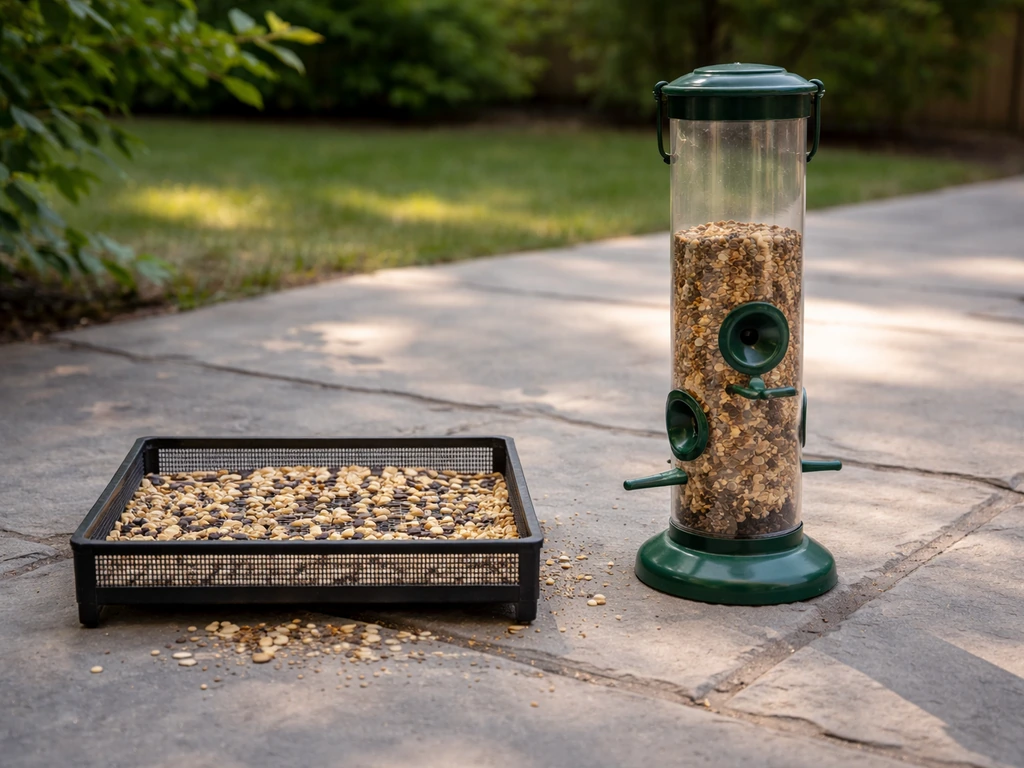
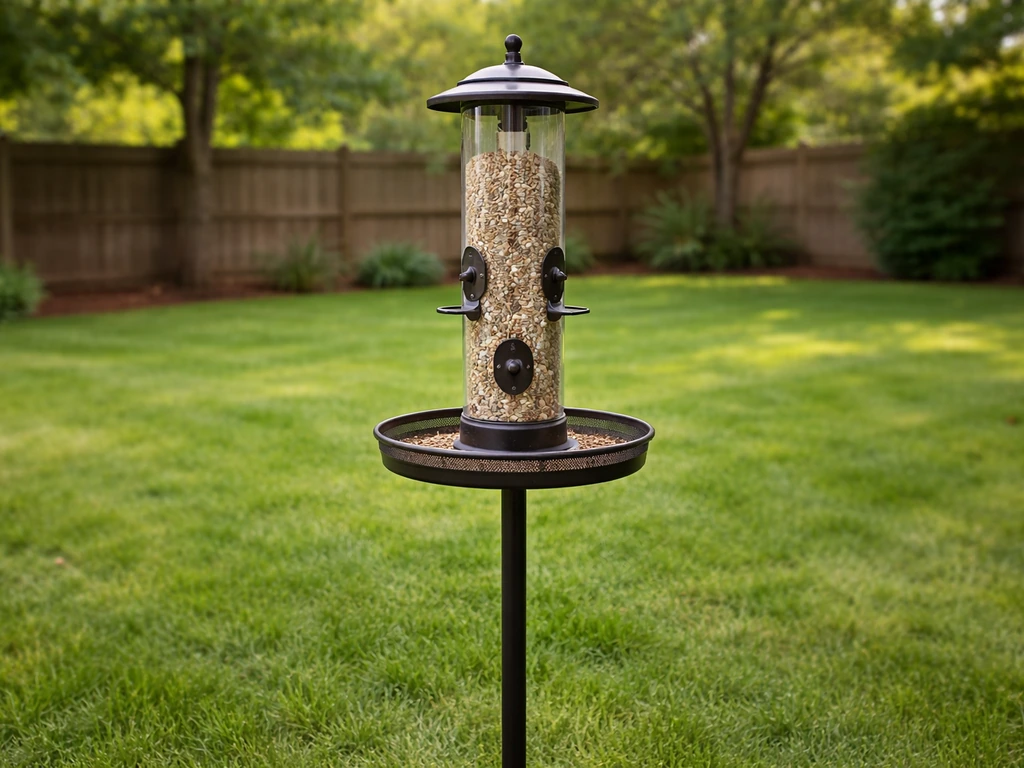
Tray or platform feeders are the highest-risk design because they hold large amounts of exposed seed with no barriers. Open-top hoppers are similar. Tube feeders with small ports are better because birds take individual seeds rather than scattering them wholesale. The best options for rodent prevention are tube feeders with built-in weight-activated closures, where heavier animals trigger a mechanism that blocks access to the seed ports, while lighter birds can feed normally. Some tube feeders also come with metal hoods that make climbing harder. If you're using a tray feeder, adding a seed catcher tray below it (to catch what falls) helps, but you have to empty and clean that tray regularly.
Food type
Whole or shelled seeds that birds eat completely create less waste than mixes with fillers. No-mess or hull-free seed blends are worth considering if rodents are already a problem, since there's less debris accumulating underneath the feeder. Nyjer (thistle) seed is small enough that it doesn't offer much to rats or mice, and it mostly appeals to finches. Suet cakes are less of a rodent attractant than seed but still shouldn't be left out in ways that allow large chunks to fall and sit on the ground.
Placement
This is probably the single most controllable factor. Rats avoid open spaces and prefer cover, so a feeder positioned out in the open on a pole, away from fences, walls, and dense vegetation, is harder for them to reach and less comfortable for them to linger near. Dense ground cover, clutter, and plants growing along fences all provide the shelter and concealment rodents need to feel safe approaching a food source. If your feeder is right next to a fence covered in ivy with a brush pile underneath, you've essentially built them a dining room with a waiting area.
Signs rodents are visiting your feeder
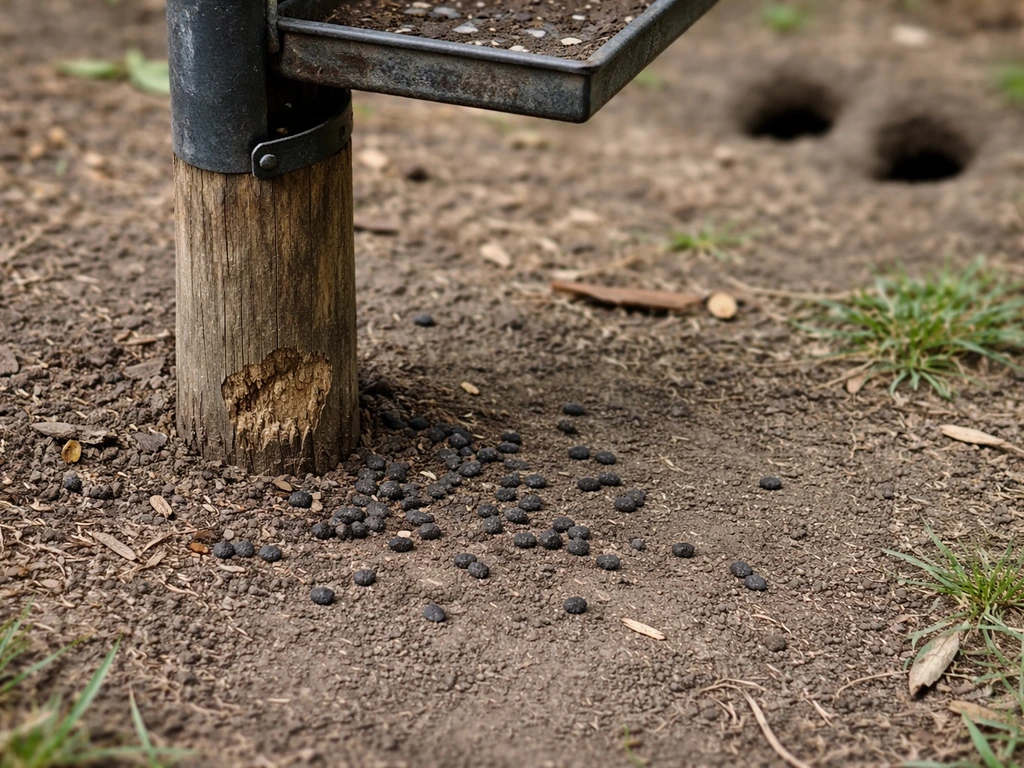
You don't usually see a rat or mouse at first. What you notice is the evidence. Fresh droppings near the base of the feeder pole or under the feeder area are the most obvious sign. Mouse droppings are small, roughly the size of a grain of rice, with pointed ends. Fresh ones are black and shiny; older droppings fade to brown. Rat droppings are larger, about 1.25 to 2.5 cm long, cylindrical and sometimes slightly curved, almost sausage-shaped. If you're not sure what you're looking at, size is the clearest differentiator.
Other signs include fresh gnaw marks on your feeder or pole, burrow openings in the ground nearby, worn runways (little smoothed paths through vegetation or along walls), and greasy rub marks where a rat repeatedly brushes against a surface. If your seed is disappearing faster than your birds could plausibly eat it, especially overnight, that's a strong signal. If you leave food out overnight, rodents have a better chance of being drawn in, so overnight management of accessible food is an important prevention step emphasized by the CDC. Rats are most active after dark, so seed that vanishes at night is a red flag.
If you're not sure whether your feeder is the cause or whether the rodents are coming from somewhere else in the yard, take note of where the signs concentrate. Droppings and activity clustered directly under or around the feeder area point clearly to the feeder as the source. Activity spread across the yard may suggest a broader issue.
What to do right now to prevent rodent visits
These are the changes with the most immediate impact, and most of them cost nothing but a bit of time and attention.
- Move your feeder onto a free-standing pole at least 6 feet high and at least 8 feet away from any fence, tree branch, deck railing, or other structure a rat could use to jump across. The pole location matters: put it out in open ground, not tucked against a wall or under a tree.
- Add a baffle to the pole. A cone-shaped baffle mounted at least 4 feet off the ground below the feeder stops rodents from climbing up the pole. A baffle above the feeder (between the feeder and any hanging point) helps too.
- Stop leaving seed in the feeder overnight. Rats are most active at night, and a stocked feeder after dark is working against you. Either bring the feeder inside at dusk or empty it each evening.
- Fill only what the birds will eat in a day. Don't overfill. Less seed in the feeder means less seed on the ground, less spillage, and less overnight accumulation.
- Sweep up fallen seed and debris under the feeder every day, or as close to it as you can manage. Don't let it sit.
- If possible, mount the feeder over a hard surface like a patio or path, which makes cleanup faster and easier.
- Clear the area around the feeder of dense vegetation, brush piles, and clutter. Remove shelter opportunities within several feet of the feeder.
It's also worth thinking about what other wildlife you might be pulling in alongside birds, because the problem rarely shows up alone. Bird feeders attracting raccoons is a related issue with some of the same solutions: height, baffles, and overnight management. The same placement and baffle strategies that deter rodents tend to reduce raccoon access too.
Feeder and food choices compared
| Feeder or Food Type | Rodent Risk Level | Why | Best Use |
|---|---|---|---|
| Open tray/platform feeder | High | Lots of exposed seed, easy access, lots of spillage | Use with a seed catcher tray and daily cleanup only |
| Hopper feeder | Medium | Holds more seed, some spillage, accessible to climbers | Pair with pole and baffles; avoid overnight filling |
| Tube feeder (basic) | Medium-Low | Less spillage, smaller ports, but still accessible to climbers | Good choice with a proper pole and baffle setup |
| Weight-activated tube feeder | Low | Closes ports when heavier animals land on it | Best option for high-rodent-pressure yards |
| Mixed seed with corn/millet | High | Birds sort and toss fillers, creating ground scatter | Avoid if rodents are already present |
| Black-oil sunflower seed | Medium | Less scatter than mixes, but hulls accumulate | Better choice; rake hulls regularly |
| No-mess/hull-free blends | Low-Medium | Minimal debris, birds eat nearly all of it | Best food choice for reducing spillage |
If you're currently using a mixed seed blend and a tray feeder, switching to a weight-activated tube feeder with hull-free seed is probably the single biggest change you can make. The combination of less spillage and a feeder that physically limits access from heavier animals covers a lot of ground at once.
A regular maintenance routine that keeps rodents away
Rodent prevention at a bird feeder isn't a one-time fix. It's a routine. Here's what a good one looks like in practice.
- Daily: Rake or sweep fallen seed, hulls, and debris from under the feeder. Discard it in a sealed bin or compost. Don't leave piles of spent seed sitting near the feeder area.
- Daily (evening): Remove remaining seed from the feeder or bring the feeder inside. This eliminates overnight access.
- Every one to two weeks: Clean the feeder thoroughly. Scrub it out, then soak it for 10 to 15 minutes in a diluted bleach solution (about 1 part bleach to 9 parts water), rinse well, and let it air dry completely before refilling. A damp feeder breeds mold and makes seed stick, both of which attract rodents and harm birds.
- Weekly in wet weather or heavy use periods: Increase cleaning frequency. Damp seed goes bad fast, and moldy or clumping seed on the ground is even more attractive to rodents than fresh seed.
- Monthly: Check the area around the feeder for signs of burrows, runways, or gnaw marks. Catch activity early before it becomes a bigger problem.
- Seasonally: Reassess your setup. Winter feeders in snow may need extra cleanup because seed gets buried and sits longer. Spring and summer are active breeding seasons for rodents, so the risk of new arrivals goes up.
Seed hulls and droppings accumulating around the feeder base are a particularly overlooked issue. They don't look like much, but they create a concentrated food and scent trail that pulls rodents in. Clearing them regularly is one of the more effective and underrated prevention steps. UNH Cooperative Extension also notes that reducing spilled seed on the ground is a good way to limit the number of rodents foraging under bird feeders [Winter Bird Feeding \[fact sheet\]](https://extension.unh.edu/resource/winter-bird-feeding-fact-sheet). Chipmunks visiting bird feeders are another sign that your ground-level seed management needs attention, since chipmunks and mice often exploit the same spillage and hull accumulation.
When the problem is bigger than feeder tweaks
If you've already got an active infestation, adjusting your feeder isn't going to solve it on its own. At that point, you need to take the bird seed out of the equation entirely for a while. Removing the feeder (or at least all the seed) is often a necessary step to make trapping or other control efforts work, because rodents won't bother with traps if there's still an easy meal available nearby.
For trapping, snap traps are generally considered the most effective and humane option for mice. Rats require larger traps. Place them along walls or fence lines where you've seen activity (rats and mice prefer to travel along edges rather than crossing open ground). Check and reset traps frequently. If you're not seeing results after a week or two, the population may be larger than traps alone can handle.
Rodent droppings and urine carry disease, and that's not a minor footnote. Contact with rodent droppings, urine, or saliva can spread illness. When cleaning up droppings, don't sweep or vacuum them dry. Wear gloves and a mask, dampen the droppings with a disinfectant spray first, then wipe them up and dispose of everything in a sealed bag. That's not overcaution; it's the recommended approach for good reason.
Rodents also don't stay neatly on one property. If you're seeing activity and your neighbors have feeders, overgrown areas, or compost piles nearby, neighborhood-level awareness can help. Sometimes what looks like a feeder problem is actually a broader yard or block problem that needs more coordinated attention. If your own efforts aren't making a dent, calling in a licensed pest control professional is a reasonable next step, especially when the infestation is established or you're finding burrows or indoor entry signs.
It's also worth knowing that bird feeders can attract a wider range of wildlife than just rodents. Whether bird feeders attract bears depends on your region, but in areas where bears are active, feeder management becomes a more serious concern and many of the same principles around overnight removal and scent reduction apply. Similarly, pigeons flocking to bird feeders can compound the problem since pigeon droppings and dropped seed also contribute to the ground-level mess that rodents exploit. Managing one unwanted visitor often means managing the conditions that attract several.
The bottom line: bird feeders do attract mice and rats when the conditions are right, but those conditions are largely within your control. Placement, feeder design, food choice, overnight management, and consistent cleanup cover the vast majority of situations. Start with those steps today, watch what changes over the next week or two, and escalate only if the signs persist. Most people find that even two or three of these changes together make a noticeable difference quickly.
FAQ
Will mice come to a bird feeder if there is no spilled seed on the ground?
It’s less likely, but not impossible. Mice can still access seed if they can climb the feeder or reach it low to the ground. Even with minimal spillage, keep the area below the feeder clean, use a feeder that physically limits access (like a weight-activated tube), and avoid placement close to fences or dense cover where mice feel safe approaching.
How high should a bird feeder be to prevent mice?
Higher helps, but height alone isn’t enough for mice. Use a hanging height that prevents easy ground-level reach, then add barriers like a metal baffle or weight-activated closure if you can. For feeders near walls, fence lines, or tree trunks, prioritize blocking routes of approach because mice can climb along edges and vegetation.
Do squirrel baffles and metal hoods also stop mice?
Often they help, but you still need a mouse-proof design. Mice can exploit gaps, small access points, and low edges. Choose baffles with a smooth, continuous surface and a setup that leaves no crawl path around the barrier, and confirm there is no direct line from nearby cover to the seed ports.
If I clean up spilled seed, how often should I do it?
At least daily during the times rodents are most active, typically overnight. Birds are messy, so hulls and cracked debris build up quickly. A practical approach is to empty and clean the seed catcher (if you use one), and remove debris around the feeder after the evening birds finish feeding.
Are certain bird foods safer for mice than others?
Yes. Whole seeds that birds eat completely tend to create less waste than mixed blends with fillers like cracked corn or millet. If mice are showing up, switch toward hull-free or lower-waste options, and avoid leaving large, exposed chunks or debris under the feeder.
Will suet attract mice the same way as seed?
Suet is generally less attractive than loose seed because it doesn’t create the same constant spill, but it can still contribute if pieces fall and sit on the ground. If you use suet, use a feeder designed to contain it, clean any dropped bits promptly, and don’t place suet in ways that allow easy ground access for mice.
Can mice tell the difference between a tube feeder and a tray feeder?
Mice can use what’s available, but tray and platform feeders are riskier because they leave exposed seed with no barriers. Tube feeders with small ports reduce scattering, and weight-activated closures add a second layer by limiting access when heavier animals trigger the mechanism. If you have mice already, prioritize a feeder that minimizes both spillage and access.
Why do I sometimes see seed disappear even if I don’t see droppings?
Seed vanishing overnight can happen before you spot droppings, because activity may be brief or concentrated in a hidden area. Check for gnaw marks on the feeder, look for rub marks along poles, and search under nearby edges where mice feel protected. Dropping location should point toward the actual feeding area, not just the feeder.
What’s the fastest way to confirm the feeder is the source?
Look for signs concentrated directly under and around the feeder base. If droppings, gnawing, or runways cluster there, the feeder area is likely the cause. If signs are spread throughout the yard, rodents may be using other food sources like pet food, compost, fallen fruit, or dense ground cover.
If I’m in an active mouse problem, should I stop using the bird feeder entirely?
If you’re seeing active signs and seed is clearly being taken, pausing or removing the feeder for a short period can make control efforts work better, because it removes the easy meal. Once activity drops, you can resume with a more rodent-resistant feeder and strict cleanup, but keep monitoring for a week or two after reintroducing feeding.
How should I clean rodent droppings near the feeder to stay safe?
Don’t dry-sweep or vacuum. Dampen droppings first with a disinfectant, then wipe up and dispose of everything in a sealed bag while wearing gloves and a mask. Because droppings can carry pathogens, treat the cleanup area as contaminated even if the amount seems small.
Will feeding birds attract other pests that also bring problems (not just mice)?
Yes, the same cleanup and access control issues can attract multiple animals. Pigeons and raccoons can add to ground-level mess through dropped food and can share similar solutions like better placement, baffles, and overnight management. If you’re seeing more than one type of animal, address the root problem, spillage and safe access routes.
Next Article
Do You Leave Bird Feeders Out All Year? Seasonal Guide
Should you leave bird feeders out all year? Get seasonal tips, safe feeding, and cleaning to prevent disease and pests.