Yes, bird feeders absolutely can attract bears. But the same idea can apply to other wildlife too, including raccoons. This isn't a fringe concern or a worst-case scenario. Wildlife agencies across the country, from Connecticut to Florida to Minnesota, list bird feeders as one of the most common reasons bears start visiting residential yards. If you live in or near bear country and you're running a feeder, there's a real chance you're putting out a welcome mat without meaning to. The good news is that you have a lot of control over how much of a draw your setup creates, and there are practical steps you can take today to reduce that risk significantly.
Do Bird Feeders Attract Bears? Causes and Prevention Steps

Eleanor Hartwick
19 Apr 2026
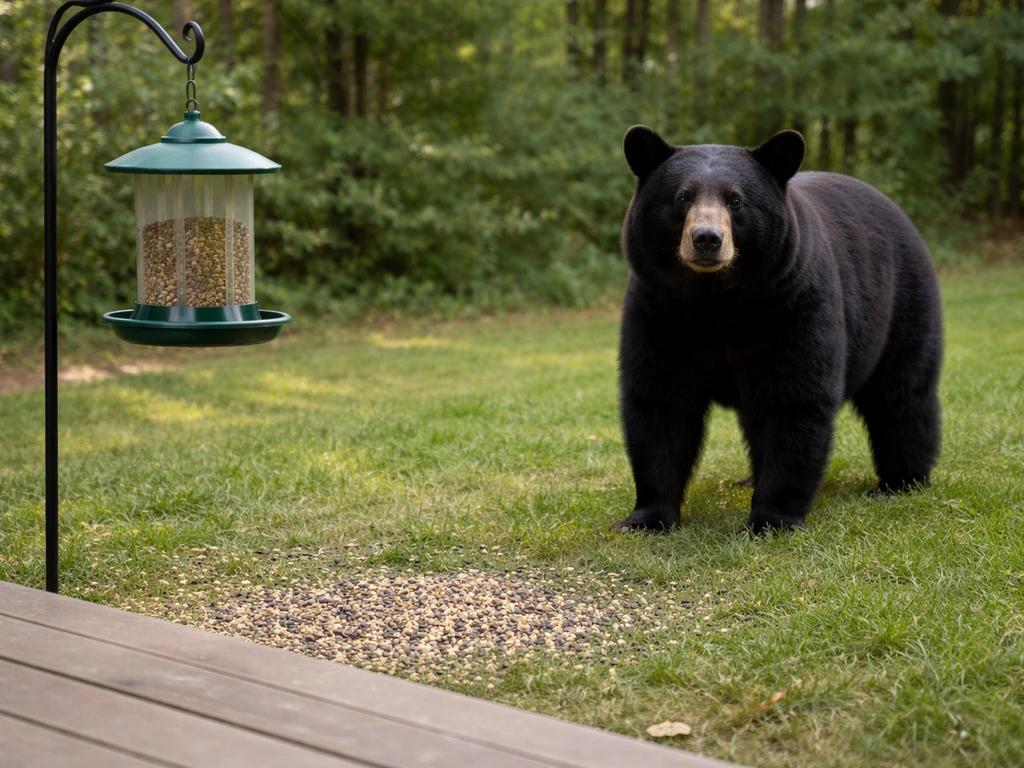
Short answer: yes, bird feeders attract bears
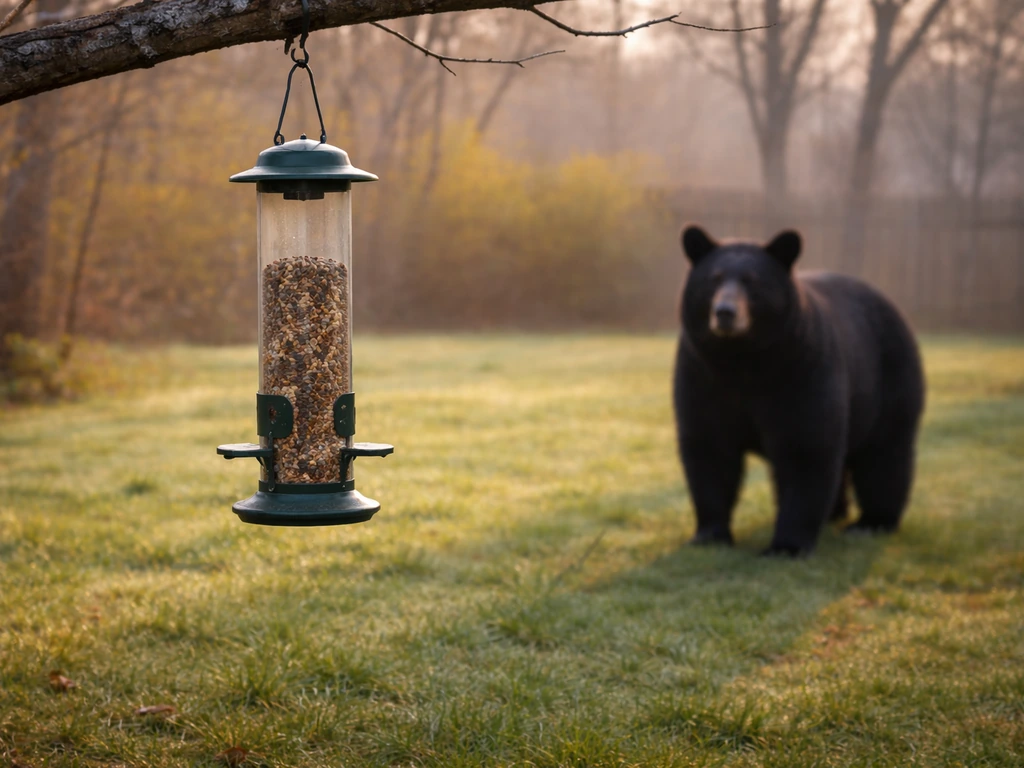
Black bears are strongly attracted to bird feeders throughout their range. Chipmunks are also drawn to bird feeders when they find seed and other dropped foods around the station do bird feeders attract chipmunks. New York State's DEC uses the phrase "very strongly attracted" in its bear guidance, and that language is worth sitting with for a second. It's not that bears occasionally stumble across a feeder.
It's that feeders, especially those stocked with high-calorie seeds like sunflower, suet cakes, or liquid hummingbird nectar, are exactly the kind of easy, energy-dense food source a bear is actively seeking. If a bear finds your feeder once, it will remember that location and return. That's the real problem: one successful visit can create a habit.
This applies to more than just traditional seed feeders. Suet feeders and liquid-filled hummingbird feeders are also flagged by wildlife agencies as bear attractants. So if you've been thinking your hummingbird feeder is off the hook, it isn't. Bears that knock down a hummingbird feeder will return to that spot looking for more.
Why bears show up: what's drawing them in
Bears are driven by calories, and bird feeders are an unusually efficient calorie source. Sunflower seeds, peanuts, suet, and corn-based seed mixes are all high in fat and protein, which is exactly what a bear needs, especially in spring when it's emerging from dormancy with depleted energy reserves, or in late summer and fall when it's entering hyperphagia and trying to pack on weight before winter.
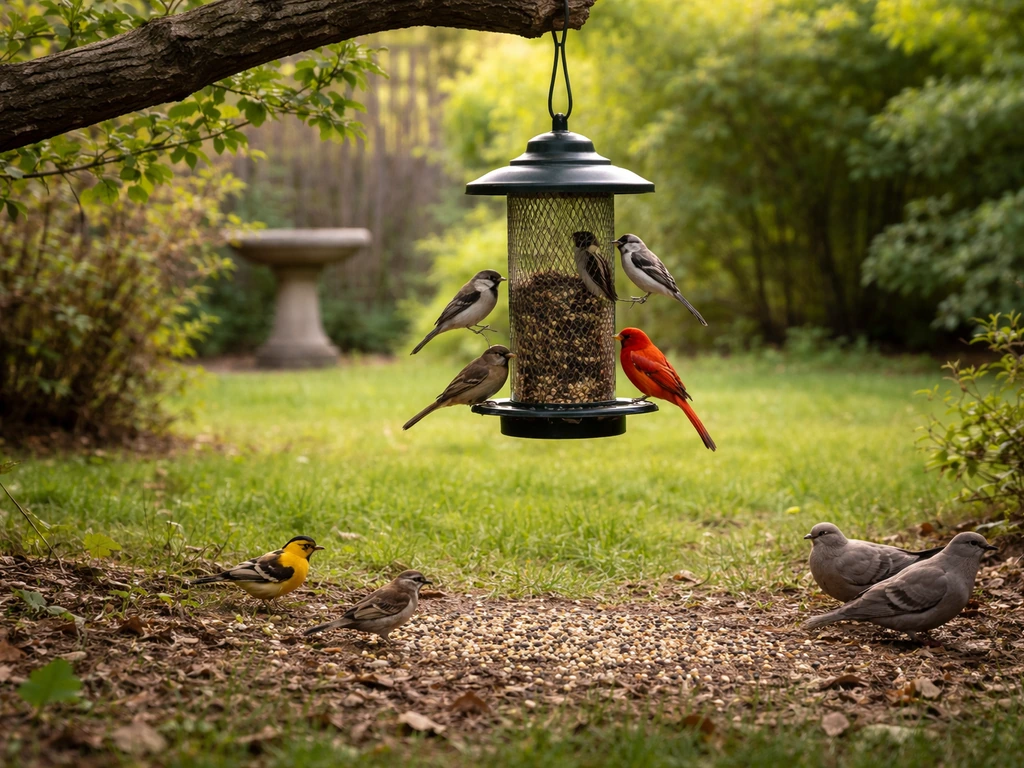
But the feeder itself isn't always the only draw. Spilled seed on the ground is often the first thing that gets a bear's attention. Birds are messy eaters, and certain seed types make this worse. Florida FWC specifically calls out red milo: birds typically toss it out of the feeder, and it accumulates on the ground beneath. That ground-level pile is easy pickings for a bear passing through, and once it finds that food source, it starts associating your yard with a reliable meal. The feeder above it almost becomes secondary. This is the same reason agencies like New Jersey DEP stress cleaning up spilled seeds and shells daily, not weekly, daily.
Scent also plays a role. Suet and pungent seed mixes like those heavy in sunflower seeds carry a strong odor that can carry downwind. Bears have an extraordinary sense of smell, far better than a dog's, so they can detect these food sources from a significant distance. That means even a well-placed feeder can attract a bear that wasn't already in your yard.
It's worth noting that bird feeders rarely operate in isolation. If you also have unsecured garbage cans, outdoor pet food, compost piles, or fruit trees, bears are more likely to investigate your whole property. The feeder may be the first thing they find, but the other attractants keep them coming back. Wildlife officials in New York, New Jersey, and Connecticut all link bird feeders alongside garbage and pet food as the top residential bear attractants.
How to reduce bear visits: placement, feeder choice, and barriers
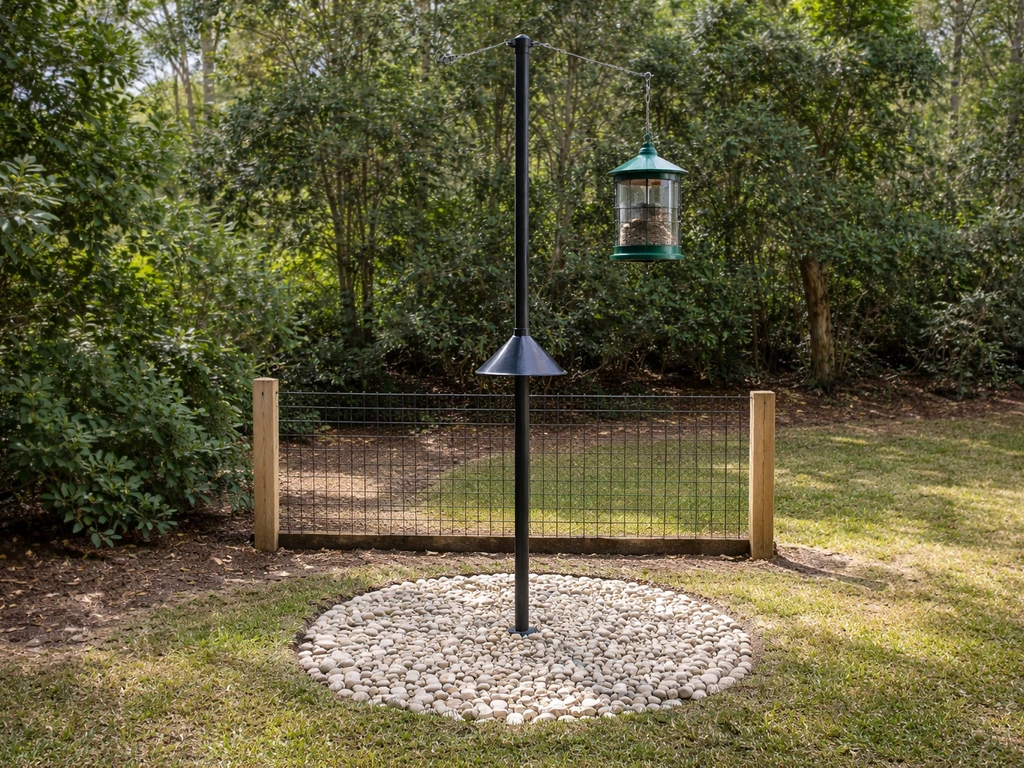
If you want to keep feeding birds while reducing bear risk, placement is the single most critical factor. Florida FWC and other agencies are consistent on the numbers: suspend feeders at least 10 feet off the ground and at least 4 to 10 feet away from any attachment point, tree trunk, branch, or structure. That last part is important because a bear can reach significantly higher when it rears up against a tree or post. A feeder hung on a branch 10 feet up but only 2 feet from the trunk isn't actually out of reach.
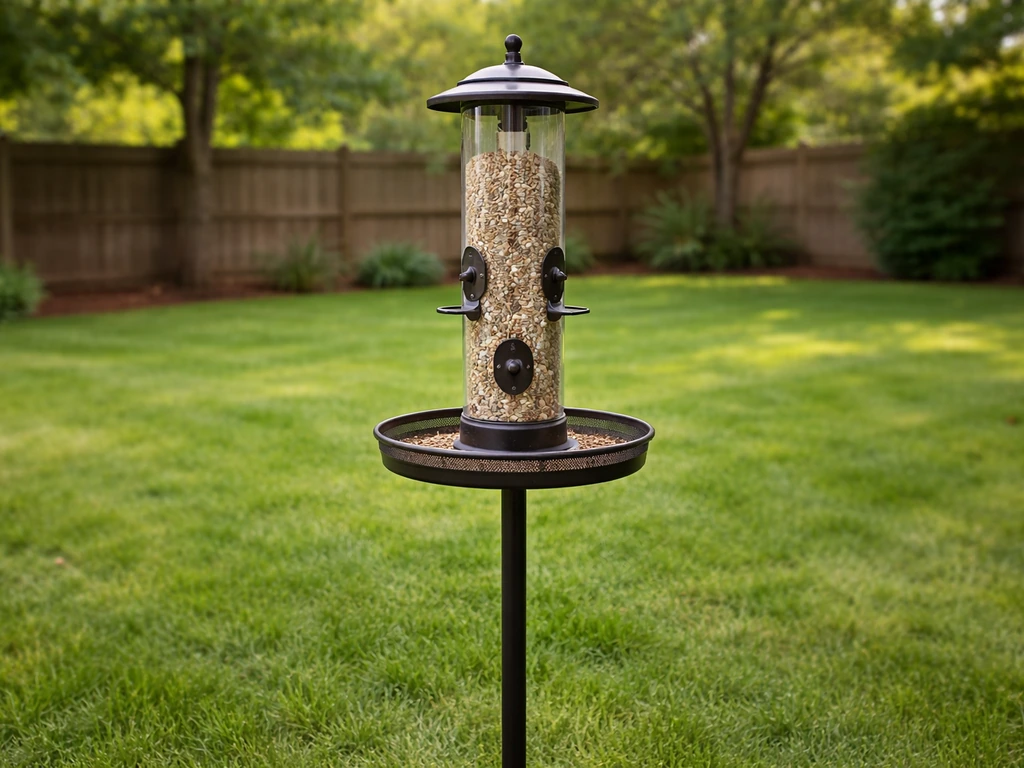
A pole-suspension system is often the most reliable approach. The FWC specifically emphasizes a pole-based design rather than tree hangs, because a freestanding pole with a baffle gives you better control over exactly how far the feeder sits from any climbable surface. Commercially manufactured bear-resistant feeding stations are also worth considering if you're in a high-risk area, though the agency guidance is clear that placement matters more than the hardware itself. A bear-resistant feeder hung wrong is still accessible.
In addition to height and clearance, New Jersey DEP recommends bringing feeders indoors at night. Bears are often most active in the early morning hours and at dusk, so removing the feeder after the birds stop feeding in the evening cuts off one of the higher-risk windows.
Seed choice matters more than most people realize. Using shelled seed (hulled sunflower, for example) reduces the amount of debris that falls and accumulates below the feeder. Avoiding red milo, which birds routinely reject and scatter, significantly cuts down on ground-level attractants. The goal is to minimize what ends up on the ground, because that's where a bear is most likely to first encounter the food.
| Feeder type | Bear attraction level | Notes |
|---|---|---|
| Seed feeder (sunflower, peanut) | High | Strong scent; spilled seed creates ground attractant |
| Suet feeder | High | Pungent smell; easily knocked down and consumed |
| Hummingbird (liquid nectar) | Moderate to high | Bears knock them down and return repeatedly |
| Shelled-seed feeder (hulled seed) | Moderate | Less ground debris; still attractive if accessible |
| Red milo or mixed filler seed | High (ground) | Birds toss it out; accumulates at ground level |
What to do right now if a bear is visiting your feeder
The guidance from wildlife agencies is unusually consistent and unusually direct on this point: take the feeder down immediately. Not after the bear leaves the area, not after you figure out a new placement strategy. Now. The blank" rel="noopener noreferrer">South Carolina Department of Natural Resources puts it plainly: don't wait until the bear has knocked your feeder down. Take it down and leave it down. New York DEC goes further, recommending permanent physical removal of the feeder rather than temporary removal, because bears remember locations and will return even after a long absence.
Removing the feeder is just step one. Once a bear has identified your yard as a food source, you need to eliminate every other attractant at the same time. That means securing your garbage cans with bear-resistant locks or storing them in a garage or shed, bringing in any outdoor pet food, and cleaning up any grills, compost, or fruit that may have fallen.
MassWildlife advises that when bears start using human-associated food sources such as trash, compost, grills, or bird feeders, they may frequent residential areas and may not flee when harassed. MassWildlife warns specifically about habituation: a bear that repeatedly accesses food near people starts to lose its fear of humans, and that's when encounters become genuinely dangerous.
The longer a bear is rewarded by visiting your yard, the harder the problem becomes to reverse.
- Take the feeder down immediately, not temporarily
- Clean up all spilled seed and shells from the ground
- Secure or remove garbage cans, outdoor pet food, and compost
- Bring in anything scented from the yard, including grills and food scraps
- Do not put the feeder back up until the bear has stopped visiting for several weeks
- If the bear returns or shows aggressive behavior, contact your local wildlife agency
On that last point: if damage is occurring or a bear is showing aggressive behavior, New Jersey DEP advises reporting it to local police and Fish and Wildlife via their hotline (1-877-WARN-DEP). Most state wildlife agencies have similar reporting lines, and getting them involved early is far better than waiting for a serious incident. They can also advise on whether hazing or other deterrence methods are appropriate for your specific situation.
Maintenance habits that keep bears from coming back
Once the immediate situation is handled, long-term prevention comes down to habits. The biggest failure point I see with people who have bear problems is that they focus on the feeder itself and ignore what's happening at ground level. A feeder can be perfectly placed at 10 feet, and a bear will still visit regularly if there's a pile of seed shells building up beneath it every week. New Jersey DEP says clean up spilled seeds and shells daily, and that's not overcautious advice. That ground accumulation is a direct invitation.
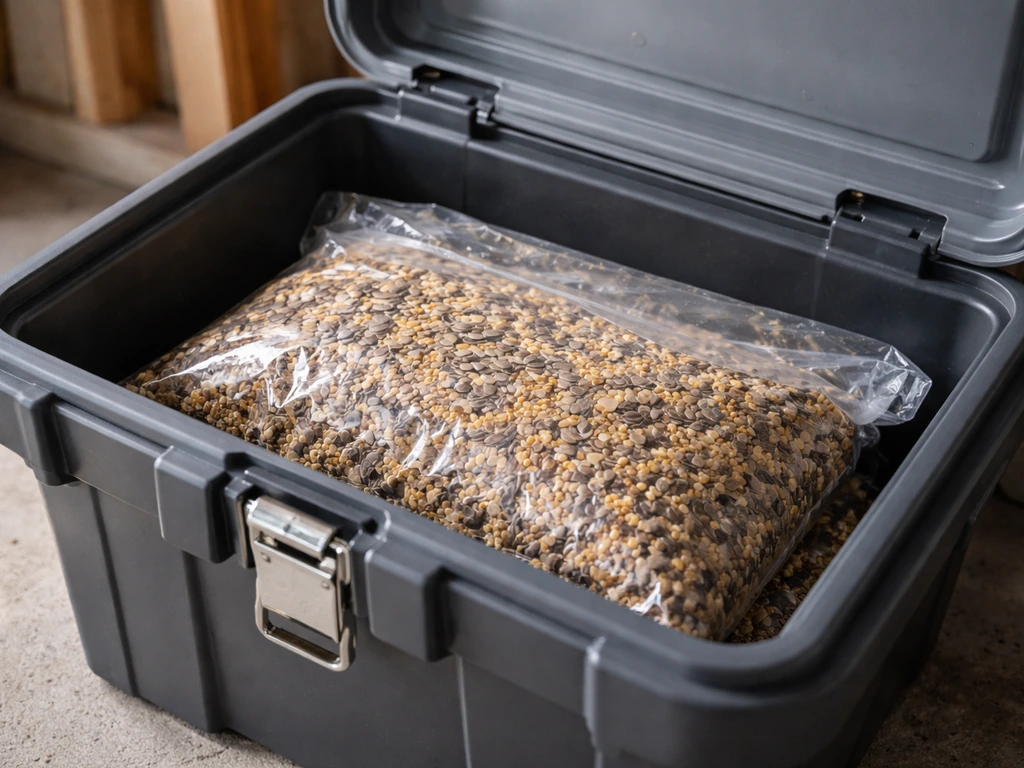
Store your birdseed in a secure location indoors, not in a garage or shed with gaps, and not in a container a bear could break into. A metal trash can with a locking lid works for many people, but store it somewhere the bear can't get to or smell it easily. If you're ordering seed in bulk, be careful about how long it sits in storage outside.
- Sweep up or rake spilled seed and shells every day, not just weekly
- Use hulled (shelled) seed to reduce the amount of debris that falls
- Avoid red milo and cheap filler seeds that birds toss to the ground
- Store all birdseed in a locked, bear-proof container indoors
- Bring feeders inside at night, especially during spring and fall when bears are most active
- Check regularly that your suspension setup still meets the height and clearance requirements
- Remove suet and hummingbird feeders first if bears are a concern in your area
It's also worth thinking about your yard holistically. Bears don't just look for bird feeders. If your neighborhood has a pattern of garbage, fruit trees, pet food, or compost that's accessible, bears will be in the area regardless of what you do with your feeder. Talking to neighbors about shared attractant management can make a real difference in reducing overall bear activity on your street.
When to stop feeding altogether: seasonal timing and knowing when to quit
Seasonal timing is one of the most practical tools you have. Most black bear conflicts with bird feeders happen in spring, when bears emerge from dens hungry and actively searching for food, and again in late summer through fall, when they're in hyperphagia and consuming as many calories as possible before winter. Minnesota DNR is direct about this: remove bird feeders when bears are active, and they put that window at late March through early November. Connecticut DEEP and Audubon have recommended taking feeders down by mid-March, or earlier in mild years.
If you want to keep feeding birds through summer, the guidance from Minnesota DNR is to at minimum blank" rel="noopener noreferrer">remove your seed, suet, and hummingbird feeders every night and bring them back out during daylight hours. That's a workable compromise for people who don't want to stop feeding entirely, though it requires consistency. Missing even a few nights can be enough for a bear to re-establish the habit.
There's a real tension here worth acknowledging. Bird feeding has genuine value: it supports birds through harsh conditions, gives you a window into local wildlife, and connects you to your yard in a way that matters. But it also carries the risk of drawing in other wildlife, and bears are one of the more serious examples of that. So if you are wondering what attracts birds to bird feeders, it often overlaps with what draws bears in.
Do bird feeders attract pigeons? They can, because feeders often provide an easy, reliable food source for many species. Do bird feeders attract chipmunks? Yes, they often will if food is accessible and seed is spilled beneath the feeder.
Other sibling concerns like raccoons and mice are worth thinking through as well, since many of the same feeder habits that attract bears also attract those species. Mice can also be attracted to bird feeders when seed and other food are left accessible on the ground bird feeders attract mice. Raccoons can also be attracted to bird feeders when they find an easy, reliable food source along with spilled seed. Mice can also be drawn to the same food and spilled seed that make bird feeders attractive to other animals raccoons and mice.
With bears specifically though, the stakes around habituation are higher, and the wildlife agencies are unusually unified in their advice: when bear activity starts, feeders need to come down.
The good news is that stopping seasonal feeding is not the end of the world for your local birds. Wild birds are highly adaptable and will find other food sources. You can resume feeding in winter, when bears are typically denning and the risk drops substantially, and you'll likely see many of the same species return. Think of it as a seasonal rhythm rather than an all-or-nothing decision: feed through winter, pull feeders in late March, keep the area clean all season, and restart when conditions allow. That approach lets you enjoy bird feeding while keeping bear habituation risk as low as possible.
FAQ
If I place my feeder high, do bird feeders still attract bears?
Usually, yes. If a bear can reach the feeder area and there is any reliable spill on the ground, it may still visit even if the feeder is elevated. The biggest determinant is what the bear finds consistently, spilled seed and smells, not just whether the feeder is high up.
What should I do the first time I see bear signs near my feeder?
In many bear areas, you should assume that once a bear discovers a location with easy calories, it will return. If you see bear tracks, droppings, or clear feeding damage near the feeder, take the feeder down immediately rather than waiting to confirm whether the bear is still around.
Are there specific bird seeds that are safe around bears?
Switching to cheaper or “less attractive” seed can backfire if it still creates ground attractants. Hulled seed reduces debris, and avoiding red milo helps, but the safest approach is to combine seed choice with daily cleanup, because ground shells and kernels are what often trigger repeat visits.
Do bear-resistant bird feeders prevent bears from coming to the yard?
Not reliably. A “bear-resistant” label is about design, but bears can still access feeders that are too close to climbable surfaces or when there is spilled food below. Hardware helps only when placement, height, and daily cleanup are correct.
How often do I need to clean up spilled seed and shells?
Clean up should be part of your routine while the feeder is out. If you only clean weekly, you allow seed shells and dropped kernels to build a consistent food patch, which is exactly how bears learn that your yard is worth revisiting.
If I remove the feeder, will bears leave if I have other food sources outside?
Yes, and it changes the risk pattern. If you have other attractants like garbage, pet food, compost, or fruit trees, the feeder can become the “first notice” item, but the bear may keep coming for the other foods. You may still see bears even after removing the feeder if other sources remain accessible.
Does refilling the feeder at the same time every day increase bear risk?
Yes, especially when you keep refilling. Bears learn that the “reward” returns at predictable times, such as morning restocks or late-day feeding. If you are in bear-active months, removing feeders nightly and only offering seed during daylight reduces that predictability.
Can bears find my feeder even if it’s not visible from the edge of the yard?
Yes. A bear can smell suet and strong seed mixes from downwind, and it may approach even if the feeder is well hidden. Wind direction and airflow matter, so don’t assume that distance alone makes the setup safe.
If a bear came once and then left, can I put the feeder back out later?
Not always. If you have a feeder that was visited, a long gap is not a guarantee because bears remember locations. The safest recommendation is permanent removal for the season or permanently depending on your local guidance, especially if you saw repeated visits.
Are hummingbird feeders and suet feeders riskier than seed feeders for bears?
It can. Using scented attractants like liquid nectar or heavily scented suet stations can increase odor cues. If you choose to feed during lower-risk periods, follow the same placement and nighttime removal rules, and prioritize minimizing ground spill.
When should I report bear activity to authorities?
Delay increases danger. If a bear is damaging property, lingering, or showing repeated interest in the feeder area, report it to local wildlife or the relevant authorities right away so they can advise on deterrence and next steps. Waiting until there is an aggressive incident can make the situation harder to resolve.
How should I store birdseed so it does not attract bears?
Store seed securely in a way that prevents both access and odors. A garage shed with gaps, a container a bear can tear open, or seed left outside for bulk use can attract bears even when the feeders are removed. Keep seed indoors and locked in a sturdy, bear-proof container.