
Yes, bird feeders can attract cockroaches, but the risk is conditional. Cockroaches are omnivorous scavengers that will eat seeds, grains, oily plant materials, and hulls, all of which accumulate around feeders. The real driver isn't the feeder itself; it's spilled seed on the ground, moisture, and warm temperatures. In cooler climates or during cold months, outdoor cockroach activity drops sharply. In warm, humid regions (or near the foundation of a heated building), a poorly maintained feeder becomes a reliable food source that roaches will learn to revisit. Fix the sanitation and placement issues, and most feeders stop being a meaningful cockroach magnet.
Do Bird Feeders Attract Cockroaches? Risks, Prevention

Eleanor Hartwick
14 Jul 2026
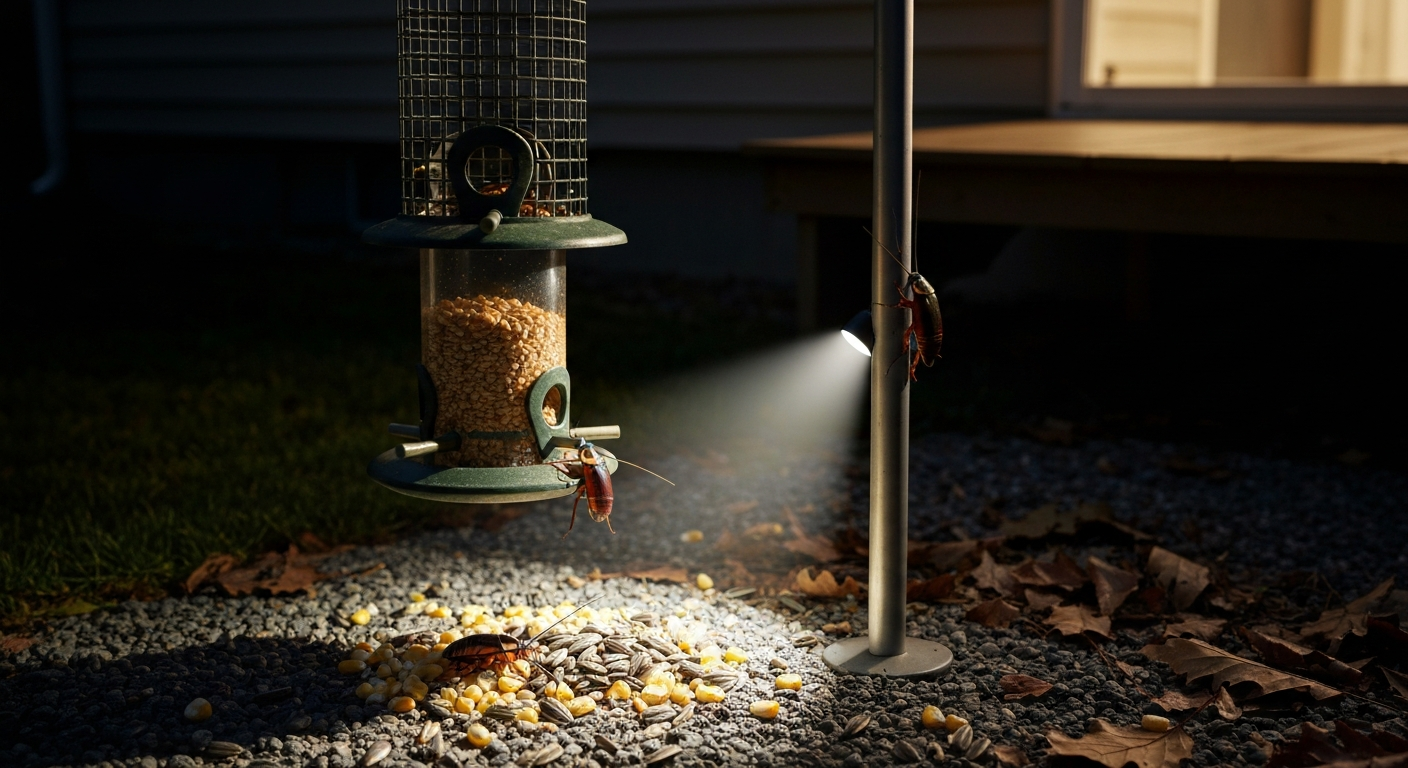
How cockroaches find and exploit bird feeders
Cockroaches locate food through scent and learned spatial memory. Once a foraging individual finds a reliable food patch, it returns to the same location repeatedly, and over time other individuals follow. A feeder that spills seed every day and is never cleaned becomes exactly the kind of stable, high-calorie site that cockroach foraging behavior is built around. Research on German cockroaches (Blattella germanica) confirms this: they use food-history cues and spatial knowledge to keep going back to places that have fed them before. The 2009 study 'Food preference in susceptible or field-collected German cockroaches under laboratory conditions (Pestology, 2009)' found dry pet foods, dry grains and oily seed components (e.g., sunflower, millet, cracked corn, peanuts) were among the most attractive materials. That's worth understanding, because it means a feeder that has already attracted roaches is harder to abandon as a target than one that never had a problem.
Several factors stack together to raise or lower your actual risk:
- Food type: Oily, high-fat seeds (sunflower, peanuts, cracked corn) and suet are more attractive to cockroaches than dry, low-fat seeds. Research specifically identifies roasted peanut and peanut-based materials as highly attractive to German cockroaches.
- Spillage: The more seed lands on the ground, the larger the accessible food supply. Spilled hulls and broken seed pieces are just as attractive as whole seed.
- Moisture: Wet or moldy seed is easier for insects to process and also creates humid microhabitats. Standing water near the feeder compounds the problem.
- Shelter and nearby structures: Cockroaches, especially Periplaneta americana (American cockroach), are peridomestic — they live in foundations, basements, and sewer lines and move into yards. A feeder close to the house foundation, a deck, or a compost pile gives them a very short commute.
- Climate and season: Periplaneta spp. are most active between roughly 68–85°F (20–29°C). Activity, feeding, and reproduction all increase with temperature. In temperate climates, outdoor cockroach risk is largely a warm-season concern; cold winters suppress populations significantly.
- Time of night: Cockroaches are nocturnal. If you're only watching the feeder during the day, you may miss activity entirely.
Which feeder styles and foods are most (and least) risky
Not all feeders create equal risk. If you're considering a window-mounted feeder, see do window bird feeders work for specific pros and cons. The key variable is how much food ends up on the ground and how accessible the feeder itself is to ground-level insects. I hear from a lot of readers who run multiple feeder types in the same yard and find that cockroach (and rodent) problems cluster around specific feeder styles, not the whole setup.
| Feeder/Food Type | Cockroach Risk Level | Why |
|---|---|---|
| Platform / open tray feeder | High | Seed sits exposed, spillage is constant, no barrier to ground insects |
| Ground feeder / scatter feeding | Very high | Food directly on soil, no elevation, maximum accessibility |
| Hopper feeder | Moderate | Some seed exposure, but raised; risk depends on spill rate and location |
| Tube feeder (small ports) | Lower | Less spillage, seed more contained; ports harder for insects to access |
| Suet cage | Moderate–high | Suet is fatty and attractive; small pieces fall and accumulate below |
| Nyjer (thistle) sock/tube | Low | Fine seed, less oily, smaller quantities lost per feeding |
| Peanut / peanut butter feeder | High | Peanuts and peanut butter are among the most cockroach-attractive foods tested in lab studies |
| Cracked corn or mixed seed with corn | High | Cracked corn is a starchy, easy-to-consume food; highly attractive to multiple cockroach species |
| Whole sunflower seed | Moderate | Oily but whole seeds harder to process; hulls on the ground raise risk over time |
| Fruit feeder (oranges, berries) | Moderate–high (warm months) | Fruit ferments quickly in heat and produces strong attractive odors for scavengers |
| Nectar / hummingbird feeder | Low–moderate | Sugar water itself is less cockroach-attractive, but drips and spills on surfaces can draw them |
The practical takeaway: if cockroaches are a concern in your area, prioritize tube feeders for seed, be especially careful with peanut and cracked-corn products, and avoid scatter feeding or open trays anywhere near the house foundation or other shelter points. Field trials report that roasted peanuts and peanut butter are highly attractive to German cockroaches, showing high‑fat/high‑oil seed items in mixes can be especially attractive (Attractiveness of Certain Popular Food Products to the German Cockroach (Egypt. Acad. J. Biol. Sci., 2017)). Suet is tricky because birds love it but the crumbles that fall accumulate fast, a seed-catcher tray underneath helps significantly.
Signs of cockroach activity around your feeder
Most people don't realize they have a cockroach problem near their feeder until it's been going on for a while, because cockroaches do the bulk of their foraging after dark. Here's what to watch for, both at the feeder and in nearby structures.
- Nighttime sightings: Go out with a flashlight an hour or two after dark. If cockroaches are visiting, you'll often see them on or under the feeder, around the pole base, and in the leaf litter nearby.
- Droppings: Small, dark, pepper-like droppings on feeder surfaces, nearby fencing, deck boards, or on the ground beneath the feeder. American cockroach droppings are slightly larger with ridged ends; German cockroach frass is finer.
- Egg cases (oothecae): Brown, leathery, capsule-shaped cases roughly 8–10 mm long for American cockroaches, smaller for German cockroaches. Finding these near the feeder base, under deck boards, or in dense ground cover is a strong sign of local breeding activity.
- Smear marks: Dark, greasy streaks along surfaces cockroaches travel repeatedly — the edge of a feeder pole, a deck railing, a fence board near the feeder. These come from oils on their bodies.
- Musty odor: A heavy cockroach infestation produces a distinctive musty, slightly oily smell. Outdoors this is subtle, but near an enclosed space (a deck underbelly or storage shed) it becomes noticeable.
- Seed disappearing faster than birds can account for: If you're losing seed overnight with no obvious bird activity, rodents or cockroaches may be feeding. Check with a flashlight to distinguish between the two.
Prevention checklist: what to do and how often
Prevention is far easier than remediation. The core principle here comes straight from Integrated Pest Management (IPM) guidance: eliminate accessible food, water, and shelter first, before any chemical approach is considered. For bird feeders, that translates into a maintenance routine. Here's how I'd prioritize it.
Daily (takes under 5 minutes)
- Sweep or rake spilled seed, hulls, and debris from directly under the feeder.
- Remove any uneaten fruit, wet suet pieces, or obviously wet/clumped seed before nightfall.
- Empty and dry any seed-catcher tray that has collected debris or rain water.
Weekly
- Wipe down feeder surfaces, perches, and ports with a damp cloth to remove seed oil buildup and droppings.
- Check the ground area in a roughly 3–4 foot radius around the feeder and clear any seed accumulation.
- Inspect suet cages and peanut feeders specifically — clean away crumbled material from the feeder exterior.
- Check seed storage containers for moisture or condensation and reseal tightly.
Monthly (or every 2 weeks in hot, humid conditions)
- Full disinfection wash: scrub feeder with hot soapy water, then soak or wipe down with a dilute bleach solution (1 part bleach to 9–10 parts water), rinse thoroughly, and air-dry completely before refilling.
- Inspect feeder pole and baffle for debris accumulation, insect trails, or damage.
- Rotate feeder location slightly if seed is building up in one spot of ground cover that's hard to clear.
- Check stored seed for mold, clumping, or insect activity and discard any compromised batches.
Seasonal
- At the start of warm season: do a full deep-clean of all feeders before ramping up filling; inspect the area around the feeder for overwintered egg cases.
- In summer: increase cleaning frequency; switch from platform to tube feeders if cockroaches are a recurring issue; consider temporarily stopping suet feeding in peak heat.
- At the end of warm season: thoroughly clean and dry feeders before storing; discard any remaining bulk seed that has been open for more than 2–3 months.
- In winter (temperate climates): cockroach outdoor risk drops significantly; maintain basic spillage cleanup but full disinfection can move to a monthly schedule.
Feeder placement and design changes that cut risk
Where and how you hang or mount a feeder matters almost as much as how you clean it. A few practical design and placement changes can make a meaningful difference, especially if you're in a warm climate or near the house.
- Keep feeders at least 10 feet from the house foundation, deck, and any attached structures. Cockroaches that find food near the foundation have a very easy path indoors. Distance creates a buffer.
- Mount on a smooth metal pole rather than a wooden post. Cockroaches can climb wood grain easily; smooth metal is harder to ascend, especially if the pole is clean.
- Install a baffle below the feeder (and above if placed near tree branches). A wide, dome-shaped or cylindrical baffle on the pole blocks climbing insects and rodents. Baffles also help with squirrels, which is a bonus.
- Add a seed-catcher tray directly under the feeder. These wide trays intercept falling seed and hulls before they hit the ground. They need to be emptied and cleaned daily or they become their own problem, but they dramatically cut ground-level food accumulation.
- Choose enclosed or tube-style feeders for your primary seed offering. The smaller the opening and the more enclosed the seed reservoir, the less seed is lost per feeding session.
- Avoid placing feeders over bare soil or dense, low ground cover where debris is hard to see and clear. A paved or gravel surface underneath makes daily sweep-up much easier.
- Don't place feeders over or near standing water sources, rain-collecting pots, or clogged gutters that drip. Cockroaches need moisture as much as food.
Cleaning, seed storage, and moisture control
Cleaning the feeder
The standard Cornell Lab-recommended approach works well: wash with hot water and dish soap first to remove grease and organic material, then apply a dilute bleach solution (1:9 bleach to water) to disinfect. Let it soak briefly, rinse thoroughly several times so no bleach residue remains, and air-dry completely before refilling. The drying step is often skipped in a hurry, but it matters, a damp feeder creates exactly the moist microclimate that encourages insect and microbial activity. In warm weather I'll leave a just-cleaned feeder in full sun for an hour before refilling it.
Storing seed properly
Poor seed storage is an underappreciated part of the cockroach (and rodent) attraction problem. Seed stored in open bags or loosely closed buckets is accessible, and elevated moisture content accelerates mold growth and insect infestation. Use rigid, airtight containers, metal or thick food-grade plastic with a secure lid. Keep seed in a cool, dry location: an attached garage with temperature swings is less ideal than a climate-controlled indoor space, but either works if the container is truly sealed. Buy seed in quantities you'll use within 4–6 weeks during active feeding season, especially for oily seeds like sunflower and peanuts that go rancid faster than plain millet. If you notice any clumping, unusual smell, or visible mold, discard the batch entirely rather than feeding it out.
Dealing with wet seed
After rain, seed inside feeders with poor drainage can become wet and clumped. If you catch it quickly, spread it on a tray in full sun to dry and reuse it the same day. If it's been sitting wet for more than a few hours in warm weather, discard it, wet, warm seed molds within 24–48 hours and the fermented, musty material is more attractive to insects and potentially harmful to birds. Open feeders (platforms and hoppers) are more vulnerable to rain than tube feeders, which is another argument for enclosed designs in wet climates.
What to do if cockroaches have already appeared
If you've already spotted cockroaches at or around your feeder, start with the least invasive actions and work outward. Using pesticide sprays near bird feeders is genuinely risky, many insecticide formulations are toxic to birds and other wildlife, and treated surfaces near food sources are a direct exposure hazard. Non-toxic tactics should always come first.
- Remove the food source immediately. Take the feeder down for at least 3–7 days. Clear all spilled seed, hulls, and organic debris from the area. This breaks the reinforced foraging behavior — roaches that keep returning to a site that no longer yields food will shift their range.
- Deep-clean the feeder and surroundings. Full wash-and-bleach the feeder as described above. Sweep and dispose of all ground debris in a sealed bag. If there's leaf litter or dense mulch directly under the feeder, rake it back at least 2–3 feet.
- Use a vacuum to remove roaches and egg cases in accessible areas. If cockroaches are clustering under a nearby deck board, storage box, or in a crack in a nearby structure, a strong vacuum removes them and their egg cases without chemicals. Seal and discard the vacuum bag outside immediately.
- Set non-toxic cockroach traps (sticky monitors) around the perimeter of the feeder area and near any cracks in nearby structures. These tell you whether activity is decreasing over the days after cleanup. Place them away from areas birds can access — under a deck edge or along a wall, not on open ground.
- Apply exclusion measures. Seal cracks and gaps in foundations, deck boards, and nearby structures that cockroaches may be using as harborage. Steel wool or foam backer rod stuffed into gaps, followed by exterior caulk, works for most small openings.
- If traps show continued heavy activity after 1–2 weeks of sanitation and exclusion, consider gel bait (not spray). Gel-based cockroach baits (applied in small pea-sized amounts inside cracks and voids, not on open surfaces) are far more targeted than sprays and are not accessible to birds when placed correctly in enclosed harborage sites. Keep bait placements indoors or deep inside wall voids and sealed void spaces, never on feeder surfaces or open ground.
- When to call a pest professional: if cockroaches are appearing inside your home, if you're finding large numbers of egg cases suggesting established breeding, or if activity doesn't decline significantly within 2–3 weeks of thorough sanitation and exclusion, it's time to bring in a licensed pest management professional. An outdoor cockroach problem at the feeder can indicate an established indoor colony that's using the feeder as a supplement — and that's a different problem than you can solve with feeder management alone.
The bigger pest picture around feeders
Cockroaches are one piece of a wider feeder pest story. Spilled seed and moisture also attract ants, rodents, and in warm regions, the animals that eat rodents. The related question do bird feeders attract coyotes is worth considering too, since coyotes and other predators can be attracted to yards that sustain rodents and small prey around feeders. If you're managing a feeder that's attracting cockroaches, you're likely creating conditions that increase rodent activity too, and rodent-heavy yards in warm climates can attract snakes and occasionally coyotes, both of which are topics that come up regularly from readers in the Southeast and Southwest. The same core practices that reduce cockroach risk (tight seed storage, daily cleanup, elevated feeders with baffles) reduce pressure from most of these unwanted visitors at once. It's genuinely a unified maintenance problem rather than a series of separate pest issues.
Bugs more broadly, including ants and beetles, are also worth considering alongside cockroaches when you're deciding on feeder style, placement, and cleaning frequency. The interactions between all these scavengers and your feeder setup are worth thinking through together rather than reacting to each pest in isolation. For a concise overview answering the question do bird feeders attract bugs and how to prevent it, see our guide on that topic.
FAQ
Short answer: do bird feeders (and bird food) attract cockroaches?
Yes — bird feeders and spilled bird food can attract cockroaches. Cockroaches are omnivorous scavengers that readily consume seeds, grains, oily materials and processed foods, so accessible seed, hulls and pet-food‑type mixes around feeders create an attractive food resource, especially where moisture and warm temperatures are present.
Under what conditions is the cockroach risk highest or lowest around backyard feeders?
Risk increases when: (1) seed or hulls accumulate on the ground (platforms, trays, and spill-prone feeders), (2) seed contains high‑oil/high‑fat items (peanuts, sunflower hearts, suet crumbs, pet-food additives), (3) feeders or ground are moist or shaded (humidity), (4) local climate is warm/humid (summer or subtropical/tropical areas), (5) feeders are placed next to structures/foundation entry points or vegetation providing shelter, and (6) food is available consistently (learned foraging by cockroaches). Risk decreases when spilled food is removed, seed is kept dry and stored sealed, feeders limit spillage (tube/hopper with small ports), placement is away from foundation/vegetation, and in cold seasons/regions where outdoor cockroach survival is low.
Which feeder styles and food types are most and least attractive to cockroaches?
Most attractive: open tray/platform feeders, ground feeders, and feeders that produce lots of fallen seed or hulls; seed mixes with peanuts, cracked corn, sunflower hearts, or any high‑oil/high‑fat components; mixes with processed pet-food ingredients. Least attractive: enclosed tube feeders with small ports and seed tubes that limit loose seed, hopper feeders with integrated seed catchers, and offering seed types with low oil content (thistle/niger for finches, strictly hulled millet) while minimizing cracked corn and peanuts.
What signs indicate cockroach activity near feeders?
Live roaches (nocturnal for many species), shed skins, droppings (pepper‑like specks or darker cigar-shaped pellets depending on species), greasy smear marks on poles/boards, circular feeding marks on seed, nocturnal feeding evidence (seed collapse overnight), and odors in heavy infestations. Increased rodent activity can coincide but droppings and live sightings distinguish cockroaches.
How does climate and season change the risk?
Warm temperatures and humidity increase cockroach activity, feeding and reproduction—so risk is highest in warm months and in subtropical/tropical climates. In cold temperate climates outdoor populations decline or die back in sustained low temperatures; however, peridomestic species may move indoors or find refugia near foundations and heated structures year‑round.
Practical, prioritized prevention checklist (what to do first — weekly to seasonal intervals)?
1) Sanitation (weekly): sweep up spilled seed and hulls around feeders at least once per week; increase to 2–3×/week in hot/humid or heavy‑use areas. 2) Feeder cleaning (biweekly to monthly): wash feeders with hot soapy water and disinfect monthly; in hot weather or heavy use clean every 1–2 weeks (Cornell/Project FeederWatch guidance). 3) Seed storage (always): store seed in airtight, rodent‑proof containers in a dry place; avoid long exposure to moisture. 4) Feeder design & placement (one‑time/setup): prefer closed tube/hopper feeders, use seed‑catch trays to reduce spillage, mount feeders on smooth metal poles and use baffles; place feeders at least several feet from house foundations and dense vegetation. 5) Remove standing water (ongoing): eliminate water sources or keep them clean and moving. 6) Rotate/relocate (seasonal): if persistent activity develops, relocate feeders temporarily and reassess. 7) Inspect (monthly): look for droppings, smear marks, and sheltering spots near foundations.
Next Articles
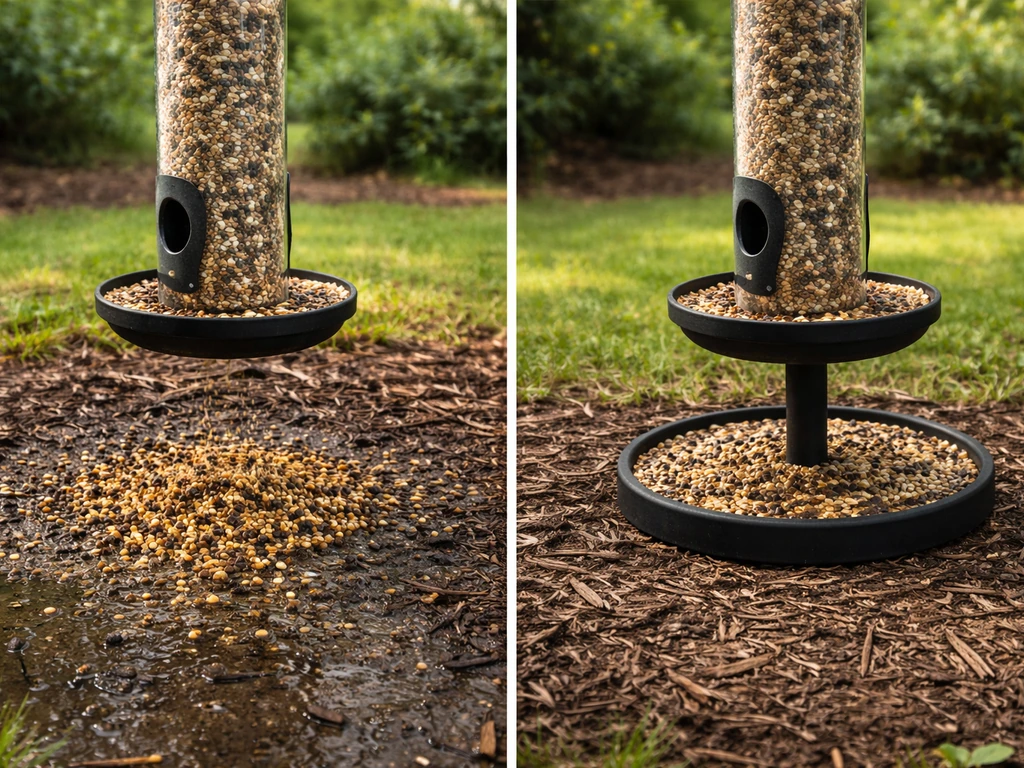
Do Bird Feeders Attract Bugs? Fixes, Types, and Real Results
See why feeders attract or reduce bugs and get fixes on placement, food choice, spill control, and cleaning.
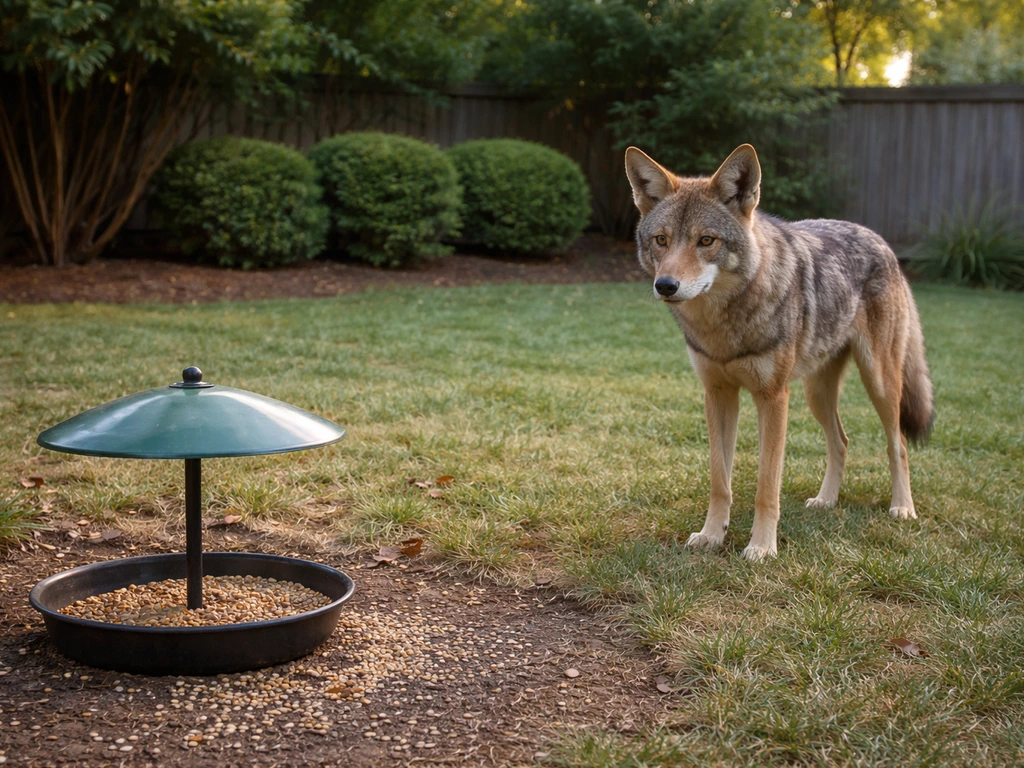
Do Bird Feeders Attract Coyotes? How to Reduce Risk
Do bird feeders attract coyotes? Learn why, how to reduce risk, and where to place feeders to deter coyotes and rodents.
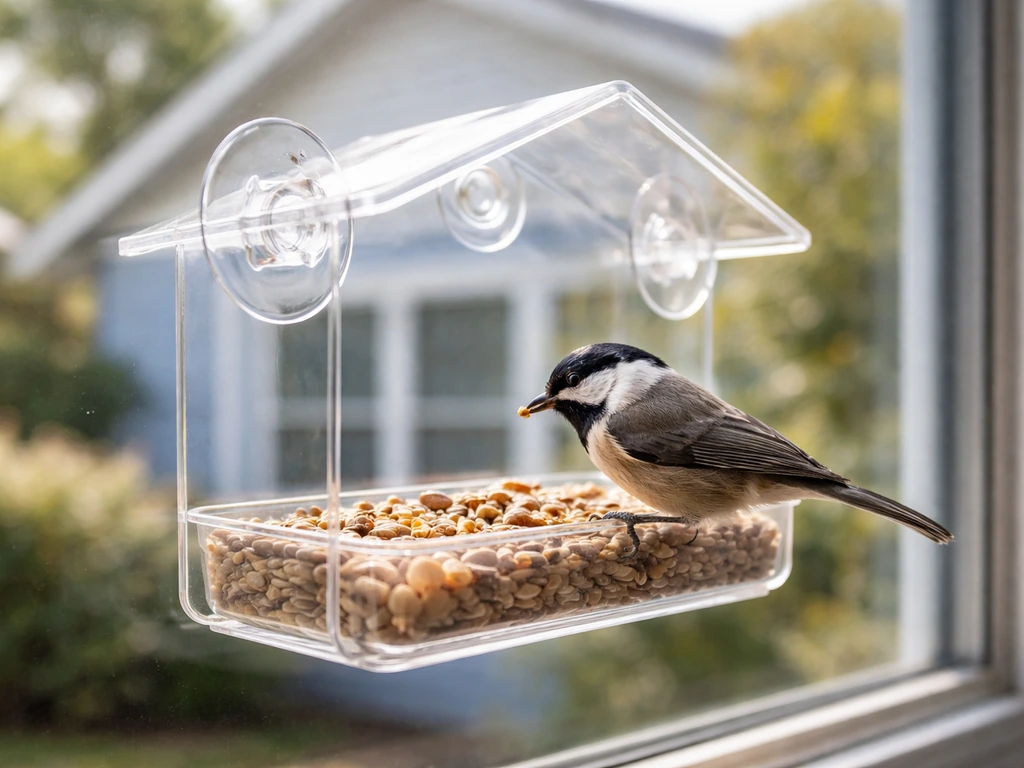
Do Window Bird Feeders Work? Setup and Troubleshooting
Learn if window bird feeders work, best setup and placement, feeder choice, and quick troubleshooting for birds and safe