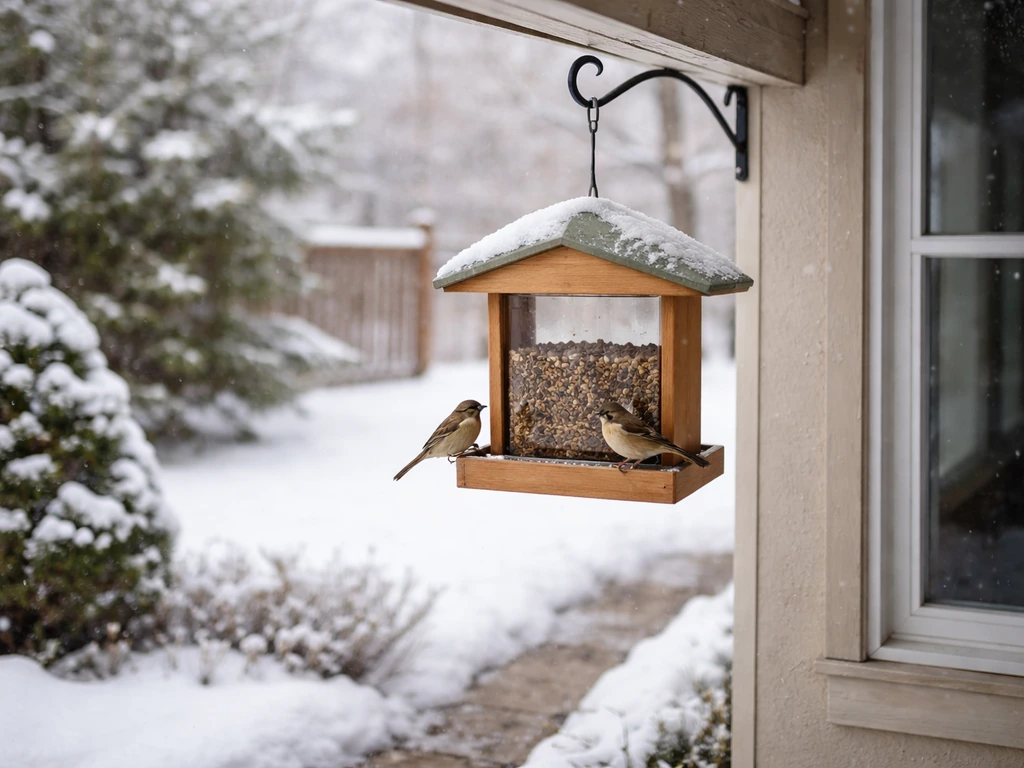
Bird feeders do not attract snakes directly. Snakes are not coming to your yard because they smell sunflower seeds or suet. What they are actually responding to is prey, and the real story is that bird feeders can create conditions where rodents and insects thrive, and those animals are exactly what snakes are hunting. If you have snakes showing up around your feeder, the feeder is not the draw. The food chain underneath it is.
Do Bird Feeders Attract Snakes? Reduce Risk Safely

Eleanor Hartwick
13 Apr 2026
The real reason snakes show up near feeders
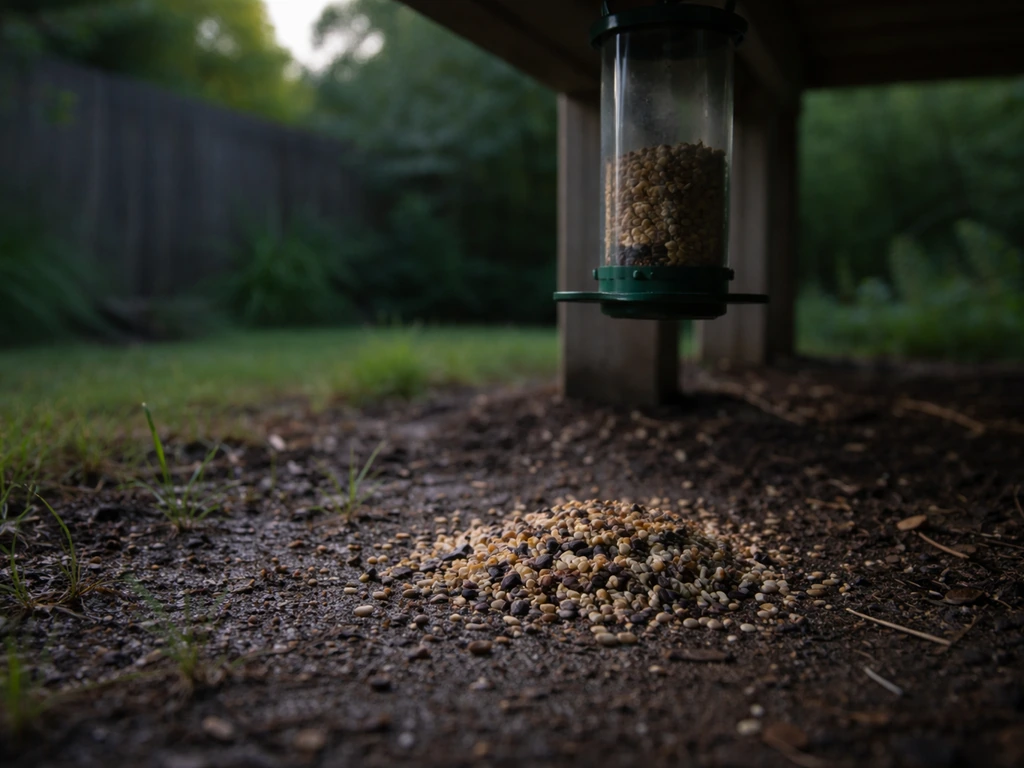
Snakes are predators, and predators follow prey. It is that simple. When bird seed accumulates on the ground, it draws mice, voles, chipmunks, and squirrels. MassWildlife notes that small mammals like mice, rats, chipmunks, and squirrels are attracted to bird-feeding stations in addition to birds blank" rel="noopener noreferrer">mice, voles, chipmunks, and squirrels. MassWildlife explicitly flags this chain: blank" rel="noopener noreferrer">fallen seed attracts small mammals, and predators that feed on small mammals follow. Florida Fish and Wildlife put it even more directly, noting that seed spillage attracts rodents which, in turn, bring larger predators into closer proximity. That is the mechanism. You are not calling in snakes with your birdseed. You are building a buffet for the animals snakes eat, and the snakes are just following the food.
Insects are part of this too. Spilled seed ferments, rots, and creates a humid, food-rich microclimate at the base of a feeder. That environment draws insects and invertebrates, which are prey for smaller snake species. If you have ever wondered whether bird feeders attract bugs, the short answer is yes, and that insect activity can be its own pull for reptiles looking for an easy meal.
A Kansas State University wildlife expert described well-stocked feeders creating what amounts to a condensed hunting ground for predators. The feeder concentrates prey activity in a small area, which makes it an extremely efficient hunting spot for a snake compared to wandering a field hoping to cross paths with a mouse.
Feeder setups that make snake problems worse
Not all feeders carry the same risk. A few specific situations consistently produce the worst outcomes.
Ground feeding and heavy spillage
Ground feeding is the highest-risk scenario. If you scatter seed on the ground or use a flat tray at ground level, you are putting rodent food directly where rodents, and therefore snakes, will operate. Even elevated feeders become a problem if seed drops and sits. USDA APHIS is clear that bird food should never be allowed to accumulate on the ground, framing it as a general wildlife-draw concern. Wildlife Illinois adds that ground accumulation specifically attracts mice, raccoons, and opossums, all of which can bring snake activity in their wake.
Low-mounted feeders near structures or dense cover
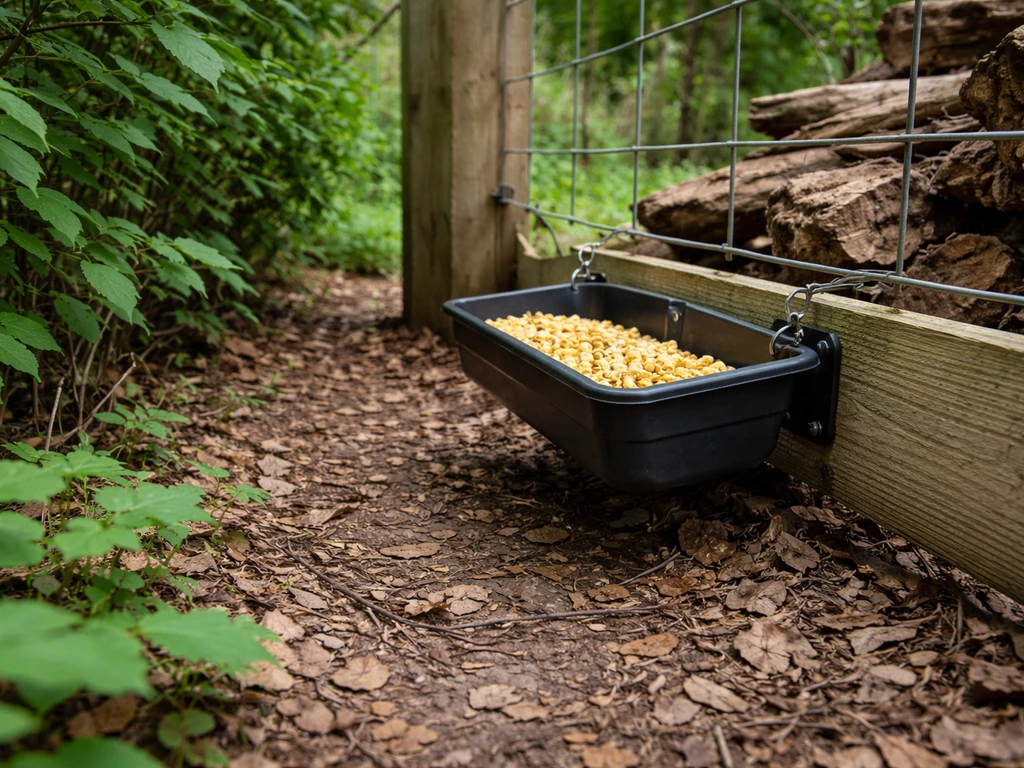
A feeder hung low, close to a fence, woodpile, or thick shrub is essentially attached to a snake highway. Snakes use cover to travel and hunt. Department of Defense preventive guidance specifically recommends moving bird feeders away from buildings and structures because the rodents attracted to uneaten food are snake prey. If your feeder is sitting two feet off the ground next to a brush pile, you have created perfect conditions: rodent food, rodent shelter, and easy snake access all in one spot.
Seed mixes with high waste content
Cheap mixed seed often contains red milo and other filler seeds that most songbirds reject. Birds pick through the mix, tossing the unwanted seeds to the ground where they pile up. Florida Fish and Wildlife specifically calls out red milo as a seed birds toss away, recommending shelled seed instead to reduce ground accumulation. The irony is that buying the cheaper bag often creates a bigger wildlife problem than using a cleaner, more targeted seed.
Step-by-step changes you can make today
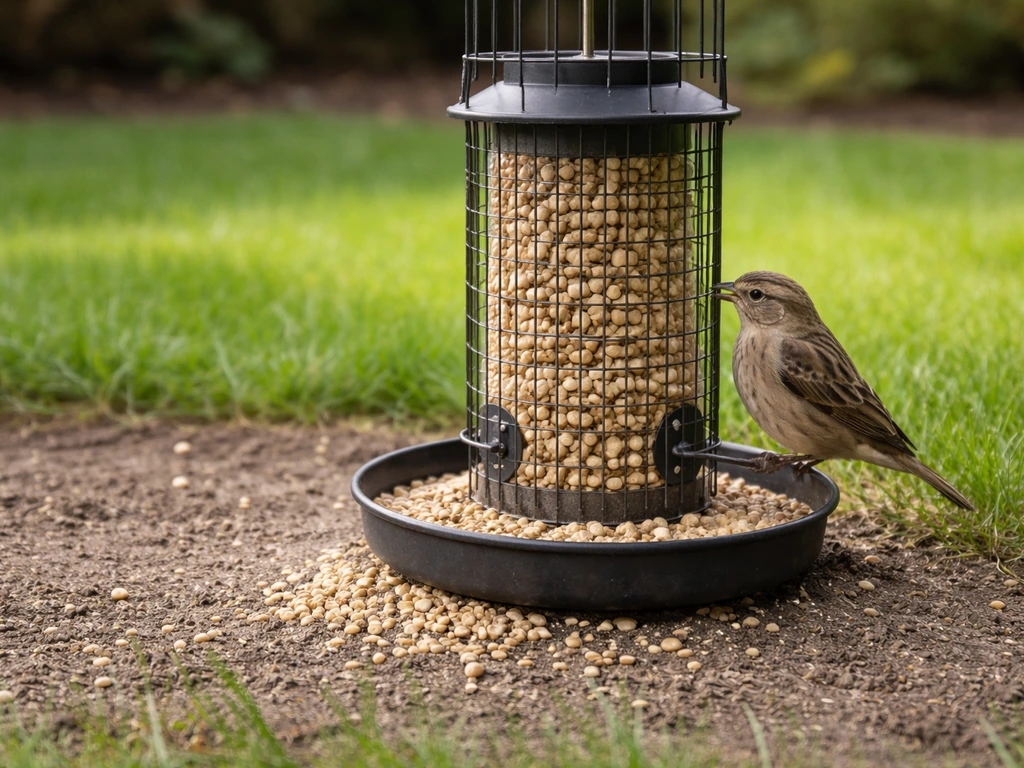
- Switch to shelled seed or no-mess blends. Shelled sunflower hearts, shelled peanuts, and no-mess mixes produce little to no ground waste because there are no hulls to accumulate. This is the single highest-impact change you can make.
- Add a wide tray or seed catcher under the feeder. WildCare recommends using a large tray under the feeder to catch hulls and seed before they hit the ground. Empty and clean that tray at least every few days, not just when it looks full.
- Sweep under the feeder daily or every other day. The National Wildlife Federation recommends using a broom, shovel, or wet-dry vacuum to remove spilled food and droppings. In high-risk periods (warm months when snakes are active), nightly sweeping makes a real difference.
- Raise the feeder and move it away from cover. Mount feeders at least five feet off the ground and position them at least 10 feet from any woodpile, dense shrubs, fences, or structural walls. Combine this with a baffle on the pole to block climbing rodents.
- Install a squirrel baffle or weight-activated treadle. Wildlife Illinois specifically recommends baffles and weight-activated feeders to keep squirrels out. Fewer squirrels means less scattered seed and less squirrel activity to attract predators.
- Fill feeders with smaller amounts more frequently. Anne Arundel County health guidance notes that filling feeders with less seed means birds consume it before it can fall and accumulate. More frequent, smaller fills are better than topping off a feeder every two weeks.
- Remove ground feeders or elevate them significantly. If you use platform feeders at ground level, either eliminate them or raise them to at least waist height. Ground-level feeding is hard to do cleanly enough to avoid rodent attraction.
- Clear nearby habitat snakes use for cover. Utah State University Extension advises against mulch beds and large rocks near the feeder area because these create snake overwintering and ambush habitat. Removing woodpiles, clearing thick grass, and keeping the area under and around feeders open significantly reduces the appeal.
Maintenance habits that remove snake attractants over time
Cleaning the feeder itself matters beyond just snake control. The U.S. Fish & Wildlife Service and Cornell Lab of Ornithology both recommend cleaning feeders at least once every two weeks to reduce disease risk. That same cleaning routine also prevents the buildup of wet, rotting seed at the base of a feeder, which is exactly the kind of decomposing material that draws insects and then the reptiles that hunt them. Cleaning the feeder and cleaning the ground beneath it are both part of the same good habit.
If you have noticed bird feeders attracting cockroaches, that is a sign your cleanup routine needs tightening before snake activity becomes a concern. Cockroach presence near a feeder usually means there is consistently rotting seed on or near the ground, and wherever cockroaches and insects concentrate, you will eventually see the predators that hunt them.
WildCare, in a rodent-control context, states that sweeping up fallen seed nightly is one of the most effective measures available, and that during periods of high rodent activity, temporarily removing feeders entirely and doing a thorough ground cleanup is the most reliable reset. You do not have to be that aggressive unless the situation has already escalated, but the principle holds: less accumulation equals fewer rodents, and fewer rodents equals fewer snakes.
The Canadian Wildlife Federation recommends feeders with large catch trays specifically to prevent spills from reaching the ground. Paired with the right seed choice and regular cleanup, a good tray can make your feeder nearly zero-waste at ground level.
Comparing feeder types and seed choices for snake risk
| Feeder/Seed Type | Ground Waste Level | Rodent Draw Risk | Relative Snake Risk | Recommendation |
|---|---|---|---|---|
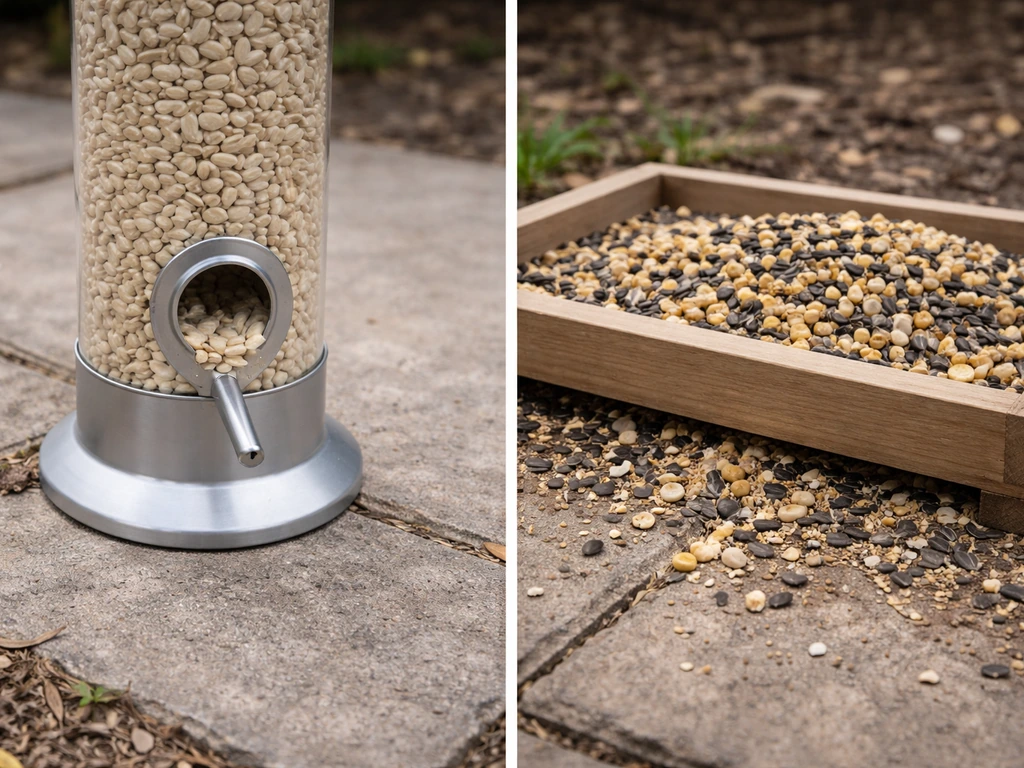
| Tube feeder with shelled sunflower hearts | Very low | Low | Low | Best overall choice |
| Tube feeder with mixed seed (includes milo) | High (birds toss fillers) | High | High | Avoid or swap seed mix |
| Platform/tray feeder at ground level | Very high | Very high | Very high | Elevate or eliminate |
| Hopper feeder with seed catcher tray | Low (if tray emptied regularly) | Low-Medium | Low-Medium | Good if maintained |
| Suet cage feeder | Very low | Low | Low | Good option |
| Scatter feeding on ground | Extreme | Extreme | Very high | Avoid entirely |
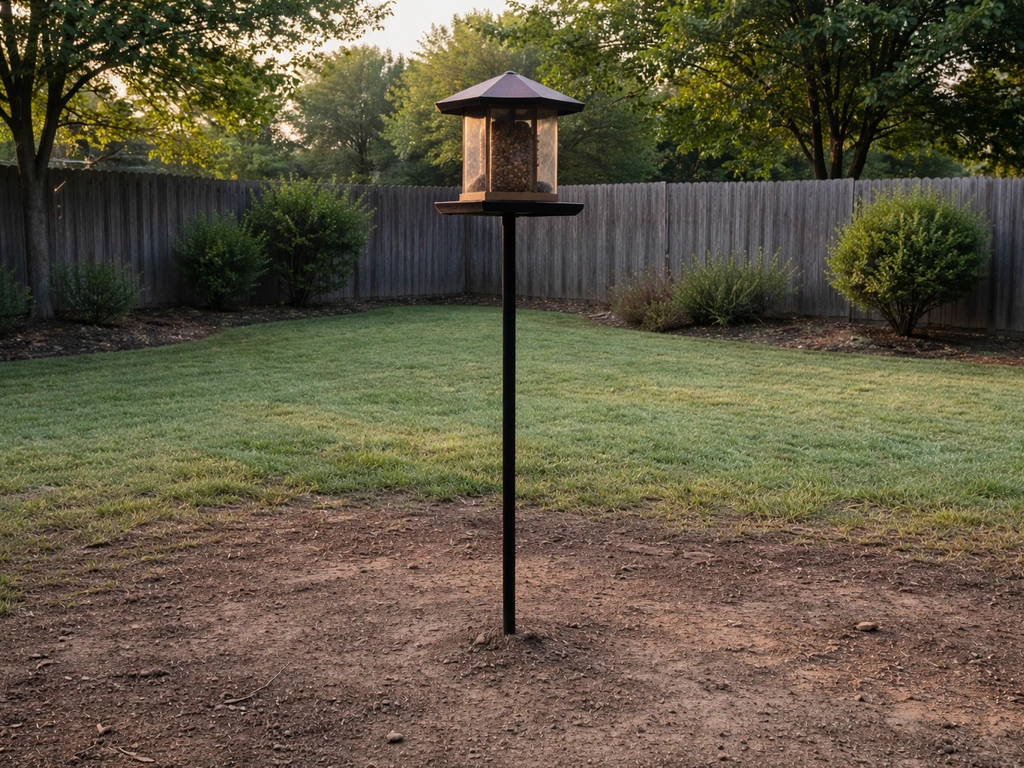
If you are trying to choose the simplest, lowest-risk setup: a tube feeder filled with shelled sunflower hearts or a no-mess blend, mounted on a baffled pole at least five feet high and away from cover, cleaned every two weeks with daily ground checks, is about as snake-unfriendly a setup as you can build while still attracting a wide variety of birds. You can also explore options like window bird feeders, which mount directly on glass and produce almost no ground waste at all, making them one of the cleanest options for controlling what ends up underfoot.
When to actually worry, and what to do if you see a snake
Most snakes that show up in suburban yards are non-venomous species that are genuinely helpful to have around. Rat snakes, garter snakes, and king snakes are all common feeder-area visitors and all control rodent populations. If you are seeing more snakes than you are comfortable with, that is a reliable signal that your rodent activity is higher than you realize, not necessarily that the snake itself is a problem.
That said, regional variation matters. If you live in an area with venomous species (copperheads in the mid-Atlantic and Southeast, rattlesnakes in the West and Southwest, cottonmouths near water in the South), the calculus changes. The same way you might wonder whether bird feeders attract coyotes if you live in an area where coyote encounters are a real safety issue, your local wildlife context determines how much you need to act versus simply observe.
Here is a practical framework for responding to snake sightings near your feeder:
- One snake, once: observe and do nothing immediately. A single sighting is often a passing animal. Do a ground-cleanup audit and note whether you have any obvious cover or food accumulation nearby.
- Repeated sightings of the same area: act on the habitat and cleanup steps above. The snake has found a reliable hunting spot, which means prey is present. Address the prey, not the snake directly.
- Venomous species identified: do not attempt to handle or relocate it yourself. Keep people and pets clear. Contact your state wildlife agency or a licensed wildlife removal professional.
- Snake inside a structure near the feeder: contact local animal control or a wildlife removal service. This has moved beyond a yard-management issue.
- Multiple snakes or a nest: this strongly indicates a larger rodent population nearby. Consider a full feeder pause and ground cleanup for one to two weeks alongside contacting your local cooperative extension office or wildlife agency for site-specific advice.
The U.S. Fish & Wildlife Service acknowledges that bird feeders can attract wildlife well beyond the birds you intend to feed, and that is worth accepting as a baseline reality rather than a reason to panic. The answer is not to stop feeding birds. It is to feed them in a way that minimizes the secondary effects you are not happy about. Tight seed management, good feeder placement, and regular cleanup handle most situations completely.
FAQ
If a feeder is elevated and I never see seed on the ground, can it still attract snakes?
Yes, but it is usually the seed spillage and the rodents and insects it supports. If you only offer seed that never hits the ground, you remove the main “prey buffet” mechanism that brings snakes closer.
Will taking the bird feeder down temporarily reduce snake activity, or do snakes show up for other reasons?
The most effective control is reducing accumulation, not changing the species of feeder alone. If you remove the feeder during a peak rodent period and do a thorough sweep of fallen seed, you often break the food chain faster than repeated spot-cleaning.
Do squirrel-proof baffles also make the area safer from snakes?
Baffles can help, but they do not solve ground waste. Use a large catch tray and check for any dropped seed under poles, perches, or below the tray edges, then clean those areas regularly.
What signs suggest my feeder area has enough prey activity to bring snakes in?
Yes. Signs of high prey activity include frequent rodent droppings near the feeder base, persistent insects that swarm around wet seed, and repeated seed pile-ups. These are often more informative than seeing a snake once.
If birds stop visiting the feeder, does the snake risk go away automatically?
No, because the risk is local prey access. Even if birds are not feeding heavily, any seed that stays wet or rots at ground level can still support insects and rodents, which then support predators.
Are snake traps or rodent poison treatments around feeders a good idea?
Some people use glue traps or poisons, but they can backfire by spreading contamination and causing unpredictable wildlife interactions. A safer approach is integrated cleanup, spill prevention, and habitat reduction (remove cover and keep the area clear) rather than targeting snakes directly.
Does the amount of bird food in the feeder affect snake risk?
If the seed level is high, birds will waste more seed, and more spilled seed means more prey. Using smaller refills more often, along with shelled or no-mess seed, can reduce the amount of ground material available to rodents.
How can I tell whether a snake sighting is random or tied to my bird feeder?
Look for consistent patterns. One brief snake visit can be incidental, but repeated presence near the same feeder base plus evidence of rodents (fresh droppings, chewed seed, gnaw marks) indicates the local prey chain is active.
Are window bird feeders completely risk-free for snakes?
Yes, window feeders are often lower risk because they produce minimal ground litter, but you still want daily checks under the area in case of occasional drops. Catch trays on any feeder setup are still important.
What should I change in my yard, besides cleaning, to make snake visits less likely?
Heavy brush, woodpiles, and dense ground cover near a feeder are key. If you can, create a buffer zone by trimming vegetation and reducing hiding spots within a short distance of the feeder and any catch tray.
If I see cockroaches near the feeder, does that mean snakes are coming soon?
Start with sanitation and spill prevention first. If cockroaches or other insects are repeatedly appearing, treat it as a “cleanup and seed management” alarm, because the decomposing seed and moisture are what drive the next steps in the food chain.
If the snakes in my yard are usually non-venomous, should I still take action?
Do not assume “non-venomous” means “safe to keep near.” Many homeowners want the area less attractive overall, but if you need to remove snakes, rely on prevention and local wildlife professionals rather than attempting to handle them yourself.
When during the year is feeder-to-snake risk highest?
Yes, timing matters. Snakes are more noticeable when prey is most active, which can align with warmer months and times when rodents forage heavily for spilled food. Tight ground checks and cleaning during those peaks are especially important.
Does feeder placement near fences or decks change how snakes use the area?
Some snake species are more likely to use cover routes and hunt near edges, so even “low” feeders can matter. Also check vertical pathways, like downed branches or crawlspaces along fences, because they create hidden travel corridors.
Next Article
Where to Hang Bird Feeders in Winter: Exact Placement Tips
Exact winter feeder placement tips for birds and safety: height, window distance, shelter, and troubleshooting.