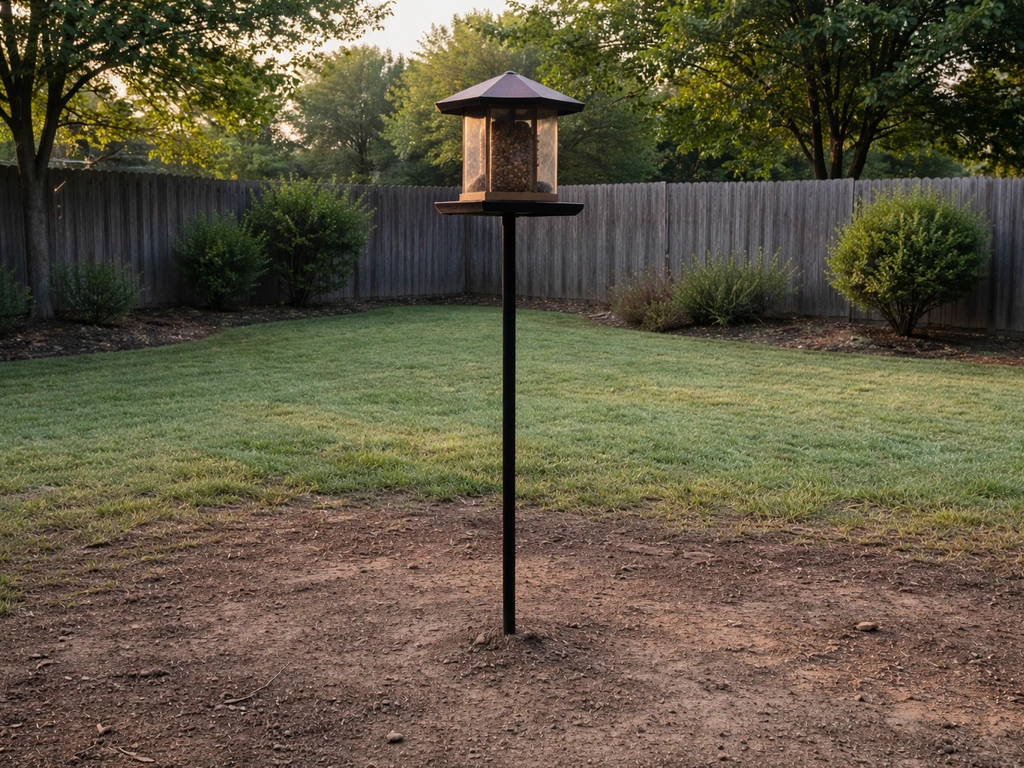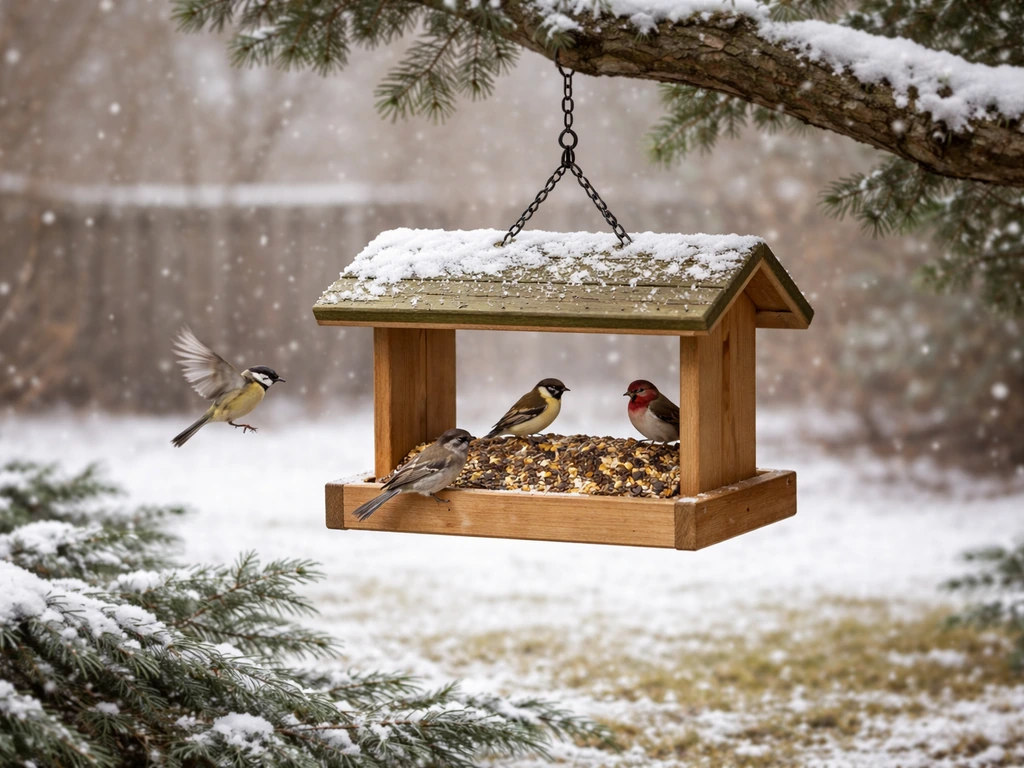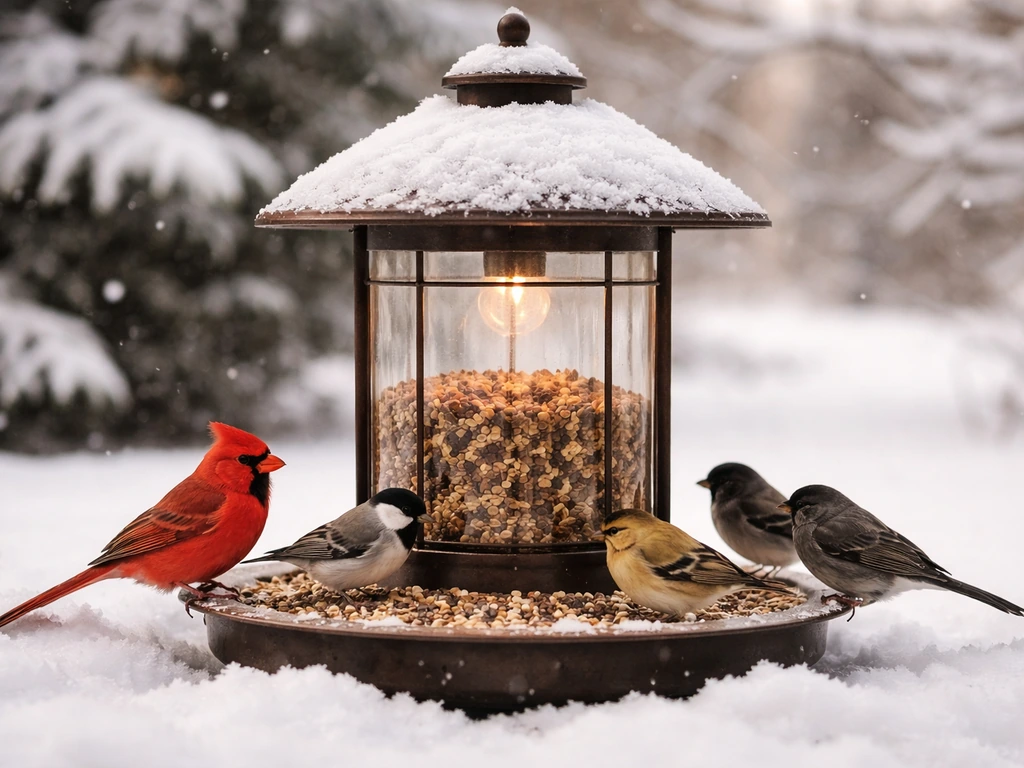
Yes, window bird feeders work, and they can work really well. When placed correctly, kept clean, and stocked with the right seed, they bring birds within arm's reach of your glass. The catch is that setup matters more here than with any other feeder type. Get a few things wrong and you'll either see no birds or, worse, start sending them into your window. Get them right and you'll have chickadees and nuthatches feeding inches from your face.
Do Window Bird Feeders Work? Setup and Troubleshooting

Eleanor Hartwick
30 Apr 2026
How window bird feeders actually work
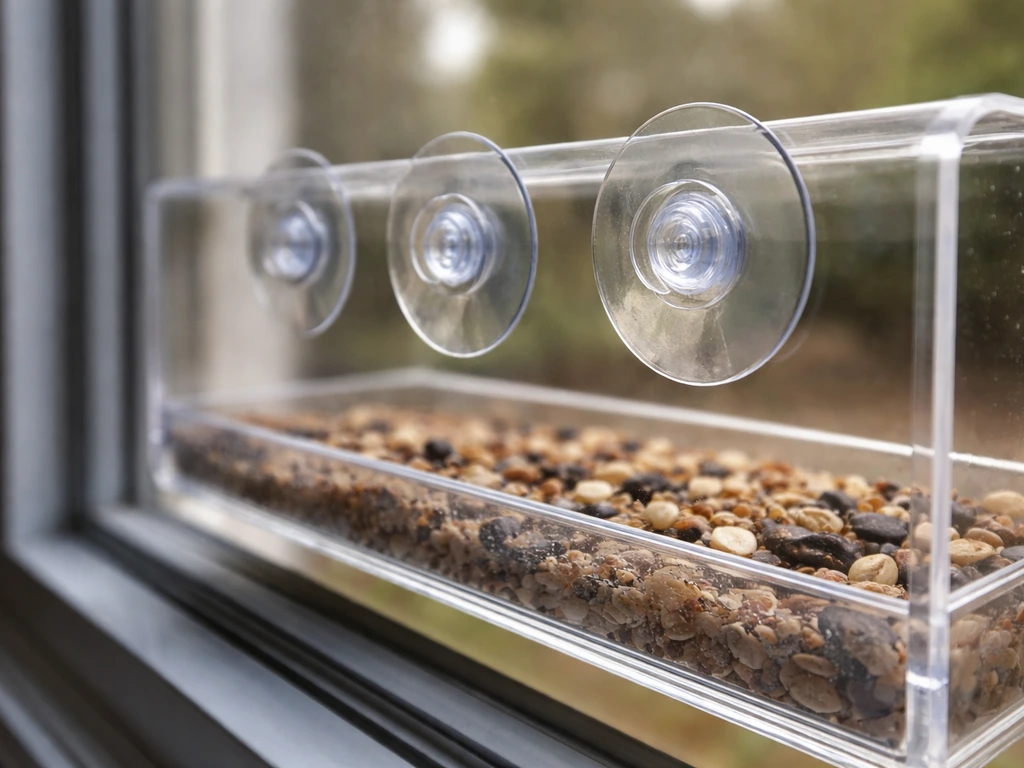
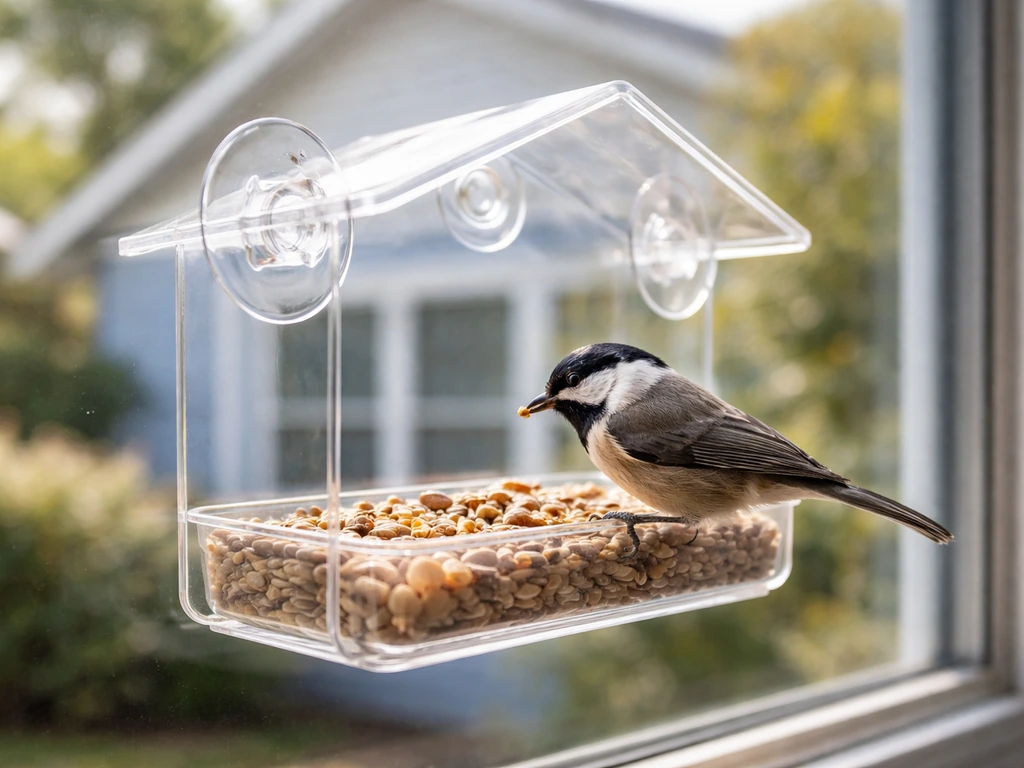
Window feeders mount directly to glass using suction cups, typically three of them, creating a stable platform that birds land on just like any other perch. The feeder body holds seed in a tray or hopper, which birds can access from the sides or front while they cling to the feeder lip or a built-in perch bar. Most designs, like the popular Perky-Pet suction cup models, use a removable seed tray so you can refill and clean the feeder without fully pulling it off the glass. Capacity is modest, usually around a half pound of seed, so these are close-up feeders, not your main seed station.
The suction cups are the whole structural story. If they fail, the feeder falls. Before mounting, the glass needs to be clean and completely dry. A small drop of olive oil or any light cooking oil rubbed onto the cup base before pressing it to the window dramatically improves the vacuum seal and keeps it from sliding or dropping over time, especially through temperature swings. This is easy to skip and really shouldn't be.
Do they actually attract birds, and when do they fall flat?
Window feeders do attract birds, but they come with a learning curve for both you and the birds. Do bird feeders attract bugs too, and how you can reduce that risk attract birds. Wild birds find feeders primarily through sight and by following other birds. A window feeder in a yard that already has bird activity will get noticed faster than one in a bare suburban lot with no existing bird traffic. If you're starting fresh with no other feeders nearby, expect a slow start: sometimes two to four weeks before the first regular visitors.
Birds also prefer to feed where they feel safe from predators. A window feeder on a busy street-facing wall, with constant foot traffic directly below it, will see fewer visits than the same feeder on a quieter side of the house with nearby shrubs or trees for cover. Birds don't need the cover to be right next to the feeder, but they do need somewhere to retreat to, and they'll watch the scene for a while before committing to a landing.
Feeders fail to attract birds when the seed is wrong for local species, when the location feels exposed or high-traffic, when the feeder gets ignored because there's no existing bird activity to cue others in, or when the seed has gone stale. If birds are visiting your yard but ignoring the window feeder specifically, it often comes down to positioning, competition from other feeders, or a seed mismatch.
The placement rules you actually need to follow
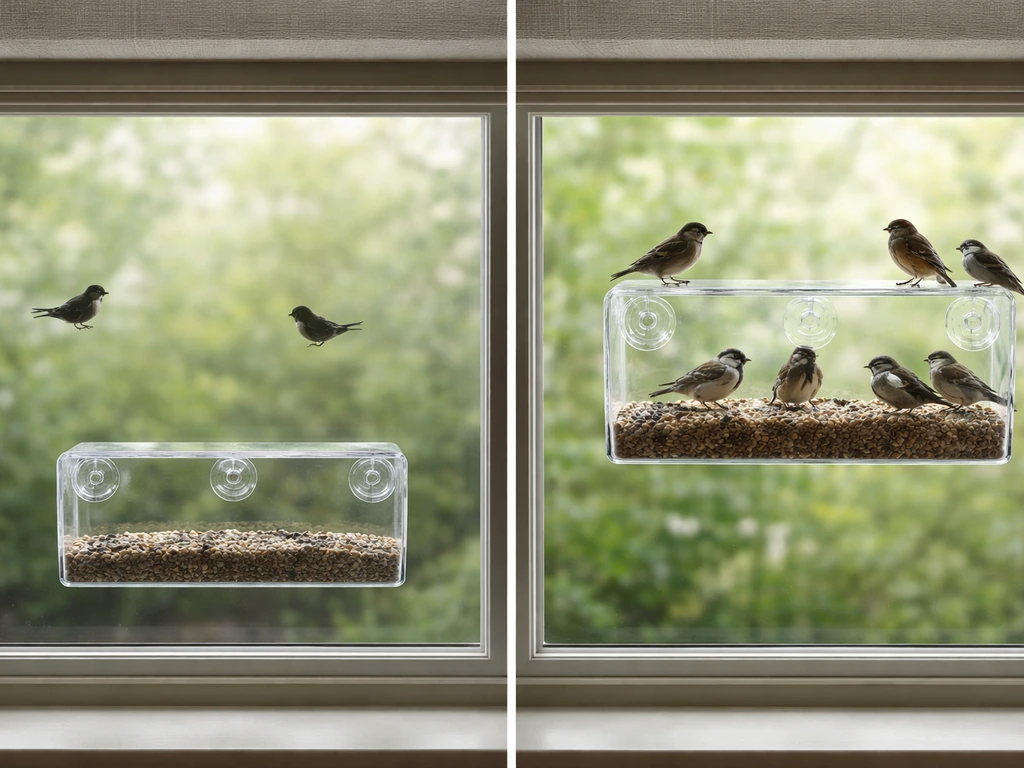
Placement is where most people go wrong with window feeders, and the stakes are higher than with a pole-mounted feeder because glass is right there. The single most important rule: put the feeder either directly on the glass or within 3 feet of it. This sounds counterintuitive, but it's backed by decades of collision research. When a bird is startled and takes off from a feeder that's 3 feet or less from the window, it can't build up enough speed to injure itself on the glass. Daniel Klem's widely cited collision research shows that bird kills drop to near zero at that range. The danger zone is 15 to 30 feet from a window, where birds have exactly enough distance to accelerate into a fatal strike.
Multiple Audubon chapters and university extension programs all land on the same practical rule: within 3 feet or at least 30 feet away. Window feeders, by definition, are mounted directly on the glass, so they satisfy the close-placement rule automatically. That's one genuine safety advantage they have over pole feeders set up within that danger zone.
For visibility, mount the feeder on a window that birds can actually see from your yard's bird traffic paths. A window tucked behind a porch overhang or facing directly into a wall may never get noticed. Eye-level or slightly above works well for observation and for giving birds a clear line of sight to the seed. Avoid placing the feeder directly in front of an interior view through to another window, since that visual pass-through can confuse birds into thinking there's open space beyond the glass.
Picking the right feeder and installing it properly
Most window feeders follow a similar basic design: clear or semi-transparent tray, suction cups, and a small roof or back panel. The differences that matter most are tray depth (deeper trays hold more seed and resist wind scatter better), the number and quality of suction cups (three is the minimum for stability), and whether the tray is truly removable for cleaning. Feeders with a one-piece design that doesn't come apart are harder to clean thoroughly, which matters more than you'd think.
If you want to attract hummingbirds specifically, there are window-mounted nectar feeders with suction cups and small ports, similar to the Perky-Pet 455 series. These need to be taken apart for regular cleaning more urgently than seed feeders since nectar spoils fast and mold in hummingbird feeders is a real health risk.
For installation: clean the window glass with a glass cleaner and let it dry fully before mounting. Then add a small drop of oil to each suction cup base, press firmly against the glass, and twist slightly to seat the cups. If your feeder has a locking mechanism, engage it. Check the hold again after the first cold night, since temperature changes affect suction. It's worth pressing the cups in again after a week of use just to confirm everything is tight.
What to put in a window feeder
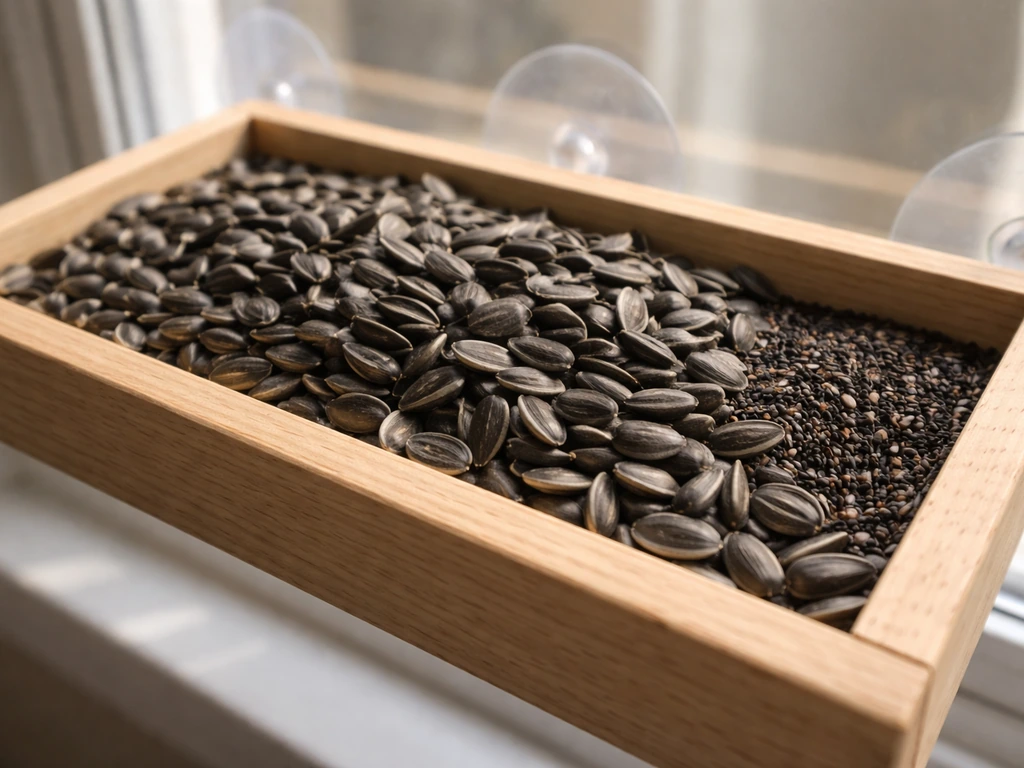
Black-oil sunflower seed is the right default choice for almost any window feeder. It attracts the widest range of common songbirds: chickadees, titmice, nuthatches, finches, grosbeaks, native sparrows, and even doves if your tray is wide enough for them to land. The thin shell is easy for smaller birds to crack, and it's available everywhere. If you want to skip the mess of shells, hulled (shelled) sunflower is even more popular with smaller species and leaves no husk debris on your windowsill or the ground below.
Nyjer (thistle) seed is an option if you're specifically targeting finches, but it requires a feeder designed for it with tiny ports, not a standard open tray. Nyjer also spoils fast when it gets wet or sits too long, so in a small window feeder it can go stale before birds work through it. If you go that route, only fill the feeder partially and check regularly for clumping or a rancid smell.
| Seed type | Best for | Window feeder compatible? | Spoilage risk |
|---|---|---|---|
| Black-oil sunflower | Chickadees, nuthatches, finches, grosbeaks, sparrows | Yes, standard tray | Low to moderate |
| Hulled sunflower | Smaller songbirds, less mess | Yes, standard tray | Moderate (no shell protection) |
| Nyjer / thistle | Finches only | Only with nyjer-specific feeder | High (spoils quickly when moist) |
| Mixed seed with millet | Ground feeders, sparrows | Acceptable in deep tray | Moderate |
| Safflower | Cardinals, chickadees, squirrel deterrent | Yes, standard tray | Low |
Keeping it clean and safe
A dirty window feeder is one of the fastest ways to stop bird visits and one of the most common reasons feeders are quietly abandoned. However, cockroaches are usually attracted by accessible food sources and spills around the feeder do bird feeders attract cockroaches. Seed hulls, droppings, and moisture collect in the tray and create mold and bacteria, which can make birds sick. The official guidance from feeder manufacturers and bird organizations is the same: clean with mild soap and warm water, use a soft brush to scrub corners and crevices, rinse thoroughly, and let dry before refilling. Do this at minimum every two weeks; weekly is better in warm or humid weather.
For window feeders that fully disassemble, take them apart for a deeper clean monthly. Don't just wipe the top of the tray and call it done. Seed dust, feces, and oil from bird feathers accumulate in corners and can be hard to see. A 10% bleach solution rinse once a month followed by thorough rinsing and drying is a reasonable deeper clean if you want to be thorough.
On the window itself: seed debris and droppings will land on the glass around the feeder. Wipe the window regularly, but wait until you need to reseat the suction cups anyway so you don't disrupt the mount unnecessarily. When you do clean the glass under the cups, re-apply the oil and reseat them fresh.
Window strikes from the feeder itself are largely prevented by the 3-foot rule already baked into window feeder placement. But if your window has a see-through interior view to another window or a bright background, birds may still try to fly through. Window decals, UV-reflective film, or tape strips can help, but spacing matters. Decals need to be placed no more than 2 to 4 inches apart across the glass to form an effective visual barrier. One hawk silhouette in the middle of the window doesn't do the job.
Solving the problems that come up most often
No birds are coming to the feeder
Give it time first. Two to four weeks is normal before a new window feeder gets discovered, especially if you don't already have other feeders in your yard. Make sure you're using fresh black-oil sunflower seed, not a mixed bag with a lot of filler seed. Check that the window you chose actually gets noticed from bird travel paths in your yard. If birds pass through nearby trees or shrubs, try moving the feeder to a window that faces that activity. Adding another feeder nearby (a pole or post feeder with sunflower) can create the initial bird traffic that helps birds spot the window feeder.
Birds come near but won't land on the feeder
This usually means the location feels exposed or the feeder itself seems unstable. If the feeder wobbles or has dropped slightly on its suction cups, birds will notice. Check the mount and reseat the cups. Look at what's happening on the other side of the window: movement inside the house (a TV, people walking by, a cat watching) can spook birds. Consider placing a piece of window film on the interior side to make the glass less transparent, or simply try to reduce movement near that window during early visits.
Birds are hitting the window
If you're seeing strikes, first check whether the feeder is truly within 3 feet of the glass. If it's mounted directly on the window, this is already satisfied. If birds are hitting a different part of the window or a nearby window, add visual markers to those panes. Decals or tape spaced at 2 to 4 inch intervals across the glass is the only approach that reliably works. Inspect the interior view through the glass: if there's a window on the opposite wall creating a visual tunnel, cover one with a curtain or shade during peak bird activity hours (early morning is when most strikes happen).
Squirrels or other wildlife are raiding the feeder
Squirrels can reach window feeders by jumping from nearby surfaces, roof edges, or window frames. If your window feeder is accessible from a ledge or overhang, you may not be able to fully prevent squirrel visits without relocating it to a window without nearby launch points. On smooth glass with no nearby surfaces, squirrels typically can't reach the feeder directly, which is one advantage of window mounting. Raccoons are less common at window feeders but can reach them from a roof edge or adjacent surface at night. If raccoons are an issue, bring the feeder in at night or move it to a less accessible window. Unlike ground-level or pole feeders, window feeders are rarely the biggest attractor for wildlife that's more drawn to spilled seed on the ground below, so keeping the area under the window tidy helps. Do bird feeders attract coyotes, or are coyotes mainly drawn to other sources like spilled seed on the ground? Some people also wonder, do bird feeders attract snakes, but the answer depends a lot on what else is drawing wildlife to your yard.
The feeder keeps falling off the glass
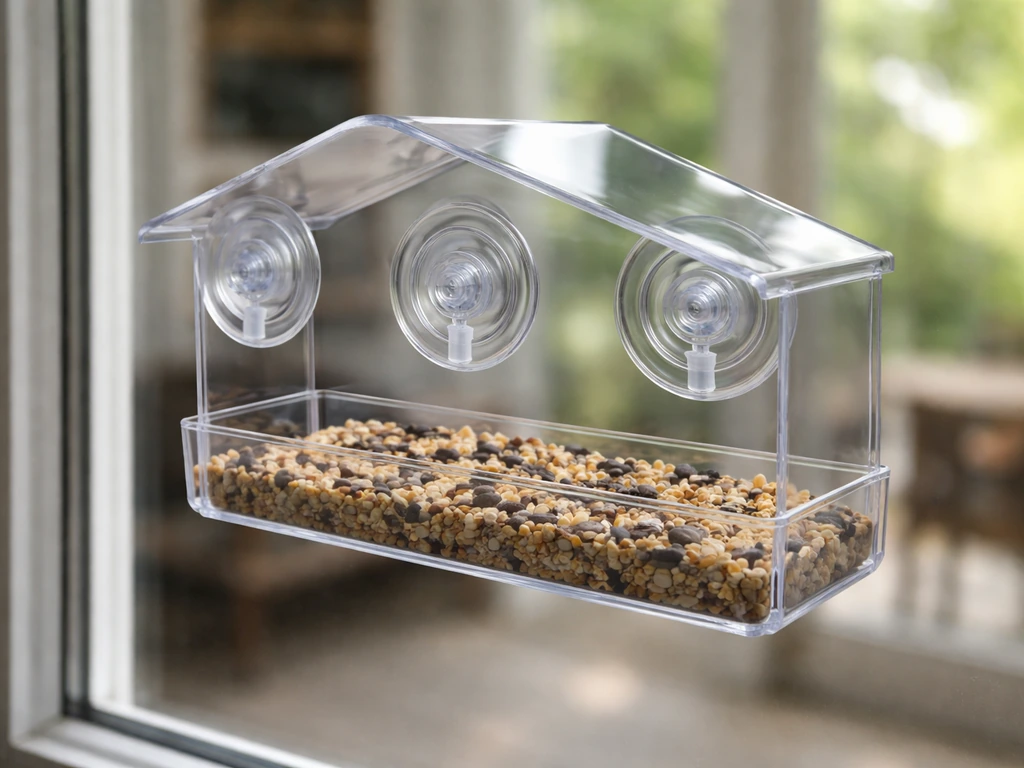
This is almost always a suction cup issue. Re-clean the window glass, dry it completely, add a small drop of oil to each cup, press firmly, and check after 24 hours. If a cup has cracked or lost its elasticity, replace it. Cold temperatures reduce suction, so in winter check the mount more frequently. Some feeder models include backup mounting options like window frame hooks; if your feeder has these, use them as a secondary hold.
Window feeders are worth the small learning curve. Once you've got the placement dialed in, the seed right, and the cleaning routine down, they're one of the most rewarding ways to watch birds. The view you get from a foot away through glass is genuinely different from watching birds at a distant pole feeder across the yard.
FAQ
How soon after installing a window bird feeder should I expect birds to show up consistently?
Birds often take 2 to 4 weeks to discover a new window feeder, especially if you do not already have other feeders creating local “bird traffic.” During that time, keep seed fresh and the window visible from where birds naturally travel (paths through nearby shrubs or trees), and avoid moving the feeder every few days, since stability helps birds commit to repeated visits.
What if birds are visiting my yard but ignoring the window feeder itself?
This usually points to either a seed mismatch or positioning. Try switching to black-oil sunflower seed (or hulled sunflower if you have husk mess problems), and check that the feeder is within about 3 feet of the glass and facing a window birds can actually see from their approach routes. Also watch for competition from a nearby pole feeder, since dominant species may push others away from the window perch.
My feeder keeps sliding or falling off, even though I cleaned the glass, what else can I do?
Moisture or residue on the glass is a common hidden cause, but temperature swings can also break the seal. Re-clean, let the glass fully dry, then apply a tiny drop of light oil to each suction cup base, press firmly, and twist to seat the cups. Recheck after the first cold night and again after about a week. If a cup looks stretched, cracked, or hardened, replace it rather than trying to “re-oil” an aging seal.
Do window bird feeders work in winter, and will suction cups hold in freezing temperatures?
They can work year-round, but suction performance often drops in colder weather, so you need to check the mount more frequently in winter. Make sure the glass is fully dry before mounting (ice or meltwater ruins adhesion) and reseat the cups after any big temperature changes. Also use fresh seed, since wet or partially thawed seed can spoil faster.
How do I prevent window strikes when I already have the 3-foot rule covered?
The 3-foot distance reduces risk for that specific feeder location, but strikes can still happen at a different part of the glass or nearby panes. Add visual markers to the correct windows, and confirm there is not a clear interior view creating a “tunnel” to another window. If you see repeated strikes during early morning hours, cover the interior-facing window briefly with a curtain or shade to break the pass-through view.
Is it better to use black-oil sunflower or hulled sunflower in a small window feeder?
Black-oil sunflower is the best all-around default because it attracts a wide mix of common species and works in most trays. Hulled sunflower is often cleaner and easier on windowsills, especially if you dislike husk litter, but it can be slightly less suitable for very small finches depending on tray access. If you choose hulled, watch seed handling and don’t let it sit long once it gets damp.
How often should I clean a window bird feeder, and what’s the minimum routine?
At minimum, clean every two weeks, with weekly cleaning in warm or humid weather. In practice, scrub seed dust and corners where debris collects, rinse thoroughly, and let everything dry completely before refilling. If birds stop visiting and you see wet clumping, that is a strong sign the feeder needs immediate cleaning rather than waiting for the next schedule.
Can I use nyjer (thistle) seed in any window bird feeder?
No, nyjer needs specific feeder ports designed for tiny seeds. Standard open trays often let nyjer get wet, clump, or spoil faster, and it may not dispense effectively. If you use nyjer, only fill partially, check frequently for clumping or off smell, and avoid leaving it in the tray too long.
Do window bird feeders attract cockroaches or other insects, and how do I reduce that risk?
They can indirectly attract pests when seed hulls, spills, and moisture collect around the feeder, especially in the tray area and on the window surface. The best prevention is frequent cleaning, wiping up debris promptly, and keeping the area under the window tidy so there is less accessible food. If you notice increased insects, clean the feeder immediately and also clean the surrounding glass where hulls and droppings accumulate.
What’s the best way to deal with squirrel access to a window feeder?
You may not be able to fully stop squirrels if there is a nearby launch point like an overhang, roof edge, or ledge. If the squirrels are reaching from that side, relocate the feeder to a window with smooth exterior surfaces and no obvious jumping points. On smooth glass with no nearby surfaces, squirrels usually struggle compared with pole or ground feeders.
My feeder tray is removable, but cleaning still feels hard, what should I focus on?
Don’t just wipe the top. Focus on tray corners, crevices, and the lip area where birds perch, since husks and droppings collect there and can harbor moisture. If your model is fully disassemblable, do a deeper monthly teardown, since residue can be hard to see but still affect bird health and visitation.