Bird feeders are ethical when you manage them responsibly. So if you're wondering, “are bird feeders good for birds,” the answer depends heavily on responsible setup and maintenance. The honest answer is that feeding wild birds sits in a gray zone: done well, it genuinely helps birds, especially during harsh weather, migration, and habitat loss. Done carelessly, it can spread disease, attract predators, and create dependency. The good news is that the difference between ethical and unethical feeding is almost entirely about your practices, not whether you own a feeder at all.
Are Bird Feeders Ethical? How to Feed Safely and Humanely

Eleanor Hartwick
5 Jun 2026
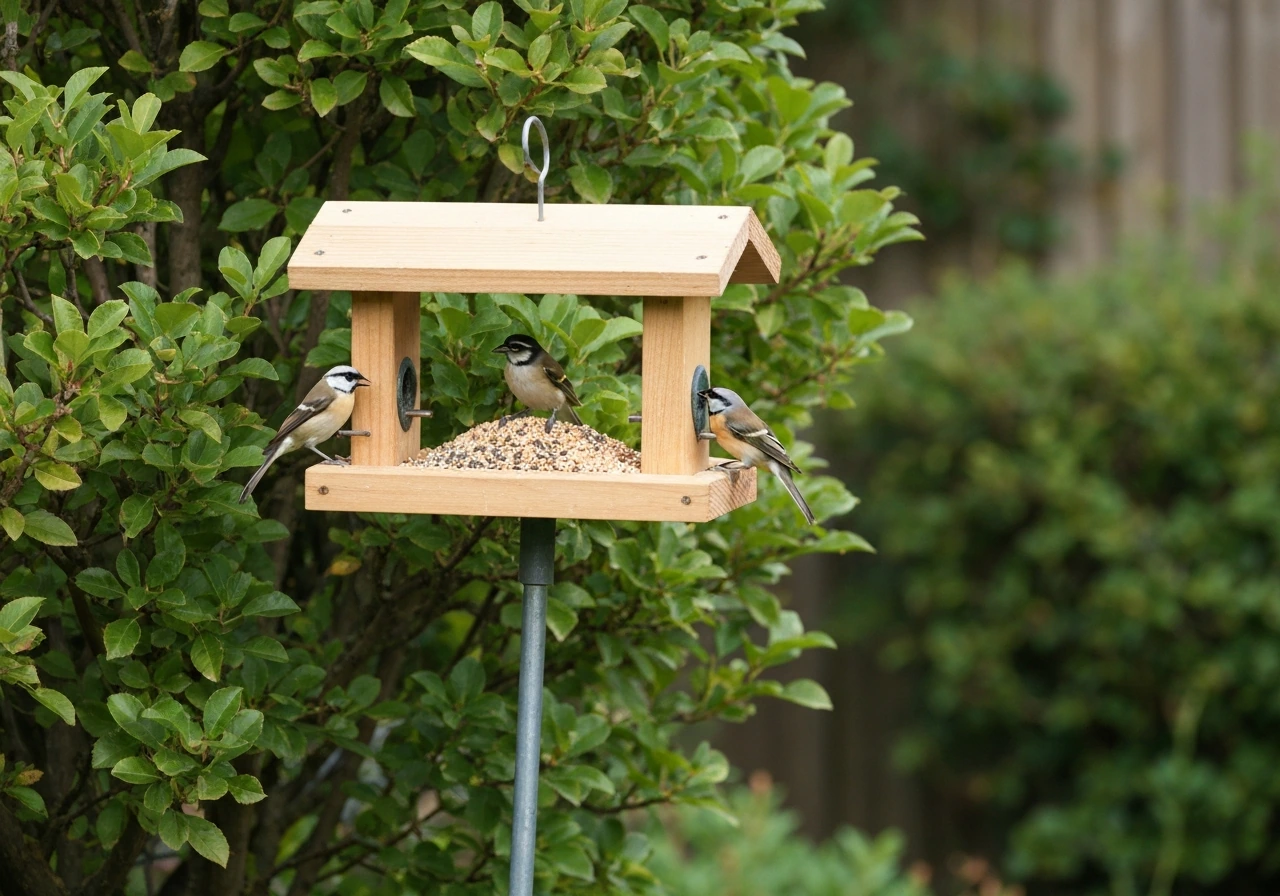
Ethical pros vs. ethical cons of bird feeding
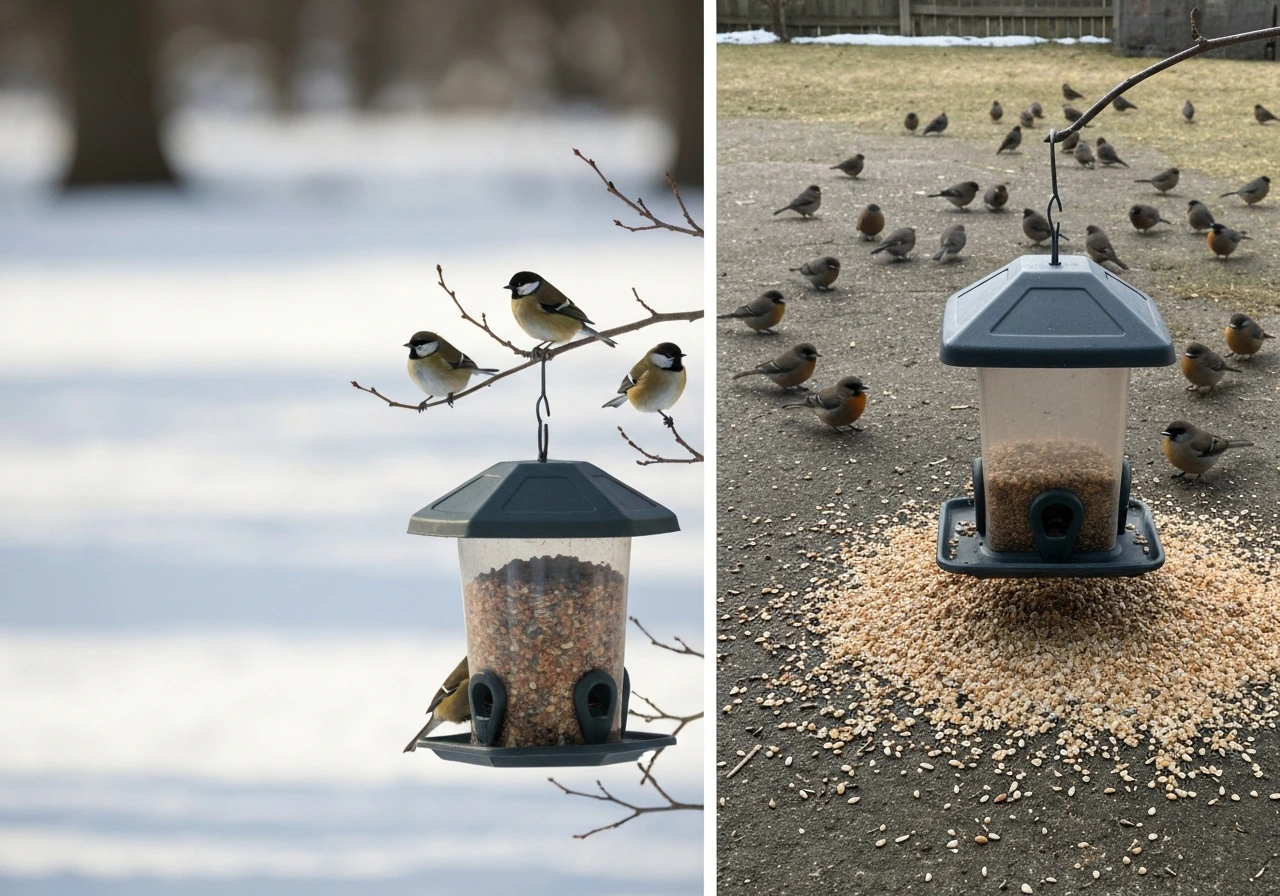
The debate around bird feeding has real substance on both sides. It helps to see the arguments laid out clearly before deciding how to approach your own setup.
| Ethical pros | Ethical cons |
|---|---|
| Provides reliable food during winter, drought, and extreme weather when natural sources fail | Shared feeder surfaces spread bacteria like Salmonella and E. coli between birds |
| Supports birds along migration routes where habitat has been degraded or lost | Poor sanitation or moldy seed can cause aspergillosis and other serious illness |
| Builds public awareness of and connection to local bird species and conservation needs | Attracting dense flocks increases disease transmission risk compared to dispersed foraging |
| Can supplement food in areas where development has reduced natural foraging opportunities | Feeders can attract predators (cats, hawks, raccoons) that wouldn't otherwise concentrate near birds |
| Observation and citizen science (like Project FeederWatch) generates real conservation data | Low-quality seed mixes with fillers like milo go uneaten, rot on the ground, and draw rodents |
| Feeders near windows and buildings create collision risk if not positioned correctly | Can attract invasive or nuisance species that compete with native birds |
Neither column wins outright. What this tells you is that your choices, feeder placement, food quality, and how often you clean, determine which column you end up in.
How feeding actually helps, and when it matters most
The USFWS is direct about this: where habitat has been lost, feeding stations can provide food opportunities along migratory routes, and this aligns with long-standing Refuge System practice. That's not a small thing. As urban sprawl continues to fragment landscapes, a well-stocked feeder in your backyard fills a real ecological gap, it's not just a hobby accessory.
Feeding matters most during predictable stress windows: severe winter cold snaps when insects and seeds are buried under snow or ice, extended drought in summer when water and food sources dry up, and during active migration periods when birds are burning energy at high rates. During these windows, a reliable food source can genuinely improve survival rates for individual birds.
The ethical upside also extends to people. Bird watching is one of the most widespread forms of wildlife engagement in the country, and feeders are the on-ramp. The more people watch birds closely, the more they notice population changes, sick individuals, and habitat problems, and the more likely they are to act on those observations. Projects like Cornell Lab's Project FeederWatch turn that attention into real scientific data.
That said, feeding matters less in peak summer in areas with abundant natural food, or in habitats that are largely intact. If you're in a lush rural setting in June with flowering shrubs and insect populations booming, your feeder is more optional than it would be in a suburban yard in January.
The real ethical harms: disease, dependence, and disrupted behavior
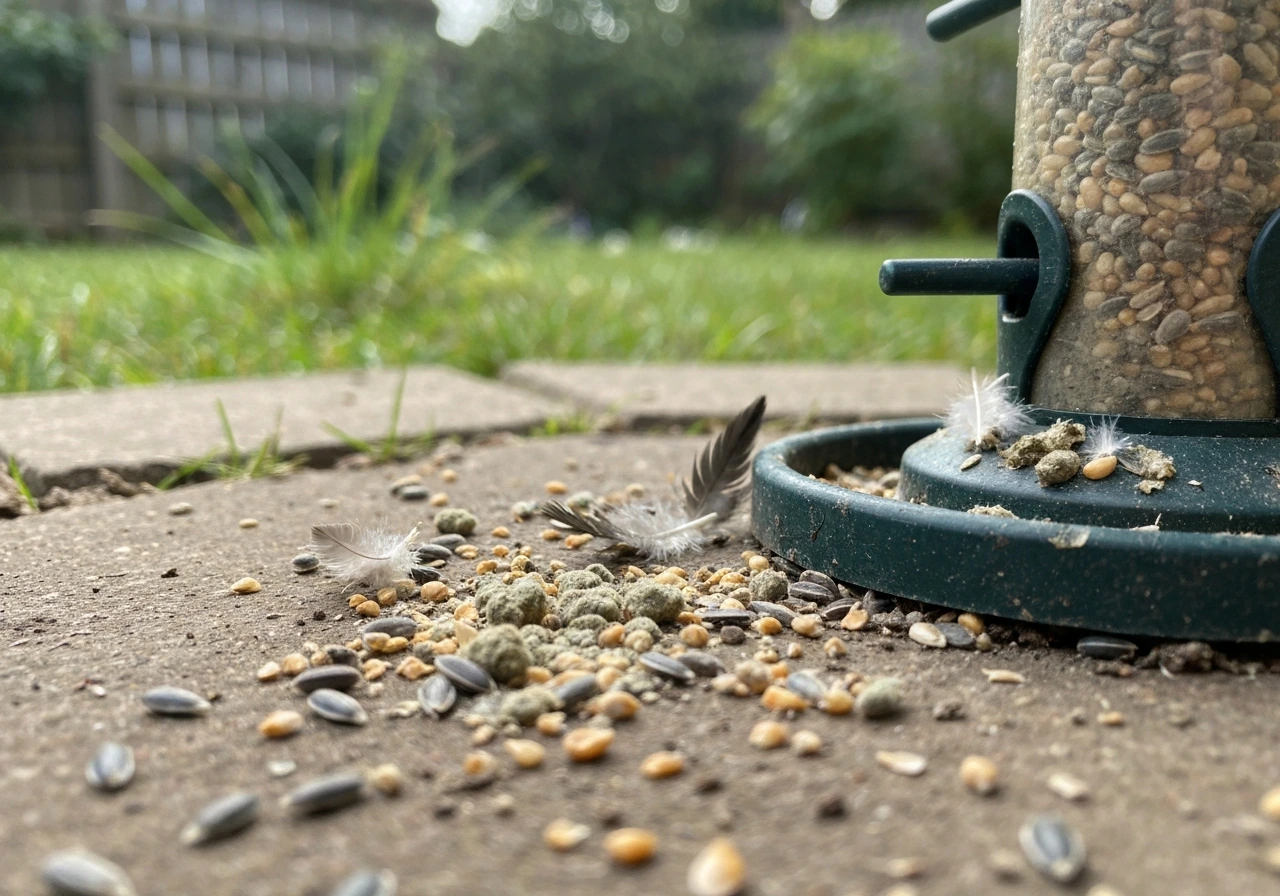
Disease at feeders is a genuine risk, not a fringe concern
Audubon and the USFWS both flag a consistent list of diseases that move through feeders: house finch eye disease (mycoplasmal conjunctivitis), salmonellosis, aspergillosis (a fungal respiratory disease from moldy feed), avian pox, and avian flu. The mechanism is simple, birds congregate at shared surfaces, and bacteria and pathogens transfer between them far more efficiently than they would in dispersed natural foraging.
The avian flu concern deserves a measured take. USFWS notes that feeder-visiting songbirds are not commonly infected with highly pathogenic avian influenza, so the risk through feeders is lower than media coverage sometimes implies. That said, Audubon recommends monitoring your local state and federal guidance when avian disease events are surging, there are seasons when pulling feeders temporarily is the responsible call.
There's also an interesting nuance that Audubon highlights: stopping feeding isn't automatically the best disease-control lever. The research on pathogen exposure at feeders is complex. What consistently reduces risk is how you maintain feeders, not simply whether you have them. This means the answer to disease risk is almost always better hygiene and smarter setup, not abandoning feeding altogether.
Does feeding create dependence?
Dependence is probably the most emotionally loaded concern, but the evidence is less alarming than people fear. Wild birds continue foraging naturally even with feeders available, they use feeders as one food source among many, not as a replacement for all foraging. The bigger risk is abrupt removal of feeders during critical periods (mid-winter cold snaps, for instance), which is why the ethical standard is to commit to maintaining your feeder responsibly once birds are relying on it seasonally, or to taper off gradually and predictably.
Natural behavior disruption
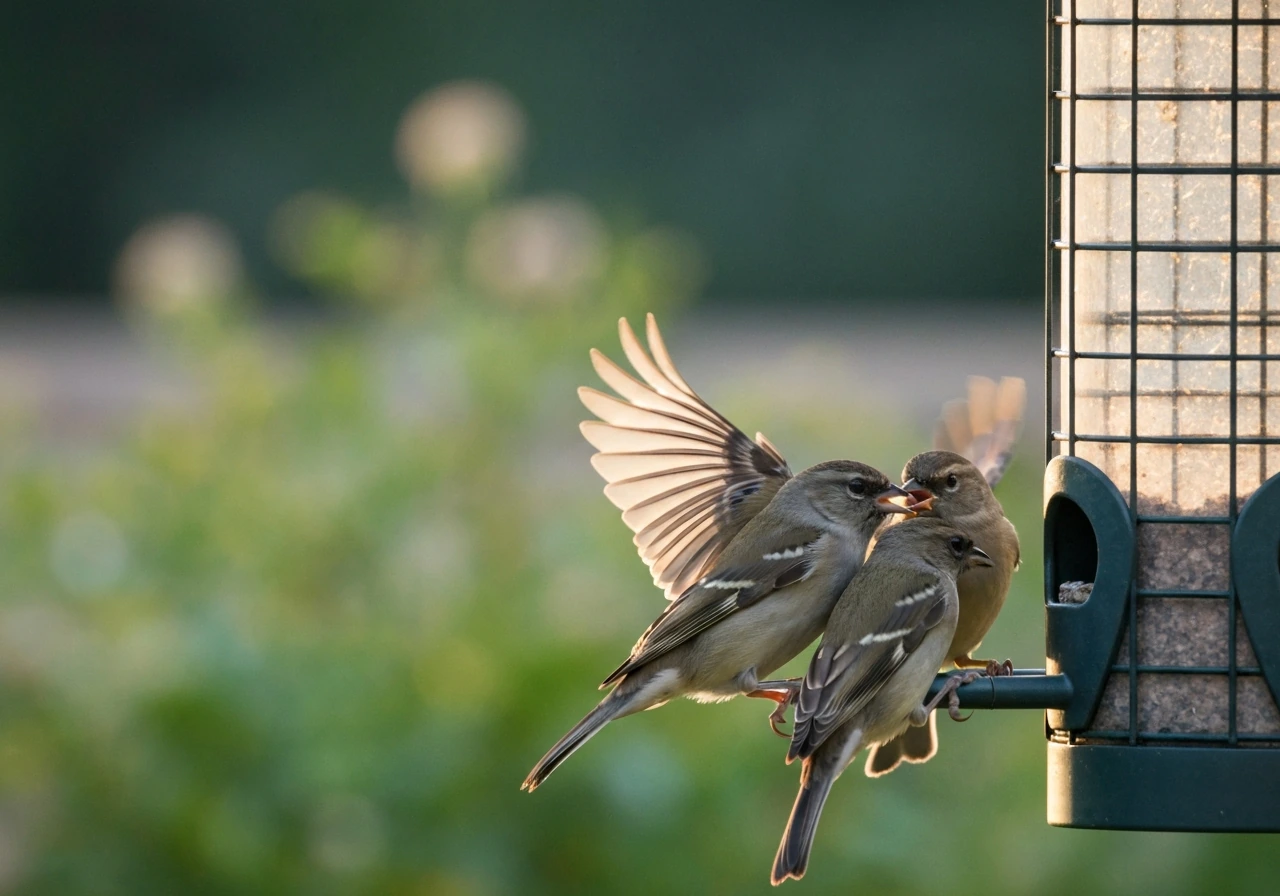
Dense feeder populations do change how birds interact. Crowding at a single feeder increases aggression, stress, and as noted above, disease transmission. Spreading food across several feeders rather than concentrating everything at one station is a practical fix. The USFWS also warns more broadly that feeding can alter wildlife behavior when done without care, a principle that applies just as much to birds as it does to other wildlife.
How to set up feeders ethically
Placement and window safety
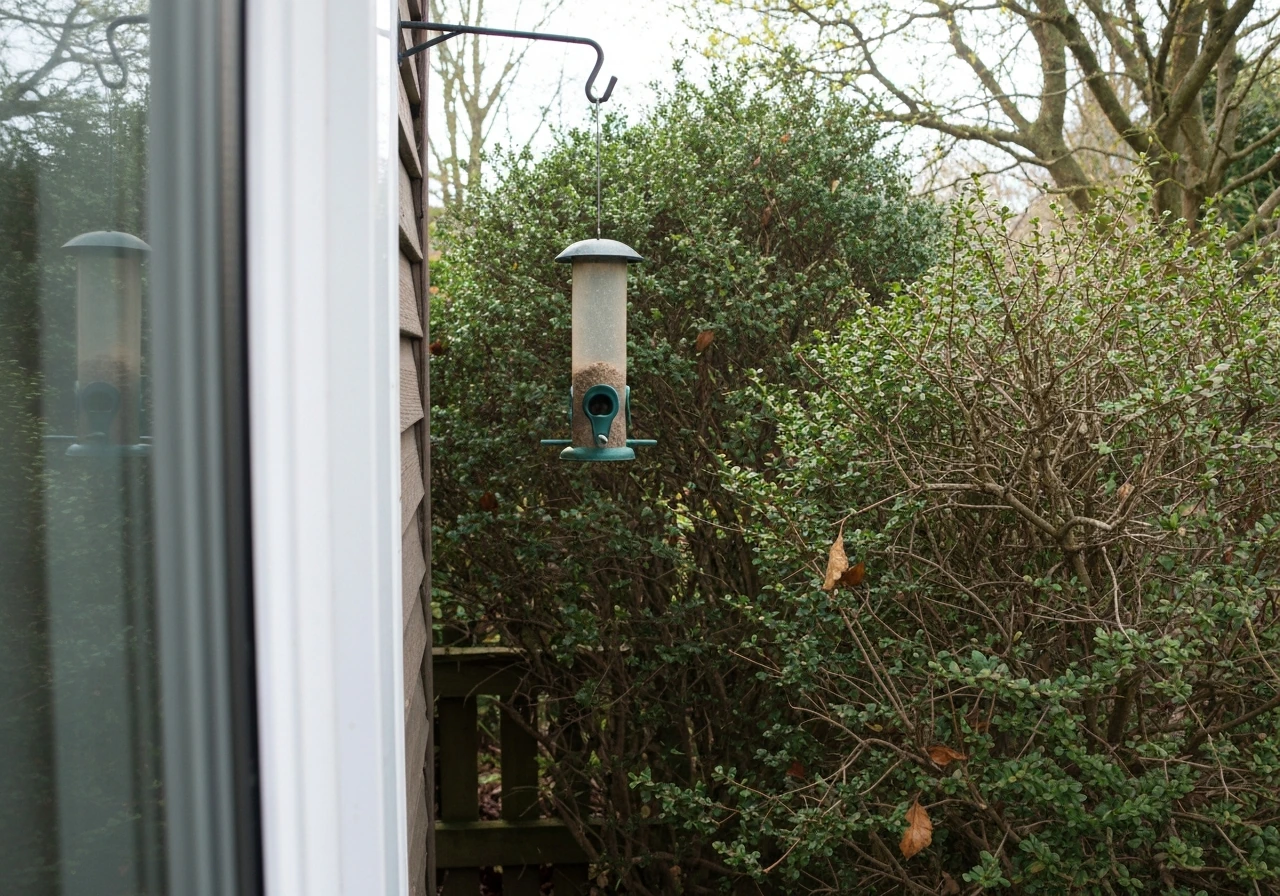
Window strikes are one of the more avoidable harms in bird feeding. The standard guidance is to place feeders either very close to windows (within 3 feet, so birds don't build up fatal velocity) or more than 30 feet away. The dangerous middle ground is 10 to 30 feet out, birds flush from a feeder, don't register the glass, and hit it at full speed. If you're placing a new feeder, commit to one of those two distances.
Feeder types and design
RSPB specifically advises against flat-surface feeder designs, which increase disease transmission because birds perch directly on food and droppings contaminate the remaining seed quickly. Tube feeders with individual ports, hopper feeders with covered seed, and caged feeders all reduce that risk compared to open platform designs. Pine cone bird feeders can still work, but their design affects how well birds feed and how much hygiene matters. If you do use a platform or tray feeder, clean it at least every two to three days.
Spread feeders out, don't stack them
Audubon cites NWHC guidance that spreading food across a few feeders provides less opportunity for sick birds to touch and contaminate others than a single high-density station. Practically, this means two or three feeders placed 10 or more feet apart is better than one feeder loaded to capacity. You reduce crowding, reduce transmission risk, and attract a broader range of species.
Predator safety
Position feeders where birds have clear sightlines to approaching predators and quick escape routes to nearby shrubs or trees. Don't place feeders directly on the ground or in spots where cats can ambush easily. Baffles on feeder poles deter both squirrels and some predators. If a hawk is regularly hunting your feeder area, consider temporarily removing the feeder for a week or two, the hawk will move on once the easy prey source disappears.
Food choices and feeding practices that reduce harm
What you put in a feeder is just as important as where you put it. Audubon notes that cheap seed mixes loaded with fillers like milo go mostly uneaten by the birds you want to attract, pile up under feeders, rot, and draw rodents. Buying better seed is both more ethical and more cost-effective because less gets wasted.
- Black-oil sunflower seed is the most broadly attractive option for North American songbirds and has very little waste
- Nyjer (thistle) seed is ideal for goldfinches and other small finches in tube feeders
- Suet cakes support high-energy needs in winter and attract woodpeckers, nuthatches, and chickadees
- Shelled peanuts or peanut hearts work well for jays, titmice, and woodpeckers — avoid salted or flavored versions
- Safflower seed is useful for deterring starlings and grackles while still feeding cardinals, chickadees, and doves
- Never use honey, which can harbor dangerous molds and bacteria; never offer moldy or clumped seed
- Avoid generic mixed seed bags with high proportions of milo, wheat, or oats — most birds toss these aside
For nectar feeders, use a 4:1 water-to-sugar ratio (plain white sugar, never honey or red dye). Replace and clean the nectar every 2 to 5 days depending on temperature, faster in heat, slower in cool weather. Fermented or cloudy nectar causes serious harm to hummingbirds.
On seasonality: the RSPB recommends pausing seeds and peanuts between May and October as a disease control measure (particularly for trichomonosis risk in the UK context), focusing instead on protein-rich foods and bird-friendly planting during that window. In North America the seasonal calculus is different, but the underlying principle holds, assess what local birds actually need by season, and adjust your offerings accordingly. Summer feeding is fine but less critical than winter feeding in most regions.
Maintenance, cleaning, and hygiene: the non-negotiable part
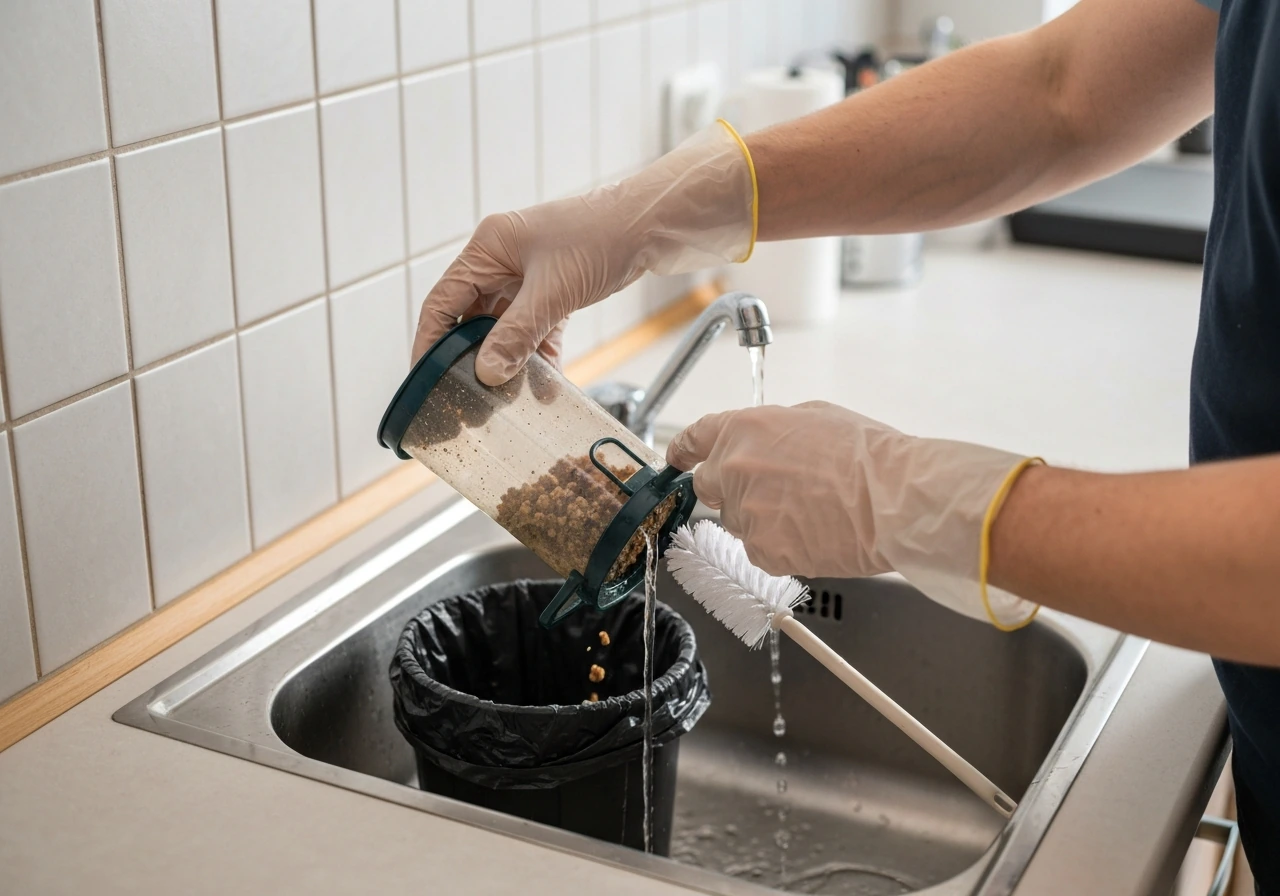
This is where most ethical problems with feeders actually originate. A dirty feeder isn't neutral, it's actively harmful. If you are wondering are bird feeders bad for birds, remember that most problems start with hygiene, not with the idea of feeding itself. Here's what the evidence-based guidance actually recommends.
Cleaning frequency
| Feeder type | Minimum cleaning interval | Increase frequency when... |
|---|---|---|
| Tube / hopper / suet feeder | Every 1–2 weeks | Hot or humid weather, heavy bird traffic, wet conditions |
| Platform / tray feeder | Every 2–3 days | After rain, during warm months |
| Nectar / hummingbird feeder | Every 2–5 days | Temperatures above 80°F, nectar looks cloudy |
| Ground feeding area | Rake and sweep every 1–2 weeks | Any time droppings or spoiled seed accumulate |
How to clean feeders properly
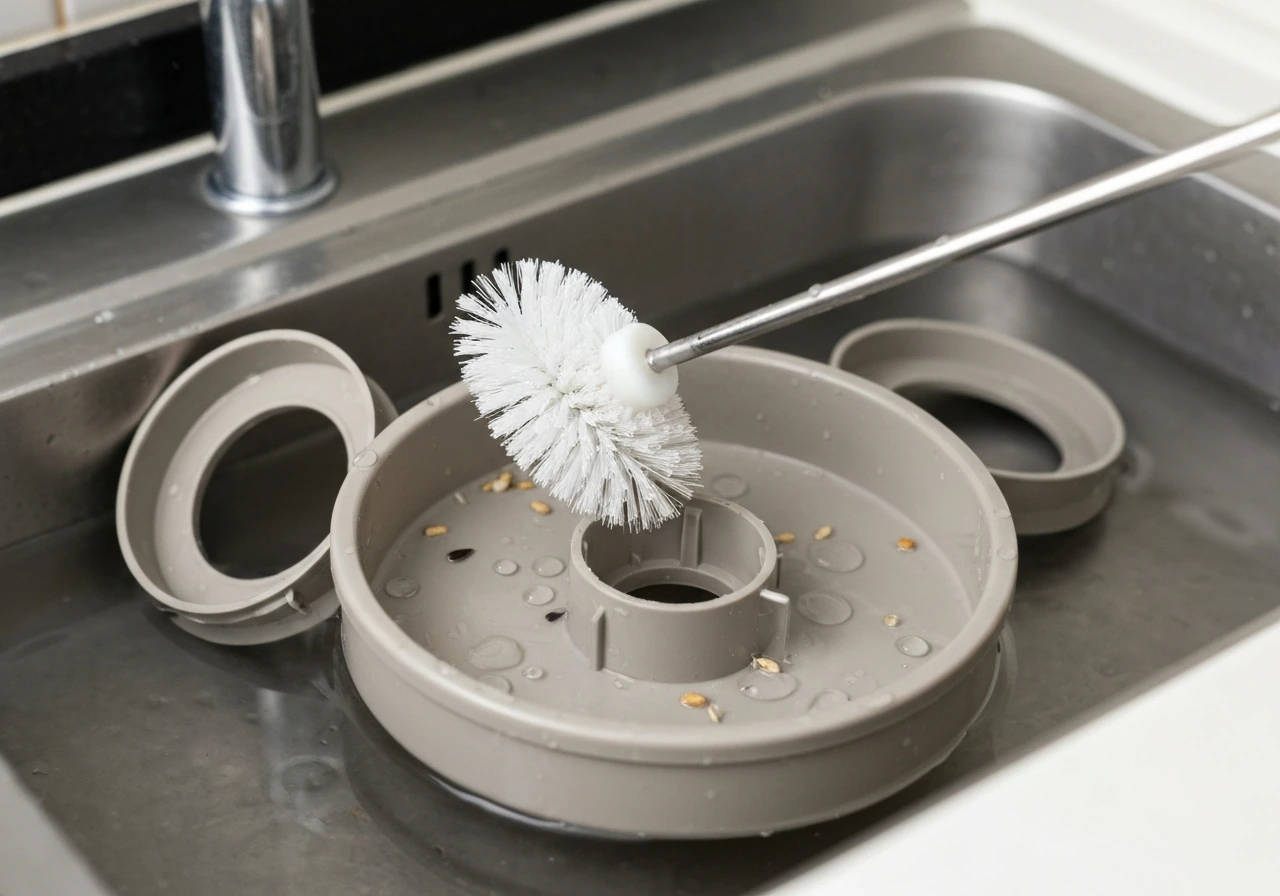
- Empty the feeder completely — discard old, clumped, or moldy seed, don't just top it up
- Rinse with hot water and scrub with a bottle brush to remove debris and droppings
- Disinfect using a 10% bleach solution (9 parts water to 1 part bleach) — soak for 10 minutes
- Rinse thoroughly with clean water to remove all bleach residue
- Allow the feeder to dry completely before refilling — moisture in seed is a direct path to mold and aspergillosis
- Clean the area under the feeder: rake up spilled seed, droppings, and debris to prevent ground-level disease buildup
If you spot a sick-looking bird at your feeder, eye discharge, fluffed feathers, stumbling, take the feeder down immediately. Clean it with a 10% bleach solution and leave it down for at least two weeks to allow any infected birds to disperse. This is Project FeederWatch's standard guidance and it works. Similarly, if disease events are reported in your region (your state wildlife agency is the best source), follow their specific instructions, which may include temporary feeder removal.
Dealing with unwanted visitors ethically
Squirrels
Squirrels are the most common feeder frustration, and the ethical solution is deterrence, not harm. A baffle (dome-shaped or cylindrical) mounted on the feeder pole stops most squirrels from climbing up. Weight-sensitive feeders that close ports when something heavier than a small bird lands on them work well for tube feeders. Placing feeders at least 10 feet from any launch point (trees, fences, rooftops) reduces jump access. Dedicated squirrel feeders placed away from bird feeders are another practical redirect, they tend to keep squirrels occupied elsewhere.
Rats and rodents
Rats are drawn to spilled seed, not the feeder itself. The fix is ground hygiene: rake regularly, use a seed catcher tray under the feeder, switch to no-waste seed mixes (shelled sunflower, shelled peanuts, nyjer), and bring feeders in at night if rats are active. Avoid poisons, they kill the hawks and owls that naturally control rodent populations.
Invasive and nuisance bird species
European starlings and house sparrows are non-native invasives in North America that aggressively displace native cavity nesters. You can reduce their presence without harming native birds through food selection: safflower seed and nyjer attract natives but are largely ignored by starlings and house sparrows. Avoid sunflower seed in open platform feeders, which starlings dominate easily. Caged feeders with small openings exclude larger birds by size. This is a case where your food and feeder choices do real conservation work.
Predators
Hawks hunting at your feeder are native wildlife doing exactly what they should do, and it's legal to interfere with them in most jurisdictions anyway. If repeated hawk visits are causing stress at your feeder station, the simplest ethical response is to stop filling feeders for a week or two. The hawk will relocate and your regular visitors will return. Free-roaming cats are a different matter: they're the leading direct human-caused threat to wild birds. If you have outdoor cats, keeping them inside or using a cat enclosure (catio) while running feeders is the ethical standard.
Your ethical decision checklist: what to do today
Use this as a quick audit of your current or planned setup. If you can answer yes to most of these, you're feeding ethically. If you're hitting several nos, you know exactly where to start.
- Is your feeder positioned either within 3 feet of a window or more than 30 feet away to prevent window strikes?
- Are you using high-quality seed (black-oil sunflower, nyjer, suet, safflower) without cheap fillers that rot on the ground?
- Are you cleaning tube and hopper feeders every one to two weeks, more often in heat or wet weather?
- Are you using a 10% bleach solution to disinfect, rinsing thoroughly, and letting feeders dry fully before refilling?
- Are you raking the ground under feeders regularly to remove droppings, spilled seed, and debris?
- Do you have a baffle or squirrel deterrent in place to avoid seed waste and feeder damage?
- Have you spread food across two or three feeders rather than loading one high-density station?
- Do you know what to do if you spot a sick bird (remove feeder, clean with bleach, wait two weeks)?
- Are you monitoring your state wildlife agency for any local disease advisories that might require temporary feeder removal?
- If you have outdoor cats, are you keeping them inside or separated from the feeder area?
If you're already doing most of these things, your feeders are doing more good than harm, full stop. If you're new to this or finding gaps in your current setup, pick the two or three items from that list that you're not doing and address those first. Clean feeder plus right food plus smart placement covers the vast majority of the ethical risk. If you want a quick check on the environmental angle, this clean feeder plus right food plus smart placement approach is a major reason the answer to are bird feeders good for the environment can be yes when managed responsibly. The rest is refinement.
One final thought: if you want to go beyond feeders, the highest-impact thing you can do for birds is plant native species in your yard. Native shrubs and trees provide natural food, cover, and nesting sites that no feeder can replicate. Feeders and native planting work together well, the feeder brings birds in close enough to observe, and the planting gives them everything else they need. That combination, managed responsibly, is about as ethical as backyard bird support gets.
FAQ
Should I stop feeding immediately if I see one sick bird at my feeder?
In most cases the ethical move is to reduce contact and contamination risk, not to keep feeding forever. If birds are congregating heavily at your feeder, switch to a design with covered seed or individual feeding ports, increase cleaning frequency, and consider temporarily pausing for a short window only when your local wildlife agency recommends it.
Do I need to take down my feeder during bird flu news headlines?
Not always. If feeder hygiene is already excellent and disease pressure is low, you may not need to pull feeders. Use local disease updates as the trigger, and if guidance is ambiguous, tighten cleaning, increase spacing, and remove old seed and wet debris rather than making an all-or-nothing change.
How often should I clean a bird feeder if temperatures change week to week?
Yes. If you clean only when birds are active, you can still leave biofilm and mold in place. Set a schedule based on conditions, in heat clean more often (sometimes daily for platforms), in cool weather you can stretch out but do not wait until seed looks “just fine.”
Is it okay to just top off the feeder as the birds eat?
It can be. Many “seed” offerings are mix-based, and the parts left on the ground can rot and attract rodents. Avoid adding more seed to an area that has a buildup of waste, instead empty and refresh, and use a seed catcher or no-waste options so spilled food does not accumulate.
What should I do if the seed gets damp or shows mold?
For disease and mold control, you should not assume “dry looking” equals safe. If the seed has clumped, smells musty, or shows visible fungal growth, remove it and wash the feeder thoroughly, then switch to a cleaner seed source and reduce exposed storage time.
Are platform feeders more unethical than tube or hopper feeders?
Different products carry different risks. Open platform feeders tend to spread droppings across food and skyrocket contamination, while tube feeders with sealed ports, hopper feeders with covered seed, and caged designs generally reduce direct contact. If you have a platform now, tighten cleaning to very frequent intervals and consider replacing it if you cannot keep up.
If feeders might cause dependency, what is the most ethical way to stop feeding?
Yes, but the timing matters. Avoid sudden changes during winter cold snaps when birds are energy stressed. If you decide to stop, taper gradually over several days while you still provide clean food, then fully stop once the critical period passes, and keep the area free of spilled seed.
My feeder is near a window, but birds still hit it sometimes, what should I change first?
Yes, if you have the right distance and placement. The “very close or very far” window is the key. Also consider that glass reflects motion differently in different seasons, so if you have persistent strikes, move the feeder and reassess window angles, curtains, and bird sightlines.
What are the most common mistakes with nectar feeders for hummingbirds?
Use the right sugar solution and change it on schedule. Cloudy or fermented nectar is a common mistake that leads to harm. If temperatures spike, replace nectar sooner than the upper end of the recommended range, rinse the feeder, and scrub away residue to prevent buildup.
Is having multiple feeders always better, or can it backfire?
It depends on where the feeding is concentrated. If you place one feeder packed with seed, you increase stress, crowding, and pathogen transfer. Ethically, spread food across two or more feeders separated by at least 10 feet, and keep each unit stocked enough to avoid waste.
Are ground feeders unethical, or can they be made safe?
Ground placement is usually a red flag because it increases contamination from droppings, makes it harder to keep clean, and lets predators and cats ambush more easily. Use a pole with proper baffles and keep the feeding area off the ground when possible.
Rats are visiting at night, what should I do that is safe for other wildlife?
You can reduce rodent attraction without using poisons. Clean up spilled seed, use a seed catcher tray, bring feeders in at night during heavy rat activity, and switch to lower-waste seeds. Poison bait is a last resort you should avoid because it harms owls and hawks that control rodents.
How can I reduce invasive birds without starving the species I want?
Yes, and in some cases food choice is a conservation tool. Starlings and house sparrows can dominate open seed sources. Safflower seed and nyjer can help reduce their access while still supporting many native species, and caged feeders can exclude larger competitors.
What is the ethical difference between hawks and cats visiting my feeder?
If the main issue is hawks regularly hunting, the most ethical step is often to stop providing easy access for a short period (for about one to two weeks), then reassess. If cats are the threat, the ethical priority is cat containment or a cat enclosure, because outdoor cats increase direct human-caused mortality beyond what feeders alone can explain.
If I want to be extra ethical, what should I do beyond using feeders?
Yes, feeders work best as part of a broader habitat plan. Planting native trees and shrubs can provide food, cover, and nesting sites that your feeder cannot. Aim for a mix of bloom and seed sources across seasons, and treat the feeder as a supplement, not the sole support.