If you're on the fence, it's worth knowing that the positive side of bird feeders is well-documented too. This article focuses on the risks and the specific practices that tip the balance from beneficial to harmful, with concrete steps you can take today.
How feeders spread disease: the real risks
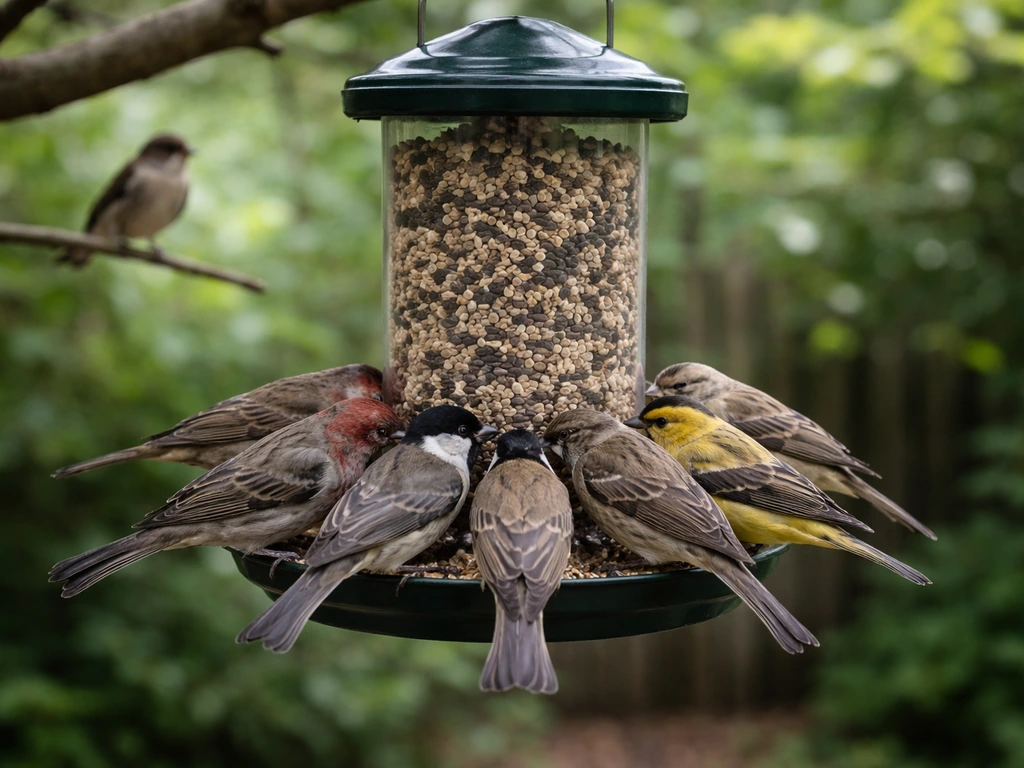
The biggest documented risk from bird feeders is disease transmission, and it happens for one simple reason: feeders concentrate birds. In the wild, birds of different species rarely interact so closely or so repeatedly in one spot. At a feeder, they crowd together, share surfaces, and mix in ways that are genuinely unusual for them. That contact creates fast transmission routes for pathogens that would otherwise spread much more slowly.
The diseases tied to feeders are not minor. Audubon lists house finch eye disease (mycoplasmal conjunctivitis), salmonellosis, aspergillosis, avian pox, and avian flu among the illnesses birds can spread through feeders. House finch eye disease in particular has been directly associated with feeder use, with the U.S. Fish and Wildlife Service specifically noting that conjunctivitis in house finches is linked to feeder contact. Salmonellosis spreads through fecal contamination of seed, which happens constantly on busy feeders. Aspergillosis, a fatal fungal lung infection, comes from moldy food, and wet or dirty feeders grow that mold fast.
Dirty and wet feeders are the core problem here. When seed gets wet, sits in a feeder tray, and mixes with droppings, you have a petri dish. Audubon is direct about this: dirty or wet feeders can grow deadly mold and actively increase cross-contamination between birds. Letting feeders dry completely before refilling is one of the simplest things you can do, and it matters more than most people realize.
Predators and unwanted wildlife: the other side of the problem
Disease isn't the only risk. Feeders attract attention from more than just songbirds. Cats, hawks, raccoons, squirrels, and rats are all drawn to the activity and food supply around a busy feeder. Window strikes also increase when feeders are placed too close to glass, since birds flushed by a sudden predator can hit a window before they have time to react. These aren't theoretical risks; they're things you can observe happening in your own yard within days of putting up a feeder.
Feeders can also draw in invasive or aggressive species that then outcompete or harass the native birds you were trying to help. European starlings and house sparrows, for example, are attracted to certain feeder setups and can dominate the space, driving off other species. If your feeder is drawing in wildlife you weren't planning to host, that's a sign that something about the placement or food type needs adjusting, not necessarily that you need to stop feeding altogether.
It's also worth thinking about the broader picture here. Questions like whether bird feeders are good for the environment get complicated when you factor in the wildlife interactions they create, including whether spillage attracts rats or whether feeder activity disrupts local predator-prey dynamics.
Feeder setup and placement: how to reduce the risk
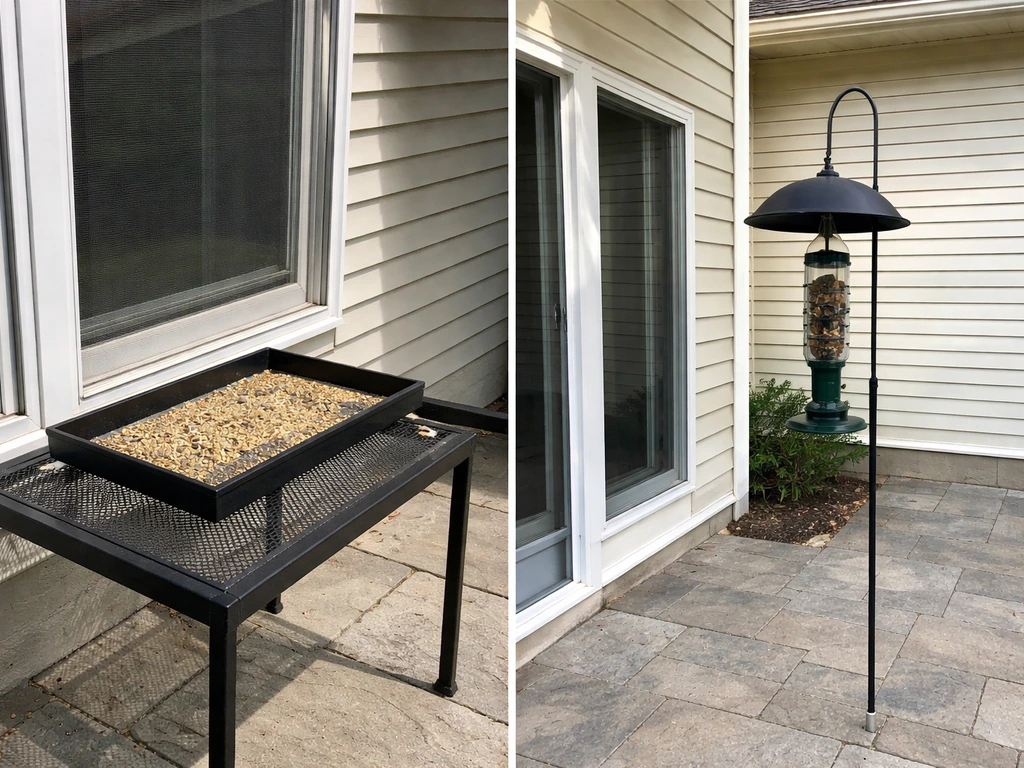
Feeder style matters more than most people think. Platform feeders, which are flat raised surfaces with food spread across them, are among the riskiest designs. Project FeederWatch is clear that food spread on flat surfaces accumulates feces and wet seed much faster than tube or hopper feeders, and that spreading food directly on the ground should be avoided entirely. If you're currently using a platform tray, you don't have to get rid of it, but you need to clean it more frequently than other feeder types and ideally choose one with drainage holes.
Placement is equally important. Position feeders either very close to windows (within 3 feet) so birds can't build up fatal flying speed, or far enough away (10 feet or more) that they have room to react. Keep feeders away from dense shrubs where cats can hide, and use baffles on poles to reduce access from ground-based predators. Spacing multiple feeders apart reduces crowding and lowers the intensity of bird-to-bird contact.
Choosing the right feeder equipment is also part of the ethics of feeding. If you're curious about the broader question of responsibility here, the conversation around whether bird feeders are ethical covers these tradeoffs in more depth, including what it means to commit to feeding birds safely over the long term.
What to feed (and what to avoid)
The wrong food can harm birds directly, either through poor nutrition or through spoilage. Avoid these common problem foods and situations:
- Bread, crackers, or processed human food: these have almost no nutritional value for birds and can fill them up without giving them what they need to survive.
- Salted or flavored seeds and nuts: salt is harmful to birds in the amounts found in human snack foods.
- Moldy or wet seed: never top off a feeder that still has damp or clumped seed in it. Empty it out, let it dry, then refill.
- Old suet in warm weather: suet goes rancid quickly above about 50°F. In spring and summer, switch to no-melt suet formulas or skip suet entirely.
- Seed mixes with a lot of filler: cheap mixes often contain red milo, wheat, and oats that most songbirds reject, leaving rejected seed to rot on the ground below.
Better choices are black-oil sunflower seeds (eaten by a wide range of species), nyjer (thistle) for finches, plain unsalted peanuts for jays and woodpeckers, and safflower seed, which is generally ignored by squirrels and starlings. Matching your food to the birds you actually want to attract is one of the best ways to reduce waste and unwanted visitors at the same time.
If you want a low-effort, lower-risk option, it's worth knowing that pine cone bird feeders made with peanut butter and seed are a simple DIY approach that many people find effective and easier to manage than a permanent installation.
Cleaning and maintenance: the routine that actually matters
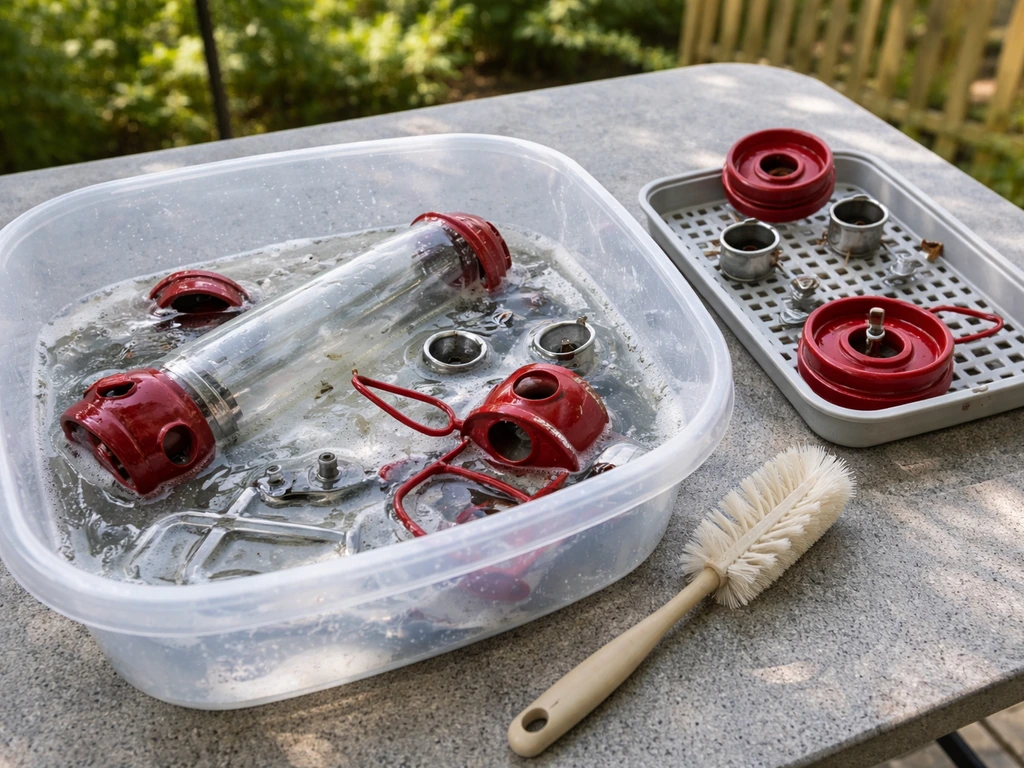
If there's one thing to take away from everything above, it's this: cleaning is the most important feeder safety practice, and most people don't do it often enough. Project FeederWatch recommends cleaning seed feeders about once every two weeks as a baseline, and more frequently during warm weather, wet conditions, or periods of heavy bird traffic. All About Birds (Cornell Lab) likewise advises cleaning seed feeders about once every two weeks as a general rule, and more often during heavy use, wet weather, or if salmonella is reported nearby or sick birds are seen in your yard cleaning seed feeders about once every two weeks as a baseline. During summer, consider bumping that to once a week.
Here's the cleaning method that works: take the feeder apart fully, scrub all surfaces with a diluted bleach solution (roughly one part bleach to nine parts water), rinse thoroughly, and let it dry completely before refilling. Hot water dishwashing is another option if your feeder is dishwasher-safe. The drying step is non-negotiable; a damp feeder that gets refilled immediately is a perfect environment for mold.
Don't forget the area below the feeder. Raking up or removing spilled seed and hulls regularly prevents ground-level disease accumulation and reduces the attraction for rats and other pests. Bird baths near feeders need cleaning too, at roughly the same frequency.
| Task | Recommended Frequency | Why It Matters |
|---|
| Full feeder cleaning (bleach solution + dry) | Every 1-2 weeks (more often in warm/wet weather) | Prevents mold, bacteria, and fecal contamination |
| Refill check (remove wet or clumped seed) | Every 2-3 days in damp weather | Wet seed grows aspergillosis-causing mold quickly |
| Ground cleanup below feeder | Weekly | Reduces pest attraction and ground-level disease spread |
| Bird bath cleaning | Every 1-2 weeks | Standing water is a disease transmission point |
| Suet check in warm weather | Every few days above 50°F | Rancid suet is harmful and attracts flies |
When your feeder is causing problems: what to watch for and when to stop
Watch the birds at your feeder actively, not just passively. If you notice birds with swollen or crusty eyes, birds sitting fluffed up on the ground, lethargy, or unusual clustering behavior, those are signs of illness. When you see sick birds, the right move is to take the feeder down immediately.
Wisconsin DNR specifically recommends removing the feeder or birdbath if sick or dead birds are found nearby and washing and disinfecting the equipment with a 10% bleach solution before putting it back up at least a week later take the feeder down immediately. Both the RSPB and the U.
S. Fish and Wildlife Service recommend stopping feeding for at least two weeks if you suspect disease, emptying bird baths, and deep cleaning all equipment before putting anything back out. The goal is to break the concentration of birds so that sick individuals disperse and don't continue spreading illness to healthy ones.
Beyond disease, there are a few other situations where pausing or stopping feeding is the responsible call:
- You're seeing predators (especially cats or hawks) hunting birds at or near the feeder regularly and can't change the placement.
- You've noticed rats, raccoons, or other unwanted wildlife feeding on spilled seed and can't solve it through feeder placement or catch trays.
- You're going away for more than a few days and no one can clean and monitor the feeder while you're gone.
- It's late spring through summer and you're in a region where natural food is abundant, reducing how much supplemental feeding is actually needed.
- You're near an active bird flu outbreak in your area, in which case local wildlife agencies may specifically advise taking feeders down temporarily.
Stopping temporarily is not failure. It's actually the responsible choice in the situations above, and you can always start again when conditions improve. The birds won't become dependent on your feeder to the point that removing it harms them, as long as you haven't been their only food source through a harsh winter. Outside of those extreme cold-weather situations, wild birds are resourceful and will find food elsewhere.
The bottom line is that bird feeders sit somewhere in a genuine grey zone. They are not automatically good or automatically bad. A feeder that gets cleaned regularly, stocked with appropriate food, placed thoughtfully, and monitored for problems is genuinely beneficial for local birds, especially in winter and in fragmented or urban habitats. A feeder that gets ignored, filled with cheap seed, never cleaned, and placed next to a window or a cat's favorite hiding spot can do real harm. You're the variable that determines which kind yours is, and the fixes are specific, achievable, and worth doing.