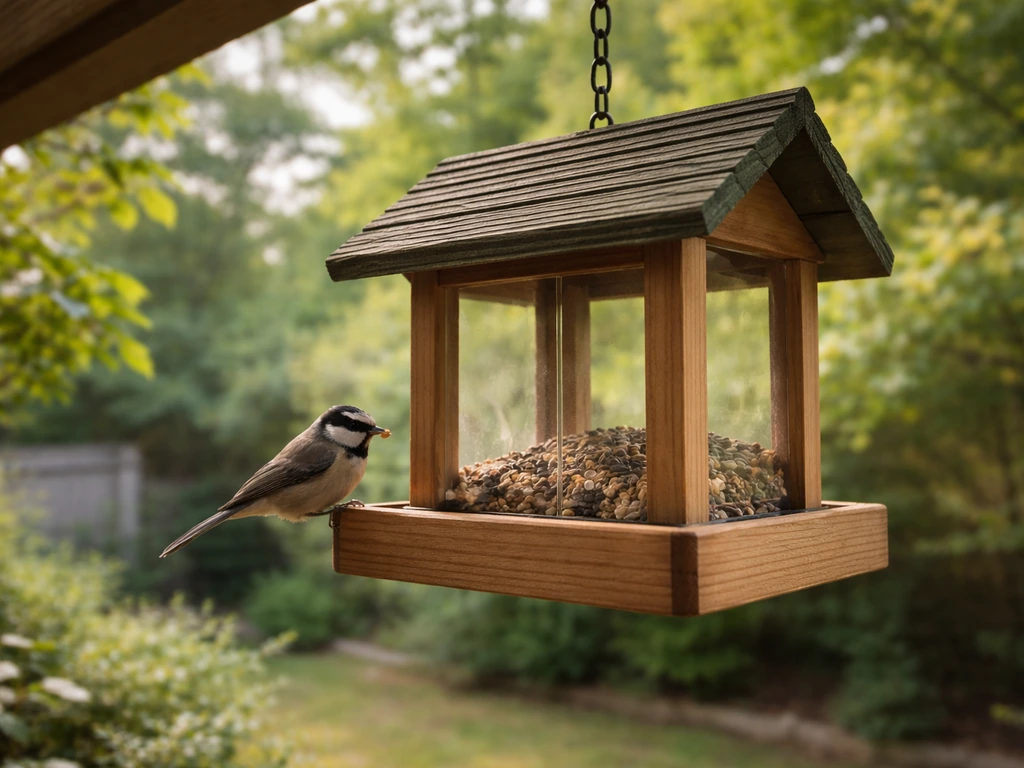
Pine cone bird feeders are genuinely good for birds when you make them with safe ingredients, hang them at the right time of year, and take them down before they go rancid or moldy. They work best in fall and winter, they attract a solid mix of species, and they cost almost nothing. The catch is that fat-based coatings can turn harmful fast in warm weather, and the seed coating can become a disease risk if it gets wet and sits for too long. Virginia DWR advises avoiding suet and other fat-based offerings during warm weather because they can quickly go rancid and/or melt and stick to birds' feathers fat-based coatings can turn harmful fast in warm weather. Done right, they're a legitimate feeding option. Done carelessly, they can cause real harm.
Are Pine Cone Bird Feeders Good for Birds? Safety Tips

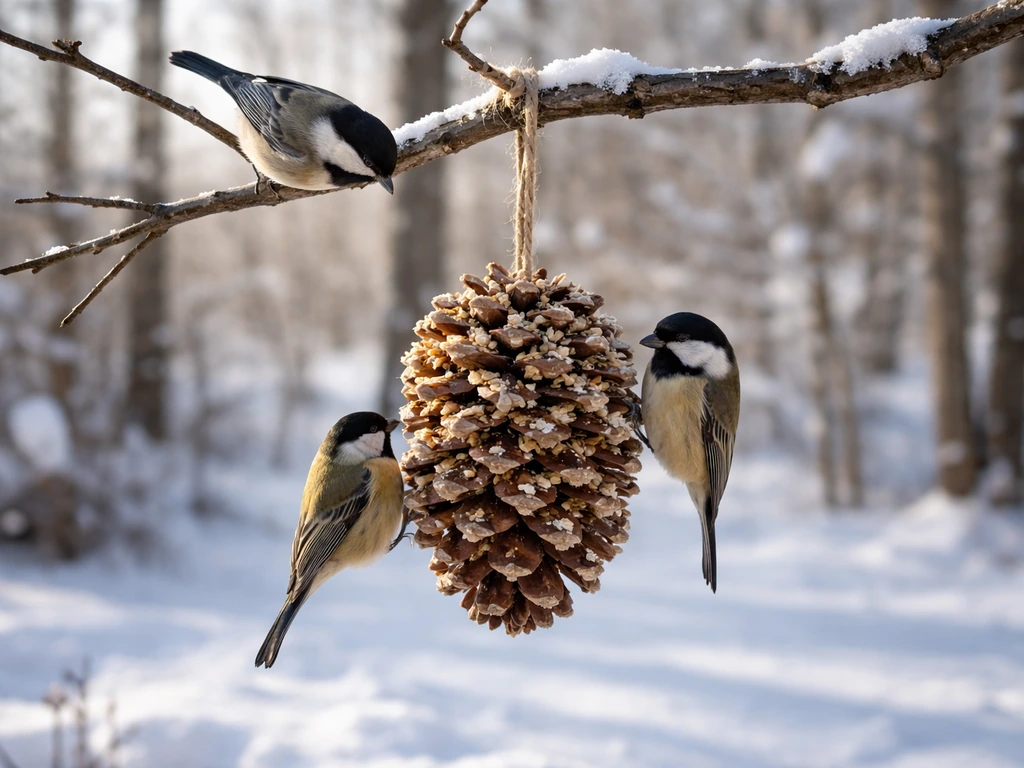
What pine cone bird feeders are and how people make them
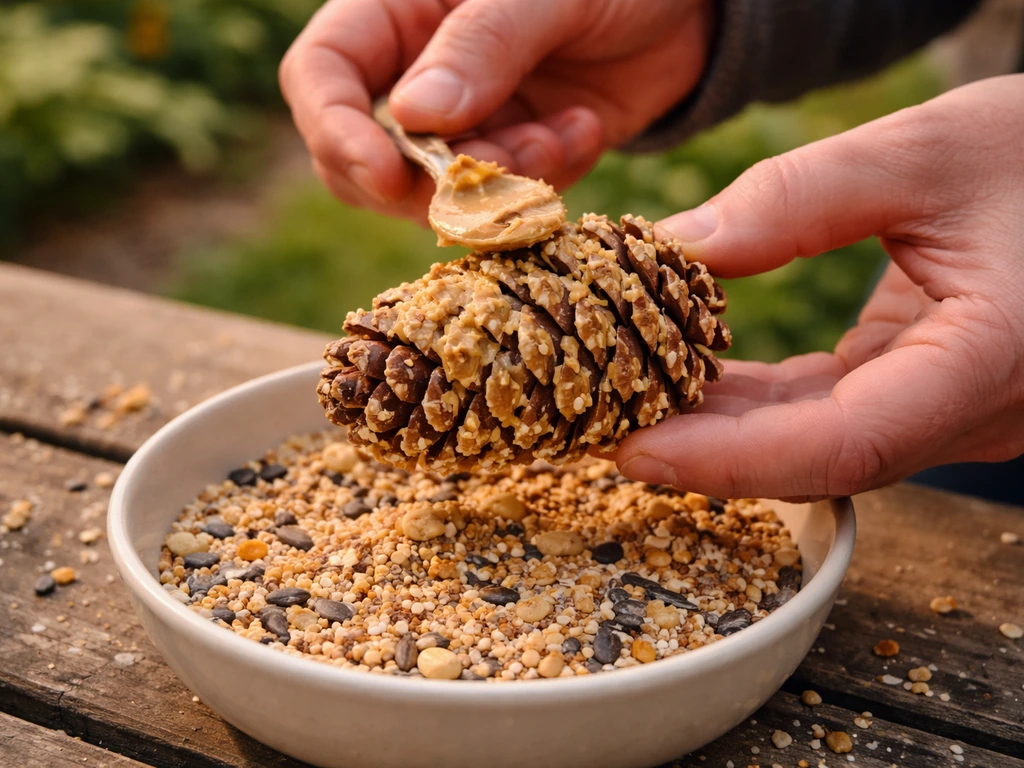
A pine cone bird feeder is exactly what it sounds like: a pine cone coated in a fat-based binder and then rolled in birdseed so the seed sticks to the surface. Birds land on the cone and pick off seeds and fat as they would from a suet cake or natural food source. The whole thing is hung by a string tied around the top of the cone.
The binder is usually one of three things: peanut butter, another nut butter (almond or sunflower butter are popular alternatives), or suet/shortening. You spread it into the gaps between the cone's scales, then roll or press birdseed into the coating until the surface is well-covered. Some people make their own suet blend; others buy ready-made suet-and-seed cakes and press the cone into the mix while it's still soft. Either approach works. The key point is that the cone itself is just a scaffold: the fat and seed are the actual food.
This is a craft feeder. It's not engineered to dispense food cleanly or protect seed from the weather. That distinction matters when you're thinking about safety and maintenance, which we'll get into shortly.
Are they actually safe and bird-friendly? The honest trade-off
The short version: yes, when the conditions are right, and no, when they're not. Here's how to tell which situation you're in.
What works in their favor
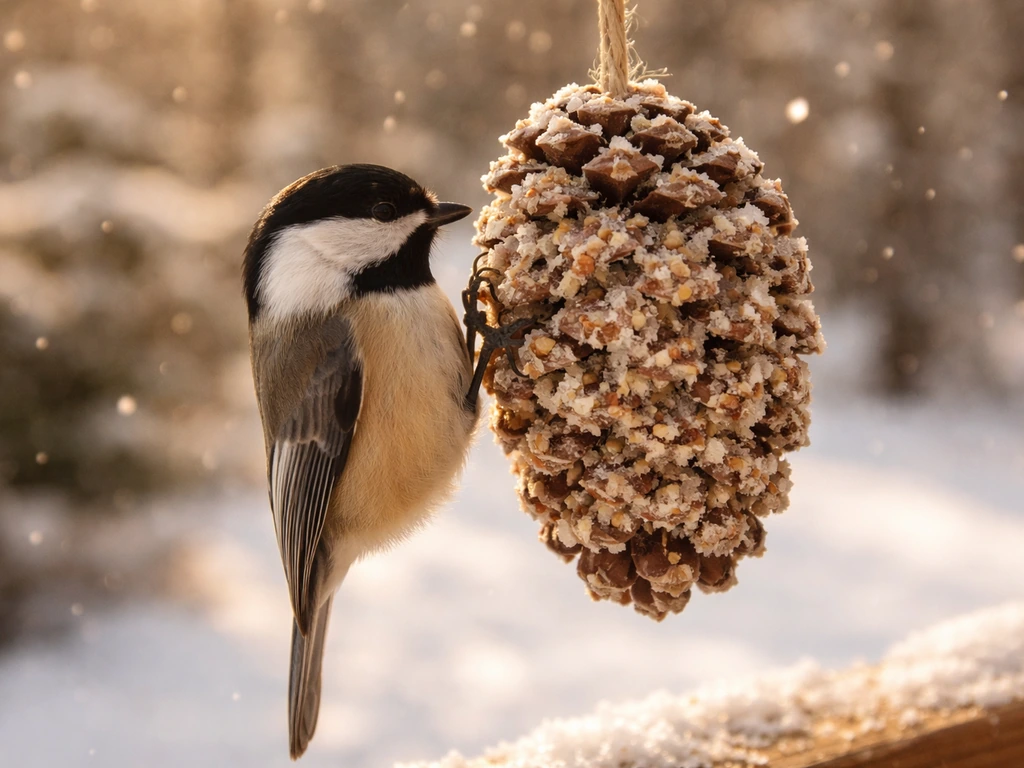
- Fat is a high-energy food source birds genuinely need in cold weather. Chickadees, woodpeckers, and nuthatches actively seek out fat-rich foods in winter, and a well-made pine cone feeder delivers that.
- They're inexpensive and quick to make, which lowers the barrier to getting something nutritious in the yard when temperatures drop.
- The cone's natural structure gives birds something to grip and cling to while feeding, which suits species that naturally forage on bark and woody surfaces.
- There are no added dyes, preservatives, or artificial ingredients if you use plain nut butter and quality seed, which makes them as clean a food source as most commercial suet cakes.
Where things can go wrong
- Fat goes rancid in warm weather. The Virginia Department of Wildlife Resources is direct about this: suet and fat-based offerings can quickly go rancid in heat and can melt and stick to birds' feathers, which is a genuine welfare concern, not just a hygiene issue.
- Wet seed grows mold fast. Because the seed coating sits exposed to the elements with no tray or shell, rain or dew can saturate it within a day or two. Moldy seed carries pathogens that spread disease, including salmonella.
- Droppings accumulate on and around the cone. Birds perch and feed directly on the surface, and fecal contamination can spread disease to the next bird that visits.
- There's no easy way to clean a pine cone feeder. Unlike a tube or platform feeder you can scrub with a diluted bleach solution, a coated pine cone isn't really cleanable. When it's done, it's done.
- They scatter seed on the ground, which attracts rodents and other wildlife you may not want in the yard.
The big-picture question about whether feeding birds is beneficial or risky in general is worth thinking about too. Pine cone feeders share the same disease-transmission concerns that apply to any supplemental feeding setup, just with fewer controls than a purpose-built feeder. Whether a specific feeder is ethical often comes down to safety and maintenance, not just what birds like to eat are bird feeders ethical.
Which birds visit and what food they're really after
The fat-and-seed combination on a pine cone feeder draws in species that naturally forage on bark, wood surfaces, and dense vegetation. In practice, that means chickadees, nuthatches, and downy or hairy woodpeckers are your most likely regulars. Blue jays will visit if the seed coating includes larger pieces like sunflower seeds or crushed peanuts. Tufted titmice are another consistent visitor.
The fat component is actually more of a draw than the seed for many of these species, especially in cold weather. Chickadees and woodpeckers benefit significantly from quality fat sources during winter. If you want to track what's working, spend a few mornings watching which species land, how long they stay, and whether they're actually eating or just investigating. That tells you whether the food you've offered is hitting the mark.
In terms of what seed to use as the coating: black oil sunflower seed attracts the widest range of species. Mixed seed works, but avoid mixes heavy in milo or millet if you're not specifically targeting ground-feeding birds, since those species won't interact much with a hanging cone feeder. Nyjer (thistle) is too small to adhere well. Crushed or chopped peanuts add protein and draw woodpeckers and jays more reliably.
How to make and set them up safely
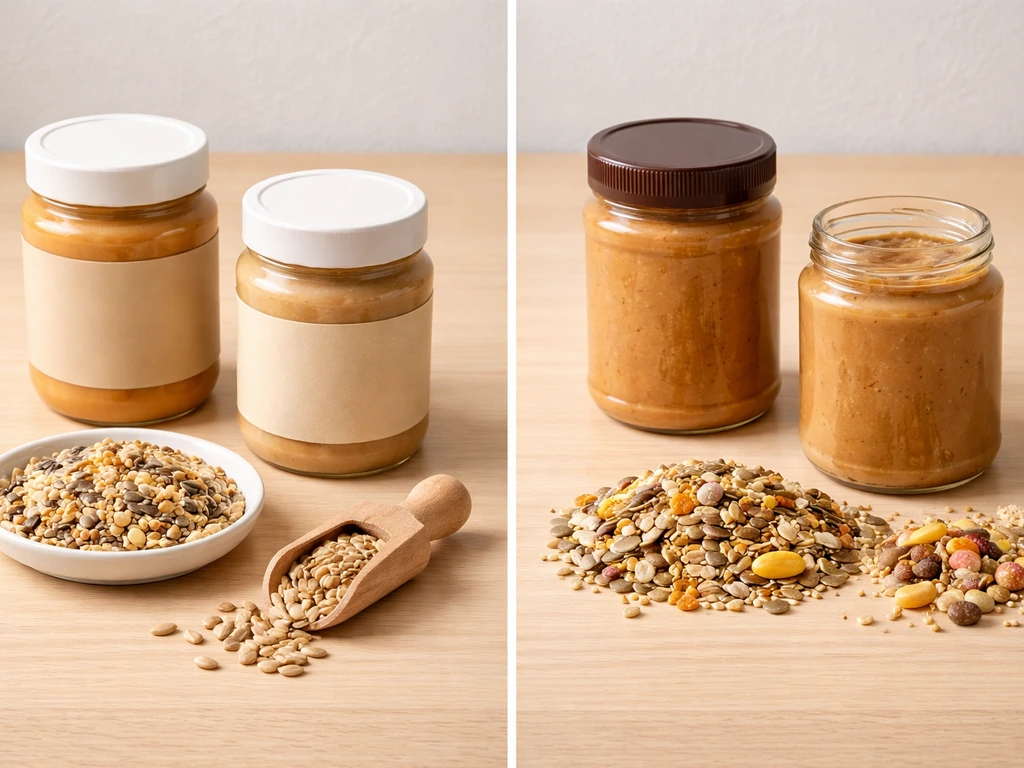
The ingredients you choose matter more than the technique. Here's what to use and what to avoid.
| Ingredient | Safe to use? | Notes |
|---|---|---|
| Plain peanut butter | Yes | Most common binder; use natural or no-salt varieties when possible |
| Almond or sunflower butter | Yes | Good alternatives if you want to avoid peanuts |
| Suet (rendered beef fat) | Yes, in cold weather only | Melts and goes rancid above about 50°F; only use in winter |
| Vegetable shortening | Acceptable | Holds up slightly better than suet in mild temperatures but still not warm-weather safe |
| Coconut oil | Use caution | Melts at around 76°F; only practical in genuinely cold conditions |
| Black oil sunflower seed | Yes | Best all-around seed coating; broadest species appeal |
| Mixed birdseed | Yes, with caveats | Avoid heavy milo/millet mixes unless targeting sparrows or doves |
| Salted peanut butter | Avoid | High sodium is harmful to birds; always use unsalted or low-salt options |
| Honey | Avoid | Can promote fungal growth and is not appropriate for birds |
| Artificial flavorings or sweeteners | Avoid | No nutritional value and potentially harmful |
To assemble: tie a 12-inch piece of string or twine around the top of the cone before coating it, since it's nearly impossible to attach after. Spread peanut butter or softened suet generously into the gaps between the scales, then press or roll the cone in birdseed until it's well coated. Let it firm up in the refrigerator for 30 minutes before hanging if the binder is soft. The firmer the binder, the less it'll drip or slump when temperatures fluctuate.
Where to hang them, when to use them, and how to keep them from becoming a problem
Placement
Hang pine cone feeders from a branch or hook at least 5 feet off the ground, ideally positioned where you can actually see them from a window. That matters not just for enjoyment but because you need to check them regularly. Place them near shrubs or trees so birds have cover to retreat to, but not so close to a fence or trunk that squirrels can reach the cone directly. A 10-foot clearance from any climbing surface is a reasonable target.
Hang them over a hard surface like a patio or deck if possible, rather than over grass or garden beds. When seed drops (and it will), it's much easier to sweep or rake up from a solid surface than to dig out of soil. This matters for hygiene as much as tidiness: seed debris and droppings that sit on the ground can transmit disease and attract rodents.
Seasonal timing
Fall through early spring is when pine cone feeders make sense. In practice, that means roughly November through March in most of North America. Once daytime temperatures regularly climb above 50°F, fat-based coatings start to soften, drip, and become rancid much faster. The RSPB in the UK explicitly advises against fat and certain high-protein offerings between May 1 and October 31 due to increased disease-spread risk in warmer months. That same guidance is a key reason many people ask whether bird feeders are bad for birds fat and certain high-protein offerings. The same logic applies here. If you're reading this in late spring or summer and wondering whether to put one out, the honest answer is: wait until fall.
Maintenance and when to take them down
Pine cone feeders can't be cleaned the way a tube feeder can, which means your maintenance window is short. Check them every few days. If the seed coating looks wet, discolored, or smells off, take it down immediately and discard it. In ideal cold, dry conditions you might get one to two weeks out of one. In wet or mild weather, it may go bad in two or three days.
For comparison, Cornell Lab's All About Birds recommends cleaning conventional feeders at least every two weeks, and more often in wet weather or when sick birds are spotted. A pine cone feeder doesn't give you that reset option, so the bar for taking it down should be lower than you might think. When in doubt, toss it. A new one takes ten minutes to make.
Rake or sweep up any fallen seed and droppings from the ground below the feeder every week. Pennsylvania Game Commission notes that Salmonella can spread through food or water contaminated with feces from an infected bird or mammal, and it advises cleaning bird feeders with a 10% bleach solution (9 parts water to 1 part bleach) and removing feces and discarded seed from the ground salmonella as a risk. Wet, moldy seed on the ground is a disease vector and a rodent magnet. The U.S. Fish & Wildlife Service specifically calls out salmonella as a risk in wet, contaminated seed, and it can grow in exactly the kind of debris that accumulates beneath a dripping pine cone feeder.
Squirrels, rats, and mess: how to reduce problems
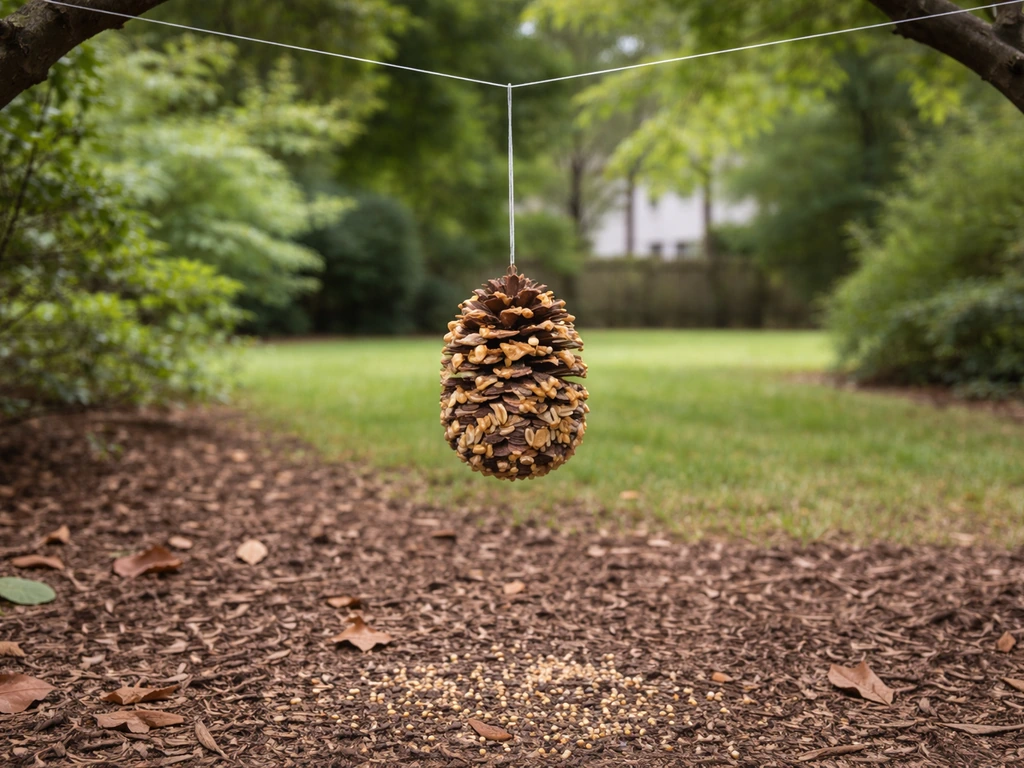
Fat and seed attract more than birds. Squirrels will find a pine cone feeder quickly, and in urban or suburban areas, ground debris can draw rats, raccoons, and in some regions even bears. Here's how to keep that manageable.
- Hang the feeder on a thin wire or monofilament line rather than a thick branch so it's harder for squirrels to reach. The line should be at least 10 feet from any branch or structure they can leap from.
- Use a pole-mounted baffle (a smooth metal sleeve or dome) if you're hanging from a shepherd's hook rather than a tree branch. The Michigan DNR describes this as the most effective squirrel deterrent for pole-mounted setups.
- Rake up fallen seed daily if rodents are a concern in your area. The Buckinghamshire Council recommends catch trays on feeders to reduce ground scatter, but since pine cone feeders don't accommodate trays, raking is the alternative.
- Don't leave the feeder out overnight if you live in an area with raccoons or bears. Both are attracted to fat and seed, and a pine cone feeder is an easy target.
- Limit the number of feeders you have out at once. One or two well-maintained feeders with regular ground cleanup create far less of a problem than multiple feeders going unchecked.
Mess is unavoidable with pine cone feeders. The open, drip-prone design means seed and fat residue will land on the ground. You can minimize it with good placement and frequent cleanup, but if you can't commit to that, a cleaner feeder type is the smarter choice.
When pine cones aren't the right tool for the job
Pine cone feeders are a great low-cost way to get started or to supplement an existing feeding setup. If you’re wondering whether bird feeders are good for birds in general, pine cone feeders can be a helpful option when used seasonally and kept safe and fresh are bird feeders good for birds. But they're not always the best option, and there are situations where a proper feeder serves birds better.
- If it's spring or summer: skip the fat-coated cone entirely. Heat makes the binder rancid and potentially dangerous. A tube feeder with fresh black oil sunflower seed, or a nyjer sock for finches, is a much safer warm-weather option.
- If you want to attract a specific species reliably: pine cone feeders are generalist tools. A suet cage feeder gives woodpeckers a consistent, purpose-built feeding surface. A tube feeder with a specific seed type (nyjer for goldfinches, safflower for cardinals) gets you better species targeting.
- If rodents or squirrels are already a problem: a properly baffled tube or hopper feeder with a catch tray is far easier to manage than a dripping pine cone that scatters seed freely.
- If you can't check on it frequently: pine cone feeders go bad fast, especially in anything less than ideal conditions. If you travel or don't have time to monitor, a conventional feeder with a longer safe window and cleanable surfaces is the more responsible choice.
- If sick birds have been reported in your area: stop all supplemental feeding until the issue passes, regardless of feeder type. A pine cone feeder's surface is impossible to disinfect, so it becomes a liability in a disease situation.
That said, pine cone feeders do have a real place in a thoughtful backyard feeding setup. They're accessible, they use natural materials, and when used seasonally with good ingredients and regular replacement, they provide genuine nutritional value to the birds that visit. Think of them as a winter-only, short-use supplement rather than a permanent fixture, and they'll do more good than harm. When set up and maintained properly, pine cone bird feeders can be good for birds and their local ecosystem, not just for the feeder birds. Treat them as a set-it-and-forget-it feeder, and the calculus flips.
FAQ
Are pine cone bird feeders good for birds in summer or mild weather?
Usually not. Once daytime temperatures are consistently warm (around the mid 50s Fahrenheit and above), the fat softens and can drip, making rancid or contaminated food more likely. If you still want to feed in warm months, choose a purpose-built option with better protection and strict daily cleanup, or wait until fall to put pine cone feeders back out.
What fat or binder is safest, peanut butter, other nut butter, or suet?
All can work, but fat-based binders spoil fast in heat. Use a plain, bird-safe product without added salt, sugar, or flavorings, and prefer fresh suet or suet mixes made for birds. Also, thicker binders hold better on the cone, which reduces drips and the mess that can become a disease risk.
Can I use lard or cooking fat instead of suet?
It depends on what it is and whether it is mixed with anything harmful. Plain, unseasoned animal fat can be bird-appropriate, but many kitchen fats include salt, seasonings, or additives. If you do not know exactly what’s in it, skip it and use a bird-specific suet product or a clearly labeled, unsalted nut butter.
How do I know when a pine cone feeder has gone bad?
Look for wet patches, dark discoloration, a greasy film that seems runny, and any off smell (sour, rancid, or strongly fermented). If any of those show up, take the feeder down right away and discard it, because you cannot reliably deep-clean the cone like you can with a tube feeder.
Do pine cone feeders attract the same birds every time?
Not always. They often favor bark and wood foragers like chickadees and woodpeckers, but bird choice depends heavily on the seed size and type in the coating. If jays visit more than small birds, it often means the coating has larger pieces like sunflower seeds or chopped peanuts.
Is black oil sunflower seed always the best option for pine cone feeders?
It’s a strong default because it adheres well and supports a wide range of species, but it’s not ideal for everything. If you target woodpeckers more directly, add crushed or chopped peanuts, and if you use a mixed coating, avoid heavy milo or millet unless you specifically want ground-feeding species (which a hanging cone won’t serve well).
Can I coat the pine cone while it’s warm or just leave it to set?
For best results, firm it before hanging. If the binder is soft or warm, it will slump and drip more, which increases mess and contamination risk. Refrigerating for about 30 minutes helps it hold its shape when temperatures fluctuate.
What’s the best height to hang a pine cone feeder to reduce predators?
At least 5 feet off the ground, and keep it away from climbing access points. A practical rule is to maintain roughly 10 feet of clearance from trunks, fences, and other surfaces squirrels can use to reach it. If it’s within easy reach of a climbing route, rodents will often find it regardless of the feeder design.
Should I hang the feeder over grass, or does it matter?
It matters a lot for hygiene. Dropped seed and droppings collect differently, and you want a surface where you can clean quickly, like patio or deck areas. If it’s over soil or garden beds, debris can sit longer, raising the odds of disease spread and attracting rodents.
How often should I replace the pine cone feeder? Can I reuse the same cone?
You can reuse a cone for a short season if it stays dry and you make fresh coatings, but you cannot “sanitize” it the way you can with many conventional feeders. If the cone becomes sticky, discolored, or repeatedly collects moldy seed, replace it rather than trying to clean it back to safe condition.
Is it okay if some birds peck at it briefly and leave?
Brief visits can be normal, but if you see lots of lingering, wet, or messy feeding, conditions are likely worsening. Watch whether birds land and eat for more than a second or two, and monitor the feeder surface. If the coating starts to look unstable or wet, remove it even if birds are still visiting.
What’s the biggest common mistake with pine cone bird feeders?
Putting them out outside the season and failing to remove the feeder quickly when it starts to soften or get wet. Because you cannot clean them the same way as other feeders, the “maintenance window” is short, and letting rancid or moldy residue sit is the main hazard.
Are Bird Feeders Good for the Environment? Pros and Fixes
Balanced verdict on are bird feeders good for the environment, plus fixes for disease, waste, placement, and food choice