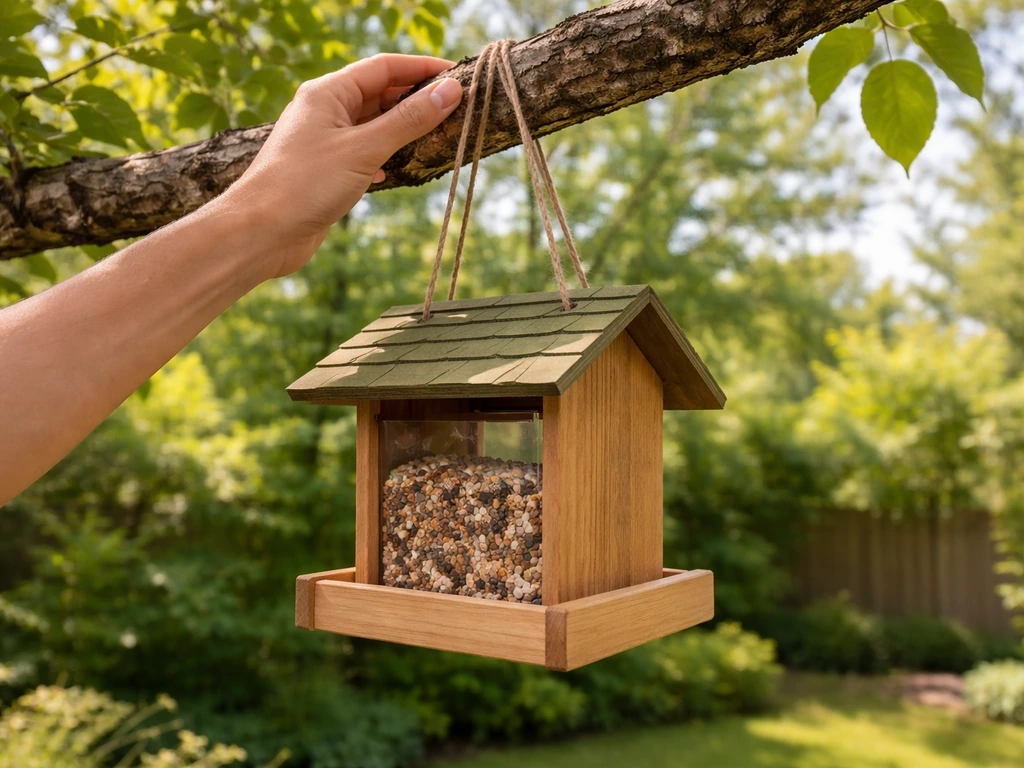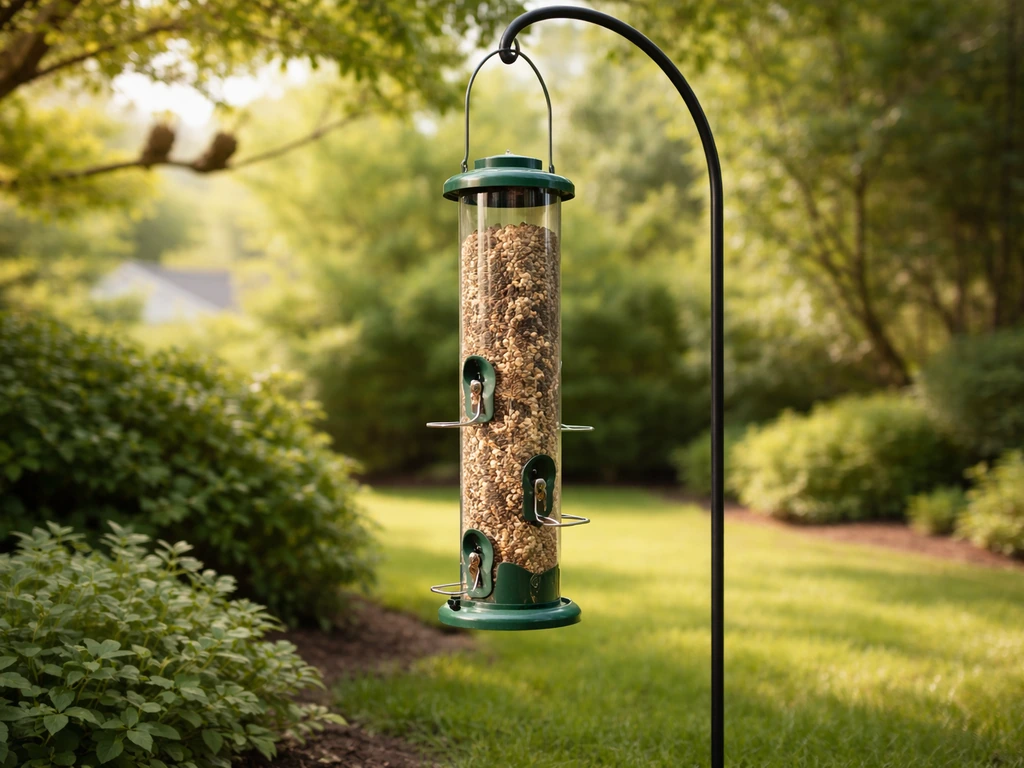
Put oriole feeders out roughly one week before you expect your first oriole to arrive, and that window shifts a lot depending on where you live. In the Gulf Coast and Deep South, that means late February to early March. Mid-Atlantic yards should aim for late March to early April. If you're in New England, the Upper Midwest, or New Hampshire specifically, early to mid-May is the target, with many birders shooting for May 1–7 as a practical starting point. The core idea is to have nectar, jelly, and orange halves ready before the first birds pass through, because orioles scout fast, and if there's nothing on offer when they arrive, they'll move on and may not double back.
When to Put Out Oriole Bird Feeders: Seasonal Timing Guide

Eleanor Hartwick
17 Jul 2026
Quick answers: timing and safety at a glance
Yes, it is safe to put out oriole feeders, provided you keep up with cleaning and use the right foods. If you're asking "can we put out bird feeders yet", use the regional timing above and local eBird reports to pick the right moment for your area. For broader guidance on general feeder safety, see our guide on is it safe to put out bird feeders. The main risks, mold in nectar, fermented jelly, disease transmission between birds at crowded feeders, are all manageable with a consistent hygiene routine. Oriole feeders don't reliably attract bears or raccoons the way seed or suet feeders do (though nothing is guaranteed), and the foods themselves pose no toxicity concern to birds when prepared correctly. The two biggest practical mistakes people make are putting feeders out too late (after the spring wave has already passed) and not cleaning them often enough once temperatures climb above 80°F.
Oriole migration timing: a practical calendar by region
Baltimore Orioles and Orchard Orioles follow a latitude-structured migration that eBird's Status and Trends data illustrates clearly in weekly abundance maps. Birds wintering in Central America and northern South America push northward through the Gulf states starting in March, then work steadily through the Southeast and mid-South during April, reaching the mid-Atlantic and lower Midwest in late April, and arriving in New England, the upper Great Lakes, and the northern Plains in late April to mid-May. Orchard Orioles travel a similar route but tend to arrive a few days to a week later than Baltimores at most northern sites.
Importantly, arrival timing isn't fixed to the calendar, it shifts with year-to-year temperature variation. Research analyzing decades of citizen-science data confirms that spring phenology (green-up, insect emergence) responds strongly to accumulated heat, while bird arrival responds more weakly and inconsistently to local temperature cues. What that means practically: don't assume that a warm spring will bring orioles a full two weeks early just because your forsythia bloomed in March. Birds are integrating conditions across their entire migration route, not just your backyard. Use the regional calendar below as a starting framework, then adjust based on local first-sighting reports from eBird in your county.
| Region | Typical First Arrival | When to Put Feeders Out | Notes |
|---|---|---|---|
| Gulf Coast / Deep South | Late February – mid-March | Late February | Earliest arrivals; some overwintering birds possible in extreme south |
| Mid-Atlantic (VA, MD, DE, NJ, southern PA) | Late March – mid-April | Late March | Watch local eBird reports; warm springs can push timing earlier |
| Southeast interior (TN, NC, KY, southern OH) | Early – mid-April | Early April | Orioles follow river corridors; check valleys vs. ridgelines |
| Midwest (IL, IN, OH, MI, WI, MN) | Late April – early May | Mid-to-late April | Upper Midwest end of range closer to May 1–10 |
| Northeast / New England (CT, MA, VT, NH, ME) | Late April – mid-May | Early May (May 1–7) | NH-specific timing discussed below |
| West Coast (CA, OR, WA) — Bullock's Oriole | Late March – mid-April | Late March | Bullock's Oriole rather than Baltimore; Pacific flyway timing differs |
New Hampshire: what to expect and when to act
New Hampshire sits at the northern edge of the Baltimore Oriole's breeding range, and arrival timing here is later and more variable than in southern New England. In most NH locations, the first Baltimore Orioles typically appear between late April and May 10, with peak arrival in the first two weeks of May. The southern tier of the state (closer to the Massachusetts border) generally sees birds a few days earlier than the Lakes Region or the North Country. In colder, higher-elevation areas around the White Mountains, late May arrivals are not unusual.
A practical NH approach: get your feeders cleaned, filled, and hung by May 1. For detailed local timing, see the guide on when to put out bird feeders in NH. For broader timing advice on when can bird feeders go back out, see the regional timing guide for your area. If you miss that window, don't panic, male orioles often arrive before females, so even a May 5–8 setup can catch the main wave. Pay attention to local birding Facebook groups or eBird reports from your county; first-sighting reports from neighboring counties are one of the most reliable short-term indicators you have. The phenological milestones to watch in NH are the bloom of apple and cherry trees (usually late April to early May in southern NH) and the appearance of crabapple blossoms, which correlate well with the energy resources orioles are seeking when they arrive.
Local cues to watch before setting feeders out
Rather than committing to a single calendar date, I find it more reliable to watch for a cluster of local signals that tend to arrive together. None of these is a guaranteed predictor, research is clear that bird arrival timing is only loosely coupled to local growing-degree-days, but they serve as useful checks that conditions are right and that orioles are likely moving through the region.
- First oriole sightings in your county or adjacent counties on eBird: the most direct signal; check weekly during migration season
- Apple, cherry, or crabapple bloom: flowering fruit trees produce nectar orioles actively seek; when these bloom, orioles are typically en route or just arrived in your area
- Tulip poplar or serviceberry bloom: another reliable floral cue in the mid-Atlantic and Southeast, often coinciding with peak oriole passage
- Insect emergence: watch for caterpillars and flying insects in the tree canopy; orioles are partly insectivorous and track insect availability closely
- Consistent overnight temps above 45°F: relevant less as a bird cue and more as a nectar-spoilage consideration — once nights stay mild, nectar ferments faster and cleaning schedules tighten
- Hummingbird arrivals in your area: Ruby-throated Hummingbirds and Baltimore Orioles share much of the same migration corridor; hummingbird first-sighting reports are a rough leading indicator
The USA National Phenology Network (Nature's Notebook) maintains plant phenology observation maps that pair well with eBird arrival data. If you want to get analytical about it, you can compare local first-bloom observations from NPN with county-level first-arrival reports from eBird to calibrate your personal timing for your specific yard. Most backyard birders find that just watching eBird for their county is sufficient.
When orioles visit most: seasonal and daily patterns
Feeder activity follows a predictable arc across the season. For a broader look at seasonal and daily peaks at backyard feeders, see when are bird feeders most active. The spring migration window, roughly two to four weeks after the first arrivals in your area, is usually the most intense period. Orioles are fueling up after a long flight, natural food sources are still limited, and competition from insects and wild fruit is low. This is when you're most likely to see multiple birds at once and to attract birds that aren't going to stay in your yard all summer.
Once breeding starts (typically late May through June in the Northeast and Upper Midwest), activity can drop off noticeably. Orioles shift their diet heavily toward insects to feed nestlings, and females especially become more cryptic. Don't take the feeder down, breeding adults still visit for nectar and jelly, particularly early in the morning, but expect fewer visits than during the spring rush. Activity typically picks back up in late July and August as young birds fledge and start exploring; this late-summer period can produce some of the most entertaining feeder visits if you're patient.
Within a day, orioles are most active at feeders in the early morning (the first hour or two after sunrise) and again in the late afternoon. Midday heat sends them into the canopy, especially during July and August. If you keep missing them, try checking your feeder at first light.
Foods and feeders: what to offer and when to start each
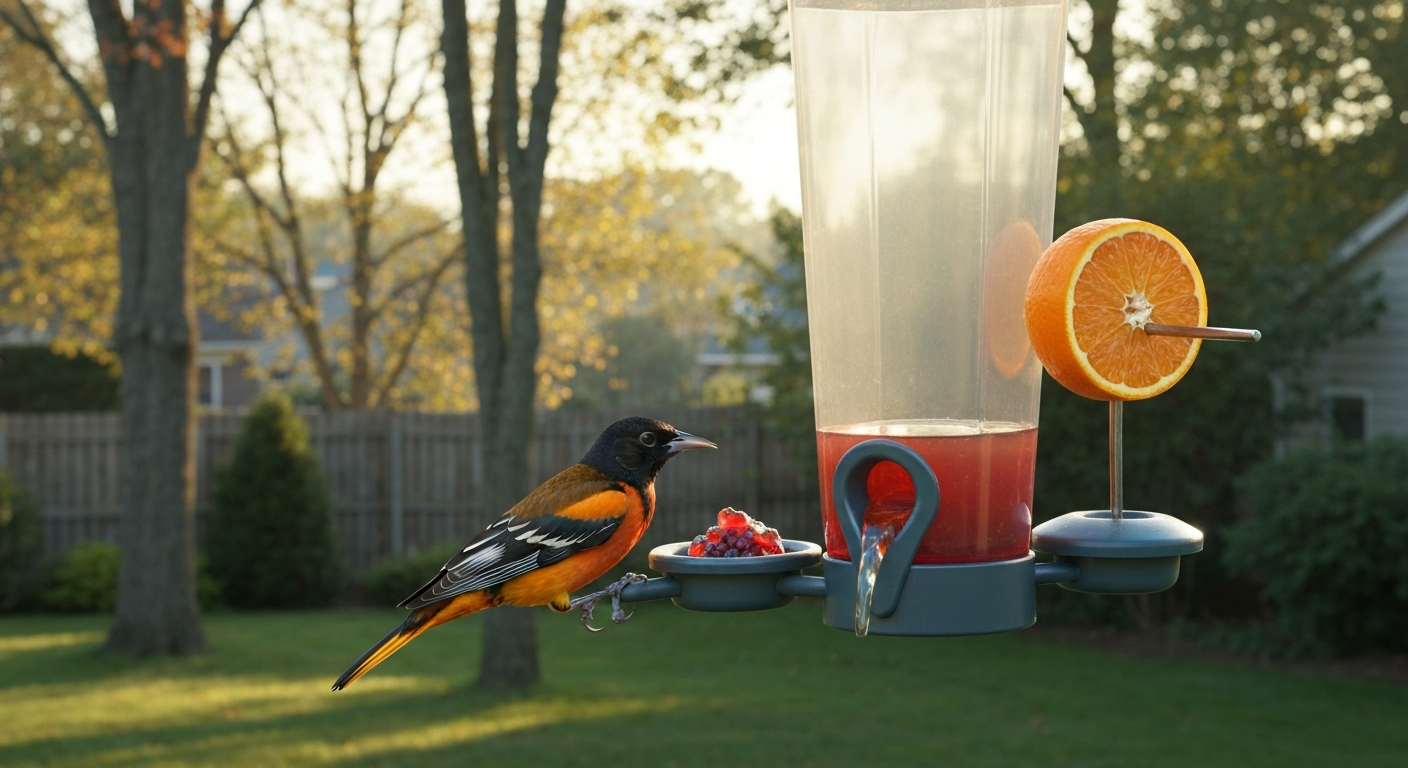
Orioles respond to a small, specific set of foods. The Cornell Lab recommends halved oranges, grape jelly in small amounts, and sugar-water nectar as the three core offerings. Each has a slightly different role across the season, and each comes with its own timing and maintenance considerations.
Sugar-water nectar
Use plain white granulated sugar dissolved in water, no honey (ferments and can cause fungal infections), no artificial dyes, no "nectar mixes. Peer‑reviewed reviews such as 'Nectar as food for birds: The physiological consequences of drinking dilute sugar solutions, Nicolson & Fleming (review)' document that generalized nectar‑feeding passerines tolerate a wide range of sugar concentrations and compositions, supporting the plain white sugar + water recommendation and the use of slightly more dilute mixes for larger, less specialized nectarivores blank" rel="noopener noreferrer">Nectar as food for birds: The physiological consequences of drinking dilute sugar solutions — Nicolson & Fleming (review). " The standard oriole recipe is 1 part sugar to 6 parts water by volume, which is more dilute than the hummingbird ratio of 1:4. This matters: orioles are less specialized nectarivores than hummingbirds and do fine with a lighter concentration, and the more dilute mix spoils slightly more slowly in moderate temperatures. Start offering nectar as soon as you put feeders out in spring, and keep it going through August. Once nights regularly drop below 50°F and no birds have been seen for two weeks, you can stop.
Grape jelly
Grape jelly is highly attractive to orioles and often pulls them in faster than nectar alone during the spring migration push. Use standard store-brand or name-brand grape jelly, no sugar-free versions (xylitol is toxic to birds). The critical rule from Cornell Lab: keep portions very small, about one tablespoon per well, and refresh it daily in warm weather. Excess jelly that gets wet, ferments, or becomes sticky can mat feathers, which in extreme cases impairs flight. Start offering jelly when feeders go out in spring, reduce it once insects and fruit become abundant in your yard (usually mid-June onward), and consider stopping altogether in midsummer heat unless you can refresh it twice daily.
Orange halves
Cut a naval orange in half and impale each half on a spike or set it in a cup on a combination feeder. Orioles love fresh oranges, particularly early in the season. In cooler spring weather, a halved orange will stay fresh for two days; once temperatures climb above 80°F, replace daily to prevent fermentation and wasp attraction. Start with oranges as soon as feeders go out, and taper off as the season progresses, by late June in most northern regions, orioles have shifted to a more insect-forward diet and orange visits drop.
Feeder types that actually work
Dedicated oriole feeders come in three basic styles, and the best option is usually a combination unit that handles all three food types. Look for feeders with large nectar ports sized for an oriole's bill (bigger than hummingbird ports), shallow jelly wells that are easy to clean, and fruit spike attachments for orange halves. Built-in bee guards and ant moats are worth paying for, more on that in the pest section below. Materials matter for cleaning: look for feeders with wide-mouth reservoirs and dishwasher-safe parts. Orange and bright yellow color accents aren't just marketing, orioles are genuinely attracted to orange, and many commercial feeders use it deliberately.
| Food Type | Start Date | Ratio / Amount | Refresh Frequency (warm weather) | When to Stop |
|---|---|---|---|---|
| Nectar (sugar-water) | When feeders go out (per region) | 1 part sugar : 6 parts water | Every 2–3 days; every 1–2 days above 85°F | 2 weeks after last sighting, before first frost |
| Grape jelly | When feeders go out | ~1 tbsp per well | Daily; twice daily above 85°F | Mid-June to July or when insects/fruit are abundant |
| Orange halves | When feeders go out | Half orange per spike/cup | Every 2 days; daily above 80°F | Late June to July; taper as visits decline |
| Mealworms (optional) | After first confirmed sighting | Small dish, ~20–30 worms | Daily | When breeding season winds down in July–August |
Step-by-step seasonal checklist
Spring setup (2 weeks before expected arrival)
- Retrieve feeders from winter storage and inspect for cracks, broken ports, or corroded hardware
- Soak all parts in a 10% bleach solution (1 part bleach to 9 parts water) for 10 minutes, scrub with a bottle brush, rinse thoroughly, and air dry completely
- Check ant moats — fill with fresh water and make sure the moat seal is intact
- Confirm bee/wasp guards are present and unobstructed
- Mix a fresh batch of nectar (1: 6 sugar-to-water ratio) using cool or lukewarm water; do not use hot water as it can caramelize the sugar
- Fill nectar reservoir no more than half-full for the first week — until you confirm birds are visiting, you'll be dumping a lot of unconsumed nectar otherwise
- Add a small amount of grape jelly (about 1 tbsp) to jelly wells
- Impale fresh orange halves on fruit spikes
- Hang feeders in a location with morning sun and afternoon shade, ideally near tall deciduous trees and away from thick shrubs that give cover to cats
Summer maintenance (May through August)
- Replace nectar every 2–3 days in mild weather; every 1–2 days when temperatures exceed 85°F — cloudy, off-color, or sour-smelling nectar should be dumped immediately
- Refresh jelly daily in warm weather; reduce portion size or stop offering jelly during heat waves if you can't maintain a daily refresh schedule
- Replace orange halves every 2 days in mild weather; daily once temps exceed 80°F
- Clean jelly wells and fruit trays with hot water and a scrub brush whenever you refill them — do not let old jelly accumulate
- Do a full bleach cleaning of all feeder components at least once every two weeks during peak summer heat
- Refill ant moats as water evaporates; check weekly
- If you observe sick or lethargic birds at feeders, remove all feeders and do a full bleach cleaning; wait at least 1–2 weeks before putting them back out
- Watch for increased wasp activity around feeder ports; relocate feeders to shadier positions or switch to feeders with better bee guards if wasps become a persistent problem
Fall take-down (September and beyond)
- Once you've gone 10–14 consecutive days with no oriole sightings, you can begin winding down
- Stop offering jelly and oranges first — these attract wasps and raccoons once orioles are gone
- Continue nectar for another 1–2 weeks in case of late migrants, then take it down
- Dump remaining nectar; do not leave old nectar in the feeder
- Do a final full bleach cleaning of all components before storage
- Disassemble feeders, dry completely (moisture in storage causes mold and accelerates plastic degradation), and store in a cool, dry location
Winter storage
- Store cleaned, fully dry feeders in a labeled bin or bag so you can find them quickly in spring
- Note any parts that need replacing (cracked ports, worn gaskets, broken spikes) so you can order them before the next season
- Check stored feeders in February or March — if you're in the Gulf South, spring prep starts soon
Region-by-region decision checklist
Timing isn't one-size-fits-all, and the questions I hear most often come down to specific regional situations. Here's how I'd approach the decision in each main zone.
Gulf Coast and Deep South (TX, LA, MS, AL, GA, northern FL)
- Put feeders out by late February; orioles moving through the Gulf corridor begin appearing in early March
- Heat and humidity accelerate nectar spoilage significantly — plan to replace nectar every 1–2 days from May onward
- Ants and wasps are a major issue; ant moats are non-negotiable here
- Hooded and Orchard Orioles are more likely than Baltimore in parts of Texas and Louisiana — both respond to the same foods
- Fall migration can bring orioles back through from August into October; consider keeping feeders up until mid-October
Mid-Atlantic (VA, MD, DE, NJ, PA, southern NY)
- Target late March to April 1 for feeder setup; peak spring arrival typically runs late April into early May
- Watch for apple and cherry bloom in your area as a reliable local cue
- Baltimore Orioles breed throughout this region; expect steady summer visits from nesting pairs if you maintain feeders well
- Raccoons can be attracted to jelly and orange feeders; use baffles on poles if hanging feeders on accessible structures
Midwest (OH, IN, IL, MI, WI, MN, IA)
- Mid-April to late April for setup in the southern Midwest (Ohio, Indiana, Illinois); aim for late April to May 1 in Wisconsin and Minnesota
- Spring migration through the Midwest can be fast and intense — one or two good windows of feeder traffic that last only a week or two
- Upper Midwest cold snaps can complicate early setup; nectar in near-freezing temperatures won't spoil but birds won't be there yet either
- Baltimore Orioles breed widely here; keep feeders up through late July for resident breeding pairs and fledglings
Northeast including New Hampshire (CT, MA, RI, VT, NH, ME, northern NY)
- May 1–7 is the target setup date for most of this region; southern CT and RI can go out a few days earlier
- In NH specifically: watch eBird county reports in late April; when sightings start appearing in southeastern NH counties, feeders in central and northern NH should go out immediately
- Apple and cherry bloom in your yard is a useful local confirmation signal
- Orioles may only visit for 2–3 weeks during spring migration if they don't stay to breed; in good breeding habitat (tall elms, cottonwoods, open woodland edges), summer resident pairs will extend the feeder season through July
- Take feeders down by late August to mid-September; stragglers are possible but uncommon after September 1 in northern NH
West Coast (CA, OR, WA), Bullock's Oriole territory
- Bullock's Orioles rather than Baltimores are the species to target here; same foods and feeder styles apply
- Put feeders out by late March in California; April for Oregon and Washington
- Scott's Oriole and Hooded Oriole are possible in southern California and the desert Southwest — both respond to nectar and oranges
- Warmer and drier conditions along the Pacific coast mean nectar spoils quickly in summer; shade placement and frequent refills are especially important
- West Coast orioles tend to leave for wintering grounds earlier than Baltimores; plan to take feeders down by late August in most areas
Troubleshooting common problems
Even well-maintained feeders run into problems. Here are the ones I hear about most often, with practical fixes.
| Problem | Likely Cause | Fix |
|---|---|---|
| Ants swarming feeder | No ant moat; moat dried out | Install or refill a water-filled ant moat above the feeder; check weekly |
| Wasps or bees blocking ports | Feeder in full sun; nectar dripping | Move feeder to afternoon shade; switch to a feeder with proper bee guards; check for drips at ports |
| Nectar turns cloudy or syrupy quickly | Temperatures too high; too large a batch made at once | Make smaller batches; replace every 1–2 days in heat; rinse reservoir before refilling |
| Jelly molding or fermenting overnight | Heat; too large a portion left out | Reduce to ~1 tsp at a time; clean wells daily; stop offering jelly in peak heat if you can't refresh twice daily |
| Raccoons raiding the feeder | Accessible hanging point; jelly or oranges as attractants | Move to a pole with a baffle; take feeders in at night temporarily; reduce jelly portions |
| No orioles after several weeks | Feeder went out too late; birds have passed through | Check eBird for local recent sightings; ensure feeders are visible from above; try adding fresh oranges as a visual/scent attractant |
| Orioles visiting briefly then disappearing | Breeding season shift to insect diet; nesting underway | Normal behavior in June–July; keep feeders out for early morning visits; watch for fledglings in late July |
Is it worth doing at all?
That's a fair question, and one worth sitting with. Oriole feeders require more active maintenance than most seed feeders, fresh foods spoil faster, cleaning is more frequent, and the window of peak activity is shorter. If you're not willing to check feeders every day or two during warm weather, there's a real risk of offering food that does more harm than good (fermented jelly, spoiled nectar). The general questions around whether and when to put feeders out at all are worth thinking through honestly. For more detailed guidance on timing, see when to put out bird feeders. But if you can commit to a regular maintenance routine, the reward is real: a Baltimore Oriole at a bright orange feeder on a May morning is one of the more spectacular things a backyard can offer. If you're asking "is it ok to put out bird feeders", the short answer is yes, provided you follow proper cleaning and food guidelines.
FAQ
When should I put out oriole feeders in my region (general calendar)?
Use this regional guideline as a starting point, then adjust for local climate/phenology: - Southern U.S. & Gulf Coast: late February–March. - Southeast & lower mid‑Atlantic: late March–early April. - Mid‑Atlantic & Ohio Valley: mid–late April. - New England & Upper Midwest (including New Hampshire note below): early–mid May. Many birders aim to put feeders out about one week before the typical local first‑arrival week shown by eBird Status & Trends maps. For exact timing see eBird Status & Trends (Baltimore Oriole weekly abundance) and local phenology data (USA‑NPN). Links: eBird ST weekly maps: https://science.ebird.org/status-and-trends/species/balori/abundance-map-weekly; USA‑NPN: https://nps.usanpn.org/.
NH‑specific note: when to put out oriole feeders in New Hampshire?
In New Hampshire expect most orioles (Baltimore and Orchard) to arrive in early to mid May in most years. Put feeders out in late April or by the first week of May for best coverage — or a week before the expected eBird first‑arrival week for your county. Monitor local green‑up (flowering trees, early insects) and adjust if spring is early or late.
Should I use calendar dates or local cues to decide when to start feeding orioles?
Prefer local cues over fixed calendar dates. Combine: - eBird weekly arrival maps for your county/state (estimate typical first and peak arrival weeks). - Phenology cues: tree/flower bloom, insect activity (butterflies, caterpillars), and growing‑degree‑days (GDD) or last‑frost maps. Use USA‑NPN or local extension GDD/last‑freeze data. If those cues show green‑up/insects are active, start feeders ~1 week before expected arrival.
What foods should I offer, and when should I start each type?
Recommended foods and timing: - Sugar‑water nectar (oriole feeders): start when orioles are expected to arrive. Recipe: plain white granulated sugar + water. Use a slightly weaker mix than hummingbird (many practitioners use 1:5 or 1:6 by volume); avoid honey and food coloring. - Grape jelly: offer small amounts in shallow wells or saucers when orioles arrive; refresh daily in warm weather and remove or reduce once natural foods increase. - Fresh orange halves: offer as soon as feeders go out; replace daily or when spoiled. - Fruit (grapes, berries): offer on platform or fruit spikes when orioles arrive. Notes: Cornell Lab (All About Birds) recommends oranges and small amounts of grape jelly and sugar water. Links: Cornell All About Birds: https://www.allaboutbirds.org/guide/Baltimore_Oriole.
What feeder types work best for orioles?
Effective feeders: - Oriole nectar feeders: larger ports and perches (hummingbird‑style but bigger), often with orange panels. - Jelly/saucer feeders: shallow wells or dish platforms for grape jelly. - Fruit spikes/trays: hold orange halves or sliced fruit. - Combination oriole feeders: include nectar ports, jelly wells and fruit pins, often with bee‑guards and ant‑moats. Choose feeders made of easy‑to‑clean materials (glass or durable plastics, metal components) and with insect‑control features.
How often should I clean oriole feeders and what’s the proper cleaning protocol?
Cleaning schedule: - Warm weather: replace nectar every 2–3 days; check jelly and fruit daily and replace when moldy or fermented. - Cooler weather: nectar can last longer (up to 5–7 days) but inspect frequently. Cleaning protocol: 1) Disassemble feeder. 2) Rinse with hot water and scrub with a bottle/feeder brush. 3) Disinfect with a 10% bleach solution (1 part household bleach to 9 parts water) or a commercial avian disinfectant for 10 minutes. 4) Rinse thoroughly until bleach smell is gone and air‑dry before refilling. Frequency: full disinfecting at least every 1–2 weeks in season, immediately if you see sick birds. Sources: Audubon/Cornell feeder hygiene guidance.