You don't need to bring your bird feeder in every time it rains, but you shouldn't just ignore wet weather either. The honest answer is: it depends on your feeder type, what's in it, and how long the rain lasts. Seed feeders with good drainage can handle a passing shower just fine. Nectar feeders and platform feeders full of loose seed? Those need more attention. The real risk isn't the rain itself, it's what happens to wet food sitting inside a feeder for hours or days afterward.
Should I Bring My Bird Feeder In When It Rains?

Eleanor Hartwick
2 Jun 2026
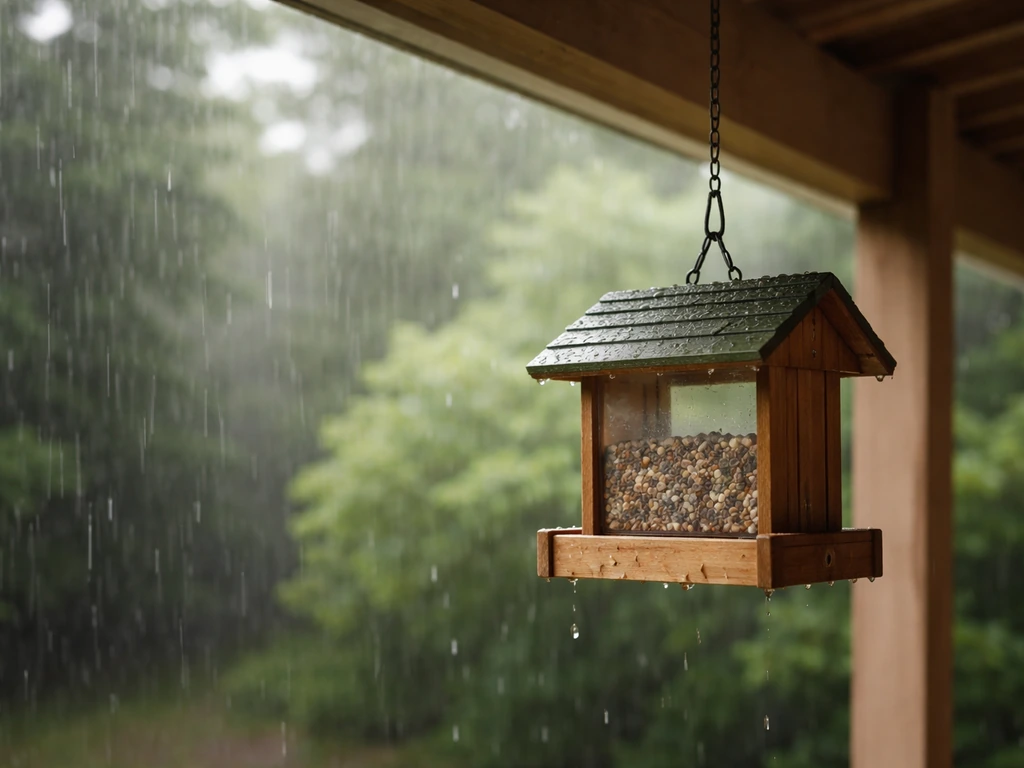
Take it down or leave it out: the quick answer
For most enclosed feeders, like tube feeders and hopper feeders, you can leave them out during light or brief rain without much worry, as long as they have drainage holes and the food isn't already wet or clumped. If you've got a nectar feeder, a platform feeder, or you're heading into a multi-day rainy stretch, bringing the feeder in or at least taking it off the hook until the rain passes is the smarter move. The core issue is mold and bacteria. The Minnesota DNR is direct about this: in wet weather, it's common for mold or bacteria to form on wet birdseed, either inside the feeder or on the ground below it, and mold can cause fatal avian diseases. That's not a scare tactic, it's just what happens when wet organic material sits out.
So the short decision: leave enclosed feeders with drainage out for light rain, bring in or shelter nectar and platform feeders, and always deal with wet seed promptly after heavy or prolonged rain.
How rain hits different feeders and food differently
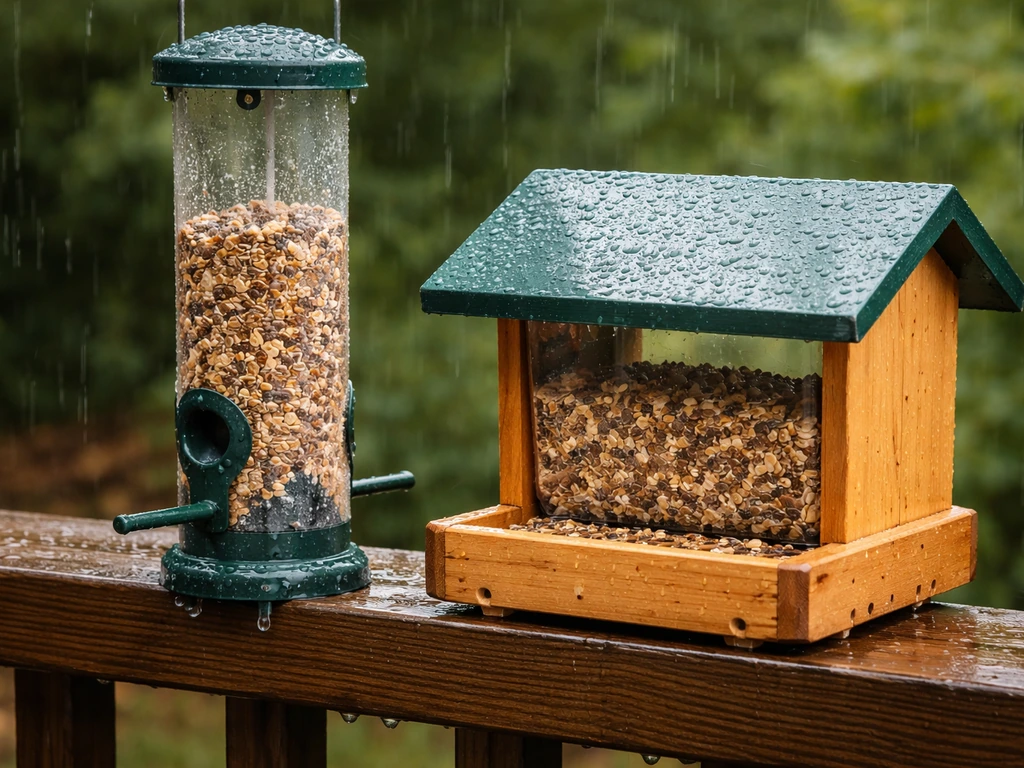
Not all feeders respond to rain the same way, and knowing the difference helps you make a smarter call without running outside every time clouds roll in.
Tube and hopper feeders (seed)
These are the most rain-tolerant feeders in your yard. A well-designed tube or hopper feeder keeps seed mostly enclosed and has drainage holes at the bottom to let water escape. During a quick shower, the seed near the ports might get damp, but the bulk of it stays dry. The trouble comes with prolonged rain or feeders that have cracked seams, clogged drainage, or poorly fitted lids. Once seed gets saturated, it clumps, and clumped seed is the perfect environment for mold to take hold fast. Watch for wet patches or a musty smell around the ports, those are your warning signs.
Platform and tray feeders (seed)
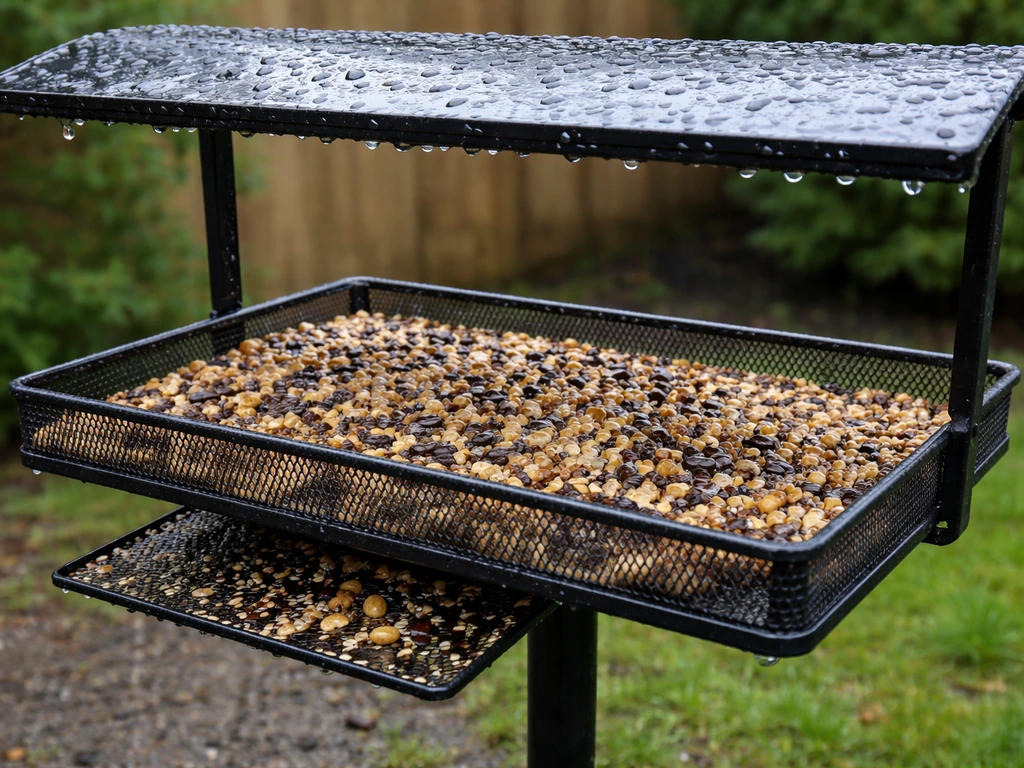
Platform feeders are the most vulnerable to rain. They're open by design, which birds love, but that also means seed sits directly exposed to falling water. Even with mesh floors for drainage, heavy rain will saturate seed within minutes. Wet seed on a platform feeder can go bad surprisingly quickly, especially in warm weather. If you have a platform feeder and serious rain is forecast, either bring it in, dump the seed before it gets soaked, or cover it until the rain passes. If you are trying to avoid the bigger question of whether do bird feeders make a mess, a platform feeder is the one type that needs the most attention after serious rain.
Suet cages
Suet cages handle rain reasonably well in cooler weather. The fat in suet acts as a natural barrier, and water tends to run off rather than soak in. The problem shows up in warm or humid weather, when suet can go rancid faster, and rain accelerates that process by keeping moisture against the cake. In summer, check suet feeders more frequently after rain and replace suet that looks oily, smells off, or is going soft and gray.
Nectar feeders (hummingbirds and orioles)
Nectar feeders are in a category of their own when it comes to rain sensitivity. Sugar water already has a short shelf life. The U.S. Fish and Wildlife Service recommends changing nectar every 3 to 5 days under normal conditions, and more often in hot weather. Rain doesn't usually dilute nectar inside a sealed feeder, but it raises ambient humidity and temperature swings that speed up fermentation and bacterial growth. Audubon recommends cleaning hummingbird feeders every two or three days in hot running water, scrubbing with a bottlebrush to eliminate fungus. If your area is getting warm, humid, rainy weather, you should be checking nectar feeders almost daily. Always discard unused nectar when you take the feeder down for cleaning, and never refill over old solution.
The real safety risks: mold, bacteria, and what it does to birds
Here's why this matters more than just keeping your yard tidy. Wet, moldy birdseed isn't just unappetizing, it's genuinely dangerous to the birds you're trying to help. Mold spores from contaminated seed can cause serious respiratory infections in birds, and some mold species are outright fatal. Bacteria can spread salmonella and other pathogens both through contaminated food and through droppings that accumulate under feeders in wet conditions.
Project FeederWatch is clear that moldy or spoiled food under and around feeders is unhealthy for birds and other wildlife, not just aesthetically bad. Rain accelerates the whole cycle: water soaks seed, seed clumps and starts to decompose, mold colonizes the clumps, birds eat from the feeder and pick up spores, and droppings below the feeder spread contamination further. Penn State Extension recommends emptying feeders and thoroughly scrubbing interiors to remove mold and residue, not just rinsing them out. This matters even more after a rainy period.
Birds don't know to avoid a contaminated feeder. They'll keep eating from it because that's where food is. That's on us to manage.
A practical checklist: should you bring yours in today?
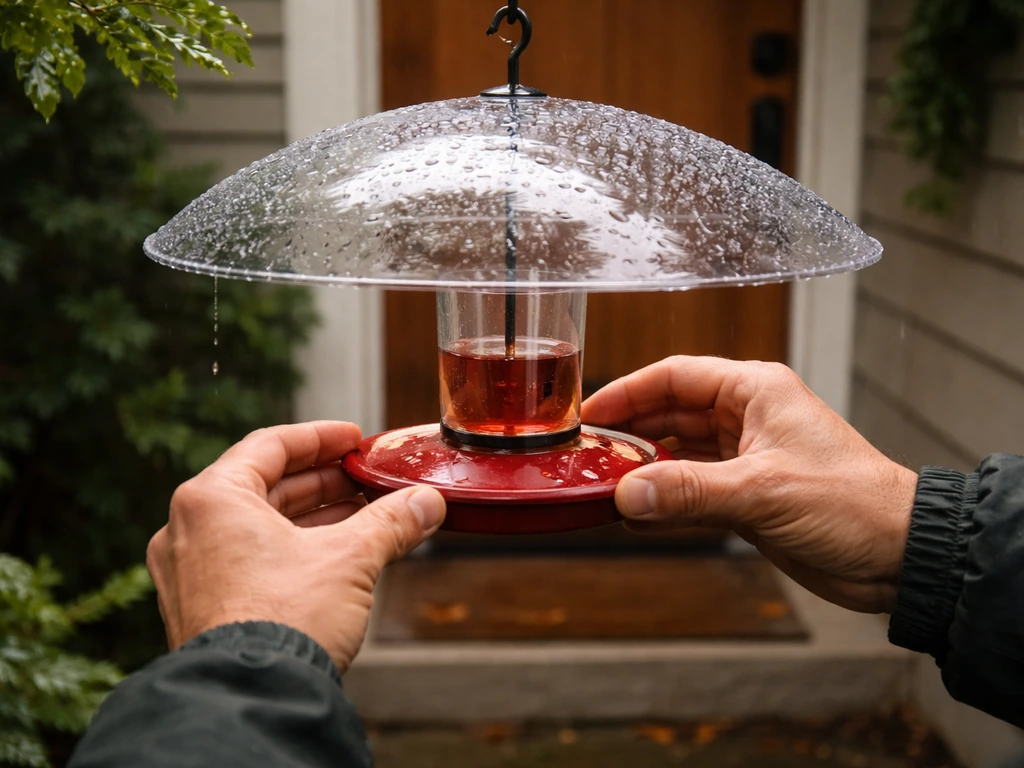
Run through these questions before you decide. You don't need to match all of them perfectly, but the more rain-risk factors stack up, the more it makes sense to act.
- Is it a short passing shower or prolonged rain lasting several hours or days? Brief showers are usually fine for enclosed feeders. Prolonged rain raises the stakes significantly.
- What type of feeder is it? Platform and nectar feeders need more caution. Tube and hopper feeders with drainage are more resilient.
- Does your feeder have working drainage holes? If they're clogged with old seed or debris, water pools inside and seed gets soaked.
- Is the food already damp or clumped from a previous rain? If yes, deal with that first before worrying about the next storm.
- What's the temperature? Warm, humid weather plus rain is the worst combination for mold and bacterial growth. Cool, dry conditions are more forgiving.
- How long has the current fill been sitting? Seed more than a week or two old is already higher-risk before rain even hits.
- Have you noticed sick or dead birds in your yard recently? If so, bring feeders in entirely and give them a thorough disinfecting clean before putting them back out.
What to actually do during and after rain
During rain
If you're home and rain is starting, the easiest move for a platform or nectar feeder is to bring it inside or put it in a covered spot like a porch or garage. For tube and hopper feeders, consider moving them under a roof overhang or adding a weather guard (a dome-shaped baffle above the feeder) to deflect rain away from the feeding ports. Tilting the feeder slightly can also help water drain rather than pool. Birds will still find the feeder once it's repositioned, they're good at that.
Right after rain stops
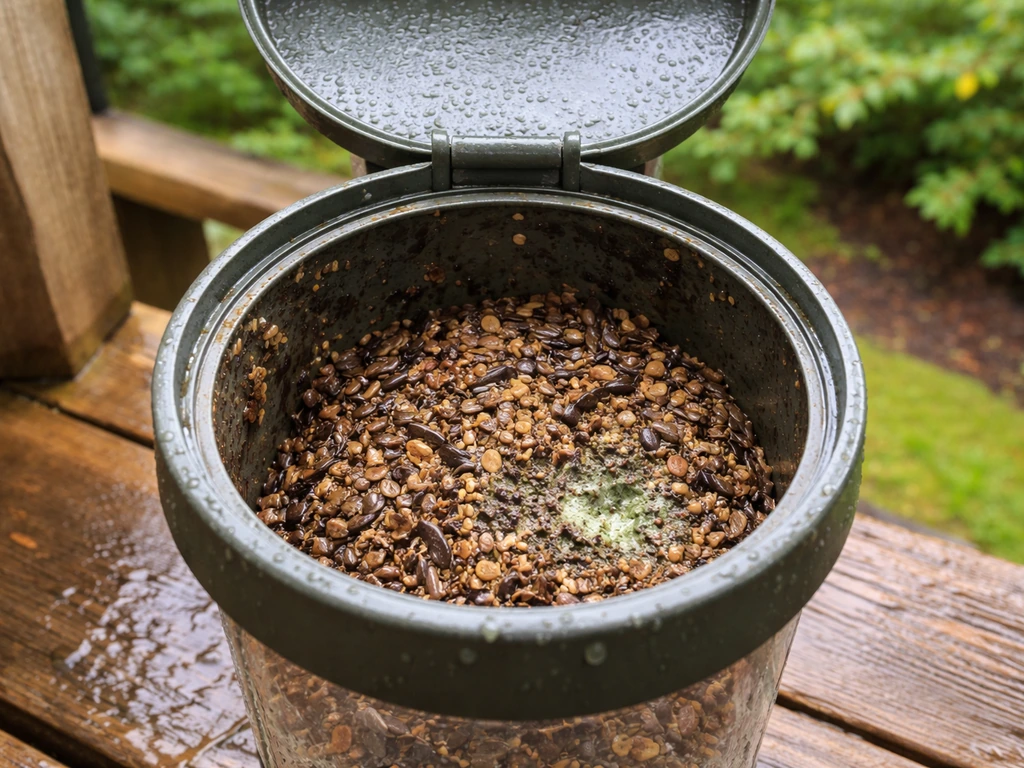
Go check the feeder before you refill it. Look for clumped or discolored seed, a sour or musty smell, or any visible mold. If any of that is present, the right move is to empty the feeder completely, not try to pick out the bad bits. Homes & Gardens warns against adding visibly wet or moldy seed back to feeders after rain or high humidity, since it can rapidly lead to unsafe conditions for birds wet or moldy seed back in after rain. Dump wet seed away from your feeding area so birds don't scavenge it off the ground. Wet seed on the ground under the feeder should be raked up and discarded too, because that's where contamination tends to concentrate.
Don't refill until the feeder is actually dry inside. This is the step most people skip because it takes patience. Refilling a damp feeder just accelerates the mold problem you were trying to avoid. Give it an hour or two in the sun if you can, or dry the interior with a cloth. For nectar feeders, Audubon is explicit: always discard any unused nectar when you take the feeder in, and dry the feeder before refilling.
When to clean vs. just refill
After light rain with no visible issues, a quick dump and refill with fresh dry seed is often enough. After heavy or prolonged rain, or if you see any mold, do a proper clean. That means scrubbing the interior with a 9:1 water-to-bleach solution (nine parts water, one part bleach), rinsing thoroughly, and letting the feeder dry completely before adding new food. Iowa DNR recommends a similar 10 percent bleach solution and is firm that feeders should only be refilled when completely dry. This same process applies to nectar feeders, which should be scrubbed with a bottlebrush to get into the ports and reservoir.
Preventing the same problem from coming back
The best way to make rainy weather a non-issue is to set up your feeders and maintenance routine so rain doesn't have much to work with in the first place.
Feeder placement and setup
Position feeders where they get some natural shelter from prevailing rain, under an eave, tree canopy, or porch roof, without blocking bird access or sightlines. Add a weather guard dome above the feeder if you don't already have one. These are cheap and genuinely effective at keeping rain off seed ports. Make sure drainage holes at the bottom of tube and hopper feeders are clear; poke them out with a stick or brush every couple of weeks.
Fill only what birds will eat in a few days
Overfilling feeders is one of the most common mistakes, especially before rain. Seed that sits for more than a week or two is already past its prime, and rain just speeds up the spoilage. Fill to about half or two-thirds capacity so you're turning over seed regularly and any rain-affected seed represents a smaller loss. This is especially important in summer.
Stick to a cleaning schedule
Audubon recommends cleaning seed and suet feeders at least every other week as a baseline, and more frequently in humid or hot weather. After any significant rain event, that's a trigger to at least inspect and potentially clean early. For nectar feeders, every two to three days is the standard under normal conditions, and daily checks make sense during warm, wet weather. If you find yourself skipping cleanings because the process feels like a chore, that's worth solving at the feeder level: look for feeders with wide openings, removable parts, and smooth interiors that are easy to scrub.
Don't forget the ground under the feeder
Project FeederWatch specifically calls out the ground below feeders as a source of disease risk when wet droppings, hulls, and spoiled seed accumulate. After rain, rake or sweep the area under your feeder and dispose of the debris away from your feeding zone. This one step makes a bigger difference than most people expect. It also reduces the risk of attracting rodents and other unwanted visitors, which wet seed and debris can pull in.
A quick reference by feeder type
| Feeder Type | Rain Tolerance | Key Risk | What to Do |
|---|---|---|---|
| Tube feeder (seed) | Good, if drainage is clear | Clumping at ports | Check drainage holes; inspect after prolonged rain |
| Hopper feeder (seed) | Moderate | Wet seed in reservoir | Move under cover if rain is prolonged; inspect after |
| Platform/tray feeder (seed) | Poor | Full seed exposure | Bring in or dump seed before heavy rain |
| Suet cage | Good in cool weather, poor in warm | Rancidity in heat + moisture | Replace suet more often in warm, wet weather |
| Nectar feeder (hummingbird/oriole) | Poor | Rapid fermentation and mold | Change nectar every 2 to 3 days; daily in heat; always discard old nectar |
Rain is a normal part of feeding birds, and you don't need to stress about every passing cloud. What you're really managing is wet food sitting around long enough to become a health hazard. Keep an eye on what's in your feeders, check them after significant rain, and clean on a real schedule. The birds will keep showing up, and they'll be better off for it.
FAQ
What should I do if my tube or hopper feeder has a drainage hole but it still leaks water inside during rain?
First, move the feeder under cover and stop refilling until it is fully dry. Then inspect for cracked seams, a warped lid, or a drainage port that is partially blocked (seed hull buildup is common). If water keeps getting in and soaking the same areas, replace the feeder or add a weather guard dome so rain is deflected before it reaches the ports.
Is it safe to leave seed out during rain if I use a covered hopper or dome-top feeder?
Usually, covered feeders reduce exposure, but they do not solve the main risk, wet seed that sits for hours or days. If the feeder is designed with true drainage and the food stays dry, brief showers are typically fine. If you see clumping, damp patches near the base, or a musty smell after the rain, empty and clean rather than assuming the cover makes it automatically safe.
How long can birdseed be wet before it becomes dangerous to birds?
There is no single number that fits every feeder and weather, but the practical rule is to treat any seed that clumps, changes color, or smells sour or musty as already too far along. In warm, humid conditions, spoilage and mold can start quickly, so after heavy or prolonged rain, don’t wait, inspect as soon as the weather clears and clean promptly if anything looks or smells off.
Should I rake the area under the feeder after light rain, or only after heavy storms?
After heavy or prolonged rain, yes, rake or sweep right away because wet hulls and droppings build up and contamination concentrates where birds hop and peck. After light rain, you can do a quick check, if there is visible wet debris or seed on the ground, clean it up; if the area is dry and clean, you can skip the extra step.
What if I don’t have time to do a full bleach scrub right after rain, can I rinse the feeder instead?
Rinsing is better than doing nothing, but it usually is not sufficient once mold residue or sour odors are present. If you see discoloration, clumping, or any musty smell, do a real scrub and then let the feeder dry completely before refilling. If you only find minor dampness after a brief shower, a thorough rinse plus complete drying may be acceptable, but still avoid refilling a damp interior.
Can I save and reuse wet seed by drying it instead of discarding it?
Only if it is not clumped, discolored, or smelling off. For wet seed that sat for hours in warm, humid conditions, drying often does not eliminate mold that already formed, so discarding is safer. When in doubt, empty the feeder and start fresh dry seed, especially for feeders used by many birds.
Do birds avoid moldy seed if the feeder still looks mostly full?
No, they generally keep feeding because food is where they expect it to be. That’s why appearance is not a reliable safety check, mold and bacteria can be present even when only small sections look wet or slightly changed. If you notice moldy smell, damp clumps, or residue, empty the feeder rather than letting birds “pick around” it.
How often should I clean and refill after rain if I live in a hot and humid climate?
Increase both inspection and maintenance frequency. A baseline cleaning may be every other week, but treat significant rain events as a trigger to inspect immediately afterward, and clean early if there are any wet or clumped areas. For nectar, plan on more frequent checks, often daily during warm, rainy stretches, and do not refill with old solution.
Is suet more forgiving than seed during rain, or can it still cause problems?
Suet cages tend to handle rain better in cooler weather, because water generally runs off and the fat resists soaking. However, rain combined with warmth or humidity can still lead to faster rancidity and spoilage. If suet looks oily, turns gray, or smells off after a wet period, discard it and wipe the feeder dry before adding fresh suet.
If I bring a nectar feeder in during rain, do I need to throw away all the nectar right away?
Yes. Discard unused nectar when you take the feeder down, then rinse, scrub the interior including ports with a bottlebrush, and dry before refilling. Rain-related changes often speed up microbial growth, and keeping old solution increases risk.
How can I tell if a nectar feeder problem is from rain versus poor hygiene or temperature?
Rain mostly affects ambient humidity and the surrounding temperature swings, but fermentation can also happen simply from warm conditions and infrequent cleaning. If nectar is cloudy, has any off smell, or there is residue or visible fungus, clean thoroughly and increase the service interval. Don’t extend the time between changes if the weather has been warm and wet.
What’s the best way to position feeders so rain risk is reduced without blocking bird access?
Aim for shelter from the prevailing direction of rain, use an eave or porch roof when possible, and consider a weather guard dome above the feeder. Keep the feeding ports unobstructed so birds can land and access from their normal routes. Also ensure drainage holes remain free, since blocked ports defeat rain defenses even under cover.
Next Articles
Where to Hang Bird Feeders in Winter: Exact Placement Tips
Exact winter feeder placement tips for birds and safety: height, window distance, shelter, and troubleshooting.
Do You Leave Bird Feeders Out All Year? Seasonal Guide
Should you leave bird feeders out all year? Get seasonal tips, safe feeding, and cleaning to prevent disease and pests.
Do Birds Use Bird Feeders in Winter? How to Feed Safely
Yes, birds use feeders in winter when needed. Feed safely, keep it clean, prevent spoilage and adjust amounts.