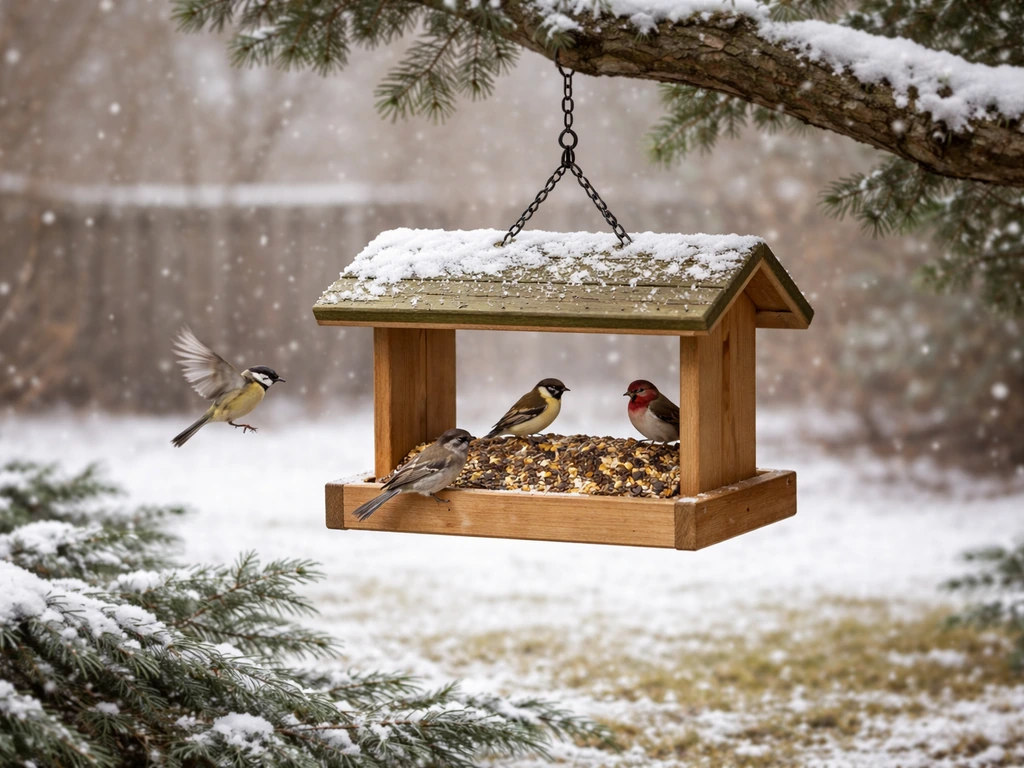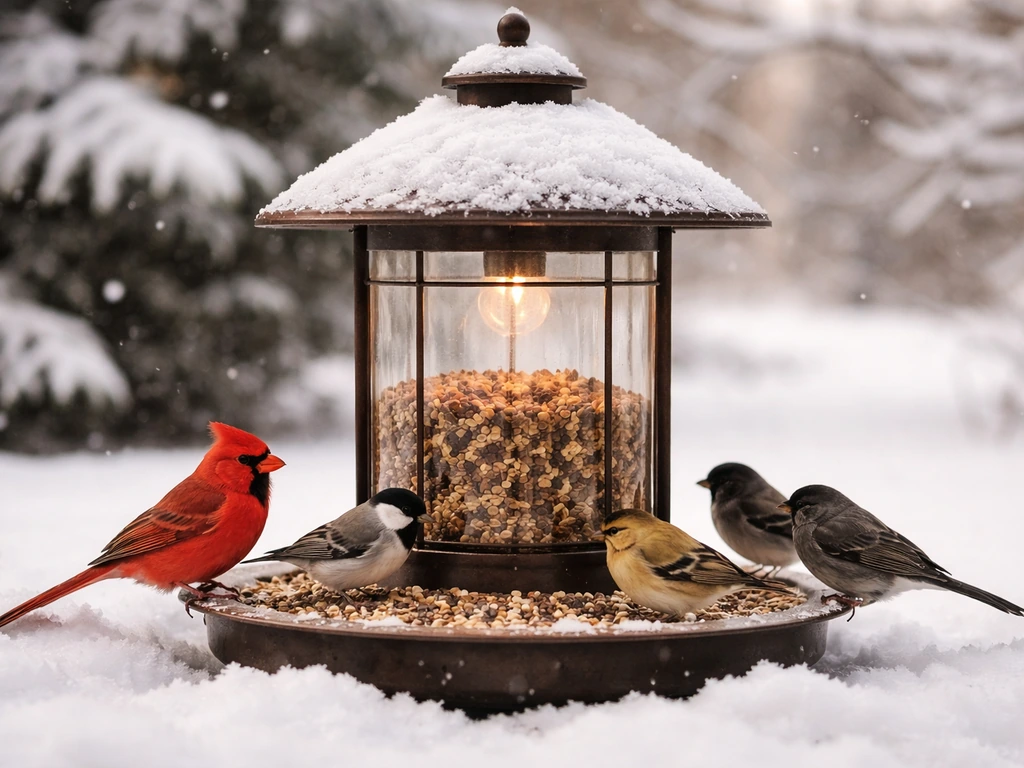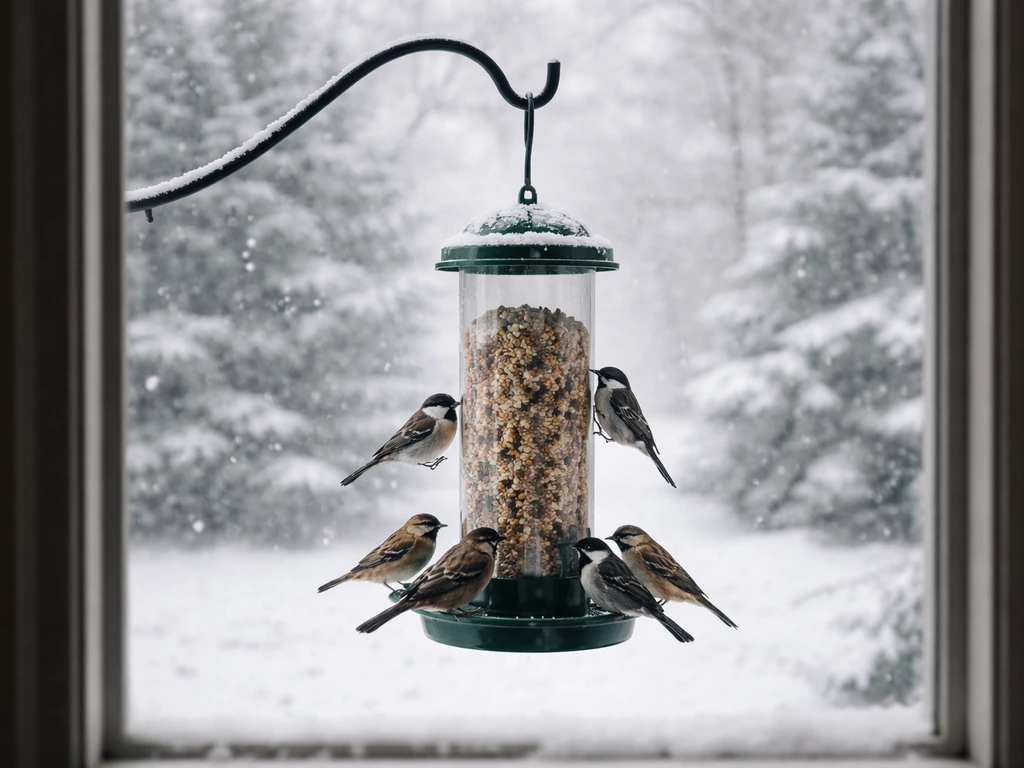
Most birds are not specifically drawn to red feeders the way hummingbirds are. Hummingbirds do have a genuine bias toward red, orange, and pink, which is why red feeders work well for them. For the vast majority of backyard species, though, the color of the feeder is far less important than what's inside it, where it's placed, and how safe it feels. If you are still wondering does the color of a bird feeder matter for your specific birds, read on to compare which species actually show preferences color of the feeder. A red feeder filled with the right seed, hung in the right spot, will attract plenty of birds. The same red feeder in the wrong location with stale food will sit empty regardless of color.
Do Birds Like Red Bird Feeders? How to Test and Improve
Eleanor Hartwick
6 Jun 2026
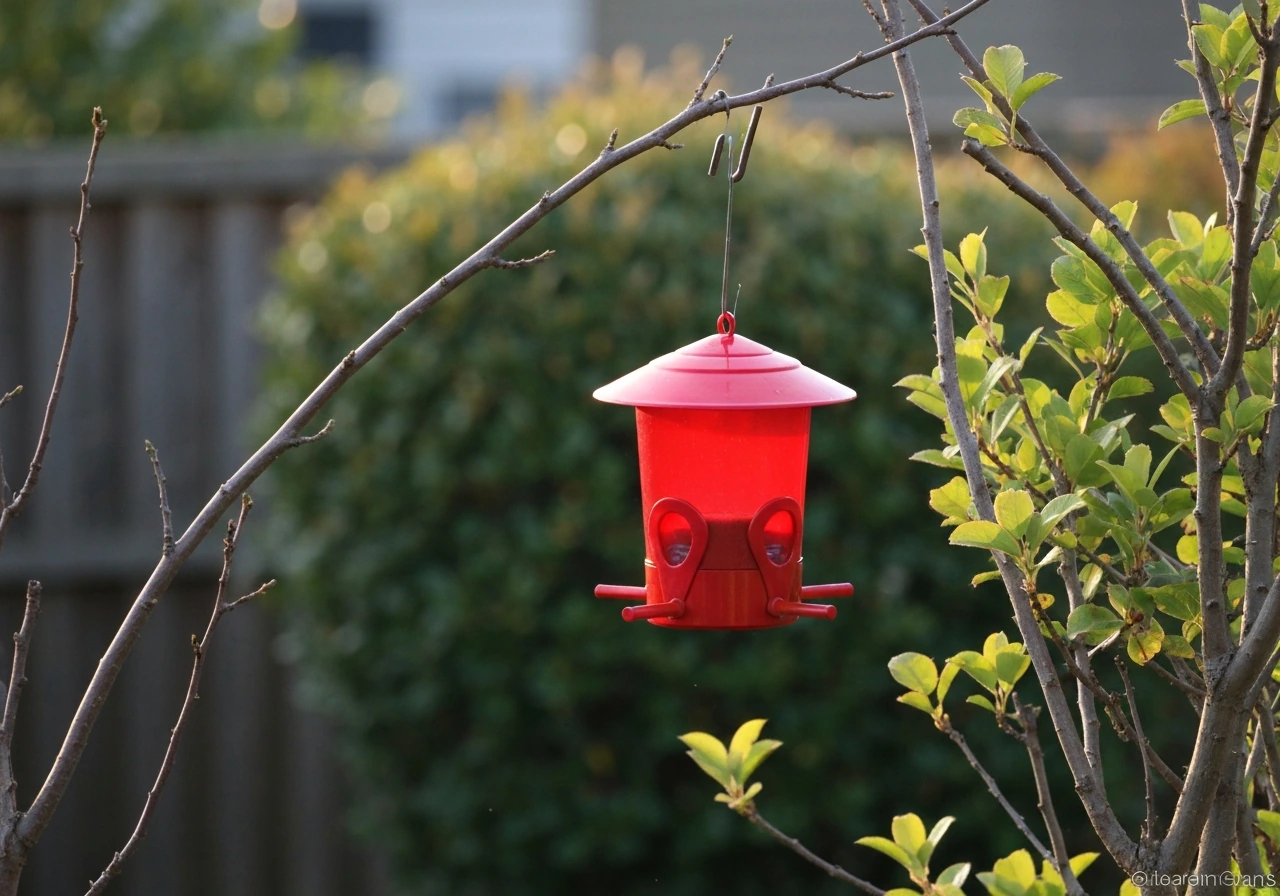
Do birds actually prefer red feeders?
The honest answer is: it depends entirely on the species. Birds see color well, often better than humans, but color preference is tied to their foraging instincts and food associations, not to feeders as objects.
Hummingbirds: yes, genuinely drawn to red
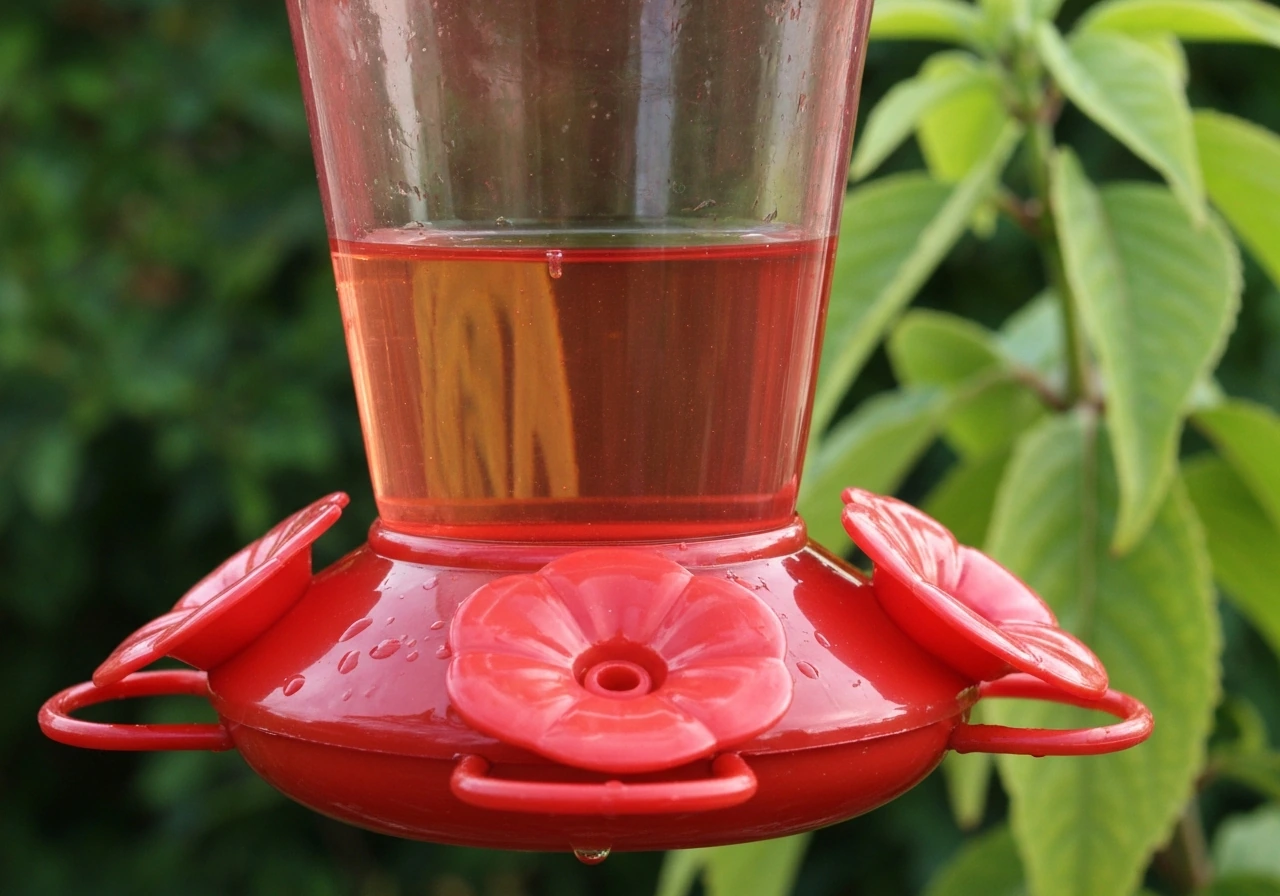
Hummingbirds associate red and orange-red with nectar-rich flowers, so a red feeder absolutely helps signal that food is available. That said, Audubon is clear on this point: the red should be on the feeder itself, not in the food. Red dye added to nectar is not necessary and may actually be harmful to hummingbirds. Clear sugar water in a feeder with red parts is all you need. If your feeder has red ports, a red base, or a red bottle cap, you're already doing it right.
Songbirds, finches, and most other backyard species
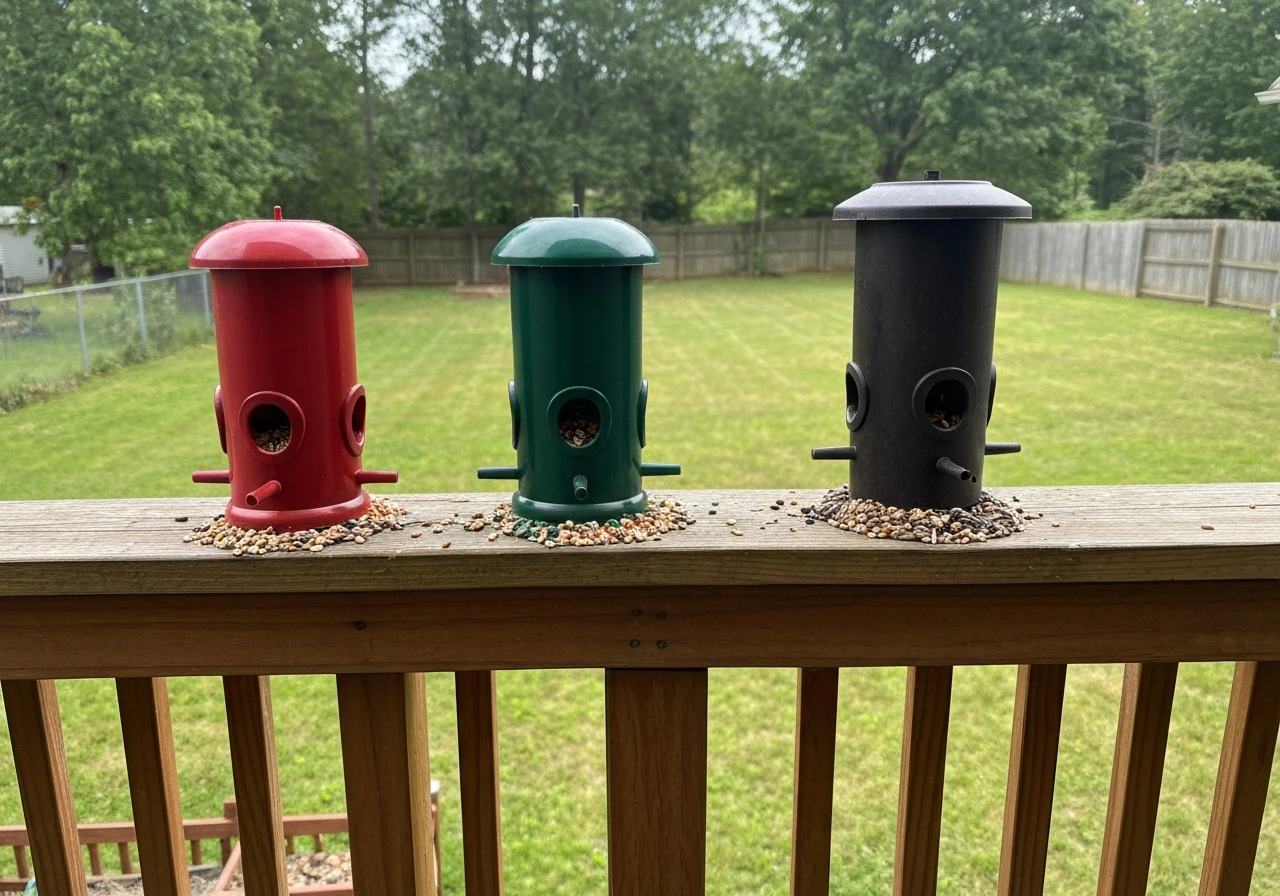
Cardinals, chickadees, goldfinches, nuthatches, sparrows, and most common feeder birds show no documented preference for a red feeder over a green, brown, or black one. What attracts these birds is familiar food, a safe perch, nearby cover, and a feeder that works (meaning seed flows freely and doesn't get waterlogged). If anything, earth tones and natural colors may feel slightly less alarming in a new setup, but that effect is subtle and short-lived once birds learn the feeder is a reliable food source. Color preferences in feeder birds are worth understanding in context, and it's a topic worth exploring in more depth if you're thinking about this for multiple feeders.
Woodpeckers and bluebirds
Woodpeckers are largely indifferent to feeder color as long as suet or nuts are available. Bluebirds typically don't come to traditional seed feeders at all, red or otherwise. They're insect eaters who may take mealworms from a dedicated dish or low platform, but feeder color isn't the deciding factor there.
What actually matters more than color
If you want birds using your feeder consistently, focus your energy here. Color is a footnote. These four things are what move the needle.
- Food quality and type: Fresh seed is non-negotiable. Black oil sunflower seed attracts the widest range of species. Nyjer (thistle) brings finches. Safflower discourages starlings and grackles. Stale, clumped, or moldy seed will cause birds to avoid a feeder no matter what color it is.
- Feeder design: Ports, mesh, perches, and hopper style all affect which birds can use the feeder and how comfortably. A tube feeder with short perches favors small birds like chickadees and finches. A platform or tray feeder invites ground feeders like sparrows and doves. Make sure the design actually disperses seed cleanly.
- Placement and cover: Birds won't confidently use a feeder that's exposed with no escape route nearby. Positioning near shrubs or trees (within about 10 feet) gives birds a quick retreat, which increases visits. Completely open placements can work but usually take longer to draw birds in.
- Consistency: Birds learn reliable sources. If a feeder is sometimes full and sometimes empty, they'll deprioritize it. Keeping it stocked, especially during migration and winter, builds a regular visiting pattern.
How to set up a red feeder so birds actually use it
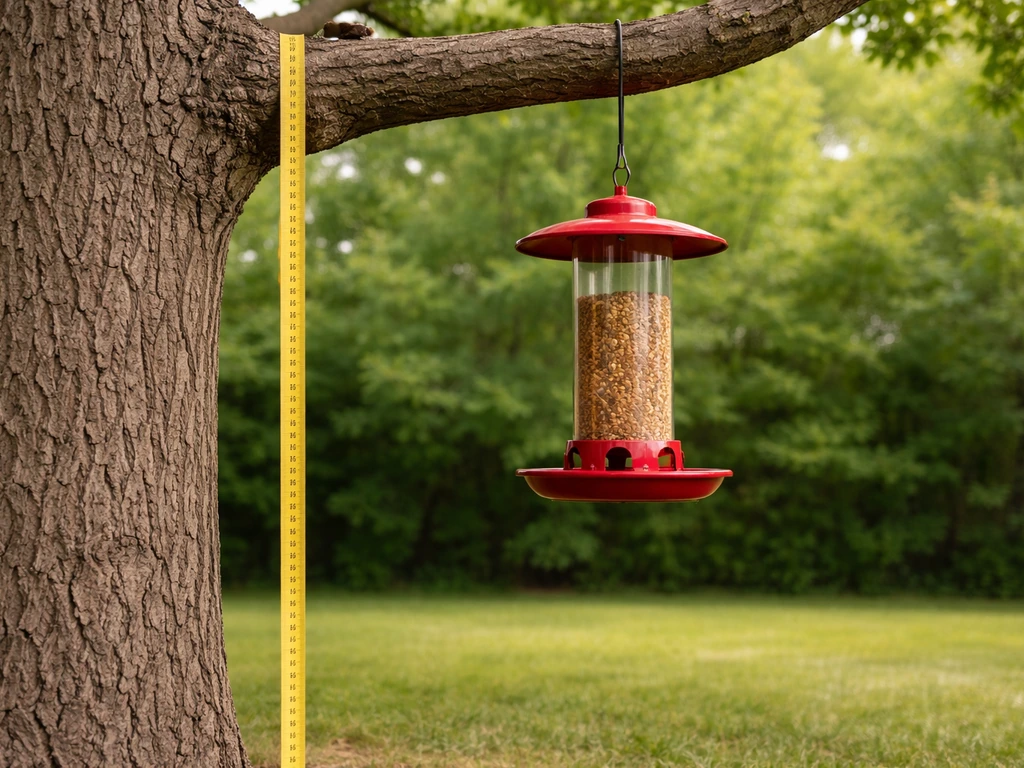
Getting the physical setup right is where most beginners lose time. Here's what I'd recommend for a new red feeder going up today.
Height
For most hanging feeders, 5 to 6 feet off the ground is a practical sweet spot. It keeps the feeder out of easy reach for cats and most ground predators, while staying low enough for easy refilling and cleaning. Hummingbird feeders are often hung a bit higher, around 6 to 7 feet, in part because hummingbirds are comfortable at canopy-edge height. Platform feeders for ground-feeding species can be lower, at about 3 to 4 feet, or even at ground level if squirrel pressure is low.
Distance from windows
Window collisions are a real risk and one of the more overlooked hazards in feeder setup. The safest placements are either very close (within 3 feet of a window, so birds don't build enough speed to be seriously injured) or far away (more than 30 feet from the nearest glass). The dangerous middle zone is roughly 5 to 25 feet from a window. If your red feeder is in that range and you're seeing birds hit the glass, move the feeder closer to the window or apply window alert decals to break up the reflection.
Cover and habitat nearby
Place the feeder within 10 feet of shrubs, a hedgerow, or a tree with low branches. Birds will perch there first, watch the feeder for a few minutes, and then commit to feeding. Without that staging area, especially in a new location, you'll wait longer for birds to start using the feeder. Dense evergreen shrubs are especially useful in winter because they provide both cover and wind protection.
Sun vs. shade
Partial shade is usually better than full sun, especially in summer. Direct afternoon sun heats seed and nectar faster, leading to spoilage. For hummingbird feeders specifically, shade extends the life of each batch of sugar water significantly. A spot with morning sun and afternoon shade hits the balance well.
If birds are ignoring your red feeder, check these things first
It's common to set up a new feeder and wait days or even a couple of weeks without any visitors. That's normal. In general, birds tend to feed from feeders most actively in the early morning and late afternoon when do birds feed from bird feeders. But if the feeder has been up for more than two weeks with no activity, something specific is usually wrong. Work through this list before assuming color is the issue.
- Check the seed: Dump everything out and look for clumping, discoloration, or a musty smell. Stale or wet seed is the single most common reason birds avoid a feeder. Refill with fresh seed.
- Check the timing: Bird activity peaks in early morning, typically just after dawn, and again in late afternoon. If you're observing midday and seeing nothing, try watching at 7 to 9 a.m. instead.
- Check for competition: If you have multiple feeders, birds may have a strong preference for one. A new red feeder placed 15 feet from an established feeder may simply be lower priority until birds discover it.
- Check for dominant species: Larger, aggressive birds like starlings, grackles, or house sparrows can monopolize feeders and push off the birds you actually want. If that's happening, switch to a feeder style that physically excludes them (tube feeders with short perches, caged feeders, or safflower in place of mixed seed).
- Check the location: Is the feeder out in the open with no cover nearby? Move it closer to a tree or shrub and give it another week.
- Check the weather: During heat waves, freezes, or heavy rain, even regular visitors go quiet. Give it a few more days after conditions normalize.
- Check for squirrel interference: If squirrels are reaching the feeder, they'll eat the seed and can deter birds entirely. Use a baffle on the pole and, if possible, position the feeder at least 10 feet horizontally from any jump-off point.
Matching your food to the birds you want
A red feeder is just the container. What you fill it with determines which species show up. Here's a quick reference for the most common backyard setups.
| Bird | Best food | Feeder type that fits |
|---|---|---|
| Hummingbirds | Plain sugar water (1 part sugar, 4 parts water, no dye) | Red tube/bottle nectar feeder |
| Cardinals | Black oil sunflower seed, safflower seed | Hopper or platform feeder with wide perches |
| Chickadees and nuthatches | Black oil sunflower, shelled peanuts | Tube feeder, peanut feeder |
| Goldfinches and finches | Nyjer (thistle) seed | Tube feeder with small ports, or mesh sock feeder |
| Sparrows and juncos | White millet, black oil sunflower | Platform or ground tray |
| Woodpeckers | Suet cakes, shelled peanuts, sunflower chips | Suet cage, peanut feeder |
| Mourning doves | White millet, cracked corn, sunflower | Platform feeder or scattered on ground |
| Bluebirds | Live or dried mealworms | Open dish or low platform (not a typical tube feeder) |
If you're unsure which birds are in your area, a red hopper feeder filled with black oil sunflower seed is the safest starting point. It covers the widest range of species and will tell you quickly who's visiting so you can refine from there. Juncos and pigeons are worth knowing about too, since they're frequent visitors in many yards and have specific feeding habits and food preferences that affect what you stock. You might also wonder, do pigeons eat from bird feeders, and the answer depends on the feeder type and what food you're offering. If you are wondering whether will juncos eat from bird feeders, the answer is usually yes when you offer the right seed and keep the feeder stocked and clean.
Keeping your red feeder safe and effective over time
The single best thing you can do for visiting birds is clean the feeder regularly. Disease spreads at feeders, particularly salmonellosis and avian conjunctivitis, and dirty feeders are a real vector. Scrub feeders with a diluted bleach solution (one part bleach to nine parts water) every two to four weeks, and more often in hot or wet weather. Rinse thoroughly and let it dry completely before refilling. If you see sick-looking birds (puffed up, sitting still on the ground, visible eye discharge), take the feeders down for at least a week and clean everything before putting them back out.
For hummingbird feeders specifically, the sugar water can ferment or grow mold faster than you'd expect. In warm weather, change the nectar every two to three days. In cool weather, every four to five days is usually fine. If the liquid looks cloudy or you see black spots inside the ports, clean it immediately.
Squirrels, raccoons, and unwanted visitors
A red feeder in a good location will sometimes attract more than birds. A red feeder in a good location can also complement your strategy for do blackbirds feed from bird tables, since blackbirds may use feeders when conditions and food choices suit them. Squirrels are the most common issue. A sturdy metal baffle on the pole, positioned at least 4 feet above the ground, stops most squirrels. Hanging feeders should be suspended at least 10 feet from any surface a squirrel can launch from. Safflower seed and nyjer are both less appealing to squirrels than sunflower or corn, so those are worth considering if squirrel pressure is high. Raccoons are mainly a nighttime problem, so bringing feeders in after dusk, or using a feeder with a weight-sensitive closing mechanism, usually handles them.
Window collision prevention
As mentioned in the placement section, feeders in the 5 to 25 foot zone from windows are the most dangerous. If you can't move the feeder, add visual markers to the glass: window alert stickers, tempera paint dots, or external tape patterns applied to the outside of the window. The goal is to break up reflections so birds register the glass as a solid barrier. This is especially worth doing if you've found dead or dazed birds near a window.
Red feeders are a perfectly good choice for most backyard setups, and for hummingbirds they're genuinely the best starting point. The color question, though, is really a surface issue. Get the food right, place it somewhere birds feel safe, keep it clean, and watch what happens. Most people who take that approach see regular visitors within a week or two, and the feeder color ends up being the least interesting part of the whole setup.
FAQ
Do birds like red bird feeders more than other colors? (What about hummingbirds vs songbirds?)
Yes for hummingbirds, but only when the red is part of the feeder itself (ports, base, bottle cap). Red dye or food coloring mixed into sugar water is not needed and can be risky, so use clear sugar water unless the feeder design calls for red parts.
If my red feeder is not getting visitors, how long should I wait before blaming the color?
Try it for food association, not color. Offer a consistent red feeder setup with the correct food for 10 to 14 days, keep it clean, and check that seed or nectar is flowing normally, then compare results to a different food or location before changing the color.
What should I check first if no birds are using my red feeder?
If you are seeing no activity after about two weeks, treat it as a setup problem: placement (height and cover nearby), window safety, food quality (fresh, not waterlogged), and cleaning schedule. Color changes usually come last.
How close should a feeder be to shrubs or cover for birds to actually use it?
Birds may still avoid a feeder even if the color is right if the feeder is too far from safety cover. As a practical rule, place feeders within about 10 feet of shrubs or low branches so birds can stage, perch, and then commit.
I placed my feeder near a window. What’s the safest distance and what if I cannot move it?
Roughly 5 to 25 feet from a window is the danger zone. If moving the feeder is not possible, use external window alerts (stickers, dots, or tape patterns) on the outside of the glass so reflections do not let birds misjudge distance.
Can a red feeder still be “ignored” if the seed is correct, but the feeder gets wet?
For seed feeders, the main failure mode is spoilage and clumping from moisture. Use dry, fresh seed, ensure holes are not blocked, clean any wet or moldy seed out, and replace seed when it looks or smells off rather than just topping off.
When is the best time of day to watch for birds at feeders?
New feeders often take time. Morning and late afternoon are typically the best observation windows, and multiple species may test the area first with brief visits before committing for longer feeding sessions.
Will red feeder color attract birds if squirrels are stealing the food?
Yes, squirrels can discourage use more than feeder color can. Add a sturdy baffle, hang it higher (commonly at least 10 feet from a squirrel launch surface for hanging feeders), and consider squirrel-resistant seed choices like safflower or nyjer if they are common in your yard.
What should I do if I suspect sick birds are visiting my red feeder?
If you see sick-looking birds (puffed up, sitting low or still, eye discharge), take the feeder down and clean everything before putting it back out. In general, plan on more frequent cleaning in hot or wet weather, not just when you notice an issue.
How often should I clean a red seed feeder to prevent disease?
For most backyard seed feeders, cleaning every two to four weeks is a baseline, and every week or more in hot, humid, or rainy conditions is safer. Use diluted bleach for scrubbing, rinse thoroughly, and let parts dry completely before refilling.
How often should I change hummingbird nectar in warm versus cool weather?
For hummingbird feeders, sugar water can ferment or grow mold faster. In warm weather, change it every two to three days, and in cooler weather every four to five days. If the liquid looks cloudy or has black spots, clean and remake it immediately.
If I switch to a red feeder, will it attract ground feeders or species like bluebirds automatically?
Yes, sometimes the key is feeder type and food choice. Some species like bluebirds may not use traditional seed feeders, and ground-feeding birds may need a platform or low offering. If you are targeting a specific species, match feeder style and diet first.