Refill your bird feeder whenever it runs low or empty, but aim to check it every one to two days during peak activity and at least every two to three days otherwise. That's the honest answer: there's no single calendar schedule that works for everyone, because how fast a feeder empties depends on how many birds are visiting, what season it is, what seed you're using, and what the weather is doing. What you're really after is a rhythm of checking, not a rigid timer.
How Often to Refill Bird Feeder: Simple Timing Guide

Eleanor Hartwick
17 May 2026
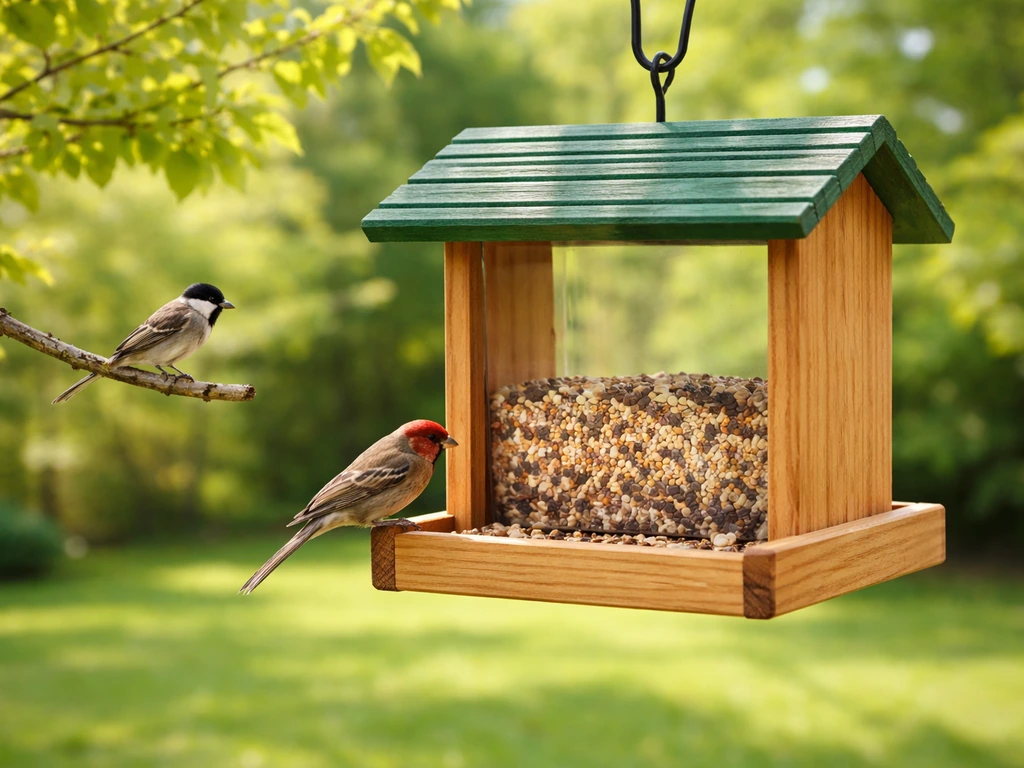
The rule of thumb most people can actually use
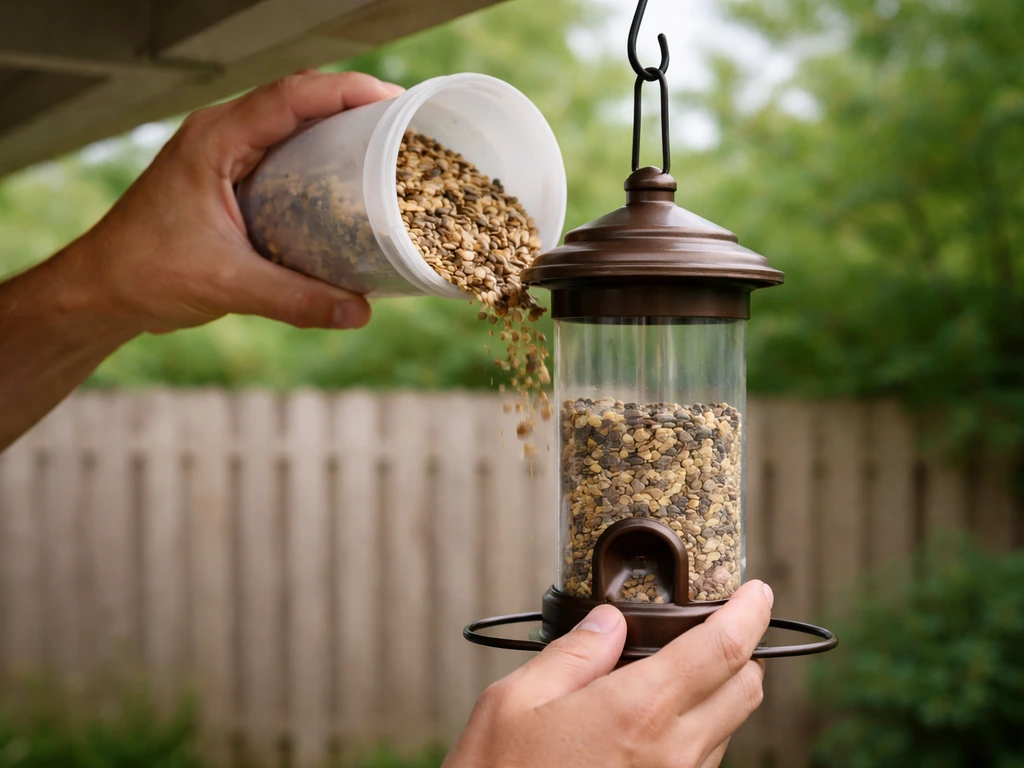
If you want a starting point, here it is: check your feeder every one to two days and refill it when it's about one-quarter to one-third full. Don't wait until it's bone dry, because that leaves birds without food and gives you less visibility into whether the remaining seed is fresh or starting to clump. At the same time, don't reflexively top it off every morning if there's still plenty of clean seed inside. Overfilling a slow-traffic feeder means seed sits longer, absorbs moisture, and spoils faster.
Pairing refills with a quick inspection every two weeks is also smart. Cornell Lab's Project FeederWatch and Audubon both recommend cleaning seed feeders about every two weeks as a baseline, and more often during wet weather or heavy use. As a baseline, that same guidance helps you understand how often to clean bird feeders, not just how often to refill them. If you build that cleaning habit into your refill routine, you'll naturally catch problems before they become serious.
How the seasons change your refill schedule
Bird traffic at feeders is not constant across the year, and your refill schedule should flex accordingly. Here's how demand and spoilage risk shift by season:
- Late winter and early spring: This is often your highest-demand period. Natural food sources are depleted, temperatures are still cold, and birds need extra energy. Refills may be needed every day or every other day, especially if you're seeing species building up for migration. Tufts Wildlife Clinic specifically notes that feeding is most helpful during temperature extremes and late winter when natural food is scarce.
- Spring migration (roughly April through May): Heavy, unpredictable traffic from migrating birds can drain a feeder overnight. Check daily.
- Summer: Traffic can drop off as natural food becomes abundant, but humidity and heat accelerate seed spoilage. Refill with smaller amounts so seed turns over faster. Suet feeders should come down entirely in summer because suet turns rancid in the heat and the dripping fat can damage bird feathers.
- Fall migration (September through October): A second surge of migrating birds. Expect higher demand again and check daily.
- Winter: Cold slows spoilage, so seed lasts longer, but birds need high-calorie food in extreme cold. Refill frequency depends on how many resident birds you're supporting. In very cold snaps, feeder traffic spikes and you may need to refill daily.
The biggest seasonal trap people fall into is keeping the same refill schedule year-round. A feeder you checked every three days in January might need daily attention in late April, and vice versa in midsummer. Watch what's actually happening at your feeder rather than following a fixed calendar.
How seed type and feeder design affect how fast you're refilling
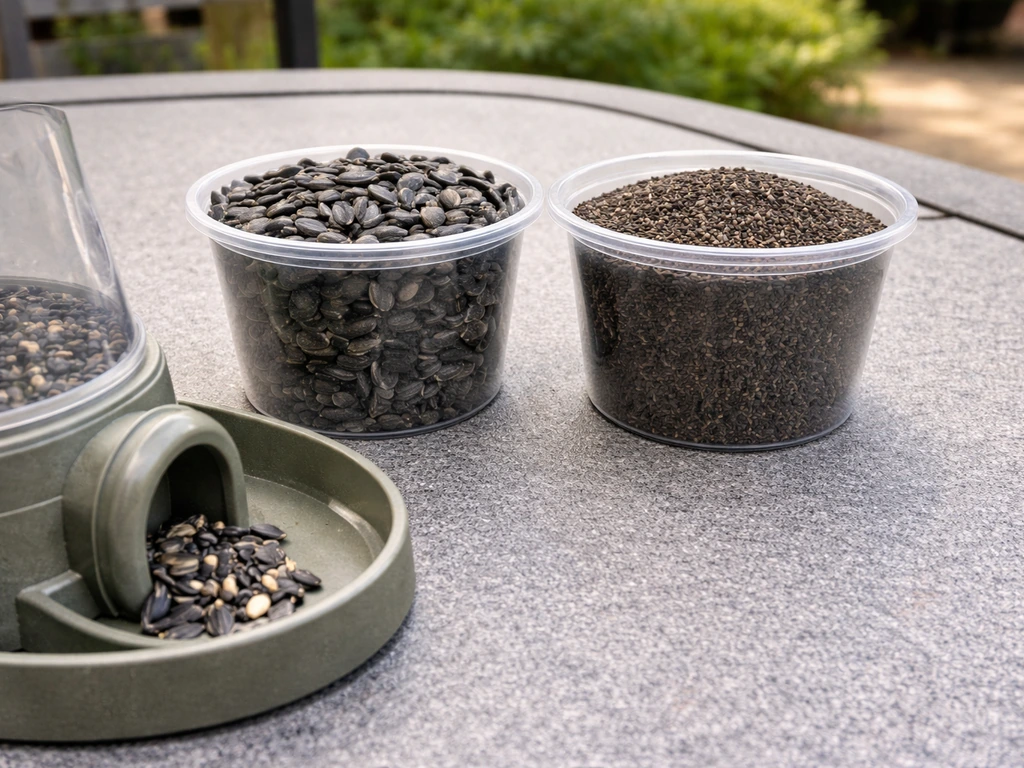
Your feeder setup has a huge influence on how quickly you'll need to refill, and understanding this makes the whole process much less guesswork.
Seed type matters a lot
| Seed Type | Typical Consumption Rate | Spoilage Risk | Notes |
|---|---|---|---|
| Black-oil sunflower | Fast — highly attractive to many species | Moderate | Hulls accumulate and can mold; clean tray frequently |
| Nyjer (thistle) | Moderate — popular with finches | Higher — oils go rancid | Nyjer goes stale faster than sunflower; use smaller amounts and refresh often |
| Mixed seed blends | Variable — depends on species mix | Higher — filler seeds rejected and pile up | Millet and filler grains pile up on trays if birds only pick out what they want, increasing waste and mold risk |
| Safflower | Slower — less universally liked | Low to moderate | Good for deterring squirrels; slower turnover means more monitoring needed |
| Suet (cakes) | Moderate in winter | High in warm weather | Remove and stop offering suet when temps consistently exceed 60-65°F |
| Shelled peanuts or peanut hearts | Fast when birds find them | High — absorb moisture quickly | Small refills, frequent checks; discard any that look oily or smell off |
Feeder design changes the equation too
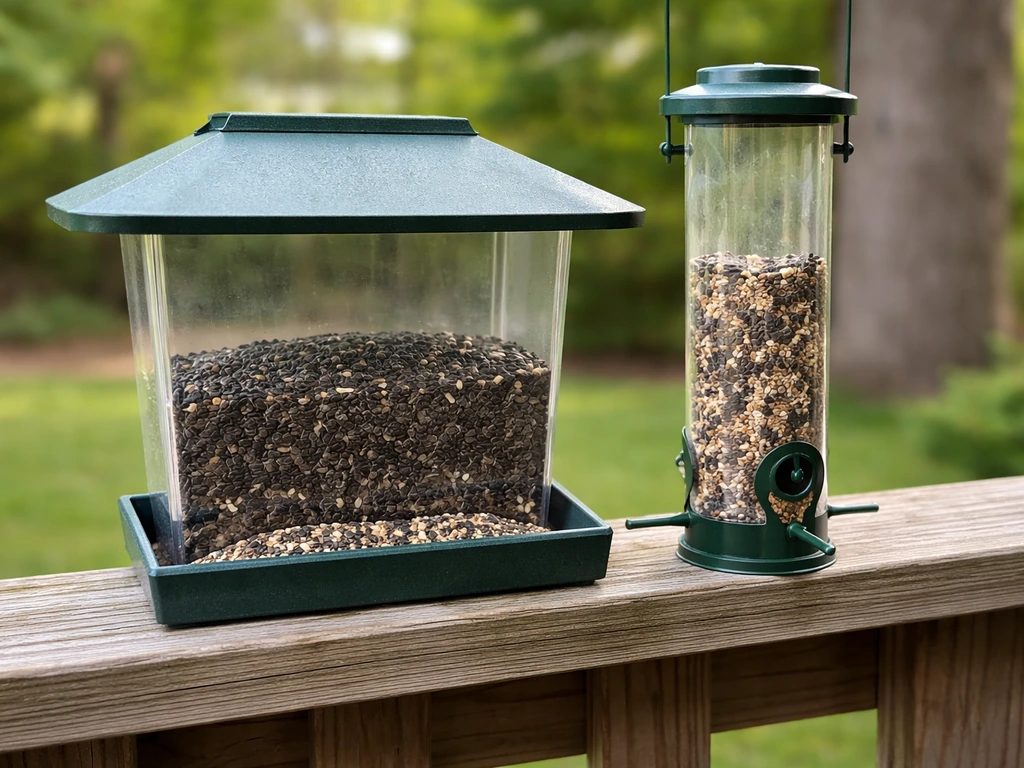
Hopper feeders hold more seed and dispense it gradually, which looks convenient but means seed can sit inside the reservoir for days without you noticing it's getting damp or stale. Tube feeders hold less and are easier to monitor but require more frequent small refills. Platform and tray feeders expose seed directly to rain and bird waste, so they need the most frequent attention of all, sometimes every day in wet weather. Tube feeders with protected ports and weather guards slow spoilage noticeably and can extend your refill interval in damp conditions.
A finch-specific tube feeder loaded with nyjer is one of the most demanding setups to manage. Nyjer oils go rancid quickly, and finches will abandon a feeder the moment the seed tastes off. Smaller, more frequent refills with fresh nyjer work better than filling it to the top and waiting a week.
Real cues that tell you it's time to refill (or not)
Rather than just watching the seed level, train yourself to read a handful of signals. This is the part that separates a feeder that genuinely helps birds from one that becomes a hazard.
- Seed level is low or empty: The obvious one. But also look at where the seed level is inside the reservoir — if seed looks compacted or caked at the bottom, that's not just low, it's potentially moldy. Don't top it off. Empty it first.
- Seed looks clumped, discolored, or smells musty: Wet seed clumping together is a sign of mold. Aspergillosis, a fungal disease that can be fatal to birds, grows in damp or wet birdseed. If you see or smell this, the right move is to discard the seed into the trash (not compost), clean the feeder, and let it dry completely before refilling.
- Hulls and debris are piling up: Seed hulls accumulate on trays and at the bottom of hoppers. Moldy or decomposing hulls can make birds sick even if the top layer of seed looks fine. Clear these out during your refill check.
- Birds are ignoring the feeder: If your feeder normally has traffic and suddenly birds are avoiding it, stale or spoiled seed is a common reason. This is your cue to empty and clean rather than just refill.
- Recent rain or humidity: After a wet stretch, check your feeder earlier than usual. Wet weather accelerates mold growth. The Minnesota DNR specifically flags this: mold and bacteria form quickly on wet birdseed, and your refill interval should tighten after rain.
- It's been two weeks since your last cleaning: Even if seed levels look fine, this is your threshold for a proper clean. Don't just keep topping off without periodically emptying and washing the feeder.
What to do while you're refilling
The best time to do a quick maintenance check is during every refill. You don't need a full deep-clean every time, but a few habits make a real difference. Before adding new seed, tip out any remaining old seed and look at it. If it's clumping, discolored, or smells off, discard it and wipe down the interior of the feeder before adding fresh seed. If the feeder or its ports look wet, let it air dry first, Audubon specifically notes that a feeder must be completely dry before you refill it.
Every two weeks, do a proper clean: disassemble the feeder, scrub it with hot soapy water, rinse thoroughly, and let it air dry. If you've seen sick or lethargic birds at your feeder, step it up to a 10% bleach solution, rinse well, and let it dry completely. Audubon is direct about this: if you see one or two diseased birds, take the feeder down immediately, clean it with a bleach solution, and hold off on putting it back up for a couple of weeks to limit disease spread.
Also check the ground below the feeder during your refill visits. Also check the ground below feeders and remove any moldy or spoiled food to prevent buildup, not just the seed inside the feeder itself blank" rel="noopener noreferrer">check the ground below the feeder during your refill visits. The U.S. blank" rel="noopener noreferrer">Fish and Wildlife Service points out that moldy or spoiled food and seed hulls accumulate on the ground and become a health hazard. Rake or clear this regularly, especially in damp weather.
Problems caused by refilling too much or too little
Over-refilling and under-refilling both create problems, and they're worth understanding specifically so you can course-correct. If you need to know exactly when to stop filling bird feeders, focus on how much spoilage risk you have and whether there is any disease concern at your site.
Refilling too often or over-filling
- Seed pile-up: Topping off without clearing old seed means you're layering fresh seed over stale or potentially contaminated seed. Birds dig through to fresher layers and scatter the rest.
- Attracting unwanted wildlife: Large, constantly full feeders attract squirrels, raccoons, bears, and rodents more consistently than feeders that are monitored and sized to what birds actually consume. If wildlife is becoming a problem, reducing fill volume and sticking to what gets consumed in a day or two is more effective than hardware fixes alone.
- Waste and environmental impact: Seed that spills, sits, or spoils contributes to ground-level mold and can introduce invasive plants if it contains certain grasses or grains. The USDA APHIS warns about the broader consequences of concentrating animals through consistent, unchecked food availability.
- Increased disease risk: A perpetually full feeder that's only cleaned occasionally is a disease incubation environment, not a feeding station.
Refilling too infrequently
- Birds lose the habit of visiting: If your feeder is regularly empty, birds will route around it and may not return even when you refill. This matters most during migration and late winter when food is genuinely scarce.
- Seed that's been sitting gets stale or wet and you don't notice: A feeder you only check weekly might have had wet seed sitting in it for days before you get there.
- You miss disease signals: Monitoring cues only work if you're checking regularly. A feeder you visit once a week gives disease-related problems six days to develop unseen.
When to consider stepping back from a schedule entirely
Sometimes the right move is to take a break from feeding altogether rather than adjusting your refill interval. If you’re wondering, “should i take down my bird feeder,” it usually comes down to whether you’re seeing disease or heavy spoilage at the feeder or in your area take the feeder down. If you're seeing sick birds, if disease has been reported in your area, or if you're going away for more than a few days, it's better to take the feeder down and clean it than to leave it up unattended. The USDA APHIS and Project FeederWatch both support taking feeders down for a couple of weeks when disease risk spikes. Birds are resilient and will find food elsewhere. Coming back to a clean, properly maintained feeder after a break is far better than a feeder that becomes a source of harm.
The question of when to stop filling feeders seasonally is a related one worth thinking through separately, especially if you're in an area with bears or if you're trying to avoid dependency effects on local bird populations. Those questions about seasonal timing deserve their own look, but the core refill habit described here will serve you well across the vast majority of situations.
FAQ
What should I do if my feeder still has seed but it looks wet or clumpy?
Refill sooner if you notice moisture, clumping, or a sour or rancid smell (even if the feeder is not yet low). During cool, damp weather, seed can spoil faster, so it helps to check ports and the bottom of the hopper or tray specifically, not just the visible seed level.
Is it okay to top off with fresh seed if only some of the old seed has gone bad?
Don’t. Instead, empty out the old seed and replace it with fresh seed, then let the feeder fully air dry before refilling. If any parts are sticky or visibly dirty, rinse and dry again, and then resume smaller, more frequent refills to prevent the same problem from returning.
How do I adjust refill frequency when lots of birds are feeding at once?
As a rule of thumb, if you see heavy, continuous traffic (many birds at once, especially at dawn and dusk), reduce your interval to about every 24 hours and target a refill when it’s roughly one-quarter to one-third full. If traffic is light or sporadic, you can usually stretch closer to the 2 to 3 day range, as long as seed stays dry and doesn’t clump.
If I see a few sick birds, should I just refill more often?
Sick or lethargic birds are a signal to pause feeding and take action, then rebuild the routine. If you see diseased birds or disease warnings locally, take the feeder down, clean with an appropriate disinfectant, and wait the recommended break period before putting it back up, rather than simply changing how often you refill.
How often should I check the feeder after heavy rain or during a wet week?
It depends on spoilage risk and the feeder style. If you’re using a hopper that holds seed for days, check daily during wet or windy spells and more often when storms are frequent. For tube feeders with good weather protection, you can often keep the normal interval unless you see moisture collecting at the ports.
When does it make more sense to stop feeding than to keep refilling?
Take the feeder down if spoilage is obvious, if you see moldy seed or a strong off smell, or if diseased birds have been reported in your area. If you’re just noticing normal daily depletion, continue refilling but stop when the feeder runs dry and refill again after inspecting and drying the unit.
Why do finch feeders with nyjer sometimes need more frequent refills?
Nyjer and other oily seeds typically need shorter intervals than standard mixed seed, because they can go rancid quickly. Use smaller refills so the seed you place lasts only a few days, and watch for any drop in visits, as finches can abandon feeders quickly when taste changes.
Should I refill at a particular time of day, or is it random?
Yes. Emptying and refilling right before peak feeding hours helps you avoid leaving birds with nothing and also gives you a more accurate sense of how fast the feeder empties on real traffic days. As soon as the feeder dips into the low range (around one-quarter to one-third full), plan the refill window rather than waiting for it to be completely empty.
How can I tell whether “emptying fast” is actually normal use or spoilage and waste problems?
If you see a lot of waste on the ground, it can be a sign that seed is getting exposed to moisture or bird waste is building up, which increases health risk and can also make the feeder seem “emptier” than it is. Clear the area during refill checks and consider more frequent refills or using a feeder design that protects seed from rain.
What’s the simplest way to recalibrate the refill schedule when the seasons change?
Seasonally, your interval is mostly driven by two factors: feeder throughput (how fast birds are eating) and spoilage risk (temperature, humidity, rain, and whether ports get wet). In practice, that means you should keep the same 1 to 2 day check habit in warm, busy, or damp periods, then ease back only if the feeder stays dry and depletion remains slow.
Next Articles
When to Take Bird Feeders Down: Season Rules and Timeline
When to take bird feeders down by season, plus disease, cleaning, and wildlife rules of thumb for safe timing.
Should I Take Down My Bird Feeder? Quick Safety Guide
Decide if you should take down your bird feeder with a safety checklist, next steps, and how to feed safely.
How Often to Clean Bird Feeders: Simple Schedule
Simple schedule for how often to clean bird feeders, with seasonal rules, signs to act fast, and step-by-step cleaning.