Clean your bird feeders every one to two weeks under normal conditions. That's the baseline recommended by Cornell Lab's Project FeederWatch and echoed by Audubon, state wildlife agencies, and veterinary researchers. If you're in the middle of winter, dealing with wet weather, or you've spotted a sick bird near your feeder, clean more often. That's the short answer. Everything below explains why, and exactly how to do it.
How Often to Clean Bird Feeders: Simple Schedule

Eleanor Hartwick
10 Apr 2026
Why cleaning actually matters for bird safety
I hear people ask whether bird feeders even need to be cleaned at all. They do, and the reason is more serious than just aesthetics. Feeders concentrate birds in a small space. That means droppings, wet seed, and debris pile up faster than they would in a natural setting, and that concentrated mess is exactly what mold, bacteria, and viruses need to get established. Birds can get sick from moldy or decomposing seeds, and they spread diseases to each other through feces. The U.S. Fish and Wildlife Service is direct about this: dirty feeders are a real disease transmission point, not just an eyesore.
One thing worth knowing: cold temperatures do not reliably kill pathogens. Cornell's Center for Wildlife Health makes this point clearly when writing about winter feeding. Bacteria, parasites, and viruses can spread easily from sick birds at a feeder even in freezing conditions. Cleaning is the intervention that actually breaks that chain.
The general cleaning schedule to follow
For most people feeding birds through spring, summer, and fall, every two weeks is the right rhythm. Project FeederWatch recommends it, and it's a practical interval that fits into a regular weekend routine without becoming a burden. If you suspect any disease is circulating among the birds visiting your yard, double that frequency and clean weekly. And here's a rule I find useful: every time you empty a feeder to refill it, that's a cleaning opportunity you should take.
If you're thinking about how often to refill your bird feeder, that cadence and your cleaning cadence should work together. A feeder that gets refilled frequently is also getting cleaned frequently, which is good. A feeder that sits full for weeks without being touched is a feeder that probably needs attention before you top it off.
How winter changes the cleaning frequency
Winter is when feeder hygiene matters most and when it's easiest to skip. Birds congregate at feeders more heavily when natural food sources are scarce, which increases the disease transmission risk significantly. blank" rel="noopener noreferrer">Audubon's winter guidance recommends cleaning at least every other week, and more often during stretches of wet weather like snowstorms or freezing rain. Audubon notes that every other week is a good starting point for seed or suet feeders, but blank" rel="noopener noreferrer">cleaning more often is best, especially in humid or hotter weather. The West Virginia DNR echoes this: every other week is the floor, not the ceiling.
Cornell's Center for Wildlife Health recommends cleaning feeders at least once or twice a month during winter using a bleach-and-water solution, and sweeping up seed waste around the feeder area regularly. If you spot birds at your feeder that look lethargic, puffed up, or otherwise unwell, that's a signal to clean immediately and possibly take the feeder down for a few days to let the local population recover. Oregon State University researchers advise keeping feeders down for two to three weeks when a disease problem is suspected, to give the illness time to run its course in the local bird population.
There are situations where taking a break from feeding altogether makes sense. If you're wrestling with that question, it's worth reading about when to stop filling bird feeders so you can make an informed call rather than just defaulting to one approach.
Exactly what to do each time you clean
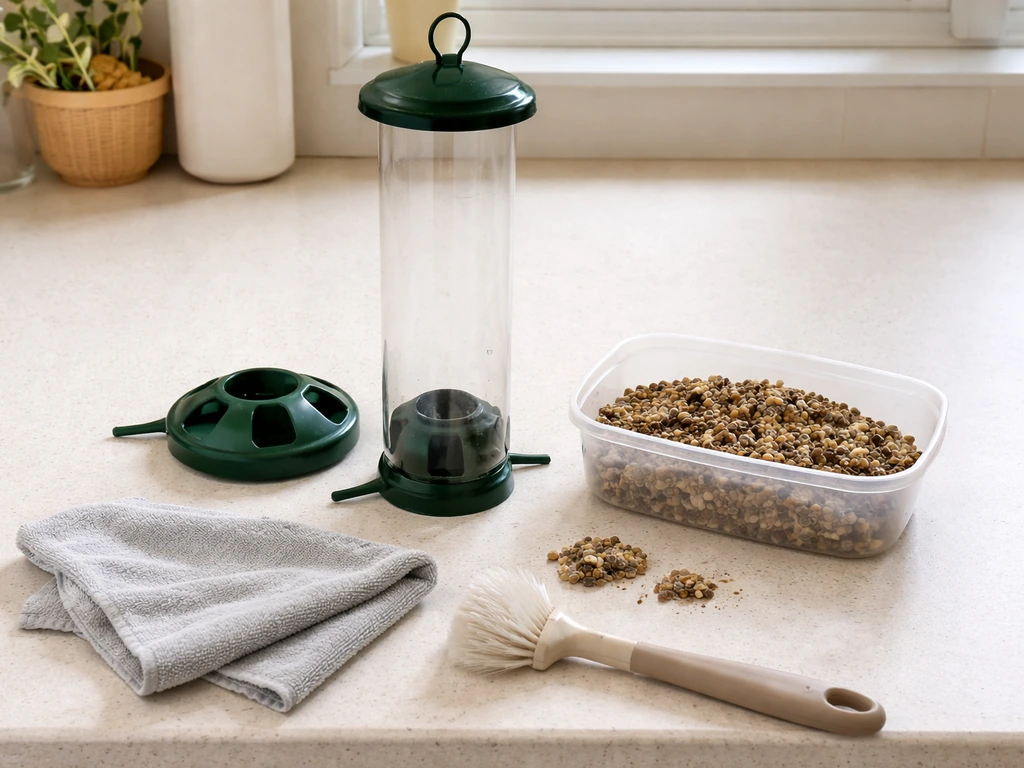
The cleaning process isn't complicated, but skipping steps defeats the purpose. Here's the routine that checks all the boxes:
- Empty the feeder completely. Discard any seed that's wet, clumped, smells musty, or looks discolored. Don't just top off over old seed. University of California's agriculture and natural resources guidance is clear: if food looks or smells questionable, throw it out.
- Disassemble the feeder as much as possible. More pieces apart means more surfaces you can actually reach and scrub.
- Wash with hot soapy water first to remove physical debris, old seed hulls, and droppings. Use a bottle brush for tube feeders and any part with a narrow opening.
- Disinfect with a dilute bleach solution: 1 part bleach to 9 parts water (a 10% solution). Soak feeder components in this solution for 10 minutes. Research supports this contact time as effective against pathogens including salmonella.
- If you prefer a milder option for more frequent cleanings, a 1: 1 vinegar-to-water solution can work for routine wipe-downs between deep cleans.
- Rinse everything thoroughly with clean water. You want no bleach residue left behind before birds are eating from it again.
- Air dry completely before refilling. This step gets skipped constantly and it matters. Moisture is what drives mold growth, so putting wet seed into a damp feeder is counterproductive.
- Sweep or rake the ground under and around the feeder. Seed waste, hulls, and droppings on the ground can transmit disease just as the feeder itself can.
If your feeder is dishwasher-safe, running it on a hot cycle is a legitimate cleaning method according to Cornell Lab's All About Birds. Just make sure it's fully dry before refilling.
Signs that you're already overdue for a cleaning
Even with a regular schedule, watch for these signals that cleaning needs to happen now rather than on your next scheduled day:
- Visible mold: any black, green, or fuzzy growth on the feeder surface or inside the seed reservoir
- Clumped or caked seed that doesn't flow freely through ports or openings
- A musty or sour smell when you open the feeder
- Droppings buildup on perches, ports, or inside the seed area
- Wet seed following rain, snow, or high humidity, especially in feeders that aren't fully weather-protected
- Sick-looking birds: lethargy, puffed feathers, loss of balance, or birds sitting still on the ground near the feeder
- Unusual number of dead birds in the vicinity of the feeder
If you're seeing sick birds, don't just clean the feeder. Take it down. Audubon recommends removing feeders for at least several days when you notice signs of illness in visiting birds. In more serious outbreak situations, the guidance from Oregon State is to keep feeders down for two to three weeks. This isn't an overreaction; it's how you avoid making a localized problem worse. You can also check with your state wildlife agency, since some publish specific guidance during regional disease outbreaks.
If you find yourself questioning whether to bring the feeder back at all after a disease scare, that's a legitimate question to sit with. The article on whether you should take down your bird feeder covers the honest pros and cons of that decision.
Cleaning by feeder type: tube, hopper, and platform
The same cleaning principles apply to every feeder type, but the practical challenges differ a lot depending on the design. Here's how to approach each one.
Tube feeders
Tube feeders are the trickiest to clean thoroughly because of the narrow interior and small feeding ports. Seed residue and moisture can build up inside the tube itself and in the port openings in ways that are hard to see. Disassembly is essential: remove end caps, perches, and any removable ports. Use a bottle brush long enough to scrub the full length of the interior. Soak disassembled parts in your bleach solution, then rinse and air dry before reassembling. Skipping the brush work and just soaking won't clear compacted debris.
Hopper feeders
Hopper feeders hold more seed and have larger surface areas, which means more places for moisture to collect and seed to go stale. The seed reservoir base is a common problem spot where old seed compacts and molds. Take the roof off and open any access panels to expose the interior fully. Scrub all surfaces, including the roof underside, seed tray, and any perch rails. Because hoppers tend to hold seed for longer periods, the risk of wet or moldy seed sitting unnoticed is higher. Check the interior every time you refill, not just on cleaning days.
Platform and tray feeders
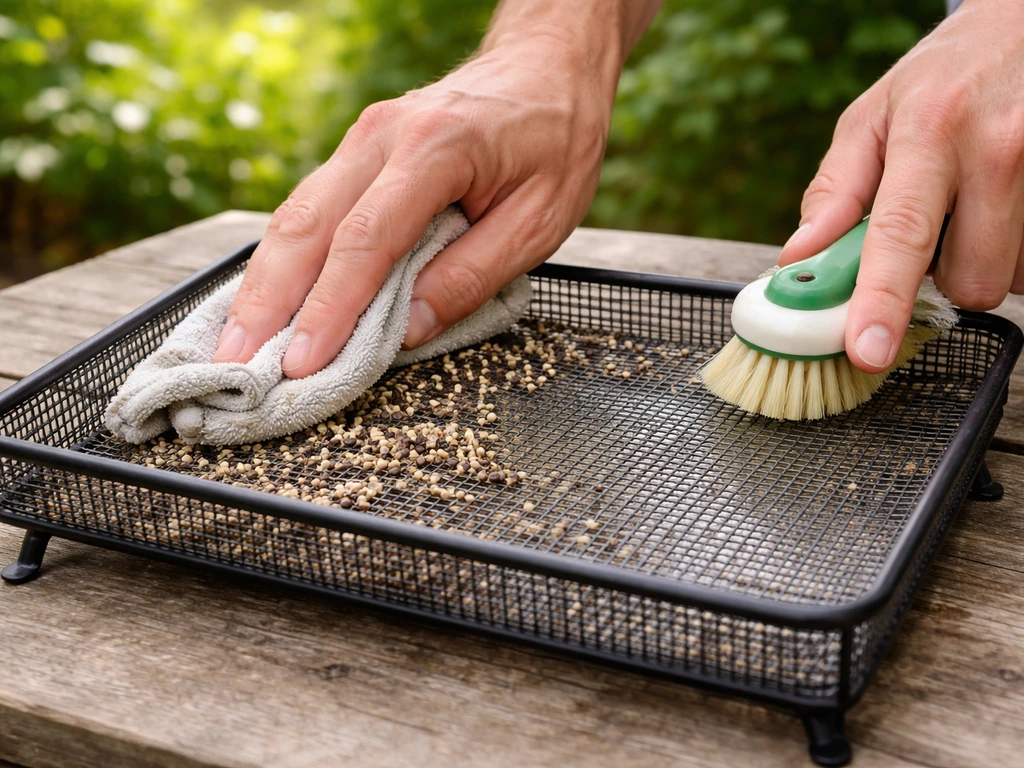
Platform feeders are the easiest to clean but the fastest to get dirty. Seed, hulls, and droppings accumulate directly on an open surface with full exposure to weather. Clean these more frequently than tube or hopper feeders, especially after rain. The tray itself should be scrubbed and disinfected each time. Also pay close attention to the ground underneath: because platforms are often lower and more open, seed waste falls directly below and that debris zone can become a disease source in its own right. Raking or sweeping under the feeder is not optional with a platform setup.
| Feeder Type | Key Challenge | Recommended Cleaning Interval | Special Step |
|---|---|---|---|
| Tube feeder | Hard-to-reach interior and ports | Every 1–2 weeks | Use a bottle brush to scrub full interior length |
| Hopper feeder | Seed compaction and moisture in reservoir base | Every 1–2 weeks; check interior at each refill | Remove roof and panels; scrub seed tray thoroughly |
| Platform/tray feeder | Open exposure to weather; rapid debris accumulation | Weekly or after rain/snow | Rake ground beneath feeder at each cleaning |
Putting it all together: your cleaning plan going forward
If you haven't cleaned your feeder in more than two weeks, that's your starting point today. Empty it, check the seed for moisture or mold, disassemble, scrub, soak in a 1:9 bleach-water solution for 10 minutes, rinse completely, and let it air dry before adding fresh seed. Then set a recurring reminder every two weeks so this doesn't fall off your radar.
In winter, or any time weather is consistently wet, bump that to weekly. If you're thinking ahead to spring and planning to change your feeding routine, reading about when to take bird feeders down can help you plan the end of your feeding season the same way you planned the cleaning routine: with intention rather than just letting the feeder sit.
The birds visiting your yard can't tell you when conditions are unsafe. Watching for the warning signs, sticking to a cleaning schedule, and being willing to take feeders down when something looks wrong are the three things that make the biggest difference. None of it is complicated. It just needs to happen consistently.
FAQ
Can I clean my bird feeder less often if I only have a couple of birds visiting?
Yes, if traffic is light and weather stays dry, the one to two week baseline usually holds. If you notice heavy droppings, wet seed, or moldy smell, traffic size does not matter, clean sooner and consider shortening to weekly.
What if the feeder looks clean, but seed waste or droppings are building up underneath?
For platforms especially, debris on the ground can still harbor pathogens even when the tray looks okay. Sweep or rake under the feeder regularly, and treat the next cleaning as overdue if waste buildup suggests moisture and biological material are accumulating.
Is dishwasher cleaning enough for all feeder types?
Not for feeders that require disassembly or have narrow interiors (like many tube feeders). Dishwasher hot cycles can work for dishwasher-safe parts, but you still need to fully scrub interiors you cannot reach and make sure every piece is completely air dried before refilling.
How do I tell whether seed is becoming unsafe before I see sick birds?
Look for clumping, dampness, a sour or musty odor, visible mold, and seed that feels heavy or sticky. If any of these show up, clean immediately, discard the affected seed, and do not top off with fresh seed on top of contaminated seed.
Can I just wipe the feeder instead of doing a full scrub and soak?
Wiping helps with surface dust, but it often misses residue in ports, trays, and reservoir bases where moisture can linger. When you clean, follow the full routine (scrub, rinse, and let dry, plus soak when using bleach solution) to actually reduce pathogen buildup.
Do I need to sanitize surrounding areas too, like the fence or nearby bird bath?
If the feeder area gets splashed or seeds fall frequently, cleaning nearby surfaces reduces cross-contamination. Focus on the immediate drop zone under the feeder and any surfaces that collect droppings or wet seed, and keep bird bath water fresh on the same hygiene rhythm.
How long should I keep a feeder down if I suspect disease?
A short pause is often recommended when you see lethargic or puffed-up birds, and more serious outbreak concerns may require keeping feeders down for two to three weeks. If only a few birds showed mild symptoms, you can reassess after thorough cleaning and a full drying period, but avoid returning quickly if birds keep arriving and looking unwell.
Should I change the cleaning schedule if it’s very hot rather than cold?
Heat can accelerate spoilage and make wet seed go bad faster, even if pathogens persist well beyond freezing. If you get humidity spikes, frequent rain, or condensation, move toward weekly cleaning regardless of season.
What’s the right approach to refilling, can I refill without emptying?
Ideally empty first, especially if any seed looks damp or moldy. If you must top off between cleanings, remove visible debris, and do not add fresh seed over old seed waste or clumps, because that preserves the contaminated micro-environment.
How should I handle bleach solution safely and effectively?
Make sure the solution is mixed correctly (the common 1:9 water to bleach ratio is the target in the routine), soak for the stated time, then rinse thoroughly and air dry completely. Never mix bleach with other cleaners, and use gloves and good ventilation to protect yourself while disinfecting.
How often should I clean if I’m feeding from multiple feeders at once?
Treat each feeder as a separate hygiene unit. If one gets heavy use or sits in a wetter spot, it may need weekly cleaning while another can stay on the one to two week baseline, and you should never assume the schedule is universal across designs.
Is it normal for feeders to get dirty sooner after heavy rain or snow?
Yes, wet weather increases moisture inside the feeder and encourages moldy seed, so cleaning should be accelerated. A practical rule is to clean right after stretches of freezing rain, snowstorms, or frequent rain, then return to your adjusted interval.