Yes, you can put a bird feeder on your balcony in most cases, but whether you should depends on three things: your building's rules, how you set it up, and how committed you are to keeping it clean. Done right, a balcony feeder is one of the most rewarding ways to watch birds up close. Done carelessly, it creates mess, attracts pests, and can get you a warning from your landlord or HOA. This guide walks you through the whole process so you can make an informed call and set things up properly from day one.
Can I Put a Bird Feeder on My Balcony? Safe Steps

Eleanor Hartwick
20 Jun 2026
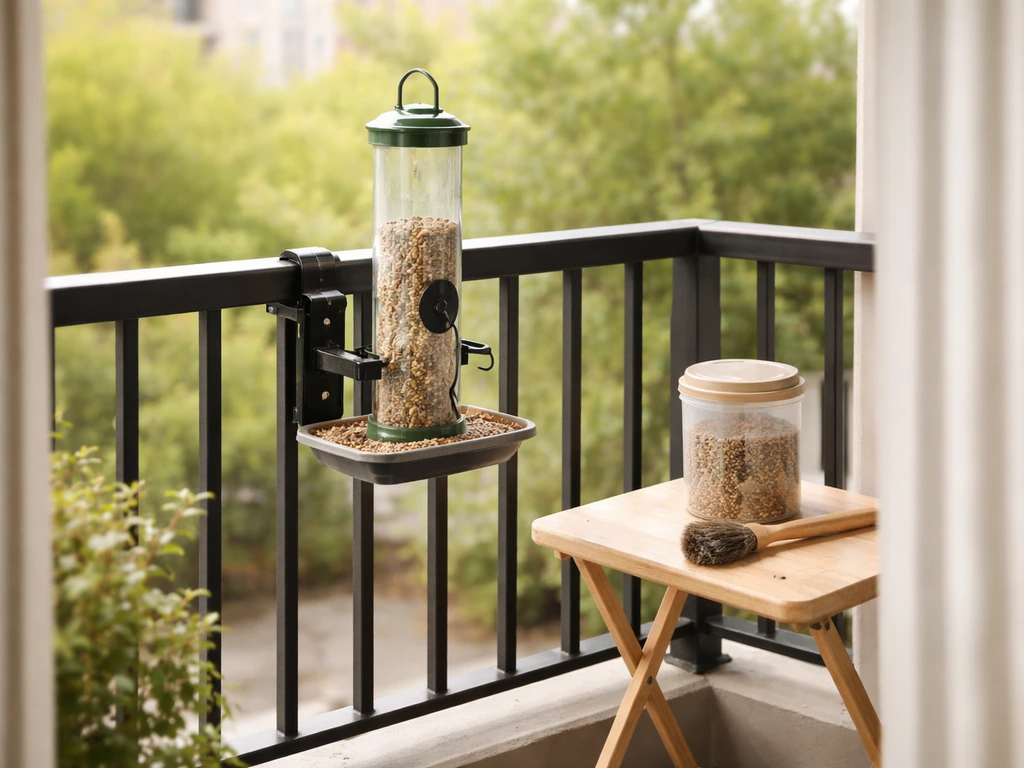
Check your building rules before anything else
This is the step most people skip, and it's the one that causes the most problems. Bird feeders occupy a legal gray area in many apartment and condo buildings. Some leases explicitly prohibit them. Others ban anything that attracts wildlife or creates a nuisance. Some HOA bylaws include language about 'feeding animals' that covers birds. A few cities, like Chandler, Arizona, have amended local ordinances to classify bird feeding in certain contexts as a health and safety nuisance. That's still the exception rather than the rule, but it shows this isn't just a landlord preference issue in every city.
Pull out your lease or condo agreement and search for words like 'bird,' 'feeder,' 'wildlife,' 'nuisance,' 'balcony restrictions,' or 'feeding animals.' If you find nothing, that's a reasonably good sign, but it doesn't guarantee you're in the clear. A quick email to your building manager asking about balcony feeders takes five minutes and protects you later. Frame it positively: you're asking about policies, not confessing to something. If your building does prohibit feeders, window-mounted suction-cup feeders are the lowest-profile option and sometimes fly under the radar, though you should still get explicit permission before using them.
Where exactly to put the feeder on your balcony
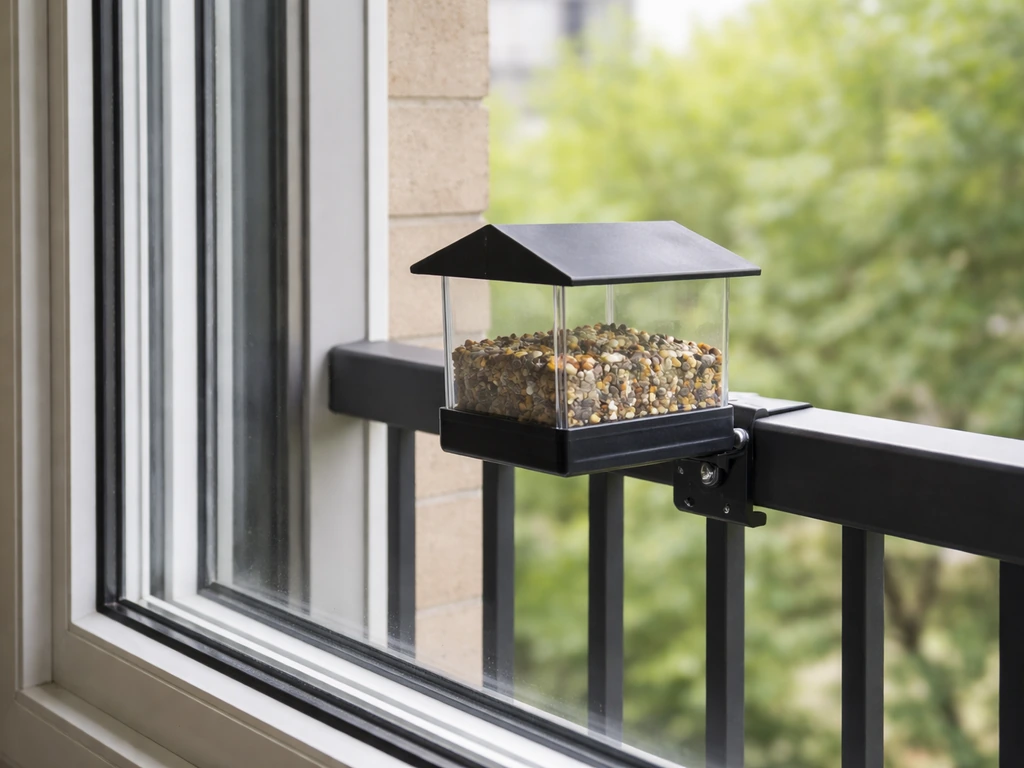
Balcony placement is more constrained than yard placement, so you have to think carefully about a few overlapping concerns: window collisions, stability, neighbor impact, and access for filling and cleaning. A bird bath should also be placed thoughtfully, ideally not right next to the feeder, so you avoid extra mess and unwanted traffic should bird bath be near feeder.
The window collision rule
This one surprises people. Both Audubon and the Cornell Lab of Ornithology (All About Birds) recommend placing feeders either within 3 feet of a window or more than 30 feet away.
The reason: birds approaching from 3 feet or less haven't built up enough speed to injure themselves seriously if they do hit the glass. At distances between 3 and 30 feet, they're flying at full speed and a collision can be fatal.
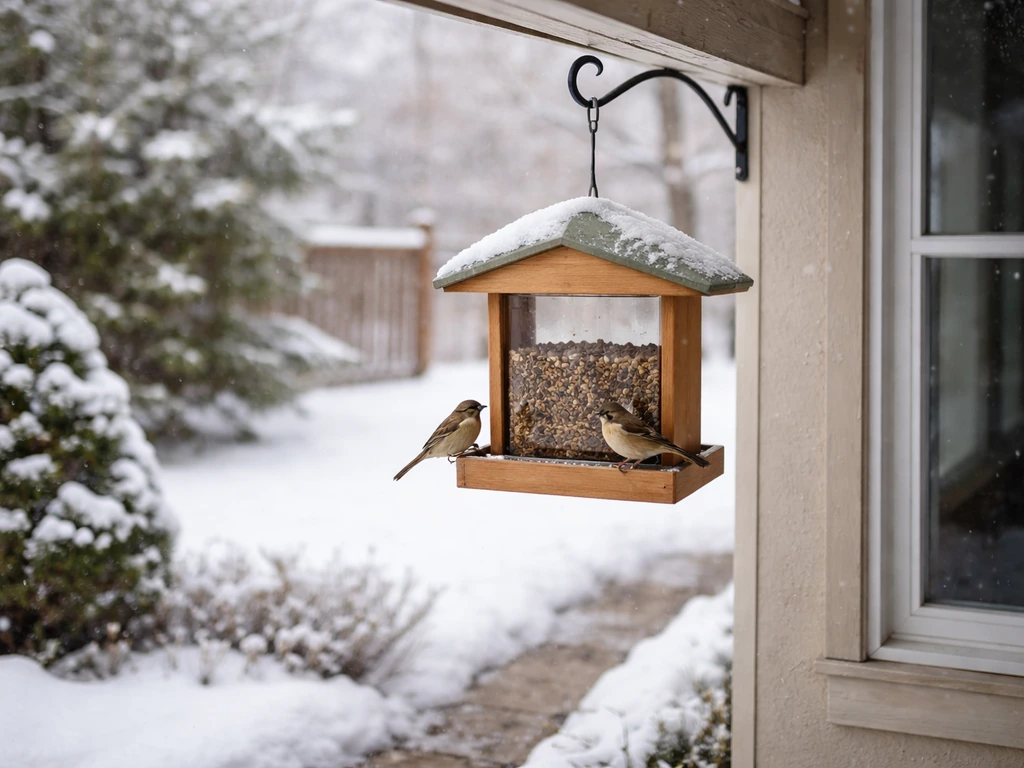
On a typical apartment balcony, this means your safest options are a feeder mounted directly on the window glass with suction cups, a feeder hanging from the balcony railing right next to the sliding door, or a pole-mounted feeder pushed close to the building wall. Avoid hanging a feeder from the center of the balcony ceiling if that puts it 5 to 15 feet from your window. That's the danger zone.
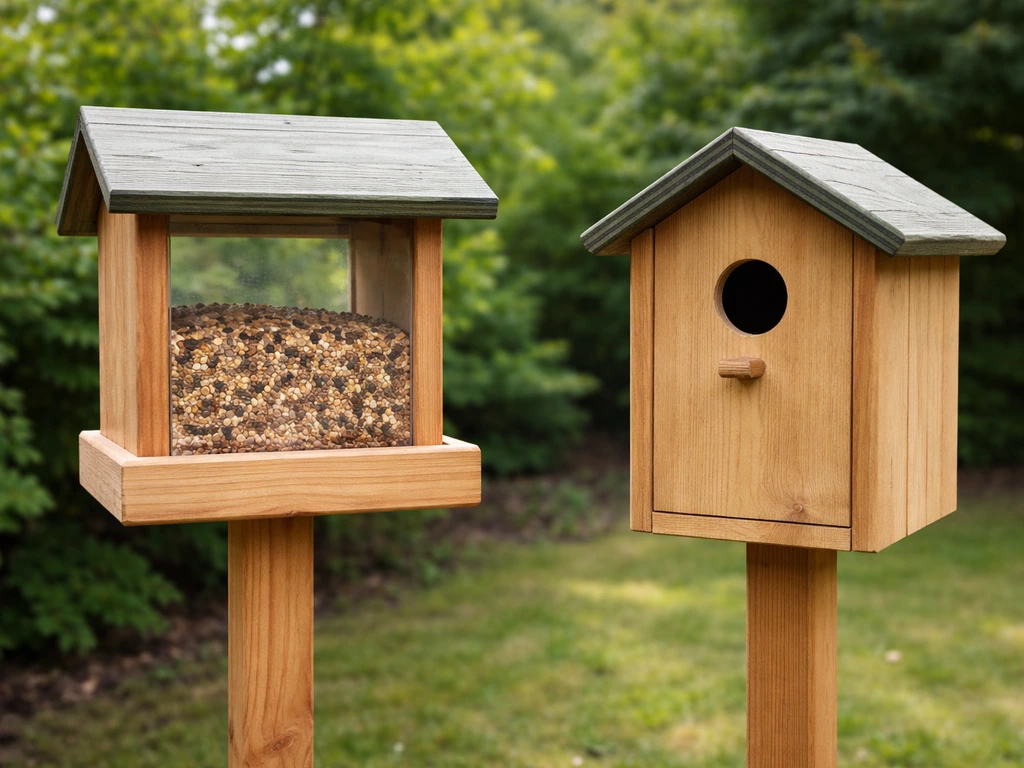
If you also plan to add a birdhouse, place it a short distance from the feeder so visiting birds can eat and then settle nearby birdhouse near a bird feeder.
Stability and falling risk
A feeder that falls three stories onto a pedestrian walkway or a neighbor's furniture below is a real problem. Use railing clamp mounts rated for the weight of a full feeder plus birds, or a tension-pole setup that braces between the balcony floor and ceiling. Avoid thin S-hooks and flimsy chains. If you're in a windy location, go for a low-profile tube feeder rather than a large hopper with a wide roof that catches gusts. Fill it only halfway during high-wind seasons. Check the mount every few weeks for loosening, rust, or wear.
Neighbor and building considerations
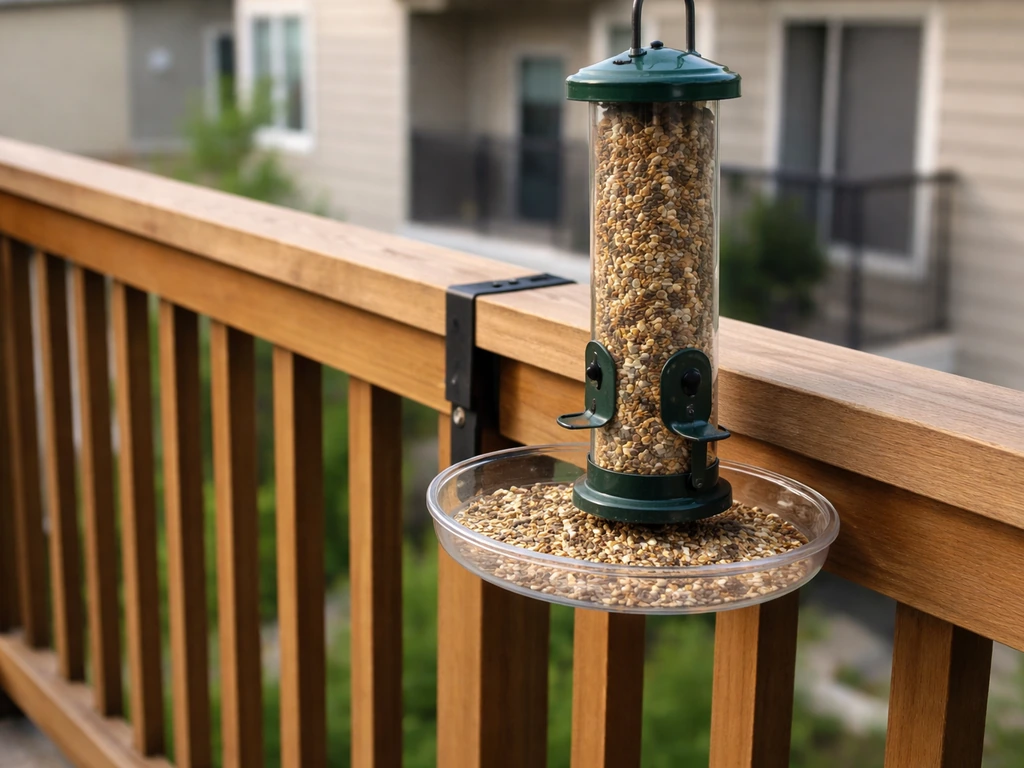
Seed hulls and bird droppings fall downward, which means your feeder can directly affect the neighbor below you. Position the feeder as close to the outer railing edge as possible, so hulls and debris fall toward the ground rather than onto the balcony below. A seed catcher tray attached underneath the feeder catches a lot of spilled seed and significantly reduces the mess that reaches your neighbors. Some people also put a mat below the feeder on their balcony floor to make cleanup easier. Be honest with yourself: if your balcony is directly above a walkway, a patio, or another tenant's living space, you need to be extra diligent.
Choosing the right feeder type for a balcony
Not every feeder design works well in a balcony setting. You want something that minimizes mess, handles wind, mounts securely, and is easy to remove and clean in a small space. Here's how the main types stack up.
| Feeder Type | Balcony Suitability | Mess Level | Best For |
|---|---|---|---|
| Window suction-cup feeder | Excellent | Low | Smallest balconies, close observation |
| Tube feeder (small to medium) | Very good | Low to medium | Finches, chickadees, titmice |
| Hopper feeder | Moderate | Medium to high | Mixed species, larger balconies |
| Platform/tray feeder | Poor to moderate | High | Ground-feeding species, hard to manage mess |
| Hummingbird nectar feeder | Excellent | Very low | Hummingbirds, warmer months |
| Suet cage feeder | Very good | Low | Woodpeckers, nuthatches, winter feeding |
For most apartment balconies, a small to medium tube feeder or a window-mounted feeder is the practical starting point. They hold enough seed to last several days, produce less waste than hoppers or trays, and are easy to bring inside for cleaning. If hummingbirds visit your area, a nectar feeder is almost zero-mess and one of the most enjoyable additions you can make. Suet cages are excellent in fall and winter and attract birds that don't always come to seed feeders. I'd skip platform feeders on most balconies unless you're fully committed to daily cleanup, because open trays get wet, grow mold fast, and scatter hulls everywhere.
What to feed: matching food to local birds
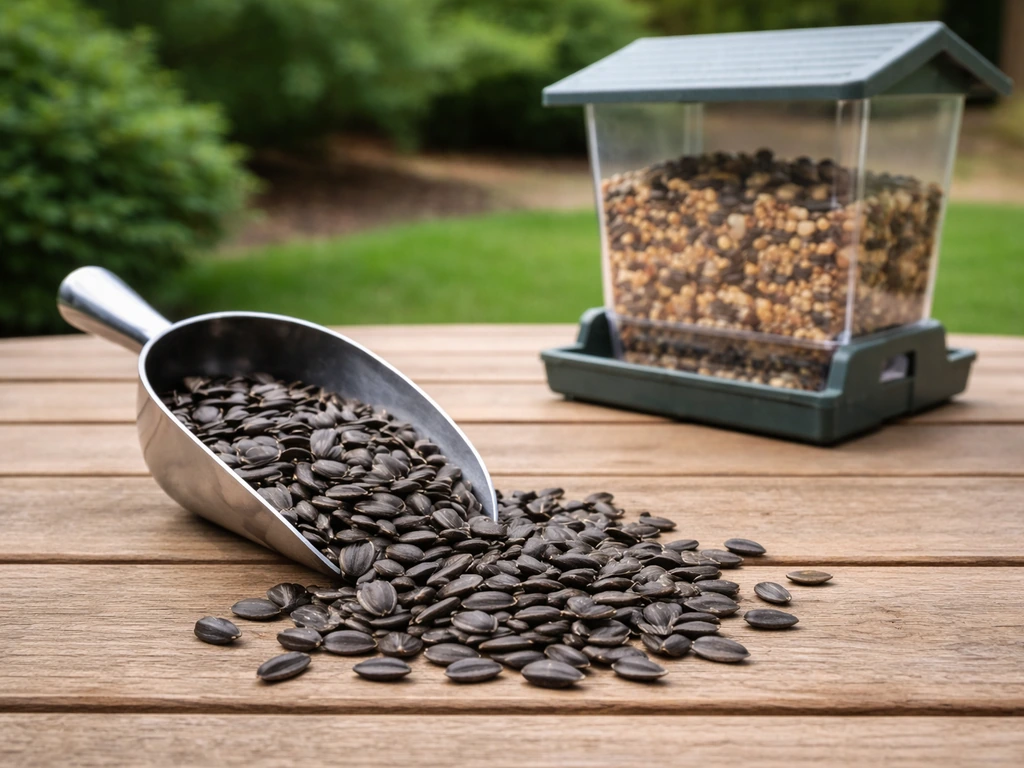
The food you put out determines which birds you attract, how much mess you deal with, and how often you're cleaning up spoiled or wasted seed. A few targeted choices beat a generic 'wild bird mix' every time.
- Black-oil sunflower seed: the single most effective seed for attracting a wide range of birds including chickadees, finches, nuthatches, cardinals, and juncos. It has a thin shell that smaller birds can crack, and it produces less hull waste than striped sunflower.
- Nyjer (thistle) seed: essential if you want finches, especially American goldfinches and house finches. Requires a special tube feeder with small ports. Almost no other animals eat it, making it one of the lowest-nuisance options.
- Safflower seed: attracts cardinals and some sparrows while being largely ignored by squirrels and starlings, which is a real advantage on a balcony.
- No-mess or hulled seed mixes: pre-hulled seeds eliminate the shell waste problem almost entirely, which is a major balcony win. They cost more but the cleanup reduction is worth it.
- Suet cakes: high-fat energy blocks that attract woodpeckers, wrens, nuthatches, and creepers, especially in cold weather. Choose suet without seed mixed in to reduce mess.
- Nectar (4: 1 water to sugar, plain white granulated): for hummingbirds. Never use red dye or commercial mixes with preservatives. Change every 3 to 5 days in warm weather, more often in heat.
- Avoid generic mixed seed with milo, oats, or wheat: most birds reject these fillers, they pile up on the balcony floor, and they attract rodents.
To figure out which species visit your area, spend ten minutes on the Cornell Lab's eBird website and search your zip code for frequently reported birds. That tells you what's actually around before you commit to a seed type. Urban balconies often attract house sparrows, house finches, mourning doves, and European starlings heavily. If you're trying to attract more diverse or native species, hulled sunflower and nyjer in a tube feeder are your best tools.
Keeping things clean: your maintenance routine
Maintenance is where balcony feeding gets more demanding than yard feeding. On a balcony, there's nowhere for mess to disperse: droppings concentrate, wet seed molds faster in a confined space, and an unclean feeder becomes a disease vector for the birds you're trying to help. This is non-negotiable if you want to do this responsibly.
Feeder cleaning schedule
- Every 1 to 2 days: check for wet or clumped seed, especially after rain. Remove and discard any moldy or soggy seed immediately. Don't just add fresh seed on top.
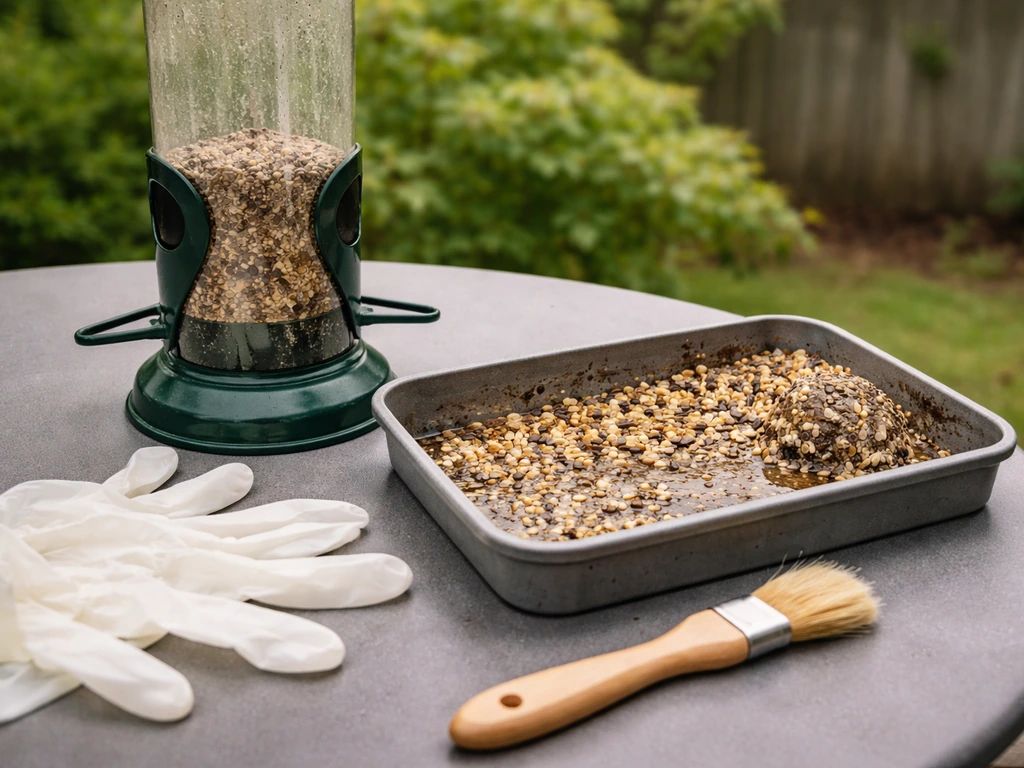
- Weekly: remove and scrub the feeder with hot water and a stiff brush. Rinse thoroughly. For a deeper clean, use a 9:1 water-to-bleach solution, scrub, rinse well, and let it dry completely before refilling.
- Weekly: sweep or wipe down the balcony floor under and around the feeder to remove hulls, droppings, and spilled seed.
- Every 3 to 5 days (summer) or every 2 days (hot weather above 80°F): change nectar in hummingbird feeders. In cool weather this can extend to weekly.
- Monthly: inspect the feeder for cracks, rust, or worn parts that could trap bacteria or injure birds. Replace any damaged feeders.
The seed catcher tray I mentioned for mess control also needs regular emptying: wet seed sitting in a tray is a mold and bacteria problem waiting to happen. Think of it as part of the feeder, not an optional accessory. If you notice birds looking lethargic, acting disoriented, or if you're finding dead birds near the feeder, take the feeder down immediately, clean it thoroughly, and hold off feeding for at least two weeks. Disease outbreaks at feeders are real, and sometimes the most responsible thing is a temporary pause.
Dealing with unwanted visitors
Squirrels, rats, wasps, and ants are the main uninvited guests at balcony feeders. The good news is that balconies actually create some natural barriers compared to yard feeders, but you still need to manage the situation actively.
Squirrels
If your balcony is accessible from a tree, nearby roof, or even a drainpipe, squirrels will find a way to it. A tube feeder with a metal squirrel baffle installed above the mounting point is your best defense. Caged feeders (a tube feeder surrounded by wire mesh with gaps sized for small birds) work well and are physically impossible for squirrels to access. Switching to safflower seed or nyjer also helps since squirrels tend to ignore these. Avoid suction-cup style deterrents advertised as 'squirrel proof' without a proper baffle: most don't work.
Rats and mice
This is the concern that most often gets apartment feeders shut down by building management. Rodents are attracted to spilled seed on the ground, not typically to the feeder itself. The solution is two-pronged: use no-mess hulled seed to drastically reduce spillage, and clean the balcony floor consistently. Never leave spilled seed sitting overnight. If you see rodent droppings on your balcony, take the feeder down until the issue is resolved. A single rat complaint from a neighbor can end your feeding setup permanently.
Insects
Wasps and bees are strongly attracted to hummingbird nectar feeders. Use feeders with bee guards over the ports, and hang the feeder in shade since insects are more active around feeders in direct sunlight. Ants are managed with an ant moat: a small water-filled cup that hangs above the nectar feeder and creates a barrier ants can't cross. These are cheap and extremely effective. For seed feeders, ants are usually only a problem if seed spills and sits; regular cleaning prevents most ant issues.
Starlings, pigeons, and house sparrows
In urban areas, you'll likely attract these species in large numbers. They're not dangerous, but flocks of pigeons or starlings can create significant noise and mess and may alarm neighbors. A small tube feeder with nyjer seed is your best tool here: starlings and pigeons can't use small-port tube feeders designed for finches. Avoid platform feeders and scatter feeding on the railing, which are open invitations for flocks.
Seasonal setup and what to do when things aren't working
Winter
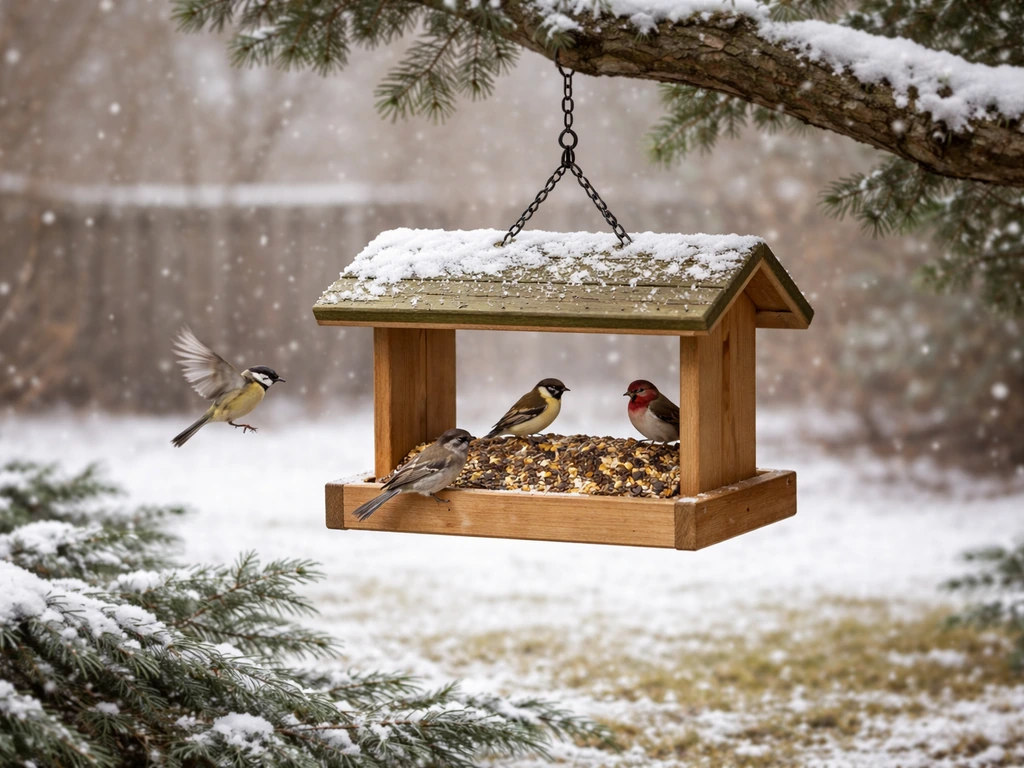
Winter is actually the most beneficial time to feed birds in most of North America. Natural food sources are scarce, and high-fat foods like suet and black-oil sunflower seed provide critical energy. Keep the feeder stocked consistently through cold snaps: irregular feeding is actually worse than no feeding once birds start relying on your feeder as a food source. In freezing temperatures, check that seed isn't clumping or freezing in the feeder. Bring the feeder inside during major storms and hang it back out when conditions ease. Don't run a nectar feeder in freezing temperatures: hummingbirds don't overwinter in most of North America (with a few exceptions on the Pacific Coast), and nectar freezes and ferments rapidly in cold weather.
Spring and summer
Spring brings migrating species passing through, so you may see birds you've never seen before for a few days at a time. This is worth paying attention to. Summer is the high-maintenance season: heat causes seed to go rancid faster, nectar needs changing every 2 to 3 days, and insect activity around feeders peaks. Fill the feeder in smaller amounts so seed turns over quickly instead of sitting and spoiling. If you're seeing fewer birds in late summer, it's normal: natural food is abundant and birds have less reason to visit feeders. Don't assume your setup is wrong.
When birds aren't coming
If you've had a feeder up for two to three weeks and seen almost no activity, run through this checklist before giving up. First, is the feeder visible from flight paths, or is it tucked behind a wall or solid railing where birds can't spot it? Birds find feeders by sight. Second, is the seed fresh?
Stale or rancid seed is rejected immediately. Smell it: if it's off, replace it. Third, is the feeder near a window that's reflecting sky and trees in a way that creates a collision hazard? Birds may be avoiding it.
Fourth, is there a cat or hawk regularly perching nearby? Birds have excellent threat detection and will abandon a feeder if a predator is using your balcony as a hunting post. Fifth, are there better food sources nearby, like a mature tree with berries or a neighbor with a larger established feeder? It can take weeks for birds to discover a new balcony feeder, especially in urban areas with few established bird corridors.
If you are wondering whether a feeder is safe around nesting birds, you can plan placements and timing so you do not disrupt the nest should i put a bird feeder near a nest.
A quick setup checklist before you start
- Review your lease or HOA rules and confirm bird feeders are permitted, or get explicit written permission.
- Choose a feeder type suited to your balcony size and target birds (tube or window-mount for most situations).
- Position the feeder within 3 feet of a window, or use a window-mounted feeder to minimize collision risk.
- Install a railing clamp or tension-pole mount rated for the feeder's full weight. Test its stability before you hang the feeder.
- Add a seed catcher tray below the feeder and a balcony floor mat for easy cleanup.
- Fill with high-quality seed: black-oil sunflower, nyjer, or hulled no-mess mix depending on your target species.
- Set a weekly cleaning reminder and commit to checking for wet or moldy seed every day or two.
- If adding a hummingbird feeder, install an ant moat and bee guards from day one.
Balcony feeding is a genuine trade-off: you get close, regular bird contact that a backyard feeder rarely delivers, but you also take on more responsibility for cleanliness, neighbor relations, and safety. If you're also thinking about adding a bird bath near the feeder or wondering how a birdhouse nearby would affect things, both are possible in balcony setups with the right adjustments. If you decide to hang a birdhouse too, the same cleanliness and location rules apply to keep birds healthy and avoid attracting pests. The birds that visit a well-maintained balcony feeder often become genuinely recognizable individuals over time, and that's something that's hard to replicate any other way in an apartment.
FAQ
Can I put a bird feeder on my balcony if my lease or HOA says “no feeding animals”?
Start by asking the building manager or HOA for a written clarification of whether bird feeders are included. Some policies target littering or attracting larger wildlife, and you may be allowed to feed with lower-mess feeders (like tube or window-mounted) plus strict cleanup. Don’t rely on “suction-cup only” as a workaround unless you get permission in writing.
What’s the safest feeder placement if my balcony is very close to a window?
If the feeder will be within roughly 3 feet of the glass, birds can’t build enough speed to suffer serious injuries in most cases, so that distance is safer. If your balcony layout forces you into the 3 to 30 foot danger range, choose a window-mounted option or mount the feeder right by the sliding door so the approach path is controlled.
How do I keep the seed and droppings from affecting my neighbors below?
Use a seed catcher tray, position the feeder as far outward as your balcony allows, and clean the balcony floor frequently, especially after windy or rainy days. Also avoid overflowing hulls and don’t let seed sit overnight, because spilled seed is what brings rodents and creates persistent mess.
Is it okay to use a suction-cup feeder on an apartment window?
It can be a low-profile option for collision risk, but it’s not automatically safe or stable. Make sure the suction mount is rated for the feeder when full (plus birds), mount it on a structurally sound surface, and inspect it periodically for loosening, especially in heat and vibration.
What should I do if I see dead or sick birds near the feeder?
Take the feeder down immediately, clean it thoroughly, and pause feeding for at least two weeks. During the pause, don’t “spot feed,” because contaminated food and surfaces can keep the problem going. After the pause, reintroduce with a freshly cleaned feeder and fresh seed.
Do I need to bring the feeder inside during winter storms and freeze-ups?
During major storms, bring the feeder in to prevent it from filling with rain and becoming moldy or icy. In freezing temperatures, check that seed is not clumping or freezing in place. For nectar feeders, do not run them in freezing weather because nectar freezes and ferments quickly and can harm hummingbirds.
How often should I refill a balcony feeder in hot summer weather?
Refill in smaller amounts so older seed turns over quickly. In summer, heat accelerates spoilage and rancidity, and sitting seed can mold in a confined balcony space. If you notice birds rejecting seed, smell it and replace it rather than adding new seed on top.
What’s the best way to prevent squirrels from emptying the feeder?
Use a tube feeder with a proper metal baffle installed above the mounting point, or use a caged/tube style that small birds can access but squirrels cannot. If squirrels persist, switch to safflower seed or nyjer, since they’re typically less attractive to squirrels than many common mixes.
Will pigeons, starlings, or other large birds take over a balcony feeder?
They can, especially with open designs like platforms or easy-access scatter feeding. For balcony control, use a small-port tube feeder sized for finches, and avoid placing seed on the railing or near ledges where flocking birds can crowd in.
My feeder isn’t getting activity, how long should I wait before changing anything?
It can take weeks for birds to discover a new balcony feeder in dense urban areas. If you’re seeing almost no activity after two to three weeks, check visibility from flight paths, confirm seed freshness (including smell), and look for collision risks from reflections or nearby predators using your balcony as a hunting spot.
Can I add a bird bath near a balcony feeder without making the mess worse?
Yes, but don’t place it right beside the feeder. Keep it far enough that birds aren’t creating extra traffic directly over your feeder and that splashes don’t increase grime and mold. Treat the bath like an additional maintenance item, since stagnant water and wet areas can raise health risks for both birds and neighbors.