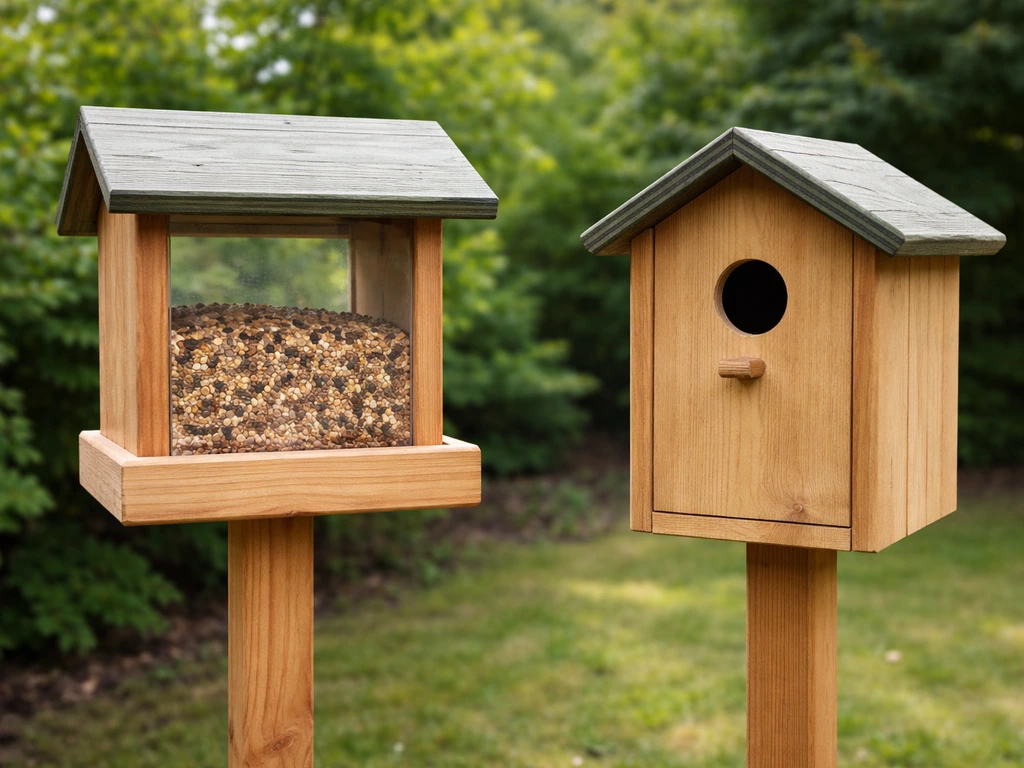
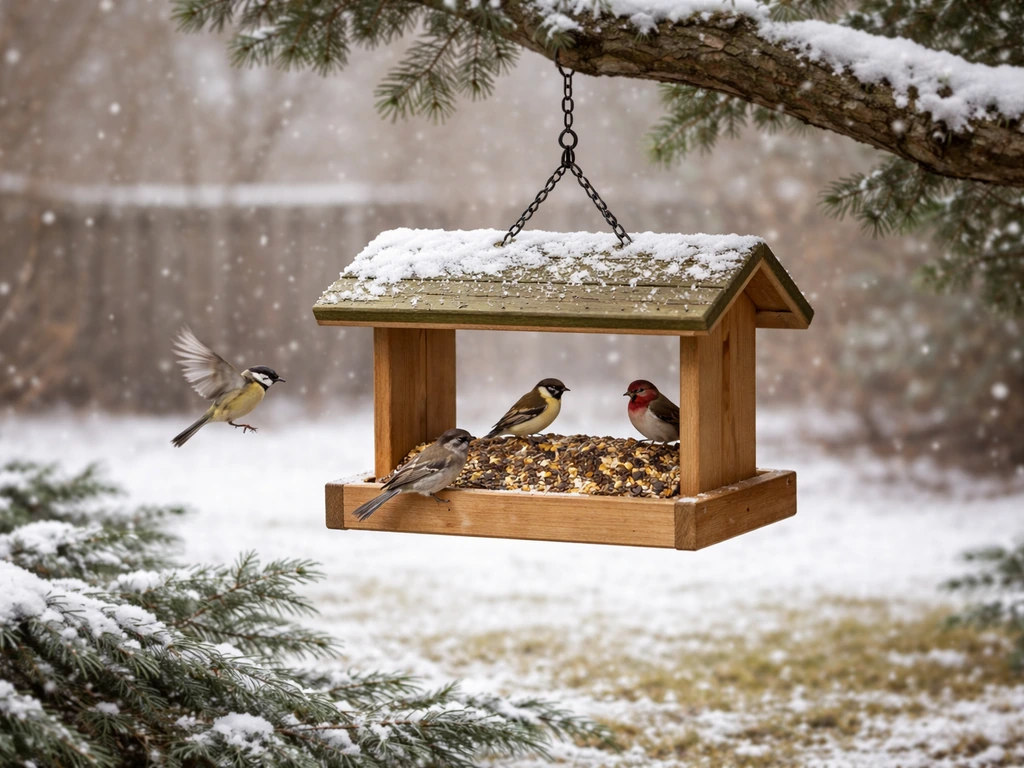
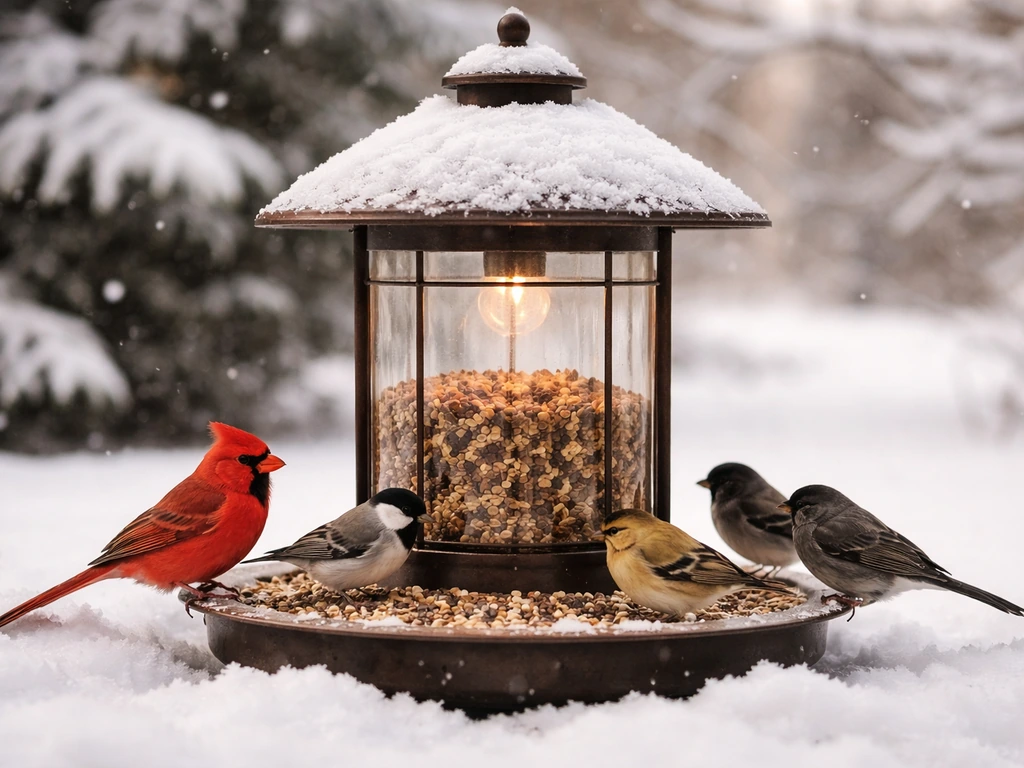
The confusion often starts at the store. Some products are sold as 'decorative birdhouses' that are really just open-platform feeders shaped like little houses. Others are genuine nest boxes with a small round entrance hole. If yours has an enclosed chamber with a small circular hole in the front, it is a nest box. If it has an open tray, mesh panels, a clear acrylic tube, or a hopper, it is a feeder. That distinction matters a lot for what you do next.
Direct answer: do you put bird food in a birdhouse?
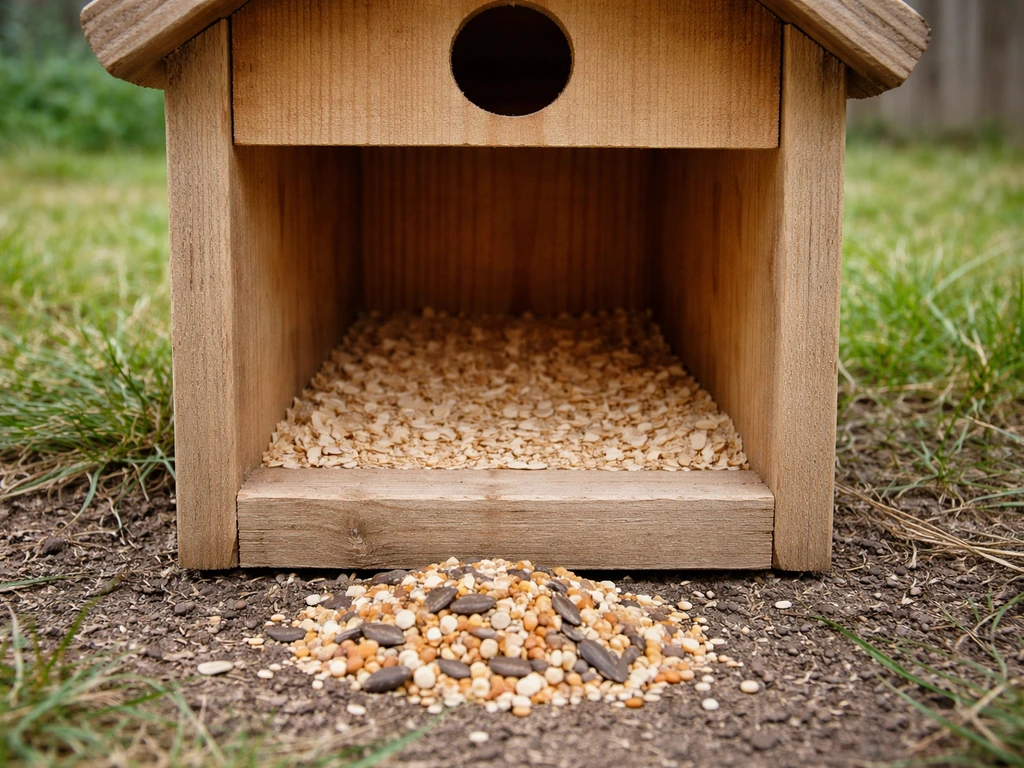
No. You do not put bird food or seed inside a birdhouse (nest box). Putting seed inside a nest box will not attract nesting birds, it will attract rodents, squirrels, and possibly deter the birds you actually want to move in. Cavity-nesting birds like bluebirds, chickadees, and wrens choose a nest box based on entrance hole size, interior dimensions, height off the ground, and surrounding habitat. They are not drawn in by food inside the box. In fact, seed sitting in a dark, enclosed box will get wet, develop mold, and create exactly the kind of bacterial environment that harms birds.
If you were hoping food would 'bait' birds into the box, I understand the instinct, but it genuinely does not work that way. Nesting is driven by instinct, habitat, and safety, not food placement. The best thing inside a clean nest box is nothing at all, or in some cases a thin layer of appropriate nesting material (more on that below).
If you meant a feeder: where the food actually goes
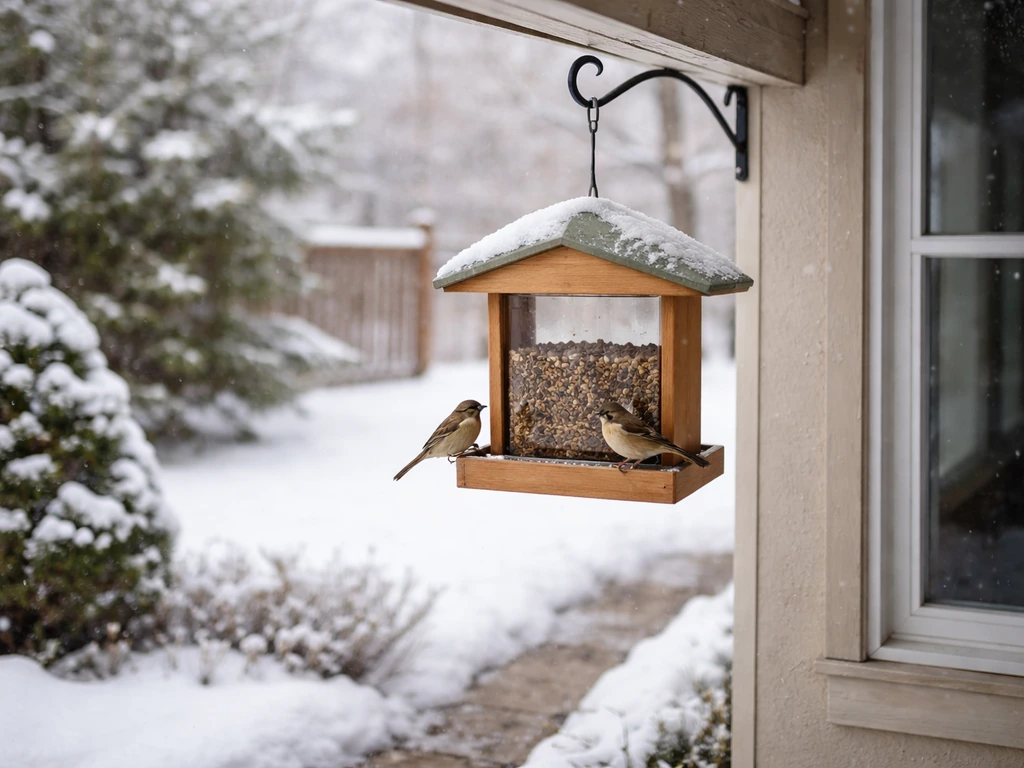
If what you have is actually a feeder (a tube, hopper, platform, or mesh design), the food goes into the designated reservoir or tray, not inside any enclosed chamber that might exist for decoration. Tube feeders load from the top. Hopper feeders have a central chamber that you fill from the top or sides. Platform feeders take seed spread across the open tray. Always fill only what birds can realistically eat within a few days, especially in warm or wet weather, because wet seed spoils fast and that is when disease risk climbs.
A few practical rules for filling feeders: match the seed to the species you want (black-oil sunflower seed attracts the widest variety), avoid cheap mixes loaded with filler seeds like milo or red millet that most birds toss aside, and never top off old seed with fresh seed. Dump, clean, dry, then refill. That habit alone prevents most of the mold and bacteria problems people run into.
If you meant a nest box: what actually goes inside
A properly set-up nest box should be clean and empty when you first put it out. The nesting birds themselves will bring in whatever materials they want. Bluebirds, for example, will bring dried grass. Chickadees bring moss and fur. Do not fill the box with cotton, yarn, dryer lint, or other synthetic materials, which can entangle birds or chicks. Some people add a very small amount of dry wood shavings (not sawdust) to nest boxes intended for species like wood ducks, but for most songbird nest boxes, the answer is simply: clean it out and leave it empty.
After each brood fledges, remove the old nest material entirely. NestWatch from the Cornell Lab of Ornithology recommends cleaning the box with a 1:10 bleach-to-water solution (one part bleach, ten parts water) once there is absolutely no sign of active breeding. Only clean when you are certain the box is unoccupied. Some species will attempt a second or even third brood in the same season, so check before you clean.
Placement basics: height, distance, and predator protection
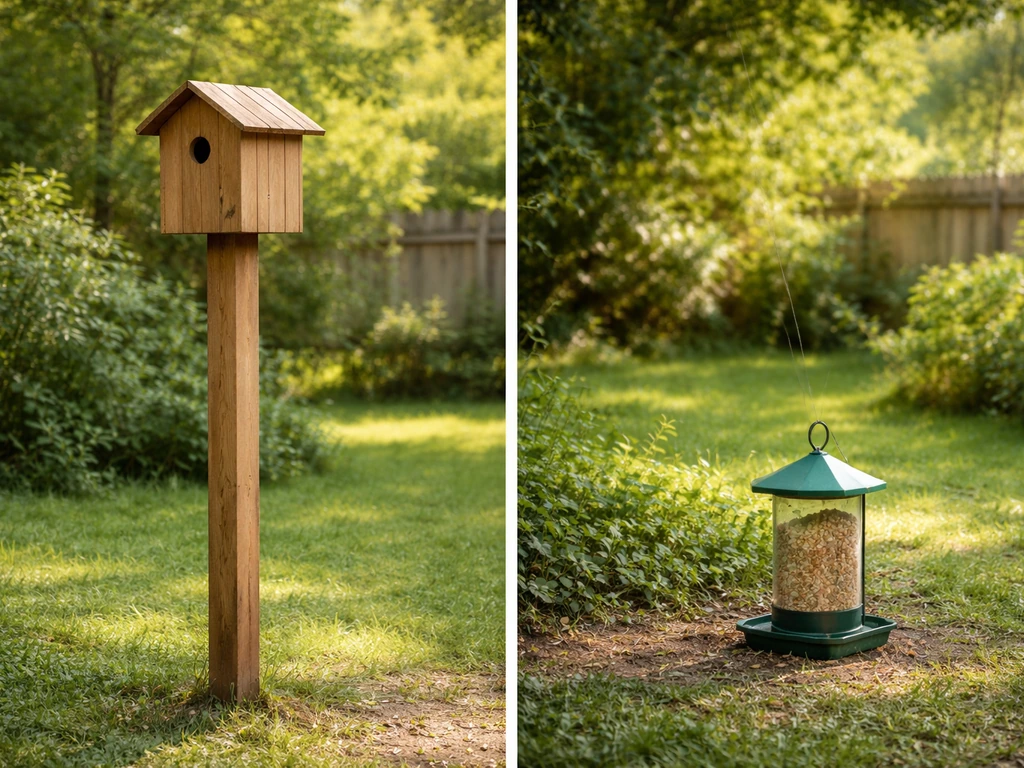
Where you put a nest box and where you put a feeder are also different questions, and getting placement wrong is one of the most common reasons neither works as well as it should.
Nest box placement
Nest box height, entrance hole size, and spacing are all species-specific. For Eastern Bluebirds as a well-documented example, NestWatch recommends a box height of 3 to 6 feet, an entrance hole of about 1.5 inches in diameter, and a minimum spacing of 300 feet between boxes if you are mounting multiple. Entrance hole orientation matters too: face it away from prevailing winds and harsh afternoon sun. Predator guards on the mounting pole are not optional if you want real nesting success. Raccoons, snakes, and cats are the most common threats. A good predator baffle on the pole below the box makes a significant difference.
One important note: keep nest boxes well away from your bird feeders. Some guidance recommends [at least 100 yards of separation](https://efotg. sc. egov.
usda. gov/references/Delete/2016-12-31/BirdBoxes%26StructuresforWildlifeGuidesheet. pdf). Feeders attract crowds of birds, which creates competition and stress near nest sites, and the activity around a feeder can draw in the same predators you are trying to keep away from nesting birds.
If you are also thinking about whether to place a birdhouse near a feeder, that spacing question deserves its own careful look. Spacing matters, so you can put a birdhouse near a bird feeder only if you give enough distance to reduce competition and shared predator risk. If you are wondering should i put a bird feeder near my garden, use the same placement principles and give the birds enough space to stay safe.
Feeder placement
For feeders, the main variables are: safety from window strikes, access by predators and squirrels, and height. The Florida Fish and Wildlife Conservation Commission recommends suspending feeders at least 10 feet off the ground and keeping them at least 4 feet from any surface a squirrel or raccoon could use as a launch point.
For window safety, either place the feeder very close to the window (within 3 feet, so a startled bird cannot build up dangerous speed) or well away from it. If you are wondering about a balcony specifically, the same general feeder placement and window safety ideas apply can i put a bird feeder on my balcony. Avoid the middle-distance zone of 5 to 30 feet from a window, which is where the most strikes happen.
Pole-mounted feeders with a baffle below are usually more effective at deterring squirrels than hanging feeders, which creative squirrels tend to defeat eventually. A cage-style feeder is another good option if squirrels are persistent. The goal is not perfection, it is making your setup difficult enough that squirrels move on to easier targets.
How to prevent mess, pests, and disease
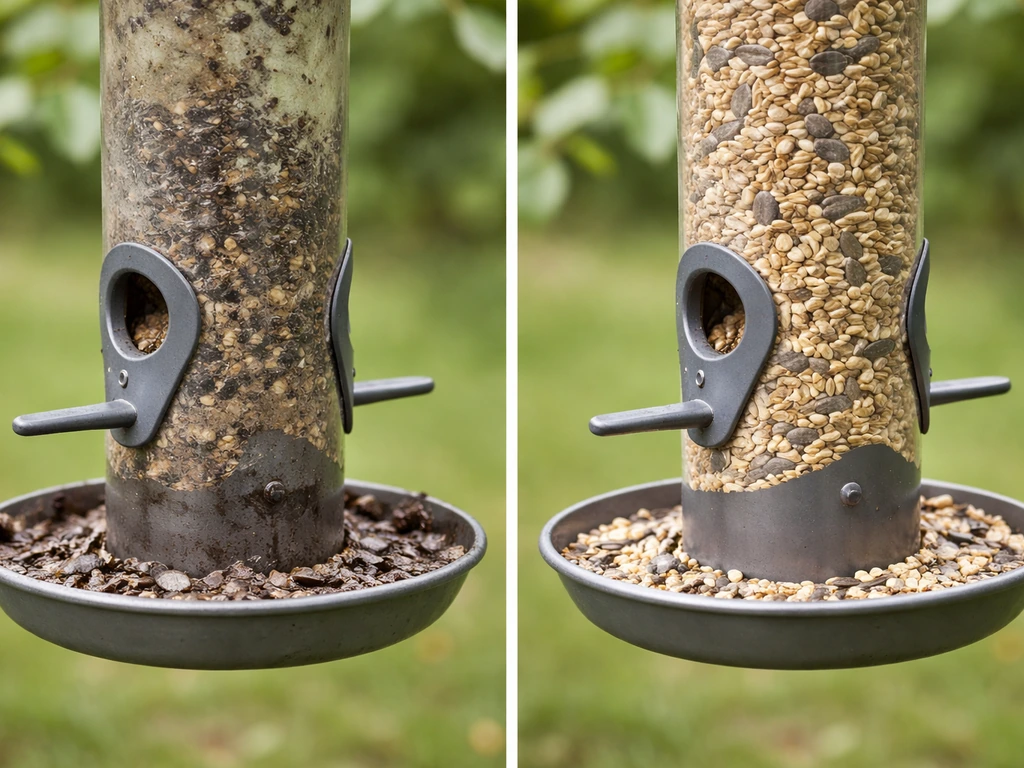
Dirty feeders are one of the most underrated threats to backyard birds. Wet or old seed can harbor fungal growth and bacteria, and a contaminated feeder becomes a disease vector for every bird that visits it. The good news is the maintenance routine is not complicated, it just needs to actually happen.
Cleaning schedule and method
The National Audubon Society, Cornell Lab of Ornithology, and the National Wildlife Health Center all recommend cleaning seed feeders about every two weeks. The standard method is a solution of one part bleach to nine parts water: soak the feeder for about 10 minutes, scrub it with a bottle brush, rinse thoroughly, and let it air-dry completely before refilling. Do not put a damp feeder back into service. Moisture inside the feeder is what seeds mold, and a feeder that smells musty should be cleaned before the two-week mark, not after.
Managing mess under the feeder
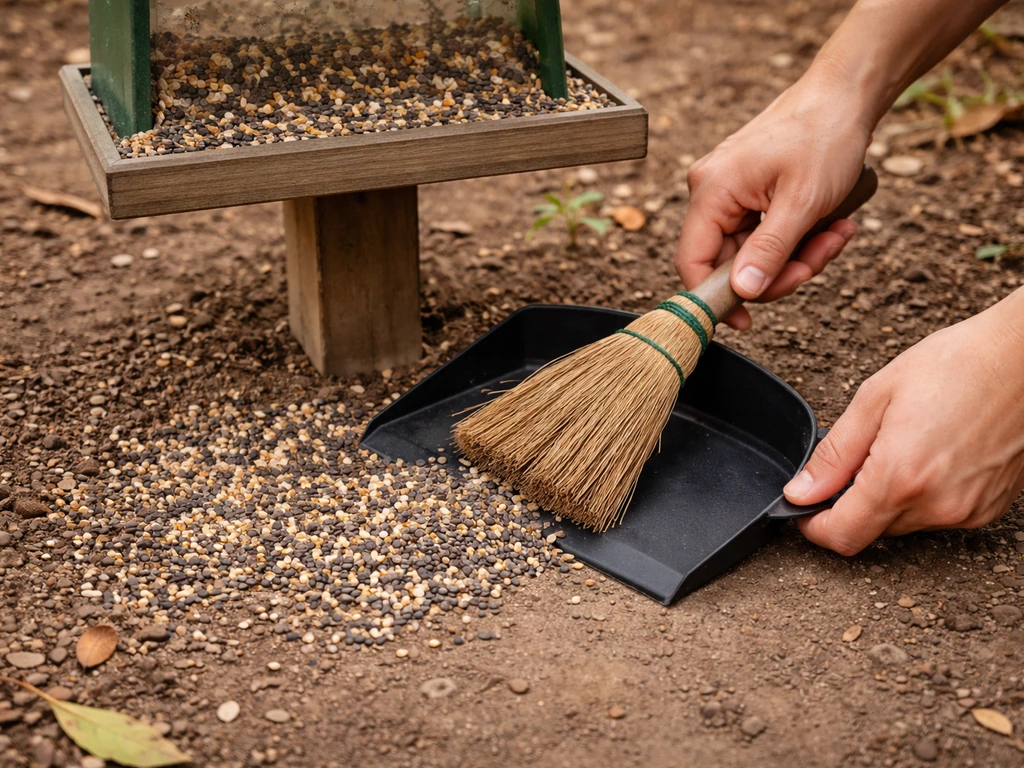
Seed hulls and spilled seed on the ground below feeders pile up fast and become a secondary disease and pest problem. Rake or sweep the area under your feeder regularly. Some people use a tray or catch basin mounted below the feeder to collect waste, which makes cleanup faster and reduces ground-level rodent attraction. If you notice moldy or clumped seed hulls below the feeder, that is a sign you are either filling too much at once or using a seed mix with lots of filler that birds are discarding.
Nest box hygiene
For nest boxes, the same bleach-to-water cleaning principle applies, at a 1:10 ratio (one part bleach to ten parts water) per NestWatch guidance. Clean between broods when the box is confirmed empty, and do a thorough end-of-season cleaning before the box sits unused over winter. San Juan Preservation Trust and others suggest the September-to-February window as the right time to clean bluebird boxes, since birds are no longer actively using them. Sweep out all old nesting material, check for parasites, disinfect, rinse, and leave the box open to air dry before closing it back up.
Seasonal timing and what to do next based on your goal
What you should do right now in April 2026 depends on which situation you are actually in.
| Your situation | What to do now | What to watch for |
|---|
| You have a nest box and want birds to nest | Confirm box is clean and empty; mount at correct height with predator baffle; keep it well away from feeders | Check weekly for nest-building activity; do not open if birds are actively brooding |
| You have a feeder and want to attract birds | Fill with fresh seed (black-oil sunflower is a good default); clean the feeder if it has been sitting unused | Refill every few days; full clean every two weeks; watch for mold or wet seed |
| You put seed in a nest box | Remove all seed immediately; clean and disinfect the box; leave it empty and remount in a good location | Monitor for rodents around the box location; check for mold inside |
| You are not sure what you have | Look for the entrance hole: small round hole = nest box, open tray or tube = feeder | Match the setup to its correct purpose before putting anything out |
Spring is actually great timing for both feeders and nest boxes. Cavity-nesting birds are actively scouting nest sites right now, so a clean, correctly placed nest box put up today can absolutely attract tenants this season. Feeders this time of year draw migrating species you will not see in winter, so it is worth paying attention to what shows up.
If you are thinking about adding a bird bath near your feeding setup, that is another placement decision worth getting right, since bird activity, predator risk, and disease transmission all connect across your whole backyard setup. If you are considering a bird bath, the location matters too, including whether it should be near your feeder a bird bath near your feeding setup.
The short version: food goes in feeders, not birdhouses. Nest boxes get cleaned and left empty. Keep both maintained, placed thoughtfully, and appropriate for the species in your area, and you will see more birds and fewer problems than the average backyard setup delivers.