Yes, having a bird feeder is generally a good idea, but only if you're willing to maintain it. Done right, a feeder genuinely helps birds (especially during migration and tough winters), brings real joy to your yard, and causes minimal harm. Done badly, left dirty, overfilled with cheap seed, or placed in the wrong spot, it can spread disease, attract rats, and actually hurt the birds you're trying to help. But resist the urge to overfeed: keeping amounts appropriate and refilling in smaller batches helps reduce disease risk and wasted seed. The honest answer is that the feeder itself isn't the problem or the solution; your habits around it are.
Is It Good to Have a Bird Feeder? Benefits and Tips
Eleanor Hartwick
26 Jun 2026
The real benefits vs. the real downsides
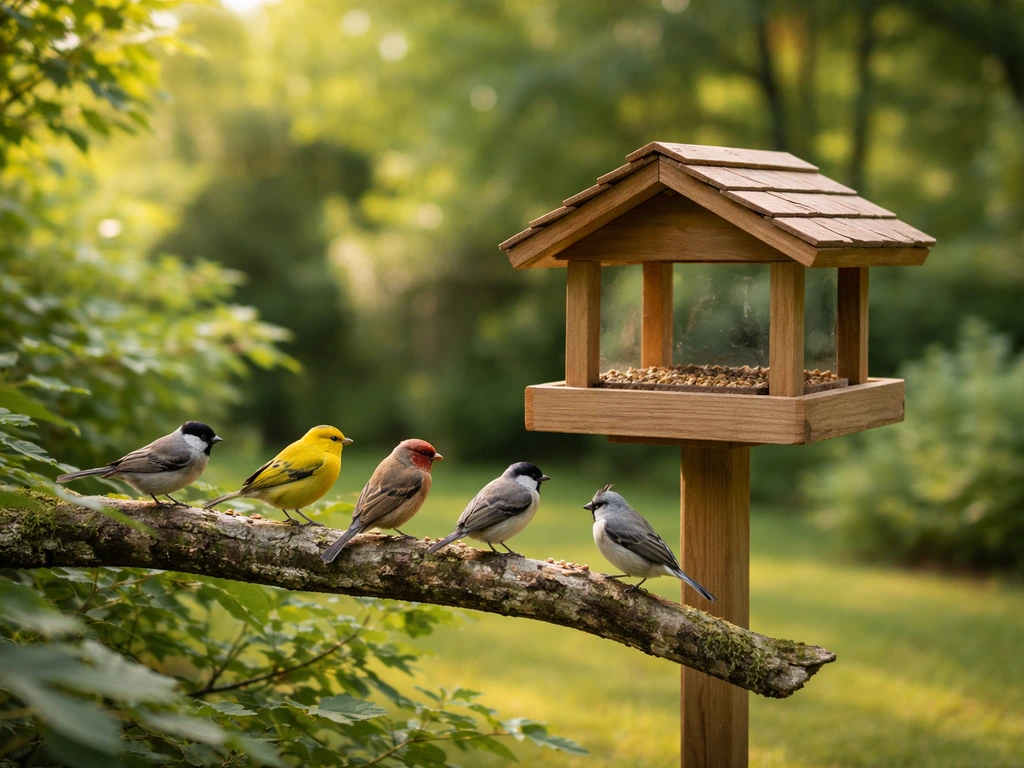
Let's be straight about both sides. The U.S. Fish & Wildlife Service acknowledges that feeders can genuinely benefit birds, particularly in areas where natural habitat has been lost and along migratory corridors where birds burn serious energy. Feeders also give you a front-row seat to bird behavior, which matters, people who watch birds are more likely to care about protecting them. That's not a small thing.
But the risks are real too, and worth knowing before you hang anything up. Feeders concentrate birds in one spot, which is exactly the condition that spreads disease fast. A sick bird visits your feeder, leaves behind contaminated droppings or saliva, and the next dozen birds that land there are exposed. Beyond disease, poorly managed feeders attract squirrels, rats, raccoons, and, if you're not careful about placement, outdoor cats hunting the birds you're feeding.
There's also a subtler concern: birds that rely heavily on feeders may reduce their natural foraging behavior over time, which can create dependency in local populations. It also helps to avoid putting out so many bird feeders that birds are crowded and conditions for disease and dependency are easier to trigger too many bird feeders.
| Factor | Benefit | Potential Downside |
|---|---|---|
| Bird health | Supports birds during migration, winter food scarcity, and habitat loss | Disease spreads faster when birds cluster at one spot |
| Wildlife | Attracts diverse bird species to your yard | Can also draw rats, squirrels, and raccoons if not managed |
| Bird behavior | Supplemental food helps birds conserve energy in tough conditions | Heavy reliance may reduce natural foraging over time |
| For you | Close-up bird observation, stress relief, connection to nature | Requires regular cleaning and maintenance commitment |
| Environment | Supports local bird populations in degraded habitats | Seed waste, mold, and droppings can accumulate under feeders |
The North Carolina Wildlife Resources Commission puts it well: feeders must be actively managed to avoid disease, predation, and unintended population effects. The word 'managed' is doing a lot of work there. A feeder you set up and ignore isn't a bird sanctuary, it's a liability.
Picking the right feeder and food
Feeder type matters more than most people expect. Tube feeders are one of the better choices for most yards, Project FeederWatch notes they keep seed fairly dry compared to open platform styles, which means less mold and spoilage risk. Platform feeders attract a wider range of species (some birds simply won't use tubes), but they expose seed to rain and droppings more directly, so they need more frequent cleaning.
For food, black-oil sunflower seed is the workhorse, it attracts the widest variety of backyard birds, has a thin shell most birds can crack, and holds up reasonably well in a tube feeder. Suet cakes are excellent in fall and winter when birds need high-fat fuel. Nyjer (thistle) seed in a finch-specific feeder brings in goldfinches and siskins. What to skip: cheap filler mixes loaded with milo or red millet that most songbirds won't touch, and any seed showing signs of clumping or discoloration, moldy seed can contain aflatoxin, a toxic compound produced by certain fungi that's genuinely dangerous.
- Black-oil sunflower seed: best all-around choice for most backyard species
- Nyjer/thistle seed: specifically for finches, requires a fine-mesh feeder
- Suet cakes: high-energy option ideal in fall and winter
- Tube feeders: keep seed drier and reduce mold risk
- Platform feeders: attract more species but need more frequent cleaning
- Avoid cheap filler mixes and any seed that looks clumped, oily, or discolored
Where you put the feeder changes everything
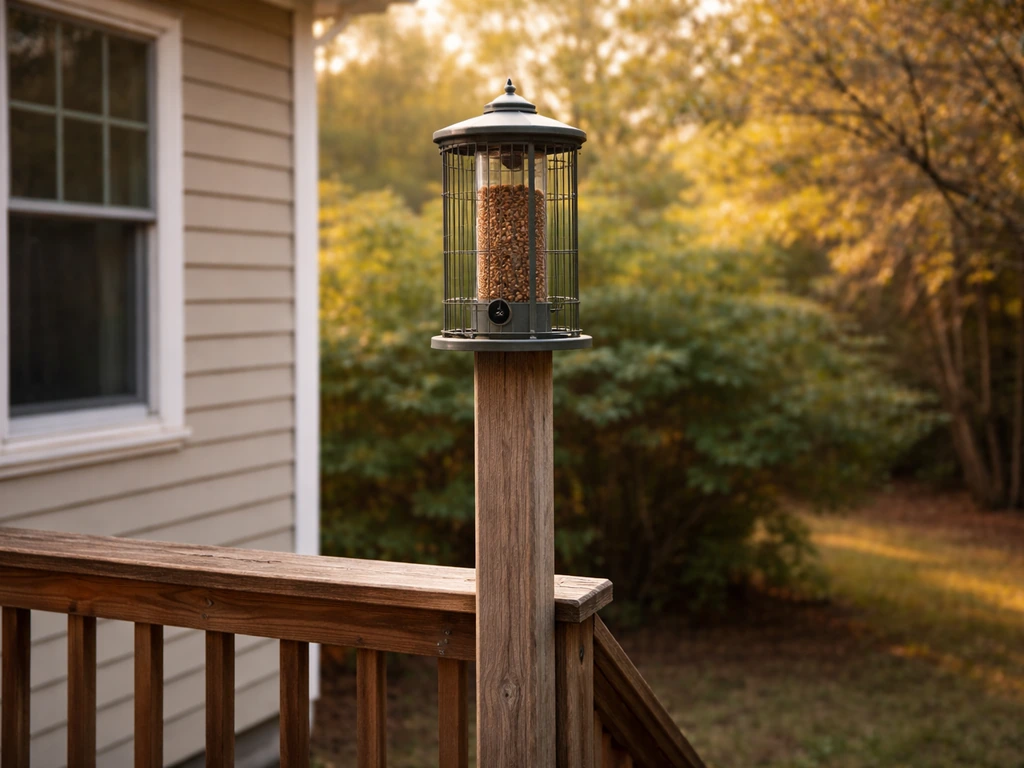
Placement is one of those things that sounds like a minor detail but makes a huge difference. West Virginia DNR recommends placing feeders about 5 to 8 feet off the ground, high enough to be out of reach of ground-level threats like cats, low enough that birds feel comfortable approaching. You also want to position feeders near natural escape cover: shrubs, dense hedges, or trees where birds can quickly dart if a hawk shows up. The North Carolina Wildlife Resources Commission specifically calls this out as a priority for reducing predation at feeders.
The squirrel equation is also a placement problem. Cornell Cooperative Extension describes cage-style baffles and counterweighted feeder designs as effective ways to physically block squirrels. But no baffle works if you've hung the feeder from a branch squirrels can reach, or placed it within jumping distance of a fence or roofline. Think of placement and squirrel-proofing as a system, not two separate steps.
One more placement factor: window strikes. Feeders placed either very close to a window (within about 3 feet) or far away from one (over 15 feet) tend to reduce collision risk compared to the in-between distances where birds build up enough speed to cause injury. If you've ever had a bird hit your window, feeder placement is likely a factor worth revisiting.
Cleaning is non-negotiable, here's exactly how to do it
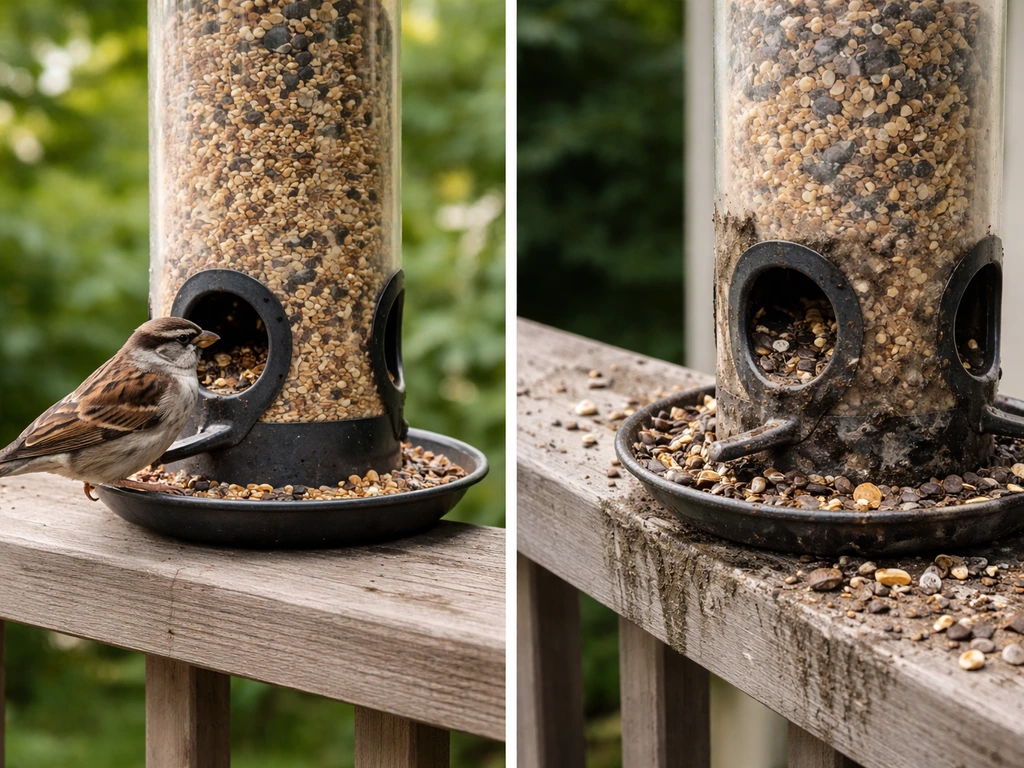
This is the part most people underdo, and it's where the real risk to birds comes from. Dirty feeders allow mold, bacteria, and parasites to build up on surfaces that dozens of birds touch every day. The Pennsylvania Game Commission notes that wildlife diseases spread through contaminated feed, soil, feces, and saliva, your feeder can become a disease transmission hub if you don't stay on top of it.
The baseline recommendation from Iowa DNR and Audubon is to clean feeders about once a month using a 10% bleach solution (roughly 1 part bleach to 9 parts water). Empty the feeder completely, scrub off any seed residue or droppings with a stiff brush, soak in the bleach solution, rinse thoroughly, and let it dry completely before refilling. That last step, fully dry before refilling, matters because moisture is what allows mold to take hold quickly. If you see sick birds at your feeder, or if there's a disease alert in your area, double the cleaning frequency immediately.
Don't stop at the feeder itself. Project FeederWatch recommends regularly raking or sweeping the ground directly under your feeders. Hulls, uneaten seed, and droppings pile up underneath and create a secondary disease and pest risk, both for birds that forage on the ground and for the rodents that will find that pile attractive. Make ground cleanup part of your routine, not an afterthought.
- Empty the feeder completely and discard old or suspect seed
- Scrub all surfaces with a stiff brush to remove residue and droppings
- Soak in a 1: 9 bleach-to-water solution for a few minutes
- Rinse thoroughly with clean water — all bleach residue must go
- Allow feeder to dry completely before adding fresh seed
- Rake or sweep the ground below the feeder to remove debris
- Repeat monthly at minimum; every two weeks or more if disease is suspected
Handling squirrels, rats, raccoons, and other uninvited guests
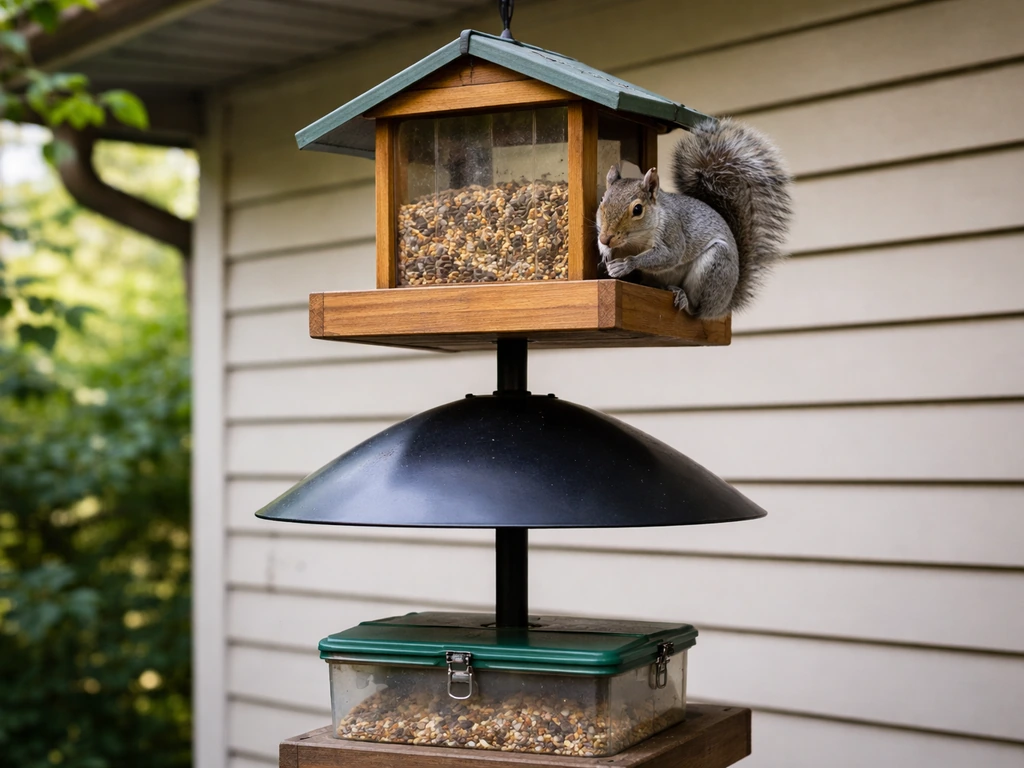
Attracting unwanted wildlife is one of the most common frustrations with bird feeders, and it's also one of the most manageable. The CDC explicitly notes that feeders can attract other wildlife beyond birds, the key is not eliminating that risk entirely (impossible) but reducing it to an acceptable level through smart setup choices.
For squirrels, a combination of placement (away from jump-off points) and physical barriers (pole-mounted baffles or weight-sensitive feeders that close under a squirrel's mass) works far better than any single fix. For rats and raccoons, the bigger issue is usually fallen seed on the ground. Clean up underneath your feeder consistently, avoid putting out more seed than birds will eat in a day or two, and don't use platform feeders that scatter seed widely if rodents are already a problem in your yard. If you're seeing rats regularly, it may be worth switching to shelled sunflower chips, birds eat them cleanly with almost no husk waste on the ground.
Aggressive behavior between birds, like larger species dominating a feeder and driving off smaller ones, is best handled by offering multiple feeding stations spread across your yard rather than one central hub. This is actually one good argument for having more than one feeder setup, which is worth thinking through depending on the size of your yard and what species you're trying to attract. If you're wondering how many bird feeders you should i have, a good starting point is to use multiple feeders to reduce competition and keep birds safer as you manage cleaning and placement having more than one feeder.
What to do differently by season
Bird feeding isn't one-size-fits-all across the year. Audubon highlights that feeding is most beneficial during migration periods and harsh winters, when birds genuinely need supplemental food to survive. That doesn't mean you should stop in other seasons, but it does mean your approach should shift.
In spring and summer, you can keep feeders going, but be extra vigilant about cleaning, warm weather accelerates mold growth and bacteria, so seed in a hot feeder can go bad in just a few days. Switch to smaller refills more frequently rather than loading feeders up. In fall, adding suet and higher-fat options gives migrating birds the fuel they need. In winter, consistency matters most, birds in cold climates come to rely on known food sources, so if you start feeding in fall, try to maintain it through the cold months rather than stopping and starting unpredictably.
If disease reports spike in your area (salmonella outbreaks in finches are documented periodically, for example), wildlife agencies sometimes recommend temporarily closing feeders until the situation passes. That's not a failure of your setup, it's the responsible call, and it's something the North Carolina Wildlife Resources Commission specifically advises as an option when disease or predation risks spike.
Your next-step checklist: how to start (or restart) responsibly
If you've read this far and want to move forward, here's a practical starting point you can act on today. If you already have a feeder, treat this as a reset checklist. If you are wondering is it bad to have a bird feeder, the key is keeping it clean, using the right placement, and managing food amounts so birds stay healthy.
- Choose a tube feeder or a covered hopper as your starting point — both minimize seed moisture and mold risk better than open platforms
- Fill with black-oil sunflower seed; skip the cheap mixed bags
- Place the feeder 5–8 feet off the ground, within a few feet of natural cover like shrubs or dense plantings
- Position away from squirrel launch points (fences, branches, rooflines) and install a baffle on the pole or hanger
- Set a recurring reminder to clean the feeder monthly: empty, scrub, bleach soak (1:9 ratio), rinse, dry, refill
- Rake beneath the feeder every week or two to remove hulls, droppings, and fallen seed
- Only fill with as much seed as birds will eat in a couple of days — freshness beats volume
- If you notice sick birds or hear of local disease outbreaks, take the feeder down until it passes
- Adjust food type seasonally — suet in fall and winter, lighter fills in summer heat
One honest note: if the maintenance side genuinely doesn't appeal to you, it's okay to admit that a bird feeder isn't the right fit right now. An unmanaged feeder does more harm than no feeder at all. A big part of the decision is whether you can handle the monthly maintenance, so answering “should i get a bird feeder” comes down to that commitment. But if you're willing to put in about 20 minutes a month plus regular refills, a well-kept feeder is one of the better things you can do for local birds, and for your own daily enjoyment of your yard.
FAQ
What should I do if my bird feeder looks dirty or the seed seems bad?
If you notice moldy clumps, a sour or “wet” smell, lots of husk waste, or birds acting lethargic, stop refilling immediately and empty, scrub, and disinfect the feeder. If you can, replace the seed with a fresh batch (never mix old and new). Once everything is dry and clean, you can restart, but consider keeping refills smaller for the next week to confirm the issue is resolved.
How can I prevent birds from overcrowding at the feeder?
Yes, you can feed in a way that reduces crowding by using smaller, more frequent refills and avoiding “top-offs” that leave a large amount of seed out all day. Multiple stations across the yard also helps spread visitors out instead of creating one high-traffic feeding zone.
Is it okay to start and stop feeding during winter?
No, don’t put the feeder on a schedule that makes it inconsistent. Birds, especially in cold months, rely on predictable food. If you start feeding, aim for steady maintenance through fall and winter rather than turning it off and on unpredictably, unless local agencies advise a temporary closure due to disease or predation risk.
If there’s a bird illness reported locally, should I close my feeder temporarily?
If you see signs of disease or there’s an outbreak in your area, temporary closure can be the safer choice. When you do reopen, switch to smaller refills, increase cleaning frequency for a few weeks, and keep the area under the feeder cleaner than usual because the ground buildup can keep risks going even after the feeder is cleaned.
Which feeder type is best if I’m trying to reduce mold and disease risk?
It depends on the design and what birds are available. Tubes often work well for many songbirds because seed stays drier, but open platforms can be better if you specifically want species that won’t use tubes. The tradeoff is that platforms typically require more frequent cleaning because rain and droppings contact seed more directly.
How do I keep rats and raccoons from being attracted to my feeder?
If you want to minimize rats, focus on what’s falling, not just what’s in the feeder. Rake or sweep under the feeder regularly, avoid overfilling so seed doesn’t sit, and consider switching to shelled sunflower chips if husk waste is attracting rodents. Also keep platforms that scatter seed only if rodents are not already an issue.
What’s the best way to choose feeder placement if I’m worried about cats and window strikes?
A simple rule is to place the feeder where birds can escape quickly into nearby cover, while staying high enough to reduce access from ground-level predators. You should also keep it properly positioned relative to your windows to reduce collision risk, rather than relying on baffles alone for safety.
How can I choose seed that won’t waste money or create extra mess?
If you’re trying to help finches or other small birds, avoid cheap mixes with fillers they often ignore. If the seed shows clumping, discoloration, or any sign of spoilage, don’t use it. Fresh, high-quality seed reduces both waste on the ground and the chance you’re introducing contaminated material.
Does having more than one bird feeder always reduce problems?
More feeders can help, but the goal is spread, not volume. Use multiple stations to reduce competition and make cleaning manageable, and keep the refilling amount appropriate for each feeder. Avoid setting up many feeders if you cannot maintain cleaning and ground cleanup consistently.
If birds keep getting sick, does that mean I should stop feeding forever?
Not necessarily. If your feeder was clean, placement was correct, and you’re still seeing frequent sick birds, the most likely causes are feeder-to-ground buildup and overall food management, not the feeder location alone. Increase cleaning and ground raking, use smaller refills, and consider pausing feeding if disease warnings increase until conditions improve.
Next Articles
Is It Bad to Have a Bird Feeder? Risks and Best Practices
Usually not bad, but avoid disease, pests, window strikes, and waste with smart placement, cleaning, and feeding.
How Many Bird Feeders Should I Have? A Practical Guide
Get a practical number for how many bird feeders to place, plus how to avoid too many, waste, and disease.
Should I Get a Bird Feeder? A Beginner Guide to Do It Safely
Decide should i get a bird feeder, choose the right type and food, place safely, reduce disease and pests, and maintain.