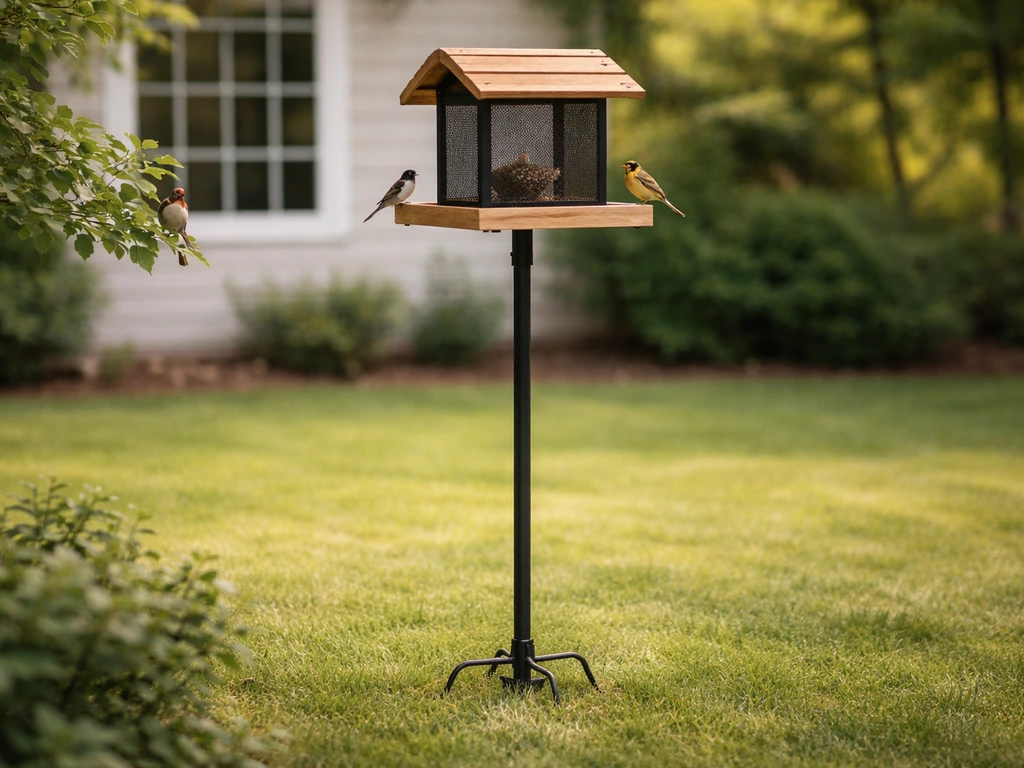
For most yards, two to four feeders is a solid, manageable starting point. That range gives you enough variety to attract different species without overwhelming yourself with maintenance or creating a crowded, disease-prone feeding station. If you want to go bigger, you can, but the right number really depends on your yard size, your goals, how many feeder locations you can realistically manage, and what local pressures like squirrels, predators, or close neighbors you're dealing with.
How Many Bird Feeders Should I Have? A Practical Guide

Eleanor Hartwick
27 May 2026
Why the "right" number varies
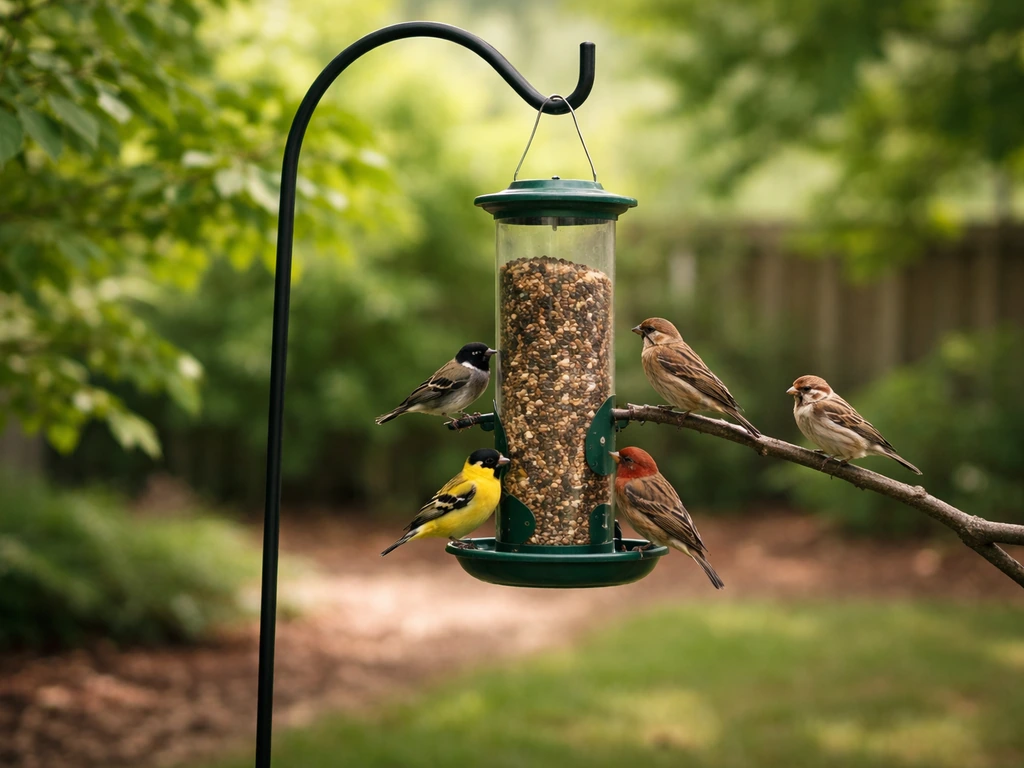
There's no universal magic number, and anyone who gives you one without asking about your situation is guessing. Audubon has published both a "five feeders every yard should have" framing and a "six feeders every home should have" framing in different guides, which tells you something useful: even expert organizations don't land on a single answer. That's not a cop-out. It genuinely depends on what you're trying to accomplish.
If your goal is simply to watch a few birds from your kitchen window, one well-placed hopper feeder might be perfect. If you want to attract a wide variety of species, you'll need multiple feeder types in multiple locations, because different birds feed at different heights and prefer different food. A woodpecker and a goldfinch are not competing for the same feeder. The number you need is really a function of the variety you want, the space you have, the time you're willing to spend cleaning, and how much you're willing to spend on seed.
Quick starting recommendations by yard size and goals
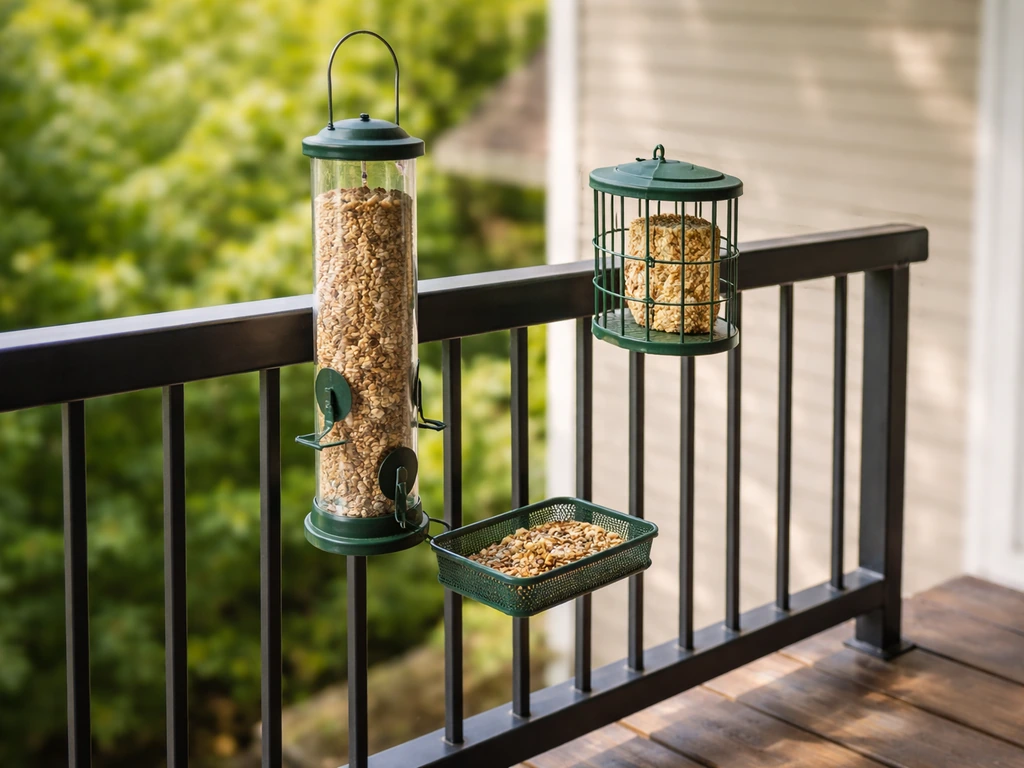
Here's a practical baseline to work from. These aren't rules, they're sensible starting points you can adjust once you see how your yard responds.
| Yard Size / Setup | Suggested Starting Count | Notes |
|---|---|---|
| Small yard, apartment, or balcony | 1 to 2 feeders | One tube or window feeder; add a suet cage if you have a nearby wall or post |
| Average suburban yard | 2 to 4 feeders | Mix of one hopper/tube, one suet, and optionally one platform or nyjer feeder |
| Large yard with mature trees | 4 to 6 feeders | Spread across multiple zones; include feeders at different heights |
| Dedicated birding garden | 6+ feeders | Only sustainable if you can commit to cleaning each feeder every 1 to 2 weeks |
If your goal is attracting more species rather than just more birds, prioritize feeder diversity over feeder count. Three different feeder types in three different locations will outperform five identical tube feeders every time. If you just want a steady stream of common backyard birds like chickadees, finches, and sparrows, two feeders is genuinely enough.
Signs you have too many feeders (and what to do)
More feeders isn't always better, and it's worth knowing when you've crossed into counterproductive territory. The clearest sign is food waste: if seed is sitting in feeders for more than a day or two without being eaten, you have more capacity than your local bird population can use. Uneaten seed goes stale, gets wet, and grows mold and bacteria, and that's when feeders stop helping birds and start harming them. It can be bad to have a bird feeder if you let seed sit and spoil, because that increases health risks for the birds.
A peer-reviewed study found that higher feeder density can actually enhance disease transmission, specifically for House Finch Eye Disease, because more feeders mean more surface contact opportunities for sick and healthy birds. Audubon has also flagged feeder-linked outbreaks of trichomoniasis. The fix isn't always removing feeders outright, it's reducing the number to what your local birds can actually empty and clean reliably. If you overfeed birds with a bird feeder, you can create crowded conditions that increase the risk of disease and other problems overfeeding birds with a bird feeder.
Other signs you've overdone it:
- You're noticing rodents (rats, mice) under or near your feeders regularly
- Aggressive species like European Starlings or House Sparrows have taken over most or all of your feeders
- You're skipping cleaning cycles because there are too many feeders to manage
- Seed hulls and droppings are building up under feeders faster than you can rake them, which All About Birds links directly to salmonellosis risk
- Neighbors are complaining about rodent or pest activity near the shared fence line
If you're in that situation, the most practical fix is to consolidate. Pull down your least-used feeders, deep clean everything with a 10% non-chlorinated bleach solution as Audubon recommends, and restart with fewer feeders stocked with only as much seed as birds can consume in a single day. That one-day rule, recommended by Penn State Extension and Virginia DWR, is the most effective single habit for keeping feeders safe regardless of how many you have.
Match feeder count to feeder types and spacing
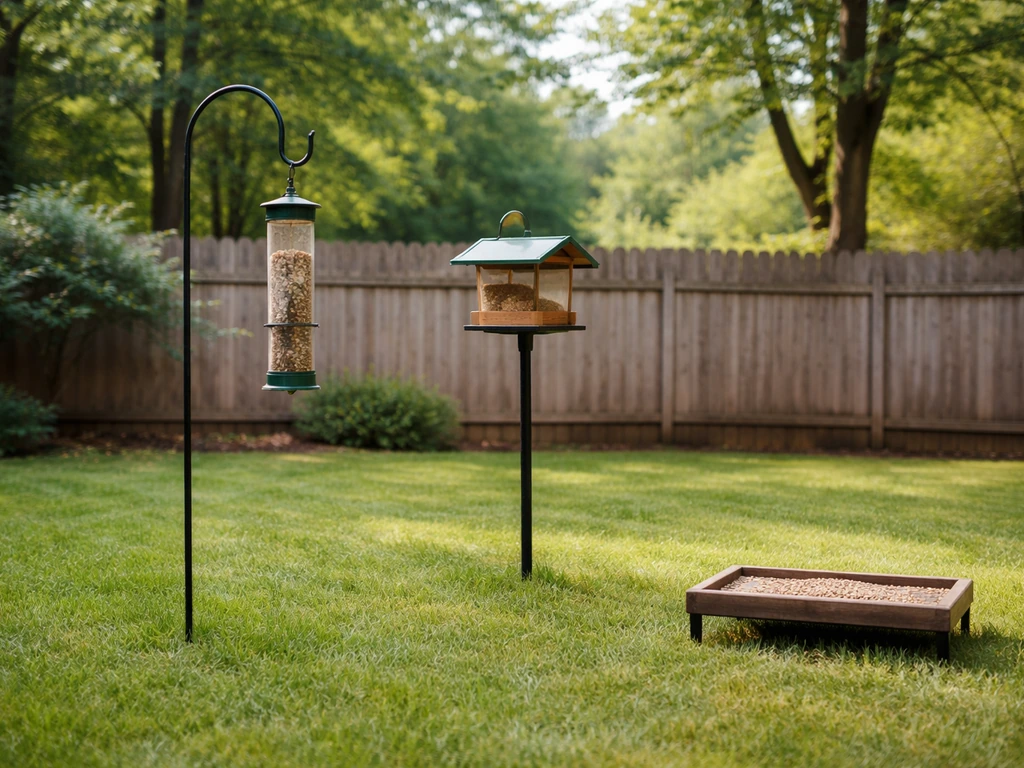
The types of feeders you choose should drive your count as much as anything else. Different feeder styles serve different bird guilds, and spreading them out reduces crowding, competition, and disease transmission. RSPB specifically recommends placing multiple feeders in different areas of the yard rather than clustering them together, precisely to reduce the number of birds congregating in one spot.
A well-rounded setup for a typical suburban yard might look like this: one tube feeder or hopper for sunflower seeds (chickadees, nuthatches, finches), one nyjer/thistle sock or feeder for goldfinches, one suet cage mounted on a tree or post for woodpeckers and nuthatches, and optionally a platform feeder for ground-feeding birds like juncos and sparrows. That's three to four feeders, each serving a different purpose, placed in different parts of the yard. That's a genuinely good setup.
One thing worth noting about platform and flat-surface feeders: RSPB specifically warns that flat surfaces increase the risk of trichomonosis spreading because sick birds can perch and regurgitate contaminated food that remains available to healthy birds. If you use a platform feeder, the one-day feeding rule is especially important, and it's worth weighing whether the added species access is worth the extra hygiene discipline.
Local factors that change the number
Squirrels
Squirrel pressure is one of the most common reasons people end up with too many feeders, because they keep adding new ones trying to find a setup that works. Virginia DWR recommends placing feeders at least 15 feet from anything squirrels can jump from and adding a metal baffle on the post. If you can't meet those placement requirements in your yard, a dedicated squirrel-resistant feeder with a weight-sensitive mechanism is often better than adding more feeders to compensate.
Predators
Feeders concentrate birds, which makes them easier for hawks, cats, and other predators to exploit. Audubon notes that feeding can shrink the predatory playing field, and Mass Audubon flags predator activity around feeders as a genuine concern. If you're seeing a hawk working your feeders regularly, Audubon's advice is to let the feeders go empty for a few days rather than adding more feeders that create more target-rich opportunities. Fewer, well-placed feeders near shrub cover are safer for birds than many feeders in open areas.
Window collisions
Every feeder you add near a window increases collision risk. The general guidance is to place feeders either within 3 feet of a window (so birds can't build up speed) or more than 30 feet away. If your yard doesn't have many locations that meet those criteria, that's a real constraint on how many feeders you can safely use, and you shouldn't ignore it just to add more feeders.
Neighbors and local wildlife ordinances
In some areas, large numbers of feeders can create genuine problems with neighbors if they're attracting rats or nuisance species to shared spaces. Virginia DWR advises against ground distribution of seed for exactly this reason. Some HOAs and municipalities also have rules about feeding wildlife. If you're in a dense neighborhood, keeping your feeder count modest and your cleanup habits tight is both neighborly and risk-reducing.
Seasonal strategy: adjusting feeder counts through the year
Your feeder count doesn't have to stay fixed year-round, and adjusting it seasonally is one of the best things you can do for both birds and your own workload.
Late winter and early spring is when feeders matter most. Natural seed sources are largely depleted, temperatures are still swinging, and birds need extra energy. This is the time to have your full complement of feeders stocked and active. Tufts Wildlife Clinic specifically identifies this period as when supplemental feeding is most genuinely helpful.
Summer is when you should scale back. Tufts recommends taking a break from filling feeders in summer so young birds learn to find natural foods on their own. All About Birds advises taking down suet feeders specifically in warm weather because suet goes rancid quickly and can coat feathers. RSPB changed its feeding guidance for May through October to reduce disease risk, citing seasonal transmission dynamics for diseases like trichomonosis. Running fewer feeders in summer, or switching to just one or two low-risk feeder types, is genuinely the smarter move.
Fall migration is a good time to bring feeders back up. Migrating birds moving through your area will use them, and resident birds are starting to depend on supplemental food as days shorten. Winter feeding through to early spring is the sweet spot for running your full setup.
| Season | Recommended Feeder Count | Key Actions |
|---|---|---|
| Late winter / early spring (Jan–Apr) | Full count | Keep all feeders stocked; prioritize high-energy foods like black-oil sunflower and suet |
| Late spring / summer (May–Aug) | Reduce by half or more | Remove suet; scale back to 1 to 2 feeders; fill only daily amounts |
| Fall (Sep–Nov) | Build back up | Reintroduce feeders as migrants pass through; clean everything before restocking |
| Winter (Dec–Jan) | Full count | Monitor for illness; clean every 1 to 2 weeks; don't let seed sit in wet feeders |
Maintenance and hygiene impact of owning more feeders
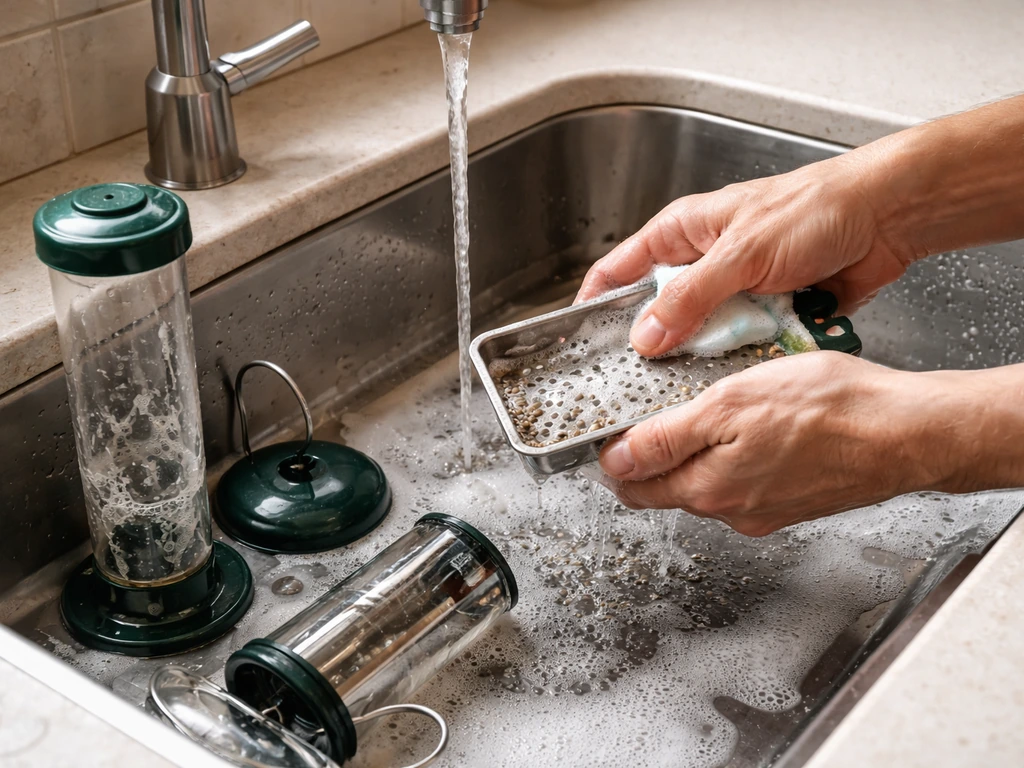
This is the part most people underestimate when they're excitedly buying their fourth or fifth feeder. Every feeder you add is a commitment to cleaning it. All About Birds recommends cleaning feeders about once every two weeks, more often during heavy use, wet weather, or if there are reports of sick birds in your area. The U.S. Fish and Wildlife Service echoes that two-week standard. Audubon says to scrub feeders with a 10% non-chlorinated bleach solution at least a few times a year and between seasons.
Do the math honestly. If you have six feeders and each one takes 15 to 20 minutes to properly disassemble, scrub, rinse, and dry, that's close to two hours of feeder maintenance every two weeks. If that's not realistic for your schedule, you'll start cutting corners, and the feeders you're not cleaning become disease vectors rather than bird sanctuaries. Three well-maintained feeders will always do more good than six neglected ones.
If you notice a sick bird at any of your feeders, the guidance is clear: take all feeders down for at least several days, clean them thoroughly outdoors, and dispose of any remaining seed rather than dumping it on the ground (which Audubon specifically recommends against). The CDC's guidance for salmonella outbreak situations goes further and recommends removing feeders and bird baths for two full weeks. You can't do any of that responsibly if you're already behind on maintaining a large feeder setup.
The bottom line on feeder count is this: start with two to three feeders, see what your yard can support and what you can realistically maintain, and scale up deliberately. If you're wondering can you have too many bird feeders, the key is balancing the number with disease risk, food waste, and how well you can clean them.
If you're wondering should i get a bird feeder, start with two to three and only scale up when you can keep up with cleaning and seed turnover. That said, it is good to have a bird feeder when you can maintain it properly and match the number to your yard and local risks. It's worth knowing that having too many feeders is a real problem, not just a theoretical one.
The risk of overfeeding, disease spread, food waste, and pest attraction all grow with feeder count if your habits don't scale up with them. If you’re wondering whether you can overfeed birds with a bird feeder, the key signals are food waste, stale seed, and growing disease risk overfeeding. A small, clean, well-placed setup is genuinely better for birds than a large, neglected one.
FAQ
How many bird feeders should I have if I only want one or two bird species (like finches)?
If you are targeting a narrow group, start with one specialized feeder matched to their food (for example, nyjer for goldfinches) plus one backup feeder or platform only if you notice they are not using the first spot. This keeps seed turnover tight, which reduces waste and disease risk.
Is it better to add more feeders or to fill them less each time?
Usually it is better to match how much seed you put out to expected daily consumption. Overfilling can lead to seed sitting and going stale, even if you have only one or two feeders. Use the “empty in about a day” mindset, and top up only what birds are likely to eat before the next cleaning interval.
What if I have feeders but I cannot clean them every two weeks?
If cleaning will slip, cap your feeder count and prioritize the easiest feeders to disinfect (tube or small hopper designs are often simpler than complex platform setups). Consider running fewer feeders in peak seasons only, because neglected feeders become the main driver of mold, bacteria, and disease spread.
How many bird feeders should I have if my yard is small or I have limited placement options?
In a small yard, reduce count and concentrate on spacing within the safe window-collision zones. If you cannot meet the “within 3 feet or beyond 30 feet” window guidance for multiple locations, you may need to stop at two feeders and place them at the safest window sites.
Can I run more feeders during winter and fewer in summer without increasing risk?
Yes, seasonal adjustment is often the smartest approach. Keep your full, cleaned-in-place setup for late winter through early spring when natural food is scarce, then scale back for summer and switch away from higher-maintenance options like suet-based feeders that can spoil quickly.
How do I tell whether I have too many feeders for my area?
Watch for food waste (seed left untouched beyond a day or two), wet or clumped feed, and repeated sick-bird reports. If birds are not emptying feeders, adding more feeders will usually worsen mold growth and disease transmission rather than increase helpful visits.
Should I put feeders close together to attract more birds faster?
Generally no. Clustering increases crowding at one site, which raises contact opportunities for disease and can make it easier for predators to hunt. Use multiple locations in the yard if you can, especially different heights and feeder types.
What is the best number of feeders if I have high squirrel activity?
Start with fewer feeders but use squirrel-resistant strategies at those locations. If squirrels can jump from nearby structures, add a baffle or choose a weight-sensitive mechanism feeder rather than compensating with additional feeders that will get raided and create more wasted seed.
How many feeders are safe if I have frequent hawks or cats visiting?
Keep the number modest and avoid creating many obvious targets in open space. If a predator is actively hunting your feeders, let them go empty for a few days and then resume with fewer, well-placed feeders nearer cover rather than expanding the setup.
Do platform feeders change how many feeders I should have?
Yes. Platform and other flat-surface feeders tend to increase trichomonosis risk because contaminated material can remain accessible. If you use a platform feeder, keep your overall feeder count lower and be especially strict about daily-ish seed turnover and cleaning, since hygiene discipline becomes more important.
What should I do with my feeder count if I see a sick bird?
Temporarily take all feeders down and pause feeding for several days, then thoroughly clean everything outdoors. Only restart with a reduced number and fresh seed once you are confident the area is clear, because leaving a large setup running makes it harder to fully reset hygiene.
Does the “right number” change for backyard birders who feed by windows only?
It does. Window-only placement often limits safe distance options, so you may be able to run fewer feeders safely without causing collisions. If you cannot use the within-3-feet or beyond-30-feet placement rule for multiple feeders, cap the count and focus on one or two safe positions.
Next Article
Should I Get a Bird Feeder? A Beginner Guide to Do It Safely
Decide should i get a bird feeder, choose the right type and food, place safely, reduce disease and pests, and maintain.