
The best thing to put on the ground under a bird feeder is pea gravel or crushed stone. It drains well, doesn't rot, keeps mold from forming, and makes raking up spilled seed and hulls genuinely easy. That said, the right choice depends on your yard setup, how messy your feeder situation is, and what problems you're already seeing. Hardware cloth, mulch, a seed tray, or even bare ground with a cleanup routine can all work depending on your context.
What to Put on the Ground Under a Bird Feeder

Eleanor Hartwick
11 May 2026
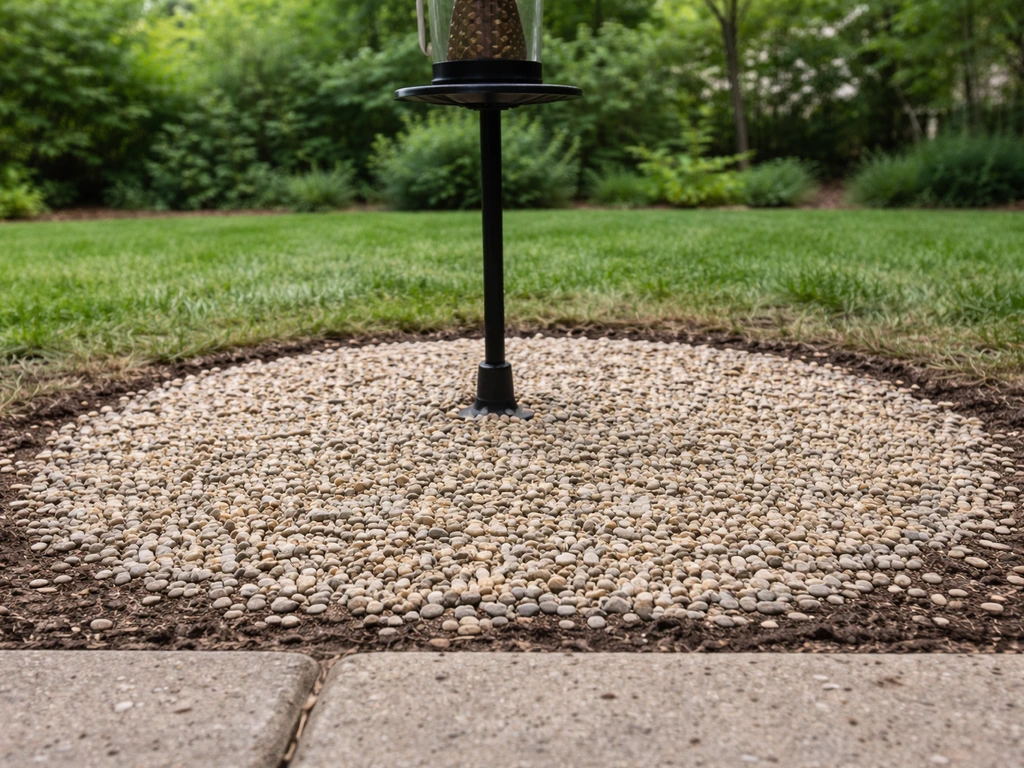
Best materials to put under a bird feeder
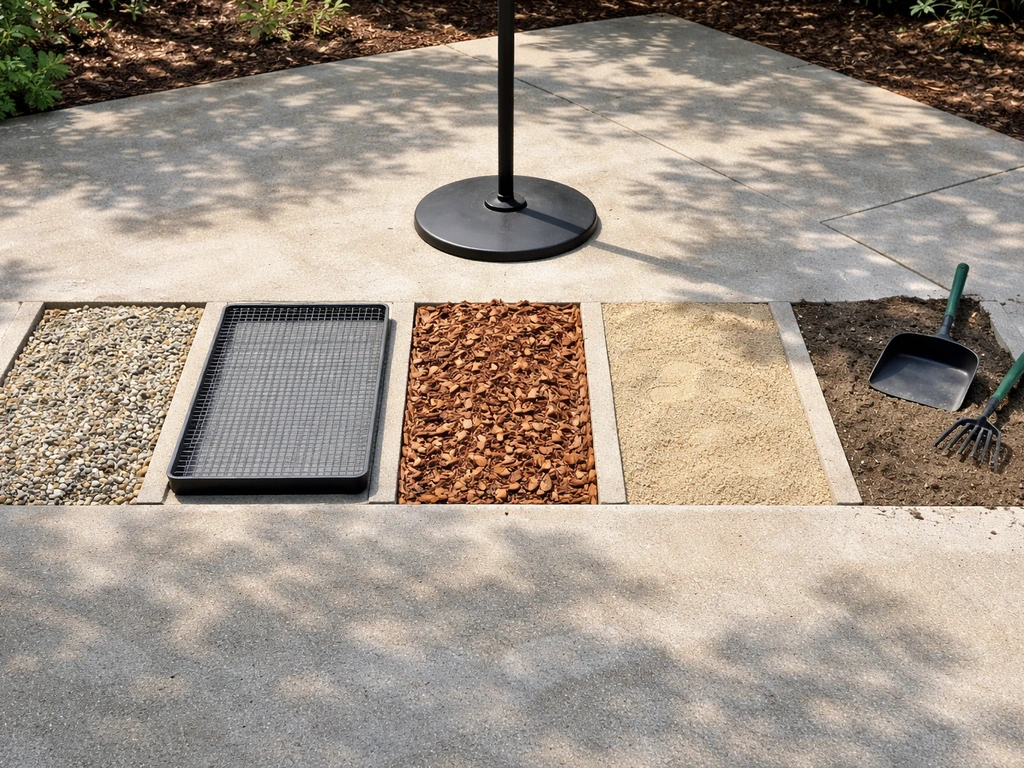
There are more options than most people realize. Each has real trade-offs, and the 'best' one isn't universal. Here's what actually works and what each one is good for.
Pea gravel or crushed stone
This is my go-to recommendation for most yards. A 2 to 3 inch layer of pea gravel or crushed stone under your feeder drains fast after rain, which is exactly what you need because wet seed on the ground is the root cause of mold, bacteria, and most pest problems. Gravel also blocks sunlight to the soil below, which slows down weed and sprouted-seed growth. When hulls and seed build up, you can rake them off the surface easily, or just rinse the whole area with a hose. It's low maintenance once it's in place and looks reasonably tidy.
Hardware cloth or catch trays
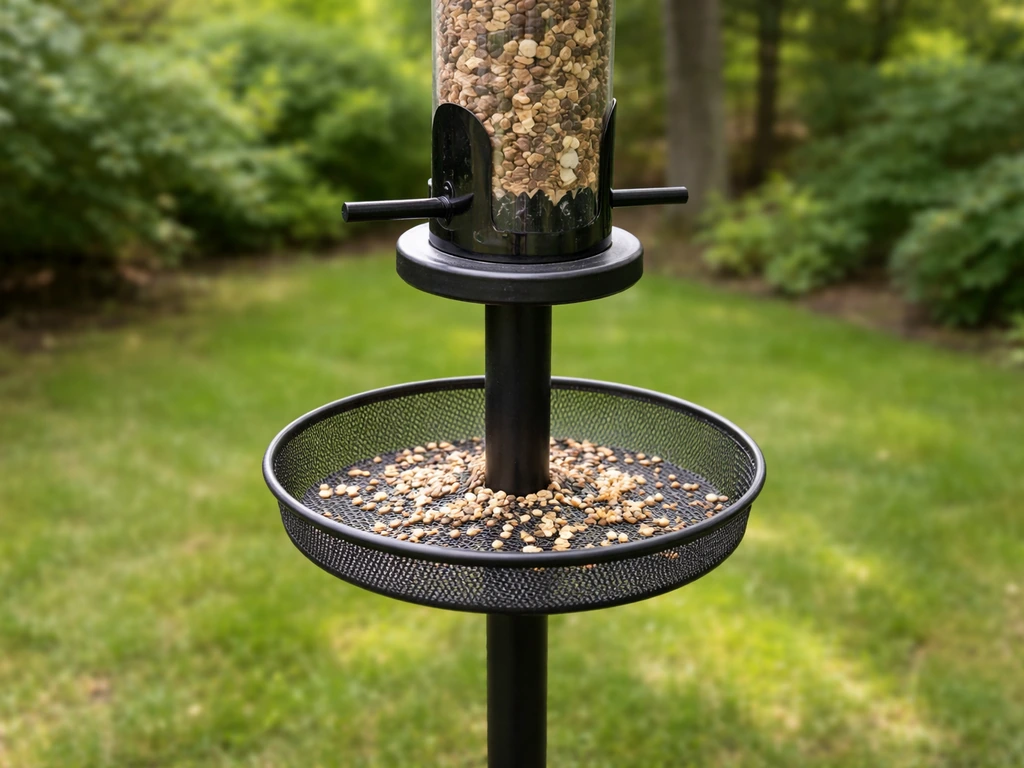
A seed catcher tray attached to the feeder pole itself is underrated. It intercepts spilled seed before it ever hits the ground, which dramatically cuts down on the mess below and reduces rodent attraction. If you're dealing with a persistent rat or mouse problem, adding a tray is often more effective than changing the ground surface. Below the tray, you can still use gravel or any other surface you prefer. Hardware cloth laid flat on the ground (and staked down) works similarly, letting seed fall through while keeping the ground underneath from becoming a soggy, moldy mat.
Cedar or hardwood mulch
Mulch is a reasonable middle-ground option if you want the area to look more natural and garden-like. It does hold some moisture though, which means it can contribute to mold if you're not raking it regularly. Cedar mulch has mild insect-repelling properties, which can help a little with ants and beetles. Avoid dyed mulch or mulch with unknown additives. If you go this route, plan on raking and replacing it more frequently than you would with gravel, especially after wet weather.
Sand
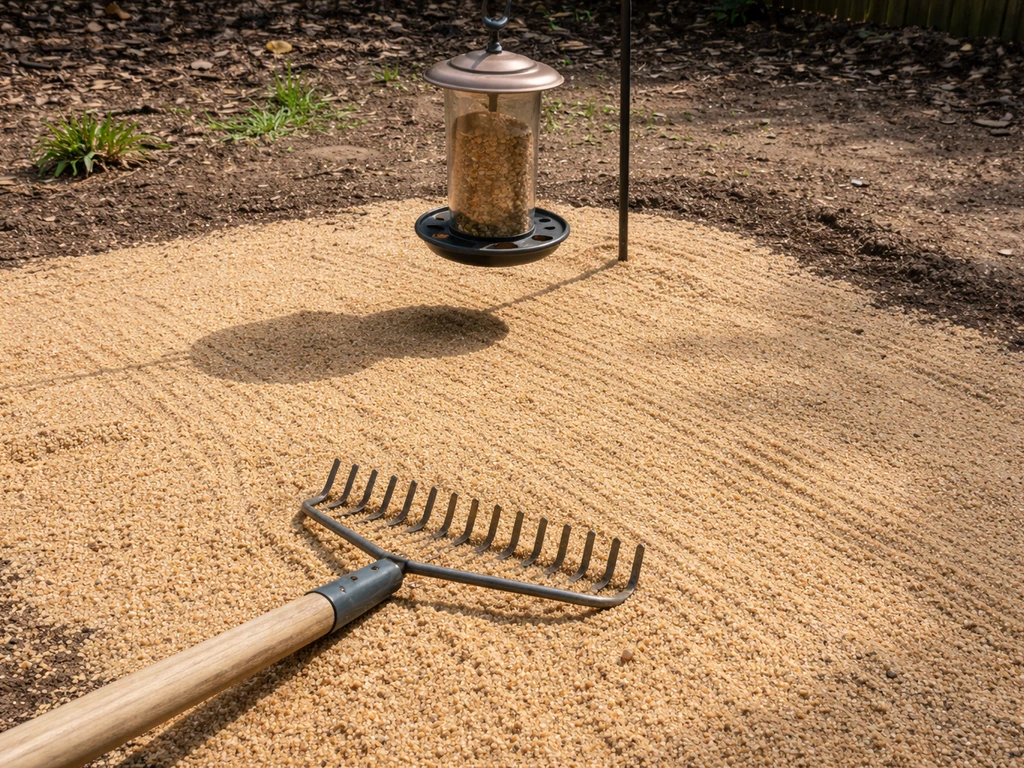
Coarse builder's sand drains better than people expect and is easy to rake. It's not as visually appealing as gravel or mulch, but it's cheap and practical. The downside is that fine seed and hull debris can work its way into sand and become harder to remove over time. It's a solid option for feeders with lower traffic or in drier climates where drainage isn't a chronic problem.
Bare ground with a dedicated cleanup routine
Some people just keep the ground bare and clean it regularly. This works if you're disciplined about removing hulls and wet seed before mold sets in, and it's the simplest setup in terms of materials. The risk is that bare ground compacts, drains poorly, and turns into a muddy mess after rain, which accelerates the bacteria and mold cycle. If bare ground is what you have, the Minnesota DNR recommends sprinkling agricultural lime about a quarter inch deep after cleaning up seed and hulls, which helps kill bacteria in the soil. Just know that lime can damage grass, so use it carefully.
| Material | Drainage | Ease of Cleanup | Pest Risk | Best For |
|---|---|---|---|---|
| Pea gravel / crushed stone | Excellent | Easy (rake or rinse) | Low | Most yards, especially wet or humid climates |
| Seed catcher tray | N/A (prevents ground mess) | Very easy | Very low | Anyone wanting to minimize ground mess entirely |
| Cedar/hardwood mulch | Moderate | Moderate (needs raking) | Moderate | Garden-style setups with regular maintenance |
| Coarse sand | Good | Moderate | Low-moderate | Drier climates, lower-traffic feeders |
| Bare ground + lime treatment | Poor-moderate | Labor-intensive | Higher | Minimal-setup situations with frequent manual cleanup |
How to choose based on mess, drainage, and your yard type
The biggest driver of which material to pick is how wet your yard gets. If you're in a climate with frequent rain, or your feeder sits in a low spot that doesn't drain well, gravel is the clear winner. Moisture is the enemy of a clean feeder area, and gravel addresses it better than anything else. In wet weather, the Minnesota DNR warns that mold or bacteria can form on wet birdseed in the feeder or on the ground Moisture is the enemy of a clean feeder area, and gravel addresses it better than anything else.. If your yard stays relatively dry and you want a lower-cost or more natural look, mulch or sand can work, but expect to put more time into cleanup.
The type of feeder and what you're filling it with also matters. Sunflower seeds leave dense hull piles. Safflower and millet scatter more broadly. Suet feeders drip grease. If you're dealing with heavy hull accumulation (and if you're curious about what goes into the feeder itself, that's a closely related question), pea gravel's rakeable surface is especially helpful. If you're curious about what goes into the feeder itself, that's a closely related question, and it connects to what to put in a bird feeder. If you’re also wondering what goes above the ground cover, the next step is figuring out what to put in an oriole bird feeder specifically what do you put in an oriole bird feeder. If you're feeding a lot of ground-feeding birds like doves or sparrows, you'll have more mess spread over a wider area and may want a larger gravel patch rather than a small circle.
For urban or small-space setups, a seed tray combined with a small contained gravel patch is often the most practical solution. For rural settings where you have more space and don't mind a larger footprint, a wider gravel bed gives you more flexibility and forgiveness between cleanups.
Preventing mold, seed hull buildup, and pests
This is really the core of why people ask this question in the first place. If you're wondering what to put in a bird feeder in India, start by choosing seed that matches your local birds and pair it with a dry, easy-to-clean ground surface under the feeder what to put in bird feeder india. Spilled seed and hulls sitting on damp ground will mold, and moldy seed is genuinely hazardous to birds. PetMD also notes that it is important to clean the areas under bird feeders, since bird feces and moldy seed casings from underneath can transmit disease and attract rodents Spilled seed and hulls sitting on damp ground will mold, and moldy seed is genuinely hazardous to birds.. The Minnesota DNR is direct about this: wet birdseed on the ground develops mold and bacteria, and it's a real health risk for the birds you're trying to help. The ground surface you choose is your first line of defense, but it's not the only one. A bear can also be drawn to spilled seed, so keep any ground mess and overflow managed right under the feeder to reduce risk bear on top of bird feeder.
Mold and bacteria
Fast drainage is the most effective mold prevention strategy. No matter what surface you use, if wet seed sits there for days, you'll get mold. Remove clumped or wet seed as soon as you notice it, and if you've had a stretch of rainy or humid weather, check the ground under your feeder more frequently. Don't wait for your regular cleanup schedule if conditions have been damp.
Rodents
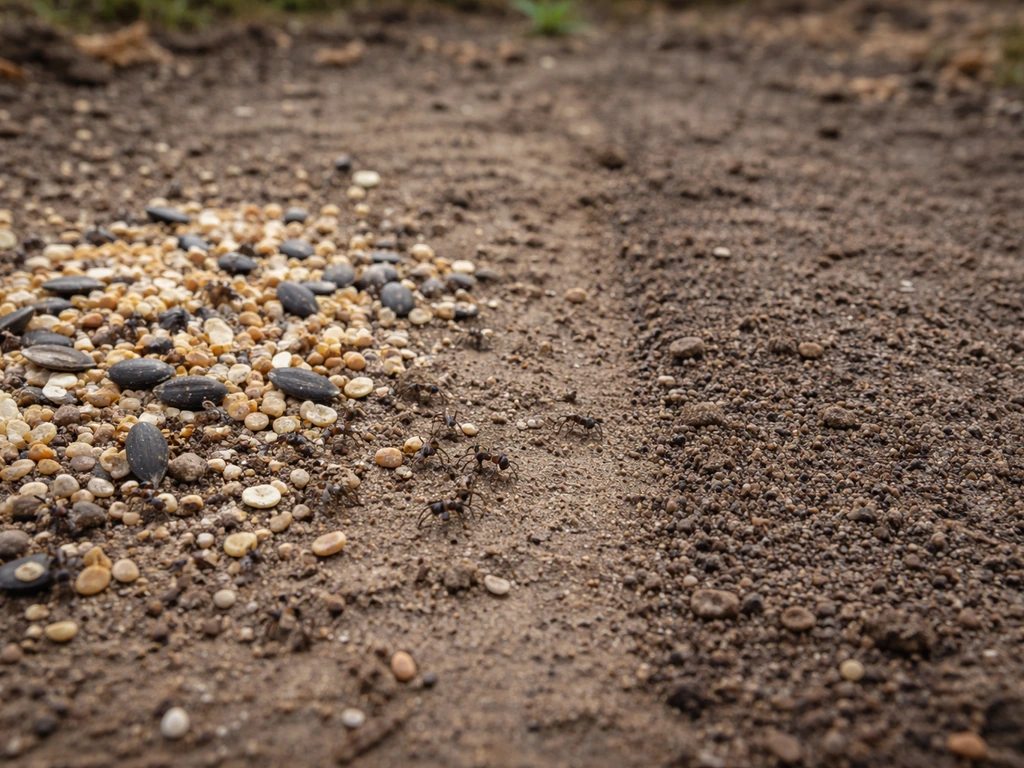
Spilled seed on the ground is one of the top reasons rats and mice move into a yard. A seed catcher tray is the most direct solution, catching seed before it becomes a ground-level food source. Beyond that, removing spilled seed daily or every couple of days in warmer months dramatically reduces rodent attraction. Gravel is harder for rodents to burrow through than loose soil or mulch, which adds a small extra layer of deterrence. Don't leave large amounts of uneaten seed on the ground overnight.
Insects
Ants, beetles, and flies are drawn to seed and hull debris, especially when it's moist and starting to decompose. The fix is the same as for mold: fast drainage and regular removal of accumulated debris. Cedar mulch has some mild insect-deterrent effect, but it's not a substitute for keeping the area clean. If ants are climbing the feeder pole, that's a separate issue from the ground surface, but keeping the ground clean reduces the initial attraction.
Sprouting seeds
If you're noticing volunteer plants growing under your feeder, it's almost certainly from dropped seed that's germinated. Gravel and hardware cloth both suppress this by blocking light to the soil. You can also buy hulled or no-mess seed mixes that don't germinate. What's growing under your bird feeder is a question worth paying attention to, because some species like sunflowers can get quite large if left unchecked, and others may be invasive depending on your region.
Placement and setup: distance from walls, doors, and water
Where you put the feeder in the first place affects everything below it, including what ground cover will work best and what problems you'll face. The most important placement rule is about window collisions. Feeders are safest either very close to windows (within 3 feet, or mounted directly on the glass) or far enough away that birds don't build up dangerous speed before a potential collision (around 10 feet or more). The zone between 3 and 10 feet is the riskiest. This isn't just a bird safety issue; it also affects where your ground-mess zone ends up relative to your house.
Placing a feeder close to a wall or door has real cleanup implications. Seed hulls and droppings near doorways track into the house, attract insects near entry points, and can cause moisture and mold issues if they accumulate against a foundation or siding. A feeder positioned at least 10 feet from the house, over a well-drained gravel patch, is much easier to manage than one hanging right off a porch. If you have no choice but to mount close to the house, a seed tray becomes even more important.
Keep feeders away from standing water sources where possible, or at least don't let spilled seed accumulate near birdbaths or drainage channels. Wet seed near water is an almost guaranteed mold situation. A few feet of separation and good drainage between the feeder and any water feature makes a real difference.
Maintenance routine for the area under your feeder
The ground surface you choose only helps if you actually maintain it. Here's a practical routine that works without taking over your weekends.
- Every 2 to 3 days in warm or wet weather: do a quick visual check. Remove any wet or clumped seed by hand or with a rake. Don't let wet seed sit.
- Weekly: rake the entire ground area under the feeder. Collect and dispose of hulls, debris, and any seed that hasn't been eaten. Compost if you can, or bag it.
- Every two weeks: clean the feeder itself with a scrub brush and a disinfecting solution. The Minnesota DNR recommends 2 ounces of bleach per gallon of water. The Iowa DNR suggests a 10 percent bleach solution once a month at minimum, but every two weeks is better in warm or humid conditions. Let the feeder dry completely before refilling.
- Monthly (or after a pest or mold problem): if you're using gravel, rinse the whole patch with a hose and let it drain. If you're using mulch, pull back the top layer and check for mold underneath. Replace any mulch that smells sour or looks discolored.
- After extended rain or humid weather: check immediately for wet seed accumulation and mold, regardless of where you are in your regular schedule.
If you do find mold on the ground, clear it all out, let the area dry, and apply agricultural lime (for bare ground or soil beneath gravel) before rebuilding your ground cover. Penn State Extension and the Minnesota DNR both emphasize that mold and residue should never be allowed to accumulate, and once a month is genuinely not frequent enough if your feeder gets heavy use or your climate is damp.
When to change approach by season or if problems appear
Bird feeding isn't a set-it-and-forget-it situation, and the ground under your feeder needs different handling at different times of year.
Spring and summer
This is the highest-risk period for mold and bacteria because of heat and humidity. Increase your cleanup frequency, check after every rain, and consider reducing the amount of seed you put out so there's less overflow hitting the ground in the first place. Warm weather also means more insect and rodent activity, so don't let debris sit. If you're seeing a surge in squirrels, raccoons, or rodents, this is the time to add a seed tray if you don't have one.
Fall
Leaves falling into your gravel or mulch area add organic debris that can hold moisture and seed. Rake the whole area more frequently in fall. This is also a good time to replenish or refresh gravel if it's shifted or become embedded with debris after the season.
Winter
In cold climates, seed and hulls can freeze into the ground surface, making cleanup harder. Gravel handles freeze-thaw cycles well; mulch can get compressed and waterlogged when it thaws. In snow, seed on the ground may actually get eaten by ground-feeding birds before it causes problems, but keep an eye on what's left once snow melts. Refreezing wet seed creates a contamination risk for birds foraging at ground level.
When you see a problem
If you notice sick birds near your feeder, evidence of rodents, a persistent bad smell, or visible mold on the ground or feeder, stop feeding temporarily. Clear out all seed (ground and feeder), disinfect the feeder with bleach solution, and let everything dry before restarting. The Iowa DNR recommends cleaning bird feeders with a 10% bleach solution about once each month, and making sure the feeder is dry before refilling disinfect the feeder with bleach solution. This isn't failure, it's just part of responsible feeding. Once you resume, consider switching to a higher-drainage ground surface and adding a seed tray if you didn't have one before. These situations often signal that the current setup needs a permanent adjustment, not just a one-time cleanup.
The goal with all of this isn't perfection. It's a manageable system that keeps the birds healthy, keeps the mess contained, and doesn't turn bird feeding into a chore you dread. With the right ground cover and a simple routine, most of the common problems are genuinely easy to stay ahead of.
FAQ
Can I put landscape fabric or weed barrier under my bird feeder?
It’s usually a bad idea because these fabrics can trap moisture and prevent proper drainage, which increases the chance of mold. If you want a barrier, use hardware cloth as a flat underlayer (staked down) so spilled seed can fall through rather than sitting on a damp surface.
How big should the gravel patch be under the feeder?
For a typical pole feeder, plan for a patch larger than the area where hulls visibly land, about 1 to 2 feet wider in every direction if you’re seeing overflow. More mess (sunflower seeds, heavy feeders, breezy locations) means you should expand the patch rather than just enlarging cleanup frequency.
Is it safe to hose-rinse the area under a gravel or mulch ground cover?
Yes for gravel in most yards, but avoid creating runoff that flows toward your foundation, driveway, or low spots. If the area stays wet after rinsing, switch to a faster-draining surface or increase the cleanup cadence instead of repeatedly washing.
What’s the best surface if the ground is already muddy or slopes toward the house?
Go with pea gravel or crushed stone on a site that drains away from the home. If water flows under the feeder toward structures, add separation (place the feeder farther from the slope) and consider a contained tray plus gravel, so spilled seed does not migrate into the muddy zone.
Will gravel make the area uncomfortable for ground-feeding birds?
Usually no, because birds can still step and forage around stones, but very small pebbles can make the surface less pleasant if you have species that prefer softer ground. If ground-feeding birds are common (sparrows, doves), use a slightly coarser crushed stone and keep the area clean so birds forage safely.
How often should I clean the ground under a bird feeder?
In dry periods, a weekly rake-and-remove is often enough, but in humid or rainy weather you should check after every rain and remove clumps as soon as they appear. The key trigger is wet seed residue, not the calendar, because mold can start within days when conditions are damp.
What should I do if I see mold coming back quickly?
Treat it as a setup problem, not just a one-time cleanup. Remove all residue, let it dry, then improve drainage (gravel instead of mulch/sand where feasible) and consider adding a seed catcher tray to stop spills before they reach the ground.
Do I need to remove the entire gravel layer when it gets messy?
No. Typically you just rake and remove the top layer of hulls, then top up with fresh pea gravel if the surface becomes embedded. Replace or refresh more often when you notice organic buildup that won’t come out cleanly.
Is agricultural lime the right choice under gravel too?
Lime is mainly a tool for bare soil conditions. If you’re using gravel or crushed stone as the primary surface, you usually don’t lime the area because the goal is to keep spilled seed off soil in the first place. Lime is most relevant when you keep the ground bare or when soil is exposed beneath a thin covering.
What should I do if ants are still coming despite using gravel?
Gravel helps with moisture-driven attraction, but ants can also be attracted to feeder ports, spills near the pole, or trails from nearby nests. Focus on catching spills with a seed tray, remove any residue on the pole base, and address the entry points around the feeder area rather than only changing the ground cover.
Should I stop feeding immediately if I find mold on the ground?
Yes, if you see visible mold, a strong sour smell, or you find clumped wet seed, stop feeding temporarily. Clean out the ground and feeder, disinfect the feeder, and restart only after the area is dry, ideally with improved drainage and a seed tray if you did not have one.
What’s the safest approach for winter when seed and hulls freeze?
Stick with gravel because it tolerates freeze-thaw cycles better, but increase cleanup around snow melt so refreezing wet residue does not contaminate ground-foraging areas. After storms, remove leftovers promptly rather than waiting for a single end-of-season cleanup.
Next Articles
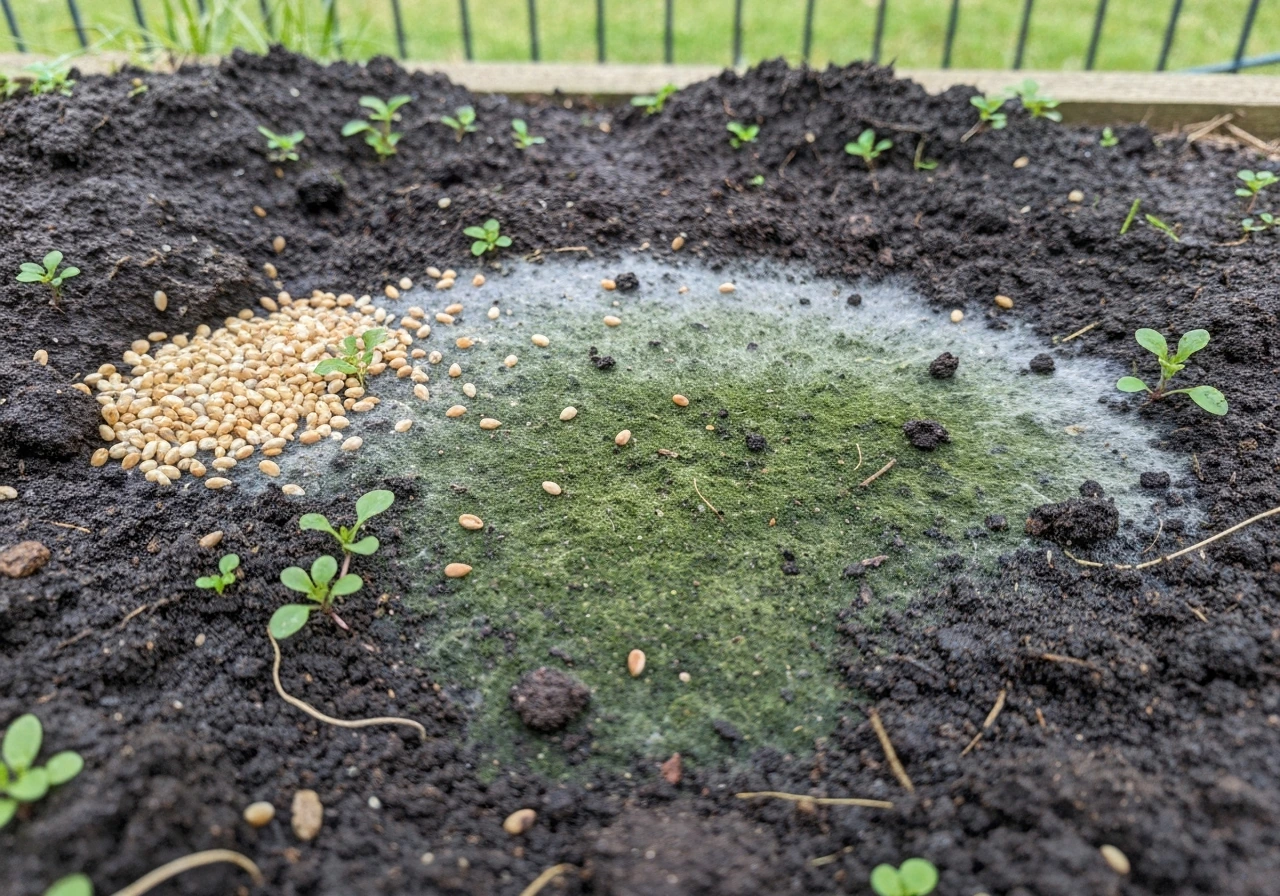
What Is Growing Under My Bird Feeder? Causes and Fixes
Identify growth under your bird feeder and fix algae, fungus, weeds, or seed spill with quick cleanup and prevention ste
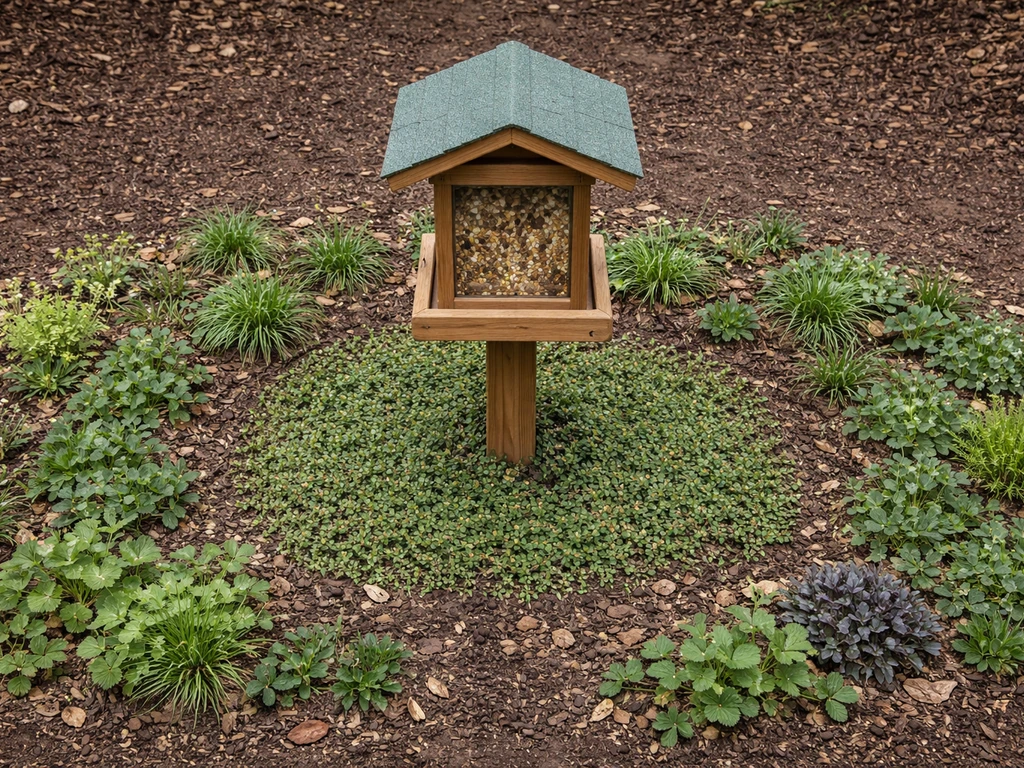
What to Plant Under Bird Feeders: Best Options
Native-friendly groundcovers and low plants for under feeders, plus what to avoid and quick seasonal care tips.
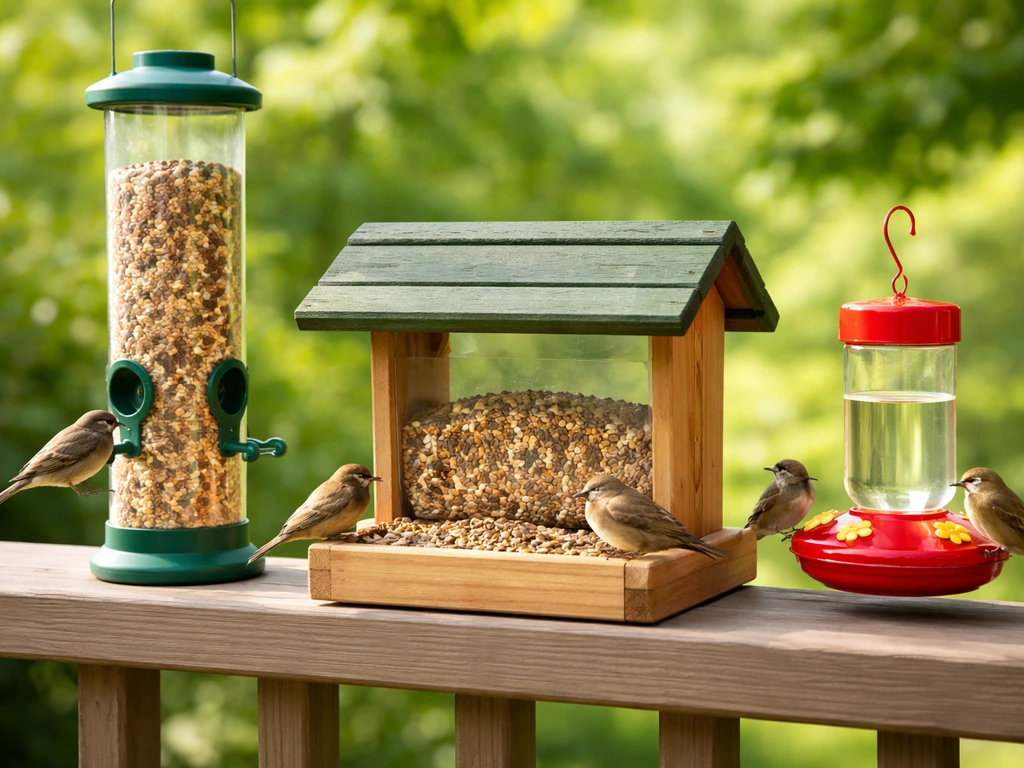
What to Put in a Bird Feeder: Safe Foods by Season
Seasonal, safe foods for bird feeders, nectar, and ground feeding with placement, cleanup, and hygiene tips to prevent d