The short answer: black oil sunflower seed in a tube or hopper feeder is the single best starting point for most North American backyard setups. It attracts the widest variety of songbirds, works in multiple feeder types, and stores well. From there, you layer in suet, nectar, millet, fruit, or mealworms depending on your feeder, your target birds, and the season. Everything else in this guide is about getting those details right so you attract the birds you want without creating a mold or pest problem.
What to Put in a Bird Feeder: Safe Foods by Season

Eleanor Hartwick
7 Apr 2026
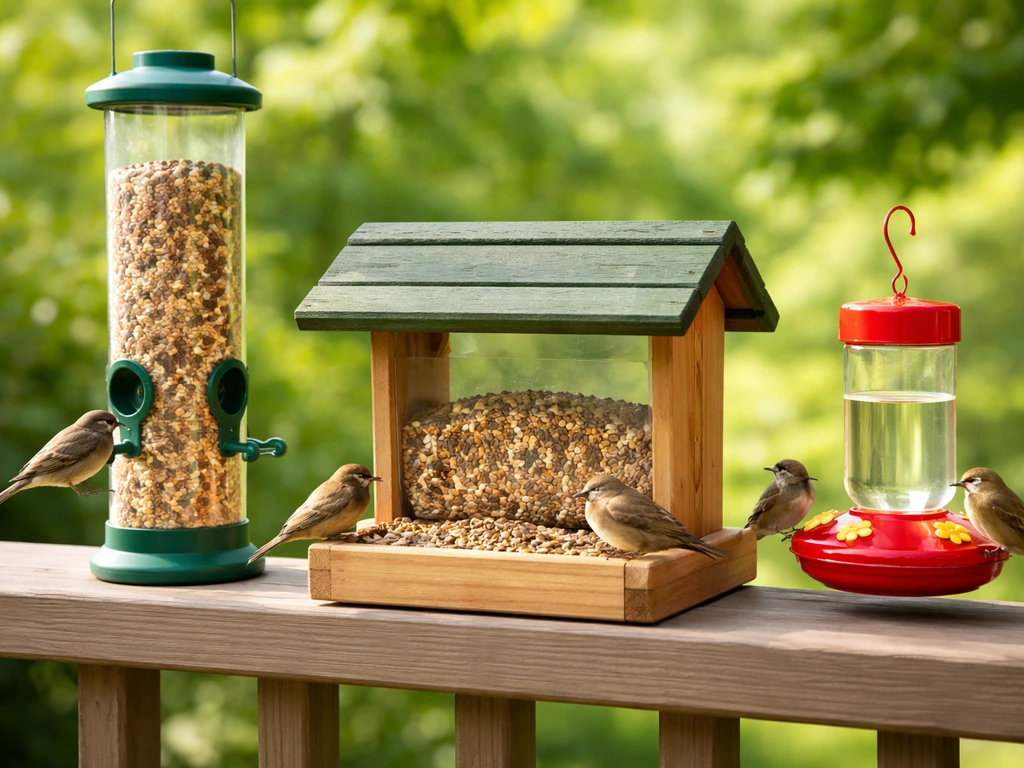
Best foods to fill common bird feeders
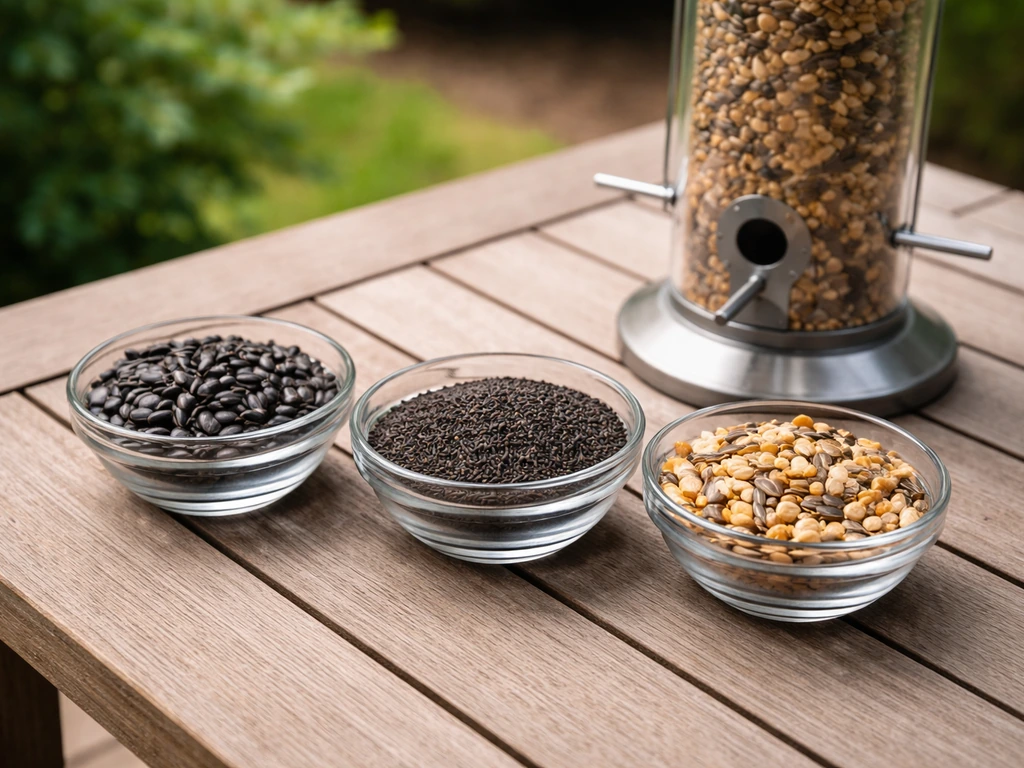
Not all birdseed is created equal, and a lot of cheap "wild bird mix" is mostly filler that birds kick to the ground uneaten. Here's what actually works, matched to the feeder types that use them best.
| Food | Best feeder type | Birds attracted | Watch out for |
|---|---|---|---|
| Black oil sunflower seed | Tube, hopper, platform | Chickadees, titmice, nuthatches, finches, cardinals, jays | Hulls pile up under feeder |
| Hulled sunflower (chips) | Tube, hopper, platform | Same as above + doves (less mess) | Goes stale faster; check frequently |
| White proso millet | Low platform, ground scatter | Sparrows, juncos, doves, towhees | Attracts rodents if scattered too heavily |
| Nyjer (thistle) seed | Nyjer tube feeder with small ports | Goldfinches, house finches, siskins | Clogs ports if wet; replace often |
| Suet cakes | Wire suet cage, mounted well off ground | Woodpeckers, nuthatches, chickadees, wrens | Goes rancid fast above 50°F |
| Sugar water (nectar) | Hummingbird feeder | Ruby-throated and other hummingbirds | Molds within 1–3 days in warm weather |
| Fresh or dried fruit | Platform or fruit spike | Orioles, catbirds, mockingbirds, robins | Ferments quickly; remove within a day |
| Mealworms (live or dried) | Low platform, dish | Bluebirds, robins, wrens, warblers | Live ones need a slippery-sided dish to contain them |
| Peanuts (in shell or shelled) | Peanut feeder, platform | Jays, woodpeckers, titmice, squirrels | Heavy squirrel interest; go moldy if wet |
| Cracked corn | Platform or small weatherproof tray | Doves, sparrows, quail, turkeys | Rots quickly when wet; offer only small amounts |
A note on cracked corn: it's a useful food for ground-feeding species, but it has a real weakness. Cracked corn becomes a moldy mess the moment it gets wet and sits for a day or two, so only offer it in small amounts in a weatherproof feeder, or scatter just what birds can clean up within a few hours. The same general principle applies to anything with a high moisture content.
What to put under bird feeders (ground-feeding and mess control)
The ground under your feeder is its own micro-environment, and it's worth thinking about deliberately. Hulls, uneaten seed, and bird droppings accumulate down there, and if you ignore the mess, you get mold, disease risk, and a rat buffet. Project FeederWatch is explicit about this: raking and cleaning under feeders regularly is not optional, and you can't count on cold weather or rain to sanitize the area for you. Project FeederWatch also advises raking and cleaning underneath feeders regularly to remove seed hulls and waste and to help reduce disease risk raking and cleaning under feeders regularly.
What you put on the ground under a feeder depends on your goals. Some people lay hardware cloth or a seed-catching tray to make cleanup easy. Others use gravel, coarse mulch, or bare packed earth that can be raked and turned over. Whatever you choose, what to put on the ground under a bird feeder is a real design decision with trade-offs between mess control, disease management, and ground-feeder access.
If you want to encourage ground-feeding birds like juncos, sparrows, and towhees, you can intentionally scatter white millet or scatter the overflow from your main feeder. Just keep the scatter zone small and rake it clean every few days. If you want zero mess, catch trays attached directly to tube feeders help a lot, and switching to hulled sunflower chips eliminates most of the shell buildup entirely.
One thing people often don't expect: seeds that fall under a feeder and germinate. If you've ever noticed mystery plants sprouting beneath your setup, you're not alone. Understanding what is growing under my bird feeder helps you decide whether to let those plants go, pull them, or redirect them. Sunflowers, millet, and safflower can all sprout if conditions are right.
Some people take this further and actually plant the area around their feeder with native plants that complement the seed they're offering. If that interests you, there's solid practical guidance on what to plant under bird feeders to turn the spill zone into habitat rather than a weed patch.
Feeder placement and food compatibility
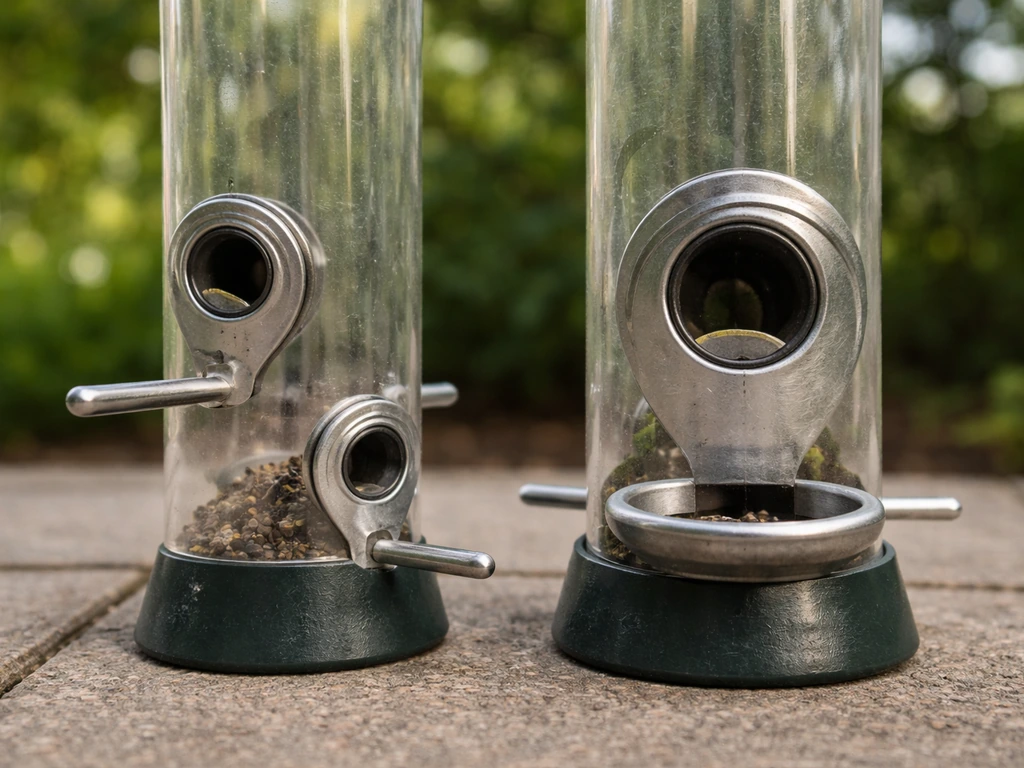
The feeder type and where you put it should match both the food you're offering and the birds you want. This is where a lot of beginners go wrong: they buy a tube feeder, fill it with mixed seed containing cracked corn and millet, and wonder why the food just sits there or rots. Different feeder designs are built around different foods and feeding behaviors.
Tube feeders
Tube feeders are the workhorse of most backyard setups. Fill them with black oil sunflower seed or nyjer, depending on port size. Large-port tubes handle sunflower; small-port nyjer tubes are designed specifically for thistle. Chickadees, titmice, nuthatches, and finches are your main customers. Hang these anywhere with decent clearance from branches squirrels can use as a launch pad.
Hopper and platform feeders
Hoppers hold a larger volume and dispense seed as birds eat. Black oil sunflower, safflower, or a clean sunflower-heavy mix works well here. Platform feeders (open trays) are great for a wider range of foods including fruit, mealworms, and larger seeds, but they're the most exposed to weather, bird droppings sitting on the food, and salmonellosis risk. Utah wildlife authorities specifically flag platform feeders as a salmonella concern because birds perch directly on the food. If you use a platform, clean it every day or two.
Suet cages
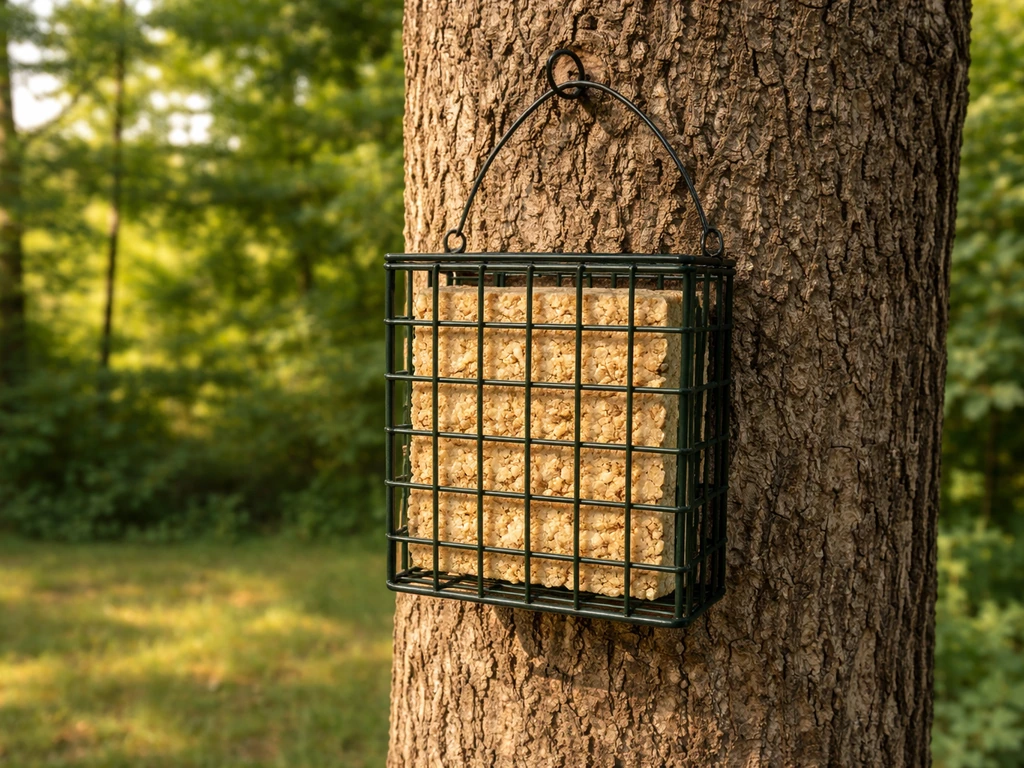
Suet cages should be placed well off the ground, ideally on a tree trunk or hanging from a pole, to mimic where woodpeckers naturally forage. Audubon recommends using the right feeder type for the birds you want, such as hopper or tube feeders for shrub- and treetop-feeding birds and suet feeders placed well off the ground for woodpeckers, nuthatches, and chickadees. During warm months (above about 50°F), only use no-melt suet dough formulations. Regular suet cakes go rancid and greasy fast in heat. In winter, any suet cake works fine.
Hummingbird and nectar feeders
These get their own section below on preparation, but for placement: hang them in partial shade if possible. Direct sun accelerates nectar fermentation and mold growth significantly, and you'll be cleaning much more often.
Window placement rules
Wherever you hang feeders, follow the collision-avoidance rule: place them either within 3 feet of a window (so birds can't build up speed before a strike) or at least 30 feet away (beyond the typical flight run-up distance). The distance in between is the danger zone. Virginia Tech also recommends keeping feeders at least 15 feet from dense shrubby cover to reduce the risk of cat ambushes.
Seed vs suet vs nectar vs fruit: how to choose for your target birds
The food you put out is essentially a filter for which birds show up. Once you know what birds you're hoping to attract, the food choice becomes much more straightforward.
- Chickadees, titmice, nuthatches, finches, cardinals: black oil sunflower seed is the go-to. These birds consistently prefer it above almost everything else.
- Woodpeckers: suet is the primary draw, supplemented by peanuts and occasionally sunflower.
- Goldfinches and pine siskins: nyjer seed in a dedicated thistle feeder will outperform sunflower for these species every time.
- Sparrows, juncos, doves, and towhees: white millet scattered low or on a ground platform. These are your primary ground-feeding species.
- Orioles: fresh orange halves, grape jelly, and sugar-water nectar in a specialized oriole feeder. For a full breakdown of what goes in these, the guide on what do you put in an oriole bird feeder covers quantities and setup in detail.
- Hummingbirds: sugar-water nectar, nothing else. No red dye, no honey, no artificial sweetener.
- Bluebirds and robins: mealworms, either live or dried, in a low tray feeder.
- Jays: peanuts (shelled or whole), sunflower seeds, and sometimes cracked corn.
For regional variations, especially if you're feeding birds in South Asia, the food and feeder options look quite different. The guide on what to put in bird feeder india covers local species and appropriate foods for that context.
How to make hummingbird nectar (and keep it safe)
This is one of the most common specific questions within the broader "what to put in a bird feeder" topic, and there's a lot of bad advice floating around. Here's what the science actually says.
The standard nectar ratio is 1 part white granulated sugar to 4 parts water. That's 1/4 cup sugar per cup of water. In cold, rainy, or foggy weather when hummingbirds need more energy, you can increase it slightly to 1/3 cup sugar per cup of water. Do not use honey (it ferments and causes a fatal fungal infection), brown sugar, powdered sugar, or any artificial sweetener. Do not add red food dye. Plain white granulated sugar in a clean feeder with red parts is all you need.
Boil the water briefly before mixing if you want to slow spoilage slightly, but let it cool completely before filling the feeder. Store extra nectar in the fridge for up to a week.
The real issue with hummingbird feeders is cleaning frequency. In warm weather, nectar can go cloudy, ferment, or grow visible mold within 24 to 48 hours. Smithsonian's National Zoo recommends changing the nectar every other day and thoroughly cleaning the feeder each time. In very hot weather (above 85°F), that means daily changes. Never just top off an old feeder. The Audubon Society recommends a 50-50 vinegar and water soak for hummingbird feeders, scrubbing all parts, then rinsing thoroughly and fully drying before refilling.
Seasonal feeding plans
What you put in your feeders should shift with the seasons, both because bird species and their nutritional needs change, and because food safety conditions (temperature, humidity) change how quickly things spoil.
Winter
This is when feeders matter most for birds. High-fat, high-calorie food is the priority: black oil sunflower seed, suet (any formulation works in cold weather), and peanuts. Tube and hopper feeders handle sunflower; suet cages should be hung somewhere accessible but sheltered. For ground-feeding species that don't get displaced by snow, add a low platform with white millet. Keep food dry: a hopper feeder with a roof is worth it in wet climates because wet seed goes moldy fast.
Spring and migration
Spring brings two things: returning migrants and the start of breeding season. This is when to diversify. Put out fresh orange halves and grape jelly for orioles (typically arriving April through May in most of North America). Add or refresh your hummingbird feeder before your local arrival date. Keep sunflower and suet running for resident birds that are now building nests and need protein. Mealworms become especially attractive to bluebirds and robins during nesting.
Summer
Summer is the highest-maintenance season for feeders. Heat accelerates spoilage across the board. Switch to no-melt suet or skip suet entirely above 85°F. Change hummingbird nectar daily in hot weather, and check seed feeders every few days for clumping or mold at the bottom (a common problem when humidity is high). This is also when insects become naturally abundant, so many birds rely less on feeders anyway. You can scale back if you want to, but keeping sunflower and nectar running maintains the habit for birds and keeps them visiting.
Fall migration
Fall migration peaks from August through October in most of North America. This is an excellent time to keep multiple food types available because you can get a wide variety of transient species stopping through. Sunflower, nyjer, fruit, and nectar (until your hummingbirds leave) all earn their place. As temperatures drop, you can reintroduce regular suet cakes. Watch for species that don't normally visit your yard: warblers, tanagers, and thrushes can show up during fall movement.
Safe handling and feeder hygiene
Dirty feeders aren't just unpleasant. They're a genuine disease vector. Audubon lists salmonellosis, aspergillosis, avian pox, avian flu, and house finch eye disease as real risks at feeders that aren't maintained properly. Pennsylvania's game commission specifically highlights aspergillosis as a risk from moldy seed, and New York's DEC confirms that feeding birds contaminated or spoiled food can directly cause aspergillosis infections. This is not fearmongering, it's a real reason to stay on top of cleaning.
Project FeederWatch recommends cleaning seed feeders about every two weeks under normal conditions, and more frequently during warm or damp weather. Here's the practical routine that works.
- Empty the feeder completely. Don't refill over old seed.
- Wash with dish soap and warm water, scrubbing all ports, perches, and interior surfaces.
- Disinfect: soak in a 9:1 water-to-bleach solution (nine parts water, one part bleach) for 10 minutes, or use a weak vinegar solution (1 hour soak) if you prefer to avoid bleach.
- Rinse thoroughly. Any bleach or soap residue left behind can harm birds.
- Dry completely before refilling. This is critical. Mold can start growing in a wet feeder within hours if you add seed to a damp interior.
- While the feeder is down, rake and clean the ground beneath it. Remove shell debris, old seed, and droppings.
Wash your hands after handling feeders and seed. This is as much for your health as for the birds: salmonella is zoonotic, meaning it can transfer to humans.
Store your seed supply in a cool, dry, sealed container. A galvanized metal garbage can with a tight lid works well. Check bags of seed before filling your feeder: if it smells off, clumps together, or shows any visible mold, throw it out. Fresh seed is non-negotiable for avoiding aspergillosis.
Avoiding unwanted wildlife
The same seeds and fats that attract songbirds will attract squirrels, raccoons, rats, and sometimes bears. These aren't reasons to quit feeding birds, but they're reasons to set up your feeding station thoughtfully.
Squirrels
Squirrels are persistent and clever, but a few physical modifications go a long way. Use a pole-mounted setup with a baffle (cone or cylinder) below the feeder rather than hanging from a branch. Keep feeders at least 10 feet from any tree, fence, or surface a squirrel can leap from. Alternatively, switch to safflower seed in your main feeder: most squirrels dislike it, and many feeder birds (cardinals especially) love it. Squirrel-proof caged feeders work well too.
Rats and rodents
Rats are attracted to spilled seed on the ground, not usually the feeder itself. The main prevention strategies are: use a catch tray under the feeder to reduce spillage, switch to hulled sunflower chips (less waste), avoid scattering millet or cracked corn in large amounts on the ground, and bring feeders in at night if rats are actively present. Avoid leaving food out in open ground-level trays overnight.
Bears
If you live in bear country, this is a serious issue. Bears are powerful enough to destroy any feeder, and a bear that learns feeders equal food is a bear that becomes a persistent, dangerous problem. The standard guidance from wildlife agencies is to bring feeders indoors at night from spring through fall (when bears are active) and only put them out during daylight hours when you can monitor them. If a bear finds your feeder once, the risk jumps dramatically. For anyone dealing with an active situation, the specific guidance on bear on top of bird feeder covers how to respond and prevent repeat visits.
Insects and ants
Ants are the main insect problem at hummingbird feeders. Use a water-filled ant moat (a small cup attachment that sits above the feeder and acts as a physical barrier) rather than applying any oil or grease to the hanger, which can coat and damage hummingbirds' feathers. Bees and wasps are attracted to exposed nectar ports; choose feeders with recessed ports that keep the nectar surface below the bee's reach, or use a saucer-style feeder instead of a bottle-style feeder. Keep nectar fresh and clean ports regularly, since old residue is a bigger attractant than fresh nectar.
Your practical starting point
If you're starting from zero, here's the simplest setup that works for most backyards in North America: one tube feeder filled with black oil sunflower seed, one suet cage for winter or a no-melt suet dough in warm weather, and a hummingbird feeder set up before your local migration arrival date in spring. Clean everything every two weeks minimum, watch for mold or caking in the feeder bottom, and rake the area underneath every time you refill. That covers the basics solidly. Once you know which birds are showing up regularly, you can expand from there.
FAQ
How much bird food should I put in a feeder so it does not go bad or attract too much waste?
Start by filling only what you will realistically use within the feeder type’s safe window. For nectar, plan for a fresh change schedule (often every other day, or daily in hot weather). For seed, avoid overfilling tube or hopper feeders if your weather is humid, since the feeder bottom can collect damp caked seed. A good rule is to refill smaller amounts more often, then adjust based on how quickly birds empty each feeder.
Can I mix different birdseed types together in the same tube or hopper feeder?
Only mix seeds if the resulting blend still fits the feeder’s intended ports and eating behavior. Many “wild bird mixes” include filler birds discard, which increases waste and mold risk under the feeder. If you want variety, use separate feeders (for example, black oil sunflower in one and nyjer in a small-port feeder) rather than combining foods that create different mess levels and spoilage rates.
What should I do if seed keeps clumping at the bottom of my feeder?
Clumping usually means moisture is getting in or condensation is forming, so change the feeding setup rather than just adding more seed. Switch to a more weather-protected model (roofed hopper or better-sealed tube), check that the feeder is not sitting in a damp micro-area, and empty and scrub the bottom parts when clumps appear. Continue by using drier seed from a sealed container, and rake and clean the area underneath more frequently.
How often do I need to clean a seed feeder if the weather is mild but it still looks dirty?
Follow a minimum schedule, then tighten it based on conditions. Even in mild weather, clean about every two weeks, and more often if you see visible mold, sour smell, heavy hull buildup, or caking. When cleaning, remove old seed fully, scrub with detergent and warm water, let everything dry completely, and replace only with fresh seed.
Is it safe to put out cracked corn year-round?
Cracked corn is best treated as a short-interval offering, especially in wet or humid weather. It can mold quickly once it absorbs moisture, so offer small amounts in a weatherproof setup or scatter only what birds will clean up within a few hours. If you see any dampness, spoilage, or an off smell, discard it rather than trying to “dry it out” for reuse.
Do I need different nectar recipes for different hummingbird species or climates?
For most North American hummingbirds, the same plain ratio works, use 1 part white granulated sugar to 4 parts water, then slightly increase to 1/3 cup sugar per cup water in very cold, rainy, or foggy conditions. The recipe choice is less about species and more about reducing spoilage, so the real factor is temperature. In heat, shorten cleaning intervals and change nectar more frequently instead of increasing sugar further.
Why does my hummingbird feeder get cloudy so fast, even when I change nectar regularly?
Cloudiness often comes from residue buildup and microbial growth that starts in crevices. Make cleaning more thorough, disassemble if the feeder allows, scrub all contact surfaces, and fully dry before refilling. Also check that nectar ports are not exposed to excessive sun, since direct sun accelerates fermentation and mold. Never top off old nectar, discard it and refill with freshly mixed solution.
What is the safest way to offer fruit or jelly, and how do I prevent disease risk?
Use fruit or jelly only in feeder designs that keep the food from staying exposed for long periods. If you use them, you generally need more frequent cleaning than with seed because fruit sugars spoil quickly and birds perch directly on surfaces. Remove any leftover food promptly and wash thoroughly, especially in warm weather, and avoid leaving it out overnight.
Can I place feeders closer to windows, or is that always too risky for birds?
Window proximity should follow the collision-avoidance rule described in the article, either within about 3 feet of the window or far enough away (about 30 feet) to avoid a dangerous flight build-up zone. If you want the closer option, consider also using window film or exterior reflectors, but the easiest fix is to choose one of the two safe distance bands and keep feeders consistent.
What should I do with the plants that sprout from seed under my feeder?
Treat them as a “spill zone” management decision. If you do not want random weeds, pull seedlings early, before they set seed, and consider redirecting spill by using a catch tray or a seed-skirted setup. If the seedlings look like sunflower or millet and you like the naturalized look, you can let a small patch go, just remember it may increase repeat seed spilling and still requires raking of droppings and hulls nearby.
How can I reduce squirrels without changing the birds I want to attract?
Squirrel-proofing often works best when it targets access, not food type. Use a pole with a baffle, keep feeders away from launch points like trees and fences, and consider swapping the main “high-waste” food to safflower if cardinals are acceptable in your area. If you use cages, ensure the bird species you want can reach ports comfortably, then monitor for any ongoing spillage that invites rats.
What is the fastest way to handle ants at my hummingbird feeder?
Use a physical ant moat attachment and keep nectar ports clean, avoid greasing the hanger since oils can damage bird feathers. Also wipe away any sugar residue around the feeder, since residue is a stronger attractant than fresh nectar. After cleaning, fully dry the area and refill, then refill on schedule so sticky residue does not accumulate.