The best plants for under and around bird feeders are low-growing, tough, native groundcovers and shrubs that can handle partial shade, compacted soil, seed debris, and bird droppings without turning into a muddy, moldy mess. Think creeping thyme, native sedges, or low fescues directly under the feeder, and berry-producing native shrubs like beautyberry, serviceberry, or native viburnums in the surrounding transition zone a few feet out. The goal is a layered setup: a forgiving groundcover right underneath, a mulched buffer zone around that, and productive native plantings further out that give birds food, cover, and perching spots beyond just what's in the feeder itself. Once you decide what to put around the feeder, you can focus on what to put in bird feeder India itself based on the birds you want to attract give birds food, cover, and perching spots.
What to Plant Under Bird Feeders: Best Options

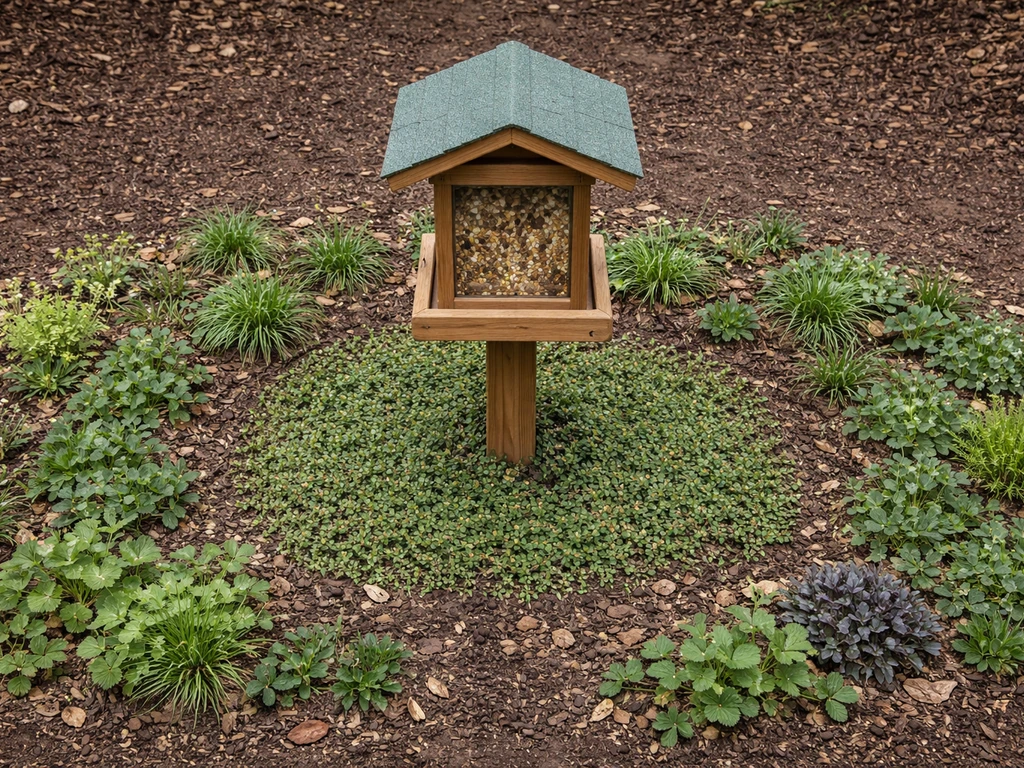
Think in zones, not just "under the feeder"
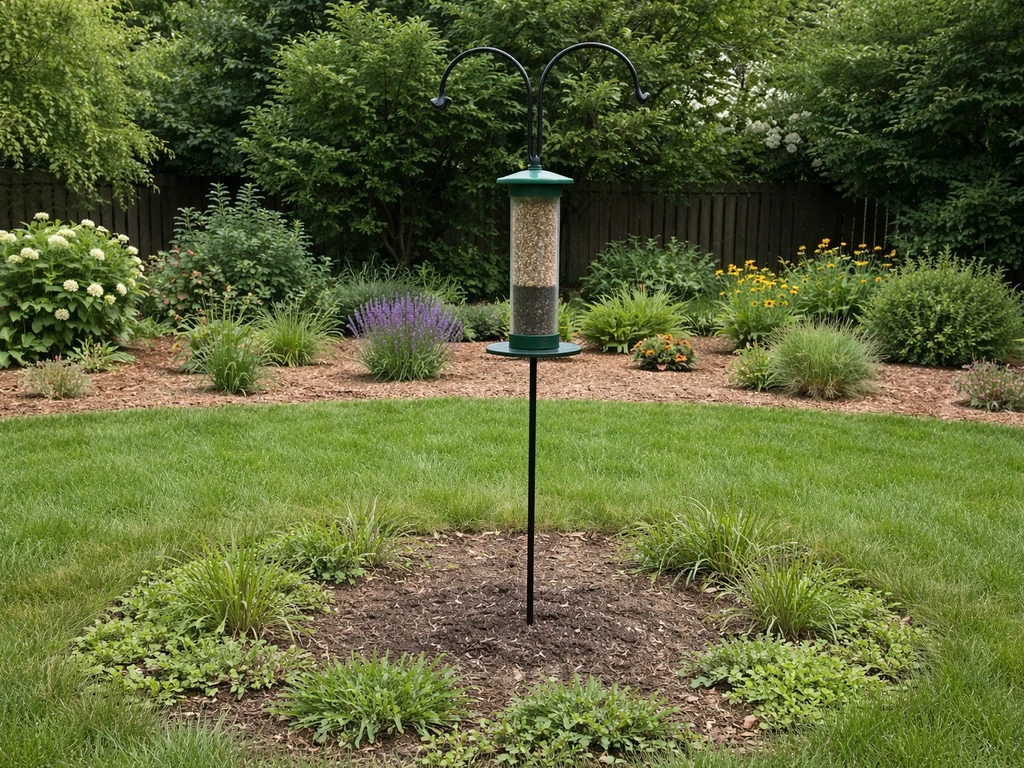
The area around a feeder has distinct zones, and treating them all the same is where most people go wrong. Directly under the feeder (roughly a 3-foot radius) takes the most punishment: fallen seed, hulls, droppings, and constant foot traffic from ground-feeding birds like juncos, doves, and sparrows. This zone needs something that can take a beating. The transition zone from about 3 to 10 feet out is where you have much more flexibility. Here you can plant things that look beautiful, attract insects, and give visiting birds a place to perch and wait their turn. All About Birds notes that feeders placed roughly 10 feet from natural shelter like shrubs and trees give birds easy refuge between feeding bouts, which also helps them avoid predators.
Best plants for different feeder zones
Right under the feeder (0–3 feet)
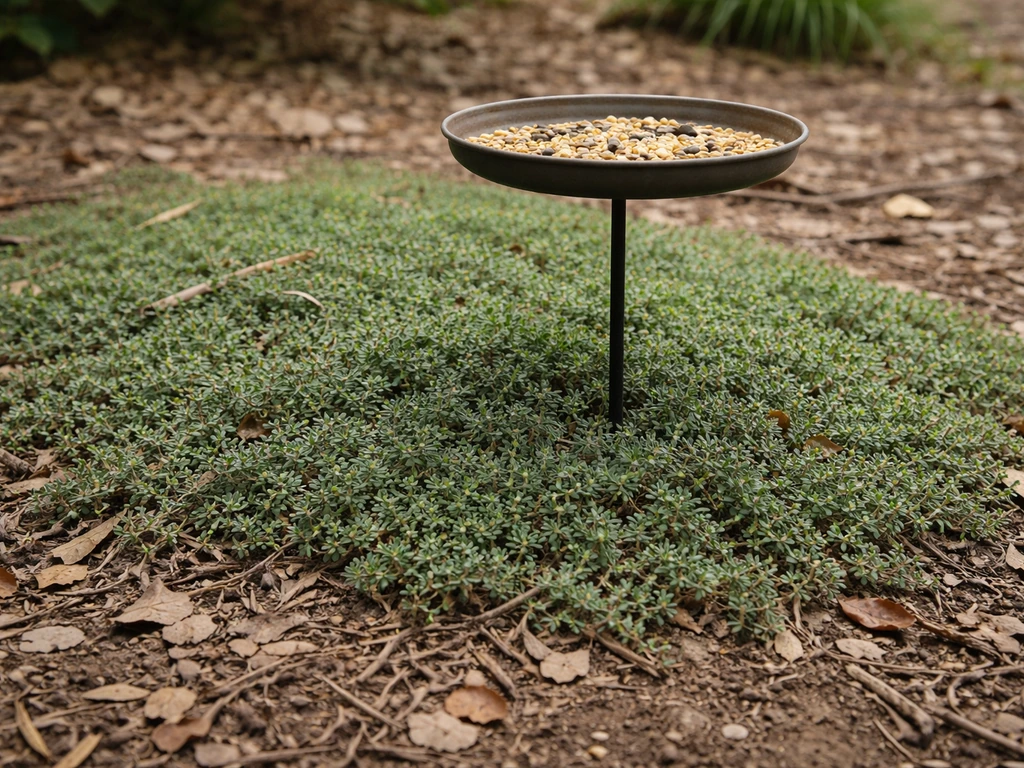
This is the tough-love zone. You need something that stays low, can handle debris smothering it periodically, and doesn't require careful maintenance around delicate stems. A few options that consistently work well:
- Creeping thyme (Thymus serpyllum): extremely tough, drought-tolerant, handles foot traffic, and the low mat-forming habit lets you rake debris off it easily. It's not native to North America but it's not invasive either, and it outcompetes weeds without chemicals.
- Native sedges (Carex spp.): especially Pennsylvania sedge (Carex pensylvanica) or Appalachian sedge. These tolerate shade and part-shade brilliantly, grow slowly, need almost no mowing, and blend seed debris into the planting without looking wrecked.
- Buffalo grass or fine-bladed native fescues: if you want something grass-like, low-growing native fescues tolerate the occasional droppings-heavy patch and are easy to rake clean.
- Ajuga (bugleweed): semi-native tolerant of debris and shade; spreads to fill bare patches but can be pulled back easily. Hummingbirds and bees love the spring flowers.
- Bare mulch with annual cleanup: honestly, for some feeder placements, 2–3 inches of wood chip mulch right underneath, refreshed once or twice a year, beats any planting. It's worth considering as the base layer even if you plant around it.
The transition zone (3–10 feet out)
This is where you get to do something genuinely bird-friendly rather than just damage-resistant. The NWF is direct about this: feeders work best when they're embedded in a real habitat, not just stuck in a lawn. Native plants that provide berries, insects, and structure are doing real ecological work here. Some solid choices by plant type:
- American beautyberry (Callicarpa americana): stunning purple berries in fall that birds devour, tolerates part shade, and grows fast enough to give structure quickly.
- Serviceberry (Amelanchier spp.): shrub or small tree form, berries in early summer, larval host for moths and butterflies (which are then bird food), tolerates a wide range of conditions.
- Native viburnums (Viburnum lentago, V. nudum, etc.): excellent bird berry production, great foliage, and most species handle part shade under a feeder canopy.
- Native coneflowers (Echinacea purpurea): the seed heads are bird magnets in late summer and fall; goldfinches especially love them. Leave the spent heads standing through winter.
- Joe-Pye weed or native asters: tall, late-season bloomers that attract insects and provide seeds; plant in the back of the transition zone where they won't flop over your groundcover.
- Native ornamental grasses (Panicum virgatum, Schizachyrium scoparium): little bluestem especially provides cover, nesting material, and seed. Doesn't need cleanup until early spring.
Native, low-maintenance options birds actually use
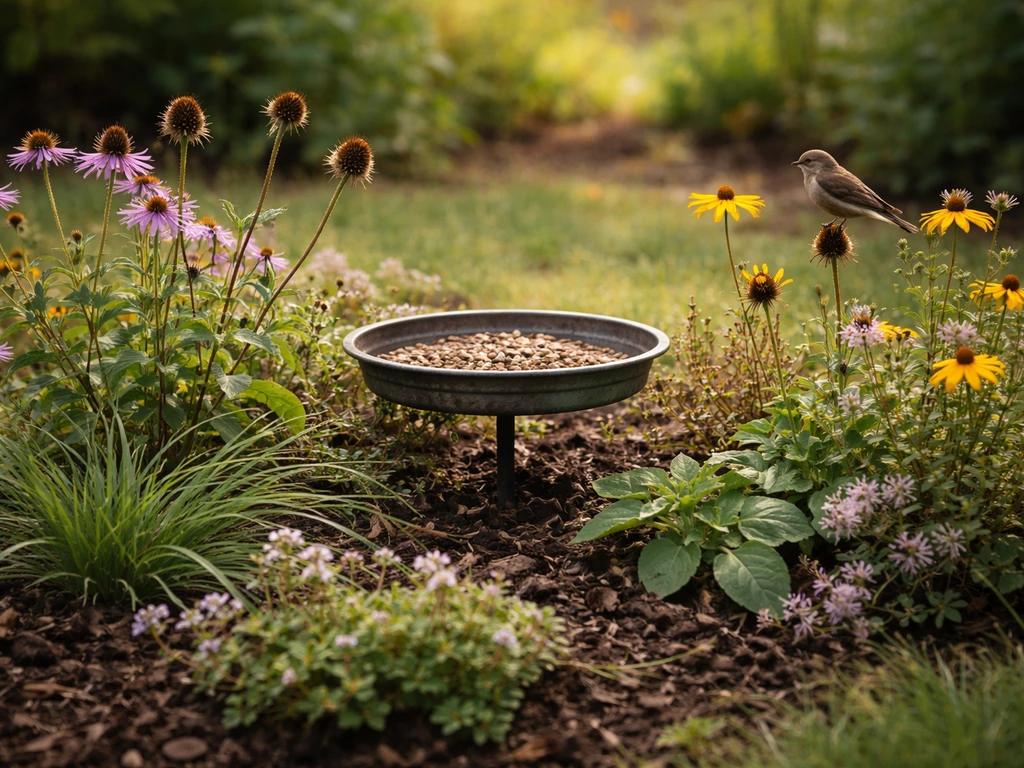
There's a difference between plants that look nice in a garden center and plants that birds actually return to. The ones that consistently pull birds in are those that produce food (berries, seeds, or the insects that come with native plantings) or offer cover and nesting sites. Here's a quick regional breakdown of native plants that do real work in bird gardens:
| Region | Native shrub/plant | What it provides |
|---|---|---|
| Northeast/Mid-Atlantic | Winterberry holly (Ilex verticillata) | Winter berries for thrushes, bluebirds, cedar waxwings |
| Northeast/Mid-Atlantic | Native viburnums | Late-season berries, insect habitat |
| Southeast | American beautyberry | Fall berries, fast cover |
| Southeast | Wax myrtle (Morella cerifera) | Evergreen cover, waxy berries for yellow-rumped warblers |
| Midwest/Plains | Little bluestem grass | Seeds, winter cover, nesting material |
| Midwest/Plains | Purple coneflower | Seed heads for goldfinches and chickadees in fall |
| West/Pacific Northwest | Toyon (Heteromeles arbutifolia) | Red berries, dense cover |
| West/Pacific Northwest | Red flowering currant | Early spring nectar for hummingbirds, berries for others |
| Southwest | Desert willow (Chilopsis linearis) | Hummingbird nectar, drought tolerant |
| Southwest | Chuparosa (Justicia californica) | Hummingbird magnet, extremely low water |
The common thread across all these is that they are adapted to local conditions, which means once established they need minimal intervention. You're not fighting your climate; you're working with it. That matters even more in a feeder zone, where the soil is often compacted and the light conditions are variable.
Plants to avoid near feeders
There are two separate problems to watch for here: plants that are toxic to birds, and plants that are just impractical in a high-traffic, high-debris zone. Both are worth knowing.
Potentially toxic plants
It's worth being honest about the complexity here: plant toxicity in wild birds isn't perfectly documented, and the risk to free-flying backyard birds differs from the risk to pet birds in enclosed spaces. That said, there are some plants consistently flagged as a concern. Foxglove, castor bean, and Jerusalem cherry show up on multiple veterinary and bird safety lists as genuinely dangerous. Oleander is toxic to many animals and worth keeping away from any bird-active area. The CAFABirdClub's bird safety materials are clear that toxicity depends on species, conditions, and quantity, so no list is absolute. The practical approach: avoid plants that appear on multiple toxic lists (foxglove, castor bean, oleander, lily of the valley) and focus on the native plant choices that are both bird-safe and well-documented as wildlife-beneficial.
Milkweed is a nuanced case worth mentioning. It supports monarchs and is widely recommended for wildlife gardens. However, it does appear on some bird-caution lists depending on species and concentration. In a transition zone that's not directly under a feeder where birds are eating from the ground, it's much less of a practical concern. Use your judgment based on your specific situation and bird species.
Impractical choices for feeder zones
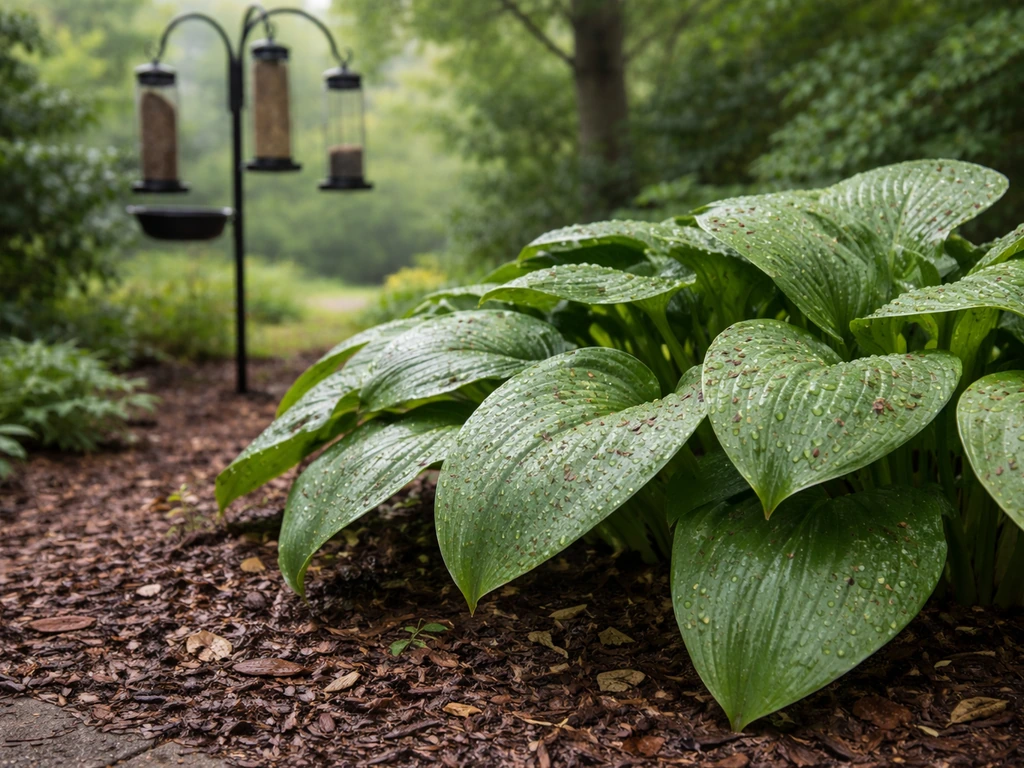
- Large-leaved hostas: they collect seed debris and bird droppings in their cups and turn into a mold incubator fast. Beautiful elsewhere in the garden, just not here.
- Tall ornamental grasses directly under the feeder: they catch and hold seed debris deep in the clump, which then rots. Move them to the outer transition zone instead.
- Heavily mulched beds with deep loose organic material right under the feeder: loose mulch under a feeder becomes a rodent magnet. Project FeederWatch specifically flags ground-level seed as a rodent attractant. Keep the mulch shallow (under 2 inches) directly beneath the feeder.
- Anything that needs regular pesticide or herbicide treatment: Virginia DWR is explicit about not using pesticides or herbicides near bird feeders. If a plant requires chemical management to thrive in that spot, it's the wrong plant for that spot.
- Dense low evergreen shrubs right at the feeder base: these provide perfect hiding spots for cats, which is exactly what the NWF warns against in feeder placement guidelines.
How to prevent seed and droppings buildup while planting
Seed and droppings buildup is the core problem under any feeder, and your plant choices and layout either help manage it or make it worse. The USFWS recommends sweeping up old, moldy, and discarded seed regularly, and Virginia DWR says to rake the area to remove hulls and waste. Neither of those tasks is fun if you've planted something that makes raking impossible. That's the main argument for keeping the immediate under-feeder zone simple: a low groundcover or shallow mulch you can actually work a rake through.
A few specific strategies that help. First, use a feeder tray or seed catcher on the feeder itself to intercept most of the mess before it hits the ground. Second, if you do have a groundcover mat directly underneath, rake or blow out debris every two to three weeks rather than letting it accumulate. Third, choose hulled or no-mess seed mixes (like hulled sunflower hearts or nyjer) if the mess is really getting out of control. Virginia DWR also notes that filler seeds like cracked corn and milo create more waste, attract unwanted species, and increase the buildup problem significantly.
Designing a bird-friendly layout under and around feeders
A layout that actually works long-term usually follows this structure: a practical center zone, a defined buffer, and a productive outer planting. Here's how to build it.
- Center zone (0–3 feet): either bare ground you rake regularly, a thin layer (1–2 inches) of wood chip mulch, or a low mat-forming groundcover like creeping thyme or native sedge. Keep this zone simple and accessible for cleanup.
- Define the edge: use a simple edging material (stone, steel edging, or even a clean gravel border) to visually separate the feeder zone from the lawn or garden beds around it. This makes the difference between a zone you intentionally manage and one that just looks messy.
- Buffer zone (3–6 feet): a 2–3 inch layer of shredded hardwood mulch works well here. It suppresses weeds, slows runoff from rain washing seed debris across the yard, and looks tidy. Refresh this once or twice a year.
- Transition planting (6–10 feet out): this is where your native shrubs and perennials go. Give shrubs at least 3 feet of clearance from each other and from the feeder pole to allow air circulation, which reduces mold and fungal problems.
- Consider feeder height and pole placement: a feeder on a baffle-equipped pole placed roughly in the center of the planted area works better than one hung from a tree branch directly over plants you care about, since branch-hung feeders drip mess unpredictably.
- Leave some open ground near the edges: ground-feeding birds like towhees, sparrows, and doves need open patches. Don't plant every square inch.
Seasonal planting and care by region
What you're doing in the feeder garden changes meaningfully by season, and your timing for planting and cleanup matters more than most people realize.
Spring (March through May)
This is your best planting window for almost everything. Native perennials and shrubs establish best when planted in spring or fall. Do your big cleanup now: rake out all the accumulated hulls and seed debris from winter, top-dress the mulch layer, and divide or transplant any groundcovers that have gotten patchy. If you're in a colder region (Zone 5 and north), wait until after your last frost date before putting in tender perennials. Feeder traffic tends to increase in spring as migrants pass through, so keep the area clean more frequently during this period.
Summer (June through August)
Summer is the hardest time for the under-feeder zone because heat plus moisture plus organic debris equals mold. Check the groundcover more frequently for wet, matted seed clumps and remove them before they become a disease issue. Watering needs go up for newly planted shrubs and perennials; established native plantings generally need little to no supplemental water in most regions. Trim back any groundcovers that are creeping where you don't want them. This is also when you'll want to watch for signs of pest pressure: rodents moving in under dense plantings, or wasps attracted to fermented seed. Keep the center zone especially clean.
Fall (September through November)
Fall is actually an excellent planting time for native shrubs and trees in most of the country: the soil is still warm, the air is cooler, and plants can establish roots before winter without heat stress. This is also when your native plants are doing the most work for birds: berries ripening, seed heads maturing, and migrants stopping through. Resist the urge to cut everything back in fall. Leave the coneflower seed heads, leave the ornamental grass clumps, leave the berry branches alone. Do your big feeder-area debris cleanup in late fall after leaf drop so you head into winter with a clean base.
Winter (December through February)
In cold climates, the frozen ground simplifies some things: debris doesn't mold as fast, and seeds on the ground are actually useful food for ground-feeding birds rather than just waste. But check for seed accumulation on top of snow or ice, which can become a slipping hazard for birds and lead to rapid mold when it thaws. In mild climates (Zone 8 and warmer), winter is when you'll see the most feeder activity and the most debris, so maintain the same cleanup schedule as summer.
Your maintenance routine: keeping plants and feeders clean together
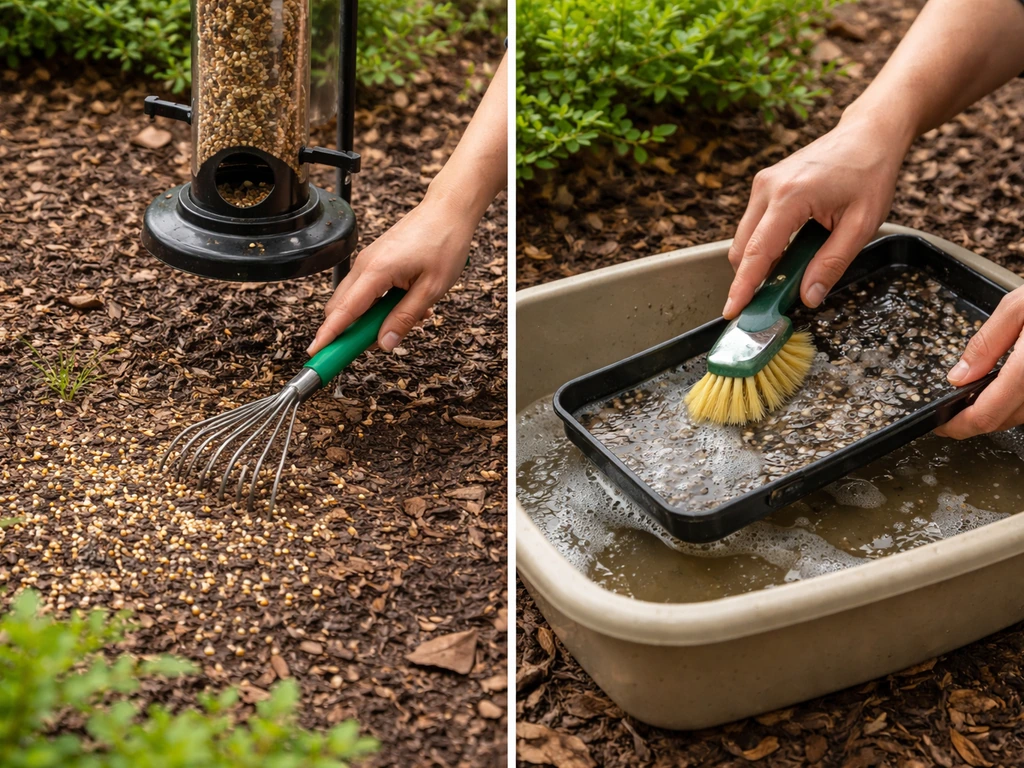
The planting around your feeder and the feeder itself need to be maintained as a system, not separately. A beautifully planted feeder area with a moldy, dirty feeder is still a disease risk. Likewise, a spotless feeder sitting over a rotting pile of hulls and debris is doing birds a disservice. Here's a practical routine that keeps both in order.
Weekly (during peak season)
- Check for and remove any wet, clumped, or discolored seed under or in the feeder.
- Rake or sweep the immediate under-feeder zone to clear fresh debris before it breaks down.
- Look at the groundcover for signs of mold patches or matting; fluff the mulch if needed.
Monthly
- Clean the feeder itself: scrub with warm, soapy water, then soak in a 1-part bleach to 9-parts water solution for 10 minutes, rinse thoroughly, and let dry completely before refilling. This is the standard recommended by both MSU Extension and Birdnet's fact sheet.
- If you prefer to avoid bleach near garden plantings, a weak vinegar solution followed by thorough scrubbing works as a gentler alternative, though it's less reliably disinfecting.
- Check the mulch layer and top up where it's thinned out.
- Trim back any groundcover that's encroaching on the center cleanup zone.
Seasonally (2–3 times a year)
- Do a full rake-out of the under-feeder zone, removing accumulated hull debris down to the soil or mulch layer.
- Refresh the mulch in the buffer zone.
- Cut back perennials in late winter (not fall, so birds can use the seed heads).
- Inspect shrubs for crowding or disease and prune as needed.
- Reassess your seed type: if you're seeing excessive waste, switching to hulled sunflower or nyjer seed dramatically reduces ground debris.
If you've ever looked up what's sprouting under your feeder and found a tangle of weeds or mystery seedlings, that's a separate but related problem worth addressing with the right groundcover before those volunteers get established. If you are wondering what is growing under your bird feeder, the answer depends largely on the plant zone and the types of seed and droppings landing there what's sprouting under your feeder. If you're wondering what is growing under your bird feeder, the answer usually comes down to what seeds are falling and which plants are already thriving in your soil and light conditions. what to put in a bird feeder. If you are also figuring out what goes in an oriole bird feeder, start by choosing an appropriate feeder style and setting it up where orioles feel safe. Similarly, if you're thinking about what to put on the ground under the feeder beyond plants (gravel, hardware cloth, etc. If you are still deciding what to put on the ground under the feeder, it helps to think in the same zones and maintenance-friendly materials described in what to put on ground under bird feeder. ), that's worth considering as part of the overall zone design rather than as a replacement for it. The planted approach and the ground-cover approach work best when combined thoughtfully.
The whole point of planting around your feeder is that it stops feeling like a chore and starts feeling like a habitat. When you get the zones right and the maintenance routine is simple enough to actually stick to, you end up with a setup that works for you, looks good, and genuinely serves the birds far better than a feeder stuck in the middle of a lawn. Bear on top of bird feeder setup should also be designed to prevent messy debris buildup and help keep feeding areas safe and clean.
FAQ
Is it ever okay to put mulch or gravel directly under a bird feeder instead of plants?
Yes, if your goal is minimum maintenance and easy cleaning. Use it only in the immediate center zone, then plant in the 3 to 10 foot transition area and farther out. A solid mulch bed should be raked or vacuumed regularly, and avoid loose gravel that shifts, because seed hulls and droppings can get trapped and become harder to remove.
How big should the planted area be if I only have room for a small garden patch?
Aim for at least a 3-foot radius buffer around the feeder, even if it’s simplified. If space is tighter, prioritize the center zone with a low groundcover or easy rake-through mulch, then put your best wildlife-beneficial plants in whatever outer distance you can manage (even 2 to 3 feet out helps).
What if my feeder area gets full sun or full shade, will the recommended plants still work?
Not always. The feeder zone light can be different from the rest of your yard, especially under eaves or dense trees. If it’s full sun, choose drought-tolerant native groundcovers and avoid plants that need consistent moisture. If it’s deep shade, switch to native sedges or shade-adapted groundcovers, because sun-loving plants will thin out and create bare soil that becomes a weed magnet.
Should I plant something that birds can eat directly in the under-feeder area?
Be careful with “edible” plants right under the feeder. Ground-feeding birds can trample and contaminate delicate seedlings quickly, and fallen plant parts can increase debris. It’s usually better to keep the under-feeder zone focused on tough groundcover, then place berries, seed heads, and insect-friendly plants in the transition and outer zones where they’re less exposed to constant foot traffic.
How do I prevent my groundcover from getting strangled by seed hulls and droppings?
Design for frequent, easy removal. Use a tray or seed catcher on the feeder to cut down what hits the ground, then choose a groundcover that can be raked through or lightly blown clear. If mats become slimy or matted, lift and reset small sections rather than trying to “wait it out,” because buried debris can lead to persistent wet spots.
What’s the best way to handle weeds that show up under and around the feeder?
Control them early, before the plants establish. The most effective move is improving density in the center zone (so weeds have less bare soil), plus doing short, regular cleanup passes during peak seed-fall periods. If you must remove weeds, pull when soil is slightly moist, then spot-reseed or replant bare patches so you do not create new gaps.
Can I use non-native plants under bird feeders if they’re tough and low maintenance?
You can, but they tend to provide less reliable food and nesting support. In the under-feeder zones you may choose non-natives only if they truly match site conditions and you can maintain them safely. For the transition and outer habitat zones, prioritize native plants that provide insects, berries, or structure, because that’s where birds repeatedly benefit.
How do I choose seed mixes so they don’t create an unmanageable mess?
Prefer hulled or low-waste options when possible, like hulled sunflower hearts or nyjer, and avoid filler-heavy mixes that include cracked corn or milo. Also check which feeder type you’re using, because a mismatch between feeder style and seed type often causes extra spillage and more hull buildup.
Do I need to worry about plant toxicity for birds if the plants are outside and wild birds just forage there?
Yes, but treat it as risk management, not panic. Avoid plants that are repeatedly flagged as dangerous on multiple animal-safety lists, especially in areas where birds might peck repeatedly. Toxicity risk also depends on quantity and which species are visiting, so a practical approach is to keep “questionable” plants out of the active feeding footprint and stick to native, well-documented wildlife plants.
Is milkweed safe near bird feeders?
It can be, but it depends on context. Milkweed is valuable for monarchs, but some lists raise concerns for certain animals or scenarios. Since the under-feeder center gets the most ground contact and seed spill, it’s generally more practical to keep milkweed in the transition or outer habitat zone rather than directly in the high-debris center.
How often should I clean the area if I already have plants there?
More often than you think during heavy migration. In spring, increase cleanup frequency because birds spend more time on the ground, which means more debris. For the under-feeder groundcover, a practical target is every 2 to 3 weeks to prevent buildup from turning into wet, mold-prone mats, with extra checks after rain.
What’s the safest way to water in an under-feeder planting to prevent mold?
Water only as needed, and avoid keeping the center zone consistently wet. If you use supplemental watering for newly planted shrubs and perennials, water early in the day and direct it toward plant roots rather than soaking the area where seed debris accumulates. Mulch helps, but heavy organic buildup plus extra moisture is the combination that drives mold.
Will dense groundcover attract rodents under my feeder?
It can, especially if the cover stays thick, debris accumulates, and there are hiding spots. Choose groundcovers that don’t form overly matted, closed “tunnels,” keep the center zone cleaner, and avoid letting seed hulls build up. If you notice droppings or gnawing, reduce shelter density near the feeder and improve cleaning immediately.
How should I change the planting approach if I have limited mobility and want low effort maintenance?
Simplify the center zone. Use a feeder tray or seed catcher, choose a groundcover that tolerates raking or light clearing, and keep the under-feeder planting minimal so cleanup is easy. Put your biodiversity and “prettiness” farther out where it’s less likely to get smothered by debris and where you can maintain it at a slower schedule.