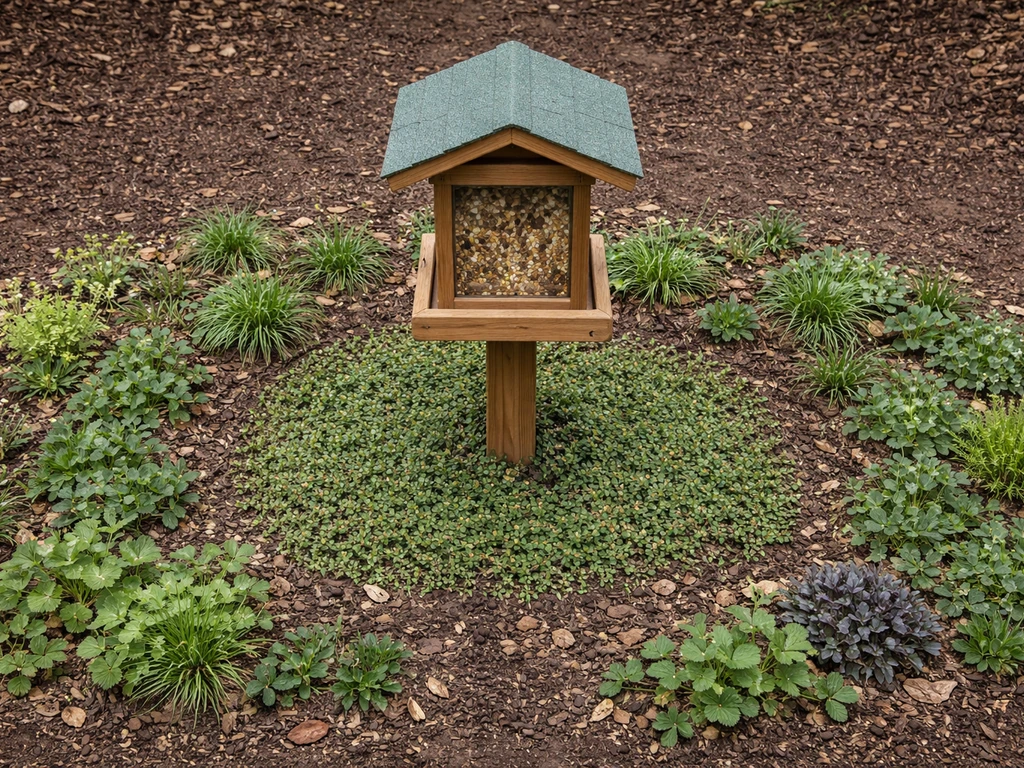
What you're seeing under your bird feeder is most likely one of five things: weeds or grass sprouting from spilled seed, moss or algae spreading across damp ground, mushrooms or bird's nest fungi breaking down wet organic debris, a dark crusty mat of moldy hulls and droppings, or just a clump of old seed that looks like it's growing but isn't. If you want to stop this kind of growth from starting again, make sure you know what to put in a bird feeder and how to keep it from spilling under your bird feeder. Identifying which one you're dealing with takes about two minutes if you know what to look for, and most fixes are things you can start today.
What Is Growing Under My Bird Feeder? Causes and Fixes

Eleanor Hartwick
29 Apr 2026
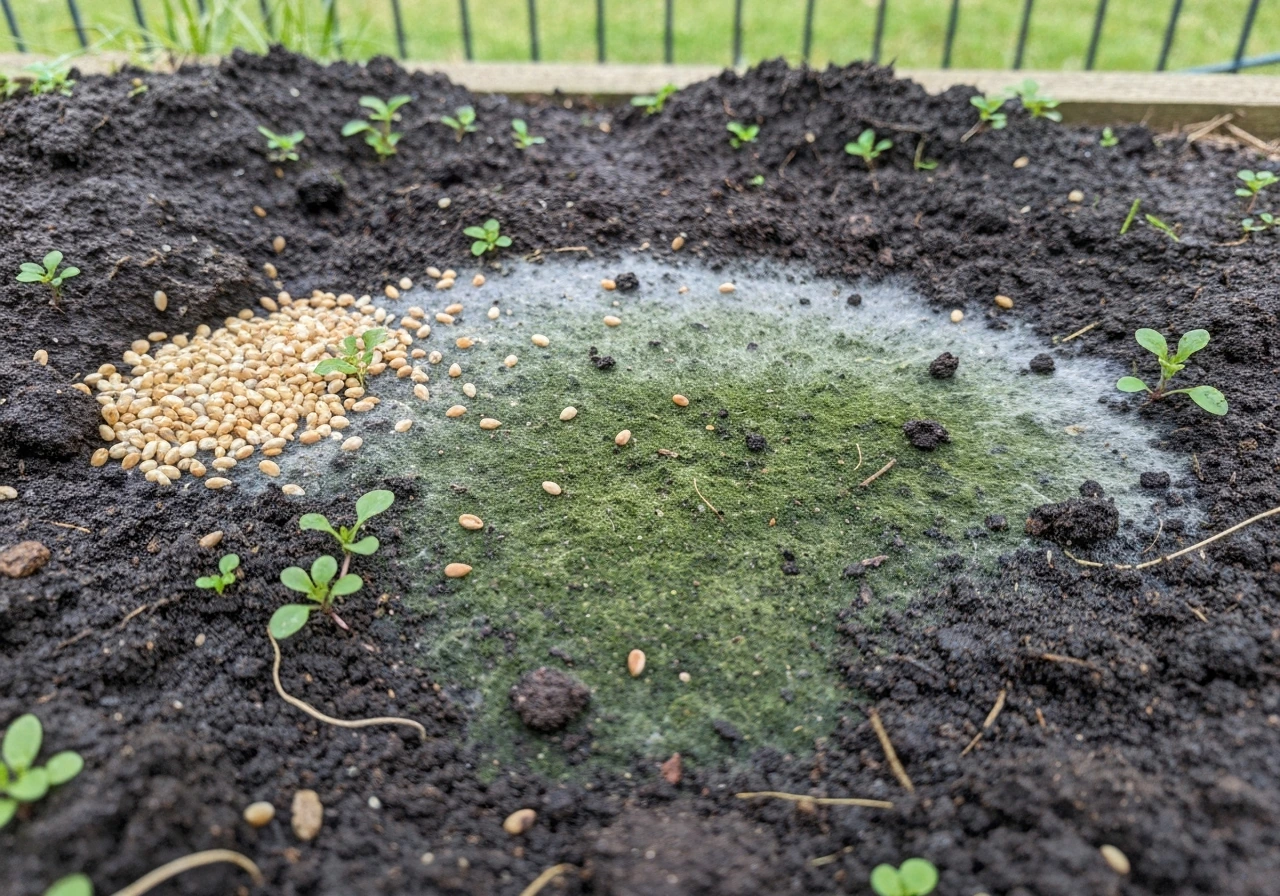
What's actually growing down there
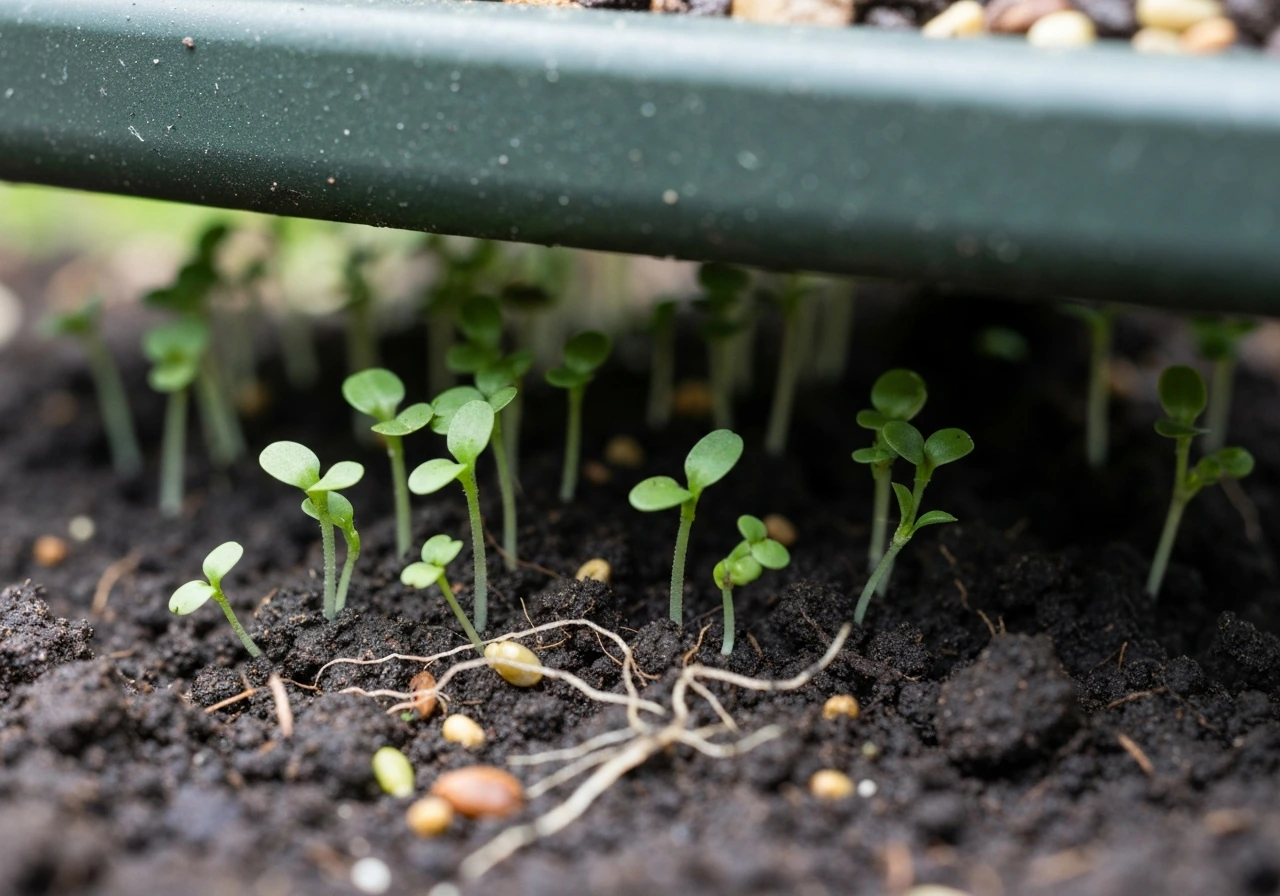
Most under-feeder growth falls into a handful of categories. Knowing which one you're dealing with points you straight to the cause and the fix.
- Grass and weeds: The most common situation. Millet, sunflower, safflower, and other seeds that hit the ground can germinate and sprout, sometimes within days in warm, moist soil. You'll see actual green seedlings, often in a rough circle matching the feeder's drip zone.
- Moss: A low, dense, velvet-like green or yellow-green mat that spreads slowly across the soil surface, often in patches that follow shade and moisture. Doesn't look like individual plants.
- Algae: A thin, slimy or powdery green, grey, or black film on hard surfaces like concrete, pavers, or plastic trays. Feels slick when wet.
- Mushrooms and bird's nest fungi: Small, cup-shaped or umbrella-shaped growths, often appearing overnight after rain. Bird's nest fungi look like tiny egg-filled cups (usually 5–15mm across) and are extremely common in mulched areas with wood-based debris. They're most often seen in damp, shady conditions.
- Moldy seed mat: Not really 'growing' in the plant sense, but a dark, matted, sometimes fuzzy layer of decomposing seed hulls, bird droppings, and wet debris. This one needs the most immediate attention.
How to identify the culprit in a few minutes
Walk up to the spot and crouch down for a close look. Color and texture tell you most of what you need to know.
If it's green with distinct stems or leaves coming out of the soil, you're looking at germinated seed. Check if the seedlings match the seed you're using. Sunflower seedlings have two broad oval leaves; millet sprouts look like thin grass blades. If the growth is green but completely flat and mat-like with no individual plant structure, that's moss. If it's slimy and sitting on top of a hard surface rather than rooted in soil, it's algae. If you see bear on top of bird feeder materials in the same spot, it helps confirm you have algae rather than something rooted in soil on top of a hard surface.
For fungal growth, look for small cup or umbrella shapes. Bird's nest fungi are particularly easy to spot once you know what they are: tiny brown or grey cups, about the size of a thimble, often with small disc-shaped 'eggs' (called peridioles) inside. They tend to appear in clusters on mulch or wood-chip ground cover after wet weather. Rain actually triggers them to eject those spore packets, which is how they spread. If you see larger mushrooms with caps and stems, that's a different fungal species breaking down organic matter in the soil below.
A dark, wet, crusty patch that doesn't have any plant or fungal structure is almost certainly a matted accumulation of seed hulls, droppings, and debris. Press it gently with a gloved finger. If it's soft, wet, and smells musty or sour, you're dealing with active mold. That's the one to treat as a priority.
| What you see | Most likely cause | Urgency |
|---|---|---|
| Green seedlings with leaves/stems | Germinated spilled seed | Low — cosmetic issue |
| Flat velvet-like green mat on soil | Moss | Low — mostly aesthetic |
| Slimy/powdery film on hard surfaces | Algae | Low-medium — slipping hazard |
| Tiny cup-shaped growths on mulch | Bird's nest or other fungi | Low — harmless decomposers |
| Dark matted wet layer, musty smell | Moldy seed/debris buildup | High — health risk |
| Any of the above after long wet weather | Combination of moisture + organic matter | Medium-high — clean up promptly |
Why it's happening right here, right now
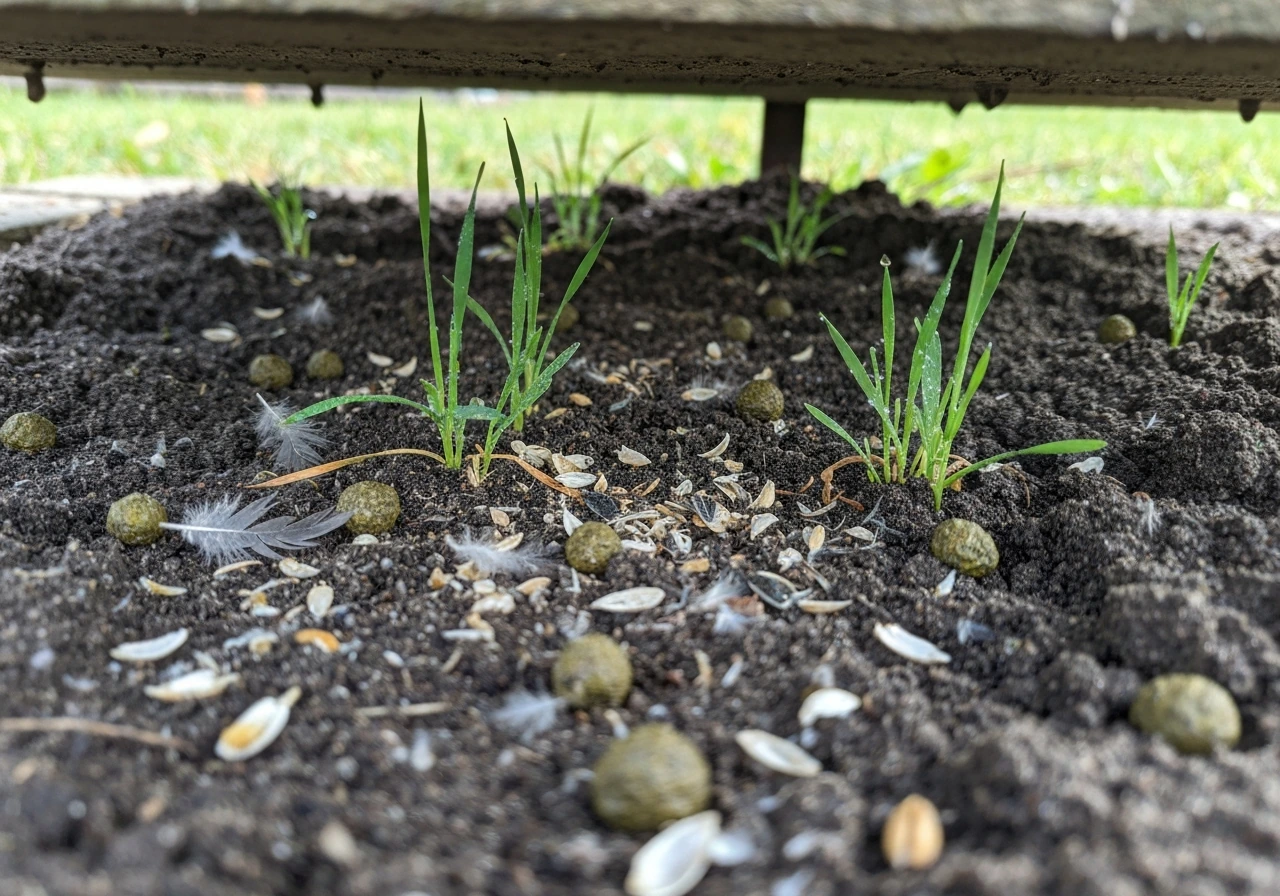
Bird feeders create a very specific micro-environment: a constant supply of organic material (seed, hulls, droppings, feathers) landing in the same spot, often under a structure that drips water and blocks sunlight. That combination is ideal for almost everything that grows in this list.
Seed spillage is the primary driver of weed and grass growth. Every time a bird grabs a seed, several more hit the ground. Hulls pile up and create a rich, moist layer of organic matter that's perfect for both plant germination and fungal decomposition. If you're using a mix with a lot of millet or other small seeds that birds toss aside while hunting for their preferred food, you'll see even more spillage than usual.
Persistent moisture makes everything worse. Feeders drip when it rains, condensation runs down the pole or post, and the debris layer underneath holds water like a sponge. If your feeder is in a low spot, under a roof overhang, or in a naturally shady area where the sun never fully dries the ground, you're going to see faster and more aggressive growth of moisture-loving things like moss, algae, and fungi.
Shade is a major factor that's often overlooked. Most garden plants need some sun to outcompete moss and algae, but those two thrive in low light. If your feeder sits under a tree canopy or on the north side of a structure, the ground underneath rarely dries out and rarely gets the UV exposure that would slow algae down.
Soil type matters too. Compacted clay or poorly draining soil holds water near the surface rather than letting it soak through, which accelerates surface growth. Sandy or well-drained soil tends to produce less of this kind of problem. If you have a ground-level feeder or a low tray, water pools there even more easily.
What you can do right now
Start with a clean-up. In India, the safest approach is to start with clean, dry seed and a well-positioned feeder, then choose what to put in the bird feeder based on the birds you’re attracting and local weather what to put in bird feeder india. Put on gloves (nitrile or rubber, not fabric) before you start handling debris, especially if there's any visible mold or if you're in a high-humidity environment. Scoop up the accumulated seed hulls, droppings, and any matted debris using a dustpan or trowel and bag it in a sealed trash bag. Don't compost moldy seed material.
If you have a tray or catch pan under the feeder, empty it and scrub it with a 9:1 water-to-bleach solution, then rinse it thoroughly and let it dry completely before putting it back. Do the same for the feeder itself if it has any wet seed, visible mold, or dark residue inside. Wet seed in the feeder should go straight into the trash, not back into the bag of fresh seed.
For the ground surface, scrape off visible moss or algae with a stiff brush or garden hoe. If it's growing on pavers or concrete, a dilute bleach solution (same 9:1 ratio) applied with a brush and rinsed off works well. For soil areas with weed seedlings, hand-pull them now before they establish deeper roots. For bird's nest fungi on mulch, you can remove them physically, but keep in mind they're harmless decomposers doing useful work in your mulch layer.
Reduce spillage today by checking how much seed is in the feeder. If it's overfilled, birds will toss more onto the ground while foraging. Fill to about two-thirds capacity so birds can access food without scattering as much. If you're using a mix with fillers that your birds reject, switching to a cleaner single-species seed (like straight black oil sunflower) dramatically reduces the amount that ends up on the ground. If you want to keep orioles happy too, you'll also need to know what to put in an oriole bird feeder what do you put in an oriole bird feeder.
Stopping it from coming back
Feeder placement is the biggest long-term lever you have. Moving the feeder to a sunnier, better-drained location makes an enormous difference. Sun dries out the ground between rain events, which is the single most effective thing you can do to prevent moss, algae, and fungal growth. It also makes spilled seed less likely to germinate successfully.
A physical ground barrier under the feeder area is worth installing if you're tired of fighting this repeatedly. Coarse gravel or pea gravel (a few inches deep) lets water drain through quickly, doesn't hold the organic layer the same way soil does, and is easy to rake clean. If you want a simple, low-mess solution, use a ground layer like coarse gravel or pea gravel beneath the feeder so water drains and seeds do not sit as long. Hardware cloth or weed fabric under the gravel keeps weeds from pushing through from below. Some people use a designated mulch zone, which works reasonably well, though mulch does support fungal activity, so it's not ideal if mushrooms are your main concern.
A seed catcher tray attached directly under the feeder catches most of the spillage before it hits the ground, which is the most direct way to address the root cause of almost all under-feeder growth. These trays also shelter seed from rain, which reduces the amount of wet, rotting seed ending up in your soil. Clean the tray every few days during wet weather.
MSU Extension recommends periodically rotating feeder locations in your yard even when there's no visible problem, because it prevents the long-term buildup of debris, pathogens, and parasites in one concentrated spot. This is genuinely good practice, and most birds will follow a feeder that's moved gradually over a few weeks.
For a realistic maintenance schedule, aim to sweep or rake under the feeder at least once a week, do a full feeder scrub with the bleach-and-water solution every two to four weeks (more often in hot, humid weather), and do a deeper ground clean at the start and end of each season. That's honestly not much time, and it prevents most of the problems in this article entirely.
If you're thinking about what to plant in and around the feeder zone, there are low-maintenance ground covers that tolerate partial shade, hold up to foot traffic and droppings, and don't give weeds a foothold. For more ideas on what to plant under bird feeders, focus on ground covers that handle droppings and partial shade without staying soggy. That's worth exploring as a longer-term landscaping strategy, especially if the area under your feeder looks consistently rough.
When the growth under your feeder is actually a safety concern
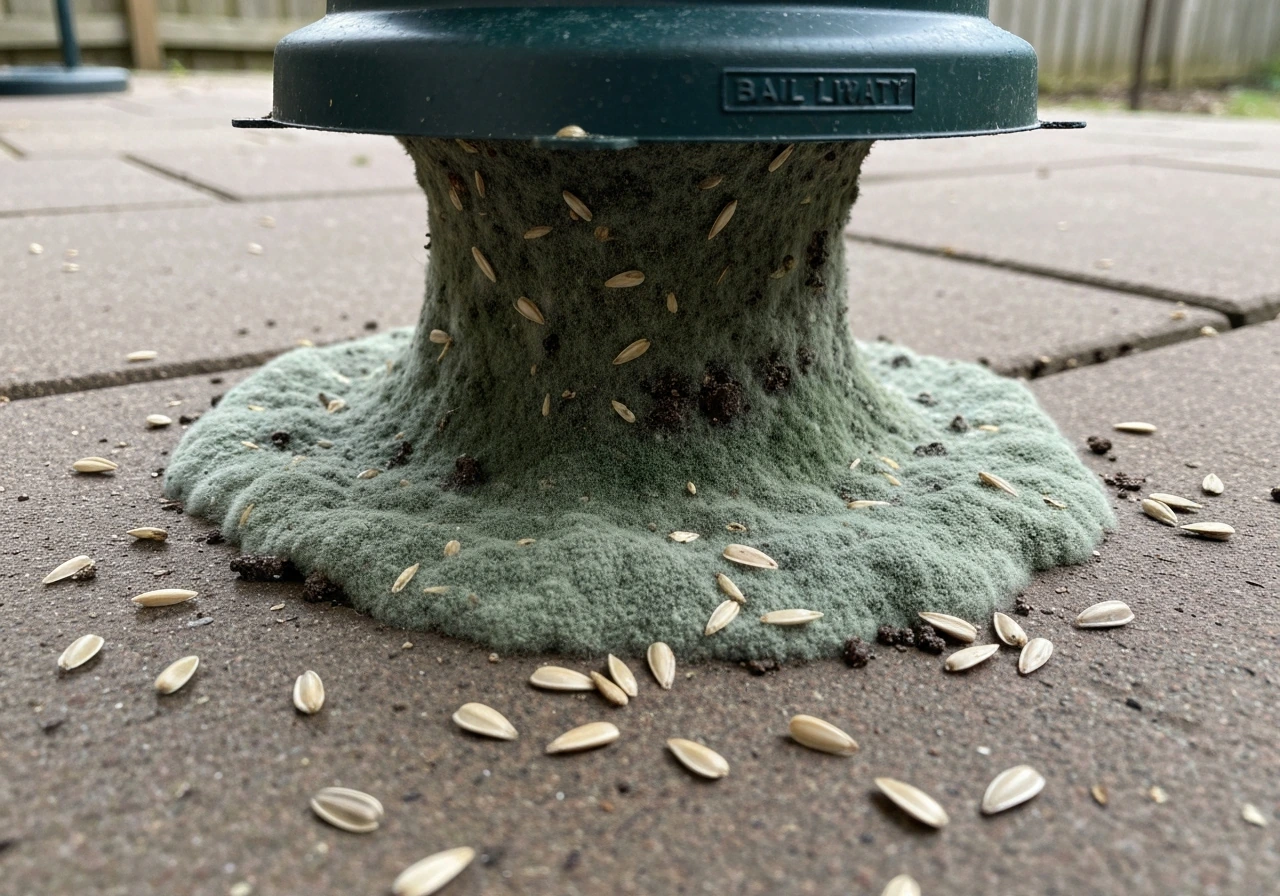
Most of what grows under a bird feeder is a nuisance, not a genuine hazard. But there are situations where you should treat it as a health issue, not just a cleanup chore.
Mold is the main risk
A thick, fuzzy, actively moldy mat of decomposing seed and droppings can release mold spores into the air when you disturb it. The EPA and CDC both note that mold exposure can irritate the eyes, skin, nose, throat, and lungs even in people without allergies. For anyone with asthma, respiratory conditions, or a compromised immune system, the risk is meaningfully higher. People in those groups should either have someone else handle the cleanup or wear an N95 respirator and gloves, and work outdoors on a non-windy day to avoid inhaling disturbed material.
Don't use a leaf blower or dry brush to clean up heavy moldy debris. That launches spores into the air at exactly the level you breathe. Wet the debris lightly first to suppress dust and spores, then scoop it into a bag. If the ground underneath has visible mold embedded in the soil itself (not just surface debris), that soil should be removed, not just turned over.
Pests, pets, and children
Seed accumulation under feeders attracts rodents. If you're seeing mice or rats near the feeder area, the ground debris is almost certainly a contributing factor. Cleaning up spilled seed promptly and using a catch tray removes the attractant. Don't let seed pile up for more than a few days, especially near structures where rodents could nest.
Pets and small children who spend time near the feeder area can come into contact with moldy debris, droppings, or fungi. Most bird's nest fungi and common garden mushrooms are not toxic, but some mushroom species can be harmful if ingested, and it's not always easy to tell them apart without expert identification. If you can't confidently identify what's growing, remove it rather than leaving it in reach of a dog or child. And if there's visible mold or heavy fungal growth and you have young children or pets regularly in that area, treat the cleanup as the priority it is.
What not to do
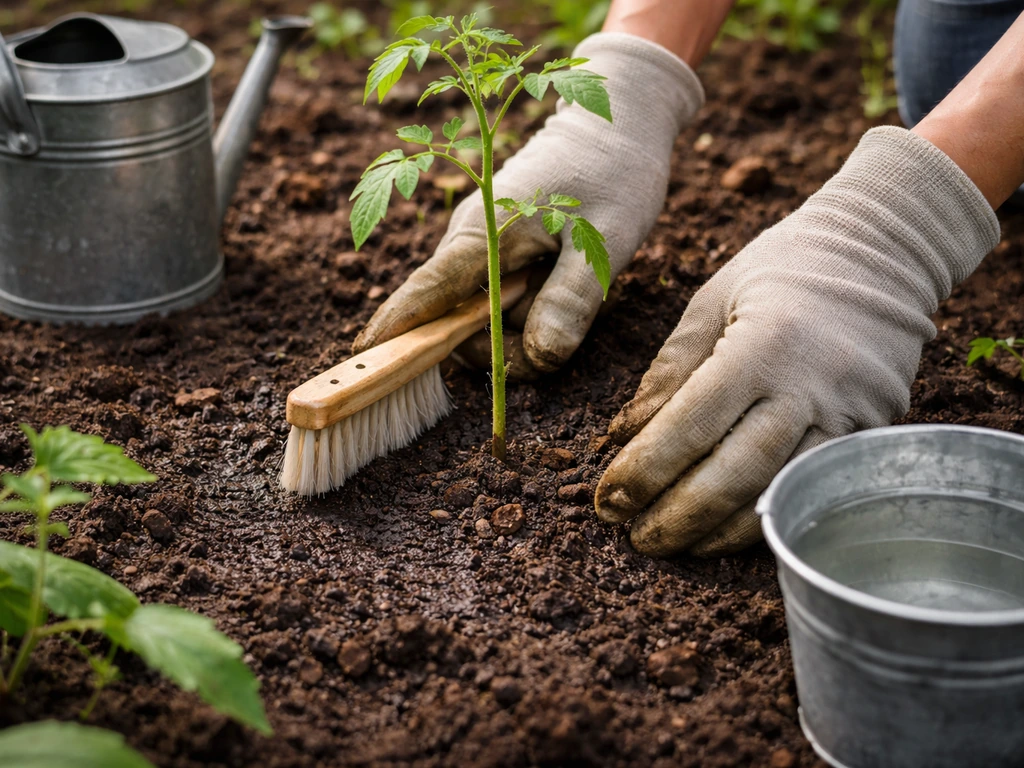
- Don't use undiluted bleach directly on soil or plant roots. It kills beneficial soil organisms and can harm nearby plants.
- Don't use herbicides or broad-spectrum pesticides under a feeder. Birds forage on the ground in that zone, and pesticide exposure is a real risk to them.
- Don't just cover the growth with fresh mulch or soil. That traps moisture and organic material and makes the problem worse underground.
- Don't ignore a musty smell or heavy black/green fuzz assuming it will dry out on its own. Active mold spreads and the spore load increases until you remove it.
- Don't compost moldy seed, droppings, or feeder debris. Bag it and put it in the trash.
If you've done a thorough cleanup and the mold or fungal growth keeps coming back heavily within a week or two, it's worth reconsidering the feeder's location entirely. Some spots are just structurally prone to this: permanently shaded, poorly drained, under a heavy drip line. Moving the feeder a few meters to a sunnier, better-drained spot often solves a problem that cleaning alone never fully fixes.
FAQ
Is “growing under my bird feeder” always weeds or fungus? How can I tell fast?
Look for whether you have individual plant stems (seedlings), a flat, velvety green layer with no roots (moss), a slick film on hard surfaces (algae), cup-shaped tiny fungi (bird’s nest fungi), or a dark wet patch with no clear structure (matted hulls and active mold). If you can’t confidently match a category, treat it as potentially moldy debris and clean with gloves and sealed bag disposal.
Can I water it or spray it to make it stop growing?
Avoid hosing it down or spraying with extra water. More moisture usually feeds moss, algae, and fungal growth and can spread spores or dissolve residue into the soil. Instead, scrape or brush off growth after the area is dry, then dry the site as much as possible by improving sun and drainage.
What should I do with the bird seed that got wet in the feeder or under the feeder?
Discard it, do not mix it back with your clean bag of seed. Wet seed can become moldy quickly, and reinserting it repeats the contamination cycle. Bag it and seal it, and if it’s visibly moldy, don’t compost it.
Is it safe to compost the moldy seed hulls and droppings?
No. The safest approach is to bag and trash moldy or heavily fungal debris. Composting may not reach temperatures that reliably suppress mold and pathogens, especially when the material is moist and concentrated under a feeder.
How often should I clean and disinfect the catch tray or tray under the feeder?
During wet or humid weather, empty and rinse more frequently, for example every few days, because algae and mold establish fast on retained moisture. Scrub with a bleach-and-water solution, rinse thoroughly, and let it fully dry before refilling, since a damp tray restarts growth quickly.
Will moving the feeder to sunnier spot always fix it?
It resolves most recurring moss, algae, and fungi, but not all. If the ground stays compacted or water pools, you may still need better drainage (like coarse gravel) or a seed catcher tray. Also consider the feeder’s drip line, if rainwater continuously runs from the structure onto the same spot.
Is bird’s nest fungus dangerous? Should I remove it?
Bird’s nest fungi are typically harmless as decomposers, they help break down mulch and wood-chip debris. If you have mold sensitivity or very young children or pets that access the area, removal is still a good idea for safety. Otherwise, physical removal and keeping the ground drier usually matter more than panic.
What’s the safest way to clean up active mold under the feeder?
Wear gloves, work outdoors on a calm day, and avoid dry brushing or using a leaf blower. Lightly wet the debris first to reduce airborne spores, scoop it into a sealed bag, and remove any embedded moldy soil rather than turning it over.
I keep seeing “black crust” under the feeder. Is that always mold?
A dark wet crust without stems usually is matted hulls, droppings, and debris, but if it is soft, smelly, and actively wet, it is likely active mold. Test by gently pressing with a gloved finger, if it is wet and musty, prioritize it as mold and improve drainage and sun right away.
Why does the problem keep coming back even after cleaning?
Common reasons include persistent shade, a feeder location with ongoing drips, compacted or poorly draining soil, seed mix with high spillage, and not cleaning the seed catcher tray if one exists. Also check if other feeders or ground feeding are adding extra seed and hulls to the same spot.
Should I switch seed types if I’m trying to reduce under-feeder growth?
Yes, seed choice can reduce spillage and germination. Using a cleaner mix your birds fully consume reduces dropped hulls. Straight black oil sunflower often creates less waste than mixes with small seeds that birds discard while foraging.
How can I reduce rodent attraction from spilled seed?
Empty and clean the area under the feeder quickly, use a seed catcher tray, and avoid letting seed accumulate for more than a few days. Also check nearby hiding spots under decks and dense shrubs, since rodents may still use them even if you improve spill control.
Are there any situations where I should stop using the feeder until the area is fixed?
If you have thick, actively moldy growth and anyone in the household has asthma, respiratory disease, or a compromised immune system, pause use of that location until thorough cleanup is done safely. Similarly, if the growth returns heavily within a week or two, move the feeder rather than repeatedly cleaning the same perpetually damp spot.
Next Article
What to Plant Under Bird Feeders: Best Options
Native-friendly groundcovers and low plants for under feeders, plus what to avoid and quick seasonal care tips.