Feeding birds in your backyard genuinely helps individual birds survive harsh winters, supports local biodiversity, and connects people to nature in ways that have real conservation ripple effects. Research backs this up. But the same feeders that help chickadees through a cold snap can also spread disease, attract predators, and shift local bird communities in ways you might not intend. This guide works through both sides honestly, covers the practical setup and maintenance decisions that make the biggest difference, and gives you seasonal and species-specific guidance so your feeder does more good than harm.
Bird Feeding Benefits: A Practical Guide for Homeowners & Conservation Tips

Eleanor Hartwick
21 Jul 2026
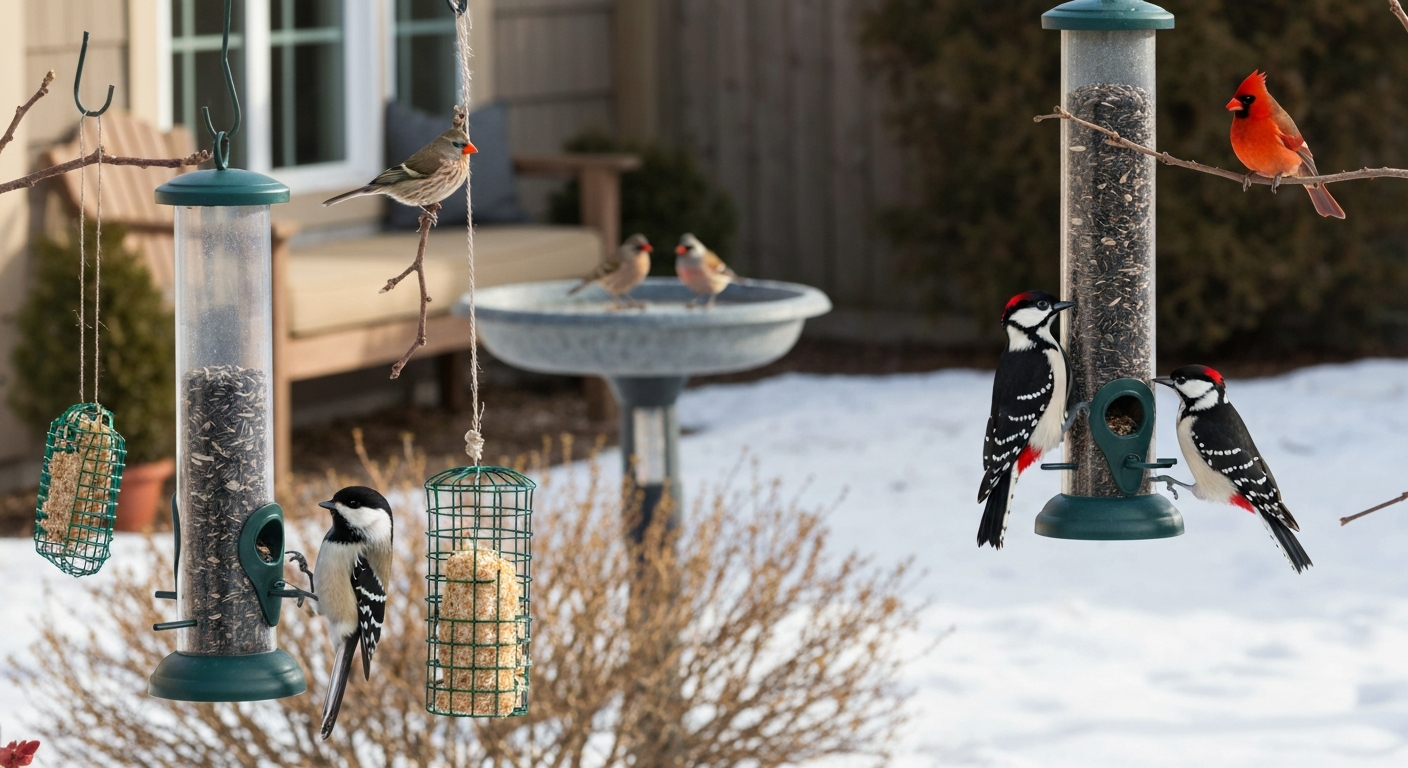
What this guide covers and who it's for
Whether you've just hung your first tube feeder or you've been running a backyard feeding station for years, you've probably asked some version of the same question: is this actually good for the birds? I hear it constantly. This article is for homeowners, backyard birders, and community volunteers who want a straight, evidence-based answer. It covers definitions, documented benefits, real risks, best-practice maintenance, seasonal timing, food and species matching, predator management, and a quick note on local rules. The goal isn't to tell you bird feeding is universally great or secretly harmful. It's to give you enough grounded information to make decisions that work for your yard, your region, and the birds you're trying to help.
What 'bird feeding' means, and is 'bird feeder' one word?
Bird feeding, at its simplest, is the practice of providing supplemental food to wild birds, typically at or near human dwellings, to support their nutrition, attract them for observation, or assist them during periods of scarcity. The term covers everything from tossing bread crusts on a balcony to running a multi-station garden feeding operation with species-specific seed mixes, suet cages, and heated water baths. The meaning of bird feeding in a community or urban context (such as questions that come up around San Francisco bird feeder ordinances or neighborhood guidelines) can also carry a regulatory dimension, referring to any deliberate provisioning of wild birds in a shared or public space. For a quick note on spelling and usage, see the entry 'is bird feeder one word', which explains that the two-word form 'bird feeder' is the standard choice in formal writing.
As for the spelling: the standard form is two words, 'bird feeder.' Merriam-Webster lists 'bird feeder' as the primary headword, with 'birdfeeder' and 'bird-feeder' as accepted variants. Oxford entries also use 'bird feeder' as the headword. So if you've seen all three spellings and wondered which is correct, the two-word version is the safest choice in formal or published writing, though all three are understood and used in practice.
Why people feed birds in the first place
The motivations are more varied than you might expect, and they shape the kind of feeding setup that makes sense. Broadly, I'd group them into three camps.
- Homeowners and casual gardeners: enjoy wildlife in the yard, want to attract color and movement, or feel a simple desire to help local birds, especially during cold snaps or storms.
- Backyard birders and hobbyists: actively track species, participate in citizen-science programs like Cornell Lab's Project FeederWatch, and use feeders as a tool for systematic observation and data contribution.
- Community volunteers and urban wildlife groups: operate feeding stations in parks, community gardens, or shared spaces, often with a conservation or education goal in mind, and sometimes navigating local ordinances about wildlife provisioning.
Each group has slightly different needs and risk tolerances. A backyard birder running tube feeders in a suburban yard has different concerns than a volunteer managing a communal platform feeder in a city park. The evidence-based guidance below applies to all three, but I'll flag where scale or context changes the calculation.
Ecological benefits backed by research
The most robust ecological finding from long-term monitoring is that gardens with feeders support measurably higher abundance and diversity of feeder-using bird species compared to unfed gardens. A 40-year dataset from the British Trust for Ornithology's Garden Bird Feeding Survey, published in Nature Communications, found that bird community composition in British gardens was directly associated with long-term feeding activity. Feeder-using species increased in fed gardens; species that don't use feeders did not. That's a meaningful ecological shift, and it tells you that feeders genuinely reshape local bird communities, not just attract passing visitors.
Supplemental feeding also extends birds' effective foraging range. Faecal metabarcoding studies have shown that feeder-visiting birds don't just eat what's in the feeder. They use it as an energy subsidy that allows them to forage more widely, which has landscape-level implications for seed dispersal, insect predation, and inter-species competition well beyond your immediate yard. This is worth knowing because it means the effects of your feeder, both positive and potentially disruptive, travel further than you can directly observe.
Direct welfare benefits for birds
The strongest individual welfare evidence comes from winter supplemental feeding studies. Field experiments by Brittingham and Temple in the early 1990s showed that Black-capped Chickadees with access to winter feeders had higher overwinter survival rates than those without access, particularly during harsh winters. This wasn't a marginal effect. It was a clear survival benefit under conditions of genuine energetic stress.
A 2014 meta-analysis of experimental food supplementation studies found that supplemental feeding frequently increases reproductive investment in birds, including larger clutch sizes and higher fledgling counts. The effect wasn't universal, and longer-term post-supplementation outcomes were variable by species and context, but the short-term reproductive boost was consistent enough across studies to be taken seriously.
One concern that comes up constantly is dependency: will birds become so reliant on your feeder that they can't survive without it? The evidence is more reassuring than alarming here. Short-term feeder-removal experiments generally find that birds switch back to natural food sources without population-level harm. That said, abrupt removal during a hard freeze or a prolonged cold snap can hurt individual birds that have been relying on your station heavily. The practical upshot is to plan seasonal changes deliberately rather than just stopping cold (no pun intended), and to taper down rather than remove feeders overnight in mid-January.
Educational and community benefits
Bird feeders are one of the most effective entry points into nature observation, especially for people who don't have easy access to wild habitats. For children, they create a low-barrier, repeatable way to observe animal behavior, identify species, and develop curiosity about ecology. For adults in urban settings, a feeder at a window or on a balcony can provide the kind of daily wildlife contact that research consistently links to improved wellbeing and reduced stress.
At the community and scientific level, backyard feeders are the backbone of citizen-science programs. Cornell Lab's Project FeederWatch, the RSPB's Big Garden Birdwatch, and the BTO's Garden BirdWatch collectively generate millions of species observation records per year. This data is used in peer-reviewed research, population monitoring, and conservation planning. When you track what visits your feeder and report it, you are contributing to a monitoring network that no government agency could replicate on its own. That's not a small thing.
Conservation outcomes at scale
The conservation case for bird feeding is strongest when you look at its role in maintaining urban and suburban bird populations that would otherwise lose habitat to development. Feeders help sustain species in fragmented landscapes between patches of natural habitat, functioning as energy stepping-stones that support movement and breeding. The BTO's long-term data is particularly compelling here: it shows not just that individual birds benefit, but that entire local populations of feeder-using species have been maintained or increased in regions where garden feeding is widespread.
There's also an indirect conservation pathway through engagement. People who feed birds are measurably more likely to participate in conservation programs, support habitat protection policies, and take steps like planting native vegetation in their yards. The feeder becomes a gateway. Whether that translates directly to species-level conservation outcomes is harder to quantify, but the connection between personal nature contact and pro-conservation behavior is well established in environmental psychology research.
Risks and environmental impacts you need to know about
This is the part most bird-feeding enthusiast resources gloss over, and I think that's a mistake. The risks are real, they're documented, and most of them are preventable with the right practices. Here's a clear-eyed overview of the main ones.
Disease transmission
This is the most significant documented harm associated with bird feeders. Mycoplasma gallisepticum, the bacterium that causes house finch conjunctivitis, has been experimentally shown to spread faster at higher feeder densities, and epidemiological studies have linked specific feeder types (platforms, hoppers, and tubes) to higher transmission rates in house finch populations. The mechanism is straightforward: birds sharing a surface or container share pathogens, and feeders concentrate birds in ways that don't occur naturally.
Finch trichomonosis, caused by the protozoan Trichomonas gallinae, has been directly linked to finch mortality at scale in the UK, with platform and flat-surface feeders identified as higher-risk because food and water pool on them, increasing contact-based transmission. The BTO associates post-breeding months (May through October) with elevated outbreak risk and advises pausing seed and peanut feeding during this period specifically to reduce trichomonosis spread.
Salmonella is another documented concern. CDC and state partners documented a 2020–2021 human Salmonella Typhimurium outbreak genetically matched to strains isolated from feeder‑visiting wild songbirds (Human Salmonellosis Outbreak Linked to Salmonella Typhimurium Epidemic in Wild Songbirds, United States, 2020–2021, CDC/EID) Human Salmonellosis Outbreak Linked to Salmonella Typhimurium Epidemic in Wild Songbirds, United States, 2020–2021 — CDC/EID. CDC investigations of a 2020-2021 outbreak linked human Salmonella Typhimurium cases to strains genetically matching those isolated from feeder-visiting songbirds, a reminder that feeder hygiene has implications not just for birds but for the people who handle feeders and birdseed.
Predation at feeders
Feeders concentrate birds in predictable locations, which makes them easy targets for predators. Domestic cats are the most significant anthropogenic threat: a synthesis by Loss et al. (2013) in Nature Communications estimated that free-ranging domestic cats kill between 1.3 and 4.0 billion birds annually in the United States alone. If you're running a feeder near a neighborhood with outdoor cats, you're potentially serving meals to predators as much as to birds. Published studies on colorful collar-covers and bells show reductions in prey brought home ranging from roughly 30 to 80 percent depending on the device, so if you have an outdoor cat or your neighbors do, these are worth raising.
Nuisance wildlife and nonnative seeds
Feeders don't selectively attract only the birds you want. Rats, squirrels, raccoons, and bears in some areas are reliably drawn to seed spills and accessible feeders. Beyond nuisance, this can create genuine safety concerns and conflicts with neighbors. Nonnative seed mixes are a separate issue: many cheap birdseed blends contain seeds from plants not native to your region, and spilled seed can establish invasive plant species in your yard or nearby habitats. Choosing regionally appropriate seed mixes and using feeders with catch trays or low-waste designs reduces this risk considerably.
Ecosystem and community-level changes
The same BTO research that shows feeders benefit feeder-using species also shows that supplementary feeding can reshape urban bird communities in ways that favor a subset of adaptable, feeder-tolerant species over others. If feeding consistently advantages a few dominant species, it could reduce ecological diversity over time, even while increasing raw bird numbers. This isn't an argument against feeding, but it is an argument for using species-specific feeders and food to attract a broader range of visitors rather than defaulting to cheap mixes that primarily benefit pigeons and house sparrows.
What to feed and which birds it attracts
Matching food to species is one of the highest-leverage decisions you can make. It reduces waste, cuts your cost, and directly shapes which birds show up. Here's a practical reference.
| Food type | Target species | Feeder type | Seasonal notes |
|---|---|---|---|
| Black-oil sunflower seed | Chickadees, finches, nuthatches, cardinals, sparrows | Tube or hopper feeder | Year-round; highest value, most versatile |
| Nyjer (thistle) seed | Goldfinches, pine siskins, redpolls | Nyjer sock or narrow-port tube feeder | Best Oct–Apr when natural seeds are scarce |
| Suet / fat cakes | Woodpeckers, nuthatches, starlings, wrens | Wire suet cage | Year-round; essential in winter; avoid soft suet in summer heat |
| Peanuts (whole or halved) | Jays, woodpeckers, nuthatches, titmice | Wire mesh peanut feeder | BTO advises pausing May–Oct to reduce trichomonosis risk |
| Mealworms (live or dried) | Robins, bluebirds, wrens, thrushes | Open dish or platform with edges | Year-round safe; especially valuable during breeding season |
| White millet | Juncos, sparrows, doves, towhees | Ground feeder or low platform | Fall and winter; scatter or use low tray |
| Fruit (oranges, raisins) | Orioles, mockingbirds, catbirds, thrushes | Open spike or dish feeder | Spring and summer during migration and breeding |
| Nectar (4:1 water to sugar) | Hummingbirds | Hummingbird feeder (red ports) | Spring through fall; clean every 2–3 days in heat |
A few things worth noting from this table: nyjer seed loses oil content and palatability within weeks, so buy in small quantities and replace it if birds stop visiting. Suet in summer can melt and go rancid quickly in hot climates, so switch to no-melt suet formulations or suspend feeding suet when temperatures consistently exceed around 32°C (90°F). And mealworms, which the BTO recommends continuing year-round, are one of the few foods that support insectivorous species that won't touch seeds.
Feeder types and placement
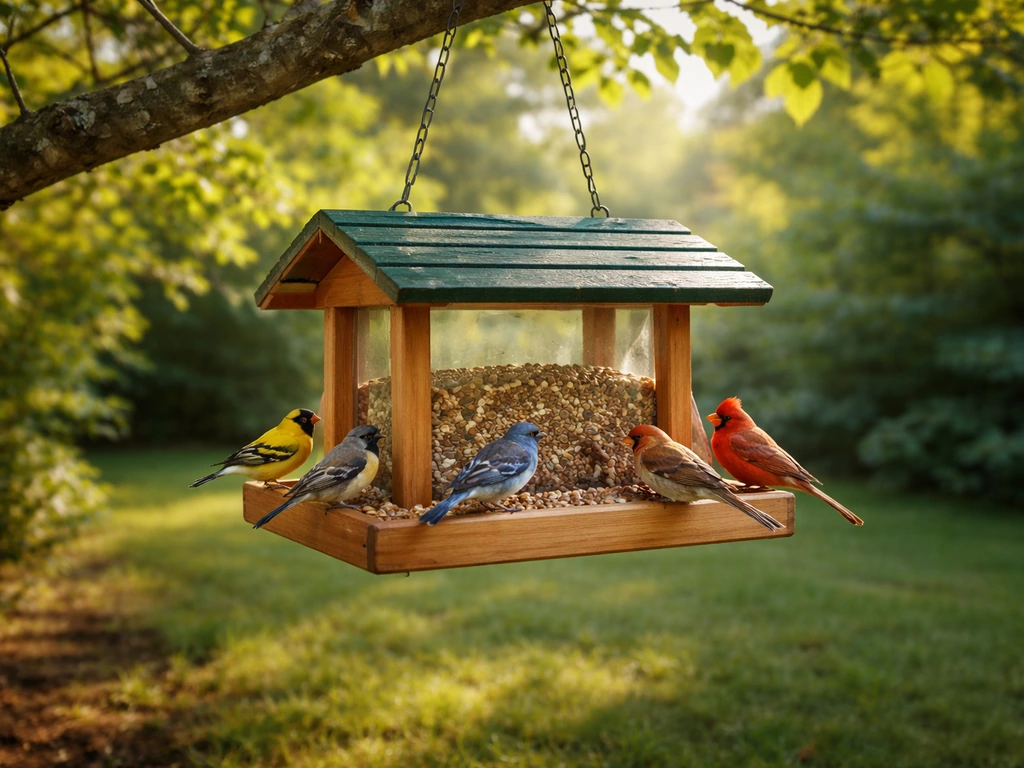
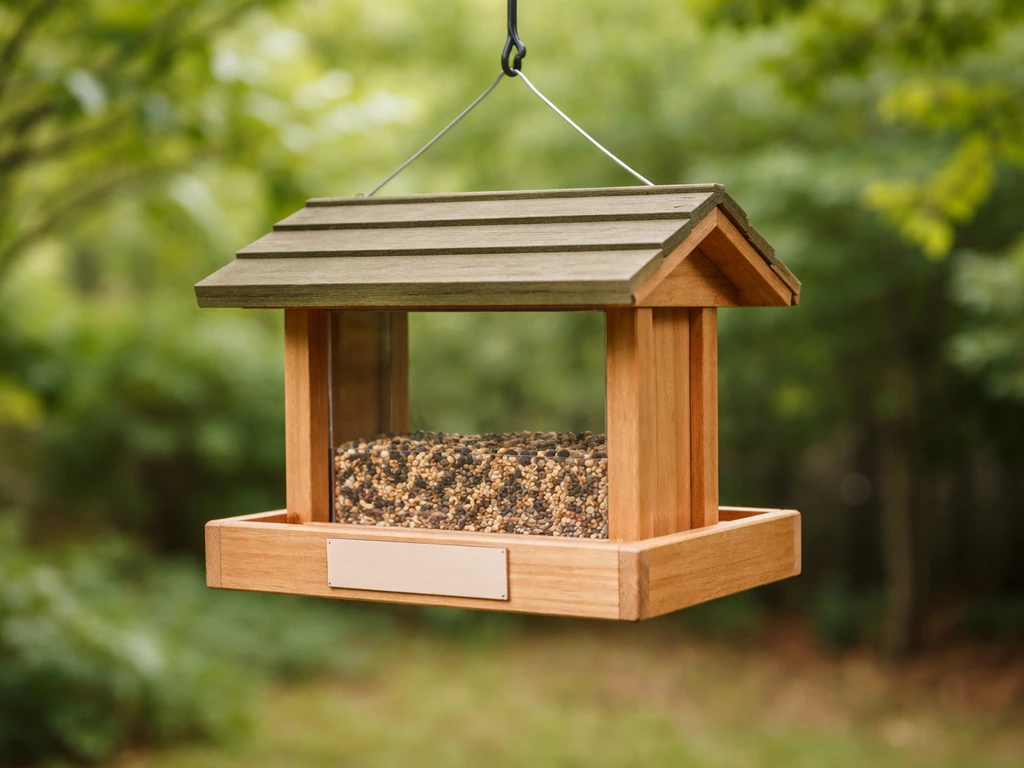
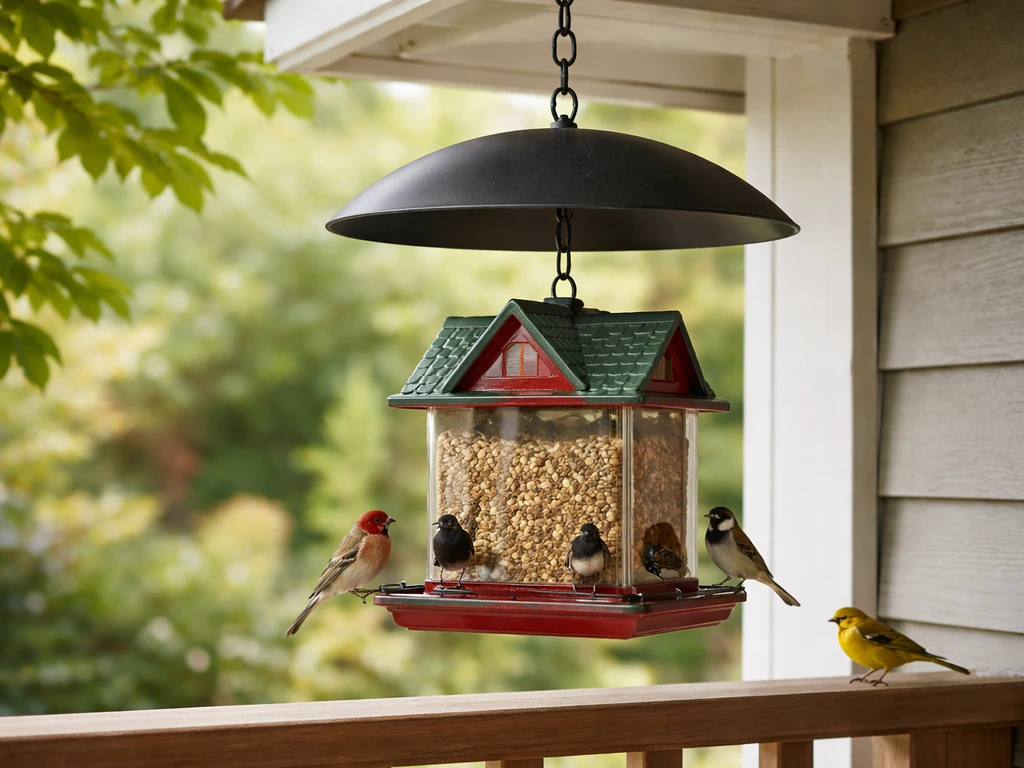
The type of feeder matters more than most people realize, both for disease risk and for which species you attract. Tube feeders with individual perch ports reduce the number of birds feeding simultaneously and limit surface contact, making them lower-risk for disease transmission than platform or hopper feeders. Wire mesh feeders for peanuts and sunflower seeds allow good airflow and drainage, which reduces mold buildup. Avoid flat or tray feeders for wet climates or year-round seed feeding: pooled water and accumulated droppings on flat surfaces are where trichomonosis and bacterial contamination concentrate.
For placement, the two most important considerations are window collision risk and predator access. Place feeders either within about 1 meter (3 feet) of a window or more than 10 meters (30 feet) away. In the 1–10 meter zone, birds build enough speed to cause fatal impacts. Close placement means birds can't accelerate to dangerous speeds; far placement means they have time to see the window clearly. For predator management, mount feeders on smooth metal poles with baffles rather than hanging them from tree branches where cats and squirrels can reach them. Keep the area beneath feeders clean to avoid attracting rats and raccoons.
Cleaning schedule and hygiene practices
This is probably the single most neglected aspect of bird feeding, and it's where most of the preventable disease risk lives. Here's the practical maintenance schedule I'd recommend, drawing on Cornell Lab and RSPB guidance.
- Seed feeders (tube, hopper): clean every two weeks minimum. Disassemble fully, scrub with hot water, and either run through a hot dishwasher or soak in a dilute bleach solution of up to 1 part bleach to 9 parts water. Rinse thoroughly and allow to dry completely before refilling.
- Platform and tray feeders: clean weekly or more often in warm, humid weather. These are higher-risk surfaces; if you use them, treat them as the most frequent maintenance priority.
- Hummingbird feeders: clean every 2 to 3 days in warm weather, every 5 to 7 days in cool weather. Rinse with hot water; avoid soap residue, which can harm hummingbirds. Replace nectar at every cleaning.
- Suet cages: rinse and check for rancidity weekly in summer. Replace suet before it softens significantly.
- Ground feeders and scatter areas: rake or sweep debris, seed hulls, and droppings at least weekly. Wet seed accumulations on the ground are prime vectors for Salmonella.
- Water baths and dishes: change water daily in warm months; scrub and rinse every 2 to 3 days. Stagnant water supports both disease organisms and mosquito breeding.
- If you observe sick birds at your feeder (lethargic, discharge around eyes, swollen joints): stop feeding immediately, clean all feeders thoroughly with the bleach solution described above, and keep feeders down for at least one week to allow birds to disperse and break the transmission chain.
Seasonal guidance: when to feed, when to pause
There is no single universal answer to whether you should feed year-round or seasonally. It depends on your climate, which species you're targeting, and your capacity to maintain feeders at the required hygiene standard. That said, some practical seasonal guidance holds broadly.
Winter feeding (November through April in temperate Northern Hemisphere regions) is when supplemental feeding has the strongest documented welfare benefit, particularly for resident species like chickadees, nuthatches, and finches during cold snaps. This is the period where the survival data is clearest. The BTO's current guidance (updated April 2026) specifically recommends offering seeds and peanuts November through April and pausing them May through October to reduce finch trichomonosis risk during post-breeding months, when outbreak risk is highest.
Spring and summer feeding has real value for different reasons: supporting breeding birds energetically, attracting migrant species with fruit and nectar, and providing mealworms for species rearing insect-dependent chicks. But this is also when disease risk peaks and when feeder hygiene demands the most attention. If you can't commit to more frequent cleaning during warm months, it is genuinely better to reduce or pause feeding rather than maintain a feeder that becomes a disease vector.
In bear country (much of the rural and suburban US), state wildlife agencies typically recommend taking feeders in from April through November to avoid habituating bears to human food sources. Check your state or regional wildlife agency guidelines specifically; in some areas, ordinances make it an offense to feed wildlife (including birds) in ways that attract bears.
Managing predators and nuisance wildlife
You can reduce predation risk at feeders meaningfully without eliminating cats from the neighborhood. The most effective structural approaches are placing feeders on baffled poles at least 1.5 to 2 meters high, keeping nearby shrub cover trimmed back to eliminate cat ambush points within about 3 meters of the feeder, and positioning feeders where birds have clear sightlines to approach and retreat. If you have an outdoor cat or a neighbor does, raising the colorful collar-cover and bell option is worthwhile: the published reduction in bird kills ranges from roughly 30 to 80 percent depending on the product.
For rats and squirrels, the key is controlling seed spill. Use feeders with integrated catch trays, avoid scattering seed on the ground, and switch to safflower seed or hot-pepper-treated seed blends that squirrels and rodents are less attracted to (birds don't respond to capsaicin, mammals generally do). Storing seed in sealed metal containers rather than plastic bins also dramatically reduces rodent attraction.
Local rules, ordinances, and what 'bird feeder' means in a community context
In most residential settings, feeding birds requires no permit and no formal approval. But there are real exceptions, and it's worth checking before you invest in a feeding setup. Some homeowner associations prohibit feeders or restrict their placement. Some urban jurisdictions have ordinances against feeding wildlife (including birds) in shared public spaces or on certain types of property, particularly where feeding has been linked to pest issues or conflicts with neighbors. In places like San Francisco, questions about what 'bird feeder' means in a regulatory sense often arise in the context of these kinds of neighborhood or park rules, where feeding wildlife in public spaces may be treated differently from feeding on private property. For a clear definition of what 'bird feeder' means under San Francisco rules, see San Francisco bird feeder meaning.
If you're a community volunteer running a feeding station in a park or communal garden, check with your city's parks or animal services department. National parks and many wildlife reserves explicitly prohibit supplemental feeding of wild birds on the grounds that it alters natural behavior and can spread disease across managed populations. In private residential settings, the main practical legal concern is usually about attracting nuisance wildlife (rats, bears, racoons) to a shared property, which can create liability. A clean, well-maintained, species-specific feeder setup is both better for the birds and less likely to create the kind of neighbor complaints that bring ordinances into play.
Troubleshooting common problems
If birds stop visiting a feeder that used to be active, the most common causes are: seed has gone stale or moldy (smell it; if it smells off, replace it), a predator has started staking out the area, the feeder needs cleaning, or natural food sources in the area have temporarily become more abundant. Track what changes when activity drops and you'll usually find the answer within a week of observation.
If you're seeing only one or two dominant species and want more diversity, the fix is almost always food and feeder specificity. A single hopper filled with mixed seed will primarily attract house sparrows and starlings. Add a narrow-port nyjer feeder for finches, a suet cage for woodpeckers, and mealworms in a shallow dish for robins and bluebirds, and you'll see the visitor list expand noticeably within days. Placement at different heights also helps: ground-feeding sparrows and juncos won't use the same station as woodpeckers working a tree-level suet cage.
If you're attracting more squirrels than birds, re-evaluate your feeder mounting and seed choices before buying a 'squirrel-proof' feeder. Many squirrel-proof designs are defeated quickly; a smooth metal pole with a cone baffle and safflower seed in the hopper is often more effective than any mechanism-based deterrent on the market.
FAQ
What is 'bird feeding' and is 'bird feeder' one word or two?
Definition and wording - Bird feeding: intentionally providing wild birds with supplemental food (seed, suet, nectar, mealworms, fruit) and/or water at a homeowner’s yard, community site, or public green space to support nutrition, observation, education, or conservation. It includes feeders, bowls, and managed water sources. - Wording: mainstream dictionaries and style guides list “bird feeder” as the standard two‑word noun (variants such as bird‑feeder or birdfeeder exist). Use “bird feeder” unless a house style requires otherwise.
What are the scientifically supported benefits of backyard bird feeding?
Concise, evidence‑backed benefits - Ecological / population effects: supplemental feeding increases local abundance and alters community composition by favoring feeder‑using species (long‑term garden monitoring shows consistent changes). - Welfare: winter feeding can improve overwinter survival for some species in harsh conditions and increase immediate reproductive investment in some studies (meta‑analysis). - Conservation: targeted, responsible feeding can help sustain at‑risk local populations seasonally and engage the public in conservation monitoring. - Educational & social: hands‑on learning, citizen science (FeederWatch, eBird), mental health and community engagement benefits. Evidence note: many benefits depend on context (species, climate, feeder density); benefits are best realized with evidence‑based practices (hygiene, seasonality, species‑appropriate food).
What are the main risks and environmental harms associated with bird feeding?
Balanced summary of risks - Disease transmission: higher transmission of pathogens (Mycoplasma gallisepticum, Salmonella, Trichomonas) has been linked to feeders, especially when feeders concentrate many birds or allow pooled food/water. - Increased predation: feeders attract birds and predators (including domestic cats); predation risk rises if feeders are poorly sited. - Dependency and ecological change: supplemental feeding can alter foraging behaviour and community composition; evidence for absolute dependence is limited but abrupt withdrawal in harsh weather can harm individuals. - Nuisance and nonnative species: spilled seed can attract rodents, starlings, pigeons, or other nonnative/undesirable wildlife. - Habitat‑scale impacts: long‑term, widespread feeding alters landscape‑level interactions and competition. Risk mitigation is realistic and effective: hygiene, feeder choice, placement, and seasonal adjustments reduce most risks.
What feeder types and food choices maximize benefits and reduce harm? (practical, evidence‑based guidance)
Feeder types and food choices - Safer feeder types: closed tube feeders, hopper feeders with perches that minimize pooling, platform feeders only when elevated hygiene can be maintained (avoid flat trays in areas with documented trichomonosis). - Hummingbird/nectar feeders: keep sugar solution clean; replace and scrub frequently. - Suet/fat cakes: good winter energy source; use enclosed suet cages to reduce spoilage. - Mealworms: useful for insectivores and nest provisioning year‑round in many contexts (BTO allows mealworms year‑round). - Seeds: black‑oil sunflower is broadly attractive and nutritious; nyjer (thistle) for finches; mixed blends often increase waste and attract non‑target species. - Avoid: moldy/old seed, bread, salty or fatty human food; large quantities of corn in areas where it encourages pest species. Actionable: match feeder and food to target species, keep feeders relatively small and refilled frequently to avoid stale food.
Species‑specific tips and a simple food‑by‑species table
Simple table (food suggestions per common backyard species) - Suggested visual (ASCII table): Species | Preferred food -----|----- Finches (house, goldfinch) | Nyjer (thistle), sunflower chips Sparrows, juncos | Mixed small seeds, millet on ground or platform Chickadees, titmice | Black‑oil sunflower, peanuts in feeders Nuthatches, woodpeckers | Suet, peanuts, platform with suet cage Cardinals | Sunflower kernels, safflower Hummingbirds | 1:4 or 1:5 sugar:water (no red dye), nectar feeder Thrushes | Mealworms, fruit (berries) - Tip: use species‑appropriate feeder designs (e.g., nyjer sock for finches; tube feeders for sunflower; suet cages for woodpeckers). Adjust offerings seasonally.
How often and how should I clean feeders? (maintenance schedule and checklist)
Maintenance checklist and schedule - Daily to weekly: remove clumped/mouldy food, empty hummingbird feeders and replace nectar every 2–3 days in heat. - Weekly: scrub and rinse all feeders with hot water (brush to remove debris); allow to dry fully before refilling. Increase to twice weekly in warm weather or heavy use. - Every 1–4 weeks: disinfect feeders if disease concern — soak in bleach solution (up to 1 part household bleach to 9 parts water) for 10–15 minutes, rinse thoroughly and dry. Follow Cornell/Project FeederWatch guidance. - If you see sick or dead birds: take feeders down for at least 1 week, clean thoroughly, and monitor (Cornell recommends removal to break transmission). Checklist (short): inspect daily; empty and scrub weekly; disinfect monthly or when sick birds observed; replace worn feeders; keep seed dry and off the ground where possible.