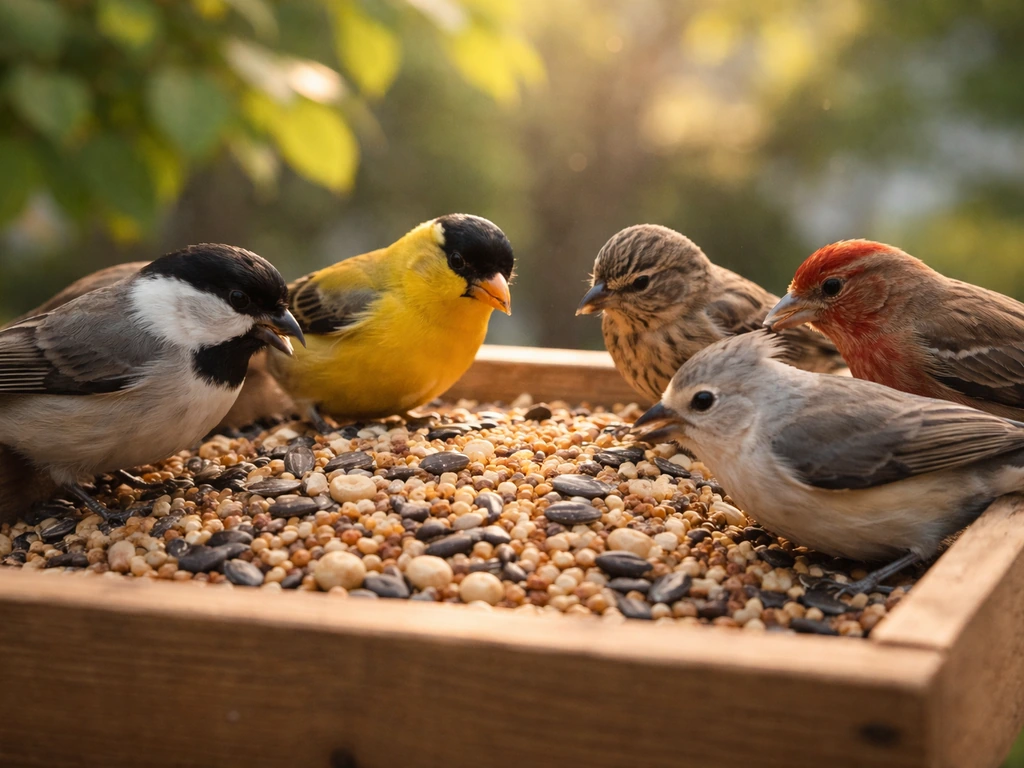
A bird feeder is an outdoor container or device you fill with food to attract and supply wild birds. That's the dictionary definition, and it's accurate as far as it goes. And whether you write it as “bird feeder” or “birdfeeder” comes down to how you want to refer to the product in plain language. But in real backyard terms, a bird feeder is also a decision: you're choosing to concentrate birds in one spot, bring them close enough to observe, and take on a small but real responsibility for doing it safely. Getting that right means understanding not just what a feeder is, but where to put it, what to fill it with, how to keep it clean, and what can go wrong.
Bird Feeder Meaning: Definition, Purpose, and How To Use One
Eleanor Hartwick
19 Jun 2026
What a bird feeder actually is (and what it's for)
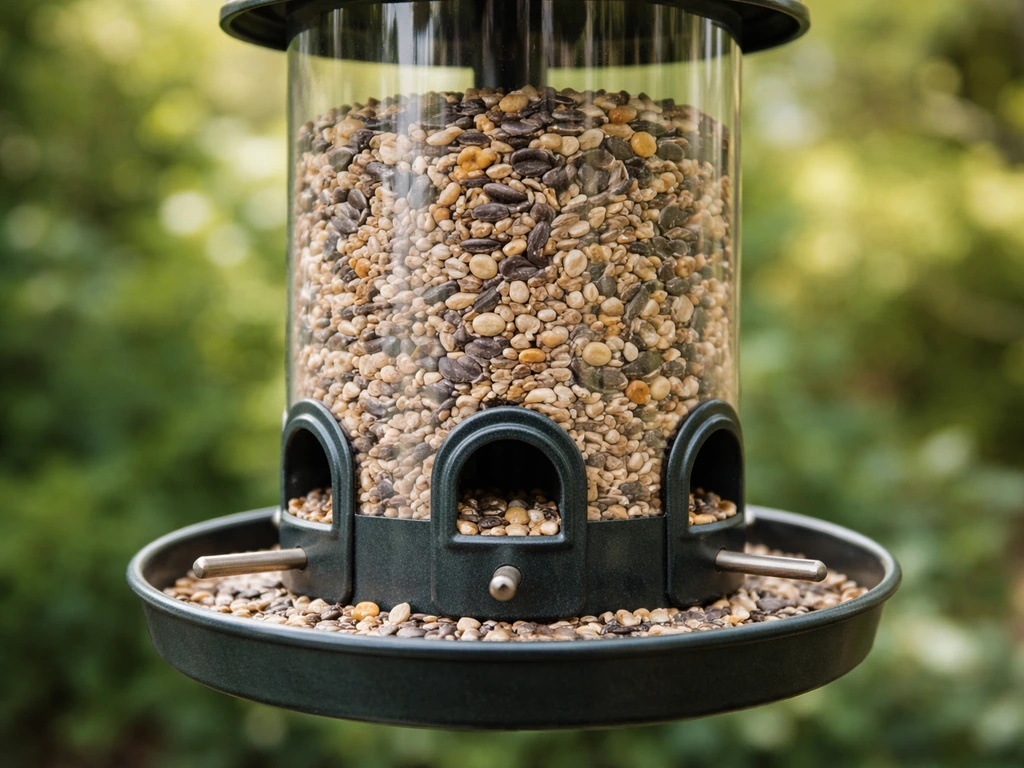
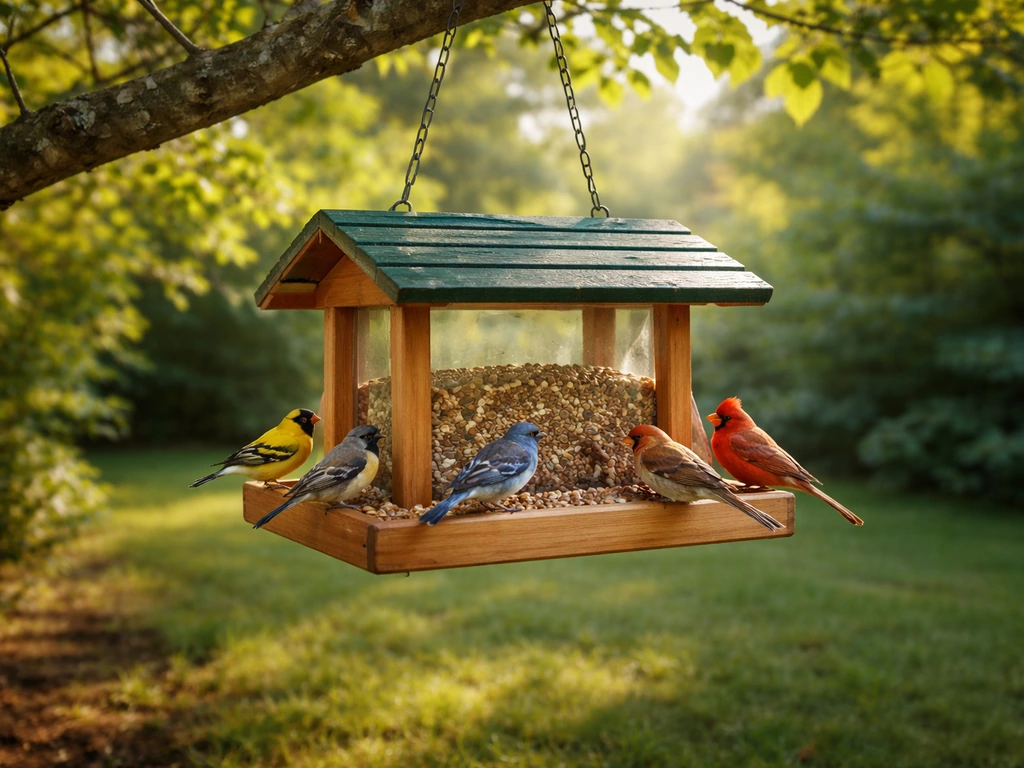
Merriam-Webster, Cambridge, and Collins all define a bird feeder the same way: a container or device designed to supply food to wild birds. The concept is simple. You put food out, birds come to eat it, and you get a close-up view of species that might otherwise stay out of sight. Beyond the pleasure of watching them, feeders are widely used for backyard birdwatching, citizen science projects like Project FeederWatch, and as a way to support local bird populations during periods of food scarcity.
It's worth separating "bird feeder" (the physical object) from "bird feeding" (the activity). On Wikipedia, “blank" rel="noopener noreferrer">bird feeding” is defined as the activity of feeding wild birds, often using bird feeders. Many people search for the bird feeding meaning, but it really comes down to the practice of offering food to wild birds in a way that supports them. The feeder is the tool; bird feeding is the practice. Both have benefits and trade-offs, which is worth keeping in mind as you get started. A feeder isn't just something you hang and forget. It becomes a regular part of your yard's ecosystem, for better or worse, and how you manage it matters more than most beginners expect.
How feeders actually attract birds
Birds find feeders primarily through sight and prior experience. They're not sniffing out your sunflower seeds from a mile away. What draws them in is a visible food source, ideally positioned near cover where they can perch safely between feeding trips. Once a few birds discover a feeder and establish a routine, others follow. This is why a new feeder sometimes sits untouched for days or weeks before you suddenly see a dozen birds using it daily. They're learning the resource exists.
Shelter plays a bigger role than most people realize. Birds won't use a feeder that sits completely exposed with no nearby perching spots. They need to feel they can retreat quickly if a predator shows up. Shrubs, trees, and even dense fencing within a few feet of the feeder give birds that sense of security. The Cornell Lab's All About Birds resource is clear on this: placement affects both whether birds actually use the feeder and how safe the experience is for them.
Food type matters for attraction too. Different species are drawn to different foods, and a feeder stocked with the wrong seed will bring in generic sparrows and starlings but not the birds you're hoping to see. More on that in the seed section below.
Where to place your feeder for the best results
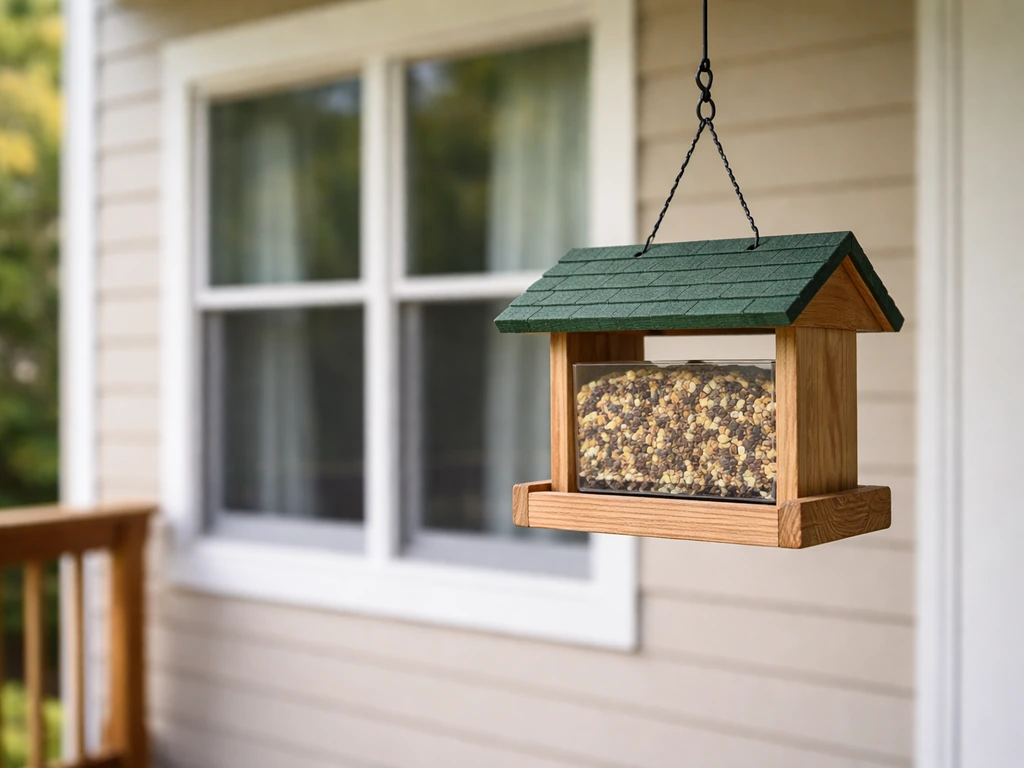
Window collisions are the most preventable feeder-related hazard, and placement distance is your main tool for reducing the risk. The widely cited guideline, attributed to Audubon, is to place feeders either within 3 feet of a window or more than 30 feet away. At under 3 feet, birds approaching or leaving the feeder don't build up enough speed to cause fatal impact if they hit the glass. At over 30 feet, they're far enough that they can see the window as a barrier rather than open sky. The dangerous zone is everything in between, roughly 3 to 30 feet, where birds are flying at full speed and can't react in time.
Beyond window safety, think about these factors when choosing a spot:
- Nearby cover: Place feeders within 5 to 10 feet of shrubs or trees so birds have a quick escape route, but not so close that cats or other predators can use the cover to ambush them.
- Weather protection: A feeder with some overhead cover (a tree canopy, eave, or roof) will keep seed drier and reduce spoilage, especially in wet climates.
- Your sightlines: Put the feeder somewhere you can actually see it from inside. A feeder you can't observe is one you'll neglect.
- Mess management: Hulls and spilled seed accumulate under feeders quickly. Place it over mulch, gravel, or a tray you can easily clean, and away from decks or patios where the mess is harder to manage.
- Access for refilling and cleaning: You'll be visiting this spot regularly. Don't make it inconvenient or you'll skip maintenance.
What to put in the feeder: seeds, foods, and which birds they attract
Black-oil sunflower seed is the single best starting point. It has a thin shell that most birds can crack, it's high in fat and protein, and it attracts a wide range of species including chickadees, finches, nuthatches, cardinals, and woodpeckers. If you put only one type of seed out, make it this one.
From there, you can add variety based on what you want to attract. Here's a practical breakdown:
| Food type | Best feeder type | Species attracted | Notes |
|---|---|---|---|
| Black-oil sunflower seed | Hopper, tube, or platform | Chickadees, cardinals, finches, nuthatches, woodpeckers | Best all-purpose choice; buy in bulk |
| Nyjer (thistle) seed | Nyjer tube feeder with small ports | American goldfinches, house finches, pine siskins | Expensive but highly targeted; finches love it |
| Safflower seed | Hopper or platform | Cardinals, chickadees, doves | Squirrels and starlings tend to avoid it |
| Peanuts (shelled or whole) | Peanut feeder, platform, or mesh tube | Blue jays, woodpeckers, nuthatches, crows | High protein; spoils faster in humidity |
| Suet cakes | Wire suet cage | Woodpeckers, nuthatches, wrens, starlings | Best in cool weather; melts and spoils quickly in summer |
| Millet (white proso) | Platform or ground feeder | Sparrows, juncos, doves, towhees | Attracts ground-feeding birds; use a low tray |
| Mixed seed blends | Hopper or platform | Varies widely | Avoid cheap mixes with filler like milo or oats; birds waste them |
One thing beginners often get wrong: buying cheap mixed seed. Most budget blends include milo, wheat, and oats that many backyard birds in North America simply don't want. Birds throw them out to get to the good stuff, creating mess and waste. Spend a little more on quality seed, or stick to straight black-oil sunflower, and you'll get better results with less mess.
Keeping feeders clean to prevent disease and mess
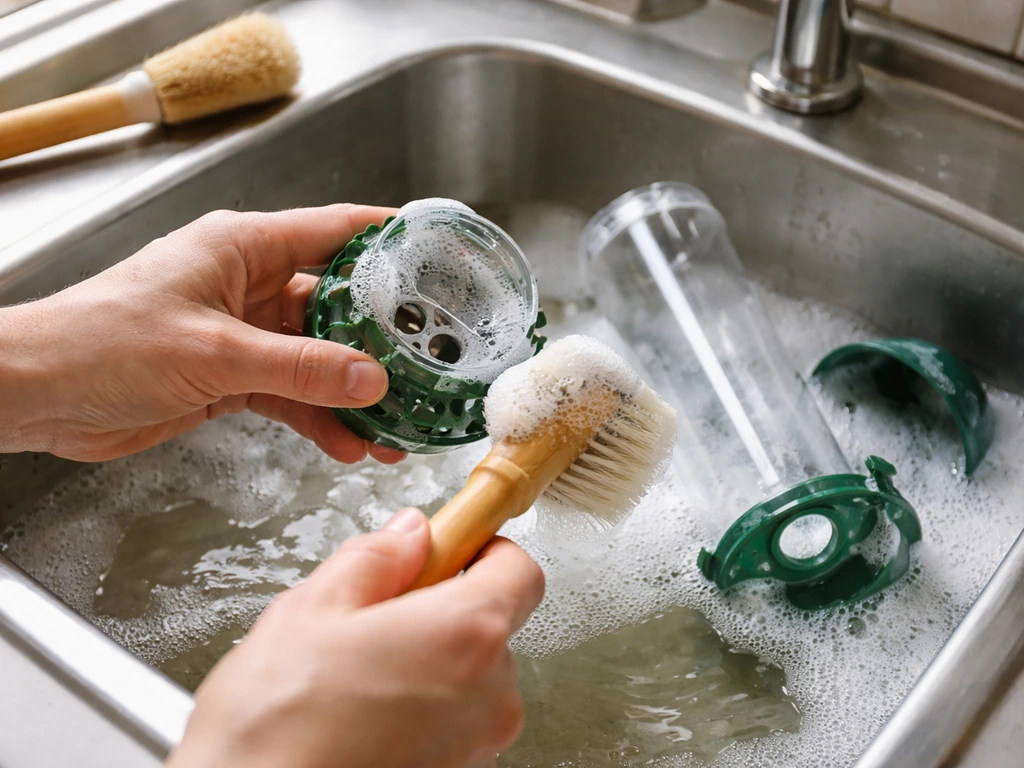
This is where a lot of people fall short, and it matters more than they realize. Feeders concentrate birds in one spot, which means they also concentrate bacteria, mold, and disease. Wet seed sitting in a feeder can develop Aspergillus mold within days. Fecal matter builds up on feeder surfaces. Salmonella outbreaks at feeders have caused real die-offs of songbird populations, particularly among Pine Siskins and House Finches.
Project FeederWatch recommends cleaning feeders regularly as a core part of responsible bird feeding. Here's a practical cleaning routine that actually works:
- Empty the feeder completely every 1 to 2 weeks, or immediately if you notice wet, clumped, or moldy seed.
- Scrub all surfaces with a stiff brush using a solution of 1 part bleach to 9 parts water (a 10% bleach solution).
- Rinse thoroughly with clean water, then let the feeder dry completely before refilling. Refilling a damp feeder accelerates mold growth.
- Clean the area below the feeder by raking up hulls and spilled seed. Rotting seed on the ground attracts rodents and can spread disease to ground-feeding birds.
- Replace suet in warm weather more frequently, as it can go rancid within a week above 70°F.
If you ever see birds acting lethargic at your feeder, or if you notice an unusual number of deaths, take the feeder down immediately, clean it thoroughly, and wait a week or two before putting it back up. That pause can break a disease cycle.
Dealing with squirrels, raccoons, and other uninvited guests
I hear about squirrel problems more than almost anything else from people new to feeding birds. Squirrels are persistent, acrobatic, and motivated. They can jump roughly 10 feet horizontally and 4 feet vertically, so placement alone rarely solves the problem. But a combination of tactics does work:
- Use a pole-mounted feeder with a squirrel baffle: A smooth metal pole at least 5 feet tall with a dome or cylinder baffle below the feeder stops most squirrels from climbing. The baffle needs to be at least 17 inches in diameter and placed so squirrels can't jump past it from nearby structures.
- Keep feeders away from launch points: Position feeders at least 10 feet from tree branches, fences, rooftops, or anything a squirrel could use to leap onto the feeder from above.
- Try safflower seed: Squirrels tend to dislike safflower. Cardinals and other birds love it, so switching to safflower-only can reduce squirrel interest naturally.
- Use a weight-sensitive feeder: These feeders have perches that collapse under the weight of squirrels (or larger birds like starlings), closing off the seed ports. They work well when properly calibrated.
- Avoid hot pepper additives selectively: Capsaicin (hot pepper) in seed deters mammals but doesn't affect birds, since birds lack the receptor that detects capsaicin. It's a legitimate tool but not a complete solution on its own.
Raccoons are a different challenge. They typically visit at night and are strong enough to simply knock feeders down or rip them open. The most reliable solutions are bringing feeders inside at night, using a raccoon-proof pole system with a wider baffle, or switching to a weight-sensitive feeder with a strong enough spring tension to stay closed under a raccoon's weight. Some people accept raccoons as part of the yard ecosystem and feed them separately; others prefer to eliminate the attraction entirely by taking feeders in after dusk.
Rats and mice are drawn by spilled seed on the ground more than by the feeder itself. Using a no-mess seed mix (hulled or shelled varieties), placing a tray under the feeder to catch spills, and cleaning up ground debris regularly dramatically reduces rodent activity. If you're already seeing rats, take the feeder down for a couple of weeks to break the habit before reintroducing it with better mess management.
Seasonal feeding: when to start, when to stop, and what to change
Bird feeders are a year-round option in most regions, but what you offer and how you manage them should shift with the seasons. Here's how to think about it:
Spring and summer
This is when bears and raccoons are most active, and in bear country, many wildlife agencies recommend taking feeders down from April through November. Beyond that concern, summer brings heat and humidity that spoil seed faster, so check feeders every few days rather than weekly. Suet should be switched to no-melt varieties or taken down entirely above 80°F. In spring, migrating species pass through and may visit your feeder briefly. Offering a broader variety of foods during this window increases your chances of seeing unusual visitors.
Fall and winter
Winter is when feeders arguably matter most to birds, particularly during cold snaps when natural food sources are buried under snow or ice. High-fat foods like suet, peanuts, and black-oil sunflower seed are especially valuable. You don't need to worry about making birds "dependent" on your feeder in a harmful way. Research consistently shows that birds get the majority of their food from natural sources even when feeders are available. Stopping in winter won't cause mass die-offs. But during a cold snap, a reliable feeder can genuinely help, especially for non-migratory species.
The honest trade-offs of feeding birds
Feeding birds has real benefits: it supports local populations during difficult conditions, provides opportunities for citizen science, and gives people a meaningful connection to wildlife. The bird feeding benefits are well documented and worth taking seriously. But it's fair to acknowledge the drawbacks too. Poorly maintained feeders spread disease. Feeders near windows kill birds through collisions. Concentrated food sources can attract unwanted wildlife and, in rare cases, disrupt local predator-prey dynamics. Some researchers have raised questions about whether supplemental feeding alters natural foraging behavior over time.
None of this means you shouldn't feed birds. It means you should feed them thoughtfully. Clean your feeder consistently. Place it with window safety in mind. Use quality food. Adjust seasonally. Watch what's happening at your feeder and respond when something looks off. The goal isn't to create a perfect, sterile bird restaurant. It's to offer something genuinely useful to local birds without creating new problems in the process. Do that, and a bird feeder becomes one of the more rewarding things you can add to your yard.
FAQ
What does “bird feeder meaning” include beyond the definition of the container?
In practice, the meaning often includes the job you do to manage risk, such as keeping seed dry, cleaning surfaces on a schedule, and choosing a placement that reduces hazards like window collisions and predator access.
How often should I clean a bird feeder to prevent disease?
If you want a simple rule, clean at least every 1 to 2 weeks, and also immediately after you see wet seed, visible mold, or any sick-looking or dead birds. After cleaning, let parts fully dry before refilling.
Is it okay to stop feeding suddenly if I notice problems?
Yes, and doing so can help break a disease cycle. Take the feeder down for 1 to 2 weeks, then reintroduce only with fresh, dry food and a thoroughly cleaned feeder, otherwise you can bring the same contamination back.
What should I do if birds are not using my new feeder?
Give it time, often days to a few weeks, and check placement first. Make sure there is nearby perching cover and visible food, then avoid changing the food type every day, since birds need consistent cues to learn a new resource.
What seed should I use if I do not want squirrels or messy waste?
Start with black-oil sunflower in a feeder designed to reduce spillage, and consider hulled or shelled options depending on what you’re seeing. Most rodent issues are amplified by ground spill, so using a tray for fallen seed and cleaning it up daily helps more than changing seed alone.
Can feeders attract predators, or disrupt local wildlife?
They can concentrate prey animals and may increase opportunities for some predators around the yard. If you notice repeated predator visits, reduce the attractant by shortening feeding windows or removing the feeder overnight, rather than continuing at full-time operation.
Are window-distance rules the only thing that prevents bird collisions?
No. Window collisions also increase with dense landscaping patterns that create short flight paths. In addition to using the 3 feet or more than 30 feet guideline, consider adding window decals or treatments and keep feeders away from reflective glass when possible.
Should I feed different foods during different seasons, or keep one seed type year-round?
You can, but adjusting improves both safety and results. In summer, check more frequently because heat and humidity spoil food faster, and in winter use high-fat options like suet or peanuts (if your local species use them) during cold snaps.
What does “bird feeding meaning” imply for responsibility and legal considerations?
It implies you are providing supplemental food to wild birds, so you should manage sanitation and hazards. Also check local wildlife or property rules, since some areas restrict supplemental feeding during certain months or near sensitive habitats.
Why do birds sometimes scatter or throw seed out of the feeder?
It often happens with cheaper mixes or when shelling and seed size do not match the birds you want. Switching from generic mixed seed to a higher-quality, species-friendly option, and using a feeder type that minimizes access to unwanted ingredients, usually reduces waste.
What feeder type is safest for preventing disease spread?
Easy-to-clean designs tend to be safest. Choose feeders with surfaces you can scrub and drain fully, avoid designs that trap wet seed, and make sure the feeder can be disassembled for thorough cleaning.
If I see multiple bird deaths, should I keep feeding?
No. Take the feeder down immediately, clean it thoroughly, dispose of remaining seed, and wait about 1 to 2 weeks before restarting. If deaths are widespread or involve an unusual number of species, consider reporting to local wildlife authorities.
Next Articles
Is Bird Feeder One Word? Correct Spelling and Usage
Get the correct spelling of bird feeder, when to use bird-feeder or birdfeeder, and how to write it for labels and guide
San Francisco Bird Feeder Meaning: How to Choose and Use One
Defines San Francisco bird feeder meaning and gives local tips on choosing, placing, feeding, and maintaining safely for
Bird Feeding Meaning: What It Is, Benefits, Risks, and How to Feed
Bird feeding meaning explained with benefits, risks, and step-by-step setup, food choice, hygiene, and deterrence tips.