"Bird feeder" is two separate words, and that's the standard form you'll find as the main headword in Merriam-Webster. You'll also see "bird-feeder" (hyphenated) listed by Cambridge, Collins, and Dictionary.com as their preferred entry, and "birdfeeder" (one word) as a recognized variant. All three mean exactly the same thing. In everyday writing, go with two words: bird feeder. It's the safest, most widely accepted choice across American and British English.
Is Bird Feeder One Word? Correct Spelling and Usage
Eleanor Hartwick
15 May 2026
Correct spelling and the common variants
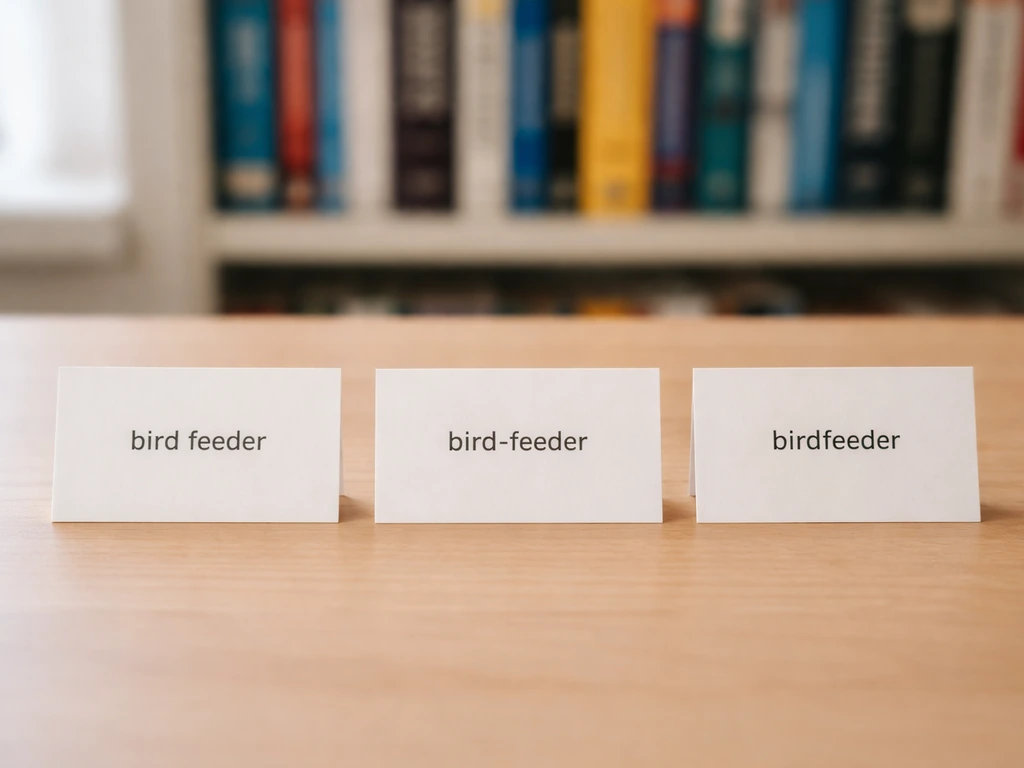
The three forms you'll encounter are "bird feeder," "bird-feeder," and "birdfeeder." Here's how they stack up across the major dictionaries:
| Form | Dictionary | Status |
|---|---|---|
| bird feeder | Merriam-Webster, Wiktionary | Primary headword (most common in American English) |
| bird-feeder | Cambridge, Collins, Dictionary.com, Wiktionary | Primary or alternate entry (common in British English) |
| birdfeeder | Merriam-Webster (variant), Wiktionary | Recognized variant, least common in formal writing |
Merriam-Webster explicitly labels "bird-feeder" and "birdfeeder" as variants of the main entry "bird feeder," meaning they're not wrong, just less preferred in American usage. Cambridge and Collins, which lean British, flip that and treat the hyphenated form as the headword. Neither camp marks any of the three as incorrect. So if you write "bird-feeder" you're not making an error, you're just using a form that some style guides and dictionaries treat as secondary.
The hyphenation rule that explains all of this
English compound words tend to travel a predictable path: they start as two separate words, then pick up a hyphen over time, and eventually fuse into one. "Bird feeder" is somewhere in the middle of that journey, which is exactly why you see all three forms still in active use. The Chicago Manual of Style's guidance on hyphenation is the practical rule of thumb here: when a compound functions as a noun standing on its own ("I bought a bird feeder"), no hyphen is needed. When that same compound shifts to work as an adjective directly before another noun (attributive position), a hyphen often improves clarity.
In practice, that means you'd write "bird feeder" as a standalone noun but could reasonably write "bird-feeder placement" or "bird-feeder pole" when the compound is modifying another noun. That said, most major retailers, birding organizations like Cornell Lab's Project FeederWatch, and publications like Chewy's editorial content simply use "bird feeder" or "bird feeders" in all positions without hyphenating. That's the modern trend: skip the hyphen unless clarity genuinely demands it. AP style handles hyphenation case-by-case, but for a compound this well-established, the two-word version passes the clarity test on its own.
How to use the term in headlines, labels, and product listings
The context you're writing for matters a lot here. Here's a practical breakdown:
- Website copy and blog articles: Use "bird feeder" (two words, no hyphen) as your base noun. It's the form most readers expect, and it matches Merriam-Webster. Example: "How to clean your bird feeder every two weeks."
- Headlines and subheadings: Stick with two words. "Best Bird Feeders for Finches" reads cleanly and matches how major birding publishers format their titles.
- Product titles and labels: Retailers like Duncraft and Chewy use "Bird Feeder" as the core noun in product names, then add descriptive modifiers before it (e.g., "Squirrel Blocker Bird Feeder"). Follow that pattern: let "bird feeder" stay as two clean words and put your descriptors in front.
- Attributive/compound modifiers: If you need "bird feeder" to directly modify another noun, a hyphen is defensible. "bird-feeder cleaning schedule" or "bird-feeder placement guide" are both grammatically reasonable. But "bird feeder cleaning schedule" works fine too and avoids the hyphen question entirely.
- One-word "birdfeeder": Avoid this in formal or professional writing. It's recognized as a variant, but it looks informal and could read as a typo to many readers.
SEO and search phrasing: what to type when you're looking things up
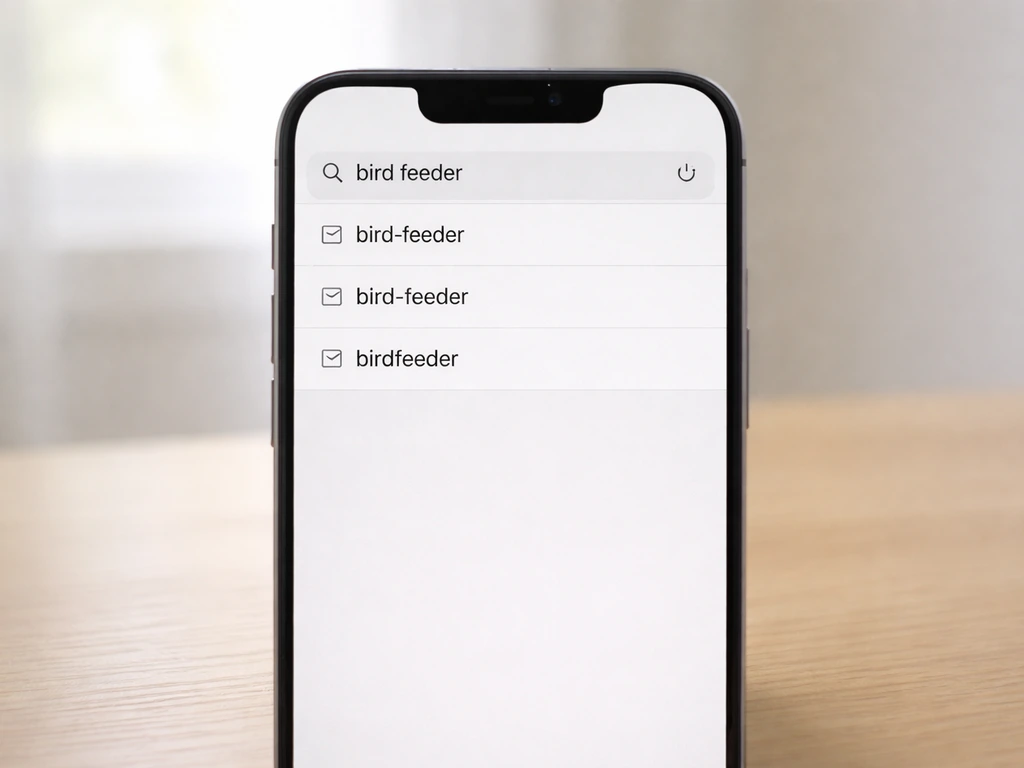
If you're searching for practical advice about bird feeders online, the two-word form is almost always the right call. Search engines understand all three variants, but "bird feeder" captures the largest search volume because it's how most people naturally type it. When you're looking for specific guidance, build your searches around that core phrase and add a specific topic after it. Here are the search strings that tend to surface the most useful results:
- bird feeder placement (for window-collision and yard positioning guidance)
- bird feeder cleaning (for bleach ratios and frequency advice)
- bird feeder types (to compare tube, platform, suet, and hummingbird feeders)
- bird feeder pole setup (for mounting and squirrel-baffle questions)
- bird feeder maintenance tips (for seasonal and ongoing upkeep)
- best bird feeder for [species] (e.g., finches, cardinals, hummingbirds)
You'll occasionally see searches or articles use "birdfeeder" or "bird-feeder," especially on sites using British English or older style guides. Those searches return the same results. The grammar question you're solving here connects directly to the broader topic of what bird feeding actually means and why terminology varies across regions and publishing contexts.
Now that you've got the spelling right, here's the practical stuff
Knowing the correct spelling of "bird feeder" is useful, but most people searching this question are also about to set one up, write about one, or figure out how to take better care of the one they already have. Here's a quick grounding in the essentials so you're ready for the next steps.
Where to place a bird feeder
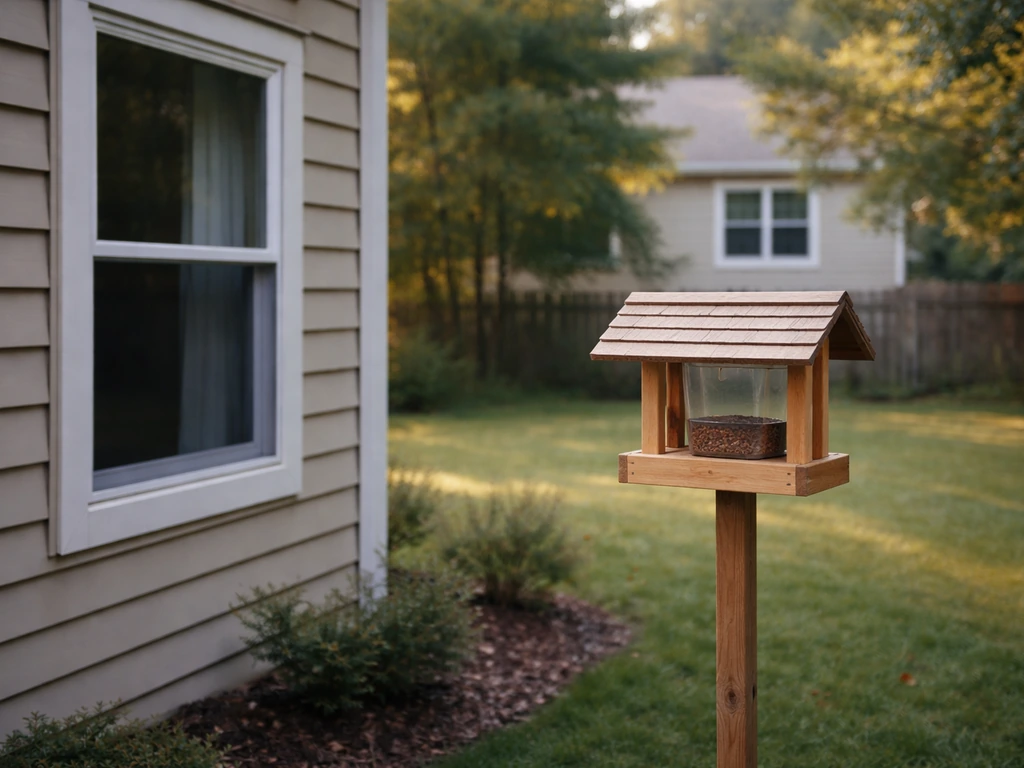
Window collisions are the biggest placement risk, and the research on this is pretty specific. The U.S. Fish & Wildlife Service notes that windows 15 to 30 feet from a feeder pose the greatest hazard because birds build up enough speed at that distance to injure themselves on impact. The Washington Department of Fish & Wildlife recommends placing feeders either within about 3 feet of a window (so birds can't accelerate enough to get hurt) or at least 30 feet away. Those two zones, very close or very far, are the safest options. Anywhere in between puts birds at higher risk.
How often to clean a bird feeder
Project FeederWatch recommends cleaning seed feeders about once every two weeks, and more often during warm or damp weather when mold and bacteria spread faster. The Minnesota DNR's cleaning guideline uses a solution of 2 ounces of bleach per 1 gallon of water, scrubbing all surfaces thoroughly. The U.S. Fish & Wildlife Service suggests a 1-part bleach to 9-parts water soak for a deeper clean. Audubon emphasizes fully drying the feeder before you refill it, which is a step a lot of people skip. For hummingbird feeders specifically, Cornell Lab's All About Birds recommends changing the sugar water every 3 to 5 days, and more frequently when temperatures are high, to prevent mold and fermentation.
A few things worth tracking once your feeder is up
Watch how quickly seed is disappearing and whether it's birds or other wildlife doing the eating. Notice whether wet seed is clumping inside the feeder, which is a sign you need to clean more often or switch to a feeder with better drainage. Pay attention to which species show up at different times of year, since that can guide decisions about feeder type and food. Bird feeding connects to a lot of practical questions beyond the name itself, including the benefits of maintaining feeders through seasonal changes and what it means for local bird populations. Bird feeding benefits extend beyond convenience, supporting local wildlife while helping you monitor which species are visiting. A bird feeder is a container used to attract and feed wild birds, so the term also covers the purpose behind the setup. Understanding the bird feeder meaning also helps you choose the right setup for the birds you want to attract bird feeding. Bird feeding meaning can also vary depending on whether you're talking about the activity itself or the broader purpose of attracting and supporting local birds. Those topics build naturally from getting the basics right.
FAQ
If I’m writing for a school assignment or a formal essay, should I always use “bird feeder” with two words?
Yes. For formal American-style writing, use “bird feeder” (two words) unless your instructor or style guide specifically asks for hyphenation. If you need an adjective, hyphenate only in front of a noun, for example “bird-feeder placement” or “bird-feeder pole,” then keep it simple elsewhere.
Is “birdfeeder” one word ever considered correct, or is it only a typo?
It’s considered a legitimate variant in some dictionaries, but it is the least preferred option in everyday American usage. Treat “birdfeeder” as acceptable, not ideal. If you want the safest, most widely understood choice, stick with “bird feeder” in most contexts.
When I use “bird feeder” as a compound before another noun, do I always need a hyphen?
Not always, but hyphenation often improves clarity when the phrase is acting like a single unit. Use “bird-feeder placement” or “bird-feeder pole” when it immediately modifies a following noun. If the meaning is already clear in two words (for example “bird feeder type”), many modern editors still leave the hyphen out.
How should I write it in plural form, like “bird feeders”?
Use “bird feeders” as two words in plural when it stands alone as a noun. For hyphenated adjective usage before a noun, you can use “bird-feeder” even with plural heads in common phrasing, for example “bird-feeder accessories,” but if you are unsure, default to two words and rework the sentence for clarity.
Does capitalization matter, for example at the start of a sentence or in a title?
Capitalization only changes the first letter. Use the spelling choice you want (“Bird feeder” or “bird feeder”), and apply title-case rules if you are formatting a headline (usually major words are capitalized). The hyphen choice typically stays the same regardless of capitalization.
Which spelling should I use in product names or brand listings?
Follow the brand or retailer’s own spelling in the product title. In your surrounding text, you can describe it as “a bird feeder” for consistency. This avoids mismatches where search systems and readers expect the exact product name spelling.
If I’m optimizing for search, does “bird feeder,” “bird-feeder,” and “birdfeeder” affect results differently?
They generally lead to the same content being found, but “bird feeder” usually matches the way most people type. For best coverage, you can use “bird feeder” in your main heading and include at most one alternate form in body text if it fits naturally.
Is “bird feeder” the right term if I’m talking about hummingbird feeders?
Yes. The category term remains “bird feeder,” and you can specify the type after it, like “hummingbird feeder” or “hummingbird bird feeder” (the simpler “hummingbird feeder” is usually enough). If you are writing about the feeder itself, the noun “feeder” is most direct.
Next Articles
San Francisco Bird Feeder Meaning: How to Choose and Use One
Defines San Francisco bird feeder meaning and gives local tips on choosing, placing, feeding, and maintaining safely for
Bird Feeding Meaning: What It Is, Benefits, Risks, and How to Feed
Bird feeding meaning explained with benefits, risks, and step-by-step setup, food choice, hygiene, and deterrence tips.
Do You Leave Bird Feeders Out All Year? Seasonal Guide
Should you leave bird feeders out all year? Get seasonal tips, safe feeding, and cleaning to prevent disease and pests.