
Yes, bird feeders can get wet, and most will at some point. The real question is how much moisture exposure matters for your specific feeder type, what food is inside, and how long it stays damp. Brief rain on a well-designed feeder usually isn't a crisis. Prolonged soaking, standing water in seed trays, or soggy nectar left out in warm weather absolutely is. Getting comfortable with that distinction will save you a lot of guesswork and a fair bit of wasted seed.
Can Bird Feeders Get Wet? Rainproofing Tips & Checklist

Eleanor Hartwick
4 Aug 2026
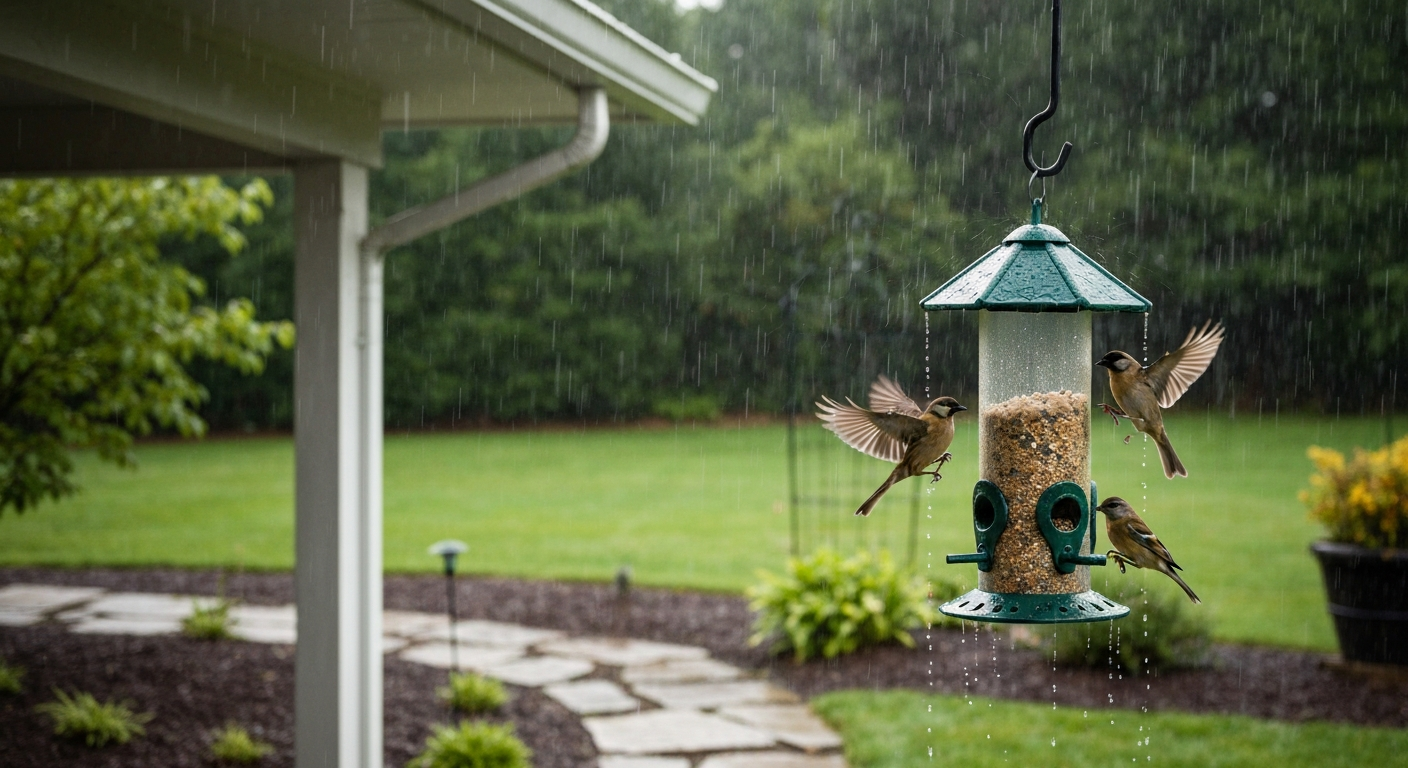
Why moisture matters: health, spoilage, structural damage and pests
Moisture is the single most common reason feeders become genuinely harmful to birds rather than helpful. When seed absorbs water and sits at or above roughly 12 to 13 percent moisture content, fungal growth becomes likely. Aspergillus molds and similar storage fungi thrive in those conditions, producing mycotoxins that damage bird respiratory and liver health. King County Public Health notes that damp seed and seed debris under feeders support growth of Aspergillus and other storage molds, which can produce mycotoxins hazardous to birds' respiratory and liver health. Birds can't assess that risk the way we assess expired food, so they'll eat clumped or visibly moldy seed without hesitation. Damp seed debris that falls under a feeder compounds the problem, building up a reservoir of mold, bacteria and the rodents and insects those attract.
Disease transmission is a separate but related concern. Experimental work has confirmed that Mycoplasma gallisepticum, the bacterium behind house finch eye disease, can spread via contaminated feeder surfaces. Avian pox can transmit the same way. Salmonella Typhimurium outbreaks in passerines have been repeatedly linked to garden feeding stations. Wet, rarely cleaned feeders create ideal conditions for pathogens to persist on perches and ports. Keeping surfaces dry and clean is the most reliable lever you have over all of these.
Beyond the biological risks, moisture degrades the feeder itself. Wooden feeders swell, crack and rot. Metal hardware corrodes. Plastic can warp or develop surface texture that traps bacteria. Mounting poles and chains rust, weakening over time in ways that aren't always obvious until something falls. The good news is that all of this is manageable with the right materials and a consistent maintenance habit.
How rain and humidity affect feeder materials and mounting hardware
Not all feeders weather rain the same way, and understanding the material differences helps you make smarter buying decisions and know where to focus your maintenance attention.
| Material | Rain/Humidity Behavior | Practical Concern | Maintenance Priority |
|---|---|---|---|
| Untreated wood | Absorbs moisture, swells, warps, rots | Mold growth inside seed chambers; structural failure | High — seal, sand, clean frequently |
| Cedar/teak/rot-resistant wood | Much better moisture resistance than pine or plywood | Still benefits from a sealant; check joints annually | Medium |
| Powder-coated steel | Coating protects well until chipped; exposed steel rusts quickly | Check for chips and touch up; avoid abrasive cleaning | Medium |
| Hot-dip galvanized steel | Decades of protection in most atmospheric environments; may corrode faster in coastal/salt air | Good for poles and frames; inspect coating annually | Low to Medium |
| Stainless steel (304/A2) | Excellent in most settings; weaker in chloride/coastal environments | Fine for most backyard locations | Low |
| Stainless steel (316/A4) | Best corrosion resistance, especially near coasts or heavy road salt | Worthwhile upgrade for hardware in harsh environments | Low |
| Polycarbonate/acrylic plastic | Generally water-resistant; UV can cause brittleness over years | Look for UV-stabilized grades; clean ports regularly | Low to Medium |
| Recycled plastic/HDPE | Excellent moisture resistance, won't rot or rust | Ideal for wet climates; can discolor but remains functional | Low |
Mounting hardware deserves specific attention because it's easy to overlook. Standard zinc-plated screws and hooks corrode noticeably within a season or two of outdoor use, and a rusted chain or hook failure can drop a heavy feeder onto the ground. If you're in a coastal area or somewhere with heavy winter road salt, stainless grade 316 (A4) fasteners are worth the modest extra cost. For most inland backyard setups, 304 stainless or properly specified hot-dip galvanized hardware performs well for years without much fuss.
How moisture harms the food: seed, suet, nectar and mixed blends
Seed
Seed that gets wet clumps together, blocking feeder ports and forming a crust that birds can't access. More seriously, once seed moisture exceeds roughly 12 to 13 percent, it creates conditions that favor Aspergillus and other storage molds. You'll often see this as gray-green fuzz on clumped seed or a musty smell when you open the feeder. Don't try to dry wet seed and reuse it. Discard it, thoroughly clean and dry the feeder before refilling. This isn't overly cautious advice, it's the same standard guidance from ornithological and wildlife health organizations.
Suet
Suet handles brief rain exposure reasonably well, but prolonged heat combined with moisture is the real problem. Wet suet turns rancid, develops a sticky film that traps debris, and can go soft enough that it smears across cage bars and harbors bacteria. In summer, many experienced feeders skip suet entirely or switch to no-melt suet formulations that hold up better in warm, wet conditions. If you notice a sour or off smell, replace the suet and clean the cage.
Nectar
Nectar is the most sensitive food type in any feeder. Sugar water in warm or hot conditions ferments and supports rapid microbial growth. Lab research has shown that yeasts like Metschnikowia reukaufii can drop nectar pH by around 0.5 units in just 36 hours and by more than 2 units within five days, fundamentally altering the chemistry that hummingbirds are adapted to consume. Bacteria compound the problem further. The practical rule most hummingbird organizations recommend: change nectar every one to four days depending on temperature, and daily when it's above roughly 85 to 90°F (29 to 32°C). Rain doesn't directly spoil nectar in a sealed reservoir feeder, but warm ambient temperatures do the damage fast, and a feeder that takes on rainwater through a poorly sealed port will dilute and contaminate the sugar solution.
Mixed blends and specialty seeds
Mixed blends with dried fruit, peanuts or corn are especially prone to mold when wet. Peanuts in particular are susceptible to aflatoxin-producing molds, which are seriously toxic to birds. If you use these blends, smaller fill quantities that birds consume quickly are safer than large, slow-emptying loads during humid or rainy stretches.
Rain-tolerant feeders versus rain-vulnerable ones
Designs that handle rain well
- Tube feeders with drainage holes at the base of the seed chamber: water passes through rather than pooling
- Hopper feeders with mesh or ventilated floors: seed above the floor stays drier while water drains
- Covered platform feeders with substantial roof overhangs: direct rain deflected away from the seed tray
- Thistle/Nyjer sock feeders: small seed size and mesh construction allow rapid drying
- Recycled plastic or HDPE feeders: material itself doesn't absorb water or rot
- Feeders with hinged or removable roofs: easier to clean dried seed residue before it traps moisture
- Suet cage feeders: open construction allows airflow and relatively fast drying
Designs that struggle in wet conditions
- Open platform feeders without a roof: fully exposed to direct rain, seed soaks quickly
- Wooden hopper feeders without drainage: water pools in seed reservoir, especially at the base
- Large-capacity tube feeders that are infrequently refilled: seed at the bottom sits damp for extended periods
- Decorative feeders with complex interiors or narrow bottoms that are difficult to clean and dry
- Feeders with glued or sealed bases that lack removable trays: water has nowhere to go
- Painted or stained wooden feeders with peeling finish: exposed wood absorbs water rapidly once the protective coat fails
- Any feeder where the seed fill level routinely reaches a non-draining area
Water dishes, watering-can feeders and other water-filled devices
There's a whole category of products that intentionally hold or interact with water, and these come with their own set of considerations. Decorative watering-can style feeders are a good example: they're designed to look like a garden watering can and often hold seed in the spout or body, sometimes near an open water reservoir. The aesthetic appeal is obvious, but the design can create a situation where seed and standing water are very close together, which is the combination you most want to avoid.
Birdbaths and water dishes placed near feeders serve a genuinely useful purpose, birds need water for drinking and bathing. The risk is stagnant water. Still, warm water is a breeding ground for bacteria and, in some climates, mosquito larvae. The standard guidance is to change and scrub birdbath water every two to three days, or daily in hot weather. Shallow dishes (two to three inches maximum) are safer because they limit the amount of stagnant water that can accumulate and are easier to tip and rinse quickly.
If you're drawn to a watering-can style feeder, the key thing to watch is whether the seed and water compartments are truly isolated. Some designs do this well; others are essentially an invitation to wet seed and algae-fouled water in the same unit. Inspect the design closely before buying, and plan to clean it more frequently than a standard feeder. The question of whether to leave these out in all weather conditions, and when it makes sense to bring them in, is worth thinking through based on your specific model's construction.
Weatherproofing options: shelters, roofs, baffles, drainage and materials
The single most effective thing you can do for almost any feeder is add or improve its roof. A roof overhang of four to six inches on each side dramatically reduces the amount of rain reaching the seed tray or ports in typical rainfall. Many tube and hopper feeders come with roofs that are too small to be effective, you can often find aftermarket weather guards or baffles designed to retrofit over standard feeder hooks.
Squirrel baffles, usually dome-shaped, serve double duty: they block squirrel access and act as rain shelters for the feeder hanging below. A large dome baffle above a tube feeder is one of the cheapest and most effective weatherproofing upgrades available. Position it close enough to the feeder that the dome's shadow actually covers the ports in typical rain angles.
Drainage is the second major lever. Mesh or screen bottoms on seed trays are a well-established commercial solution, and they work. For example, the Birds Choice 'Fly Thru' feeder includes an expanded‑mesh removable seed tray designed to improve drainage and make cleaning easier. If your feeder has a solid-bottom seed tray, drilling three to five small holes (roughly 3mm to 4mm) in the lowest point of the tray gives water a path out. Combined with a roof, drainage holes make an enormous difference to how long seed stays usable after rain.
Placement matters too. Hanging feeders from a sheltered spot, such as under a porch overhang or in the lee of a garden shed, reduces direct rain exposure without moving the feeder indoors. Avoid low spots in the garden where cold air and moisture pool overnight. A location with morning sun helps dry out any dampness that accumulated overnight.
Practical DIY fixes to keep feeders dry and draining properly
You don't need to buy new equipment to meaningfully improve how your feeder handles rain. Here are some modifications I've tested or heard reliably recommended by readers across different feeder setups.
- Drill drainage holes in solid seed trays: use a 3mm to 4mm drill bit and add three to five holes at the lowest point of any tray or base that currently holds standing water. Test with a cup of water before refilling with seed.
- Add a dome baffle above the feeder: clip a large (at least 12-inch diameter) dome-style squirrel baffle above the hanging hook. Adjust the height so the dome extends well past the feeder's outer edges.
- Build a simple roof extension: cut a piece of weather-resistant cedar or treated plywood into a circle or square roughly four inches wider than your feeder's existing roof. Attach it above the existing roof with a short dowel or pipe, sealing the wood with exterior sealant. Cost: a few dollars in materials.
- Apply exterior wood sealant to wooden feeders: sand any rough or peeling surfaces, wipe clean, and apply two coats of water-based exterior sealant to all exposed wood. Repeat annually before the rainy season.
- Use a hardware cloth tray liner: cut a piece of galvanized hardware cloth (1/4-inch mesh) to fit inside a platform feeder tray. Seed sits on the mesh, water drains below, and air circulates underneath. The mesh lifts out for easy cleaning.
- Reduce fill quantity during wet spells: fill feeders to one-quarter to one-third capacity during rainy or humid stretches. This ensures seed is consumed before it has a chance to clump, reducing waste and the risk of mold.
- Improve feeder placement: relocate to a spot with morning sun exposure and natural wind shelter. Morning sun dries overnight condensation; wind shelter reduces direct rain entry.
- Switch to weather-resistant seed types during wet periods: straight black oil sunflower seed and safflower dries faster and clumps less than mixed blends with corn, millet or dried fruit. Reserve mixed blends for dry stretches.
Cleaning intervals tied to wet weather
Audubon and similar wildlife health organizations recommend cleaning seed and suet feeders at least every one to two weeks as a baseline. In hot, humid weather or after prolonged rain, that interval should shorten to every few days. The core rule: if seed is visibly clumped, discolored, or smells musty, don't wait for your scheduled cleaning day, clean it immediately. Always dry the feeder completely before refilling. A damp feeder refilled with fresh seed will foul that seed within hours in warm weather.
Nectar feeders work on a different and more demanding schedule. Even in mild weather, change nectar every three to four days and clean the feeder at each refill. When temperatures climb above around 85 to 90°F (29 to 32°C), change nectar daily. Fermented nectar smells sour and often turns cloudy, if you see either sign, clean and replace immediately rather than waiting for the scheduled change.
| Conditions | Seed/Suet Feeder Cleaning | Nectar Feeder Change | Notes |
|---|---|---|---|
| Cool, dry weather | Every 1–2 weeks | Every 3–4 days | Standard baseline |
| Warm, humid (below 85°F/29°C) | Every 5–7 days | Every 1–2 days | Watch for clumping |
| Hot (above 85–90°F/29–32°C) | Every 2–3 days | Daily | Discard wet seed immediately |
| Prolonged rain or wet spell | Every 2–3 days or after soaking | Daily or more | Check after each heavy rain |
| Disease outbreak known nearby | After each use or daily | Daily | Consider removing feeders temporarily |
When to bring feeders in versus leave them out: a quick decision guide
Most feeders don't need to come inside for typical rain, especially if they're well-designed and have adequate drainage. For detailed guidance on whether to bring feeders in during specific weather conditions, see can you leave bird feeders out in the rain. But there are situations where bringing a feeder in temporarily is the smarter call. For specific criteria and a simple checklist, see our guide on should I bring my bird feeder in when it rains. Use this as a rough guide rather than a strict rule.
| Situation | Leave Out? | Bring In or Act? |
|---|---|---|
| Brief shower, well-drained feeder | Yes | Check seed after; discard if clumped |
| Multi-day heavy rain | Consider | Bring in or empty if seed will sit wet more than 24 hours |
| Extended heat wave above 85°F/29°C | Yes, but | Increase cleaning frequency; reduce fill quantity |
| Nectar feeder in warm weather | Yes, but | Change nectar daily; do not leave more than 24 hours in heat |
| Suet in summer heat and rain | Reconsider | Switch to no-melt suet or remove until cooler |
| Disease outbreak reported nearby | No | Remove all feeders; clean before redeploying |
| Overnight frost following rain | Yes | Check ports for ice blockage in the morning |
| Decorative/complex feeder after rain | Conditional | Inspect seed chamber; clean if seed is wet or clumped |
Keeping the area under your feeder clean
Wet seed debris on the ground under feeders is one of the most reliably underestimated problems in backyard bird feeding. It molds faster than seed in the feeder, it accumulates quickly below busy stations, and it's a direct draw for rats, mice and insects. A few practical habits make a big difference: rake or sweep debris from under feeders every few days during wet weather, use a catching tray that you actually empty regularly, and consider placing the feeder over a hard surface like pavers or gravel that can be hosed down rather than a lawn that traps debris in grass. The question of feeder mess more broadly is worth thinking through, particularly in gardens where rodent attraction is a real concern. For practical tips on how much mess feeders cause and how to reduce it, see our guide “do bird feeders make a mess.”.
The bottom line is that bird feeders can and will get wet, and that's okay in most circumstances. The problems arise when wet conditions persist, food isn't changed, and cleaning is deferred. A feeder that drains well, gets cleaned on a schedule that matches the weather, and is filled with quantities birds will consume in a day or two will serve your birds well through rain and shine alike.
FAQ
Can bird feeders get wet?
Short answer: Yes. Feeders and food can get wet from rain, humidity and splash; moisture increases the risk of spoilage, mold, bacterial and viral transmission, corrodes some materials and can reduce feeder lifespan. Keep feeders and food as dry as reasonably possible.
How does moisture harm different feeder types and food?
Seed: Wet seed clumps, molds (e.g., Aspergillus) and supports fungal/mycotoxin growth and bacterial survival. Suet: Softens, melts and becomes rancid or moldy in wet conditions. Nectar/hummingbird sugar water: Ferments and grows microbes quickly in warm/wet conditions, altering pH and becoming harmful. Feeder structure/hardware: Water accelerates corrosion of unprotected metals, swells or rots untreated wood and degrades some plastics and glued joints. Surfaces: Damp perches and tubes increase fomite transmission of diseases (e.g., Mycoplasma, avian pox, Salmonella).
Which feeder designs are rain-tolerant and which are vulnerable?
Rain-tolerant: Covered hopper and staged roof feeders with deep overhangs, feeders with built-in drainage/mesh bottoms, tube feeders with long crowns or cone-shaped baffles above ports, platform feeders with shelters, metal feeders (galvanized or stainless) and feeders designed with removable trays for drying. Vulnerable: Open tray/platform feeders with no shelter, exposed suet cages, shallow dish-style feeders, decorative watering-can style feeders without drainage, poorly sealed wood feeders, and any feeder without drainage where seed can pool.
Should I bring feeders in when it rains?
Decision depends on feeder type, local weather and disease risk. Bring in or shelter feeders when: heavy/prolonged rain or storms are expected, feeders repeatedly soak and clump seed/suet, you’ve seen illness in local birds (outbreaks of pox, finch disease, salmonella) or temperatures are high causing rapid spoilage. Leave out feeders when they are designed to shed rain and you can check and clean them regularly.
Quick decision checklist: bring in or leave out?
Bring in/shelter feeder if: seed or suet gets visibly wet or clumped; nectar spoils quickly in warm weather; local disease outbreak is reported; heavy storms are forecast. Leave out if: feeder has an adequate roof/overhang/drainage, seed remains dry, you can clean and dry it frequently, or weather is light/drizzle and birds are feeding normally.
Practical weatherproofing options and materials
Install shelters or dedicated roofs above feeders; use baffles and cones to deflect rain; choose feeders with mesh bottoms or drainage holes and removable trays; mount feeders under eaves, porches or tree canopy; use stainless or hot-dip galvanized hardware in wet/coastal areas; prefer UV-stable plastics, stainless steel or treated/rot-resistant woods; add small overhangs to platforms. Ensure drainage holes are clear so water doesn't pool.