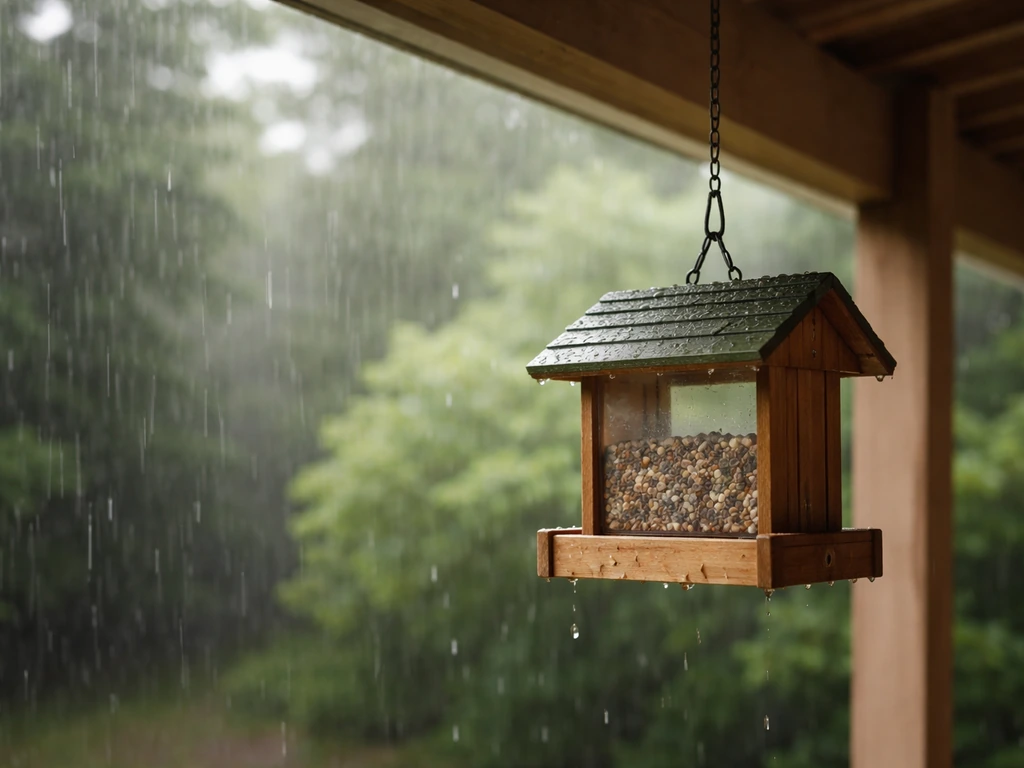
Yes, you can leave most bird feeders out in the rain, and in many cases there's no reason to rush outside and bring them in every time clouds roll in. For a focused answer, see our guide on can bird feeders get wet. The real concern isn't the rain itself, it's what happens to the seed, nectar, or suet inside the feeder when moisture gets in and stays there. A quick shower rarely causes harm. A multi-day soaking event with poor drainage and no cleanup afterward is a different story entirely.
Can You Leave Bird Feeders Out in the Rain? Practical Guide

Eleanor Hartwick
23 Jul 2026
Why rain matters for feeders, seed, and birds
Rain creates three overlapping problems at a bird feeder: it wets seed and accelerates spoilage, it degrades feeder materials over time, and it produces the damp, warm conditions that mold and bacteria need to thrive. None of these risks are instant, but they compound quickly if you're not paying attention after wet weather.
Wet seed that sits in a feeder for even 24–48 hours in warm weather can begin to clump, sprout mold, or develop a sour smell. Molds like Aspergillus species grow best in moist conditions in the mid-to-upper 70s°F, and they produce mycotoxins, including aflatoxin, that can sicken or kill birds. That's not a theoretical risk; wildlife health labs across the country document moldy-seed deaths in wild birds regularly.
Beyond mold, wet feeders can also act as transmission points for bacterial pathogens. Research has shown that Mycoplasma gallisepticum (MG), the organism behind house finch eye disease, can remain infectious on feeder surfaces for roughly 24 hours, and colder temperatures can actually extend its viability on surfaces for several days. Salmonella is another documented risk, with a 2020–2021 multistate outbreak in humans traced in part to contact with contaminated wild bird feeders and seed. Rain alone doesn't cause these outbreaks, but a wet, uncleaned feeder is exactly the kind of environment where pathogens linger and spread.
For the feeder itself, prolonged exposure to rain can crack plastic, warp wood, rust metal components, and degrade seals. These structural failures then let in even more water, creating a cycle that's harder to break the longer it goes unaddressed.
How rain affects different feeder types
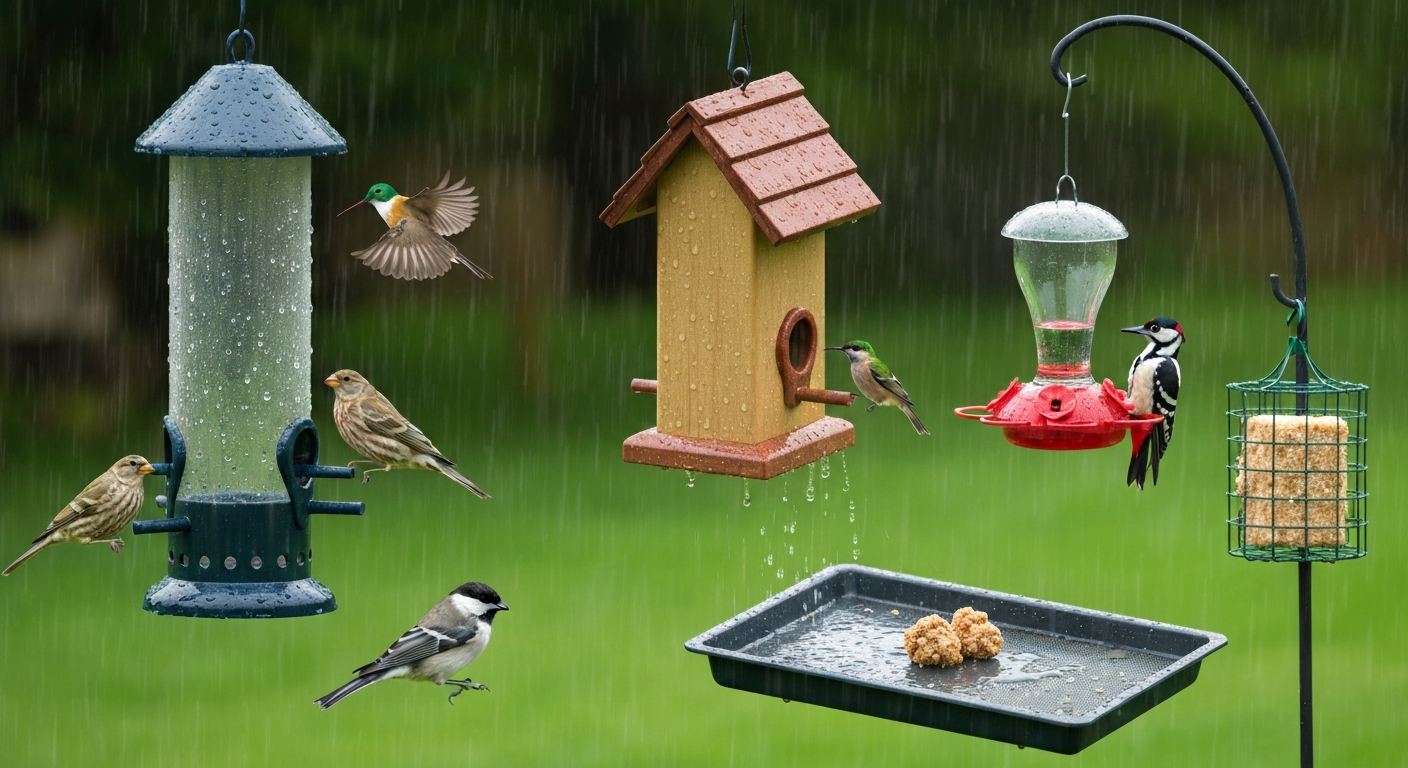
Not all feeders handle wet weather the same way. The design of your feeder is probably the single biggest factor in whether rain is a minor inconvenience or a genuine problem.
| Feeder Type | Rain Vulnerability | Main Risk | Best Practice |
|---|---|---|---|
| Tube feeder (enclosed) | Low to moderate | Seed at bottom ports gets wet; plastic cracks over time | Choose models with drainage holes; check bottom ports after rain |
| Hopper feeder | Moderate | Seed in the reservoir gets wet if roof is small or angled poorly | Use wide-roofed hoppers; check for clumping after heavy rain |
| Platform / tray feeder | High | Fully exposed; seed soaks quickly | Only use with drainage mesh; dump and refill after every rain |
| Suet cage | Low | Suet softens and smears in prolonged heat + rain; can turn rancid | Use no-melt suet in warm months; move under shelter in storms |
| Nectar / hummingbird feeder | High | Rain dilutes nectar and accelerates fermentation and bacterial growth | Change nectar every 1–2 days in rainy or hot weather |
| Ground tray | Very high | Seed soaks immediately; attracts pests; greatest disease risk | Use sparingly; clean and refill after every rain event |
Platform and ground feeders deserve special attention here. They have no protection at all, and wet seed sitting on an open tray is a fast track to mold and pest attraction. If you're using one regularly, treat it more like a daily or post-storm commitment rather than a set-and-forget setup.
How rain affects common bird foods
The type of food you're offering also determines how quickly rain causes a real problem. Some seeds and foods hold up reasonably well; others deteriorate fast.
| Food Type | Sensitivity to Wetting | What Goes Wrong | Action After Rain |
|---|---|---|---|
| Mixed seed (millet, milo, etc.) | High | Clumps, sprouts mold within 24–48 hrs in warm weather | Discard if clumped or smells sour; do not let it 'dry out and reuse' |
| Black-oil sunflower | Moderate | Shell resists brief wetting; hulled sunflower molds fast | Use in-shell seed in wet weather; check hulled chips daily |
| Nyjer / thistle | High | Fine seed clumps badly; sock feeders stay wet inside | Dump and replace after prolonged rain; check tube ports |
| Cracked corn | Very high | High starch content — molds extremely fast when wet | Offer only in amounts birds finish within hours; avoid in rainy spells |
| Suet cake | Moderate | Softens and smears in heat + rain; goes rancid; attracts flies | Switch to no-melt suet in summer; remove if visibly slimy |
| Nectar / sugar water | Very high | Diluted by rain; fermentation begins within days; yeasts produce ethanol | Replace every 1–2 days in rain or heat; discard immediately if cloudy |
One important note about wet seed: don't just let it dry out in the feeder and assume it's safe again. Extension and wildlife health sources are consistent on this point, once seed has been wet and clumped, you should discard it rather than wait for it to dry, because fungal growth can have already started at the cellular level before any visible mold appears.
Disease, spoilage, and fermentation, signs to watch for
You don't need a lab to tell when a feeder has gone bad after rain. There are reliable, observable signs that tell you it's time to clean out and start fresh.
- Clumped or matted seed that doesn't pour freely from the feeder
- Visible gray, green, or black fuzz anywhere inside the feeder or on seed
- A sour, musty, or fermented smell when you open or empty the feeder
- Nectar that looks cloudy, discolored, or has visible floating particles
- Seed that feels damp or sticky to the touch, even without visible mold
- A slick or slimy film on suet or on the inside surfaces of the feeder
- Unusual absence of birds at a feeder that's normally busy — sometimes birds detect spoilage before you do
Fermentation in hummingbird feeders is worth flagging specifically. Research published in 2023 detected measurable ethanol concentrations in hummingbird feeders from yeast fermentation, and the process accelerates sharply with heat. If your hummingbird feeder has been sitting in warm, rainy weather for more than two days, the nectar is almost certainly fermenting whether it looks cloudy or not. Change it.
Species-specific considerations
Hummingbirds
Hummingbirds are probably the most rain-sensitive feeder visitors you'll have. Their nectar spoils fastest, and they're small enough that ingesting fermented or bacteria-laden nectar poses a genuine health risk. Cornell Lab and Audubon both recommend changing nectar every 3–5 days under normal conditions and more frequently in hot or humid weather. Rain dilutes the sugar concentration and creates additional entry points for yeast and bacteria, so in summer rainy spells, every 1–2 days is a reasonable target. If you notice the feeder is being topped off by rain rather than emptied by birds, that's a red flag, diluted nectar ferments even faster.
Seed-eating birds
Finches, sparrows, chickadees, and similar birds that eat seed from tube or hopper feeders are at risk primarily from moldy seed. Many of these species visit feeders in large numbers and in close proximity to one another, which is also exactly the transmission dynamic that makes pathogens like Mycoplasma gallisepticum and Salmonella spread efficiently. Wet seed that stays in a feeder becomes a contact surface for dozens of birds per day. Keeping seed dry or replacing it promptly after rain is the most effective single thing you can do to reduce disease transmission risk at these feeders.
Suet consumers
Woodpeckers, nuthatches, and other suet visitors are less sensitive to brief rain events, since suet cages drain well and the fat in suet provides some resistance to spoilage. The issue comes during extended warm, wet weather when standard suet softens, smears across the cage, and begins to go rancid. Rancid fat smells distinctive and birds will often stop visiting when it gets bad. In summer, switch to commercially available no-melt suet formulations, which are designed to hold up in temperatures up to around 90°F.
Ground foragers
Doves, towhees, juncos, and other birds that prefer to feed at ground level or on low platforms face the highest exposure to wet, spoiled, or contaminated seed. Ground-level feeding also means birds are coming into contact with accumulated feces, debris, and soil, all of which amplify disease risk. After rain, ground trays and any seed that has spilled beneath a feeder should be the first things you attend to. Wet, scattered seed on the ground also becomes a strong attractant for rodents and insects, which creates a secondary pest problem.
When to bring feeders in, a clear set of decision rules
I don't think it's necessary, or realistic, to bring feeders in every time it rains. But there are specific situations where bringing them in, or at least emptying them, is the right call. For a quick decision guide, see should i bring my bird feeder in when it rains.
- Bring in or empty hummingbird feeders if you won't be able to change the nectar within 48 hours during warm weather, or if heavy rain will dilute and top off the feeder.
- Bring in or empty platform and ground tray feeders before any significant rainfall event — these have no drainage and will collect standing water immediately.
- Empty tube and hopper feeders if a multi-day storm is forecast and you won't be around to check them; a dry, empty feeder is safer than a feeder full of soaking seed.
- Remove any feeder immediately if you see sick birds at it — birds with swollen or crusty eyes, unusual lethargy, or ruffled feathers sitting on or near the feeder. Clean and disinfect before returning it.
- Empty and discard all seed if it's already wet, clumped, or smells sour — don't wait to see if it dries out.
- Consider temporary removal during documented disease outbreaks in your region (your state wildlife agency or Cornell's eBird disease alerts are good sources for this).
- Leave feeders out without concern during brief passing showers if your feeder design has good drainage and shelter, and you check them within 24 hours afterward.
Weatherproofing and placement fixes
If you're finding that rain is a recurring problem at your feeders, the solution is usually a combination of better placement and smarter feeder setup rather than constantly bringing feeders inside. Here's a step-by-step approach that works well in practice.
- Position feeders under the eaves of a roof, a covered porch, or a large tree canopy. Even a partial overhang significantly reduces how much rain falls directly into the feeder.
- Add a weather baffle or dome above hanging feeders. Wide dome baffles (at least 15–18 inches in diameter) positioned 6–10 inches above the feeder provide effective rain coverage.
- Choose feeders with angled or sloped roofs on hopper-style designs. Flat-roofed hoppers pool water; a steep pitch sheds it quickly.
- Verify that tube feeders have drainage holes at the base of the seed chamber. If yours don't, a small drill bit can add them — many birders do this to factory-made feeders.
- Orient feeder openings or ports away from the prevailing wind direction. This reduces driven rain entering feed ports during storms.
- Use screened or mesh trays under feeders rather than solid trays. Mesh allows water to drain through rather than pooling under the seed.
- In exposed locations, consider a feeder pole with a wind break or place feeders near a fence or hedge that blocks prevailing weather without eliminating bird access.
Feeder and seed choices that resist wetting
Some feeders and foods handle wet conditions much better than others. For a simple, rain-friendly option, consider a watering can bird feeder, its tilted body and built-in drainage help keep seed dry while providing an attractive perch for birds. If you live in a consistently rainy climate, these choices make maintenance substantially easier. Feeder design materially affects how much seed gets wet; Feeding Birds - Project FeederWatch (Cornell Lab project guidance) recommends covered hoppers, enclosed tube feeders with roofs or screened/draining trays and drainage holes to reduce moisture accumulation.
- Metal or recycled-plastic feeders: these don't crack, warp, or absorb moisture the way standard plastic or wood does. They're easier to dry and disinfect.
- Enclosed tube feeders with drainage holes: seed stays protected and water drains before it pools.
- In-shell black-oil sunflower seeds: the shell provides a natural moisture barrier. Hulled chips or hearts are convenient but mold significantly faster when wet.
- Peanuts in the shell: hold up well in brief rain; avoid shelled pieces in wet weather.
- No-melt suet formulations: designed to stay firm in warm, humid conditions where standard suet would smear and go rancid.
- Avoid millet mixes, cracked corn, and hulled grains in open or exposed feeders during rainy periods — these are the fastest foods to go bad when wet.
How to clean and dry your feeders properly
Regular cleaning is the single most effective action you can take to keep feeders safe, and wet weather should prompt more frequent cleaning than you might do in dry seasons. The CDC recommends a 1:9 bleach-to-water solution for disinfection, that's 1 part household bleach to 9 parts water, which works out to roughly 1.5 cups of bleach per gallon of water. Here's the full procedure:
- Empty the feeder completely. Discard any wet, clumped, or moldy seed — don't compost it or leave it on the ground.
- Scrub the feeder with hot soapy water and a stiff brush, paying particular attention to perches, ports, and any crevices where seed or feces accumulate.
- Rinse thoroughly with clean water to remove all soap residue.
- Submerge or thoroughly wet all surfaces with the 1: 9 bleach solution. Soak for at least 10 minutes.
- Rinse again thoroughly with clean water. Multiple rinses are better than one.
- Do not clean feeders in the kitchen sink — use an outdoor hose, utility sink, or a dedicated bucket. This reduces the risk of Salmonella contamination in your home.
- Allow the feeder to dry completely before refilling. This step is critical and often rushed. A damp feeder re-introduced to seed immediately defeats the purpose of cleaning.
- Wash your hands with soap and water after handling feeders, even if you wore gloves.
A diluted white vinegar solution (1:1 vinegar to water) is sometimes suggested as a gentler alternative for routine maintenance cleaning between deep disinfections. It's effective at cutting through light residue and is safe to use more frequently. However, for post-rain disinfection when disease risk is elevated or when you've seen sick birds, the bleach solution is the evidence-backed standard.
Post-storm maintenance checklist
After any significant rain event or storm, run through this quick checklist before deciding to refill and move on.
- Check all seed in tube and hopper feeders by feel and smell — discard anything damp, clumped, or sour.
- Empty and rinse platform or tray feeders; allow to dry before refilling.
- Replace hummingbird nectar if it has been more than 24 hours in warm weather or if the feeder was topped off by rain.
- Inspect suet cages — discard suet that is soft, slimy, or smells rancid.
- Remove all wet, spilled seed from the ground beneath feeders immediately.
- Check drainage holes on tube feeders to make sure they haven't become blocked by debris.
- Wipe down exterior feeder surfaces, perches, and ports with the diluted bleach or vinegar solution.
- Look for any birds showing signs of illness at or near the feeders before refilling.
Reducing mess and pest attraction from wet feeders
Wet seed that spills or drops from feeders is one of the most reliable ways to attract rodents, ants, slugs, and flies. If you’re wondering whether do bird feeders make a mess, check our guide on managing spilled seed and pest attraction. This is a problem regardless of rain, but rain accelerates it significantly because wet seed spreads, compacts into the soil, and ferments in place.
- Sweep or rake spilled seed from beneath feeders within 24 hours of a rain event — don't leave wet seed on the ground to dry.
- Use a seed catcher tray under tube feeders with a mesh bottom so water drains through rather than pooling under a wet seed pile.
- Reduce fill amounts in rainy weather so birds empty the feeder before seed sits long enough to get wet.
- Spread a layer of gravel or coarse mulch beneath feeders rather than bare soil or mulch that holds moisture — this discourages rodents from nesting in damp, seedy ground cover.
- If ants are becoming a persistent problem at hummingbird feeders, a water-filled ant moat on the hanging wire effectively blocks them without chemicals.
- Store your seed supply indoors in a sealed container — damp seed in a storage bag or open bag outside is where rodent and insect problems often actually start, not at the feeder itself.
Troubleshooting common post-rain problems
Seed is clumped and stuck in the feeder
Don't try to poke it through or dry it in place. Remove the seed entirely, clean the feeder with hot water and a brush, and let it dry completely. If the clumping is recurring, the feeder either lacks drainage holes or is positioned where it catches too much rain. Adding drainage holes at the base and moving the feeder under shelter usually solves it.
Nectar smells fermented or looks cloudy
Discard it immediately. Rinse the feeder with hot water, then follow the bleach cleaning procedure above. Refill with fresh nectar (4 parts water to 1 part plain white sugar, do not use honey, brown sugar, or artificial sweeteners). In warm or rainy weather, consider making smaller batches so you're not throwing out a full feeder's worth every few days.
Suet has softened or gone slimy
Remove and discard the suet cake. Scrub the suet cage with hot soapy water and rinse well. In summer, switch to a no-melt formulation rather than a standard beef suet cake. If the problem is ongoing, move the suet cage to a shaded spot or under a covered area, direct sun combined with rain on warm days is the fastest way to ruin suet.
Persistent leaks or pooling inside a feeder
First check whether drainage holes are present and clear. A toothpick or small wire can clear blocked holes. If the feeder has no drainage, adding small holes at the lowest point of the seed chamber with a drill is a straightforward fix. If the roof or lid is the problem, cracked or warped so it no longer sheds rain properly, that's usually a sign the feeder needs replacing. Trying to seal cracks with adhesive tape or caulk rarely holds for long and can create surfaces that are harder to clean.
Balanced takeaways for everyday wet-weather feeding
You don't need to be anxious every time it rains, and you don't need to treat every feeder like it requires hospital-grade management. What you do need is a consistent habit of checking feeders after wet weather, discarding anything that got too wet, and cleaning regularly enough that pathogens don't accumulate on surfaces. Most of the serious problems, mold, Salmonella, MG, fermented nectar, are problems of neglect over time, not problems caused by a single rainstorm.
The practical hierarchy looks like this: nectar feeders need the most attention in wet weather, followed by platform and ground trays, then open hopper feeders, with enclosed tube feeders requiring the least intervention. Suet is somewhere in the middle depending on temperature. If you have limited time and can only manage one thing after a heavy rain, prioritize the hummingbird feeder and any open tray feeders first.
Choosing the right feeder design and positioning it thoughtfully, under cover, with drainage, away from driven rain, is ultimately more sustainable than trying to compensate through constant maintenance. Get the setup right and the post-rain checklist becomes a quick five-minute task rather than a recurring headache.
FAQ
Short answer: can you leave bird feeders out in the rain?
Yes — but with caution. Many feeders can remain out during light rain if they have good covers/drainage; however, wet seed and nectar increase spoilage and disease risk. Bring in or protect feeders when rain is heavy, prolonged, or combined with cold temperatures, or during local disease outbreaks.
How does rain affect different feeder types?
Platform feeders and open trays collect water and wet seed quickly and are highest risk. Tube and hopper feeders with roofs keep seed drier; look for models with overhangs and drainage holes. Suet cages expose suet to moisture unless under cover; suet cakes can soften or spoil. Hummingbird feeders with small ports can trap water in ports and reservoirs, promoting microbial growth if not covered or regularly changed.
How does rain affect common foods (mixed seed, sunflower, suet, nectar)?
Mixed and hulled seed clumps and can develop mold or bacterial growth when wet. Sunflower (especially shelled) gets soggy and ferments or molds faster. Suet becomes soft and may encourage surface microbial growth or spoilage. Nectar (sugar water) is a rapid growth medium for yeasts and bacteria when warm or contaminated; rainwater diluting nectar can change concentrations and promote microbial growth.
What disease and spoilage risks come from wet seed and fermented nectar?
Wet seed and fermented nectar promote bacterial and fungal growth (including yeasts) that can cause avian illness and attract pathogens like Salmonella or Mycoplasma-related contamination at feeders. Mold and certain fungi (Aspergillus) can produce harmful spores and mycotoxins. Fermented nectar produces ethanol and other byproducts that can affect hummingbird health; elevated microbial loads increase disease transmission risk via shared feeder surfaces.
Are certain bird species more at risk in rainy conditions?
Hummingbirds: higher risk from fermented or diluted nectar; clean feeders frequently and change solution every 3–5 days (more often in heat). Seed-eaters (finches, sparrows, cardinals): at greater risk from moldy or clumped seed and contaminated feeder ports. Suet consumers (woodpeckers, nuthatches): exposed suet can get greasy or grow surface microbes when wet. Overall, cold, wet conditions can prolong pathogen viability on feeder surfaces, increasing indirect transmission risk.
When should I bring feeders in? (Clear decision rules)
Bring feeders in or cover them when any of these apply: heavy or prolonged rain; visible wet/clumped seed or cloudy, foamy, or fermented nectar; local bird-disease advisories or outbreaks; temperatures near freezing that will keep surfaces wet for long periods; feeder parts damaged so water pools. For short showers with well‑designed, covered feeders, leaving them out is usually acceptable.
Next Article
Should I Bring My Bird Feeder In When It Rains?
Decide whether to bring bird feeder in during rain by feeder type and food safety, plus cleaning tips to prevent mold an