Birds aren't using your feeder for one of a handful of very fixable reasons: wrong seed, bad placement, dirty feeder, or simply not enough time. Bees may also show up at the same feeder because sugary liquids or spilled seed can attract them. Most people who contact me about this problem find the culprit within the first three items on this list. Work through each section below and you'll almost certainly identify the issue today.
Why Aren’t Birds Using My Bird Feeder? Fixes Today
Eleanor Hartwick
1 Jul 2026
First, confirm what you're actually looking for
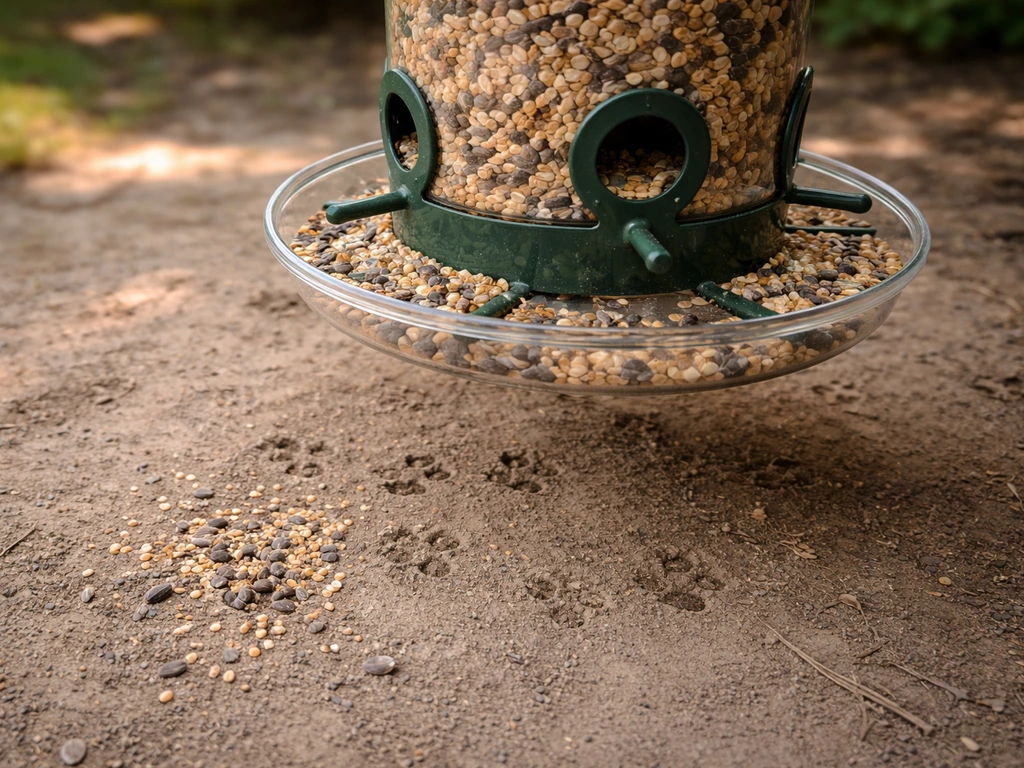
Before you start changing things, it helps to define what 'using the feeder' actually looks like. Birds don't announce their visits. A feeder that looks untouched at 9am might have been busy at 6am. The clearest signs birds are using a feeder are: seed levels dropping over days, shell debris or droppings on or below the feeder, and of course direct sightings. If all three of those are absent after two full weeks, you have a genuine problem worth diagnosing. If seed has dropped even slightly and you've spotted a bird or two in nearby trees, give it more time before assuming something is wrong.
It's also worth ruling out a simple awareness gap. Research tracking first-visit behavior on brand-new feeders shows that even in well-populated yards, there can be a measurable lag between a feeder going up and the first bird exploring it. Birds are cautious. A new feeder is an unfamiliar object and it takes time for local birds to decide it's safe. Two weeks is a reasonable minimum wait before concluding your setup isn't working.
Placement and access: where the feeder sits matters more than most people think
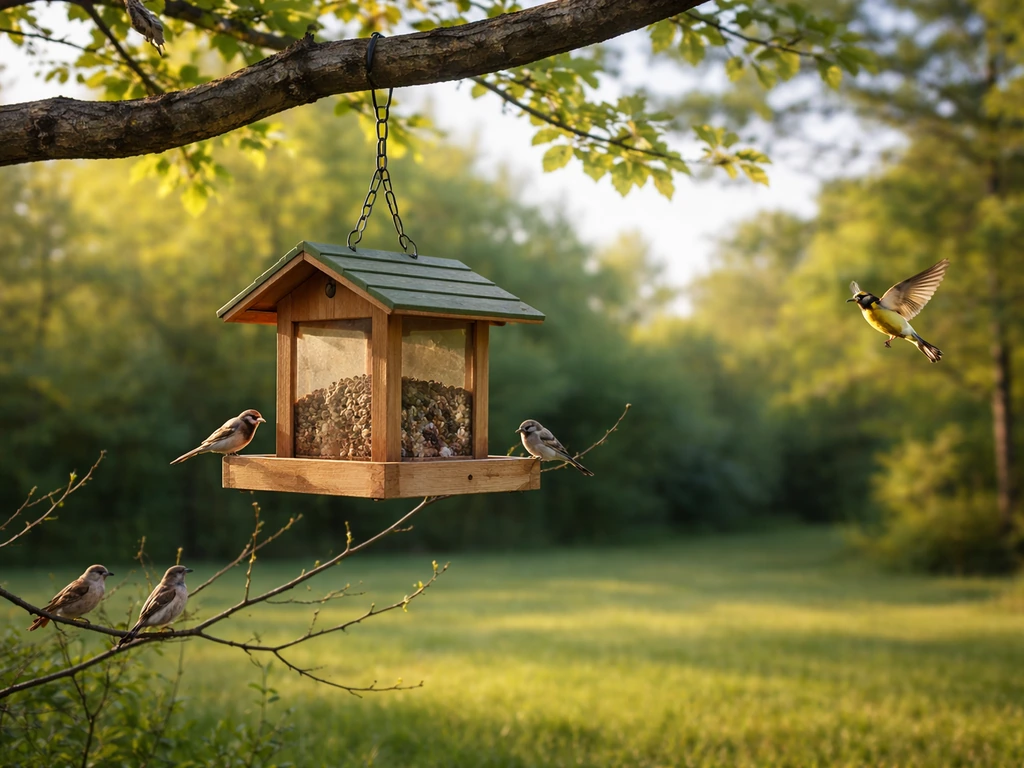
This is the most commonly overlooked factor. Birds need to be able to see the feeder from a perch they already use, and they need a safe escape route nearby. If you are seeing larger blackbirds like common grackles at bird feeder instead of smaller songbirds, revisit placement and access so birds can land and escape safely. The sweet spot is about 10 to 15 feet from a shrub, bush, or tree. That's close enough for a bird to dart to cover if a hawk appears, but far enough that a cat or other predator can't crouch behind the bush and launch directly at the feeder. If your feeder is sitting in the middle of an open lawn with no cover within 20 or 30 feet, birds will notice it but won't feel comfortable landing.
The opposite problem also happens: a feeder jammed right into a dense hedge. That setup makes birds nervous too, because they can't see threats approaching from multiple directions. Aim for open sightlines on at least two or three sides with a shrub or tree within a short flight distance.
Height matters less than people expect, but a feeder hung at eye level or lower is often more exposed to foot predators and may make birds uncomfortable. A pole or hook that puts the feeder at roughly five to six feet off the ground is a practical default. If you're mounting a feeder on a window, make sure it's either within three feet of the glass or more than 30 feet away to reduce collision risk.
Seed type and freshness: the fastest thing to get wrong
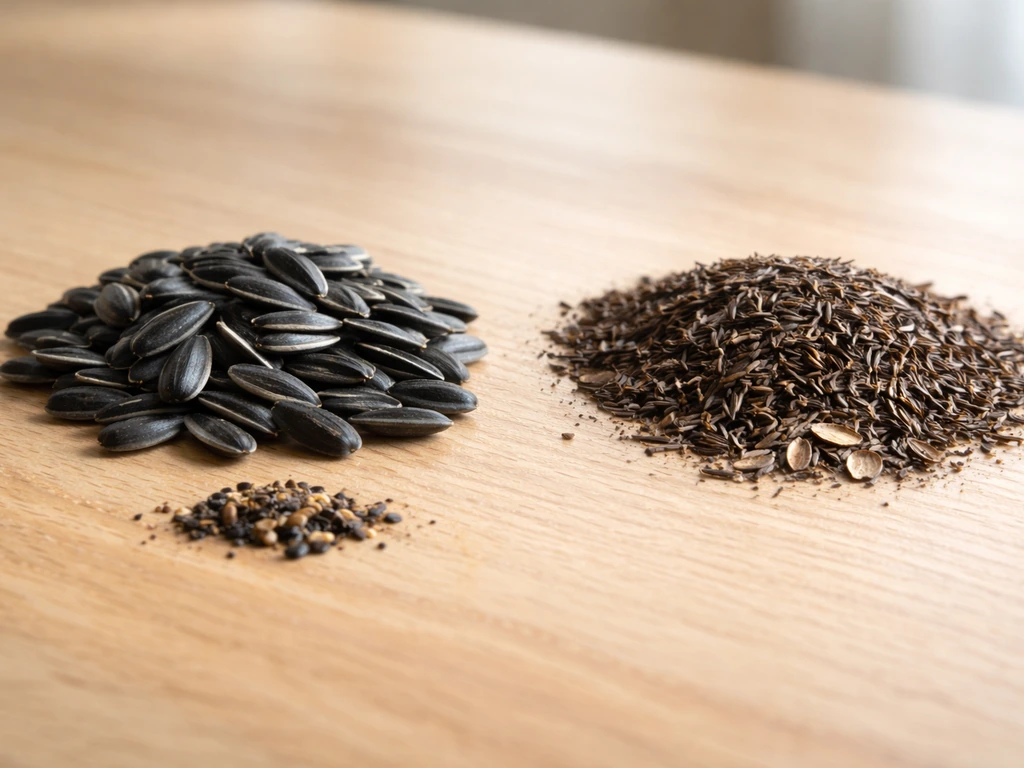
If placement seems fine, the seed is usually the next thing to check. The single most versatile seed you can offer is black-oil sunflower. It has thin shells that a wide range of seed-eating birds can crack open easily, it's energy-dense, and it's the most commonly accepted seed at North American feeders. If you're currently using a generic 'wild bird mix' from a bargain bin, check the ingredient list. Many cheap mixes are padded with filler seeds like milo, oats, or wheat that most backyard birds ignore entirely. Those fillers sit in the feeder while birds pick around them, and eventually the whole thing goes stale.
Nyjer (sometimes called thistle) is excellent for finches, but it requires a special feeder with tiny ports. If you're putting nyjer in a standard feeder with large ports, it'll pour out the bottom and go to waste. Safflower is a solid secondary seed that cardinals particularly like. Millet is fine but redundant if you're already offering black-oil sunflower, since birds that eat millet will typically eat sunflower too.
Freshness is critical. Seed that's been sitting in a feeder through rain cycles, humidity, or extreme heat can go rancid or develop mold, and birds can smell and taste the difference. If the seed in your feeder has been there for more than a few weeks, or if it looks clumped, discolored, or smells musty, dump it entirely. Don't tip stale seed onto the ground either since that just creates a ground-level contamination problem and can attract rodents. Bag it and bin it.
Feeder design and setup: small details that block birds
Even with the right seed in the right place, a poorly designed or incorrectly assembled feeder can make feeding difficult or impossible. Check these specifics:
- Port size: Ports that are too small won't allow seed to flow through freely, especially if the seed is larger than the port was designed for. Sunflower seed needs a standard-sized port; nyjer needs a tiny one. Mismatch and the feeder functionally runs empty even when it's full.
- Perch availability: Some birds, particularly larger ones like jays or cardinals, won't attempt to feed if perches are too small or too close to the port. Conversely, very wide perches on tube feeders can attract larger bully birds that crowd out smaller species.
- Seed flow: Tube feeders can jam if seed gets damp and clumps. If seed isn't flowing down to the ports naturally when you shake the feeder, it's clogged. You'll need to empty and clean it.
- Weather protection: A feeder with no roof or cover lets rain in directly. Wet seed clumps, goes rancid faster, and can develop the kind of mold that makes birds sick. If your feeder has no baffle or cover, that's worth addressing.
- Feeder color and newness: A brand-new bright red or yellow feeder isn't a problem for most birds, but a feeder that's been sun-bleached, cracked, or warped may be structurally preventing seed flow.
Cleanliness: mold and residue drive birds away fast
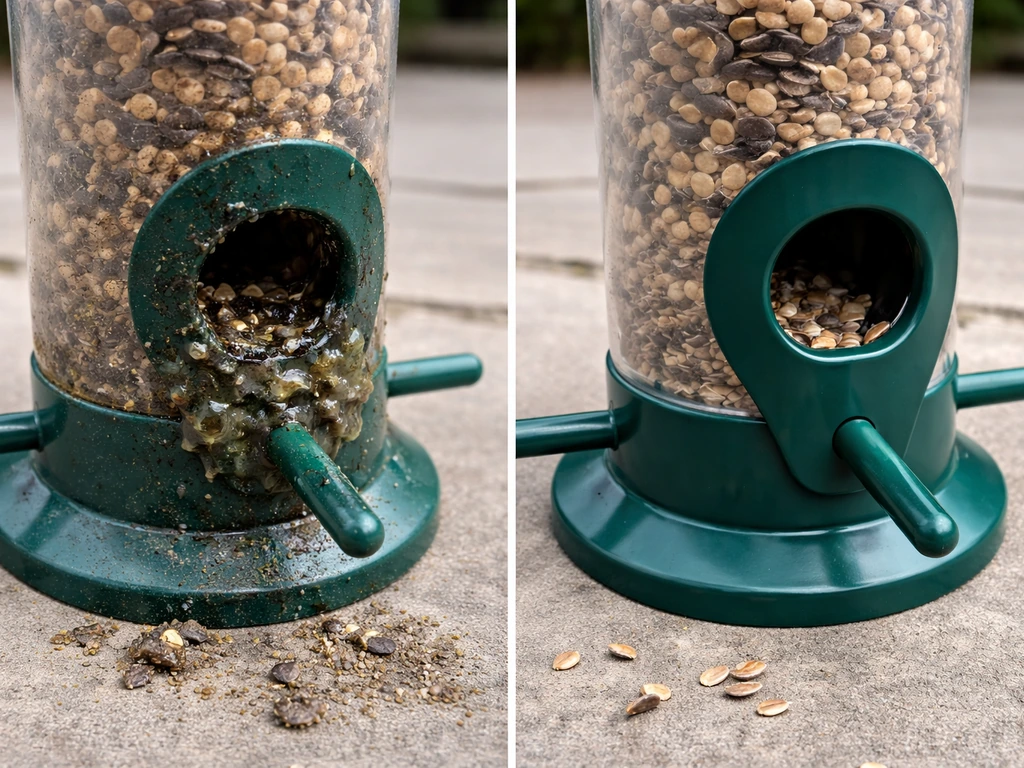
A dirty feeder is one of the most reliable ways to stop birds from visiting. Mold, bacteria, and seed residue build up quickly, especially in warm or wet weather, and birds avoid contaminated food sources. This isn't just an aesthetic issue: moldy seed can make birds seriously ill.
For general seed feeders, a monthly cleaning is a reasonable baseline. The Iowa DNR recommends cleaning seed and general bird feeders and waterers about once each month using about a 10% bleach solution, and making sure the feeder is dry before refilling with seed monthly cleaning is a reasonable baseline. Take the feeder apart and wash it with soap and hot water, then sanitize with a dilute bleach solution of 1 part bleach to 9 parts water (or roughly 2 ounces of bleach per gallon of water). Soak for about 10 minutes, scrub away any debris or old seed, rinse thoroughly, and let it dry completely before refilling. This last step matters: refilling a damp feeder just re-introduces the moisture that causes mold. During hot summer months or if birds are using the feeder heavily, cleaning every two weeks is better than monthly.
Don't forget the ground below the feeder. Spilled seed and droppings accumulate there and contribute to bacterial and mold contamination. Rake or clear that area regularly. Letting it build up also attracts rodents, which can create a secondary problem that discourages birds from landing.
If you're running a hummingbird feeder alongside your seed feeders, the stakes are even higher. Sugar water degrades fast, especially in summer heat, and should be changed every two to three days at a minimum. Flathead Audubon also notes that sugar water should never be left out more than 2, 3 days and should be changed more often in hot weather sugar water should never be left out more than 2–3 days and should be changed more often in hot weather. Mold in a hummingbird feeder shows up as black residue inside the bottle and should trigger an immediate clean with the same dilute bleach solution, plus a full rinse and dry cycle.
Wildlife conflicts: when other animals are the problem
If birds are approaching but not landing, or if your seed is disappearing without any birds visiting, wildlife interference is likely. Squirrels are the most common culprit. They can empty a feeder in hours, and their presence on or near the feeder is often enough to make smaller birds avoid the area entirely.
No setup is completely squirrel-proof, but two approaches work well in practice. The first is a baffle: a dome or shroud mounted on the pole below the feeder that squirrels can't get past. Some designs are weight-activated and close off the feeding ports when a squirrel pulls on the feeder. The second approach is a cage feeder, where the seed is surrounded by wire mesh with gaps sized to let small birds in but block squirrels. Placement matters here too: a pole-mounted feeder needs to be at least five feet from any horizontal surface a squirrel can jump from, including fences, tree branches, and the edges of decks.
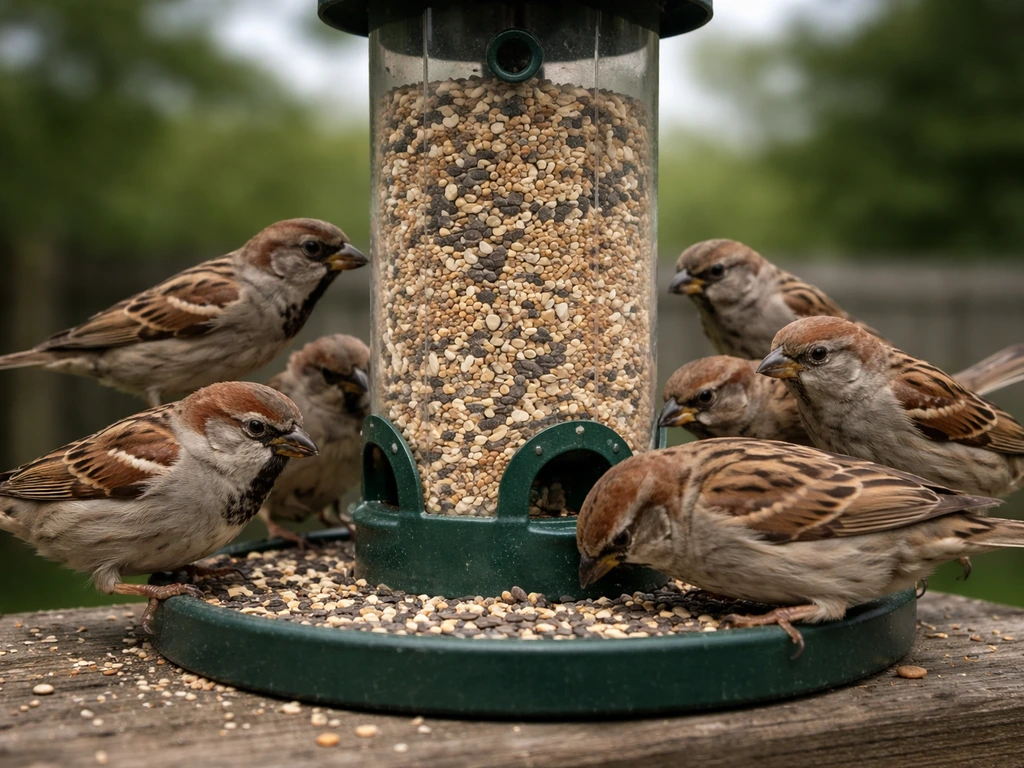
Other interlopers worth considering: raccoons (mostly a nighttime feeder problem, bringing the feeder in at dusk is an easy fix), ants (grease or sticky baffles on the pole help), and bully bird species. Large, aggressive birds like common grackles can dominate a feeder and make smaller songbirds reluctant to visit. If you're seeing a particular species monopolizing your feeder, switching to a cage-style feeder that excludes larger birds, or offering safflower instead of sunflower (which grackles tend to ignore), can shift the balance. If only sparrows are visiting your feeder, it usually comes down to the seed type, feeder access, or whether other birds find the setup safe and convenient sparrows visiting your feeder.
Timing and season: sometimes you just need to wait
This is the hardest one to accept, but it's genuinely true: sometimes birds aren't using your feeder because they don't need it right now. In late spring and summer, natural food sources like insects, berries, and wild seeds are abundant. Birds that visited your feeder all winter may simply be foraging naturally and have less reason to stop by. This doesn't mean your setup is wrong.
Feeder use typically peaks between November and April in most of North America, when natural food is scarce and birds rely more heavily on supplemental feeding. If you set up your feeder in July and nothing is happening, that's partly seasonal. Keep it clean, keep it stocked, and birds will find it. When conditions shift in the fall, you'll likely see a noticeable increase in activity.
Year-to-year variation is also real. Some years, local bird populations are smaller, migration patterns shift, or a nearby natural food source is particularly productive. The University of New Hampshire Extension notes that feeder visitation can genuinely fluctuate from year to year for reasons outside your control. That doesn't mean you're doing anything wrong.
What to check and fix today: a quick recap
| Problem | What to look for | Fix today |
|---|---|---|
| Wrong placement | Feeder is in open with no cover nearby, or buried in dense shrubs | Move to 10–15 feet from a tree or shrub with open sightlines |
| Wrong or poor-quality seed | Cheap mix with filler seeds, or seed that looks clumped or smells off | Switch to black-oil sunflower seed; dump any old or questionable seed |
| Stale or moldy seed | Clumped, discolored, or musty-smelling seed in the feeder | Empty feeder, clean with dilute bleach (1:9), dry fully, refill with fresh seed |
| Dirty feeder | Residue, black spots, or debris on the feeder interior or ports | Disassemble, wash with soap and hot water, soak in bleach solution 10 minutes, rinse, dry |
| Feeder design issue | Ports clogged, perches wrong size, no weather cover | Clear clogged ports, confirm seed type matches port size, add a roof baffle if possible |
| Squirrel or wildlife interference | Seed disappearing fast, no bird sightings, squirrels seen on feeder | Add a pole baffle or cage feeder; move feeder away from jump-off surfaces |
| Seasonal low demand | Setup seems correct but it's late spring or summer | Keep the feeder clean and stocked; expect more activity from October onward |
Bird feeding is more nuanced than it looks from the outside, and it's genuinely common to go several weeks without activity even with a solid setup. Work through placement, seed quality, and cleanliness first since those three factors solve the problem in the vast majority of cases. If you've addressed all of them and you're still not seeing birds after a few more weeks, think about the season and whether wildlife competition might be the hidden variable. You'll get there.
FAQ
How can I tell if birds are avoiding my feeder because of something specific, not just lack of time?
Yes, but only as a troubleshooting step. If you see zero drop in seed and no birds for two full weeks, take the feeder down for 24 to 48 hours, check it for contamination or assembly issues (ports clogged, wrong cage type for the seed), then reinstall and give it another 1 to 2 weeks. Leaving a questionable setup up can keep discouraging birds if the feeder smells musty or if mold is forming.
Should I change the seed right away if birds aren’t using the feeder?
Start by offering a known, broadly accepted seed, then switch once, not repeatedly. If you currently use a wild-bird mix, replace it with black-oil sunflower for at least 10 to 14 days to see if visitation starts. Avoid quick back-and-forth changes because birds learn to use a feeder based on consistent, predictable food.
What should I look for on the bag label to avoid wasting money on seed birds won’t eat?
If you want to reduce filler-seed problems, check the ingredient list rather than trusting the label. Look for a mix that clearly includes black-oil sunflower or mostly sunflower, and avoid blends where most of the volume is milo, oats, or wheat. Inexpensive mixes can look full while birds eat around the filler, leaving the seed to stale.
What does it mean if the seed level drops but I never see birds at the feeder?
Use the feeder setup as an observation tool. If the seed level stays the same but you see seed hulls or droppings beneath, birds are visiting but maybe can’t land to feed well. If you see no hulls or droppings at all, the issue is usually access, placement safety, or seed quality, not just feeder design.
Is it okay to just refill the feeder instead of emptying it and cleaning it?
Avoid “topping off” with damp or previously used seed. If you’re refilling after rainy weather, empty the feeder, dry it fully, and refill with fresh dry seed. This matters because moisture trapped in the feeder accelerates mold, and birds will often stop returning even after you fix the problem.
Could my yard feel unsafe even if the feeder is in the right general height and distance range?
In many cases, yes. If your yard has nearby predators or foot traffic, move the feeder so it offers a quick getaway to cover within about 10 to 15 feet (shrubs or trees) and keep open sightlines on multiple sides. This reduces “approach hesitation” where birds check the area but won’t risk landing.
Can the feeder type be wrong for the birds I’m trying to attract?
Sometimes the culprit is the container itself. For example, if a seed feeder has oversized ports, small birds can’t access seed efficiently, and the larger-bird pattern can change. If you use caged or tube feeders, make sure the port size matches the seed type and the bird sizes you want to attract.
What’s the best way to handle seed that looks a little off, but not totally moldy?
Yes. Birds may keep returning to a feeder that is “good enough,” but they can avoid it if it smells like old seed. If you’ve had humid weather and the seed is clumped, discolored, or musty, empty and replace it completely. Don’t spread stale seed onto the ground because it can cause contamination at ground level.
How do I know if squirrels are the reason birds aren’t using the feeder?
If squirrels can access the feeder, birds often stop visiting the immediate area even if you never see them. Look for chewed seed husks, damaged feeder parts, or tracks around the base. The fastest fix is usually a properly sized baffle plus moving the feeder at least five feet from any horizontal launch surfaces like branches, fences, or deck edges.
What should I do if one bully bird keeps scaring off the smaller birds?
If you’re seeing mainly one aggressive species, that’s a “dominance” problem. A practical reset is switching to a feeder style that limits entry by larger birds (cage-style where appropriate) and changing the seed to something the dominant bird tends to ignore, like safflower instead of sunflower. Keep the rest consistent for 2 weeks so birds can adjust.
Why might my feeder work in winter but not during the summer, even if I do everything right?
Yes, bird behavior can be seasonal and still look like a failure. If it’s warm season and natural food is abundant, visitation can be low even with a perfect setup. Keep the feeder clean and stocked, but evaluate results using a full window: wait until conditions shift (often late summer into fall) before deciding the setup is wrong.
Does moving the feeder location help more than adjusting the height?
Not always, and distance depends on what’s happening around your feeder. If birds are dropping seed but not using the feeder, it may be a landing access or escape route issue rather than distance. If nothing shows up at all and the feeder is in open lawn, relocating to be within 10 to 15 feet of cover usually helps more than changing feeder height.
How can I reduce bees at or around my bird feeder without discouraging birds?
If bees are a concern, reduce attractants. Avoid sugary spills near the seed feeder, fix any leaking containers, and clean any sticky residue under or around the feeder. Also check if you’re running both seed and hummingbird setups, because sugar water access can pull bees in and discourage other visitors near the same area.
Next Article
Why Do I Only Get Sparrows in My Bird Feeder? Fixes
Diagnose why sparrows dominate your feeder and get step-by-step fixes for seed, feeder type, placement, and cleaning.