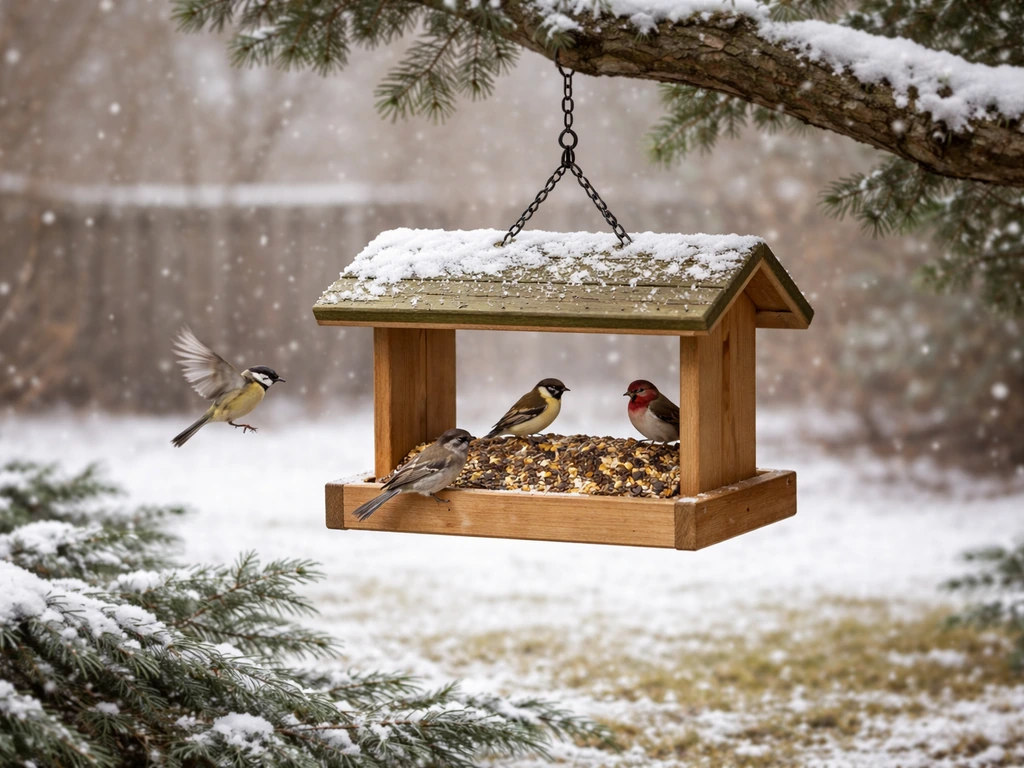
If birds have stopped coming to your feeder, or never showed up in the first place, there's almost always a fixable reason. The most common culprits are feeder placement, stale or wrong seed, a dirty feeder, or a nearby predator making birds feel unsafe. This guide walks you through each one so you can diagnose the problem today and make changes that actually work.
Why Aren't Birds Coming to My Bird Feeder? Fix It Fast
Eleanor Hartwick
2 Apr 2026
First, check what you're actually seeing
Before you change anything, get clear on the symptom. Are you seeing zero birds at any point during the day, or just not seeing them when you happen to look? Birds tend to visit feeders in short, active bursts, often early morning and again in late afternoon. If you're only glancing out the window once or twice a day, you might be missing them entirely.
It's also worth knowing that "no birds at my feeder" is a recognized, documented situation, not just a personal frustration. Project FeederWatch, the Cornell Lab's citizen science program, actually asks participants to log it as a specific data point: if you watched your feeders and no birds were present, you record that explicitly. That tells you this is a known, real phenomenon with identifiable causes, and not just you doing something wrong.
Ask yourself a few quick questions before diving into fixes: How long has the feeder been up? Has it ever attracted birds before, or is this a brand-new setup? Did birds stop coming suddenly, or has it always been quiet? Did anything change recently, like a new outdoor cat in the neighborhood, a tree trimmed nearby, or a change in the seed you're using? Your answers will narrow this down fast.
Placement problems that quietly keep birds away
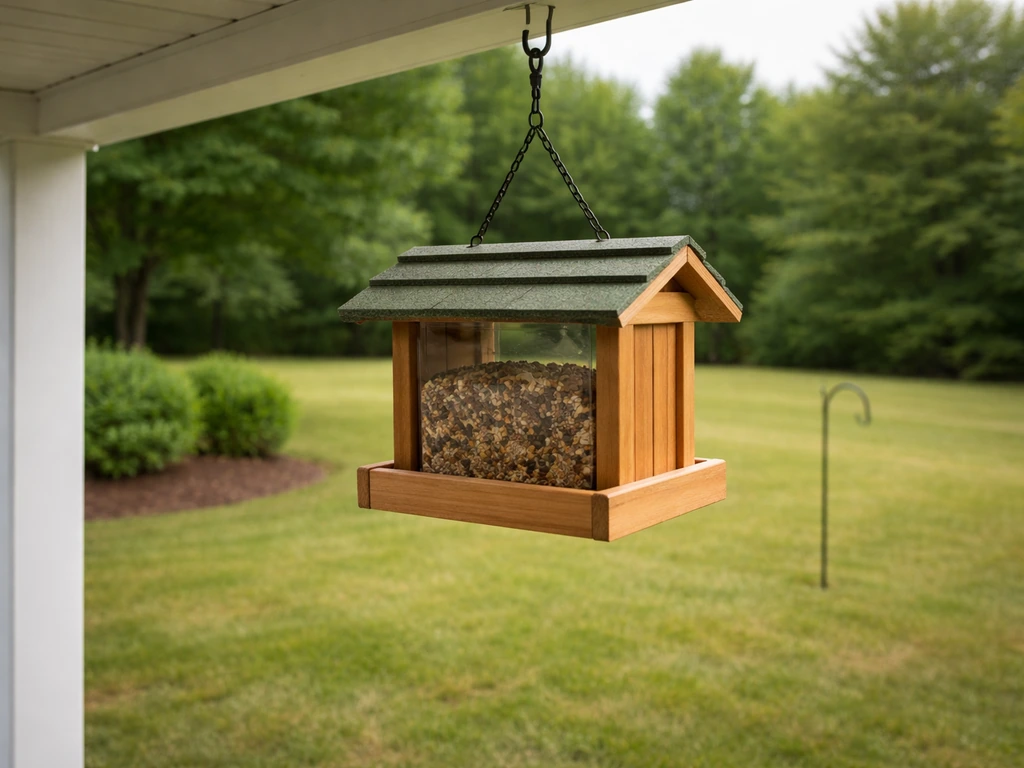
Placement is the most underrated factor in feeder success, and it's where I'd start if I were troubleshooting. Birds won't reliably visit a feeder where they feel exposed. The general guideline backed by Audubon is that birds need escape cover, like shrubs, hedges, or trees, within about 15 to 20 feet of your feeder. Without that nearby shelter, many species, especially smaller birds like sparrows, finches, and chickadees, will avoid the area entirely. If your feeder is sitting in the middle of an open lawn with no cover in sight, that's almost certainly your problem.
Height matters too. Ground-feeding birds like juncos and mourning doves prefer low platform feeders or seed scattered on the ground. Tube feeders hung at chest height or higher work better for finches and chickadees. If you've got a tube feeder sitting 18 inches off the ground or a platform feeder strung up high, you may be getting a mismatch between feeder style and the birds you're hoping to attract.
Window proximity is a factor people often overlook, and it cuts both ways. If your feeder is placed at an awkward middle distance from a window, say 5 to 25 feet away, birds may get injured or killed from window strikes, and the activity near the window itself can feel threatening. The practical guidance from Audubon Texas and the Hoy Audubon Society is consistent: place your feeder either within 3 feet of a window or more than 30 feet away.
Within 3 feet, a bird that does hit the glass won't have enough speed to injure itself. Beyond 30 feet, the reflection problem diminishes. That middle zone is genuinely the danger zone. If you want to go deeper on this issue, why birds aren't using your feeder covers some of the subtler environmental factors that come into play alongside window placement.
Also think about sun, wind, and general visibility. A feeder that bakes in full afternoon sun in April will warm seed faster, which can speed up spoilage. A feeder that's constantly swinging in wind is harder for birds to use comfortably. And a feeder that's hidden from bird flight paths, tucked in a corner behind a fence, won't be discovered easily. Birds largely find feeders by sight, so put yours somewhere visible from above and from nearby perching spots.
Seed type, seed quality, and how weather changes things
What you put in the feeder matters enormously. The seed that attracts the widest variety of birds is sunflower, specifically black-oil sunflower seed. The shells are thin enough that most seed-eating birds can crack them open, and the seeds are high in fat, which is especially valuable in cooler months. If you're filling your feeder with a cheap mixed seed blend, there's a good chance a large portion of it contains millet, milo, wheat, or other filler seeds that most birds will toss aside. That wasted seed piles up under the feeder, attracts rodents, and the birds still don't get what they want.
One more warning on seed quality: corn-based mixes are the bird food most likely to be contaminated with aflatoxins, which are highly toxic even in small amounts. The Oklahoma State University Extension fact sheet on aflatoxins in wildlife feed also explains that aflatoxins are produced by fungi and that minimizing contamination risk is important for wildlife corn-based mixes are the bird food most likely to be contaminated with aflatoxins. Avoid mixes heavy in cracked corn, especially if they've been sitting around for a while or stored in damp conditions. When in doubt, stick to straight black-oil sunflower or a blend where sunflower is the primary ingredient.
Weather affects feeder visits more than people expect. After a rain, seed in open platform feeders or poorly designed tube feeders gets wet fast, which accelerates mold growth and makes the seed less appealing. Cold, dry stretches often bring more birds to feeders because natural food sources are harder to find. Warm springs like the one we're moving into right now in early April can actually reduce feeder traffic temporarily because insects are emerging and natural seeds and berries become available again. That's not a problem you caused, it's just seasonality.
Feeder maintenance: cleaning and access issues
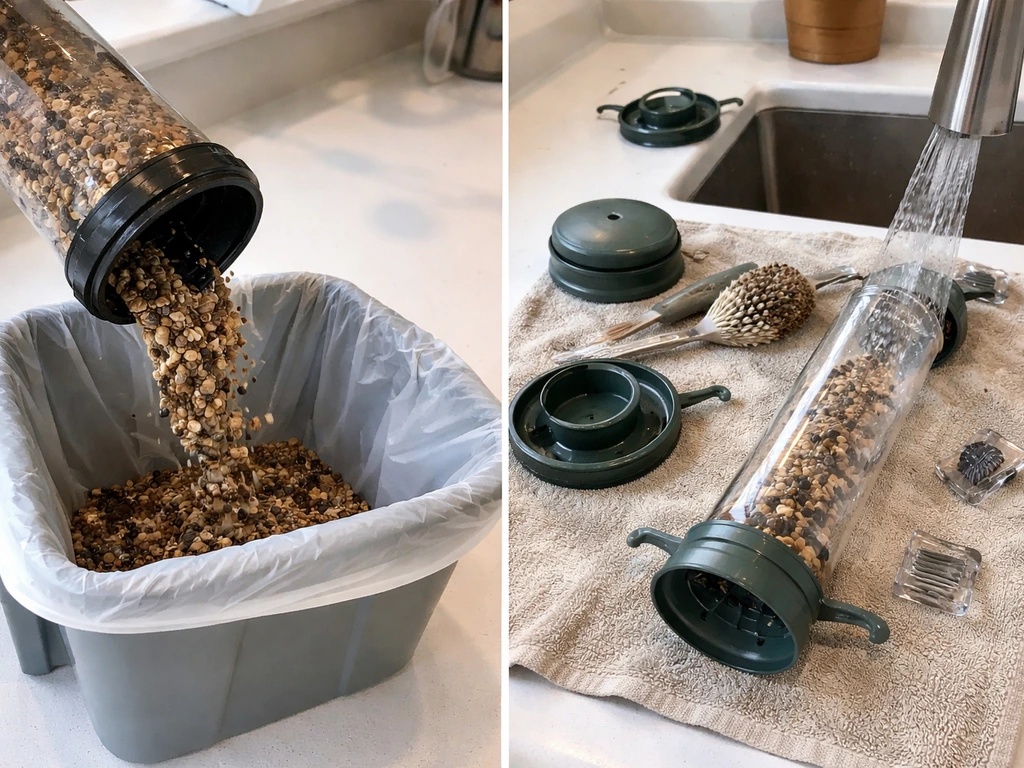
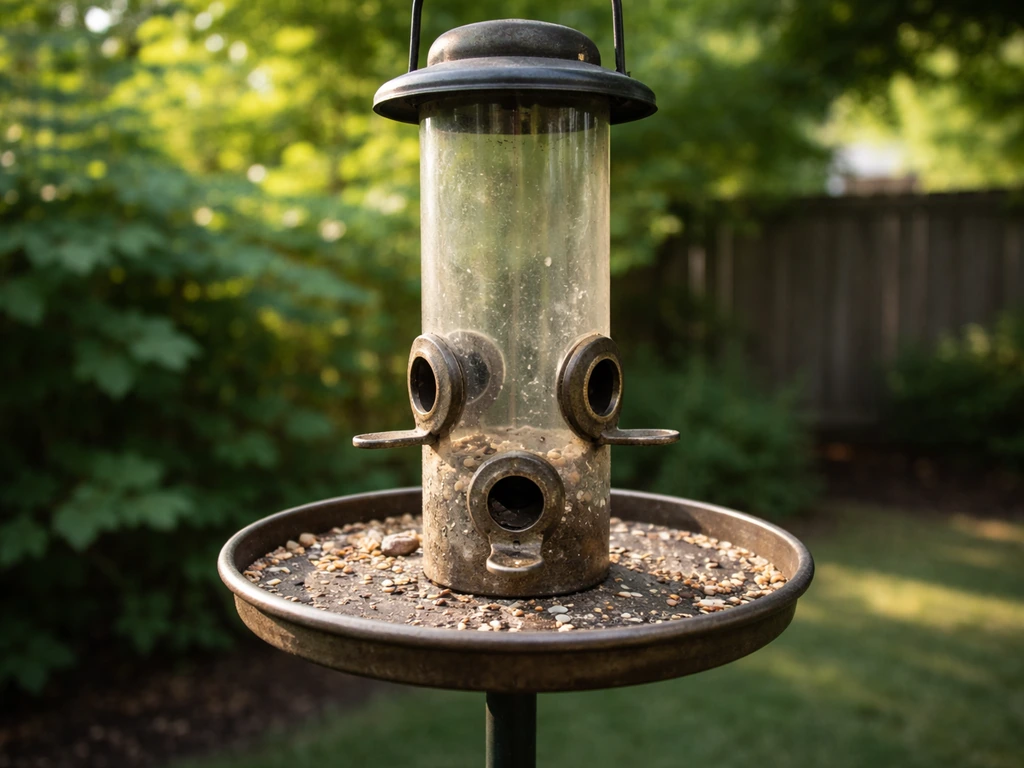
A dirty feeder is one of the most common and most fixable reasons birds stop visiting. Wet, moldy, or rancid seed doesn't just sit there, it actively repels birds and can spread disease among the birds that do visit. The consensus from Cornell Lab, Audubon, the U. S.
Fish & Wildlife Service, and UNH Extension is consistent: clean your seed feeders at least once every two weeks. The Cornell Lab's All About Birds recommends cleaning feeders about once every two weeks, and more often during heavy use, wet weather, or when there are reports of sick birds nearby clean your seed feeders at least once every two weeks.
In wet weather, during heavy use, or if you've heard reports of sick birds in your area, bump that up to weekly.
Here's how to actually do it properly. Take the feeder apart, dump out any old seed, and scrub all surfaces with hot water and a bottle brush. A diluted bleach solution (roughly 1 part bleach to 9 parts water) is more effective than soap and water alone at killing bacteria. Rinse thoroughly, then, and this part matters, let the feeder dry completely before refilling it. Putting fresh seed into a damp feeder just sets you up for the same mold problem within days. Also sweep up the spilled seed and debris under the feeder regularly. That pileup on the ground is a disease reservoir and a rodent magnet.
Beyond cleaning, check whether the feeder is actually accessible. Tube feeder ports can get clogged with compacted seed or debris. Platform feeders may have water pooling in them. Suet cages can freeze shut in cold weather. Check each port and feeding surface to make sure seed is actually flowing freely and birds can physically reach it. And if you're using suet, remember that suet goes rancid, especially as temperatures warm up into spring. If your suet cake has been out there for more than two weeks in warmer weather, replace it.
Predators and bully animals that scare birds off
If birds were visiting your feeder and then suddenly stopped, predator activity is high on my list of suspects. Free-roaming cats are one of the biggest threats to feeder birds, and birds are very good at recognizing and avoiding areas where they've been hunted. If a neighbor's cat has been lurking near your feeder, even once, the local bird population may have learned to avoid the spot. Keeping cats indoors is the most effective solution, but if that's not in your control, placing the feeder higher and adding physical barriers around the base can help. A baffle below the feeder pole reduces cat access and makes birds feel safer.
Hawks are another reason birds can vanish suddenly. A Cooper's hawk or sharp-shinned hawk that discovers your feeder has essentially found a buffet. When a hawk shows up, feeder birds scatter and may not return for hours or even days. This isn't something you did wrong, it's a sign your yard is healthy enough to attract predators, but it can be frustrating. Giving birds dense shrubs nearby to hide in reduces the hawk's success rate and helps birds feel safe returning sooner.
Squirrels are less of a safety deterrent for birds and more of a resource problem, but a feeder constantly monopolized by squirrels will reduce bird visits simply because squirrels eat or scatter the seed before birds get a chance. A squirrel baffle on the feeder pole is the most effective mechanical solution. Some tube feeder designs use weight-sensitive perches or downward-facing ports to block squirrels and larger animals without affecting smaller birds.
Bully birds, like common grackles at bird feeders, starlings, and pigeons, can take over a feeding station and crowd out the smaller, more desirable species you're hoping to see. Cage feeders that allow small birds to enter but block larger ones are one practical approach. Feeder designs with no perches, or with very short perches, tend to favor smaller birds like finches that can cling while eating, while excluding bully species that need a stable perch. A halo baffle above the feeder can also deter larger corvids and pigeons from landing.
If you've noticed bees showing up at your bird feeder, that can also be a deterrent for some birds, especially around hummingbird feeders where nectar attracts insects. Bees clustering around ports make it harder for birds to feed comfortably and can reduce traffic noticeably.
Seasonality and what to realistically expect right now
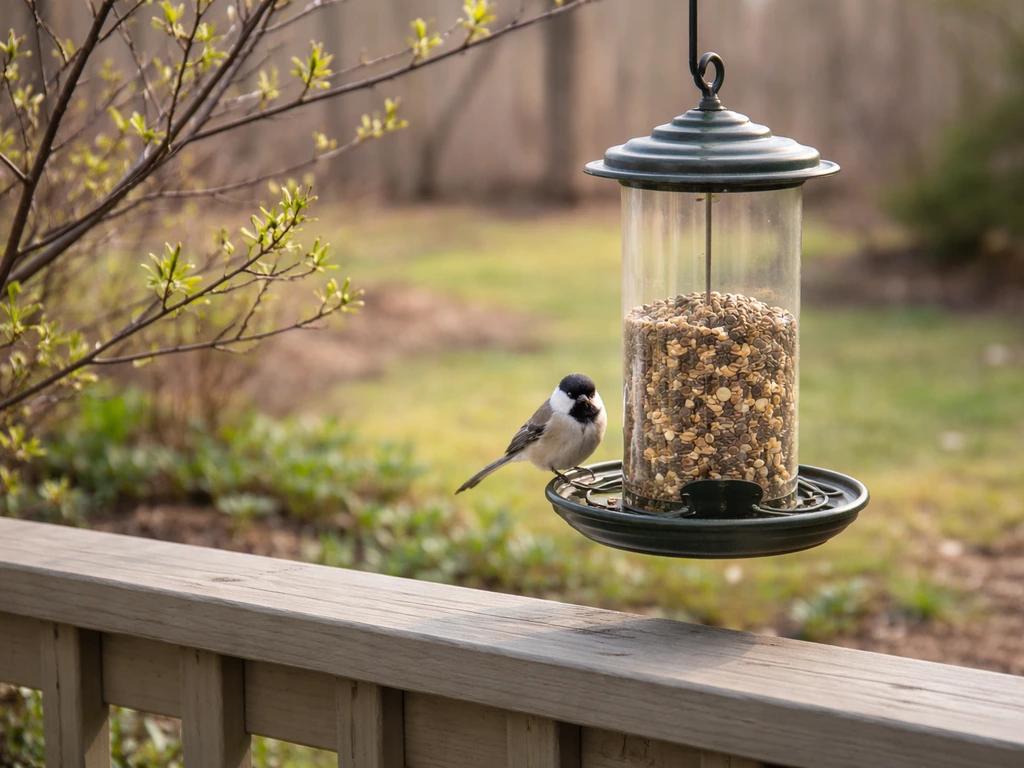
It's early April 2026, and that timing is worth factoring into your expectations. Spring migration is underway across much of North America, which means your local bird population is in flux. Some winter residents like dark-eyed juncos and white-throated sparrows are heading north, while neotropical migrants are starting to pass through or arrive. The birds you had at your feeder all winter may genuinely be gone, not because anything is wrong with your setup, but because they've left for the season.
At the same time, spring is when natural food sources start competing with your feeder. Insects are emerging, buds are opening, and many birds shift their diet away from seeds toward protein-rich insects as breeding season approaches. Minnesota DNR specifically notes spring as a time to adjust your feeding setup, and recommends keeping suet available through spring since it's still a valuable fat source for birds expending energy on migration and nesting. If you want to maintain feeder traffic through spring and summer, suet, nyjer for goldfinches, and fresh sunflower seed are your best bets.
If you're noticing that the birds visiting are mostly one species, say sparrows, that may simply reflect what's locally abundant right now rather than a feeder problem. Why you're only getting sparrows at your bird feeder is worth reading if that pattern is frustrating you, since it often comes down to seed type and feeder style rather than anything you're doing wrong.
If you're brand new to feeding birds and wondering whether birds will ever show up at all, patience is part of the answer, but so is setup. Whether birds will come to a bird feeder covers what conditions actually predict success and helps set realistic timelines for new feeders to get discovered.
What to actually do today: a practical checklist
Here's what I'd do if I were standing in front of my feeder right now trying to fix this. Work through these in order, since each one builds on the last.
- Empty the feeder completely and check the seed. Smell it. If it's musty, clumped, or has any visible mold, throw it out. Do not refill over old seed.
- Clean the feeder with hot water and a bottle brush, then rinse with a diluted bleach solution (1 part bleach to 9 parts water). Rinse thoroughly with clean water and let it dry fully before refilling. This usually takes a few hours.
- Check placement. Is there escape cover (shrubs, hedges, trees) within 15 to 20 feet? Is the feeder in the open with no nearby shelter? If so, move it closer to cover.
- Check window distance. Is the feeder between 3 and 30 feet from a window? If yes, move it either within 3 feet or farther than 30 feet to reduce collision risk.
- Refill with fresh black-oil sunflower seed. If you have other feeders, add a nyjer sock for finches or a suet cage for woodpeckers and nuthatches.
- Sweep up all spilled seed and debris under the feeder. A clean ground area reduces rodent attraction and disease risk.
- Check for predator activity. Look for signs of cats, assess whether a hawk has been visiting, and make sure squirrels aren't monopolizing the feeder. Add a baffle if needed.
- Give it 3 to 7 days before concluding nothing is working. Birds have to find the feeder, feel safe, and establish a routine. Watch for activity in short morning and late-afternoon windows.
- If you still see nothing after a week, consider whether the feeder location is discoverable, whether there are any local factors (neighborhood cats, recent construction, seasonal migration shifts) that might explain the absence.
The honest truth is that bird feeding has real variables, and some yards take longer to attract consistent visitors than others. Urban yards, yards with lots of free-roaming cats nearby, and yards with limited native plantings are all harder environments. But if your feeder is clean, filled with the right seed, placed near shelter at the right distance from windows, and free from constant predator pressure, you've done what you can. Most feeders in those conditions start getting regular visitors within a week or two, sometimes much faster.
Quick reference: feeder problem vs. likely fix
| Symptom | Most Likely Cause | Fix |
|---|---|---|
| Birds suddenly stopped coming | Predator (hawk or cat) or dirty/moldy seed | Check for predator activity; clean and refill feeder |
| Never attracted birds since setup | Poor placement or wrong seed type | Move feeder near cover; switch to black-oil sunflower |
| Fewer birds in spring than winter | Normal seasonal shift; natural food sources competing | Keep suet available; add nyjer for goldfinches |
| Feeder is active but only one or two species | Seed type or feeder style mismatch | Add a second feeder style; diversify seed offerings |
| Feeder visited but seed disappears fast with few birds | Squirrels or bully birds monopolizing | Add a pole baffle; switch to a cage or weight-sensitive feeder |
| Wet or clumped seed in feeder | Feeder design allows rain in; not cleaned often enough | Choose a feeder with a roof; clean every 1 to 2 weeks |
| Birds fly near but don't land | Feeder too exposed; no nearby cover or unsafe location | Relocate within 15 to 20 feet of shrubs or trees |
FAQ
How do I know if birds are just visiting at times I’m not noticing?
Start by confirming whether the feeder is actually getting attention, not just whether it looks busy. Birds often visit in quick bursts, so check at the times of highest activity (early morning and late afternoon), and also look for indirect signs like fresh seed shell piles, droppings on nearby surfaces, or repeated perching on the feeder pole or branches.
I changed the seed and birds disappeared, how long should I wait before changing again?
If you recently switched seed and birds left, don’t assume the feeder is the problem. Many birds can take a few days to adjust to a new mix, but if the new mix is mostly millet, milo, or wheat you may be offering low-preference filler. Try black-oil sunflower as a baseline, and keep the seed dry and fresh, especially after rainy stretches.
What should I do if the seed looks moldy or smells bad?
For rotting seed smell or visible mold, you should clean immediately, remove all old food, and let the feeder dry fully before refilling. Even after cleaning, replace seed rather than topping off, because spores and rancid seed flavors can persist and keep birds away for several days.
Could window strikes be the reason birds stop using my feeder?
Window placement problems are often mistaken for “birds not coming.” If your feeder is in the 5 to 25 foot range from a window (the danger zone), birds may also avoid it after near-misses. Move it to within 3 feet of the glass or more than 30 feet away, and add visibility solutions like window decals if you cannot reposition right away.
My feeder is full, but nothing comes out, could a blockage be the issue?
If you’re seeing no birds at all but other wildlife is active, check for accessibility and feeding flow. Tube feeder ports can clog, platform feeders can pool water, and seed can cake if the holes or base stay damp. Test by manually ensuring seed can flow out when you gently tap the feeder or shake it.
Why do squirrels keep me from getting birds even when the feeder is filled?
Yes, but it depends on what “squirrels and rodents” are doing. If seed is being emptied before birds arrive, birds will learn the area is unreliable. Use a squirrel baffle sized for your pole and feeder type, and clear spilled seed regularly because it becomes a persistent food source for rodents and draws them closer to the feeder.
How can I stop bigger birds from chasing away the smaller ones?
Bully birds, like starlings or grackles, can drive away smaller species quickly. To reduce crowding, choose a feeder design that limits landing stability, use cage feeders that allow small birds access while blocking larger ones, and consider shorter or no-perch designs to discourage birds that need stable footing.
If hawks showed up once, will birds ever return to the feeder?
A sudden stop after hawks or other predators appears is common, birds can stay away for hours or even days. The most useful step is to increase escape cover nearby (shrubs, hedges, or small trees within the recommended distance) so birds can regroup quickly when the predator moves on.
Is it normal for feeder visits to drop in spring, even if my setup is unchanged?
During spring, feeder traffic can drop because natural food and insects become available and birds adjust their diet. To maintain visits, keep sunflower available, offer nyjer for goldfinches (if your area supports them), and keep suet available longer into spring since it remains valuable for energy when nesting and migration demands are high.
What if the feeder is in the right spot, but cats are around?
Yes. If your yard has a high number of free-roaming cats, birds may avoid the whole feeding area even if the feeder is “perfect.” The practical approach is to add a baffle to reduce cat access to the base, elevate the feeder appropriately, and keep the area around the feeder clear so birds can spot and respond faster.
Why does my mixed seed not attract as many species as I expected?
Don’t rely on “mixed seed” to attract many species, and don’t assume leftover seed is still desirable. Mixed blends often include low-preference filler, and old seed can go stale or dampen. If birds are scarce, replace with a high-quality, fresh primary like black-oil sunflower and keep storage dry, cool, and sealed.
What’s the quickest “do-this-first” plan to get birds back reliably?
If you want fast improvement and fewer unknowns, use a simple, high-fat option and a consistent feeder style while you troubleshoot. A good starting plan is black-oil sunflower in a compatible feeder, cleaned and dried on schedule, placed near shelter and correctly spaced from windows, then wait about one to two weeks for consistent traffic.
Next Article
Do You Leave Bird Feeders Out All Year? Seasonal Guide
Should you leave bird feeders out all year? Get seasonal tips, safe feeding, and cleaning to prevent disease and pests.